


 Brasil
 Canada
 United Kingdom
 Australia
 Netherlands
 France
 España
 Italia
 السعودية
7 control pickleball paddles for dinks and resets
For players who win points with patience: 7 control pickleball paddles chosen for what they do on the dink, the reset and the block, with the spec sheet that explains each one.
Updated on 10/07/2026
On this page
- 1.The 7 control pickleball paddles
- 2.What "control" means on each shot
- 3.Which one to pick for your problem at the kitchen
- 4.What to look at on a control paddle's spec sheet
- 5.Three control paddles, three shapes
- 6.Signs your paddle is costing you control
- 7.Control is not a lack of power
- 8.How we chose the 7
- 9.Doubles, singles and players coming from another sport
- 10.Is a control paddle suitable for a beginner?
- 11.Verdict
A control pickleball paddle is one that lets the ball leave at the speed you asked for, and no faster. In practice: a 14 to 19 mm core, a construction that doesn't "fire" the ball, a face with grip and a shape that forgives off-center hits. We selected 7 control pickleball paddles from the catalog, with the three shots that decide a point at the kitchen in mind: the dink, the reset and the block.
The 7 control pickleball paddles
7 control pickleball paddles
- 1
- Weight
- 8.1 oz
- Core
- 19 mm
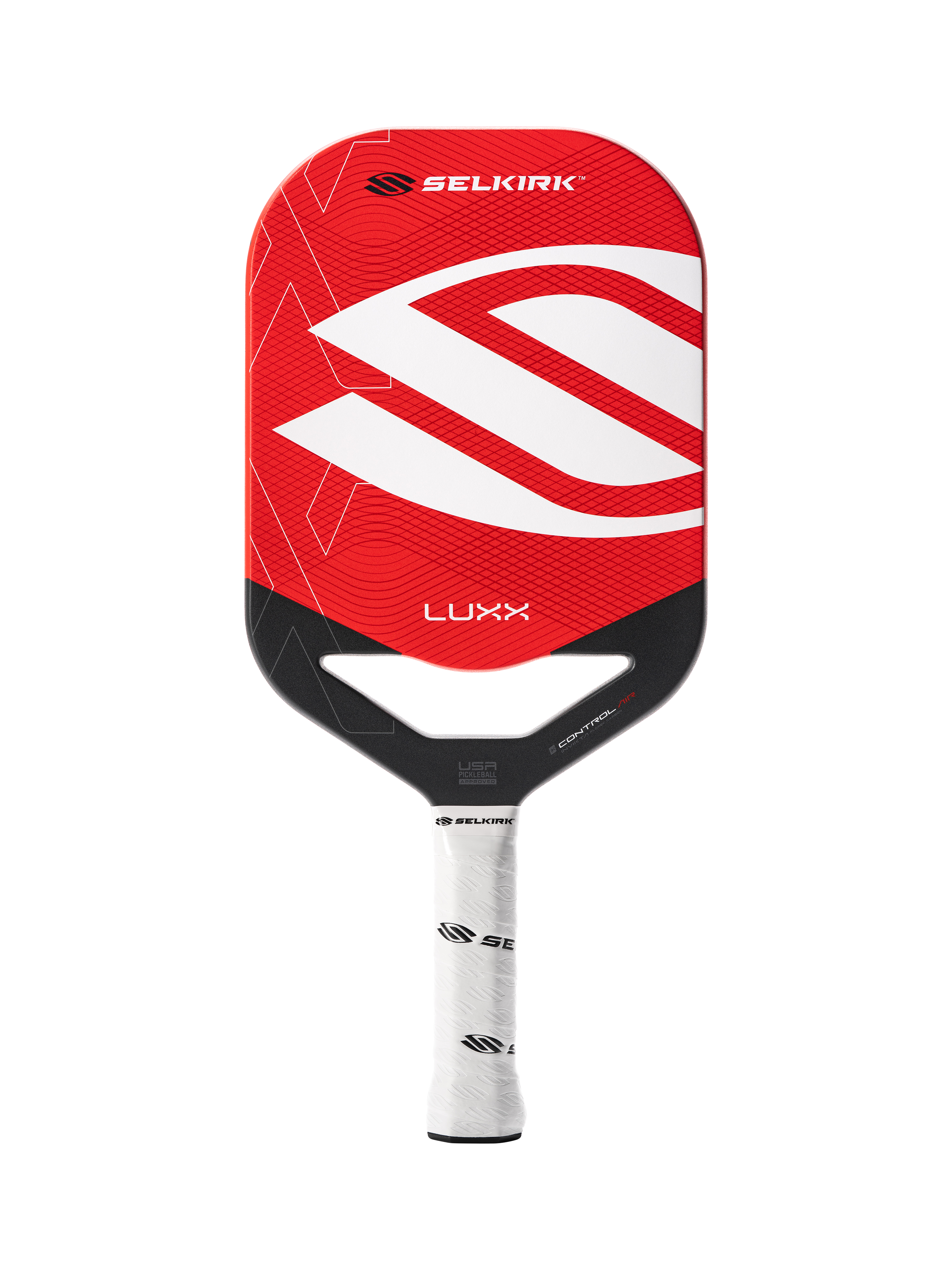
19 mm X7 Thikset core, the thickest among the paddles listed in the catalog, with a FlexFoam foam perimeter. Average swing weight of 113 and an InfiniGrit surface, which Selkirk says lasts three times longer than painted texture. It came out a little livelier than the 2023 version, but it is still the benchmark for soft touch.
- 2
- Weight
- 8 oz
- Core
- 16 mm
- Face
- Etched carbon
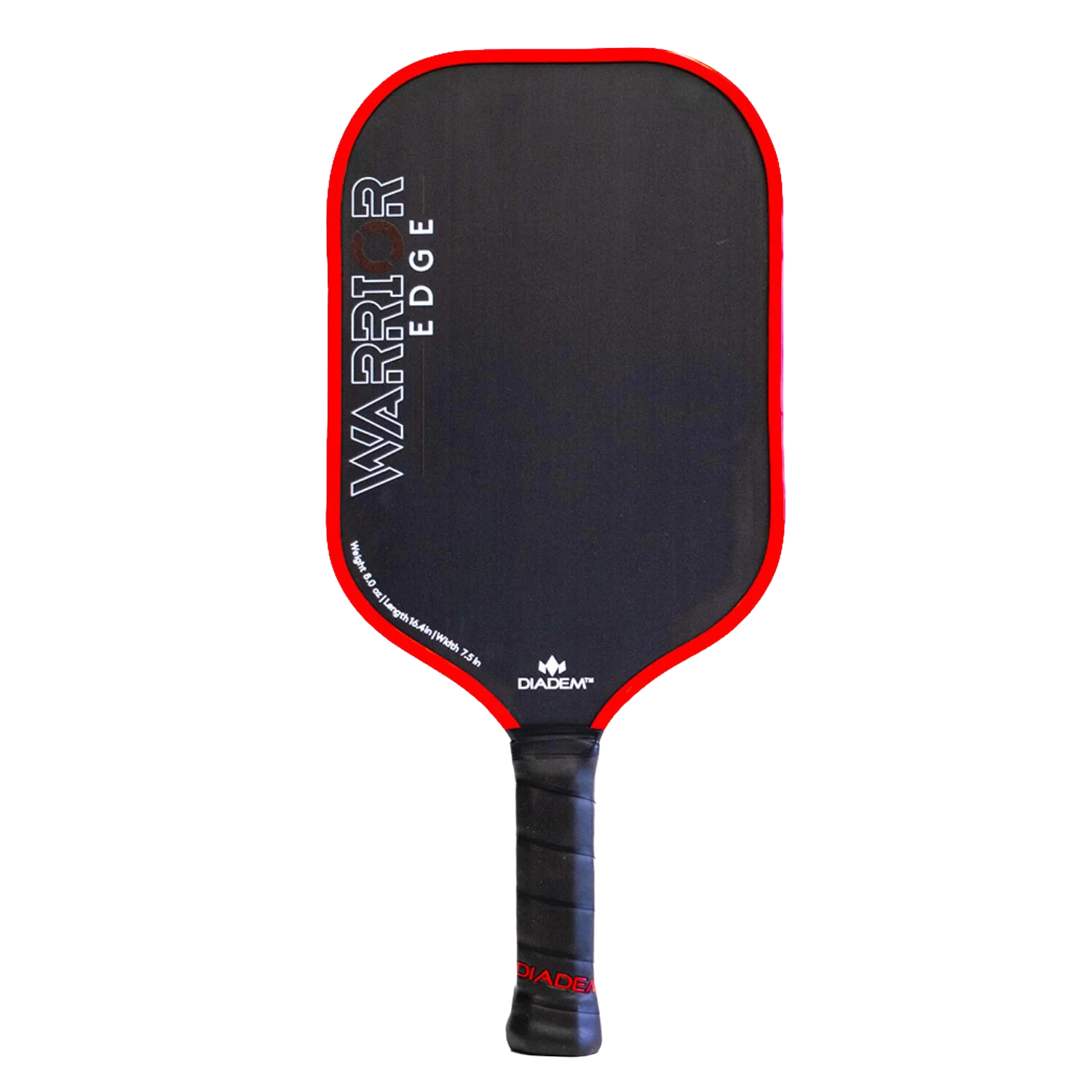
A lighter, more agile version of the Warrior line, with a 16 mm honeycomb core and an etched carbon face that Diadem says holds its spin longer. Measures 16.4 x 7.5 in and weighs an average of 8.0 oz. It is quick to get the paddle back in front of your body between one reset and the next.
- 3
- Weight
- 8 oz
- Core
- 16 mm
- Face
- Raw woven 3K carbon
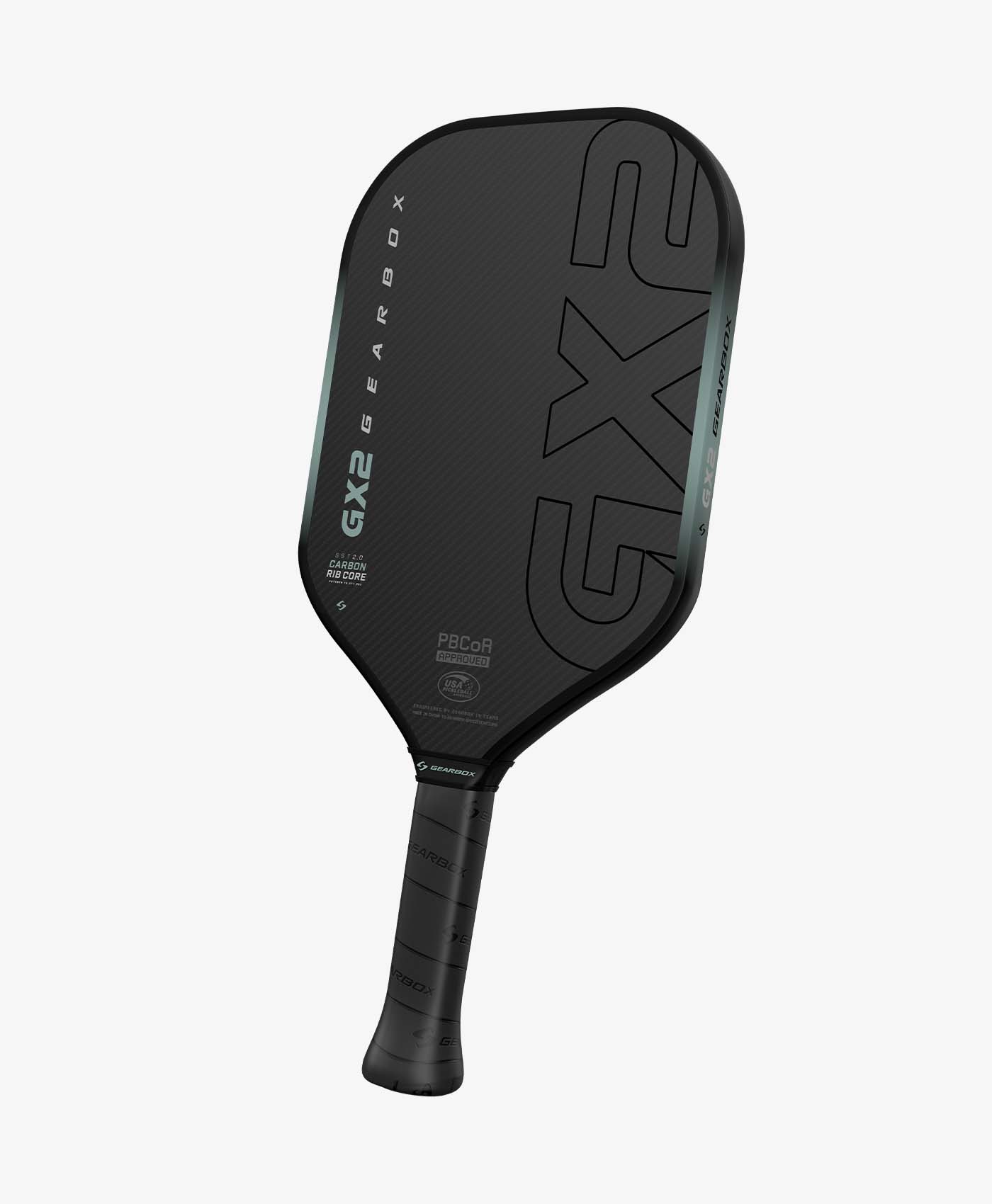
Swaps the polymer honeycomb for suspended Toray T700 carbon ribs, the SST 2.0, which Gearbox compares to the strings of a tennis racquet. 16 mm core, a hybrid 16.375 x 7.375 in shape, 8.0 oz and a thin 4 in grip. Takes some adjustment for players coming from honeycomb.







What "control" means on each shot
Control is too generic a word. At the kitchen, it shows up in three different ways, and each asks something different of the paddle.
The dink: repeating the same ball 20 times
The dink is a short, slow shot that has to land in your opponent's kitchen without rising. The most common mistake is the ball "jumping" off the face and coming out high. What helps:
- Thick core. It dampens and reduces the ball's exit speed on low-speed shots.
- Face with grip. A little slice or topspin on the dink keeps the ball lower after the bounce.
- Medium weight. Very light paddles demand more wrist force for the same ball, and the wrist is a variable.
The reset: turning an attack into a dead ball
The reset happens when your opponent attacks and you, in transition or already at the line, return the ball softly into the kitchen. It is the hardest shot in pickleball, because the ball arrives fast and has to leave slow. What helps:
- Absorbing construction. Cores of 16 mm or more, without aggressive thermoforming, take speed off the ball at contact.
- Wide sweet spot. On a fast ball you often miss the center. A standard or wide shape forgives more.
The block: absorbing the speed-up at your body
When your opponent speeds the ball up at your body, there's no time for a swing: you just position the face. What helps:
- Stability against twisting. A little more weight and a wide face hold the angle when the ball hits off-center.
- Moderate swing weight. Paddles that are very head-heavy arrive late on the block.
Tip
A good test before you buy: hit 30 crosscourt dinks in a row with the paddle, then ask a friend to speed up 10 balls at your body. The right control paddle is the one that keeps the ball low in the first drill and returns it short in the second, without you having to think about it.
Which one to pick for your problem at the kitchen
If the ball comes out high on the dink
The problem is exit speed. Go for the thickest core possible.

At 19 mm, it dampens the most among the paddles listed in the catalog. The elongated shape gives reach on the crosscourt dink, but it asks for more precision on contact than the wide ones.
If you lose a lot on the speed-up
The problem is stability. Look for width and weight.
If your transition reset doesn't stay in the kitchen
The problem is absorption on a fast ball. Soft core and a standard shape.
If you play with one hand and want the most face
What to look at on a control paddle's spec sheet
The six basic measurements for choosing are in the guide to how to choose a pickleball paddle. For control, reading the spec sheet goes like this, in order of importance:
- Core thickness: 16 mm is the starting point; 19 mm is the extreme. Below 15 mm, the paddle starts to favor exit speed. The full explanation is in pickleball paddle core thickness.
- Construction: thermoformed paddles tend to have more pop. That doesn't rule them out for control, but a traditional pressed 16 mm tends to be more contained. On the spec sheet, look for the "thermoformed" field.
- Shape and width: 8 in or more of width means a wider sweet spot. Elongated 7.5 in paddles give reach, but demand more accuracy.
- Weight: the seven paddles on this list average between 8.0 and 8.3 oz. Well below that, the face tends to twist more on the block.
- Face: raw or textured carbon helps the dink with spin. If spin is a priority, also see the 10 pickleball paddles with the most spin.
A detail few people look at is the edge guard. The LUXX Control Air Invikta InfiniGrit and the Wilson Cadence 16 come without an edge guard, according to the spec sheet. Without it, the edge is thinner and the usable face area grows a little, which helps on low balls hit at the limit of the paddle. The flip side is protection: on dinks that scrape the ground, an edge without a guard is more exposed to chipping. If you tend to drag your paddle on the floor, you can apply edge tape, a change the rules allow.
Three control paddles, three shapes
The three below have a core of 16 mm or more and a focus on touch. The difference is in the shape: elongated, standard and wide.
The LUXX gives reach and the most dampening, but it is the least forgiving on the sides. The Scorpeus Pro IV is the middle ground, with weight for blocking. The Cadence 16 has the widest face and the shortest handle. To see the full families, the catalog has Selkirk pickleball paddles and JOOLA pickleball paddles.
Signs your paddle is costing you control
- Dinks come out high even with a short motion. The paddle has too much exit speed for your touch. A thin core or an overly lively thermoformed build are the suspects.
- Resets fly past the kitchen. Same problem, more visible on a fast ball.
- The face "rotates" in your hand on the block. It lacks stability: a paddle too light or too narrow for your game.
- You miss more with the backhand than with the forehand at the net. It may be a handle too thick or too long to change grips quickly.
- The paddle got livelier over time. Heavily used honeycombs can lose firmness and change their response. If this shows up along with a different sound in one region of the face, it may be core wear.
Control is not a lack of power
A common mix-up is thinking a control paddle "doesn't attack." It does attack, but it requires you to generate the speed. Players who already have a firm drive often win with a control paddle, because they miss fewer short balls, which are the majority in a doubles game. Players who don't yet have a drive and rely on the paddle to supply speed may miss the pop from the baseline.
If you're somewhere in between, a 14 to 15 mm core, like the one on the Paddletek Tempest Wave Pro-C or the Engage Pursuit Pro EX, is a reasonable compromise. For those just starting out, the guide to the best pickleball paddles for beginners has more forgiving options, and those moving up a level will find more choices in the best pickleball paddles for intermediate players.
How we chose the 7
We started with paddles that have at least one store selling them and filtered by the spec sheet, not by the model name. The ones that made it have a honeycomb or rib core of 14.3 mm or more, a declared control or touch profile and a shape that doesn't sacrifice the sweet spot too much. The order considers the RR Score and how well each paddle solves one of the three kitchen shots.
Two groups that show up a lot on "control" lists were left out on purpose:
- 16 mm foam-core paddles, like the Selkirk OMNI. They have the same thickness, but the foam returns more energy than honeycomb. They are great all-court paddles; they are not the most contained choice for the dink.
- Very lively 16 mm thermoformed paddles, like several from JOOLA's fifth generation. Thermoforming and foam walls give pop and stability, and players who spend a lot of time at the kitchen may feel the ball leaving faster than they want.
That doesn't mean these paddles are bad. It means that if the criterion is control above all, the seven on the list deliver it with fewer compromises.
Doubles, singles and players coming from another sport
In doubles, most points are decided near the net, in dink exchanges and short counterattacks. That is the scenario where a control paddle pays off most. In singles, the whole court is yours: you need reach and strides from the baseline, and a very contained paddle can cost you dearly. For singles, prefer the elongated LUXX or a 14 to 15 mm core.
Players coming from tennis tend to arrive with a long swing and a lot of acceleration. A lively paddle amplifies that, and the result is long dinks. A control paddle "brakes" the excess while the player learns to shorten the motion. Players coming from beach tennis have fast hands at the net, but are used to a heavier racket and a ball that leaves with little speed. Here, face width helps more than an extra-thick core.
Is a control paddle suitable for a beginner?
Yes, with one caveat. A thick core and a wide sweet spot are exactly what a beginner needs: the ball leaves slower and off-center hits cost less. The caveat is price and weight. Several paddles on this list are from intermediate and advanced lines, and some are over 8 oz, which can tire those who play only occasionally. If you're in your first year of pickleball, an entry-level 16 mm paddle with a standard shape delivers a good part of the same control.
Verdict
To check live prices and other options, use the pickleball paddle catalog with the core thickness filter, or put two candidates side by side in the pickleball comparison tool. If you want a personalized suggestion, Find Your Paddle does it in a few questions, and the methodology explains how the scores are calculated.
Where to buy the racquets in this guide
- LUXX Control Air Invikta InfiniGrit Selkirk8.1 oz · 19 mm · Florek carbon fiber with InfiniGritSee pricePickleball Central
- Warrior Edge Diadem8 oz · 16 mm · Etched carbonSee priceAmazon
- GX2 Integra XL 16mm Gearbox8 oz · 16 mm · Raw woven 3K carbonSee priceGearbox
The prices above are checked automatically at each store and may have changed since the last check. The price that counts is the one shown on the store's website at checkout. We may earn a commission on purchases made through store links, at no extra cost to you.