


 Brasil
 Canada
 United Kingdom
 Australia
 Netherlands
 France
 España
 Italia
 السعودية
Pickleball Paddle Materials and Shapes: The Complete Guide
Fiberglass, T700 carbon, aramid, foam, thermoformed, elongated or widebody: how each material and shape changes a pickleball paddle.
Updated on 10/07/2026
On this page
The face and the core decide how the ball comes off a pickleball paddle; the shape decides which part of the face it comes off well from. Fiberglass gives easy pop, carbon gives control and spin, and aramid (kevlar) gives firmness and grip. Thermoformed construction and foam cores take that behavior up a level. This guide explains each material and shape with real catalog examples, so you can read a spec sheet and know how the paddle will play.
Anatomy of a pickleball paddle
A pickleball paddle is a sandwich. Understanding the layers helps you read any spec sheet:
- Face (skin): the outer layer on both sides, made of fiberglass, carbon, aramid or a blend. It's where the ball makes contact and where the texture lives.
- Core: the middle layer, almost always a polymer honeycomb or, in newer paddles, foam. It defines damping and a good part of the power.
- Perimeter and edge: it can have injected foam, an EVA ring or a carbon reinforcement. It stabilizes the paddle when the ball hits off-center.
- Edge guard: protects against knocks on the ground. Some paddles don't have one (edgeless), to gain hitting area and aerodynamics.
- Handle: on thermoformed paddles, it's usually molded together with the face, as a single piece.
Face materials
Fiberglass
Fiberglass is more flexible than carbon. On impact, the face gives a little and returns the ball with a "trampoline" effect, which gives pop without requiring much motion. That's why it's common in entry-level paddles and in some power paddles. The weak point is spin: the surface tends to be smoother and the flex reduces precision in the soft game.
Graphite and polycarbonate
Graphite is, in practice, a form of carbon. In pickleball, the term usually indicates thin, smooth faces from the older generations, generally with a firm touch and fast response. It appears in models like the Onix Z5 Graphite and the HEAD Extreme Tour. Polycarbonate appears in recreational paddles, like the Paddletek Phoenix G6. It's a durable material that tends to generate little spin.
T300 and T700 carbon
The designations T300 and T700 refer to carbon fibers from Toray, a Japanese manufacturer. T700 has about 40% higher tensile strength than T300, with similar stiffness. On the court:
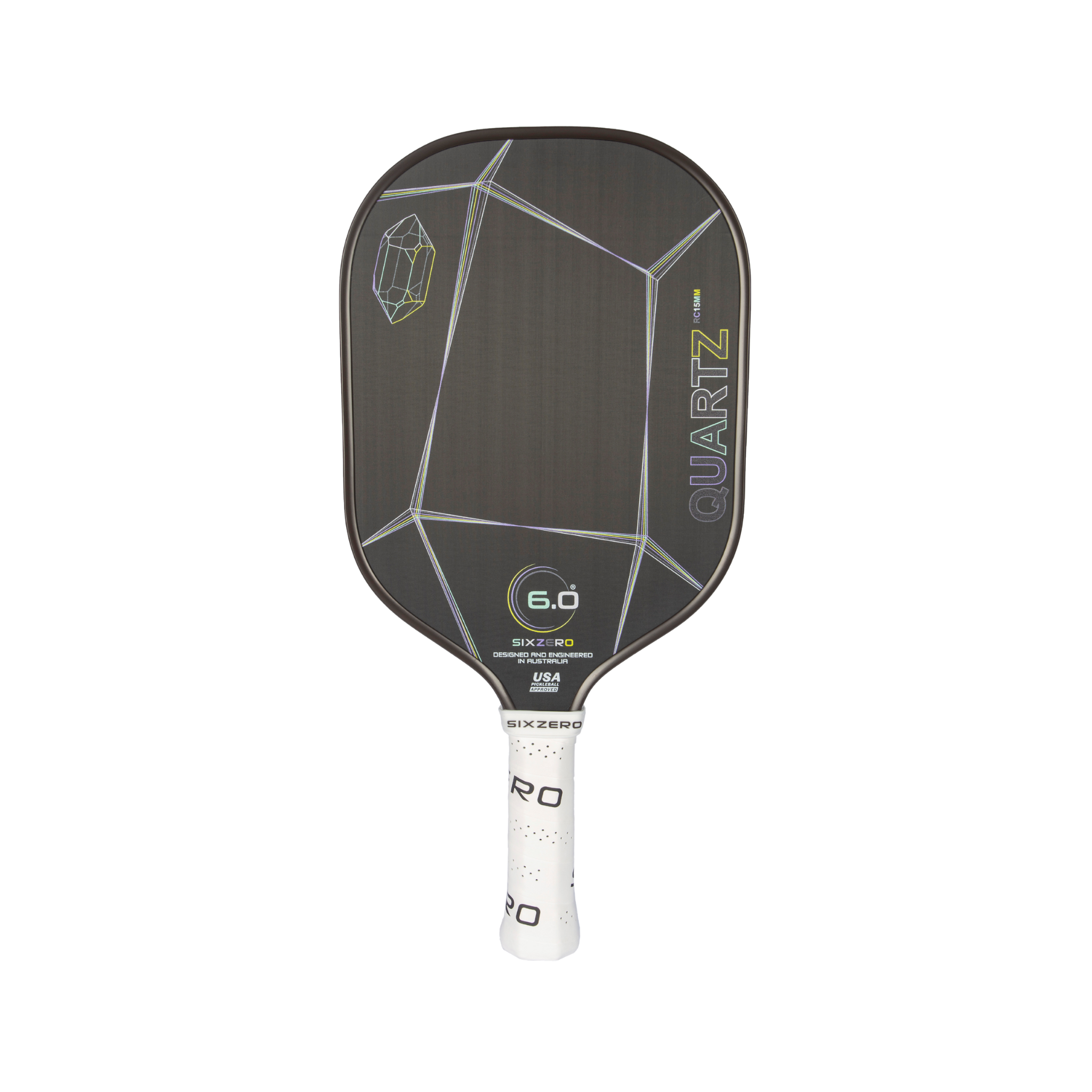
- T300: a slightly more flexible face, a softer feel, common in entry-level paddles from performance brands, like the Six Zero Quartz and the Sapphire.
- T700: a firm, consistent face, the standard in intermediate and top-end paddles.
Raw carbon and textured carbon
Raw carbon leaves the weave exposed, with no paint over it. The weave grips the ball and increases spin. Textured carbon gets an applied layer (grit, grit-blasting or heat-pressed texture) for the same purpose. In both cases, the roughness decreases with use. The rules limit how rough the face can be, so the difference between approved paddles is more in the durability of the texture than in the maximum spin.
Aramid (kevlar) and hybrid faces
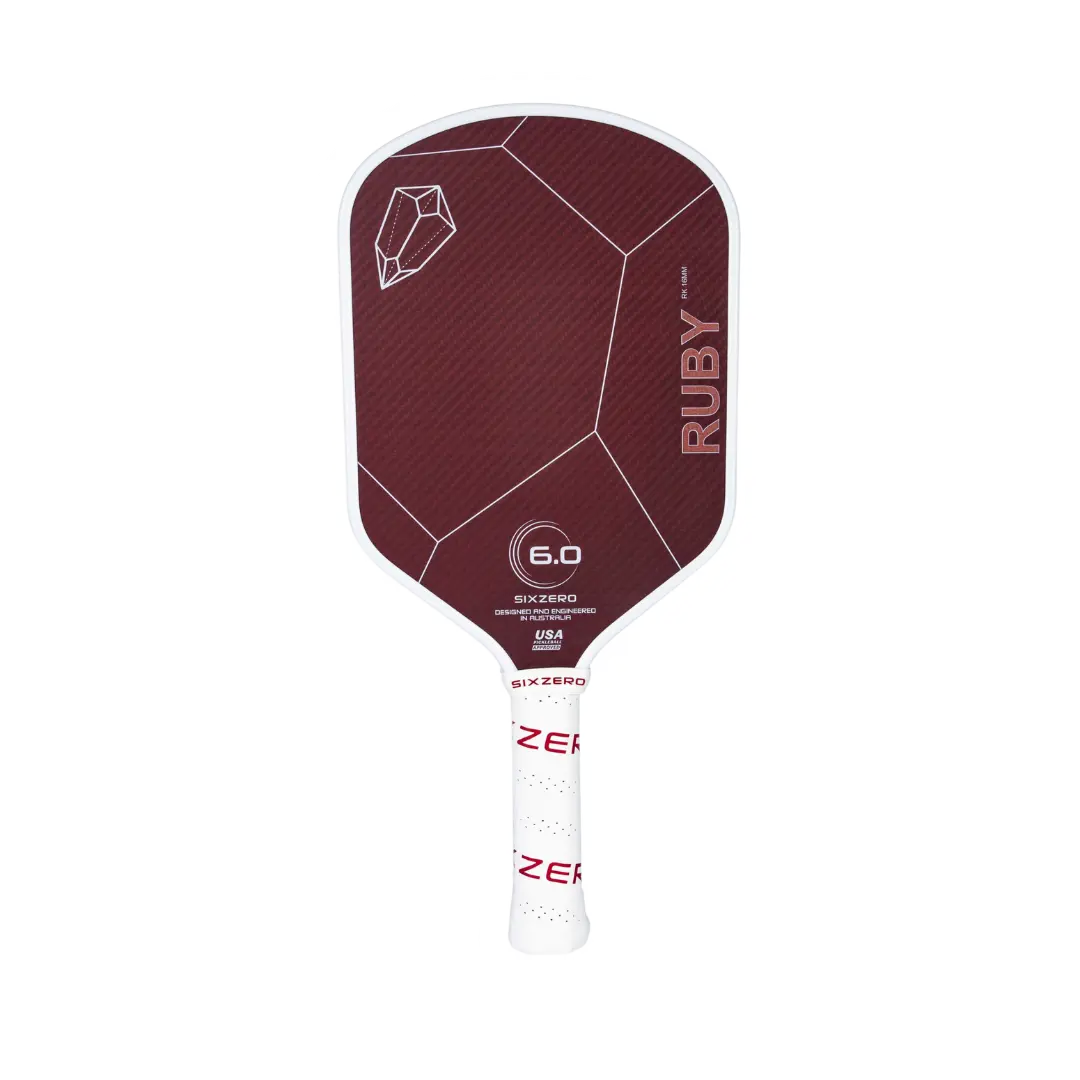
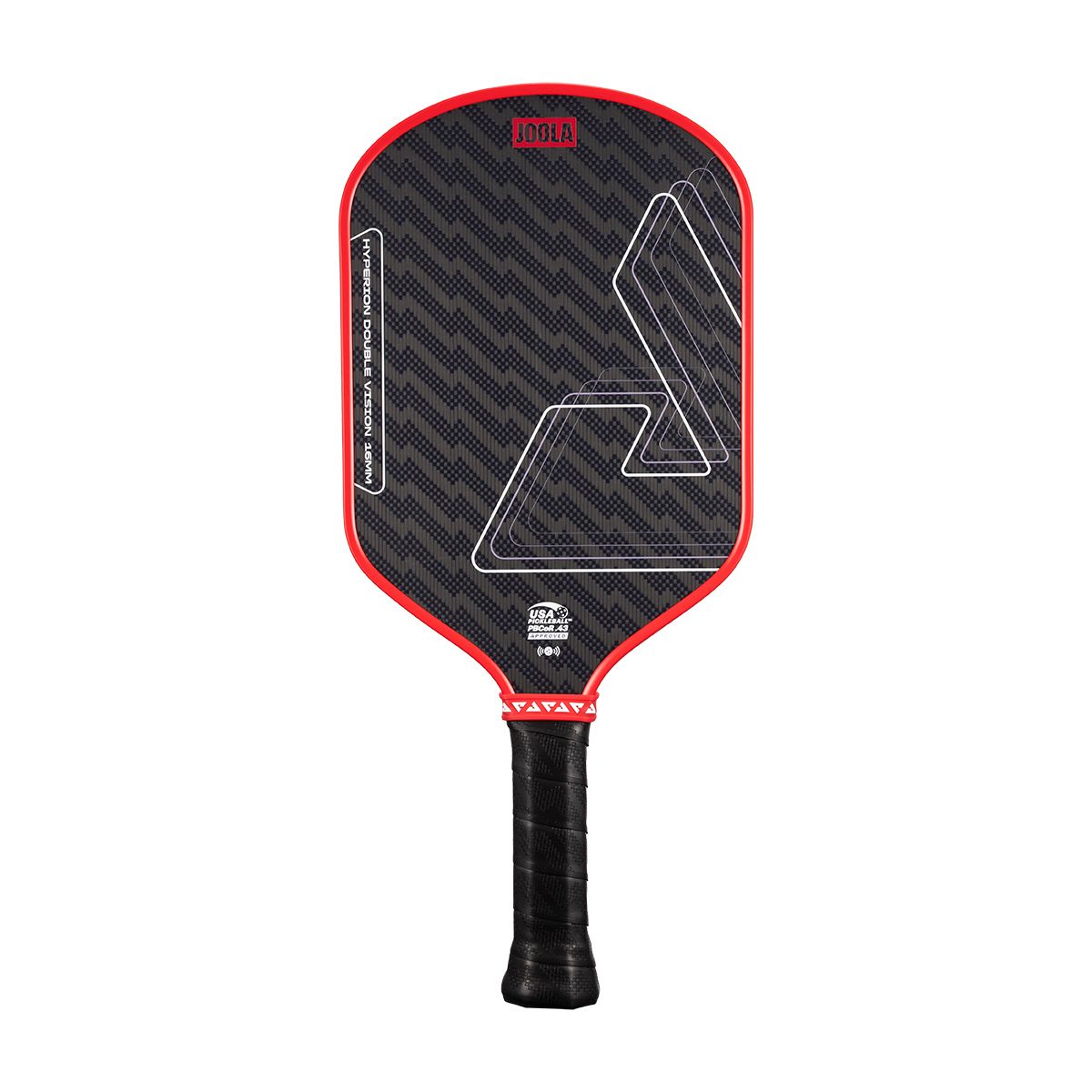
Aramid is the family of fibers that includes Kevlar. It's very impact-resistant, less stiff than carbon and absorbs vibration. On a pickleball face, that translates into a firm touch, a "solid" feel and, with a crossed weave, plenty of grip. The Six Zero Ruby uses a 100% aramid face, and the JOOLA Hyperion Double Vision also has aramid in its face.
Hybrid faces blend materials to add up their advantages: carbon with fiberglass (more pop over a control base), carbon with aramid (spin and firmness) or several layers of carbon in different directions.
| Face material | General tendency of the material | Catalog example |
|---|---|---|
| Fiberglass | Flexible, easy pop, smoother surface | Selkirk AMPED Pro Air Invikta |
| Graphite | Thin, smooth face, firm touch | Onix Z5 Graphite |
| T300 carbon | Slightly more flexible, soft feel | Six Zero Quartz 15mm |
| Raw T700 carbon | Firm, exposed weave that grips the ball | Selkirk Vanguard Control Invikta |
| Aramid (kevlar) | Absorbs vibration, firm and grippy touch | Six Zero Ruby 16mm |
| Carbon with fiberglass | Firm base with the pop of fiberglass | Selkirk Vanguard Power Air Invikta |
The table describes the typical behavior of each material, not a measurement of the models cited. Core, construction and shape also change the final result.
The best way to see the effect of the face is to compare paddles from the same brand with the same shape. The four below use Selkirk's elongated Invikta shape:
Same shape, different faces: four Selkirk Invikta paddles


Highlighted: what differs between the racquets. In bold: the best value in the row.
The AMPED combines fiberglass and a 16 mm core, a combination that tends to give pop with a soft touch. The Vanguard Power Air adds fiberglass and carbon to a 13 mm core, a typical attack-paddle recipe. The Vanguard Control uses raw T700 carbon and 16 mm, the combination most associated with control play. The LABS Project 008 keeps the raw carbon and swaps the honeycomb for foam. More models from the brand are in Selkirk pickleball paddles and in the Selkirk paddle comparison.
Core materials
- Polypropylene honeycomb: the most common. Soft, quiet and with good damping. Thickness (13, 14, 16 mm) sets the balance between pop and control.
- Nomex honeycomb: aramid paper impregnated with resin. Harder and louder, with a lively ball exit. The Onix Z5 Graphite is a classic example.
- Polymer with a foam perimeter: honeycomb in the center and foam or EVA at the edge, to widen the sweet spot. It appears in many current paddles, like the HEAD Radical Pro with its Triflex core.
- Foam (EPP, EVA, PureFoam): no honeycomb. Returns more energy, has a muted sound and doesn't suffer core crush, the sinking of cells that leaves the paddle "dead" in one spot on the face. The CRBN TruFoam Genesis is a catalog example.
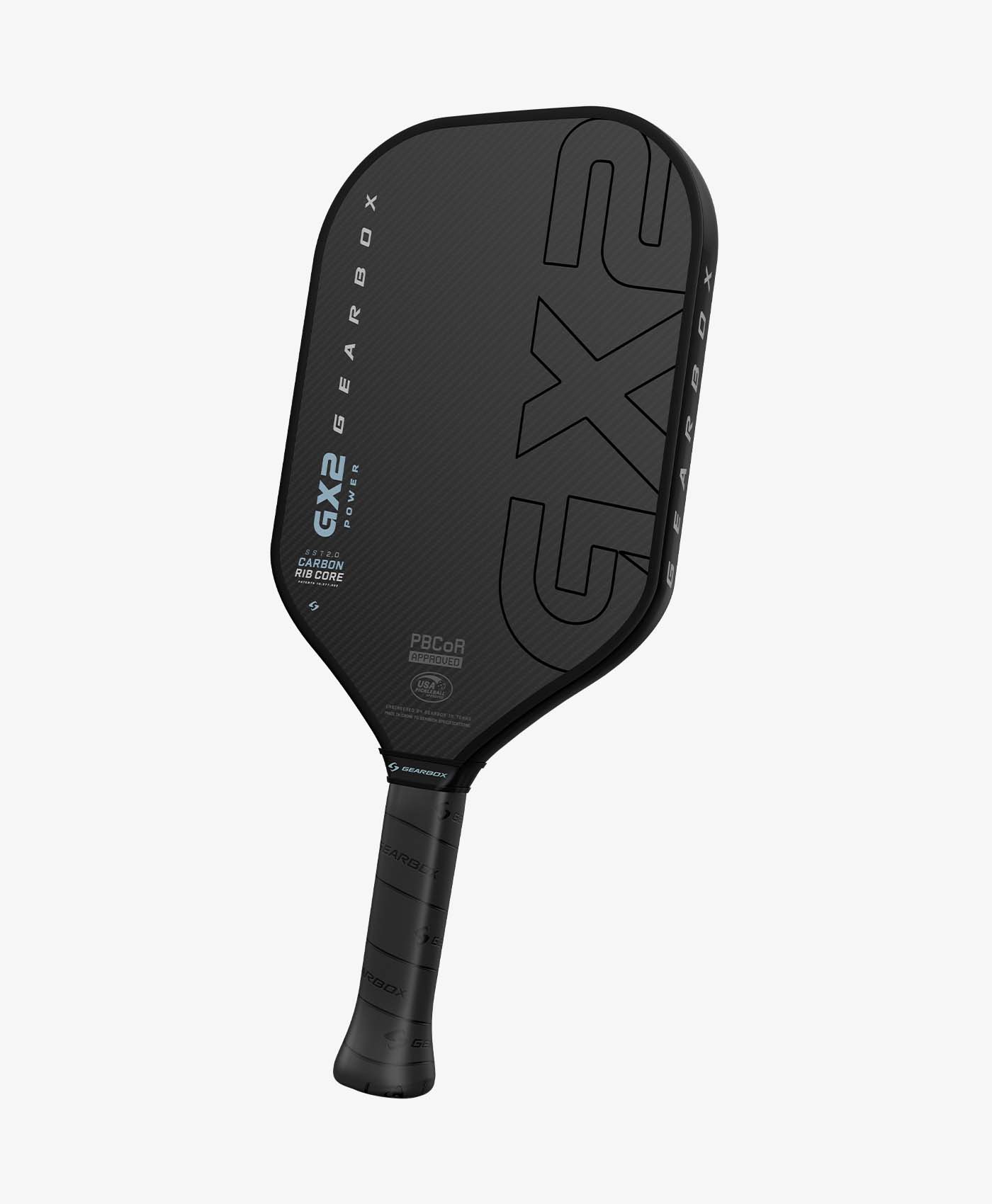
- Carbon chambers: Gearbox uses solid T700 carbon ribs in place of the honeycomb. According to the brand, the touch is firm and the structure is very durable.
Thermoformed vs. cold-pressed
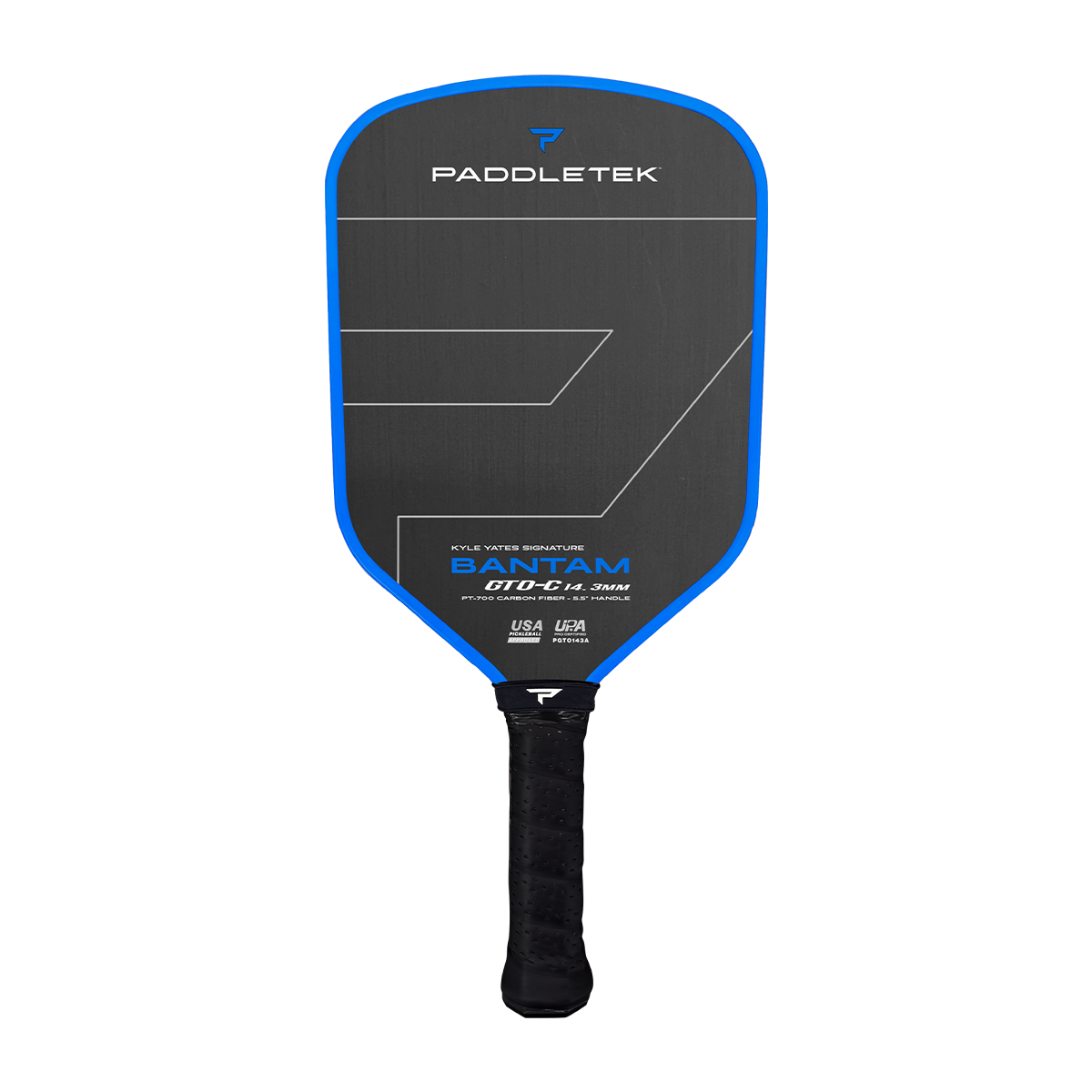
Construction is as important as material. In a cold-pressed paddle, the face is bonded to the core under pressure, without heat. The result is a soft touch, with plenty of control and less pop. The Paddletek Bantam GTO-C is a current example of that school.
In a thermoformed paddle, the face, edge and often the handle are molded together under heat and pressure, forming a single piece (unibody). In general, the walls get injected foam. The effect in play:
- more pop and more power with the same motion;
- a larger sweet spot, because the reinforced edge stabilizes the face;
- more stability on off-center blocks.
The flip side: the first thermoformed paddles had a reputation for losing response over time and for requiring adaptation in the soft game, because the ball comes off livelier. Current generations have improved on this point, with foam reinforcements and, in some cases, double thermoforming, as in Franklin's C45 line.
Good to know
Thermoformed doesn't necessarily mean better. For those who build the point with dinks, drops and resets, a 16 mm cold-pressed paddle can perform better. Thermoforming pays off for those who already have control and want to turn neutral balls into attacking balls.
Shapes: standard, elongated, hybrid and widebody
Under the rules, length and width added together can't exceed 24 inches. So every shape is a trade-off: every inch of length is an inch less of width.
| Shape | Typical dimensions | Sweet spot | Reach | Hand speed | For whom |
|---|---|---|---|---|---|
| Standard | About 15.5 to 16 x 7.75 to 8 in | Wide | Low | High | Beginners and kitchen play |
| Widebody | About 15.5 to 16 x 8 in or more | The widest | Low | High | Those who live at the net and block a lot |
| Hybrid | About 16.2 to 16.3 x 7.6 to 7.8 in | Medium | Medium | Medium | Complete game, all-court |
| Elongated | About 16.5 x 7.25 to 7.5 in | Narrow | High | Medium to low | Attackers, singles, two-handed backhand |
The sweet spot doesn't just change size, it changes position. On an elongated paddle, it moves up away from your hand, which gives more leverage on the serve and drive, but demands more precision on fast volleys. On a widebody, it's wide and close to the center, great for balls at your body.
To see shape isolated from other variables, compare the same paddle in different shapes. The Bread & Butter Filth uses the same 16 mm core and the same T700 carbon face in three shapes, and the Selkirk OMNI comes in elongated and widebody versions:
Note how the OMNI Widebody has a swing weight of 112 versus 118 for the elongated, even with a similar weight. With the mass closer to your hand, the widebody tends to be faster in exchanges.
Combinations that work
Material and shape aren't chosen separately. Some combinations show up often because they make sense in play:
- Total control: raw T700 carbon + a 16 mm core or more + standard or widebody shape.
- Baseline attack: a hybrid face with fiberglass, or a foam core + elongated shape + long handle.
- All-court: T700 carbon + 14 or 16 mm thermoformed + hybrid shape.
- Spin above all: aramid or textured raw carbon + hybrid or elongated shape.
- Comfort and a sensitive arm: 16 mm polypropylene core + fiberglass, polycarbonate or aramid face + medium to light weight.
A catalog example for each material










How to use this when buying
On the spec sheet, read in this order: core thickness, core material, face material, construction (thermoformed or not) and shape. With those five lines you already know whether the paddle will play soft or lively, with or without spin, fast or slow at the net.
For the other measurements of the choice, such as weight, handle, grip and approval, see the guide to how to choose a pickleball paddle. If you'd like to go straight to recommendations, we have the best pickleball paddles by profile and selections by level for beginners and intermediate players.
In the pickleball paddle catalog, you can filter by face material, shape and thickness. The pickleball comparison tool shows spec sheets side by side, and the Six Zero paddle comparison is a good example of how the same brand varies its fiber between T300, T700 and aramid. To understand how materials figure into each paddle's score, see the methodology.
Frequently asked questions
What is the best material for a pickleball paddle?
It depends on your game. T700 carbon, especially raw, is the most balanced between control and spin. Fiberglass gives more pop and is good for those who want easy power. Aramid (kevlar) gives firmness and lots of grip. For most players who practice often, T700 carbon is the safest starting point.
What is the difference between T300 and T700 carbon?
They're carbon fibers from Toray. T700 has about 40% higher tensile strength than T300, with similar stiffness. In play, T700 gives a firmer, more consistent face; T300 is a little softer and shows up in entry-level paddles.
Is a kevlar pickleball paddle good?
Yes, for those who want spin and a firm touch. Aramid, the Kevlar family, absorbs vibration and, with a crossed weave, grips the ball well. In some models, like the Six Zero Ruby, the weight is above average.
What is a widebody pickleball paddle?
It's the wide shape, with about 8 inches or more of width and a shorter length. It has the largest sweet spot and is the fastest in volley exchanges, but has less reach than elongated paddles.
Do thermoformed paddles wear out faster?
The first generations had a reputation for losing response over time. Current ones use foam reinforcements and, in some cases, double thermoforming to improve durability. Foam cores, having no honeycomb, don't suffer core crush.
Are graphite and carbon the same thing in a pickleball paddle?
Chemically, graphite is a form of carbon. In pickleball, graphite usually indicates thin, smooth faces from the older generations, while carbon, especially raw T700, indicates faces with an exposed weave and more spin.
Verdict
Where to buy the racquets in this guide
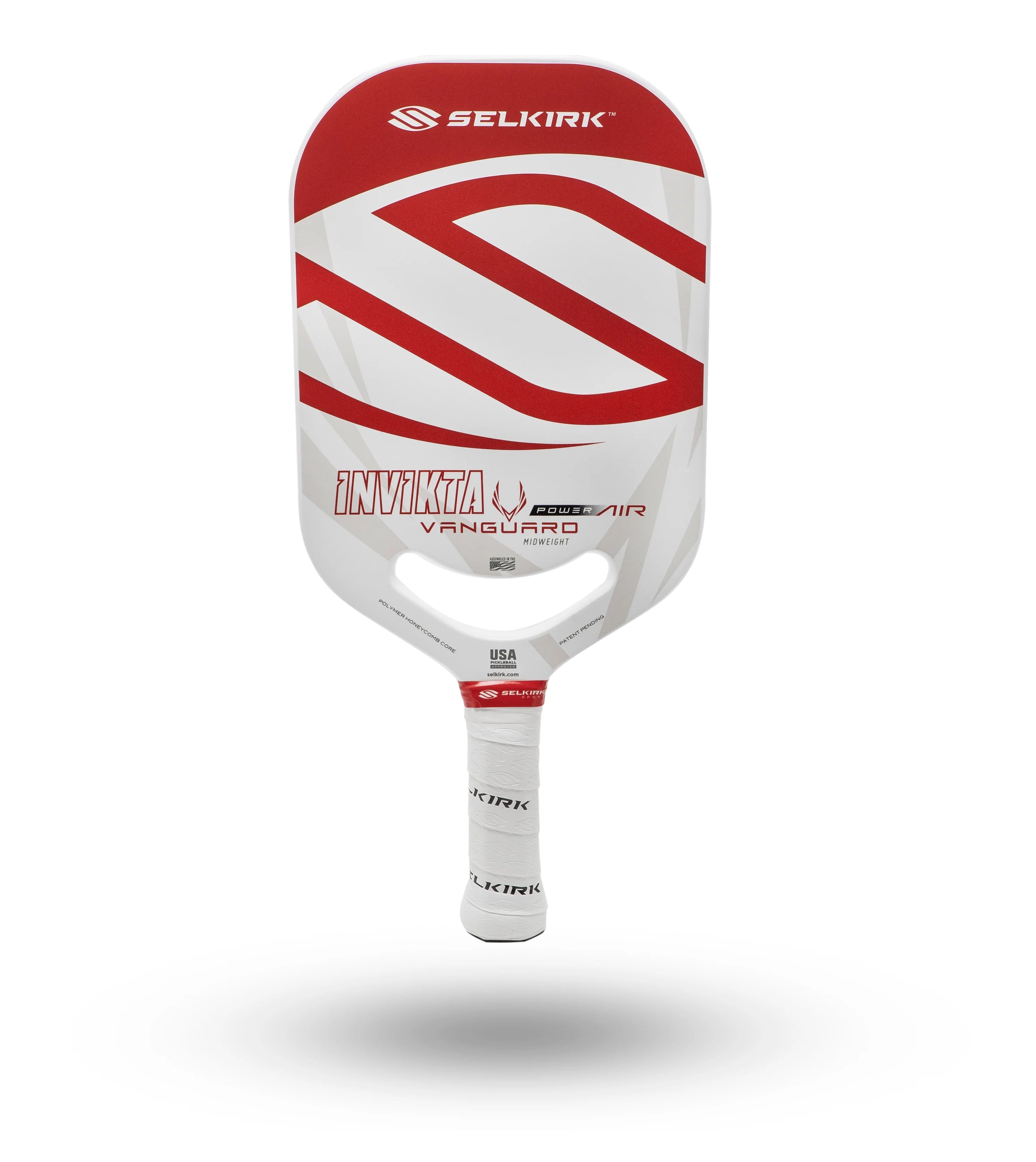 Vanguard Power Air Invikta Selkirk7.9 oz · 13 mm · Fiberglass and carbonSee priceRacquet Point
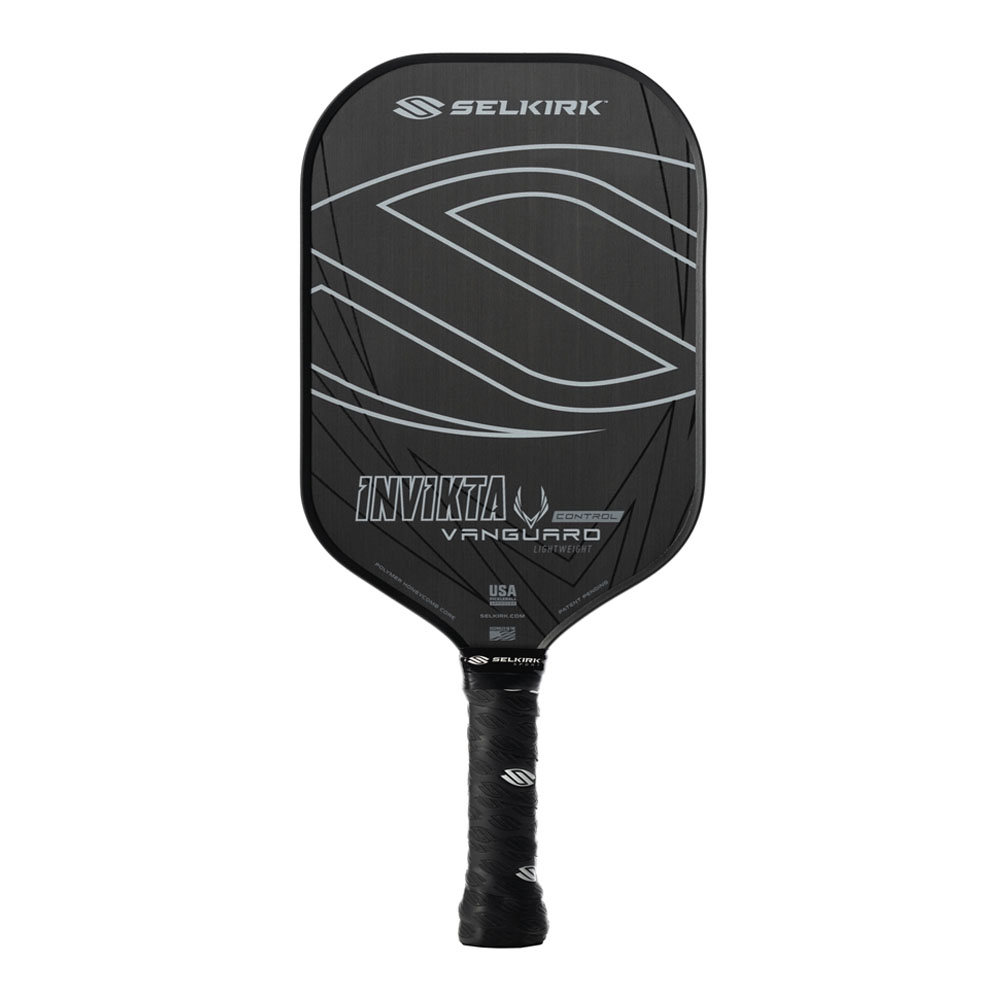 Vanguard Control Invikta Selkirk7.9 oz · 16 mm · T700 Raw QuadCarbonSee priceBadminton Warehouse
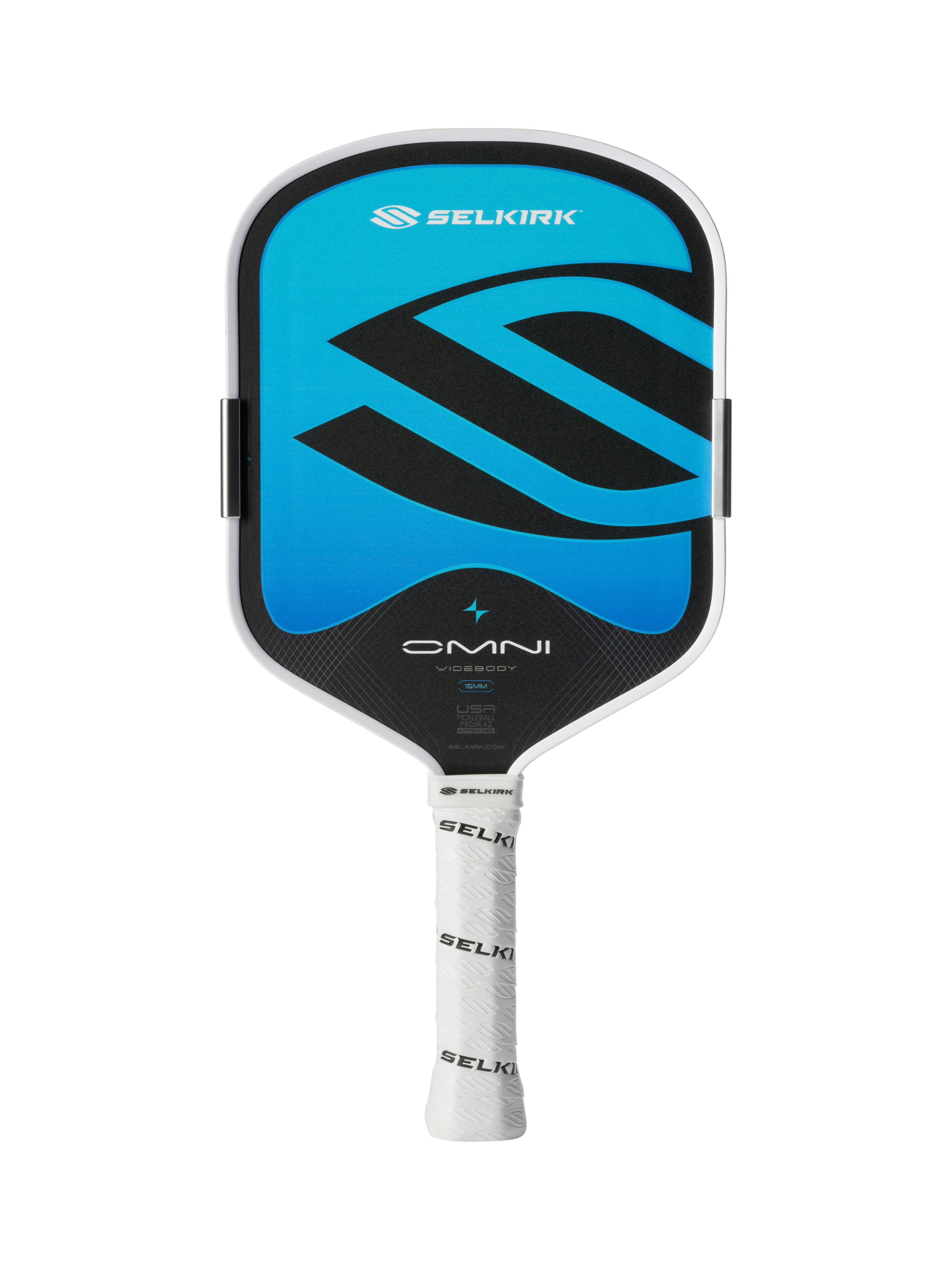 OMNI Widebody 2026 Selkirk8.1 oz · 16 mm · T700 Multistrata carbon with InfiniGritSee priceTennis Warehouse
- Quartz 15mm Six Zero7.9 oz · 15 mm · T300 carbonSee pricePickleball Central
- Ruby 16mm Six Zero8.2 oz · 16 mm · Aramid (Kevlar)See pricePickleball Central
- Hyperion Double Vision 16mm JOOLA8 oz · 16 mm · AramidSee priceJOOLA
- GX2 Power Hybrid Gearbox8 oz · 16 mm · Raw woven 3K carbonSee priceGearbox
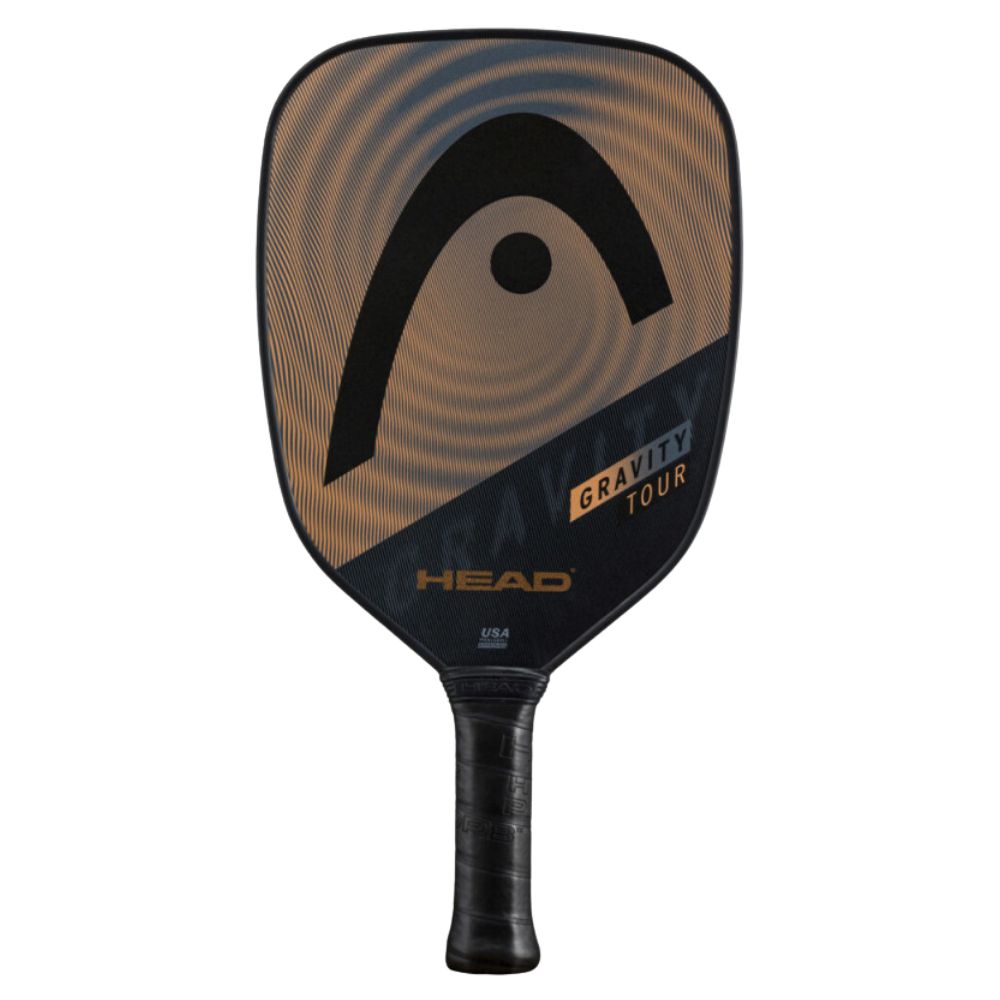
- Gravity Tour HEAD8.1 oz · 14 mm · Carbon and fiberglassSee priceBadminton Warehouse
- Bantam GTO-C 14.3mm Paddletek7.9 oz · 14.3 mm · Raw unidirectional Toray T700 carbonSee pricePickleball Central
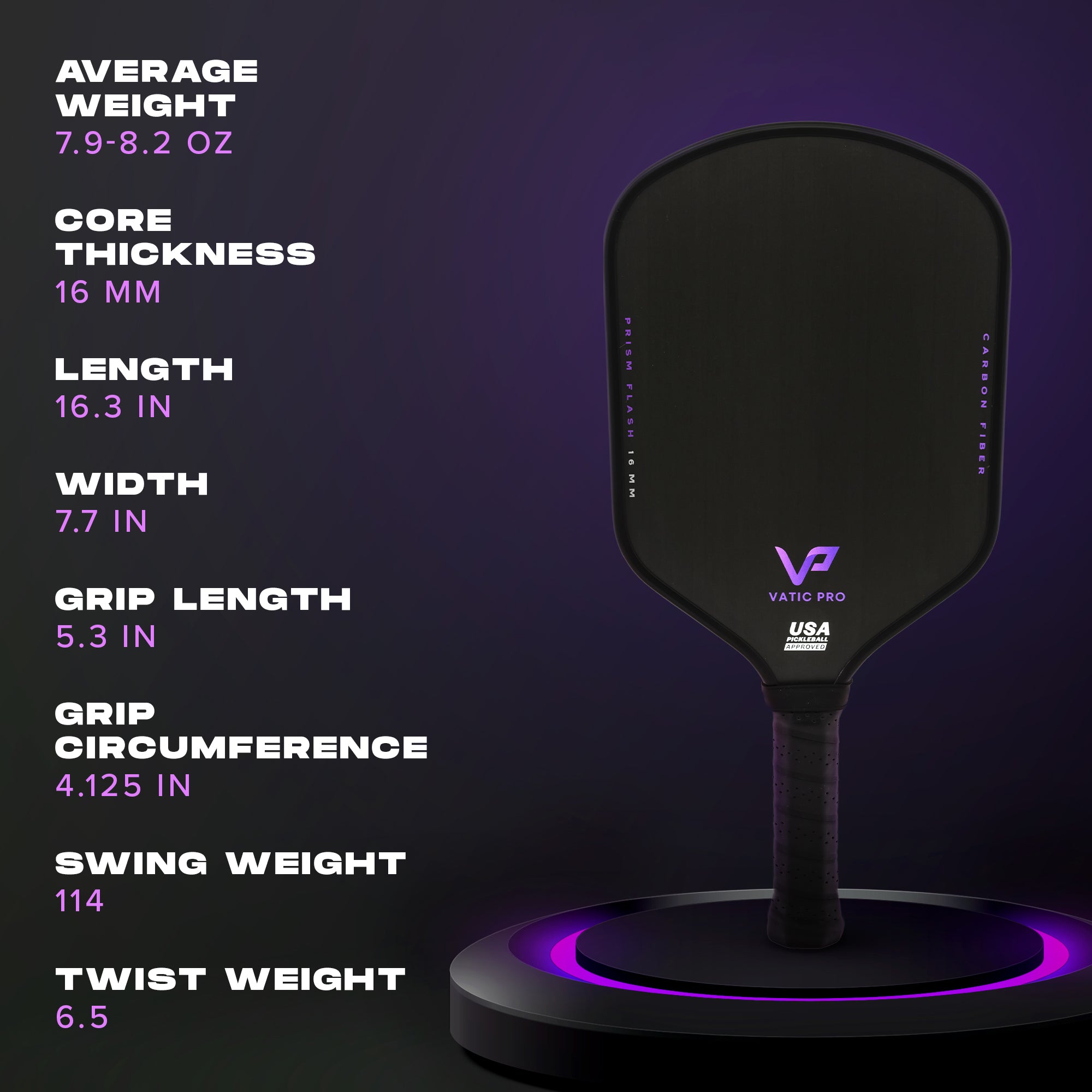 Prism Flash 16mm Vatic Pro7.9 oz · 16 mm · T700 carbonSee priceVatic Pro
The prices above are checked automatically at each store and may have changed since the last check. The price that counts is the one shown on the store's website at checkout. We may earn a commission on purchases made through store links, at no extra cost to you.