


 Brasil
 Canada
 United Kingdom
 Australia
 Netherlands
 France
 España
 Italia
 السعودية
7 best padel rackets for beginners in 2026
Round, soft, fiberglass and between 345 and 360 g: the padel rackets that help beginners the most, with light options and options for women players.
Updated on 10/07/2026
On this page
- 1.What a beginner padel racket needs
- 2.The 7 best padel rackets for beginners in 2026
- 3.Why the round shape is right for starting
- 4.Soft rubber: soft EVA, foam and the slow ball
- 5.Fiberglass or carbon to start?
- 6.Weight of 345 to 360 g: neither too light nor too heavy
- 7.Light rackets and options for women
- 8.Comparison of the round starter rackets
- 9.Most common buying mistakes among beginners
- 10.When to replace your first racket
- 11.Care that makes your first racket last longer
- 12.Frequently asked questions
- 13.Verdict
If you are about to buy your first padel racket, look for four things: a round shape, a soft core (soft EVA or foam), a fiberglass face and a weight between 345 and 360 g. That combination puts the sweet spot in the center of the head, makes the ball come off without effort and forgives the crooked hits every beginner makes in the first weeks. Below are the 7 best padel rackets for beginners in 2026, with the reason for each pick.
What a beginner padel racket needs
Before the models, it is worth understanding what really matters at this stage. A beginner does not need power: a beginner needs the ball in play, comfort and a racket that does not punish mistakes.
- Round shape. The sweet spot is in the center and the racket has more usable area in the lower part of the head, where defensive balls land.
- Low or neutral balance. Weight closer to the handle keeps the hand quick to react to the ball coming off the wall.
- Soft core. Soft EVA or foam lets the ball come off even when the stroke is short and unaccelerated.
- Fiberglass face. More flexible than carbon, it returns energy on slow balls and is more comfortable.
- Weight of 345 to 360 g. Enough to give stability at impact without tiring the arm in an hour and a half of play.
Everything that departs from this, such as diamond shapes, high-stiffness carbon and hard rubber, was designed for players who already hit the center of the face often.
The 7 best padel rackets for beginners in 2026
The 7 best padel rackets for beginners in 2026
- 1
- Weight
- 355 g
- Shape
- Round
- Face
- Fiberglass
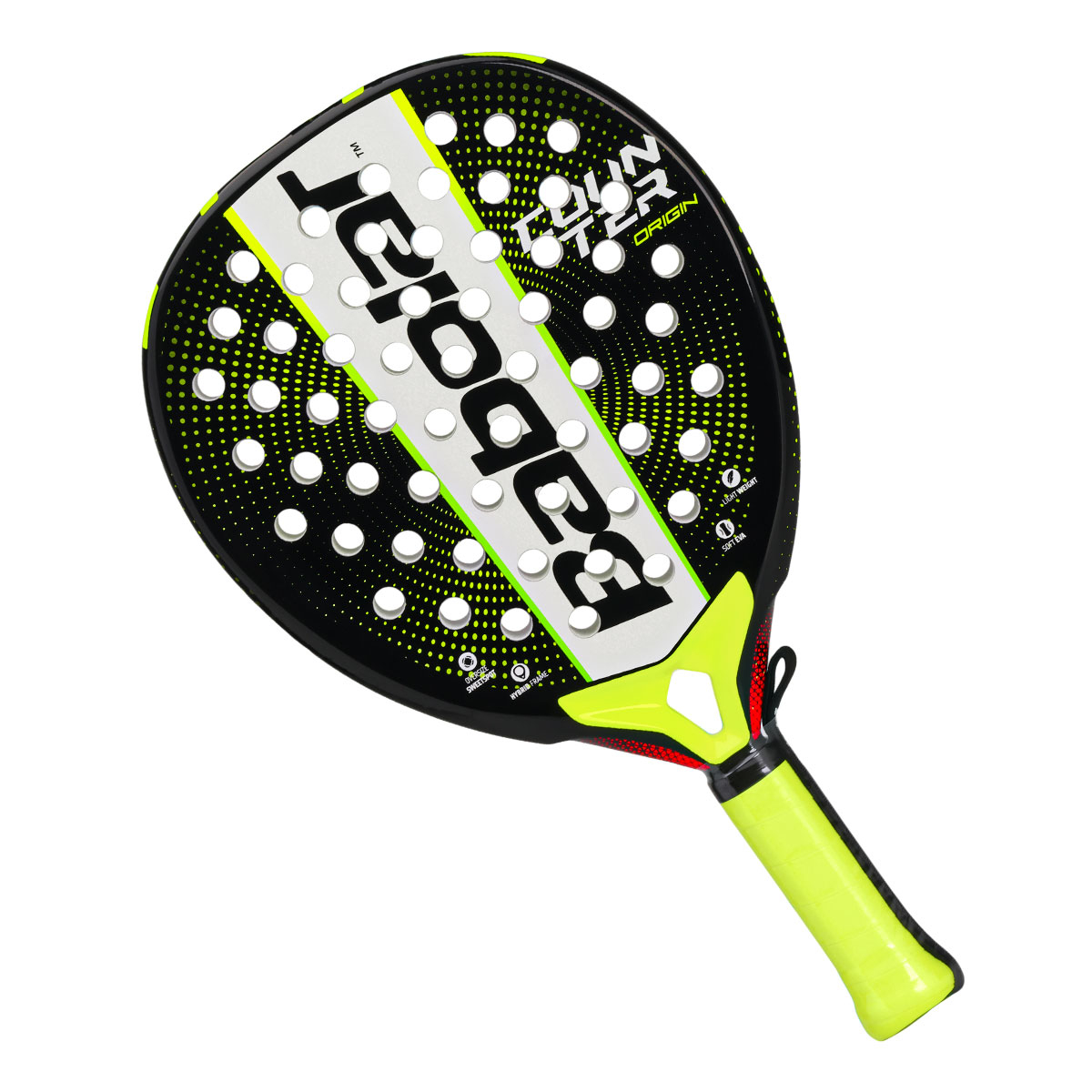
One of the starter rackets with the most active offers. Large round, about 355 g, 260 mm balance, fiberglass face and EVA Soft core. The frame mixes carbon and fiberglass. The surface is smooth, with no texture for spin, and the large head usually forgives off-center hits more.
- 2
- Weight
- 355 g
- Shape
- Round
- Face
- 3K fiberglass
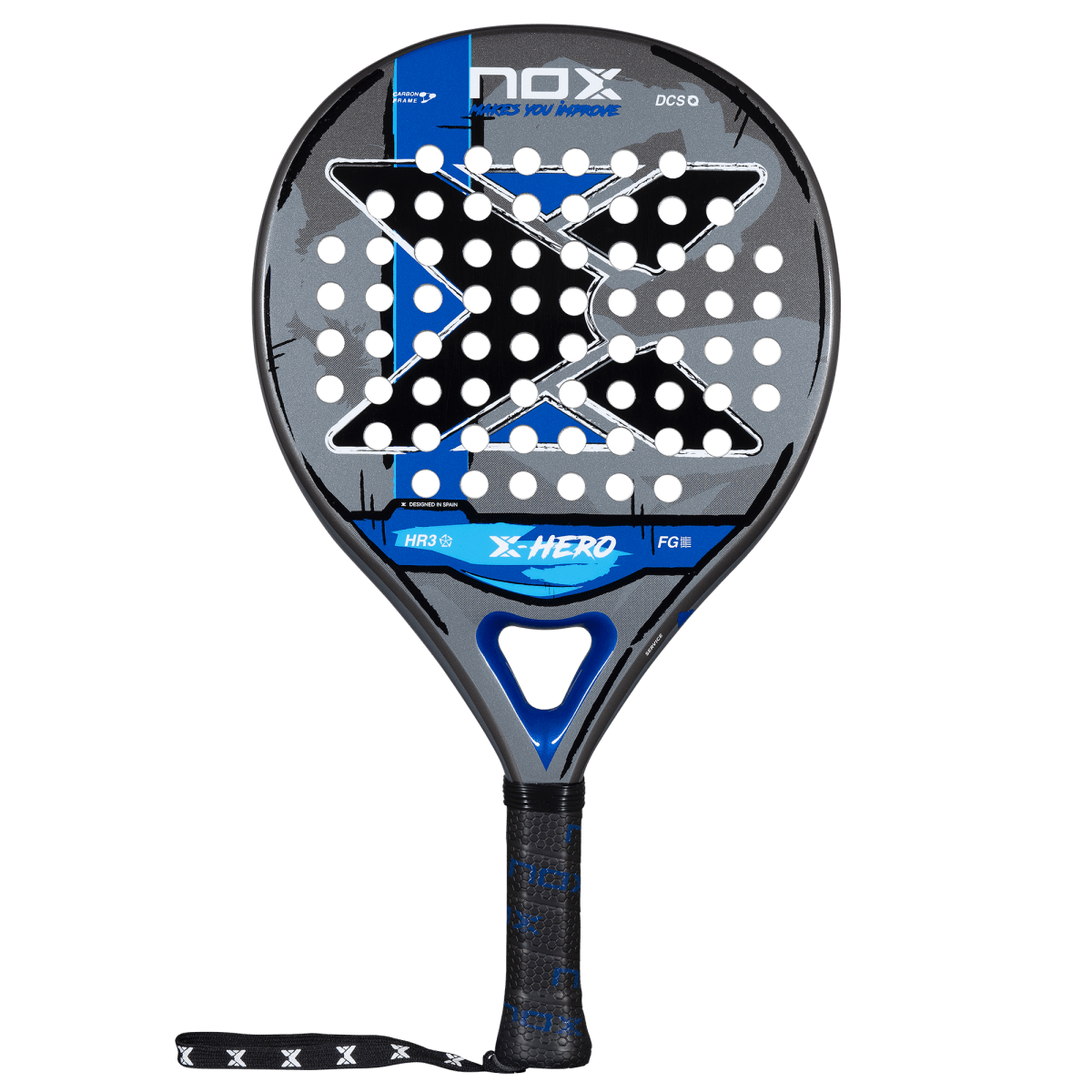
350 to 360 g round with 3K fiberglass faces and an HR3 White EVA core with a soft feel. The carbon frame gives resistance to knocks against the glass. The average of buyer reviews on Amazon is high.
- 3
- Weight
- 352.5 g
- Shape
- Round
- Face
- Fiberglass
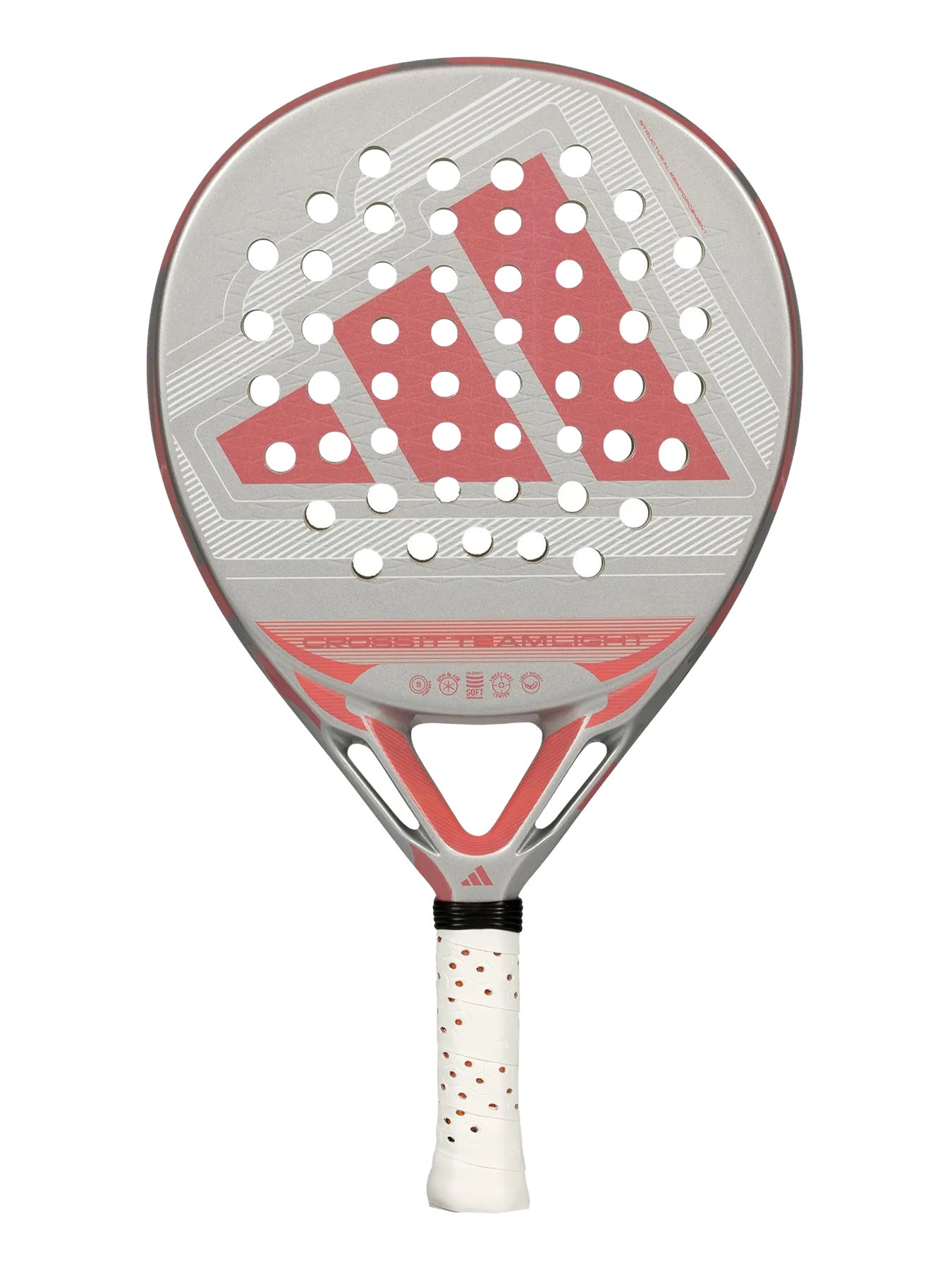
345 to 360 g round, all fiberglass, with an EVA Soft Performance core and a rough surface. The roughness helps players who already want to learn to slice the ball on the bandeja. Light and soft, it is a good option for women players.
- 4
- Weight
- 355 g
- Shape
- Round
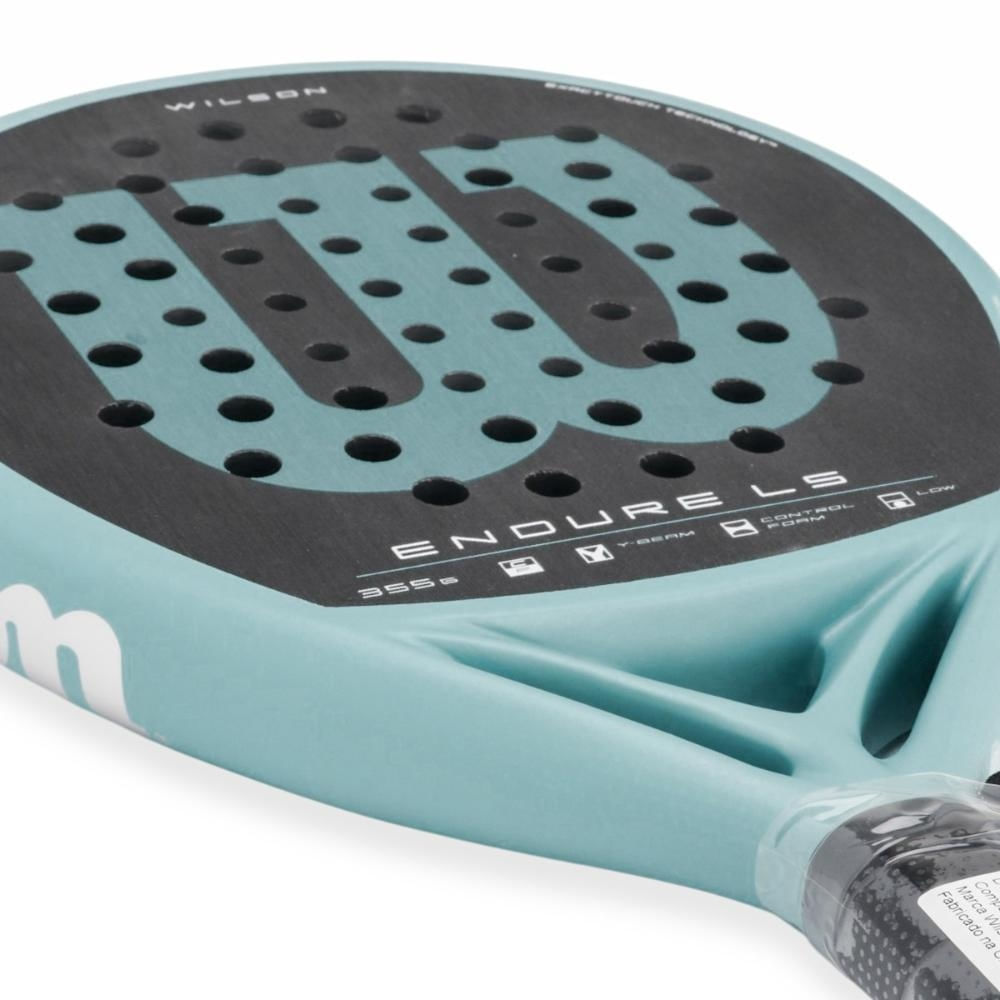
Light version of the Endure control line, at 355 g with a low balance of 255 mm. The face mixes fiberglass and carbon, and the Control Foam core has dual density. A mixed face usually keeps up with your progress for longer than an all-fiberglass face.
- 5
- Weight
- 355 g
- Shape
- Round
- Face
- Polyglass
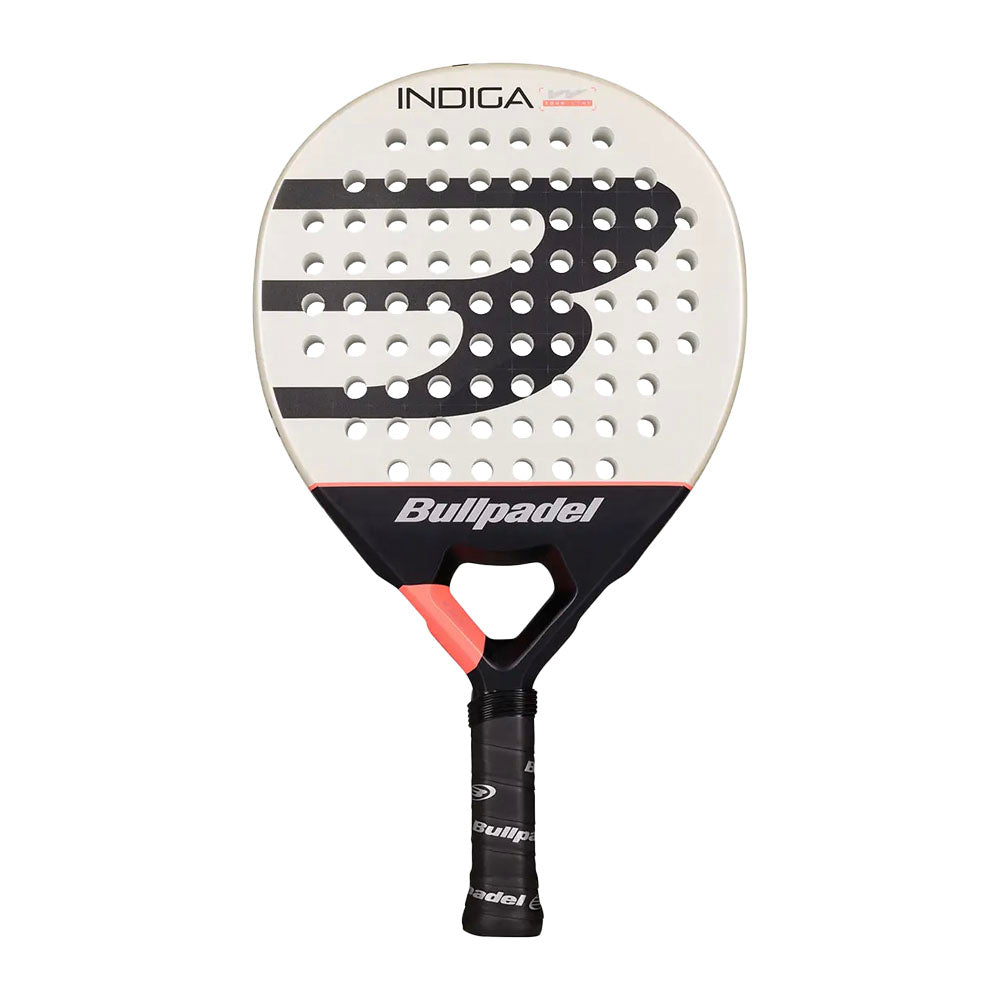
Same construction as the Indiga CTR, at 350 to 360 g and with its own look. Round, soft and low balance. It has a good average of buyer reviews.







The rackets above were chosen by the level indicated on the spec sheet, by the RR Score and by how easy it is to find an offer. To see all the options for the sport, the padel catalog lets you filter by level.
Why the round shape is right for starting
In the first weeks, almost every ball you hit is a defensive one: the ball bounces, hits the back glass and comes back. You have to meet it low, close to your body, often late.
The round racket helps at this moment for two reasons. First, the sweet spot is in the middle of the head, not high up, so a ball that hits a little below the center still comes off with direction. Second, the balance is usually low, which keeps the head light to rotate the wrist on the wall exit.
Diamonds and teardrops do the opposite: they put weight and area high up to boost the overhead shot. For someone who does not yet arrive well positioned on the smash, that only increases errors. The difference between the shapes is detailed in the guide round, teardrop or diamond.
Soft rubber: soft EVA, foam and the slow ball
The core is the layer of rubber between the two faces. It defines how the ball comes off the racket.
Soft EVA is a low-density rubber. It deforms more on impact and returns energy even when the stroke is slow. For the beginner, who still hits with little acceleration, this means the ball reaches the other side without effort.
Foam is an even more elastic foam. It has a similar effect, with a slightly more "spongy" feel. Brands such as Head and Wilson use their own names, such as Soft Foam and Control Foam.
Hard EVA, the hard rubber, does the opposite: it only returns energy when the stroke is fast. On slow balls, it feels as if the racket "swallows" the ball. That is why competition rackets frustrate beginners.
Good to know
Names such as SoftEVA, HR3 White EVA, EVA Soft Performance and Control Foam are trade names for soft or medium-density rubbers. In practice, what matters is that the spec sheet indicates a soft feel or low density. Be wary of starter rackets that do not list the core.
Fiberglass or carbon to start?
The face is the blade that receives the ball. The two most common materials are fiberglass and carbon fiber, sometimes mixed.
| Characteristic | Fiberglass | Carbon |
|---|---|---|
| Flexibility | Higher, returns the slow ball | Lower, stiffer |
| Power off a short stroke | Easy | Requires acceleration |
| Precision on fast balls | Lower | Higher |
| Comfort on the arm | Higher | Varies, generally lower |
| Price range | Entry and intermediate | Intermediate and top of the line |
For the first year of padel, fiberglass is the right choice. Mixed faces, such as the Wilson Endure LS's, or ones with carbon reinforcement in the frame, as on the Indiga and the Counter Origin, are a good middle ground: they gain resistance without losing the soft feel.
Weight of 345 to 360 g: neither too light nor too heavy
There is a myth that a beginner needs the lightest racket possible. It is not quite so.
Very light rackets, below 340 g, become unstable when the ball comes hard from the opponent: the head twists in the hand and the stroke comes out crooked. In addition, a light racket absorbs less shock, and part of the vibration goes to the arm.
Rackets above 365 g, on the other hand, tire the shoulder and slow the reaction on fast balls. The 345 to 360 g range balances the two for most adults.
The exception is players with little strength, those returning from injury or teenagers. In that case, an ultralight such as the Nox AT10 Genius Ultra Light, at 310 to 325 g, makes sense.
Light rackets and options for women
There is no rule that separates men's rackets from women's. What brands call a women's model is usually a lighter version, sometimes with a lower balance. If you have less arm strength, these rackets work, regardless of gender.
Light padel rackets for beginners and women players



The Nox X-One Silhouette has an oversize round shape, and a larger head usually widens the usable area. The Babolat Counter Vertuo 2.6 weighs about 350 g and uses the Soft Fiber face, a flexible fiberglass, with a textured surface for those who want to learn to put spin on the ball. The Head Zephyr 2023 weighs 350 g, has a 490 cm² head and still appears at several stores.
Comparison of the round starter rackets
Four round starter rackets side by side
3 racquets: swipe sideways to see them all1–2 of 3 →
Highlighted: what differs between the racquets. In bold: the best value in the row.
All four have the same basic profile. What changes:
- Surface. The Adidas is rough and helps with spin. The other three are smooth.
- Balance. The Indiga and the Adidas have a low balance; the X-Hero is neutral. In general, a low balance keeps the head lighter to react on defense, and neutral puts a little more mass into the hit.
- Frame. Indiga and X-Hero use a carbon frame; the Counter Origin has a hybrid frame. A carbon frame tends to withstand knocks against the glass better, which are common at this stage.
Strengths
- + Round shape with a central sweet spot
- + SoftEVA core with a soft feel
- + Low balance, which keeps the head light on defense
- + Carbon frame
Drawbacks
- − Low balance and soft core are not designed for the smash
- − Smooth surface, with no texture for spin
- − Falls short when the player reaches the intermediate level
Most common buying mistakes among beginners
Choosing by your idol's racket. The model signed by a professional is usually a diamond, stiff and heavy. The same brand almost always has a starter version with a similar look, such as the Nox AT10 Genius Ultra Light.
Buying the cheapest one in the store. Very cheap rackets, with no spec sheet, sometimes use rubber that hardens quickly and a fragile frame. Prefer a starter model from a known brand, with the core and face listed.
Jumping straight to carbon. The idea of buying a better racket so you do not have to replace it soon seems economical, but it slows your progress. The stiff face punishes center errors and takes power away from short strokes, which are the majority at the start.
Ignoring your own body. Players with a history of shoulder or elbow pain should prioritize a soft core and medium weight, even if that means a racket with fewer features.
Not testing. Many schools and clubs lend rackets in lessons. Playing once or twice with different models helps you notice whether you prefer low or neutral balance before buying.
When to replace your first racket
A starter racket lasts, on average, until you start feeling that the overhead ball does not run. The most common signs:
- You already arrive in position for the bandeja and want it to come off heavier.
- You start hitting the víbora and the ball has no speed.
- You feel the racket is "mushy" on hard volleys, with the head giving way.
- You have played more than twice a week for several months.
At that point, the next step is usually a teardrop with a mixed face or a round carbon racket. The guide to the best padel rackets for intermediates shows how to make that transition without skipping steps.
Care that makes your first racket last longer
- Use the wrist strap. Besides being mandatory under the rules, it keeps the racket from flying off and hitting the glass or your partner.
- Put on frame protector tape. It is an adhesive tape that protects the edge from knocks on the floor and the wall, common in the learning phase.
- Do not leave the racket in the car in the sun. Extreme heat can affect the resin and the rubber of the core.
- Replace the overgrip often. A worn grip slips and makes you squeeze the handle too hard, which tires the forearm.
If you are still in doubt between two models, the Find your racquet tool crosses your level with your playing style and suggests options from the catalog.
Frequently asked questions
What is the best padel racket for beginners?
The Bullpadel Indiga CTR 2026 is the best choice in our selection: round, soft, with low balance and a carbon frame. The Babolat Counter Origin and Nox X-Hero are very similar alternatives, and the choice between them can be made based on the offer available.
What is the ideal padel racket weight for a beginner?
Between 345 and 360 g for most adults. Below that the racket becomes unstable against hard balls; above it, it tires the arm. Players with little strength or returning from injury can use models of 310 to 330 g.
Can a beginner use a carbon racket?
They can, but it is rarely the best idea. Carbon is stiffer and only returns the ball well when the stroke is accelerated. A fiberglass face, or a mixed one with carbon reinforcement in the frame, gives more power off the face and comfort in the first months.
Is a women's padel racket different?
In general, it is the same construction with a lower weight, near 350 g, and sometimes a lower balance. There is no difference in the rules. Anyone with less arm strength can use one, and many women players adapt well to standard-weight rackets.
Smooth or rough padel racket for a beginner?
Both work. A rough surface helps put spin on the ball, which will be useful when you start hitting the bandeja and sliced wall exits. For the first months, the difference is small, and the shape and core weigh much more in the choice.
Which padel racket should I buy for a child?
Children should use junior rackets, which are lighter and sometimes thinner than adult ones. The Nox AT10 Genius JR 2026, for example, weighs about 312 g and is 30 mm thick. Heavy adult rackets can overload the arm of someone who is still growing.
Verdict
Want to understand each spec before buying? The guide how to choose a padel racket explains weight, balance, core and face in detail, and the padel racket comparison tool puts any model side by side.
Where to buy the racquets in this guide
- Counter Origin Babolat355 g · Round · FiberglassSee priceAmazon
- X-Hero 2026 NOX355 g · Round · 3K fiberglassSee priceAmazon
- Cross It Team Light 3.5 2026 Adidas Padel352.5 g · Round · FiberglassSee pricePadel USA
- Endure LS V1 Wilson355 g · Round · Fiberglass and carbon (Comfort Flex)See pricePadel USA
- Indiga W 2026 Bullpadel355 g · Round · PolyglassSee pricePadelPadel
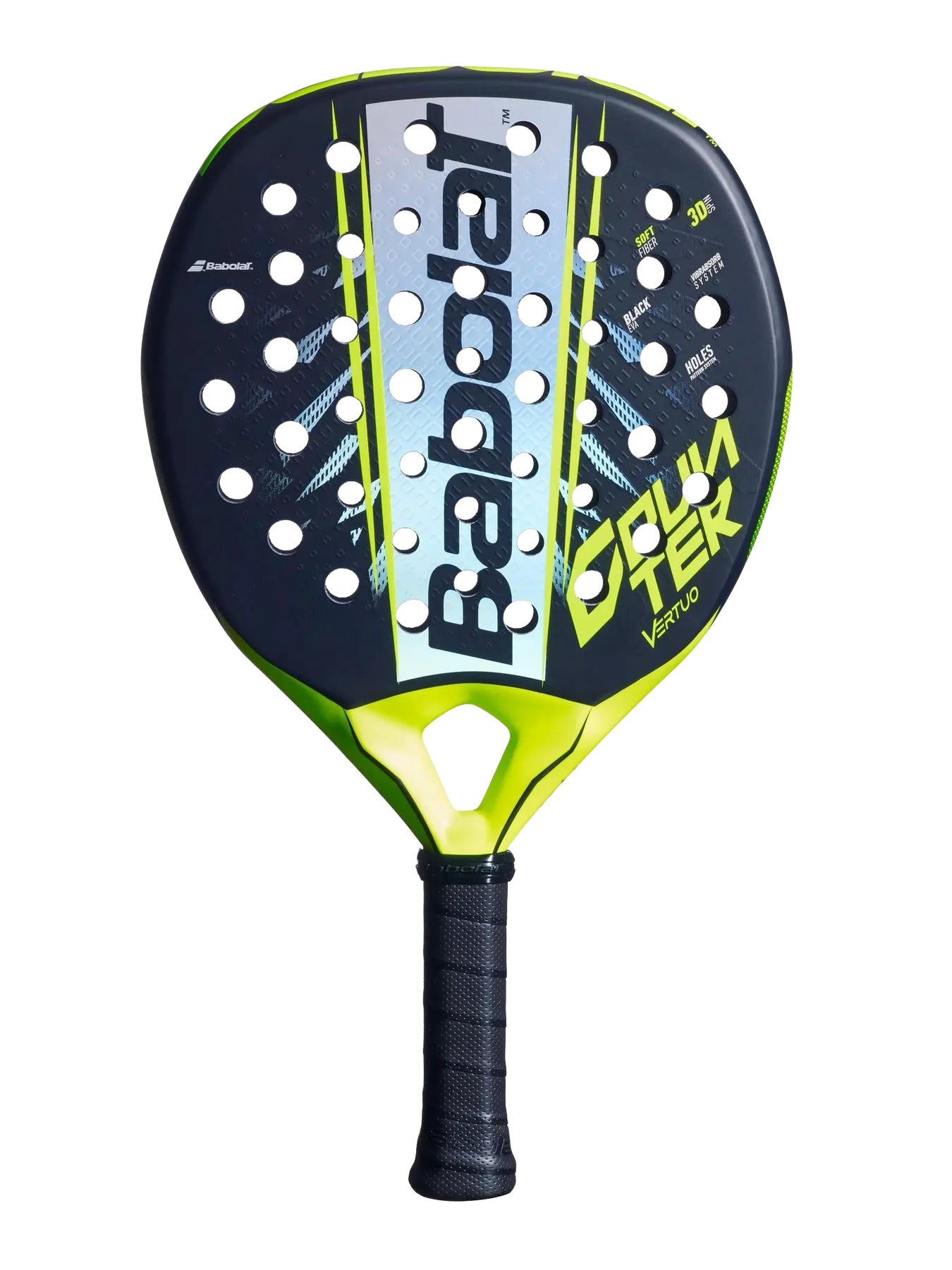 Counter Vertuo 2.6 2026 Babolat350 g · Round · Fiberglass (Soft Fiber)See priceAmazon
The prices above are checked automatically at each store and may have changed since the last check. The price that counts is the one shown on the store's website at checkout. We may earn a commission on purchases made through store links, at no extra cost to you.