


 Brasil
 Canada
 United Kingdom
 Australia
 Netherlands
 France
 España
 Italia
 السعودية
Soft, Medium or Hard EVA Rubber in Padel: Which Core to Choose
What rubber density changes in a padel racket, how to read the commercial names of the core and why heat, cold and time in use also count.
Updated on 10/07/2026
On this page
- 1.Soft, medium or hard EVA: the reference chart
- 2.What density changes, explained through the stroke
- 3.How to read the rubber's name on the spec sheet
- 4.Same mold, different core
- 5.Examples of each density in the catalog
- 6.Heat, cold and your racket's rubber
- 7.How long the core lasts
- 8.Myths and facts about padel rubber
- 9.Decision tree: which rubber to choose
- 10.Frequently asked questions
Soft, medium or hard EVA rubber in padel is the choice of core density, the filling between the two faces. Soft EVA deforms more and returns the slow ball with little effort; hard EVA deforms less and only responds well to an accelerated stroke, with more control; medium, almost always made of layers, sits between the two. The right choice depends less on your level and more on the speed of your stroke, the climate you play in and how much you play.
Soft, medium or hard EVA: the reference chart
| Soft EVA (low density) | Medium or multilayer EVA | Hard EVA (high density) | |
|---|---|---|---|
| Ball exit on a slow stroke | Easy, trampoline effect | Good | Little, the ball "dies" |
| Ball exit on a fast stroke | Good, but less precise | Good | Very good and precise |
| Directional control on attack | Lower | Medium | Higher |
| Feel at impact | Soft, muffled | Intermediate | Dry, firm |
| Vibration to the arm | Tends to be lower | Intermediate | Tends to be higher |
| In the cold | Gets firmer, still playable | Hardens | Hardens a lot |
| In the heat | Gets even softer, ball can go long | Softens | Gains a little ball exit |
| Loss of response with use | Tends to be faster | Intermediate | Tends to be slower |
| For whom | Those who hit with little acceleration, those who defend a lot | All-rounders | Those who accelerate hard and want control on attack |
The guide to how to choose a padel racket presents the core together with weight, balance and face. Here the subject is only the rubber: what density does, how to read the commercial names and what happens to it over time.
What density changes, explained through the stroke
Think of the core as a mattress between two sheets. When the ball hits, the face sinks a little and the rubber underneath it is compressed.
- In soft EVA, the rubber gives easily, even with a slow ball. It stores that deformation and returns it as a push: that is the trampoline effect. Great coming off the wall, on the defensive lob and for those who do not yet accelerate their arm.
- In hard EVA, the rubber barely gives with a slow ball. The energy of the stroke goes into the ball without a "mattress," so it leaves at the speed you put on it, no more and no less. With a fast stroke, the rubber finally works and returns energy with direction. Hence the reputation for "power with control."
- In medium, brands usually stack layers: firmer rubber near the faces and softer in the middle, or the reverse. The idea is to get some help on the slow stroke without losing firmness on the hard stroke.
That is why the phrase "hard EVA gives more power" is only half true. It gives more power to those who accelerate and less to those who do not.
How to read the rubber's name on the spec sheet
Each brand names its own core, and the names rarely state the density. The chart translates the names that appear in the padel racket catalog, based on what the spec sheets themselves say.
| Name on the spec sheet | Brand | What the spec sheet indicates |
|---|---|---|
| EVA Soft Performance | Adidas | Low density, comfortable touch |
| EVA Soft Energy | Adidas | Intermediate density |
| EVA High Memory | Adidas | High density, on the Metalbone HRD and the Cross It CTRL |
| HR3 Soft EVA and HR3 Hard EVA | Nox | Soft and hard versions of the same mold |
| HR3 White EVA | Nox | Soft touch, per the spec sheet of the entry-level X-Zero |
| MLD Black EVA | Nox | Intermediate to firm touch |
| MultiEva | Bullpadel | Multilayer: double or triple density depending on the model |
| Hard EVA | Bullpadel | Firm, dry touch |
| CloudEva | Bullpadel | Soft, in the Cloud versions |
| X-EVA | Babolat | Multi-density |
| Black EVA | Babolat | More elastic rubber |
| Power Foam and Control Foam | Head and Wilson | Foams; Wilson's Control Foam has dual density |
| Custom EVA | Lõk | Varies: soft on the Be Flow, medium on the Carb-On Flow, high density on the Maxx Hype |
| EVA Pro High Density | Drop Shot | High density, firm |
| EVA Soft (low density) | Drop Shot | Soft, in the Comfort, Control and Soft lines |
| Dual Foam | Kuikma | Dual-density EVA |
| EVA Hard | Siux | Firm, for those who accelerate |
Note Lõk: the same commercial name appears with different densities in different models. It is the best argument for reading the full description and not relying on the name alone. When the store gives nothing beyond "EVA," each racket's page on Racquet Rank usually carries the detail.
Same mold, different core
The cleanest way to understand the core is to compare rackets where only it changes. The Bullpadel Neuron 02 is a good example: the 2026 version uses MultiEva and the 2027 uses Hard EVA, with the same X-Tend Carbon 3K face, the same shape and the same 365 to 375 g range.
Bullpadel Neuron 02: MultiEva vs. Hard EVA




Highlighted: what differs between the racquets. In bold: the best value in the row.
The 2027's spec sheet describes a "firm and dry" touch and warns that it demands technique to generate speed. The 2026's talks about quickness in defense and transitions. It is exactly the difference in the chart at the start: the hard one rewards those who accelerate, the multilayer helps more on transition balls.
Adidas does the same with the Metalbone. The 3.5 version uses EVA Soft Performance; the HRD uses EVA High Memory, high density. Face, shape and weight system are the same.
According to the spec sheets, the Metalbone 3.5 has a touch "more comfortable than the look suggests," and the HRD returns a lot of energy on fast strokes but demands technique on slow balls. For an advanced attacker, the choice between the two is almost entirely about the core. The guide to power padel rackets for advanced players shows other options in this profile.
When the brand changes the whole package
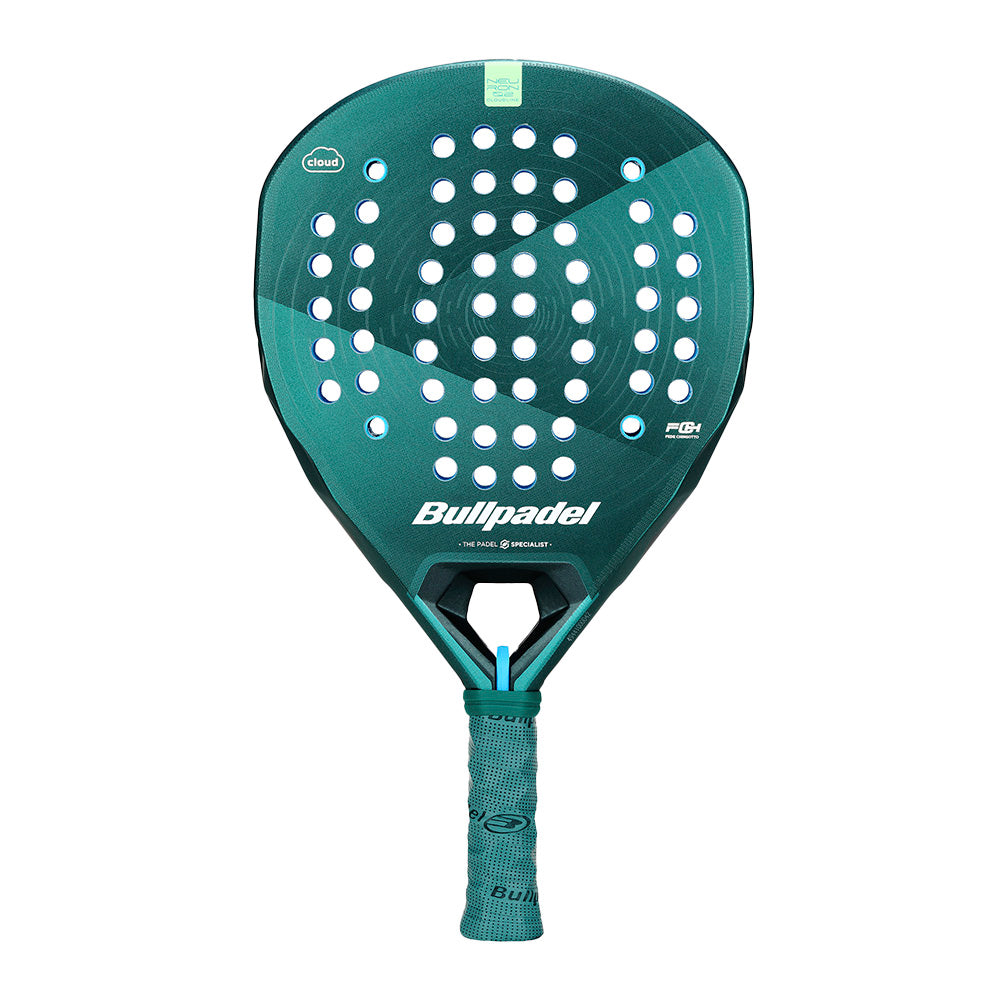
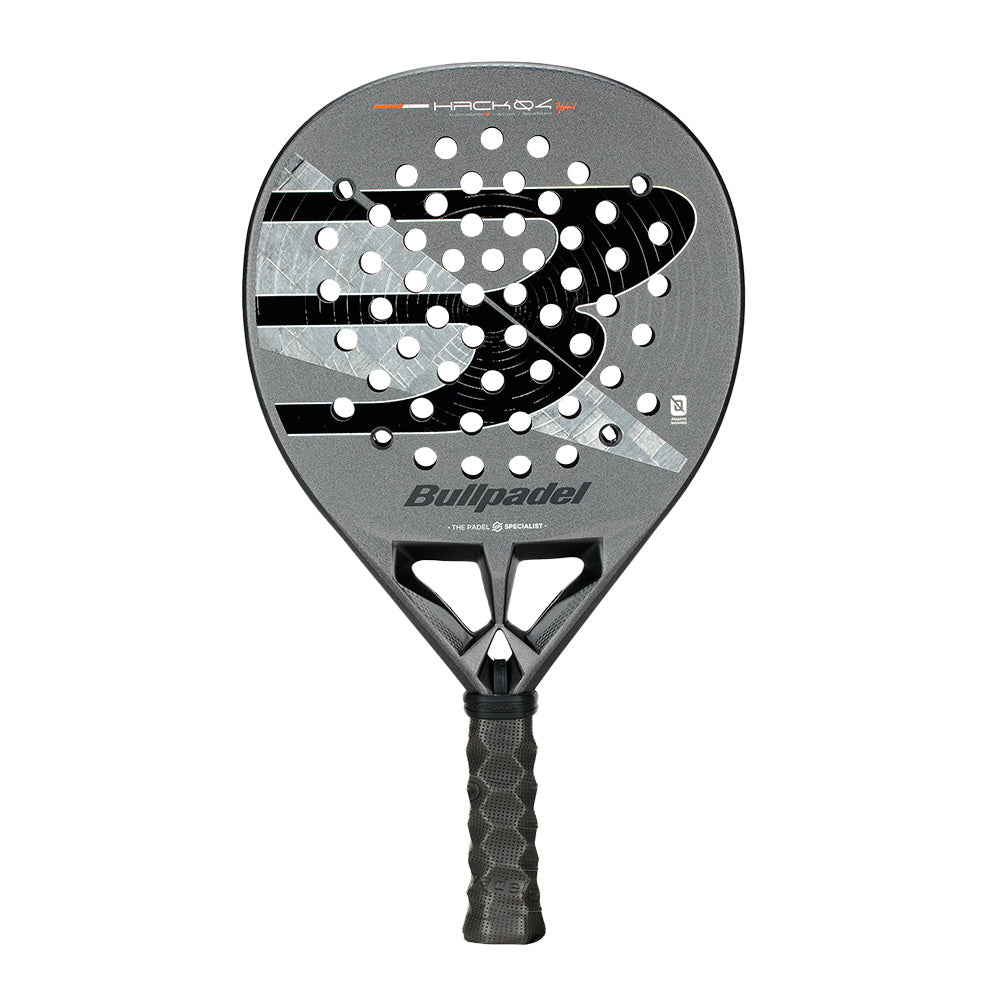
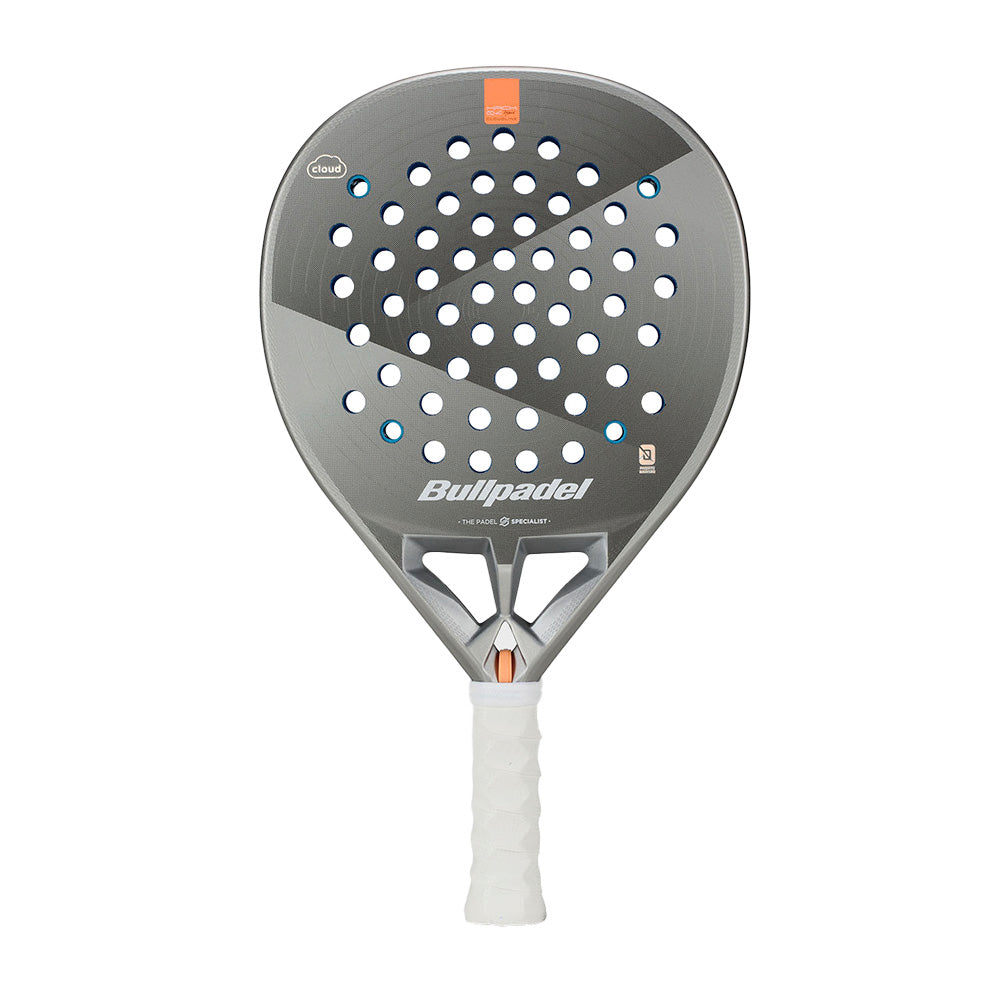
In the Cloud versions, Bullpadel changes core and face at the same time. The Hack 04 Hybrid uses MultiEva with A-18K aluminized carbon; the Hack 04 Hybrid Cloud uses CloudEva with an Elastic Fiber face.
Hack 04 Hybrid vs. Hack 04 Hybrid Cloud
Highlighted: what differs between the racquets. In bold: the best value in the row.
Here the difference in feel is bigger, because face and core pull in the same direction. It is the option for those who like a mold but want the truly soft version.
Examples of each density in the catalog
Padel rackets with soft, medium and hard cores

- Weight
- 365 g
- Shape
- Teardrop
- Face
- Elastic Fiber




- Soft: Drop Shot Flame Soft 2026, with Soft EVA and a 12K carbon face, and Bullpadel Neuron 02 Cloud, with CloudEva.
- Medium or multilayer: Kuikma Control Pro, with a two-density Dual Foam, and Lõk Carb-On Flow Gen 2, with medium-density Custom EVA.
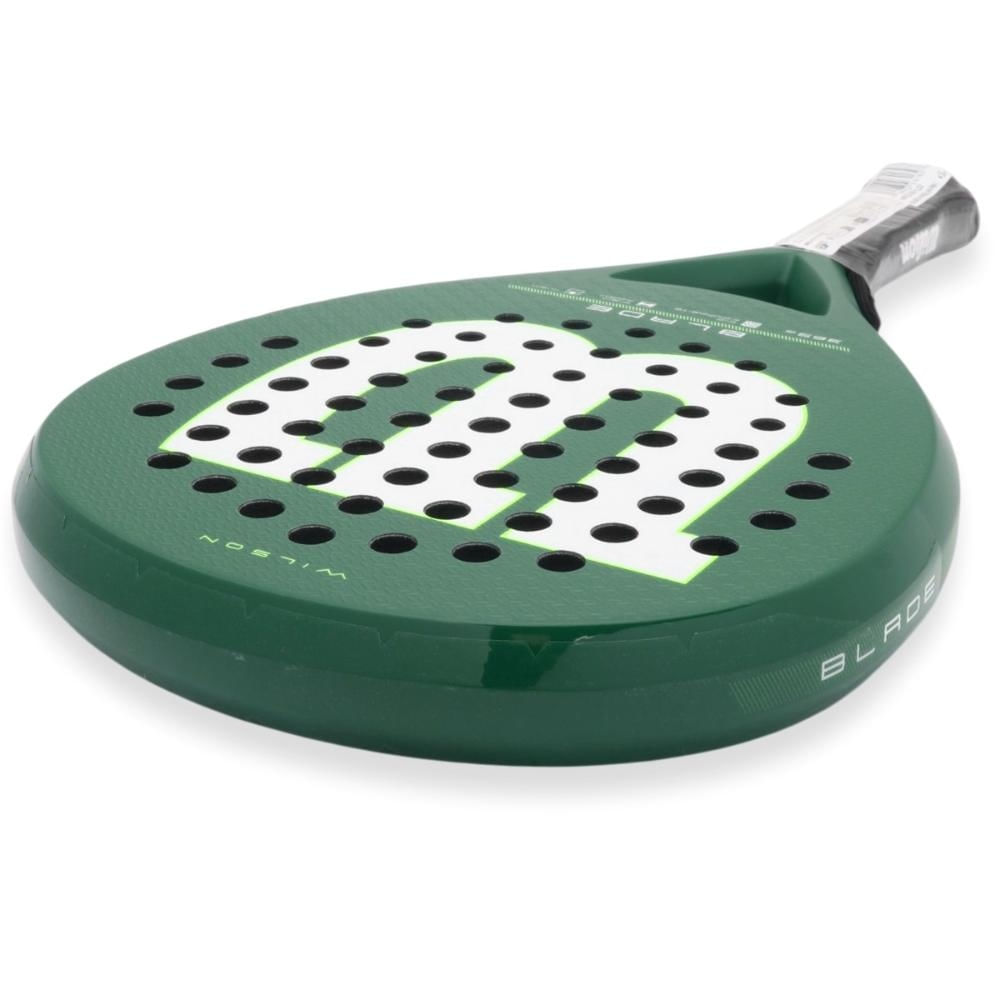
- Firm and hard: Wilson Blade V4, with EVA Firm, and Siux Electra Stupa Pro ST3, with EVA Hard.
Heat, cold and your racket's rubber
Rubbers change behavior with temperature. In the cold, EVA gets stiffer; in the heat, softer. The ball does something similar: in the heat it tends to come off livelier, in the cold, slower.
This has practical consequences, because the same racket may be played on a summer evening on an outdoor court and on a winter night:
- Outdoor court in the heat. A soft core plus a lively ball can make the ball go long and hit the opponent's back glass. Those who play a lot in these conditions usually do well with medium or hard rubber.
- Cold night or winter. Hard EVA gets even harder and the ball slower. The feeling is of a "dead" racket on defense. A soft or medium rubber compensates.
- Indoor, climate-controlled court. The temperature varies little, and the choice goes back to depending only on your stroke.
Some manufacturers of aluminized faces claim the treatment makes behavior more stable as temperature varies. That is a brand claim, and the rubber is still the part that changes the most.
Tip
Do not leave your racket in the trunk of the car in the sun. Extreme heat is not good for the rubber or for the resin that glues the layers. A thermal racket bag, or simply taking the racket indoors, solves it.
How long the core lasts
Rubber is the part of the racket that "tires" the most. With every impact it is compressed and springs back; over time, it loses some of that ability to recover. Names like High Memory, high recovery and good memory, which appear on Adidas, Siux and Lõk spec sheets, speak precisely to this.
- Soft EVA tends to lose response sooner, because it deforms more with each stroke.
- Hard EVA tends to keep its feel for longer, but transmits more load on hard hits against the glass.
- Frequency weighs more than type. Those who play four times a week will notice the difference well before those who play once.
Signs of a tired core: the ball comes off lifeless even on well-hit strokes, the racket feels softer than when it was new and the sound of impact gets more muffled. When that happens, no adjustment is possible: it is time to replace it.
Myths and facts about padel rubber
"Hard EVA is for advanced players, soft EVA is for beginners." Half true. There are advanced-level rackets with a soft core, such as the Drop Shot Axion Comfort, and soft and hard versions of the same professional mold. The criterion is the speed of your stroke, not your level on paper.
"A soft core protects your elbow." It helps reduce vibration, but it is not treatment. Weight, balance and technique matter as much. If you feel pain, see a health professional before changing rackets.
"Foam is always softer than EVA." No. The Wilson Defy Pro uses Power Foam with a solid feel and is an attacking racket. Density matters more than the name of the material.
"The rubber does not matter if the face is carbon." It matters a lot. A 3K face over hard EVA can be drier than an 18K over soft EVA, as the guide to rackets for intermediate players explains.
Decision tree: which rubber to choose
- Does your defensive ball often land short? Yes: soft EVA. No: continue.
- Do you play mostly on outdoor courts, in the heat? Yes: consider medium or hard. No: continue.
- Do you finish many points from above with an accelerated stroke? Yes: hard. No: medium.
- Does your arm feel it after playing? Whatever the previous answer, move one notch toward the soft side and review weight and balance.
If you want the site to do the math for you, the Find Your Racket quiz takes style and level into account, and the padel racket comparison tool shows each model's core side by side.
Frequently asked questions
What is the difference between soft EVA and hard EVA in padel?
Soft EVA has low density, deforms more and returns the slow ball with little effort, with a soft touch. Hard EVA has high density, deforms little and only returns energy well on fast strokes, with more directional control and a dry touch.
Does hard EVA give more power?
Only for those who accelerate the stroke. With a fast ball, the hard rubber returns the energy precisely. With a slow stroke, it returns less than a soft rubber, and the ball seems to die on the racket.
What is medium or multilayer EVA?
It is a rubber of intermediate density or, more commonly, a core with layers of different densities, such as Bullpadel's MultiEva, Babolat's X-EVA and Kuikma's Dual Foam. The idea is to help on the slow stroke without losing firmness on the hard one.
Does temperature change a padel racket?
It does. In the cold the EVA gets stiffer and the ball slower; in the heat the rubber softens and the ball comes off livelier. Those who play a lot in the heat usually prefer a medium or hard core, and those who play in the cold, soft or medium.
What is the difference between EVA and foam?
They are two types of rubber used in the core. EVA exists in several densities and is the most common. Foam is a sponge-like material of a different composition, used by brands like Head and Wilson. There is soft foam and firm foam; density matters more than the name.
When should I replace a padel racket because of core wear?
When the ball starts coming off lifeless even on well-hit strokes, the racket feels softer than it used to and the sound of impact gets muffled. Soft cores tend to show this sooner, and those who play many times a week notice it earlier.
After the core, the other half of the feel is in the face. The guide to the padel racket face: carbon, fiberglass and roughness explains that layer.
Where to buy the racquets in this guide
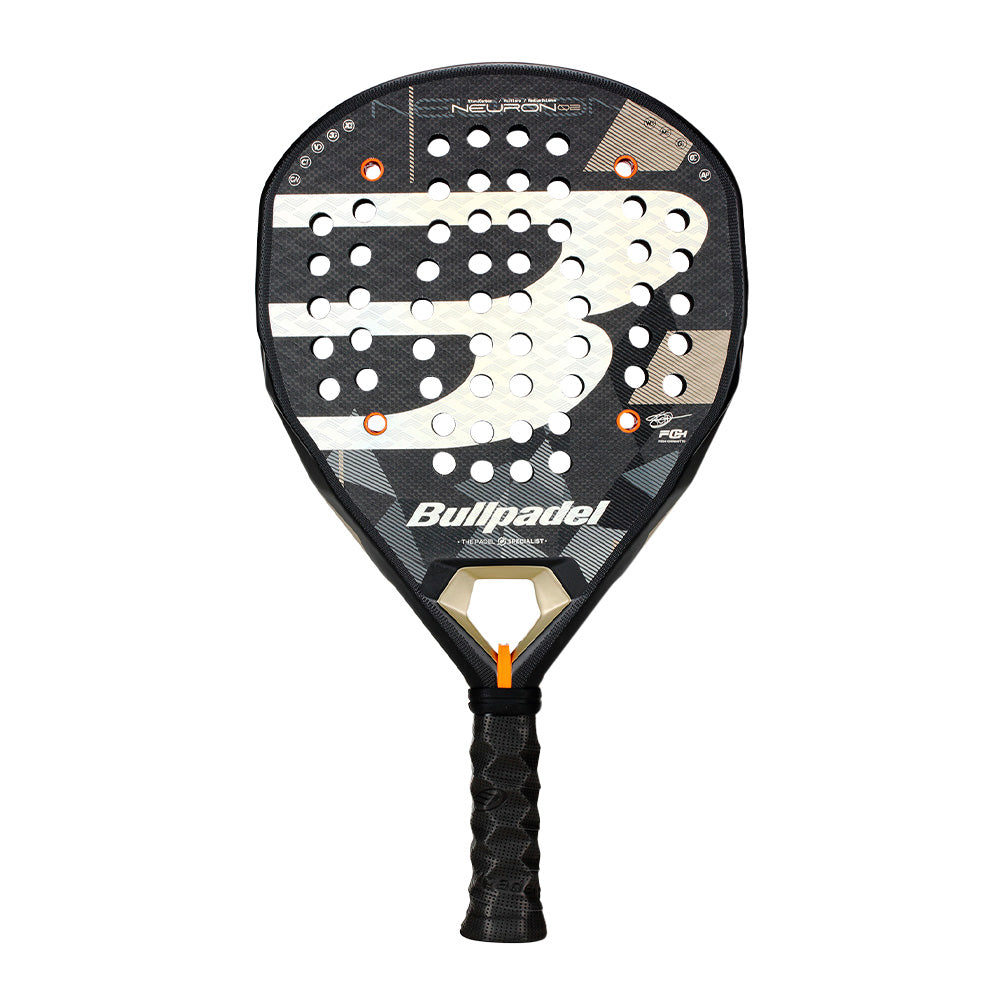 Neuron 02 2026 Bullpadel370 g · Hybrid · X-Tend Carbon 3KSee priceAmazon
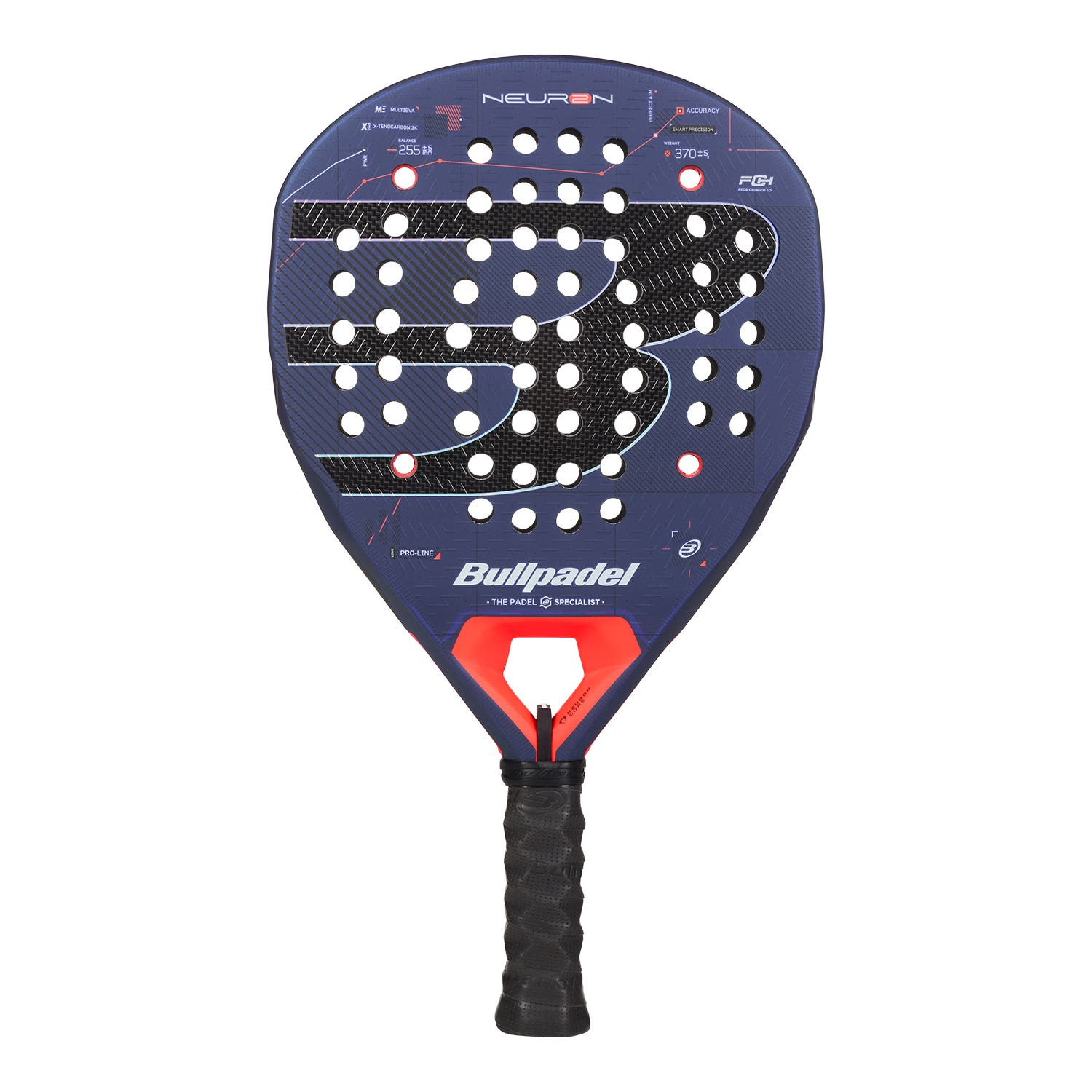 Neuron 02 2027 Bullpadel370 g · Teardrop · X-Tend Carbon 3KSee pricePadelPadel
 Hack 04 Hybrid 2026 Bullpadel370 g · Hybrid · A-18K aluminized carbonSee priceAmazon
 Hack 04 Hybrid Cloud 2026 Bullpadel370 g · Hybrid · Elastic FiberSee pricePadelPadel
- Neuron 02 Cloud 2026 Bullpadel365 g · Teardrop · Elastic FiberSee pricePadelPadel
- Blade V4 Wilson365 g · Teardrop · Carbon and fiberglassSee priceAmazon
The prices above are checked automatically at each store and may have changed since the last check. The price that counts is the one shown on the store's website at checkout. We may earn a commission on purchases made through store links, at no extra cost to you.