


 Brasil
 United States
 United Kingdom
 Australia
 Netherlands
 France
 España
 Italia
 السعودية
10 best badminton rackets for competition in 2026
Playing a tournament? The 10 professional-level badminton rackets for 2026 and what changes in competition: BWF rules, an identical backup racket, weight and string.
Updated on 2026-10-07
On this page
- 1.Before the ranking: the tournament player's checklist
- 2.The 10 best badminton rackets for competition
- 3.What the rules say about the racket
- 4.Professional-level specs: what changes on the spec sheet
- 5.Backup racket: why bring two identical ones
- 6.Weight tolerance between units: check at home
- 7.Allowed customization (and what crosses the line)
- 8.Tournament stringing
- 9.What top players use
- 10.Buying a tournament racket
For competition, the best badminton racket is the top version of the family you already master, bought in pairs and strung the same way. In a tournament, the spec sheet matters less than consistency: two rackets that respond the same, within the BWF rules and with the string you trained with.
This guide is for players who compete in ranking events, interclub matches or federation tournaments. It lists the 10 professional-level rackets that make sense in 2026 and covers what buying guides don't usually cover: what the rules allow, why you should have an identical backup racket, how to check the weight between two units, what customization is allowed and how to prepare your stringing for match day.
Before the ranking: the tournament player's checklist
- A top-tier racket from the family you already use. A tournament is no place to debut a new balance.
- Two identical units, same generation, same weight class and same grip.
- Weight and balance point checked at home, with a scale and a ruler.
- Same string and same tension on both, strung by the same professional.
- Identical customization on both: overgrip, protection tape and any extra weight.
- Rackets within BWF Law 4, which any factory model meets, as long as you don't invent accessories.
The 10 best badminton rackets for competition
The 10 best badminton rackets for competition in 2026
- 1
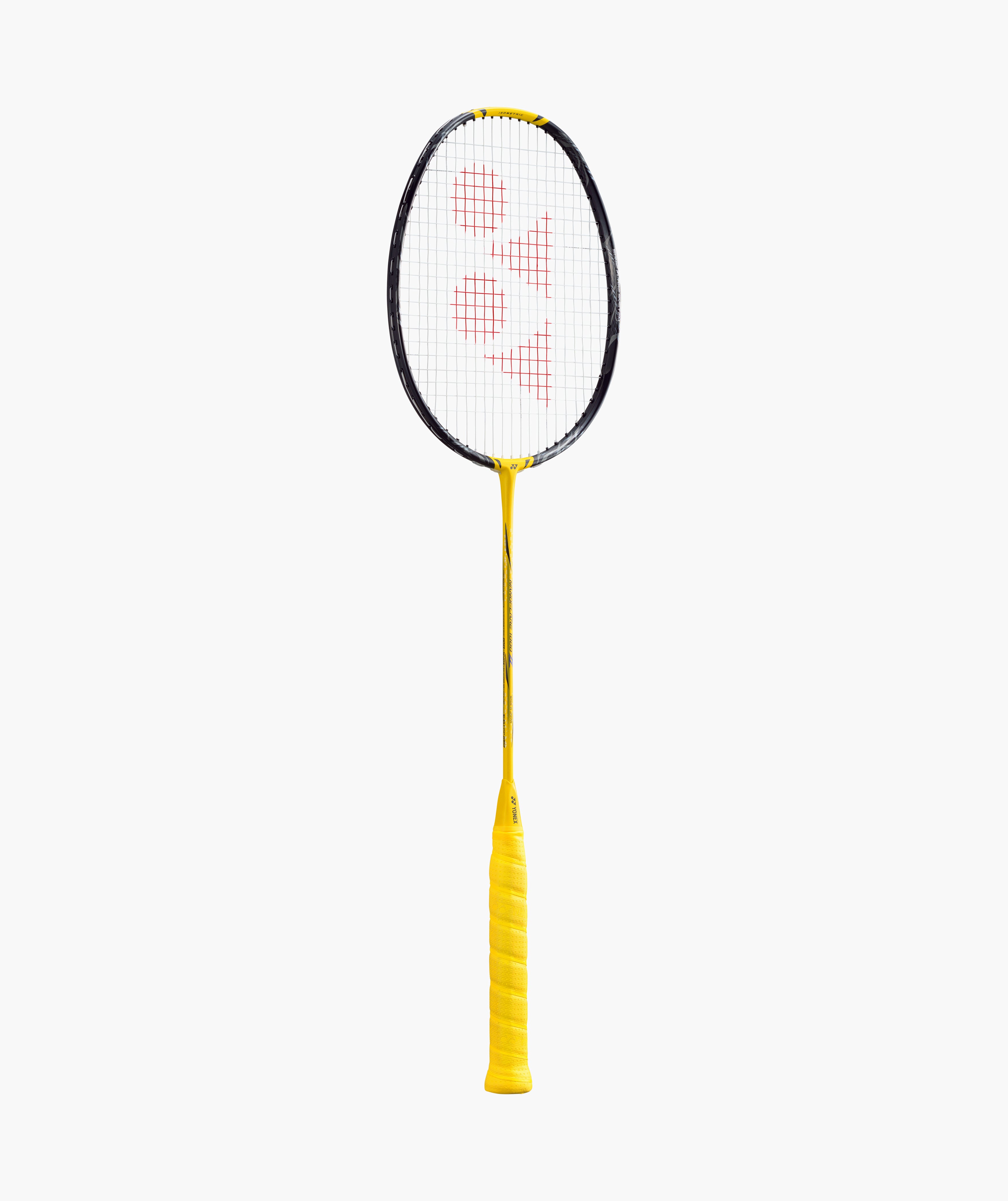
- Weight class
- 4U
- Balance point
- Lighter head
- Flexibility
- Extra stiff
Head-light, extra stiff shaft and a compact frame with Nanometric DR, M40X and EX-Hyper MG. According to Yonex, it is the only head-light racket with proven increased shuttle acceleration. For players who play at speed and have a very fast arm.
- 2
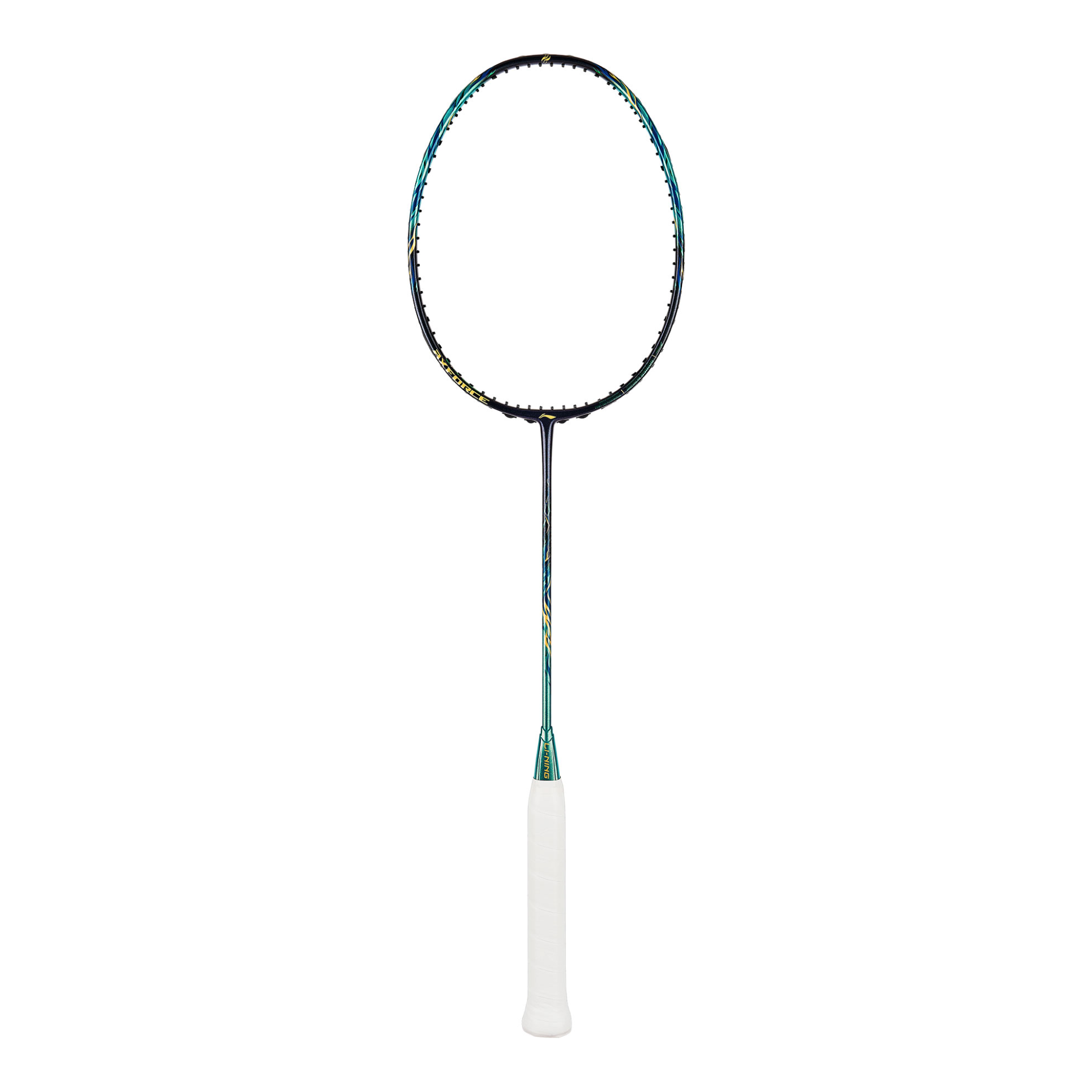
- Weight class
- 4U
- Balance point
- More head weight
- Flexibility
- Stiff
Second generation of Li-Ning's top attacking racket, launched in late 2025. 6.2 mm stiff shaft in M46, T1100 and ULTRA carbon, head-heavy and 675 mm. 4U from 80 to 84 g up to 30 lbs; 3U from 85 to 89 g up to 31 lbs.
- 3
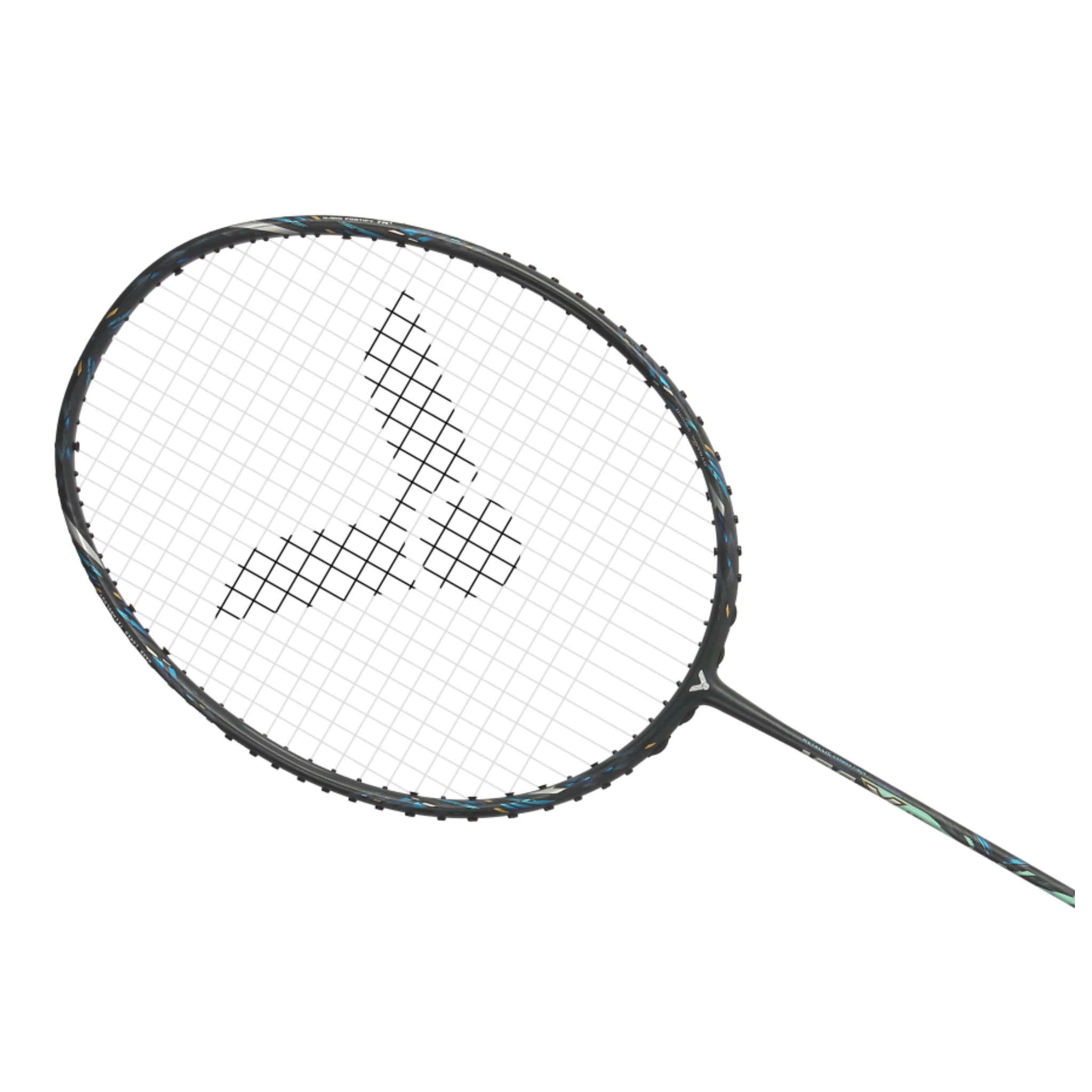
- Weight class
- 4U
- Balance point
- Lighter head
- Flexibility
- Stiff
Evolution of the 100X launched in late 2024, with a 5.8 mm stiff shaft in graphite, Metallic Carbon and Pyrofil. Slightly head-light and gains more power on attack than the 100X. In 3U, up to 31 lbs, and 4U, up to 30 lbs.






The first seven are the top versions of the main Yonex and Li-Ning families, and the Ryuga II Pro and the Auraspeed 100X Ultra play the same role at Victor. The BR 990 Pro makes the list for a different reason: it is a serious-spec attacking racket sold at a mainstream retailer, which makes it simpler to buy the second identical unit.
If you don't play tournaments often yet, the guide to the best badminton rackets for advanced players covers the Tour versions, which deliver almost the same with less demand. The general ranking of the best badminton rackets of 2026 compares these families by playing style.
What the rules say about the racket
The official rules of badminton are the Laws of Badminton, published by the Badminton World Federation (BWF). Law 4 defines the racket by its dimensions and a few prohibitions:
| Item | What BWF Law 4 requires |
|---|---|
| Overall length | Up to 680 mm |
| Overall width | Up to 230 mm |
| Strung area | Up to 280 mm long and 220 mm wide |
| Strings in the throat | May extend up to 35 mm wide, as long as the total strung area does not exceed 330 mm |
| Stringing | Flat, with strings crossed, interlaced or bonded at the intersections |
| Attached objects | Only those used to limit wear or vibration, distribute weight or attach the handle to the hand by a cord, of reasonable size |
| Mechanisms | Any device that allows changing the shape of the racket is prohibited |
In practice, all the rackets in this guide are within the rules: those of 675 mm, like most of the top ones, and those of 670 mm, like the Astrox 88S Pro, are below the 680 mm limit.
There is no list of approved rackets. Unlike sports that publish approval lists, the BWF handles the racket under Law 5: the federation decides whether a racket, shuttle or prototype conforms to the specifications, on its own initiative or at the request of a player, umpire, manufacturer or national federation. In Brazil, the Confederação Brasileira de Badminton publishes the national ranking and competition regulations.
Professional-level specs: what changes on the spec sheet
Stiff or extra stiff shaft. Top versions take almost all the flexibility out of the shaft. The Astrox 100ZZ and the Nanoflare 1000Z are extra stiff; Arcsaber 11 Pro, Astrox 88D Pro, 88S Pro and 99 Pro are stiff. The difference shows at the end of a long match: an extra stiff shaft demands the same fast swing in the third game as in the first.
Construction. At Yonex, several top versions are made in Japan, like the Astrox 100ZZ and the Astrox 88D Pro, while the Tours of the same family come from Taiwan.
Maximum tension. The ceiling varies by brand and weight. Top Yonex models run 20 to 28 lbs in 4U; the Axforce 100 II goes to 30 lbs in 4U and 31 lbs in 3U; the Ryuga II Pro reaches 32 lbs in 3U. A high ceiling is not a reason to buy, but it matters for those who already play with very hard strings.
Sold unstrung. Top rackets leave the factory without stringing, because the tournament player chooses string and tension. Budget for the stringing in both money and time.
Top of the line from the three Asian brands
Highlighted: what differs between the racquets. In bold: the best value in the row.
Backup racket: why bring two identical ones
BWF Law 16 states that play is continuous from the first service to the end of the match. Play can't be delayed for a player to recover their breath, and nobody leaves the court without the umpire's permission outside the intervals. If a string breaks in the middle of a game, you need to grab another racket right there, next to the court, and continue.
That is why the backup has to be identical, and not just "similar":
- Same generation. The 2025 Astrox 99 Pro is the line's third generation, and generations change in construction. At the store, check the year and the color of the version.
- Same weight class and same grip. A 3U and a 4U of the same model have different ball timing.
- Same string, same tension, same stringer. Ask to have both strung on the same day.
- Rotation in training. Alternate the two during the week, so the strings wear similarly and neither is "new" on match day.
In a tournament with several matches in one day, or for those who play singles and doubles in the same event, a third unit avoids depending on the event's stringer.
Heads up
Buy both rackets at the same time and at the same store whenever possible. Top rackets get discontinued or change generation, and finding the same version months later can be hard, especially since few professional-level models are kept consistently in stock.
Weight tolerance between units: check at home
The U class is not an exact weight. It is a range of about 5 g: 4U runs from 80 to 84.9 g and 3U from 85 to 89.9 g, unstrung. Two 4U rackets of the same model can therefore differ by a few grams, and manufacturers themselves state tolerances. The Duora Z-Strike, for example, is declared at 88 g ±3 in 3U, and the Voltric Z-Force II at 83 g ±2 in 4U. On the Axforce 100 II spec sheet, the 4U appears as 80 to 84 g.
With a kitchen scale accurate to 1 g and a ruler, you can compare the two units:
- Weight: weigh each racket without a cover, with the same grip and the same string.
- Balance point: rest the racket lying on a thin edge, like the side of a ruler, and find the point where it balances. Measure the distance from the end of the handle to that point.
- Compare: if one of the two is clearly heavier or has its balance closer to the head, you will feel it on court.
When the difference bothers you, it can be corrected with the allowed customization, described next. The guide to badminton racket weight and grip details how to read the U and G codes.
Allowed customization (and what crosses the line)
Law 4.3 allows objects attached to the racket that serve only to limit wear or vibration, distribute weight or attach the handle to the hand by a cord, as long as they are of reasonable size and position. That covers what the tournament player usually does:
- Overgrip and grip change: adjust handle thickness and tackiness. A thicker grip also shifts the balance slightly toward the handle.
- Frame protection tape: protects the head from contact with the floor on low defensive shots.
- Weight tape: small strips stuck on the frame or handle to match two units or adjust the balance. Add a little at a time and repeat exactly on both rackets.
- Wrist cord: also provided for in the rules.
What the rules prohibit is any mechanism that allows changing the shape of the racket. And one practical caution applies: every gram stuck on the head changes the swing. Test customization in training, never in tournament week.
Tournament stringing
Play with the tension you trained with. Tournament week is not the time to test a new string or go up two pounds. If you plan to change, do it weeks earlier.
String one or two days ahead. A freshly installed string loses some tension in the first hours of use. Stringing a little earlier and doing a short practice session with the racket lets you confirm the feel before the first match.
High tension has a price. It gives a crisper response and control on a hard stroke, but shrinks the useful area of the strings and raises the risk of the string breaking. That reinforces the need for a backup.
Backup with the same setup. The backup racket only does its job if it has the same string and the same tension as the main one.
What top players use
Caution is called for here: what a professional uses on court isn't always disclosed by the manufacturer, and isn't always the same as the store model. One verifiable fact is Yonex's partnership with Viktor Axelsen, a two-time Olympic champion. Yonex announced a collection with his name, which includes the Astrox 100 VA Edition racket, developed with the player's feedback.
Even so, an Olympic champion's racket was designed for his swing. Choose by your role on court, not by your idol's racket.
Buying a tournament racket
Few professional-level rackets are consistently in stock at stores. Many show up on marketplaces, sometimes as imports, and the listings mix generations, colors and weight classes. Before buying, confirm in the listing the year or generation, the U class and the G grip, and prefer stores that show the product page with that information.
In the badminton racket catalog you'll find updated offers for each model, plus the lines from Yonex, Li-Ning and Victor. The badminton racket comparison tool puts up to six models side by side, and the methodology explains how we arrive at the scores. If you're still unsure about your profile, the racket finder helps you filter.
Where to buy the racquets in this guide
- Nanoflare 1000Z 2023 Yonex4U · Lighter head · Extra stiffSee priceAmazon
- Axforce 100 II Li-Ning4U · More head weight · StiffSee priceYumo Pro Shop
- Auraspeed 100X Ultra Victor4U · Lighter head · StiffSee priceYumo Pro Shop
The prices above are checked automatically at each store and may have changed since the last check. The price that counts is the one shown on the store's website at checkout. We may earn a commission on purchases made through store links, at no extra cost to you.