


 Brasil
 United States
 United Kingdom
 Australia
 Netherlands
 France
 España
 Italia
 السعودية
10 attacking badminton rackets for a heavier smash
A ranking of attacking badminton rackets available from stores, from the Astrox 99 Tour to the DHS Reflex RF588, and what each one demands of the player.
Updated on 2026-10-07
On this page
An attacking badminton racket combines three things: a head-heavy balance, a stiff or medium-stiff shaft and enough mass for the shuttle to leave heavy on the smash. The list below brings the 10 best available from stores, from the Astrox 99 Tour, which delivers almost everything the Pro version does, to a carbon DHS for players who want to start attacking without spending on a top-of-the-line model.
The 10 best attacking badminton rackets
- 1
- Weight class
- 2U
- Balance point
- More head weight
- Flexibility
- Extra stiff
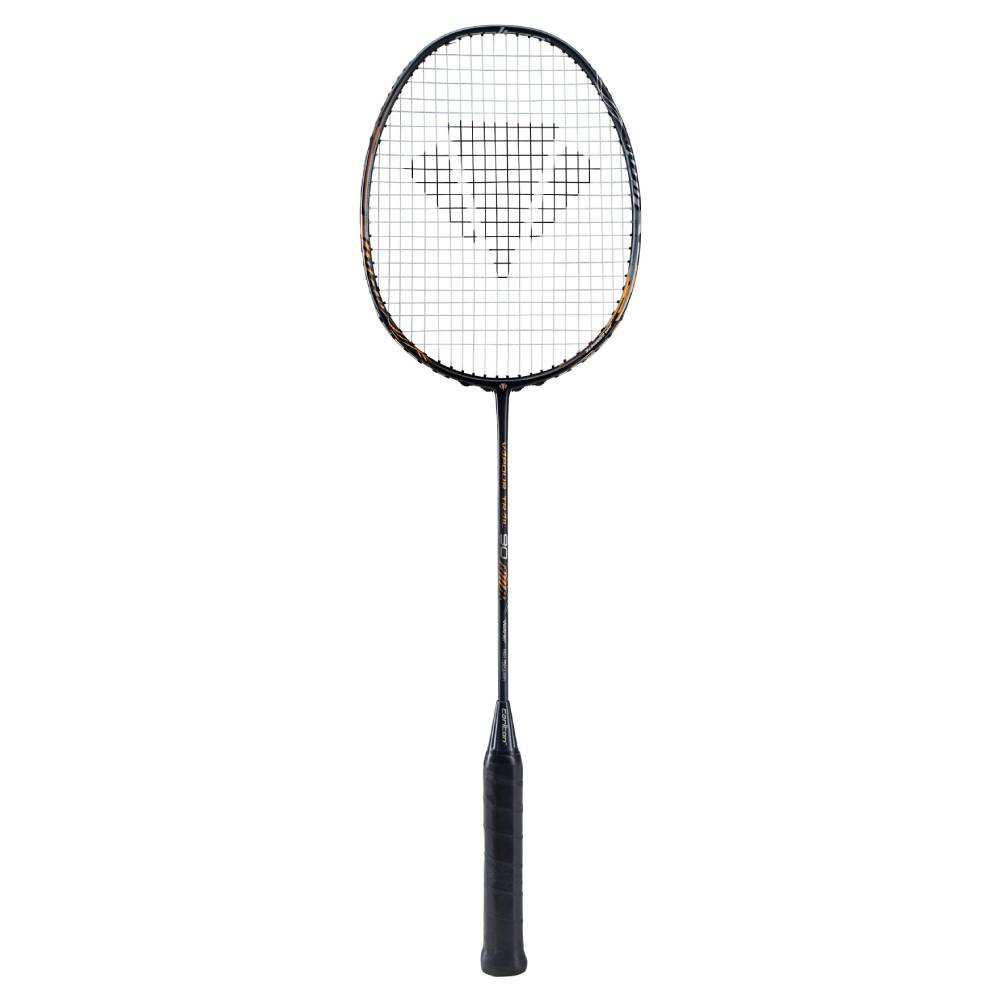
2U class (90 g), head-heavy balance and an extra-stiff shaft. The frame accepts 19 to 30 lbs and comes strung. It is the heaviest on the list and demands physical strength and technique so you don't arrive late on defense.
- 2
- Weight class
- 3U
- Balance point
- Even balance
- Flexibility
- Extra stiff
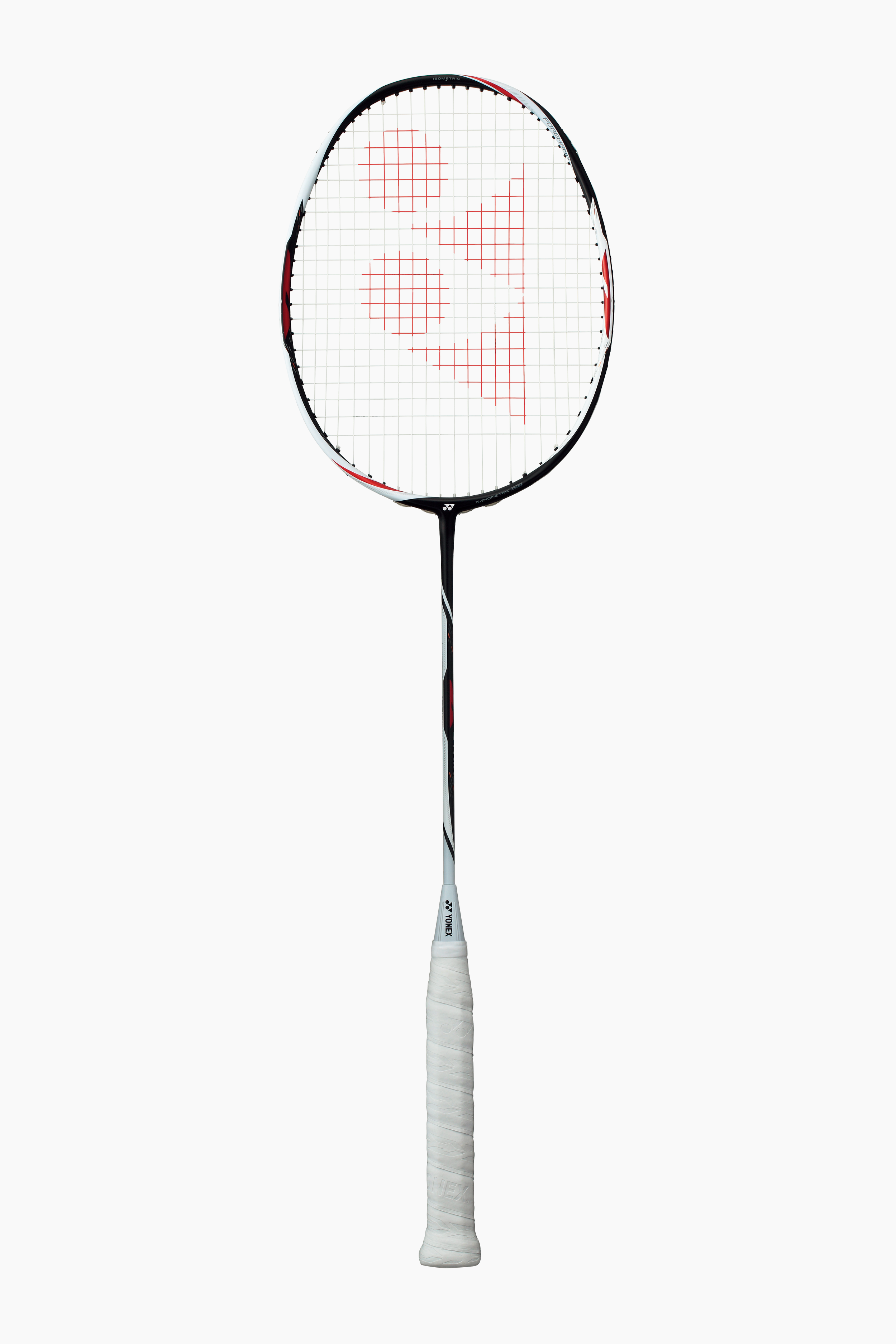
Extra-stiff, extra-thin shaft, 3U (88 g ±3) and an even balance. The head frame has a box side for the forehand and an aerodynamic side for the backhand. It attacks with hand speed, not with weight at the top.






What makes an attacking badminton racket work
The smash is the stroke in which the racket travels the biggest arc and meets the shuttle at its highest speed. The more mass near the top at that moment, the more energy the shuttle receives and the less the head deflects when contact lands slightly off-center. That is why almost all the rackets on this list are head heavy and several put tungsten in the head frame: the Astrox 99 Tour, the 88D Pro, the 88D Game, the 7 DG and the Voltric Z-Force II.
The shaft completes the package. A stiff shaft bends little and returns energy quickly, which gives precision and a flatter, more downward trajectory, but it only works if your swing is fast enough to load it. A medium shaft bends more and returns part of the energy even with a slower arm. If you want to understand the physics of balance and flex at your own pace, the guide to badminton racket balance and flex explains it in detail. Here the focus is different: which attacking racket to buy and what each one demands of you.
Three points few people consider before buying an attacking racket:
- The smash is one stroke; the rally has many. A head-heavy racket wins on the smash and loses on the next defense, when the shuttle comes back fast at your body. In singles, you have time to recover; in doubles, whoever is at the back has to defend too.
- Total weight and balance add up. The Carlton Vapour Trail 90S (2U) and the Perfly BR 990 Pro (3U) have more absolute mass than a 4U Astrox. The feeling of "weight behind the shuttle" comes from both numbers together.
- Aerodynamics changes hand speed. The Duora Z-Strike has an aerodynamic side on the head frame and an even balance: it attacks through the speed with which the head reaches the shuttle, not through a lot of mass at the top.
Which attacking racket to pick if you...
| If you... | Pick | Why |
|---|---|---|
| already have a full swing and want the best current attacking racket | Astrox 99 Tour 2025 | Stiff shaft, head-heavy balance and materials close to the 99 Pro |
| want the heaviest smash possible | Voltric Z-Force II | 305 mm balance point and an extra-stiff shaft |
| play doubles and stay at the back | Astrox 88D Pro 2024 or 88D Game 2024 | Designed for the back court; the Game has a medium shaft |
| play singles and decide from the back | Babolat Satelite Blast | 3U, head-heavy balance, good stability on long clears |
| have a strong arm and like a racket with mass | Carlton Vapour Trail 90S or Perfly BR 990 Pro | 2U and 3U with head-heavy balance |
| attack fast from mid-court and need to get back to defense | Duora Z-Strike | Even balance and an aerodynamic backhand side on the head frame |
| string tight and break frames | Astrox 7 DG | Up to 35 lbs of tension |
| want to start attacking without spending much | DHS Reflex RF588 | Carbon, 300 mm balance point, comes strung |
The 10 rackets, one by one
1. Yonex Astrox 99 Tour 2025
The 99 Tour is the most complete choice for players who want to attack. Yonex tiers the line into Pro, Tour, Game and Play, and the Tour is the step just below the Pro: it keeps the stiff shaft and the 2G-Namd Flex Force, which flexes and returns energy quickly, with an HM graphite frame, CSR and tungsten. That is an average of 83 g in 4U, 675 mm and tension of 20 to 28 lbs. It comes unstrung, so budget for stringing. If the stiff shaft feels too hard, the Astrox Nextage uses Namd with a medium shaft, and the Astrox 99 Play 2025 brings the 99 profile to a standard graphite version that is already strung.
2. Yonex Voltric Z-Force II
It is Yonex's classic smash racket, made in Japan and used by Lee Chong Wei and Lin Dan. The spec sheet explains the fame: a 305 mm balance point in 4U, an extra-stiff and extremely thin EX-HMG shaft and the Tri-Voltage system, which concentrates weight at the top and the sides. The smash comes out very heavy and steep. The price shows up on defense and late in long matches: it is a racket that tires you out and forgives little if you don't yet hit the center.
3. Yonex Astrox 88D Pro 2024
The 88D Pro is the "back court" version of the 88D and 88S pair. It has a head-heavy balance, a stiff shaft, a Power-Assist Bumper and an average of 83 g in 4U, with 20 to 28 lbs. Compared to the 99 Tour, it was designed for the sequence of smashes and clears from whoever stays at the back in doubles, and it also works for offensive singles. It is top of the line, made in Japan, and the investment only pays off for those who already have the technique.
4. Perfly BR 990 Pro
Decathlon's top attacking model has the numbers of a serious racket: 86 g (3U), a 306 mm balance point, a stiff shaft in Japanese high-modulus carbon and Kevlar at the top of the frame to increase inertia. The hexagonal T-joint reduces twisting and an internal foam cuts vibration, according to the brand. Comes unstrung. It is an alternative to the Asian brands for players who already have a fast arm.
5. Carlton Vapour Trail 90S
The heaviest in the ranking: 90 g, 2U class, head-heavy balance and an extra-stiff shaft in Japanese high-modulus graphite. Carlton uses the TCS system in the T-joint against twisting and the Xtreme Tension Frame, which accepts 19 to 30 lbs. Comes strung and with a cover. It works for players with a strong arm who play more from the back; in fast doubles, the total mass weighs on defense.
6. Babolat Satelite Blast
Used by Joachim Fischer-Nielsen and Beatriz Corrales, according to the spec sheet, the Satelite Blast has 88 g (3U), a head-heavy balance and a stiff shaft. It is good for singles: stable on long clears and on the smash from the back. It comes strung at 25 lbs and accepts up to 27 lbs, a low ceiling for players who like very firm strings.
7. Yonex Duora Z-Strike
The Z-Strike makes the list by a different route. It has an even balance, not a head-heavy one, but an extra-stiff, extra-thin shaft and the Dual Optimum System: one side of the head frame in a box shape for the forehand and the other aerodynamic for the backhand. It weighs 88 g ±3 (3U), measures 675 mm and accepts up to 28 lbs. It is the racket for players who attack from mid-court with hand speed and need to be ready for the counterattack.
8. Yonex Astrox 88D Game 2024
The 88D Game has the same back-court role as the Pro, with a medium shaft, an average of 83 g in 4U, tungsten in the head frame and 2G-Nanomesh NEO in the shaft. Comes strung. It is one of the most balanced options for the intermediate player who wants a strong smash without needing a professional's swing. To see the shaft difference side by side, put the Pro and the Game in the badminton racket comparison tool.
9. Yonex Astrox 7 DG
DG stands for Durable Grade: the frame accepts up to 35 lbs, something rare in intermediate rackets. Beyond that, it is a robust attacking racket, with a 305 mm balance point, a medium shaft with Nanomesh Neo, tungsten and an average of 83 g (4U). It makes sense for players who string tight, break frames often or play at a heavily used club.
10. DHS Reflex RF588
The RF588 is the entry point to attacking. It has carbon in the frame and shaft, 85 g (±4 g), a 300 mm balance point and a recommended tension of 24 to 28 lbs, above recreational rackets. Comes strung and with a cover. It doesn't have the precision of the Yonex models above it, but it gives the head-heavy feel to players who play regularly and want to start attacking.
Three ways to attack: head-heavy balance, total mass and even balance
Highlighted: what differs between the racquets. In bold: the best value in the row.
Other attacking rackets worth a look
They missed the top 10 because they are less specialized or have less complete spec sheets, but they serve specific profiles well:
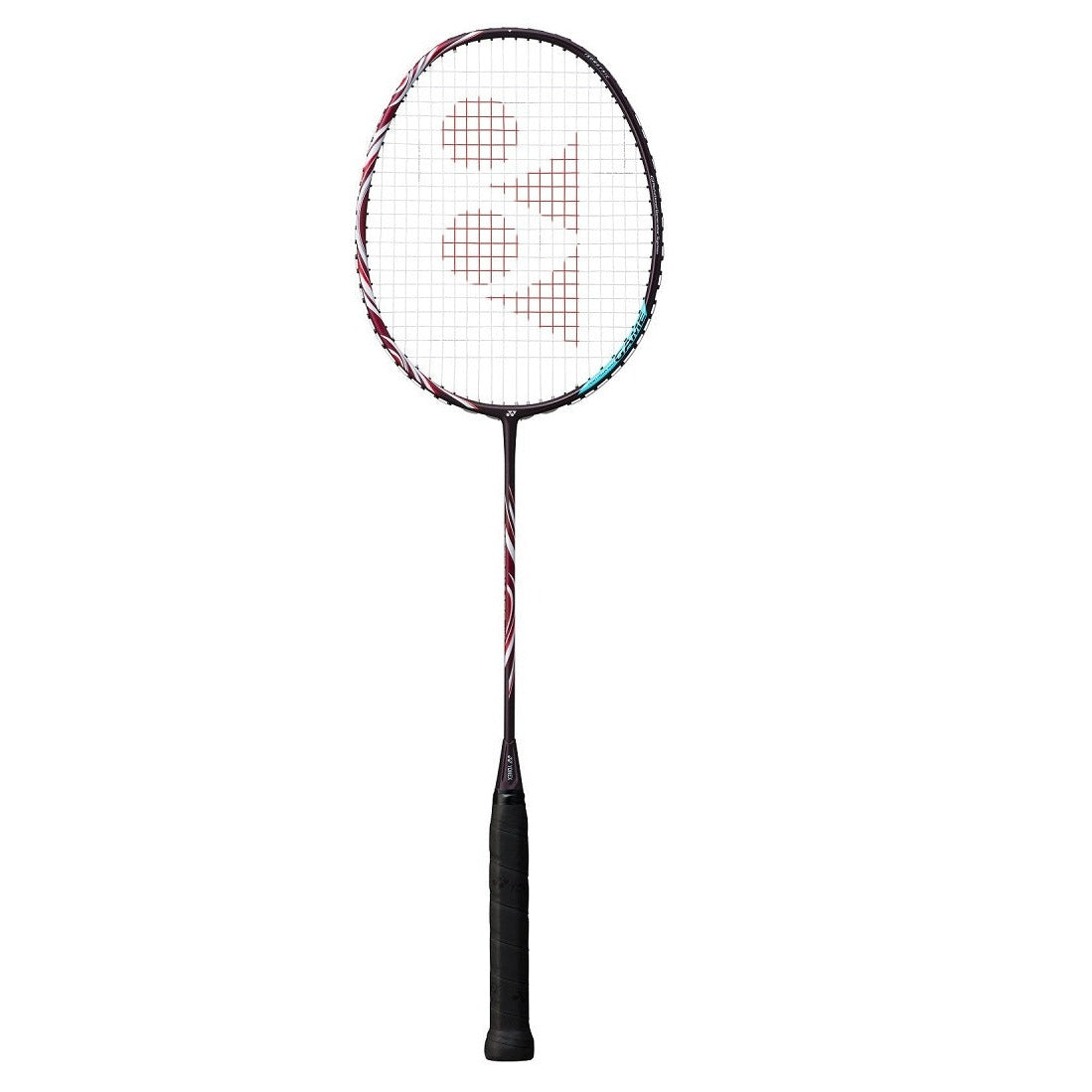
- Yonex Astrox 100 Game: head-heavy balance, a medium shaft and 685 mm, 10 mm longer than standard. The extra length adds reach and leverage on the smash.
- Yonex Voltric 5: 3U with tungsten at the 2 and 10 o'clock positions and in the T-joint, isometric head. Heavy attack with a generous sweet spot.
- Apacs Stern 90 Offensive: an ultralight approach, 78 g per the brand's spec sheet, with a 290 mm balance point. For players who want a head-heavy feel without carrying total weight.
- Yonex Astrox 77 Tour 2022: slightly head-heavy balance and a medium shaft. Attacks well without being slow on defense.
Attacking alternatives available from stores


Signs the attacking racket is too much for you
Buying an attacking racket too early is one of the most common mistakes in recreational badminton. Watch for these signs in the first few weeks:
- The clear doesn't reach the back. If the stiff shaft doesn't bend with your swing, the shuttle dies mid-court. It is the clearest sign you need a medium shaft.
- You're late on every defense at the body. A head-heavy racket takes longer to leave the attack position. If you lose a lot of points on drives and smash returns, the balance is weighing you down.
- Your forearm or shoulder tires before the match is over. Mass at the top demands more of the arm on every stroke. That is a sign to review weight and balance, and if there is pain, it's worth seeing a health professional instead of pushing through.
- The smash comes out high and without angle. Often the problem is wrist and forearm technique, not the racket. A stiffer shaft doesn't fix that; it usually makes it worse.
If you recognized yourself, the guide to badminton rackets for intermediate players helps you find the right step before the top of the line. And if your game is net play and defense, the list of lightweight badminton rackets for doubles makes more sense than any racket on this page.
String tension in attacking rackets
A tighter string doesn't increase power. It makes the shuttle come off "drier" and more precise, but only for players who hit fast and in the center. Those who raise the tension thinking the smash will get stronger usually see the clear get shorter. The ranges by level are in the guide to how to choose a badminton racket.
What matters on this list is each frame's ceiling. The Satelite Blast stops at 27 lbs, the Z-Strike at 28, the Astrox at 20 to 28 lbs, the Vapour Trail 90S goes to 30 and the Astrox 7 DG reaches 35. Going over the spec sheet's limit can deform or crack the frame. The guide to badminton racket weight and grip explains why the same racket can have different ceilings in 3U and 4U.
What is the best badminton racket for the smash?
For players who already have a full swing, the Yonex Astrox 99 Tour 2025 is the most complete: head-heavy balance, a stiff shaft and materials close to the 99 Pro. Players who want the heaviest smash and accept a slower racket on defense can go with the Voltric Z-Force II, with a 305 mm balance point and an extra-stiff shaft.
Is an attacking racket suitable for a beginner?
Generally not. The stiff shaft doesn't bend with a still-slow swing, and the shuttle loses depth. Beginners attack better with a slightly head-heavy balance and a medium or flexible shaft. If you want an affordable attacking racket to start practicing the smash, the DHS Reflex RF588 or the Astrox 99 Play 2025 are more forgiving than the Pro and Tour versions.
3U or 4U for attacking?
The 3U has more mass and stabilizes the smash better, but it tires you more and is slower on defense. The 4U is the current standard and suits most players, including for attacking. Stick with the 3U if you play singles, have a strong arm and like a heavy racket.
Is a head-heavy racket bad for doubles?
Not for players at the back. The Astrox 88D Pro and the 88D Game were made precisely for the rear player in doubles. For players who stay at the net or rotate a lot between front and back, a head-light or even-balance racket usually performs better.
Want to see all the options? The badminton racket catalog filters by balance and flex, the Yonex badminton page gathers the Astrox and Voltric lines, and Find Your Racket suggests models for your style. How we calculate the RR Score is in our methodology.
Where to buy the racquets in this guide
- Vapour Trail 90S Carlton2U · More head weight · Extra stiffSee priceRacquetGuys.ca
- Duora Z-Strike Yonex3U · Even balance · Extra stiffSee priceAmazon
- Astrox 100 Game Yonex4U · More head weight · MediumSee priceAmazon
- Voltric 5 Yonex3U · More head weight · MediumSee priceAmazon
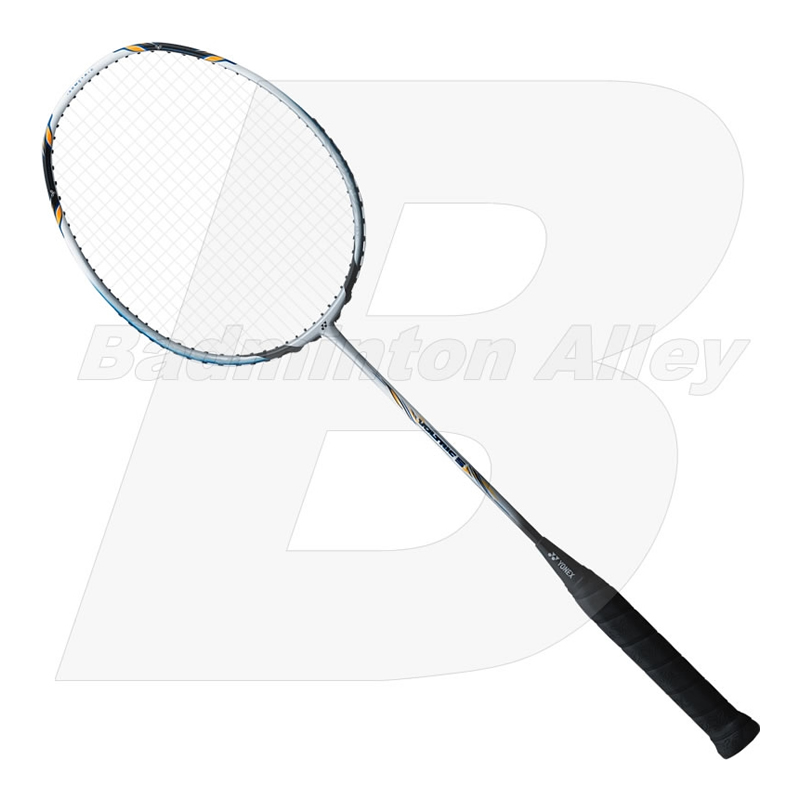
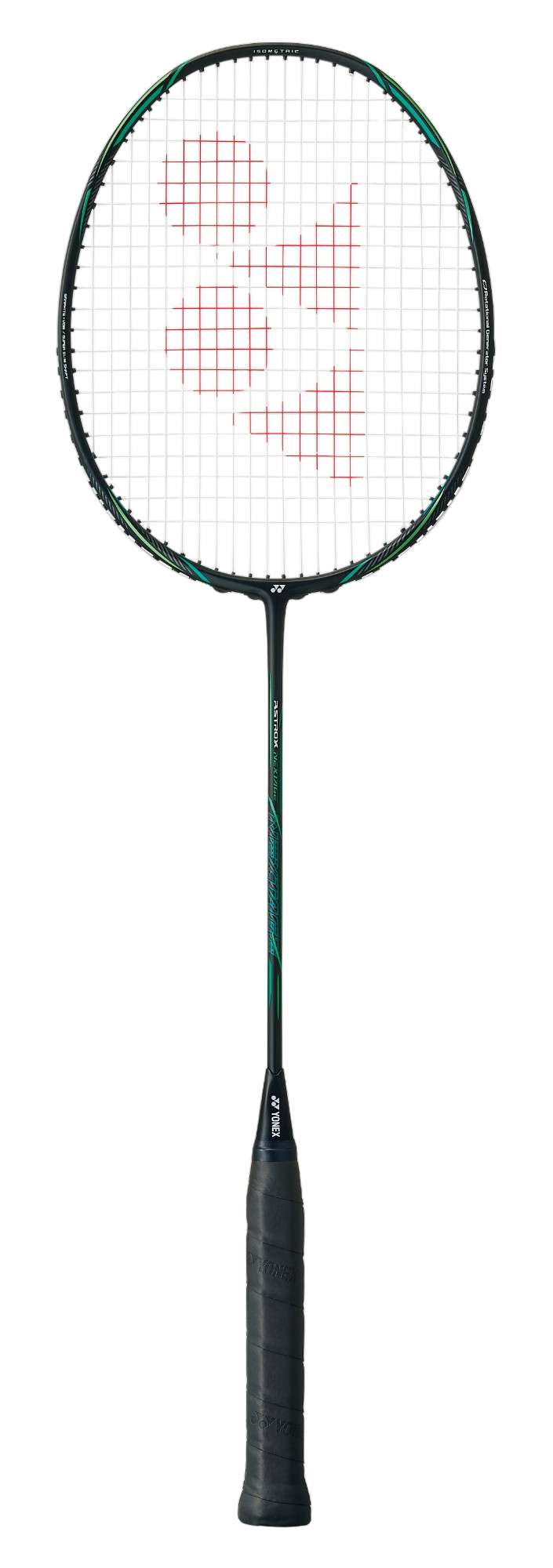
- Astrox Nextage Yonex4U · More head weight · MediumSee priceAmazon
The prices above are checked automatically at each store and may have changed since the last check. The price that counts is the one shown on the store's website at checkout. We may earn a commission on purchases made through store links, at no extra cost to you.