


 Brasil
 United States
 United Kingdom
 Australia
 Netherlands
 France
 España
 Italia
 السعودية
7 Best Squash Racquets for Advanced Players in 2026
How to tell if you're advanced, what changes in the specs compared with intermediate, and the 7 squash racquets that fit each playing style.
Updated on 2026-10-07
On this page
- 1.How to tell if you're already advanced at squash
- 2.What changes in the specs from intermediate to advanced
- 3.The best squash racquets for advanced players
- 4.Choose by your playing style
- 5.The seven side by side
- 6.Fine-tuning: what the advanced player tests before changing racquets
- 7.Common mistakes advanced players make when buying
- 8.Where to see more options
An advanced squash player doesn't need a racquet that does the work for them: they need one that follows the style they already have. The best squash racquets for advanced players are separated less by "better or worse" and more by profile: a compact head for players who place the ball, a thin frame for players who live on the wall, mass for players who decide the point from the back, and lightness for players who volley. Below are the seven that make the most sense in 2026, along with the criteria for choosing yours.
How to tell if you're already advanced at squash
Level isn't time on court. It's what you can do with the ball when your opponent applies pressure. You're in the advanced group if you recognize most of these signs:
- You choose the height of the ball on the front wall. Your drive to the back comes out low when you want to pressure and high when you need to buy time, and that's a decision, not luck.
- The drop shot and the boast end points. You don't use the short touch only to escape pressure; you use it to open up the court.
- You volley from the T often. Most of the balls you can cut off before the back, you cut off.
- You notice the difference between racquets. A change of 5 g, of balance, or of string pattern shows up in your game within one session.
- Your errors are errors of decision, not execution. When you lose the point, you usually picked the wrong shot, rather than hitting off-center.
If the list still describes a goal rather than your game today, the guide to squash racquets for intermediate players is the right step before this one.
What changes in the specs from intermediate to advanced
The intermediate player buys forgiveness with a bit of control. The advanced player buys control and accepts giving up some forgiveness, because they already hit the center. In practice, the specs change like this:
| Spec | Intermediate | Advanced |
|---|---|---|
| Head size | Around 500 cm², almost always | 470 to 500 cm², depending on style |
| Unstrung weight | 120 to 130 g, comfortable range | 115 to 135 g, chosen for playing style, not comfort |
| Balance | Neutral or slightly head-light | Any, as long as it matches where you win your points |
| String pattern | 14x18 as a starting point | 14x18, 16x19, or adaptable pattern, together with string and tension |
| Frame | Doesn't matter | A thin frame (16 mm) starts to matter for players who hug the wall |
| Throat | Open to help the ball come off the strings | Open or closed, based on the feel you want |
The most important change is head size. A 470 to 475 cm² head has a smaller sweet spot, but each string is shorter and the response is more predictable on touch shots. For the intermediate player, that's punishing. For the advanced player, who hits the center, it becomes precision. The guide to open vs. closed head explains the effect of throat shape, which is a separate decision.
The best squash racquets for advanced players
7 best squash racquets for advanced players in 2026
- 1
- Weight
- 125 g
- Head
- 72.9 in²
- Strings
- 14x18
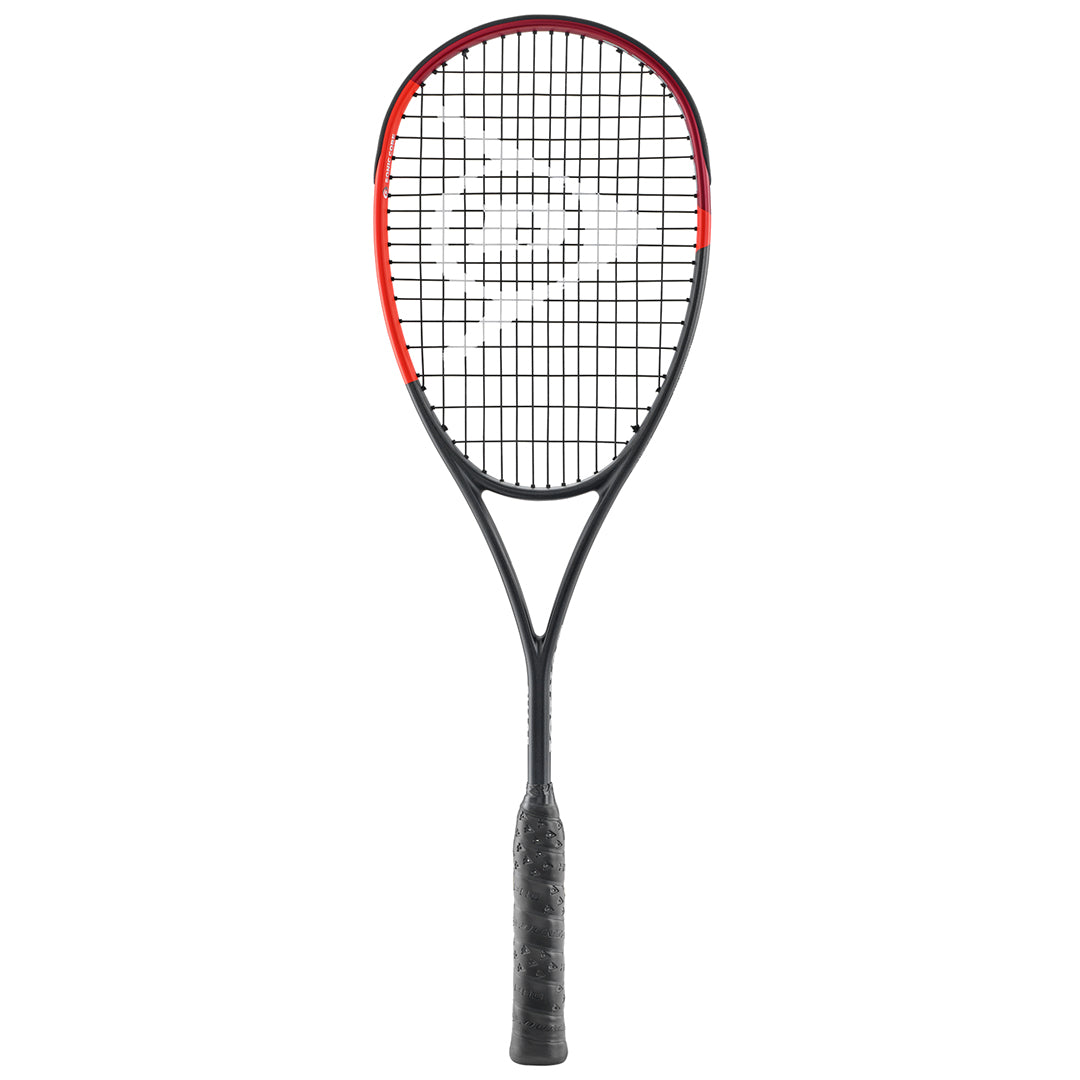
The control racquet of the CX line: a 470 cm² head, the smallest in the series, 14x18 pattern, 125 g, and extra head-light balance. It's the most predictable on the list on drops and balls hugging the wall, and the Sonic Core Infinergy at the 2 and 10 o'clock positions handles vibration. It asks for a player who generates their own power.
- 2
- Weight
- 125 g
- Head
- 77.5 in²
- Strings
- 14x18
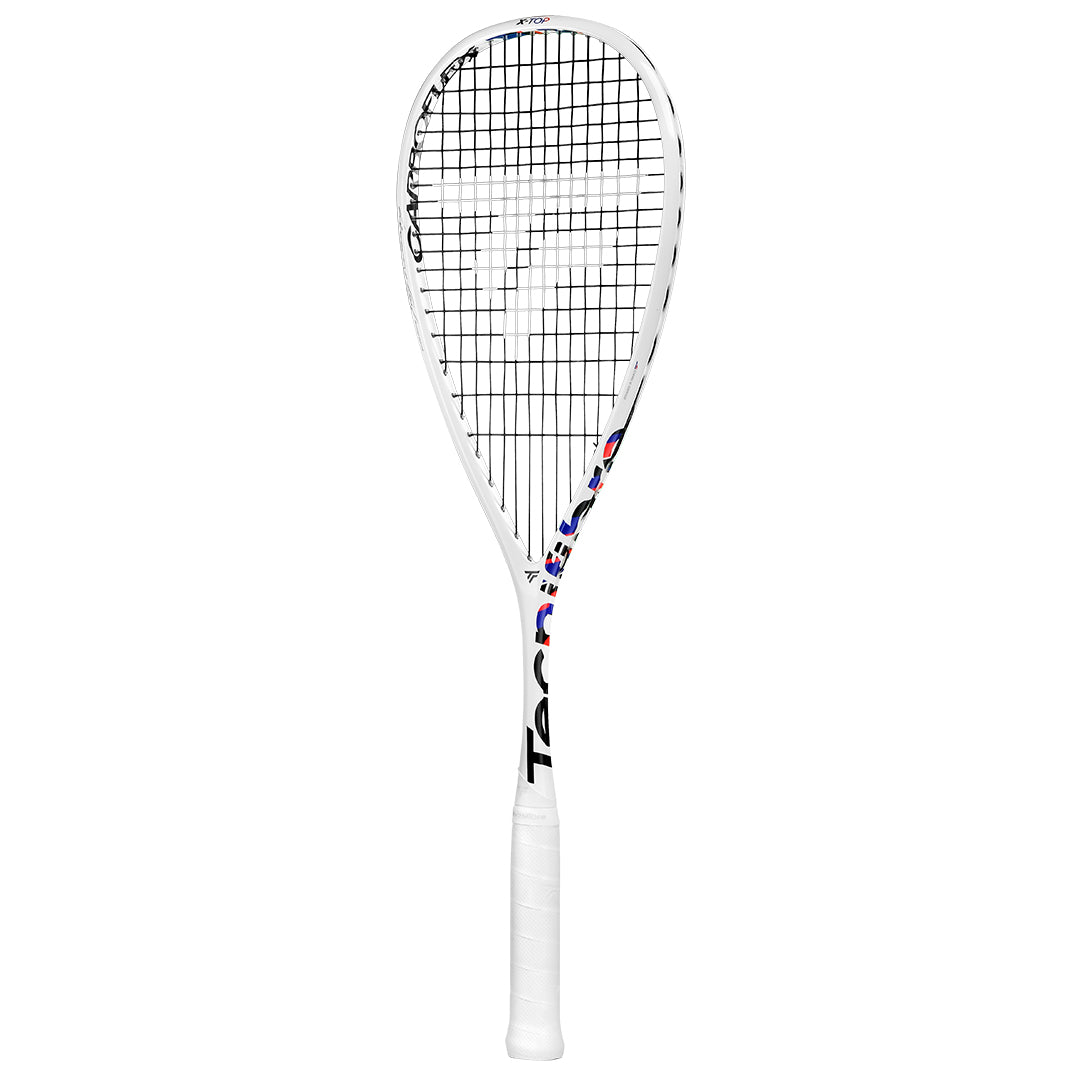
125 g, a 500 cm² head, a neutral 350 mm balance, and 14x18. The X-Top tip replaces the bumper with aramid fibers with PTFE, which makes the swing faster. It delivers power with stability and suits both players who attack and players who build the point.
- 3
- Weight
- 120 g
- Head
- 76 in²
- Strings
- 14x18
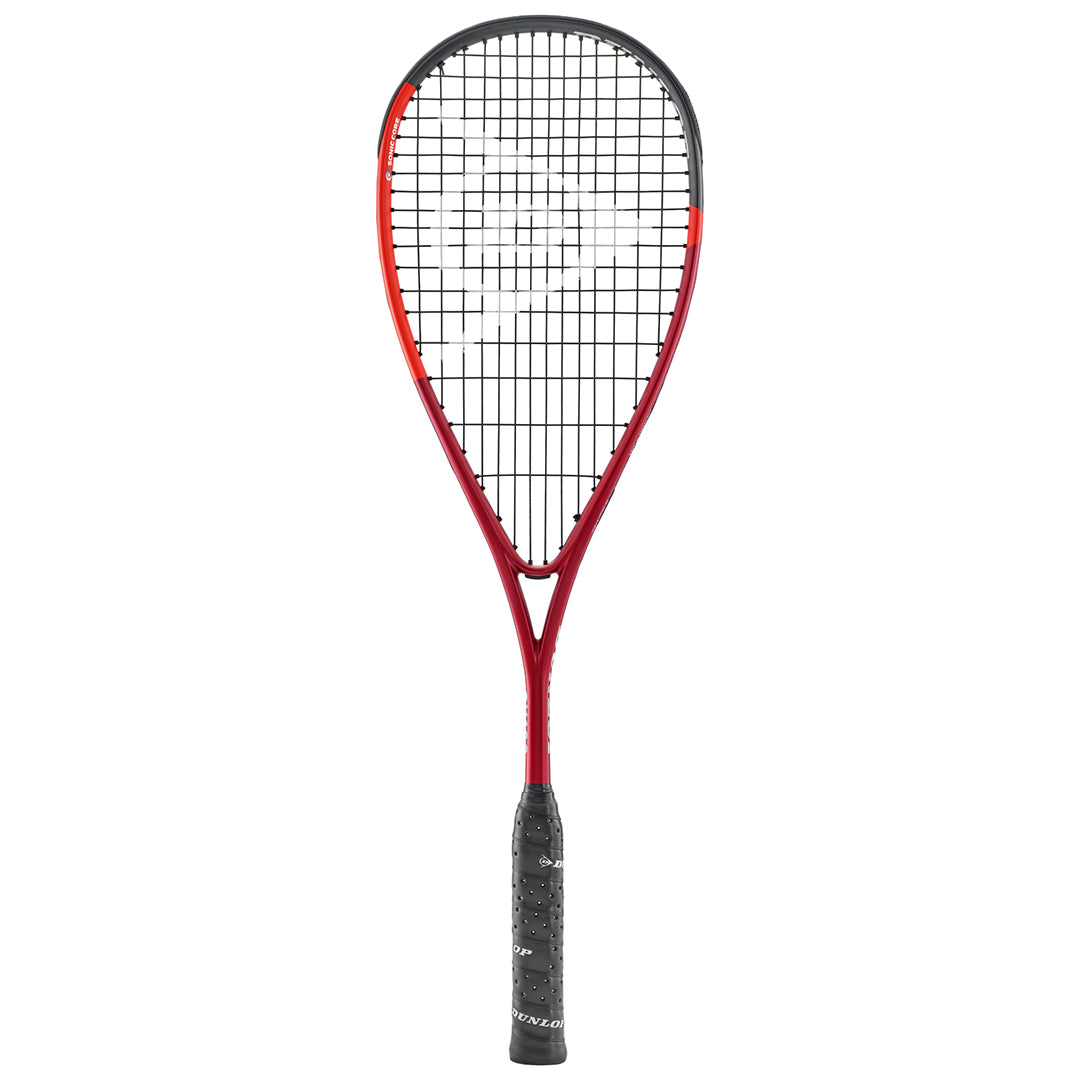
The lightest in the CX line: 120 g, extra head-light balance, and a 490 cm² hybrid head with elongated main strings. It reacts very quickly on volleys and still has some pop. The tradeoff is little mass to block heavy balls.
- 4
- Weight
- 125 g
- Head
- 75.2 in²
- Strings
- 14x18
The power version of the first-generation Slash, a line Tecnifibre developed with Mostafa Asal. It has 125 g, a 485 cm² head, a 350 mm balance, a 14x18 pattern, and an open throat, with the X-Top extended to the 4 and 7 o'clock positions. Aggressive and fast.






Choose by your playing style
The list above is in order of general recommendation, but the advanced player should read it differently: first identify where you win your points, then go straight to that group.
You win points by placing the ball: Dunlop CX 125
If your game is patience at the back, drives hugging the side wall, and a drop shot at the right moment, the CX 125 is the most consistent racquet. The 470 cm² head and the 14x18 pattern let the ball leave on the same trajectory on every similar shot, and the extra head-light balance gets the racquet to the blocking volley early.
What you give up is margin. A ball that hits the upper part of the head comes off noticeably shorter than on a 500 cm² racquet. If you play at club-training pace, with lots of difficult balls, you'll feel it by the third game.
Strengths
- + 470 cm² head that is very precise on touch shots
- + Extra head-light, reacts quickly on volleys
- + Sonic Core Infinergy at the 2 and 10 o'clock positions
- + Comes with Iconic Pro string and Hydramax Pro grip
Drawbacks
- − Smaller sweet spot than 500 cm² racquets
- − Needs refined technique to generate power
You play hugging the wall: Head Radical 135 SB
The 16 mm Slimbody frame is the defining feature of this racquet. On balls running tight along the side wall, a thin frame lets the strings reach the ball before the frame scrapes the wall. Combined with the 475 cm² head, the result is a touch racquet that isn't light: the 135 g holds up against your opponent's heavy ball.
The adaptable pattern is the other asset. You can string it 14x17 during the phase of heavier physical training, when you want pop, and 18x17 when you want to tighten up control. To understand what each string and tension does in this adjustment, see the guide to squash racquet strings and tension.
You want a racquet that doesn't get in the way of any shot: Tecnifibre Carboflex 125 X-Top V2
Not every advanced player has an extreme style. Players who mix attack and point-building usually do better with a racquet that doesn't pull in either direction. The Carboflex 125 X-Top V2 is exactly that: 500 cm², a neutral 350 mm balance, and 125 g. The bumper-free tip keeps the swing clean through the air, and the V2 widened 12 holes to loosen up the stringbed.
The caution is physical: without a bumper, the head takes more punishment from scrapes on the floor and the wall. Players who dig a lot of balls out of the corner should accept replacing the racquet sooner. To see the rest of the line, the Tecnifibre comparison tool puts the versions side by side.
You live at the T and volley everything: Dunlop CX 120
At 120 g with extra head-light balance, the CX 120 is the fastest on the list. The 490 cm² hybrid head, with elongated main strings, makes up for some of the missing mass, so the ball doesn't come off weak on attacking volleys. It belongs to the same family as the CX 125, which helps with comparison: both have the same balance and the same pattern, and the difference is in size and weight.
If you want to go even lower in weight, under 120 g, the guide to light squash racquets shows the options and who shouldn't go down that road.
You decide the point with power: Head Radical 135 X or Tecnifibre Slash 125
Here are two different ways to generate power.
- Radical 135 X: mass in the head. It's 135 g with the balance pulled toward the top, and the 16x19 pattern keeps that energy from turning into an uncontrolled ball. It's a front-of-court racquet for players who hit the ball with conviction.
- Slash 125: geometry. The open throat and the 485 cm² head let the strings work more, with 125 g and a 350 mm balance. It's faster than the Radical 135 X, but has less ball weight.
If you feel your opponent's ball pushes your racquet back, go with the Radical 135 X. If your problem is getting there in time to attack, go with the Slash 125.
You're aggressive and want maximum area: Unsquashable Diego Gobbi Autograph 2026
Not every advanced player wants a smaller head. Players who are aggressive, getting to the ball early and hitting on the move, have lots of contacts away from the ideal position. For this player, a 500 cm² head with slightly head-light balance and 125 g is a rational choice. The racquet signed by Diego Gobbi comes from the factory with Tour-Tec Pro 1.20 string and Tour-Tec Pro grip, and the PowerCore construction, according to the brand, aims to deliver power while reducing shock to the arm.
The seven side by side
Squash racquets for advanced players: CX 125, Carboflex 125, Radical 135 SB, CX 120, Slash 125, Radical 135 X
4 racquets: swipe sideways to see them all1–2 of 4 →
Highlighted: what differs between the racquets. In bold: the best value in the row.
In the table, read head size and balance first. Those are the two columns that change the feel the most for a player who already has technique. Weight comes after: a 10 g difference with the same balance changes less than the same weight with the balance in a different place.
Fine-tuning: what the advanced player tests before changing racquets
Once your technique is formed, half the difference between two racquets comes from what's set up on them. Before concluding that you need another frame, test in this order:
- Tension. Raising or lowering it by a few kilos often changes the pop as much as switching between two similar racquets. Change one thing at a time.
- String. A thinner string bites the ball more and gives more feel; a thicker one lasts longer. For players who break a string every week, that math matters.
- Grip. A thicker grip or an extra overgrip changes the weight near the hand and makes the head feel lighter. They also change how the wrist works on spin shots.
- Extra weight. Lead tape on the frame adds stability, but also inertia in the swing. Use a little, in symmetrical positions, and play a few sessions before adding more.
If after all that the racquet still fights your game, then it's time to switch.
Common mistakes advanced players make when buying
- Copying the pro's racquet without copying the setup. Pros adjust string, tension, grip, and sometimes weight. The store racquet is a starting point, not the racquet you saw on the broadcast.
- Going for the smallest possible head for status. A 470 cm² head is great for players who hit the center at match pace. If you play with a lot of difficult balls, the 500 cm² area wins you games.
- Ignoring fatigue. 135 g with head-heavy balance feels great in the warm-up and weighs on you in the fifth game. Judge the racquet at the end of the session.
- Switching racquets close to a tournament. Adapting takes a few weeks. If you're going to compete, the guide to squash racquets for competition shows how to build your tournament pair of racquets.
Where to see more options
The squash catalog lists all the racquets with specs and offers, and the squash comparison tool lets you cross any combination. To see a brand's whole line, the page for Dunlop in squash and the one for Head in squash are good places to start. If you'd rather get a recommendation based on your profile, find your racquet does the filtering. How we score racquets is explained in our methodology.
What is the best squash racquet for an advanced player?
It depends on your style. For players who place the ball, the Dunlop CX 125, with a 470 cm² head and 14x18. For a balanced game, the Tecnifibre Carboflex 125 X-Top V2, with 500 cm² and neutral balance. For players who hug the wall, the Head Radical 135 SB, with a 16 mm frame.
Does an advanced player's squash racquet need to be light?
No. The advanced player chooses weight by style. Players who live at the volley do well with 115 to 120 g; players who decide the point from the back usually prefer 130 to 135 g. What matters is weight combined with balance.
A 470 or 500 cm² head for an advanced player?
A 470 to 475 cm² head gives more precision to players who hit the center at match pace. A 500 cm² head gives margin on difficult balls. Aggressive players, who hit a lot of balls on the move, usually do better with 500 cm².
Is it worth using lead tape on a squash racquet?
For the advanced player, it can be worth it as a fine adjustment to stability or balance. Use a small amount, in symmetrical positions, and test it for a few sessions. Too much tape makes the racquet slow and tires the arm.
Where to buy the racquets in this guide
- CX 125 2025 Dunlop125 g · 72.9 in² · 14x18See priceAmazon
- Carboflex 125 X-Top V2 Tecnifibre125 g · 77.5 in² · 14x18See priceAmazon
- CX 120 2025 Dunlop120 g · 76 in² · 14x18See priceAmazon
- Slash 125 2023 Tecnifibre125 g · 75.2 in² · 14x18See priceRacquet Science
The prices above are checked automatically at each store and may have changed since the last check. The price that counts is the one shown on the store's website at checkout. We may earn a commission on purchases made through store links, at no extra cost to you.