


 Brasil
 United States
 United Kingdom
 Australia
 Netherlands
 France
 España
 Italia
 السعودية
7 Best Squash Racquets for Beginners in 2026
The 7 best squash racquets for beginners, what each one needs to have, and why the blue-dot or red-dot ball makes a difference at the start.
Updated on 2026-10-07
On this page
- 1.What a beginner squash racquet needs
- 2.The 7 best squash racquets for beginners
- 3.Comparison of the beginner racquets
- 4.Head Extreme 120: why it is the first choice
- 5.Tecnifibre Team: Carboflex or Slash?
- 6.Dunlop for beginners: Blackstorm Carbon or Tristorm Elite?
- 7.Aluminum or graphite: what should you buy first?
- 8.The right ball matters more than the racquet
- 9.Things to watch for on your first purchase
- 10.Common mistakes with a first squash racquet
- 11.When to replace your beginner racquet
Anyone starting out in squash should look for a graphite racquet with a big head (close to 500 cm²), between 120 and 140 g unstrung, with a little weight in the head. That combination forgives off-center hits and sends the ball to the front wall even when your swing is still short. By that standard, the best squash racquet for beginners today is the Head Extreme 120 2025, but there are good alternatives for every budget and body type.
Before the list, a warning that matters more than any racquet: in the first few months, the ball makes more of a difference than the equipment. We cover it further down.
What a beginner squash racquet needs
The beginner in squash has three typical problems: hitting the ball off-center on the strings, not yet having a long, loose swing, and spending much of the time late, hitting the ball already near the back wall. Each characteristic of the racquet solves one of them.
Big head, close to 500 cm²
World Squash rules limit the strung area to 500 cm². Racquets that reach this limit have the largest possible sweet spot, and that is exactly what you need while you still miss the center. A 455 to 475 cm² head, common on control racquets, punishes every crooked hit with a weak, deflected ball.
Weight between 120 and 140 g (in graphite)
Graphite racquets for beginners sit comfortably in this range. Below 120 g, the racquet is fast but shakes against any hard ball and doesn't help generate depth. Above 140 g, the arm tires before the end of the match and the wrist starts to compensate.
Aluminum racquets are another story: they weigh 165 to 190 g and so usually have the balance pulled toward the handle, so they don't feel slow. They are durable and cheap to maintain, good for lessons and for players who don't yet know whether they will stick with the sport.
Head-heavy balance
In squash, the side walls shorten the stroke. Beginners, who don't yet know how to use the wrist and body rotation, end up making a short, locked-up motion. A racquet with more mass in the head compensates for this: the weight concentrated up top carries the ball without needing a long swing.
The downside shows up on reflex balls, like quick volleys at the T. But at the start, you will hit far more drives from the back than volleys.
Open throat (teardrop)
An open-throat racquet doesn't have the bridge between the head and the handle. The main strings run down close to the handle, are longer, and work like a bigger trampoline. The result is more power and a more elongated sweet spot. For beginners, it is almost always the best choice. The full difference is explained in the guide on open vs. closed throat.
The 7 best squash racquets for beginners
7 best squash racquets for beginners in 2026
- 1
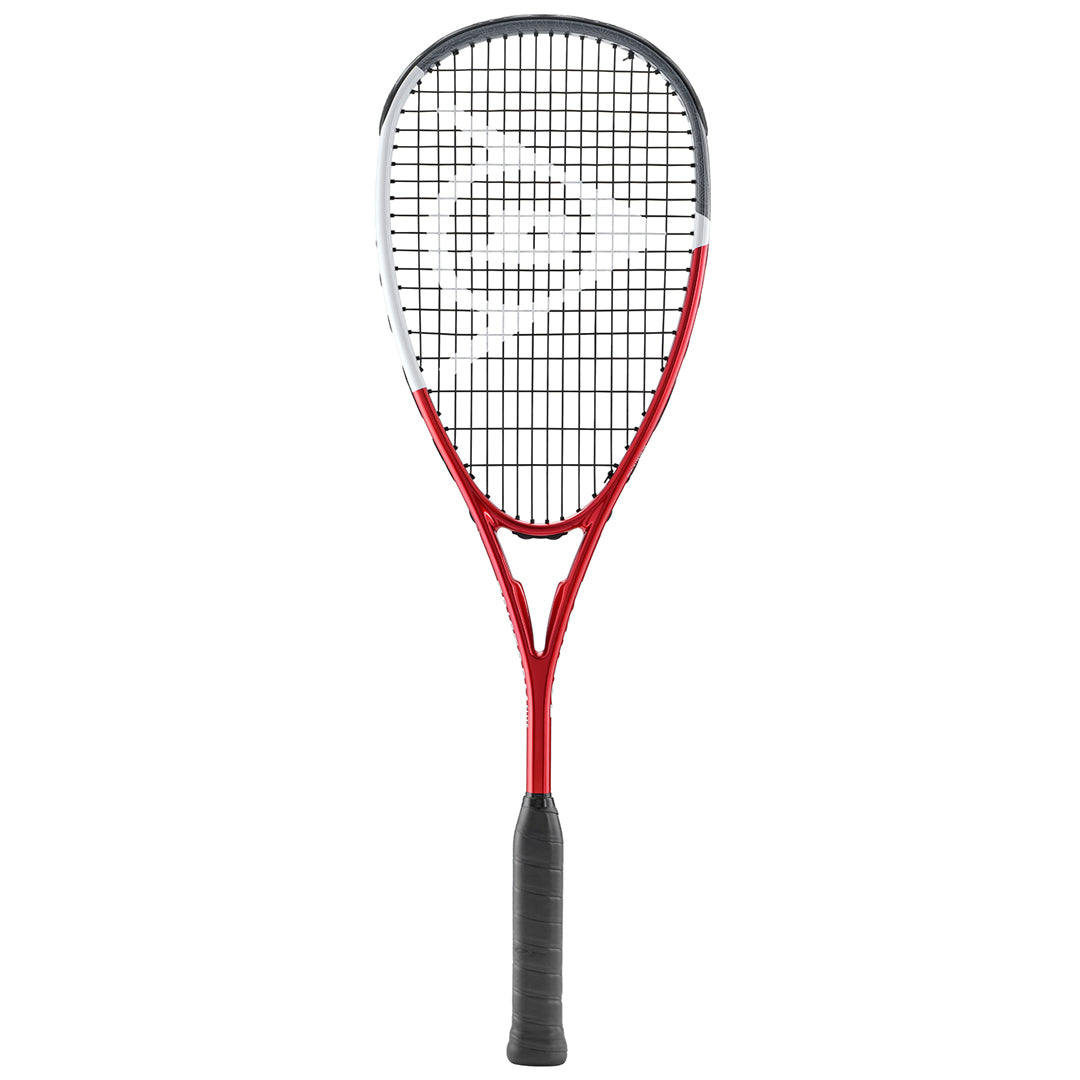
- Weight
- 140 g
- Head
- 77.5 in²
- Strings
- 14x19
140 g, 500 cm², and a 14x19 pattern, with a slightly head-light balance to offset the weight. It has Power Grommets, grommets that, according to Dunlop, let the strings work more. A step above aluminum for players who want a heavy graphite racquet.
- 2
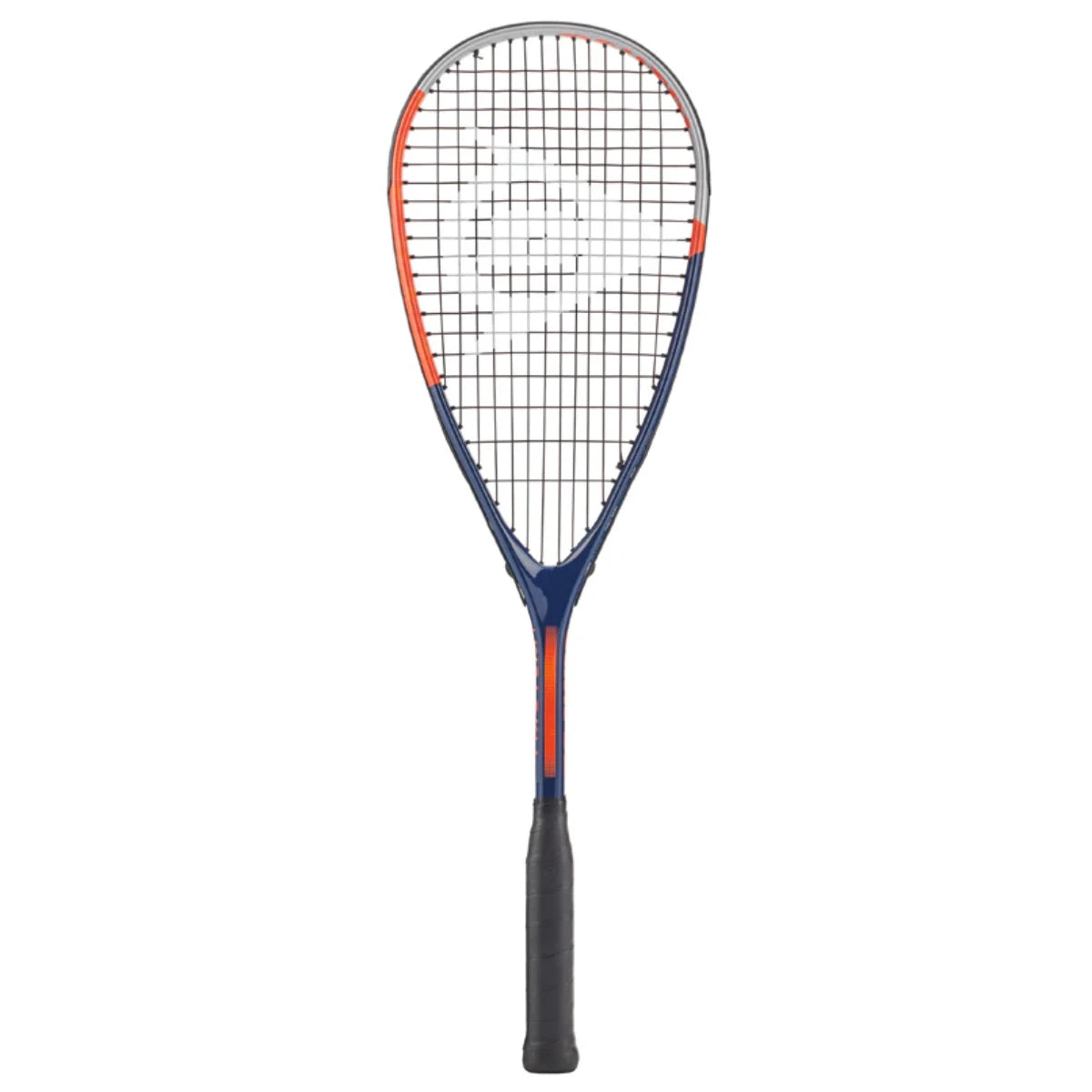
- Weight
- 170 g
- Head
- 77.5 in²
- Strings
- 14x20
Aluminum, 170 g, 500 cm² head, and an open 14x20 pattern. Takes wall hits without drama. Rated 4.4 out of 5 on Amazon with 32 reviews. For lessons, recreational use, and players still deciding whether to stay with the sport.



Comparison of the beginner racquets
Note the weight column: the graphite racquets sit between 120 and 140 g, while the aluminum one is over 170 g. It is a difference you feel by the second game.
Squash racquets for beginners: Extreme 120, Carboflex Team, Slash Team, Inspire, Tristorm
Highlighted: what differs between the racquets. In bold: the best value in the row.
Head Extreme 120: why it is the first choice
The Extreme 120 2025 brings together the four characteristics we listed without excess. The 495 cm² teardrop head is practically at the rules limit. The 120 g makes the racquet easy to lift between strokes, and the head-heavy balance gives back the mass that the low weight takes away. The frame varies from 19.5 to 21.5 mm, thicker than that of control racquets; thicker frames usually help with power.
The Power Holes, holes in the throat area, lengthen the main strings. Innegra, a composite used in the frame, is Head's bet to reduce vibration. For beginners, that matters because the ball will catch near the frame many times.
Strengths
- + 120 g unstrung
- + Teardrop shape with 495 cm²
- + Head-heavy balance for players with a short swing
- + Innegra in the frame
Drawbacks
- − Thicker frame than control lines
- − Head-heavy balance weighs on reflex balls
If you are strong, play another racquet sport, or find the 120 too light in your hand, the Extreme 135 has the same shape at 135 g and is also recommended for beginners and intermediate players. The Extreme 145, heavier, has a head-light balance and suits players who want a stable, durable racquet.
Tecnifibre Team: Carboflex or Slash?
Both Tecnifibre Team versions have 130 g, 500 cm², a 355 mm balance, and a 14x18 pattern, and both come strung. The difference is in the design:
- Carboflex Team 130 V2: monoshaft, single-shaft heart, the same idea as the competition Carboflex.
- Slash Team: inherits the open-throat ergonomics of the Slash line, developed with Mostafa Asal.
Since the spec sheet is practically the same, the choice depends more on the feel in your hand and on current offers. If you can, hold both before deciding. To see other options from the brand, the Tecnifibre comparison shows the whole line.
Dunlop for beginners: Blackstorm Carbon or Tristorm Elite?
Dunlop has two entry-level graphite racquets with opposite philosophies, and the choice between them sums up the balance dilemma well.
- Blackstorm Carbon: 130 g with a head-heavy balance. The mass at the top pushes the ball to the back even when you hit cramped. The denser 16x19 pattern holds the ball a little and keeps it from coming off uncontrolled.
- Tristorm Elite: 140 g with an extra head-light balance. The greater weight sits near the hand, so the racquet is stable without feeling slow. The Power Grommets are grommets that, according to Dunlop, let the strings move more.
If you are shorter, have less arm strength, or play only for fun, the Blackstorm Carbon tends to be easier. If you are strong and already feel the ball coming off, the head-light balance of the Tristorm Elite tends to match your game better. Both are on the Dunlop squash page.
Aluminum or graphite: what should you buy first?
| Situation | Best choice | Why |
|---|---|---|
| Taking your first lessons | Aluminum (Tristorm Pro, Spark Elite) | Takes wall hits and costs little to replace |
| Already plays once a week and will keep going | Entry-level graphite (Extreme 120, Team) | Lighter, more sensitive, grows with you |
| Plays 2 or more times a week | Entry-level or intermediate graphite | Aluminum starts to limit touch and tires the arm |
| Child or short teenager | Junior racquet, shorter | Right length for arm size |
The Head Spark Elite, sold as a kit, weighs 190 g and has a very open 12x17 pattern: it is durable and works for lessons, but it is the heaviest on the list. Anyone buying an aluminum racquet should think of it as learning equipment, not as the racquet for the next few years.
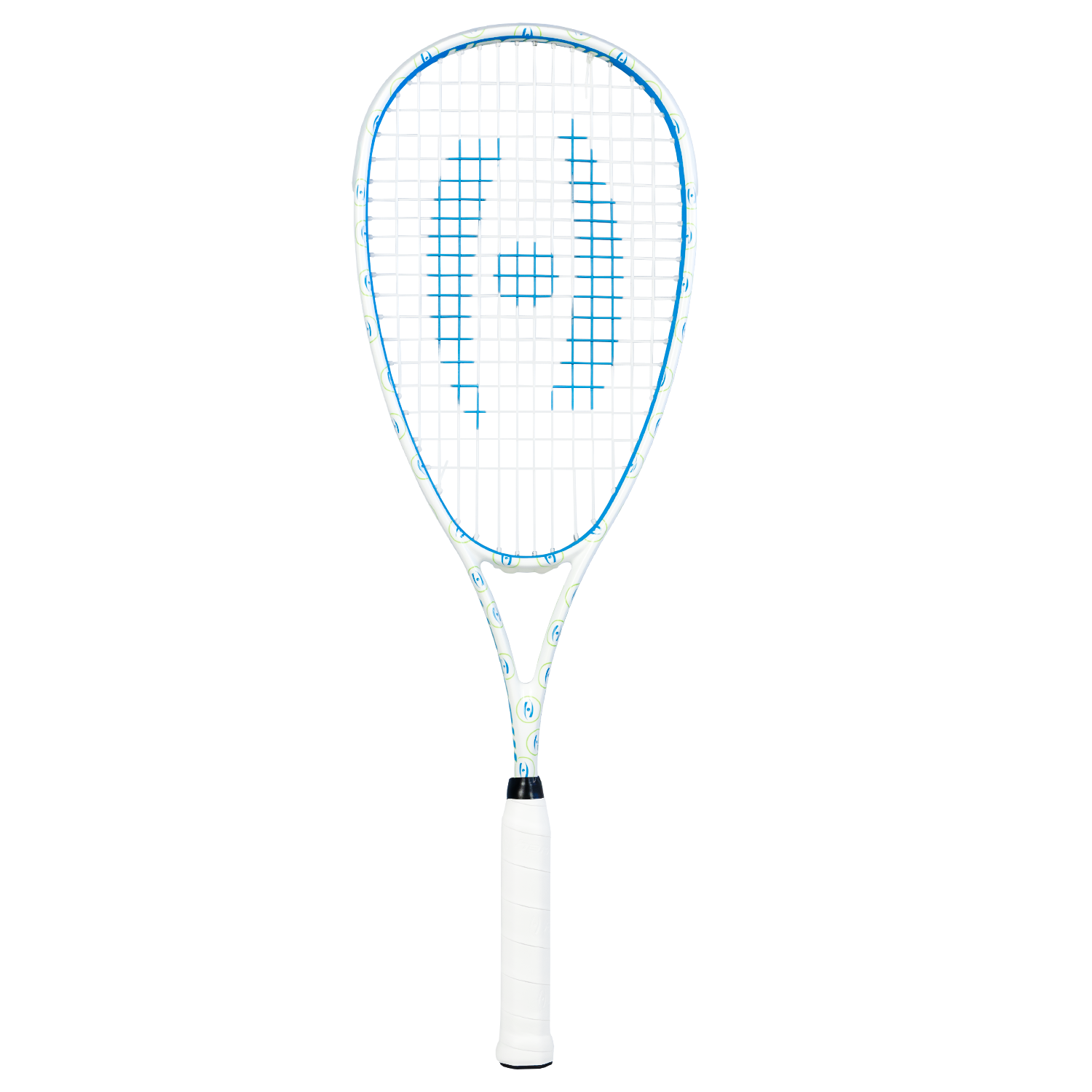


For kids who already train: high-modulus graphite, 25 inches, 130 g unstrung, and an even balance. Comes strung at 28 lbs and with a half cover.
The right ball matters more than the racquet
This is the most common mistake for beginners: playing with the double yellow dot ball, the same one used in professional tournaments. It bounces very little and has to be warmed up with hard hits to work. In a beginner's hands, the ball dies on the floor before you get to it, and the game turns into a series of lost balls.
Dunlop, which makes the most widely used balls, separates its line by colored dots:
| Ball (Dunlop) | Dot | Difference from the pro ball | Who it's for |
|---|---|---|---|
| Intro | Blue | 12% bigger and 40% more air time | First lessons and kids |
| Progress | Red | 6% bigger and 20% more air time | Recreational, players who already sustain rallies |
| Competition | Single yellow | 10% more air time | Club player who is improving |
| Pro | Double yellow | Benchmark | Advanced and competition |
With the blue or red dot ball, the ball stays in the air longer, you get to it with time to set up the stroke, and you can actually rally. That is how you learn the technique that later makes any racquet perform.
Tip
Ask the club or the coach which ball to use. Many beginners give up on squash thinking the problem is the racquet, when the double yellow dot ball simply doesn't bounce enough for their pace.
Things to watch for on your first purchase
- Check whether it comes strung. Most entry-level racquets come ready to play. If the factory string is very basic, the first restring already improves the feel.
- The grip is a consumable. It will go slick with sweat. Keeping a replacement grip at home costs little and keeps you from squeezing the handle too hard.
- Protective eyewear. World Squash recommends protective eyewear for all players, in any match, and makes it mandatory at the junior and doubles events it sanctions. A squash ball to the eye is a serious accident.
- Cover. Some entry-level racquets come without a cover; it is worth buying one to carry the racquet without marking the frame.
Common mistakes with a first squash racquet
- Buying the lightest possible. A 110 g racquet feels great in the hand, but it demands a full swing to send the ball to the back. For players who are still learning, it shortens the game.
- Buying your idol's racquet. Competition models usually have a smaller head or a handle-heavy balance, characteristics that punish players who still miss the center.
- Thinking a heavy head is always better. It helps on the drive but hurts on volleys. If you already play a lot up front, an even balance may be more comfortable.
- Ignoring the grip. Beginners squeeze the handle too hard. A new grip that doesn't slip helps loosen the wrist.
When to replace your beginner racquet
Signs that you have outgrown the entry-level racquet: you hit the center often, you feel the ball coming off too hard on short touches, and you start playing more up front, with volleys. At that point, even-balance and control racquets begin to make sense. The guide to the best squash racquets for intermediate players shows the next step, and the overall ranking of squash racquets for 2026 shows the top of the catalog.
If you would rather have a personalized recommendation, Find Your Racket asks your level and style and filters the squash catalog for you.
What is the best squash racquet for a beginner?
A graphite racquet with a head close to 500 cm², between 120 and 140 g, and a head-heavy balance. The Head Extreme 120 2025 brings these characteristics together. Tecnifibre Carboflex Team 130 V2 and Slash Team are good alternatives, more stable at 130 g.
Is an aluminum squash racquet worth it?
For first lessons and recreational use, yes: it is durable against wall hits and cheap to replace. But it weighs 165 to 190 g, has little sensitivity, and tires the arm. If you will play regularly, an entry-level graphite racquet is a better investment.
Which squash ball should I use to start?
The blue dot (Intro) or red dot (Progress), in Dunlop's line. They are bigger and stay in the air longer than the professional double yellow dot ball, which gives you time to get there and set up the stroke. The double yellow dot is made for advanced players.
Heavy or light squash racquet for a beginner?
Neither too light nor too heavy. In graphite, between 120 and 140 g unstrung. Very light racquets demand technique to generate depth; very heavy ones tire the arm and delay the stroke. Balance counts too: a little weight in the head helps players who still have a short swing.
Do I need to restring a new racquet?
Not right away. Most entry-level racquets come strung and ready to play. When the string loses its response or breaks, replace it with a medium-gauge multifilament, around 1.20 mm, which balances durability and feel.
Can a child use an adult racquet?
It is not ideal. Adult racquets are about 68.5 cm and are long and heavy for small children. Junior models, like the 25-inch Harrow Junior 130, have the right length and make control easier until the child grows.
Where to buy the racquets in this guide
- Tristorm Elite 2024 Dunlop140 g · 77.5 in² · 14x19See priceAmazon
- Tristorm Pro 2024 Dunlop170 g · 77.5 in² · 14x20See priceAmazon
- See priceTennis Central
The prices above are checked automatically at each store and may have changed since the last check. The price that counts is the one shown on the store's website at checkout. We may earn a commission on purchases made through store links, at no extra cost to you.