


 Brasil
 Canada
 United Kingdom
 Australia
 Netherlands
 France
 España
 Italia
 السعودية
Best Squash Racquets 2026: The Best Picks by Playing Style
Ranking of the best squash racquets of 2026 by playing profile, with the technical reason behind each pick and a direct comparison of the standouts.
Updated on 10/07/2026
On this page
- 1.How we chose the best squash racquets of 2026
- 2.The best squash racquets by profile
- 3.Direct comparison: the five standouts side by side
- 4.Best overall: why the Carboflex 125 X-Top V2 came out on top
- 5.Compact head: Dunlop CX 125
- 6.The lightest on the list: Dunlop CX 120
- 7.More mass or a heavy head: Head Speed 135 SB and Dunlop FX 128 Pro
- 8.Smaller head and thin frame: Head Radical 135 SB
- 9.Brazilian signature model and classic control: Unsquashable
- 10.For players moving on from aluminum: Dunlop FX Team 125
- 11.Which squash racquet to buy for your style
- 12.Common mistakes when choosing
For most players who already play squash regularly, the best squash racquet of 2026 is the Tecnifibre Carboflex 125 X-Top V2: 125 g, a 500 cm² head, and even balance, a package that attacks and defends without needing adjustment. If your game leans one way, the choice changes: the Dunlop CX 125 has a compact 470 cm² head and a closed throat, the Head Speed 135 SB has 135 g for players who defend from the back, and the Dunlop CX 120 is the lightest at the top, at 120 g.
The list below separates the racquets by profile, explains the technical reason for each pick, and shows live prices from stores.
How we chose the best squash racquets of 2026
We started with the squash racquets published in the Racquet Rank catalog and cross-checked four things:
- Spec sheet: unstrung weight, balance, head area, and string pattern. In squash, those four numbers explain almost everything you feel on court.
- RR Score: the site's overall score, which appears live on each racquet. The math is in the methodology.
- Generation and availability: we prioritized current models with offers from stores. A good racquet nobody sells doesn't help.
- Profile consistency: each racquet was placed in the profile its own spec sheet suggests, such as compact head, head-heavy, or low weight.
There are no paid placements. If none of the options below matches your game, Find Your Racket matches your level and style against the whole catalog.
The best squash racquets by profile
Best squash racquets of 2026
- 1
- Weight
- 125 g
- Head
- 77.5 in²
- Strings
- 14x18
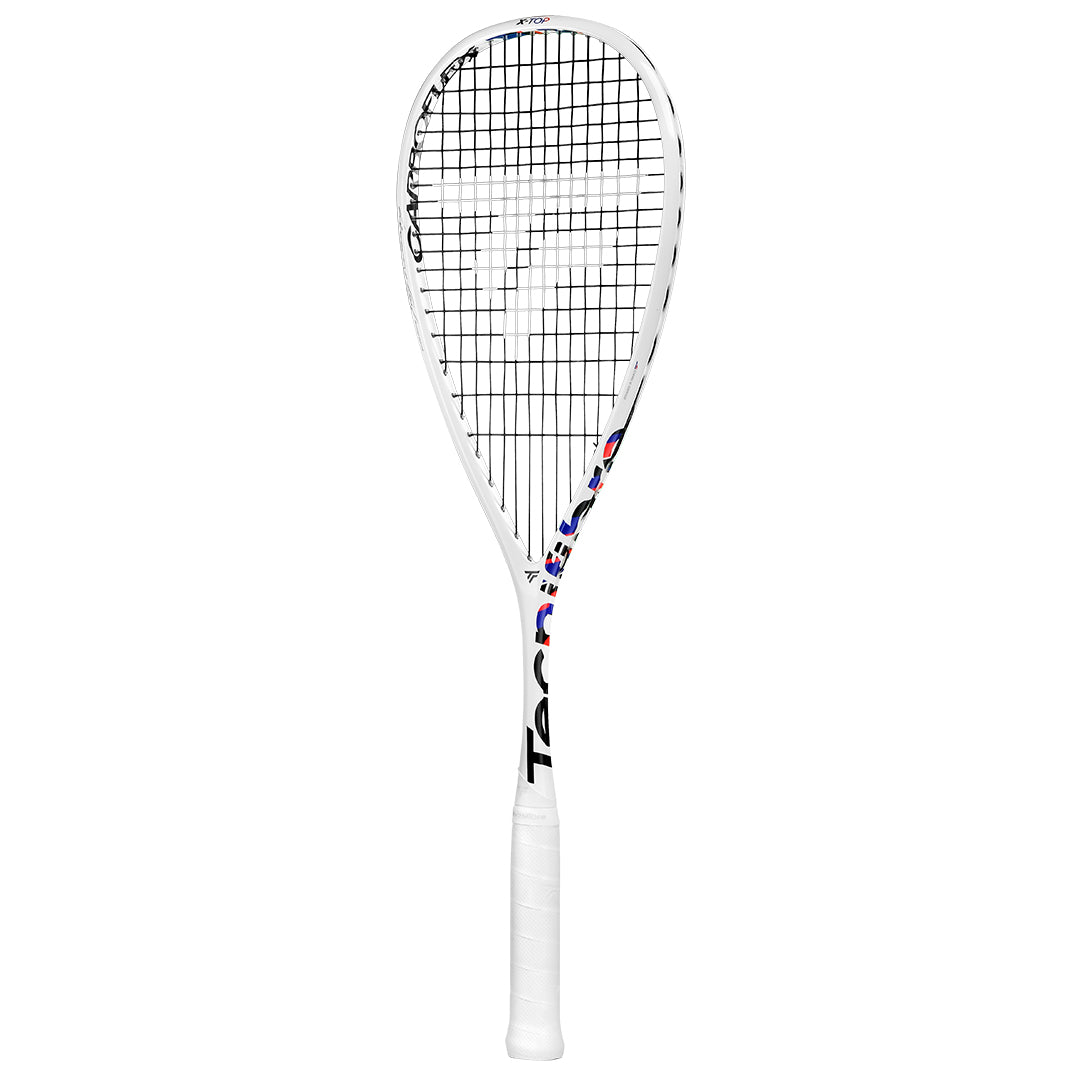
Combines the maximum permitted head size (500 cm²) with 125 g and an even balance of 350 mm. The X-Top tip swaps the plastic bumper for aramid fibers, which makes the swing faster through the air. It attacks well, defends well, and suits players from intermediate to competitive.
- 2
- Weight
- 125 g
- Head
- 72.9 in²
- Strings
- 14x18
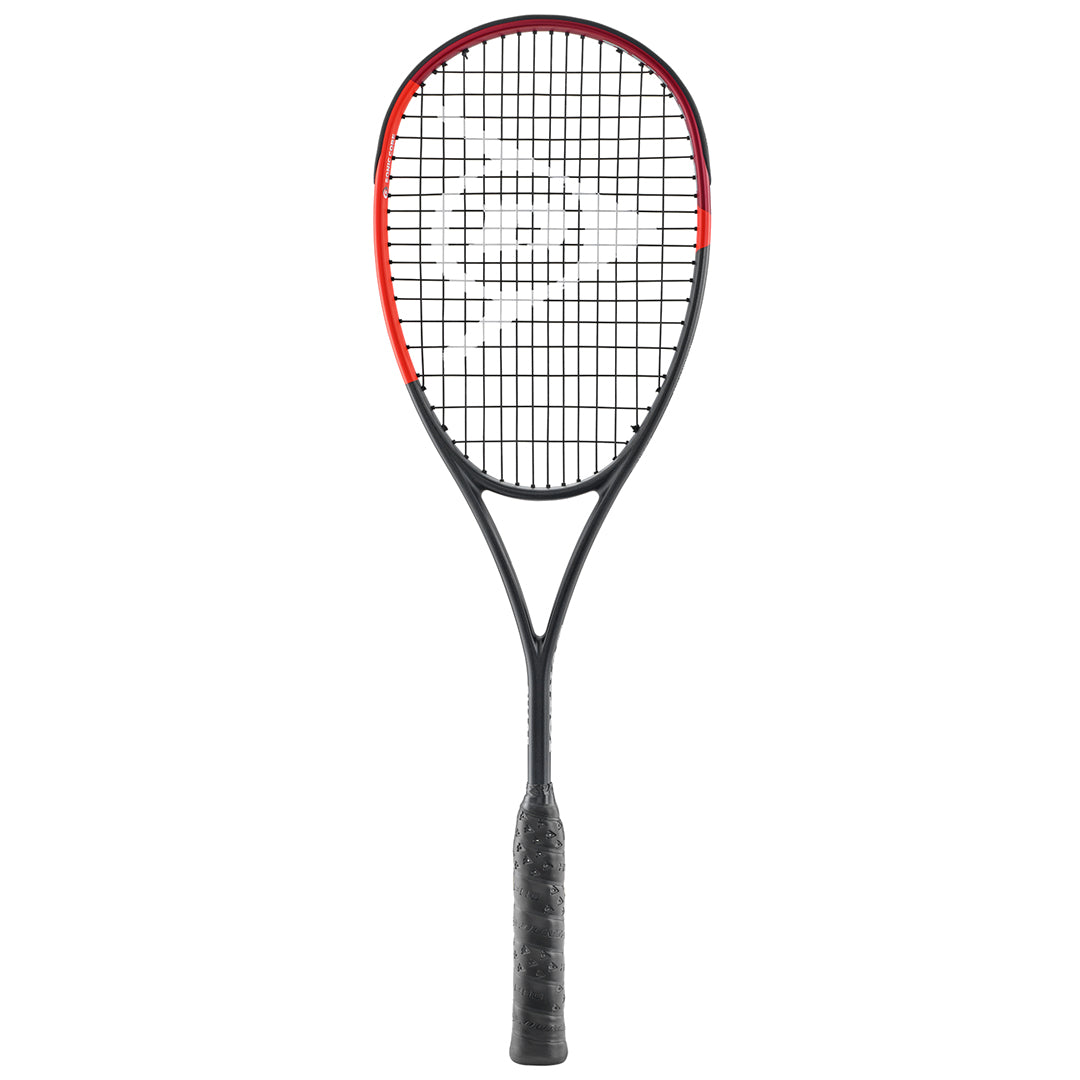
470 cm² head, the smallest in the CX line, closed throat, and a head-light balance. A smaller head and closed throat tend to favor precision on drops, short volleys, and drives tight to the wall. In return, it needs your own swing to generate speed.
- 3
- Weight
- 120 g
- Head
- 76 in²
- Strings
- 14x18
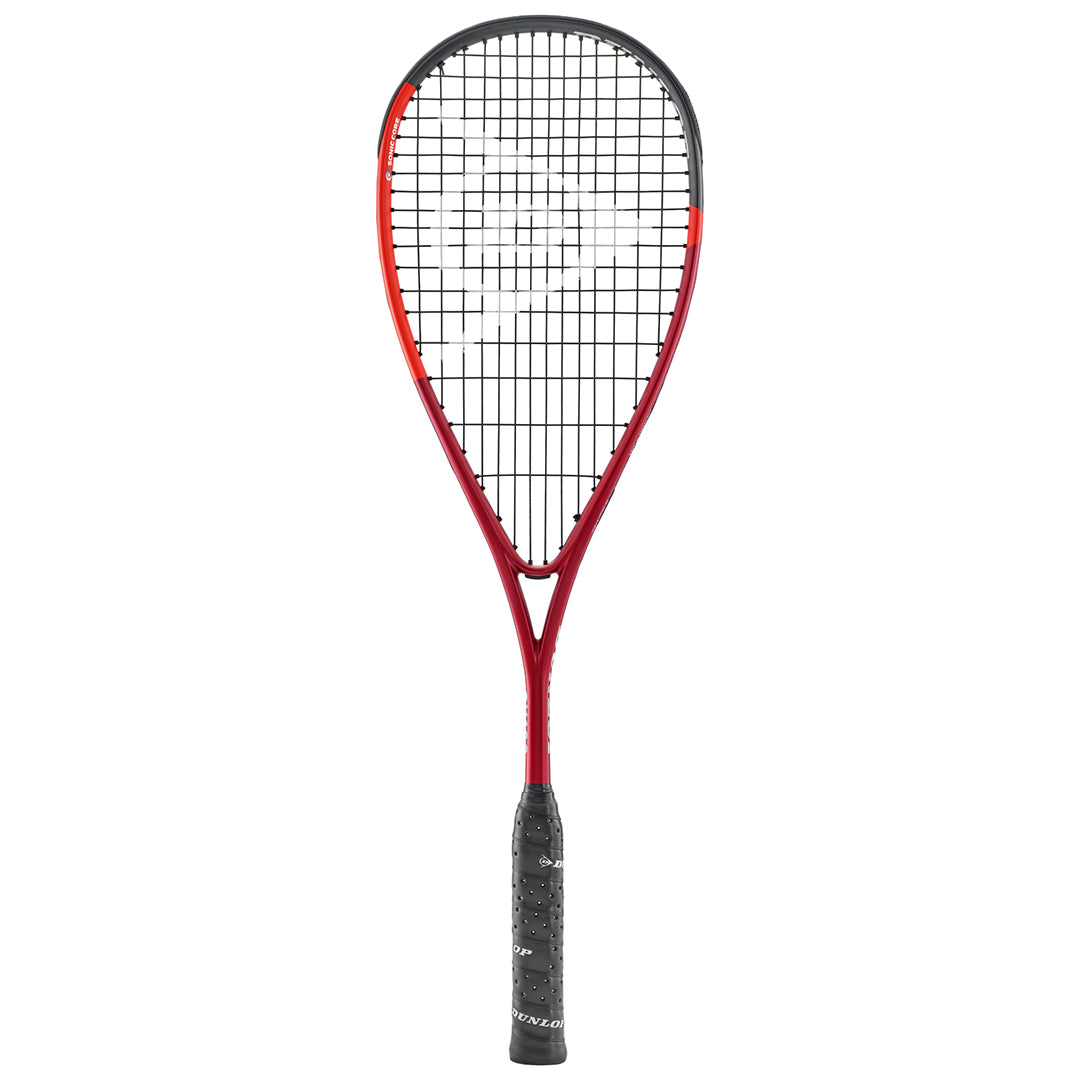
Just 120 g unstrung with a head-light balance, a combination that favors volley exchanges at the T. The 490 cm² hybrid head has elongated main strings, a feature Dunlop uses to recover power.
- 4
- Weight
- 135 g
- Head
- 77.5 in²
- Strings
- 12x17
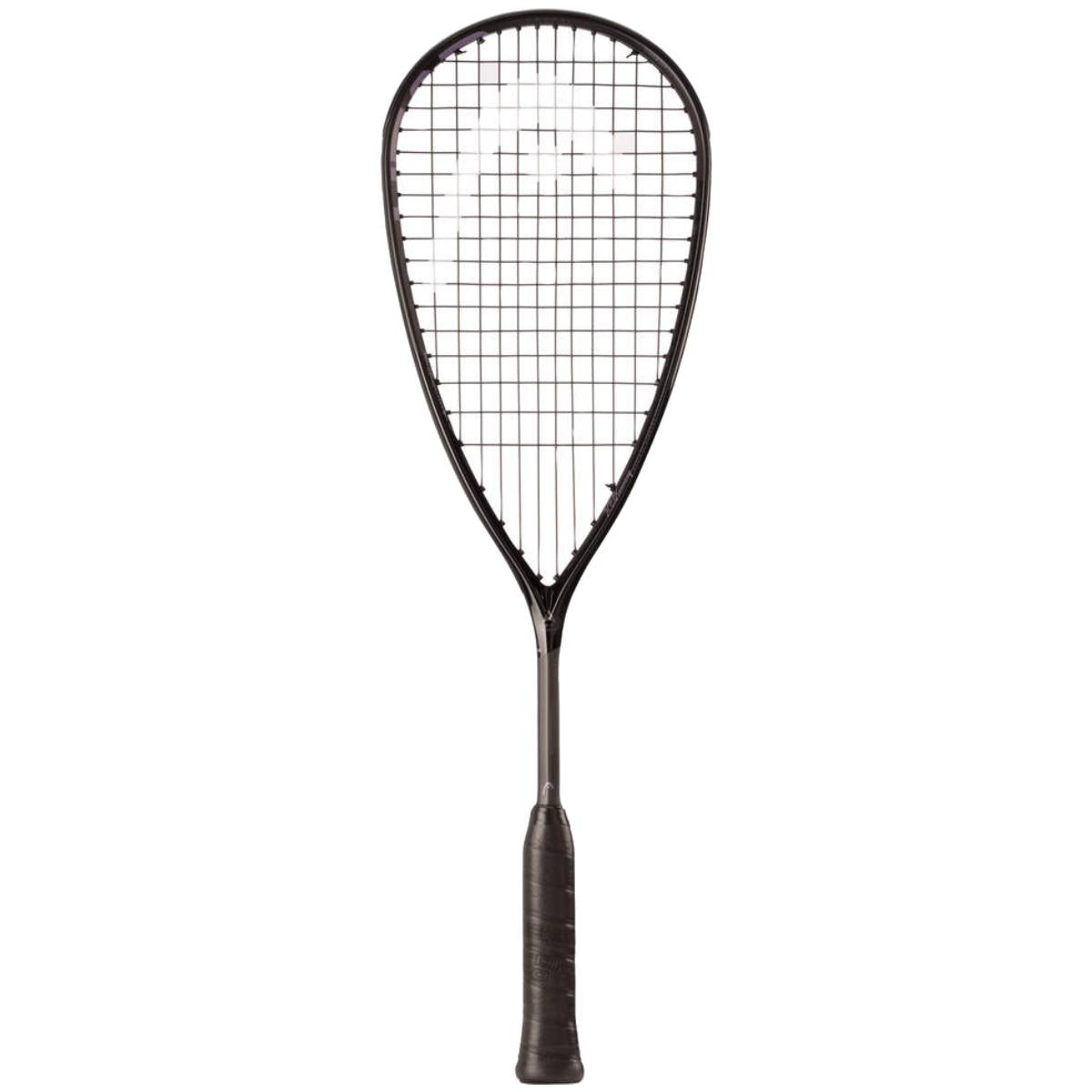
135 g unstrung, 500 cm², and a head-light balance: more mass for players who defend from the back, with the weight close to the hand. The Slimbody frame gets through balls stuck to the side wall more easily, and the AFP pattern lets you string it 12x17 (straight) or 16x17 (fan).
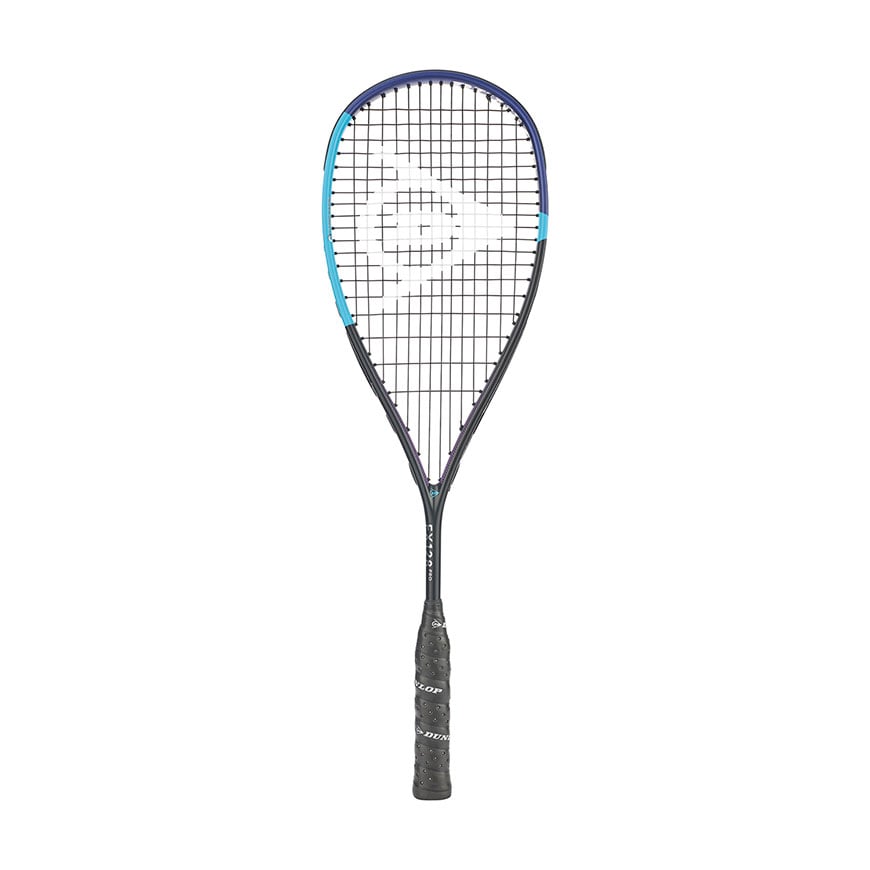
- 5
- Weight
- 128 g
- Head
- 77.5 in²
- Strings
- 14x19
Open throat, 500 cm², 14x19 pattern, and a head-heavy balance. The spec sheet suits players who like to take the ball early and play up front. The pattern is slightly denser than the usual 14x18.







Direct comparison: the five standouts side by side
The table below makes the difference in philosophy among the top racquets clear. Note three columns: head area (forgiveness), string pattern (control), and balance (maneuverability).
Carboflex 125, CX 125, CX 120, Speed 135 SB, and FX 128 Pro
5 racquets: swipe sideways to see them all1–2 of 5 →
Highlighted: what differs between the racquets. In bold: the best value in the row.
Best overall: why the Carboflex 125 X-Top V2 came out on top
In squash, the racquet has to do two things that fight each other: swing fast enough to save a ball that comes back off the side wall in a split second, and carry enough mass to send a drive to the back without breaking down your stroke. The Carboflex 125 X-Top V2 solves this down the middle.
- 125 g is the weight where a good share of competition racquets now cluster. Light enough for volleys at the T, heavy enough not to shake against a hard ball.
- A 350 mm balance, practically in the middle of a 68.5 cm racquet. The head doesn't drag on your wrist, and you don't miss the momentum.
- 500 cm² is the maximum the rules allow. A big sweet spot helps when you arrive late and catch the ball off-center.
- Bumper-free tip: Tecnifibre replaces the plastic cap with aramid fibers, which takes weight off the point farthest from the handle. With less mass at the tip, the head tends to accelerate more easily.
If you have small hands or like to rotate your wrist a lot on boasts and volleys, there is the NS version, with a thinner handle. And the NEO generation, launched in 2026, is already in the catalog, but with few offers for now.
Strengths
- + Bumper-free tip, with less mass at the end
- + 500 cm² head, the maximum under the rules
- + Even balance of 350 mm
- + Comes strung from the factory with Dynamix VP
Drawbacks
- − Without a bumper, scrapes on the floor and wall mark the tip
- − NEO generation already released, with few offers for now
Compact head: Dunlop CX 125
Control in squash means placing the ball a few centimeters from the side wall, or making the drop die before the second bounce without touching the tin. Two things help: a smaller head and a closed throat.
The CX 125 has 470 cm², 30 cm² less than most. It seems small, but the stringbed is more compact and uniform, and that tends to make the exit angle more predictable. The closed throat (with a bridge between the head and the handle) shortens the main strings and reduces the trampoline effect. The price comes with it: a smaller head forgives off-center hits less and gives less free power.
Players who want control, but with more forgiveness, have the sister CX 132: a traditional 500 cm² head, dense 16x19 pattern, and 132 g, still head-light. The difference between head shapes is explained in detail in the guide to open vs. closed throat squash racquets.
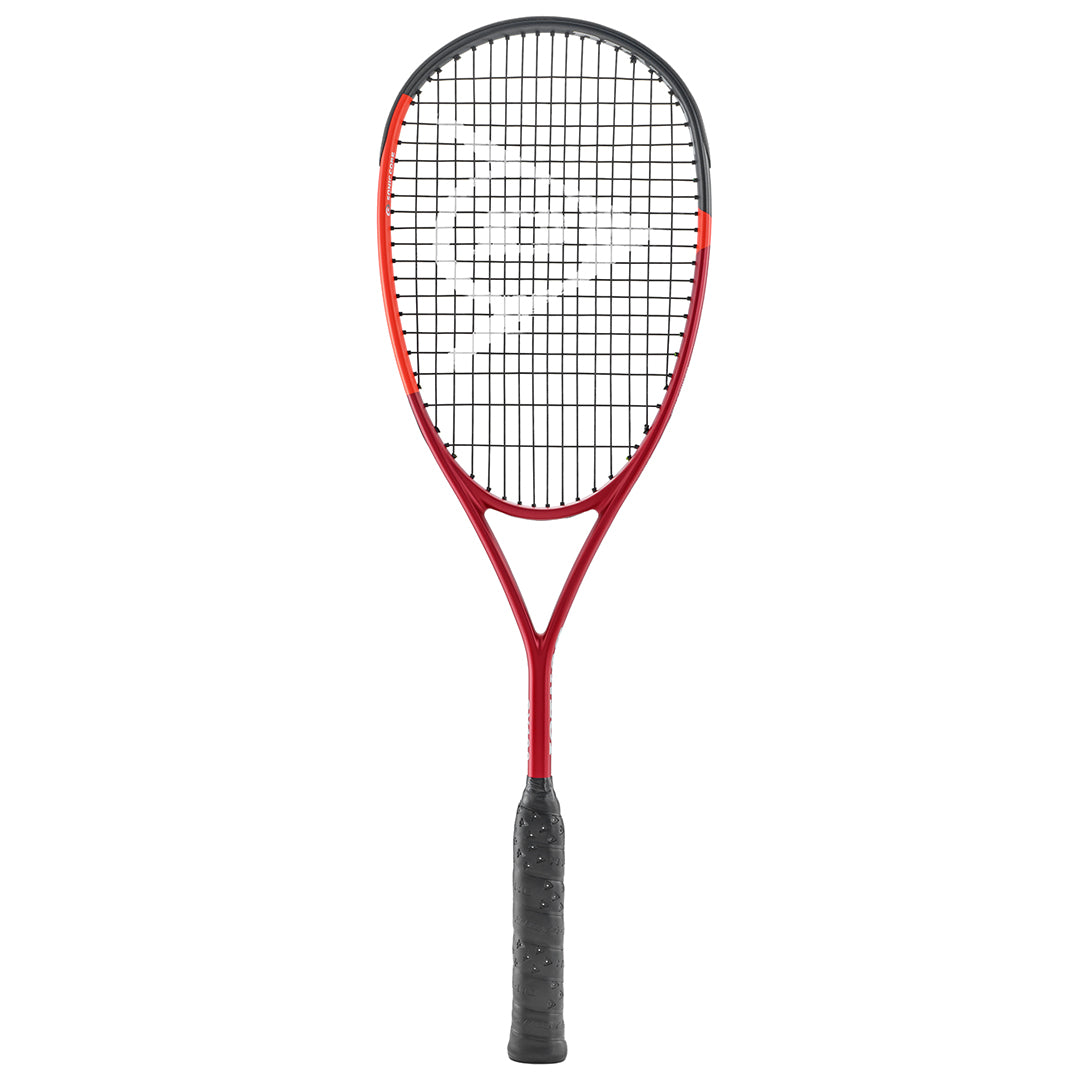

An alternative to the CX 125 for players who want the denser 16x19 pattern without giving up the 500 cm² head. It asks for a bit more arm because of the 132 g.
The lightest on the list: Dunlop CX 120
If your game is to stay at the T and cut the ball off with a volley before it reaches the back, hand speed is worth more than the weight of the ball. The CX 120 has 120 g unstrung and a head-light balance, the combination that makes reacting easiest.
What sets it apart from other ultralight racquets is the 490 cm² hybrid head with elongated main strings: Dunlop stretches the strings into the throat area, with the idea of recovering some of the rebound that lightness takes away. Even so, it has little mass to block a heavy ball at the back; players who spend most of the match defending from behind tend to do better with 125 to 130 g.
More mass or a heavy head: Head Speed 135 SB and Dunlop FX 128 Pro
Power in squash is not just hitting hard. It is managing to send the ball to the back even when you are out of position, with a short swing, because the side wall doesn't let you take a full backswing. Two racquets on the list bet on this by different paths on the spec sheet.
Head Speed 135 SB 2025 uses mass: 135 g unstrung, a 500 cm² head, and a teardrop shape with an open throat. The balance is head-light, so the weight sits closer to the hand, which keeps the racquet from feeling slow. The thinner Slimbody frame helps on balls stuck to the wall, a situation where a thick frame scrapes before the strings touch the ball.
Dunlop FX 128 Pro 2026 uses a heavy head: 128 g with the mass shifted to the top, an open throat, and 500 cm². It is a spec sheet that suits players who attack early, up front. The 14x19 pattern is slightly denser than the usual 14x18, with more cross strings in the stringbed.
Good to know
Head-heavy and head-light balance change the feel more than weight does. A 128 g racquet with a heavy head can feel heavier in the swing than a 135 g head-light one. If you can, compare the two in your hand before deciding by the number on the box.
Smaller head and thin frame: Head Radical 135 SB
The Radical line is Head's answer for touch players. The 135 SB 2024 has 475 cm², an even balance, and a 16 mm Slimbody frame. The 135 g looks like a lot on paper, but the even balance keeps that mass near the middle of the racquet, without concentrating weight at the tip.
The adaptable pattern is a differentiator: the same frame can be strung 14x17, for more power, or 18x17, with the strings in a fan, for more control. If you don't know yet what you prefer, start with the factory pattern and ask for the change at your next restring.
The 2026 version is already in the catalog with Hy-Bor technology in the handle, but the 2024 is the one that currently shows up with easier availability.
Brazilian signature model and classic control: Unsquashable
Unsquashable has two good options at the top of the catalog:
- Diego Gobbi Autograph 2026: 125 g, 500 cm², head-light, and a 14x18 pattern. It is the racquet for the aggressive player who wants a big, fast head. It comes with a good-quality string and grip, which is usually a real saving, since many racquets leave the factory with basic string.
- Tour-Tec Pro 125: same weight, same area, but a classic head instead of a teardrop. The classic head spreads the area more toward the top and sides, and the ball comes off less "loose" than on a power teardrop. Good for players who already have a stroke and want to refine placement.
One detail to note: Unsquashable reports the racquets' "dynamic weight," a measure specific to the brand. Compare it with caution to the unstrung weight from other manufacturers.
For players moving on from aluminum: Dunlop FX Team 125
Not everyone needs a competition racquet. If you play once or twice a week and are still replacing your first racquet, the FX Team 125 is the most sensible choice on this list. It is graphite, with a 500 cm² teardrop head, 125 g, and head-light. It is rated 4.3 out of 5 on Amazon with 19 reviews. For players still in their first lessons, see the guide to the best squash racquets for beginners, which also covers aluminum racquets and choosing the ball.
Which squash racquet to buy for your style
| Your game | What to look for | Pick from this list |
|---|---|---|
| Plays everything, wants one racquet | 120 to 130 g, even balance, 500 cm² | Carboflex 125 X-Top V2 |
| Drops, touch, balls stuck to the wall | Smaller head, closed throat, denser pattern | CX 125 or Radical 135 SB |
| Volleys at the T, high tempo | Up to 120 g, head-light | CX 120 |
| Defends from the back, wants a heavy ball | 130 to 135 g, big head | Speed 135 SB |
| Attacks early up front | Heavy head, open throat | FX 128 Pro |
| Plays for fun, improving | Entry-level graphite, 500 cm² | FX Team 125 |
Still torn between two models? The squash racquet comparison tool puts the spec sheets side by side, and the Dunlop comparison helps you understand the differences between the CX, FX, and Team lines. To understand each number on the spec sheet at your own pace, read the guide on how to choose a squash racquet.
Common mistakes when choosing
- Buying a pro's racquet by name. Professionals choose by their own swing, and many customize weight and balance. What works for someone who trains every day can be too fast or too lively for you.
- Looking only at weight. Two 125 g racquets can feel opposite because of balance. Always read the two together.
- Ignoring the string. The factory string on an entry-level racquet is usually basic. Switching to a 1.20 mm multifilament can change the feel more than switching models.
- Underestimating the grip. A worn grip slips, and you squeeze the handle harder to compensate. Replace it before blaming the racquet.
If you have been playing for a few years and want to understand when it is worth moving to a lighter or control-oriented racquet, the guide to squash racquets for intermediate players deals exactly with that transition.
What is the best squash racquet of 2026?
For most regular players, the Tecnifibre Carboflex 125 X-Top V2, for its balance of 125 g, even balance, and 500 cm² head. Players who prefer a compact head and closed throat should look at the Dunlop CX 125; those who want the lightest racquet, the Dunlop CX 120, at 120 g; and those who want more mass for the back of the court, the Head Speed 135 SB, at 135 g.
What is the ideal weight for a squash racquet?
Between 120 and 135 g unstrung works for almost all adult graphite players. Below 120 g the racquet gets very fast but loses stability against hard balls. Above 135 g it is stable but tiring in long matches. Always read weight together with balance.
Is a squash racquet with a big head better?
It is more forgiving: 500 cm², the maximum allowed by the rules, forgives off-center hits and makes power easier. Smaller heads, between 455 and 475 cm², give more precision, but require hitting the center often. For most club players, 490 to 500 cm² is the safest.
Is it worth buying the previous generation of a racquet?
Often, yes. Models like the Head Radical 135 SB 2024 and the Tecnifibre Carboflex 130 X-Top remain on sale and change little from later generations. Check that the main specs (weight, balance, head, and pattern) are the same before paying more for the new release.
Is a racquet without a bumper fragile?
Not necessarily, but the tip is more exposed. On Tecnifibre's X-Top racquets, the plastic bumper is replaced with aramid fibers, which makes the swing faster. In exchange, scrapes on the floor and wall mark the frame more easily. Players who scrape their racquet a lot may prefer a model with a traditional bumper.
How long does a squash racquet last?
It depends heavily on use and on wall hits, which are the main cause of breakage. The string and grip wear out well before the frame. Players who play several times a week usually replace the string a few times a year and the grip even more often.
Where to buy the racquets in this guide
- Carboflex 125 X-Top V2 Tecnifibre125 g · 77.5 in² · 14x18See priceHolabird Sports
- CX 125 2025 Dunlop125 g · 72.9 in² · 14x18See priceAmazon
- CX 120 2025 Dunlop120 g · 76 in² · 14x18See priceAmazon
- Speed 135 SB 2025 HEAD135 g · 77.5 in² · 12x17See priceSquashGear.com
- FX 128 Pro 2026 Dunlop128 g · 77.5 in² · 14x19See priceSquashGear.com
- CX 132 2025 Dunlop132 g · 77.5 in² · 16x19See priceHolabird Sports
The prices above are checked automatically at each store and may have changed since the last check. The price that counts is the one shown on the store's website at checkout. We may earn a commission on purchases made through store links, at no extra cost to you.