


 Brasil
 Canada
 United Kingdom
 Australia
 Netherlands
 France
 España
 Italia
 السعودية
Squash Racquet: Open or Closed Throat?
Open or closed throat, teardrop or traditional: what each shape changes on the spec sheet, which level it suits, and examples from Tecnifibre, Dunlop, and Head.
Updated on 10/07/2026
On this page
- 1.What open throat and closed throat mean
- 2.Teardrop vs. traditional: shape is not the same as throat
- 3.How each shape affects power, sweet spot, and control
- 4.Table: open head vs. closed head
- 5.Real catalog examples, brand by brand
- 6.Same weight, opposite shapes: Head Speed 135 vs. Radical 135
- 7.Who should choose each shape
- 8.Selection by shape
- 9.How to feel the difference on court
- 10.Myths about head shape
- 11.Shape and rules: why almost all are 500 cm²
An open-head squash racquet (open throat, almost always teardrop-shaped) delivers more power and a bigger sweet spot; a closed-head racquet (with a bridge between the head and the handle) delivers more control and a more predictable response. For most players, especially beginners or those who still need help getting the ball to the back, the open head is the easier choice. The closed head pays off for players who already have a stroke and win points by placement.
But throat shape doesn't decide everything on its own. Head area, string pattern, and balance weigh just as much, and the catalog has good examples of that.
What open throat and closed throat mean
The "throat" is the region where the racquet head meets the handle.
- Closed throat: there is a crosspiece, the bridge, that closes off the bottom of the head, as on a tennis racquet. The main strings end at that bridge.
- Open throat: there is no bridge. The head narrows and merges into the handle, and the main strings run down very close to it.
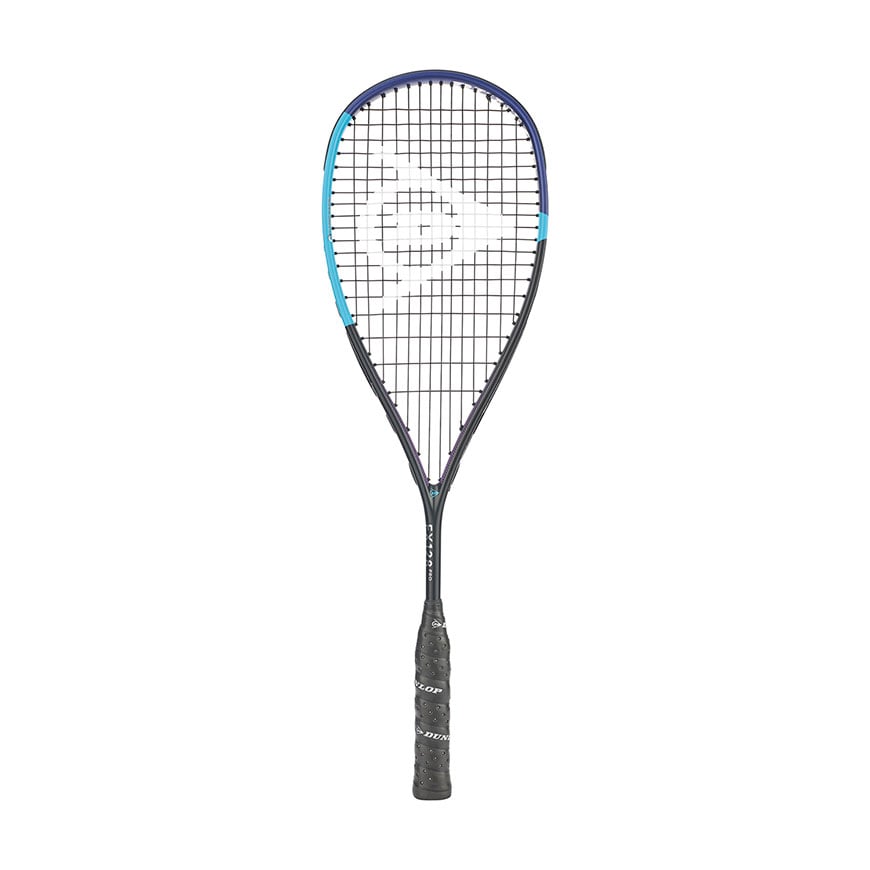
Watch out for a common confusion: "open" here refers to the frame, not the string pattern. An open-throat racquet can have a dense pattern (like the Dunlop FX 128 Pro, at 14x19), and a closed-throat one can have an open pattern.
Teardrop vs. traditional: shape is not the same as throat
Shape describes the design of the head seen from the front.
- Teardrop: the head is wider at the top and narrows toward the handle. Almost all teardrops have an open throat.
- Traditional (classic or oval): the head is more rounded and ends in a bridge. Almost always has a closed throat.
- Hybrid: mixes the two. It keeps the bridge, but moves it lower or elongates the main strings into the throat region.
The exceptions show why it is worth reading the spec sheet. The Harrow Response 120 and the Reflex 125 are teardrop racquets with a closed throat: the brand uses the teardrop design to gain area, but keeps the bridge for stability. And the Tecnifibre Slash 120 Control combines a wide-open throat with a round, compact 461 cm² head designed for precision.
How each shape affects power, sweet spot, and control
Power
What best explains power is the length of the main strings. On an open throat, they run lower and are longer. A long string stretches more on impact and returns the ball like a bigger trampoline. That is why open-throat racquets generate more power with the same swing.
On a closed throat, the bridge shortens the main strings. The stringbed is firmer, the ball sinks in less and comes off with less free speed.
Sweet spot
The sweet spot is the region of the strings where the hit comes off clean, without vibration and with maximum rebound. With longer strings, the open-throat teardrop has a bigger sweet spot, elongated toward the handle. That forgives the ball that catches a little lower, a common situation when you arrive late.
On a traditional head, the sweet spot is more concentrated in the center. A hit in the center is very precise; a hit off it loses more.
Control
Shorter, more uniform strings, like those of a closed head, deform more similarly at any point in the stringbed. The exit angle is more predictable, and that is exactly what you want on a drop or on a drive that needs to hug the side wall. The bridge is also an extra structural piece, and many control racquets use it to give a firmer feel on impact.
Table: open head vs. closed head
| Characteristic | Open throat (teardrop) | Closed throat (traditional) |
|---|---|---|
| Main strings | Longer | Shorter |
| Power | Higher, with less effort | Lower, depends more on the swing |
| Sweet spot | Bigger and elongated | Smaller and more centered |
| Control | Good, but the ball comes off more "loose" | More predictable and precise |
| Forgiveness | High | Medium to low |
| Typical profile | Beginner, intermediate, back-court attacker | Advanced, touch player, and front-court player |
| Examples | Carboflex X-Top V2, Dunlop FX, Head Speed | Dunlop CX, Head Radical 135, Wilson Pro Staff UL |
Real catalog examples, brand by brand
Tecnifibre
The Carboflex X-Top V2 racquets are open-throat teardrops at 500 cm², from the 120 g model to the 135 g one. It is the line many people associate with the shape. The Slash, developed with Mostafa Asal, also has an open throat, but the Control version closes the area down to 461 cm² and uses internal reinforcements in the heart (Yoke Control) to gain precision. It is proof that you can have an open throat and play a control game.
Dunlop
Dunlop splits its lines by exactly this criterion. The FX, aimed at power, has an open throat. The CX, aimed at control, has a closed throat. Within the CX there are nuances: the CX 125 has the compact 470 cm² head; the CX 132 has 500 cm² in a traditional shape with a dense 16x19 pattern; and the CX 120 uses a 490 cm² hybrid head with elongated main strings, which recovers some of the power. The Dunlop comparison puts these differences side by side.
Head
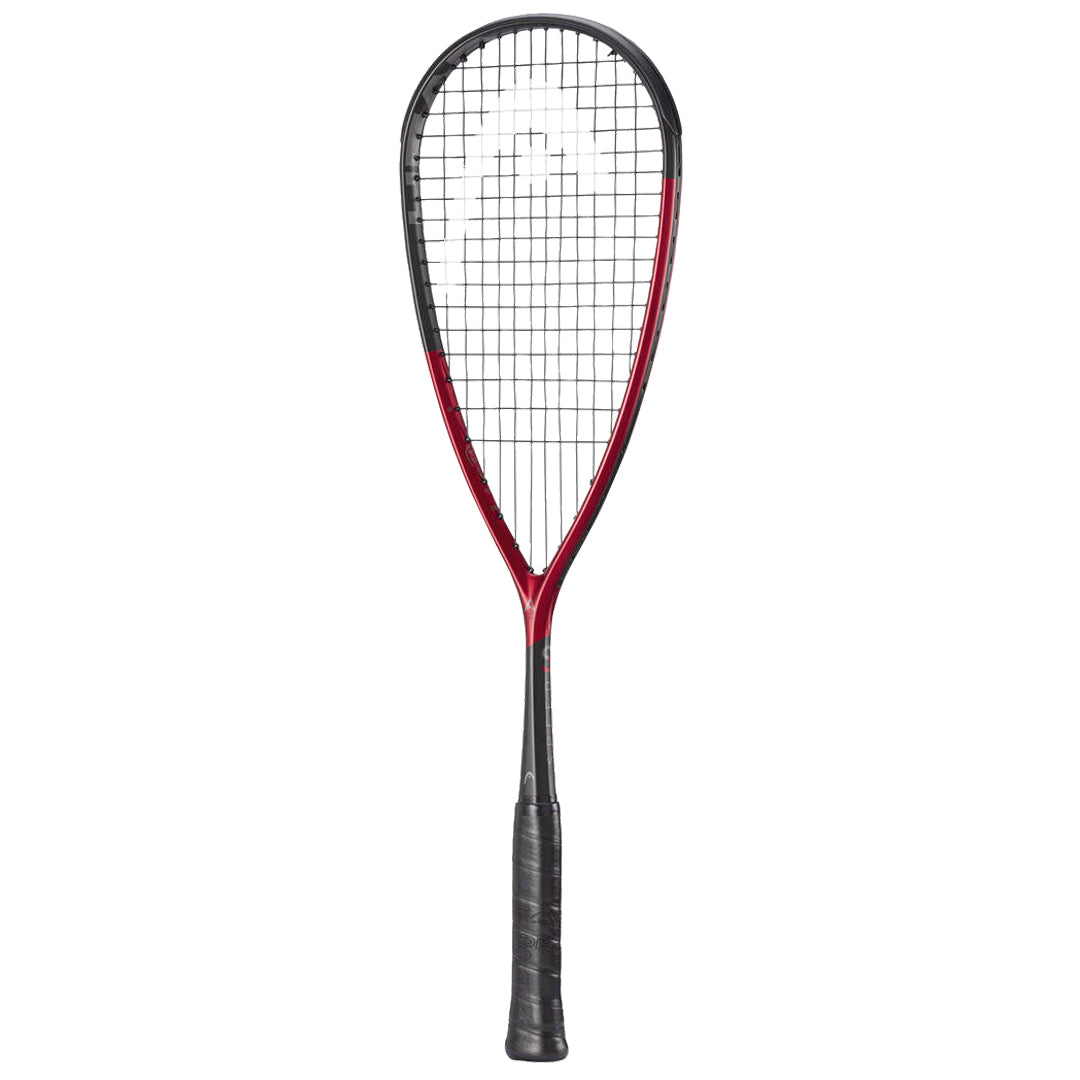
The Speed is an open-throat teardrop at 500 cm². The Radical 135 is the opposite: traditional shape, closed throat, and 460 cm². The Radical 135 X sits in the middle, with a 490 cm² hybrid head. And the Extreme, an entry-level line, has a 495 cm² teardrop head. See the full line in the Head comparison.
Other brands
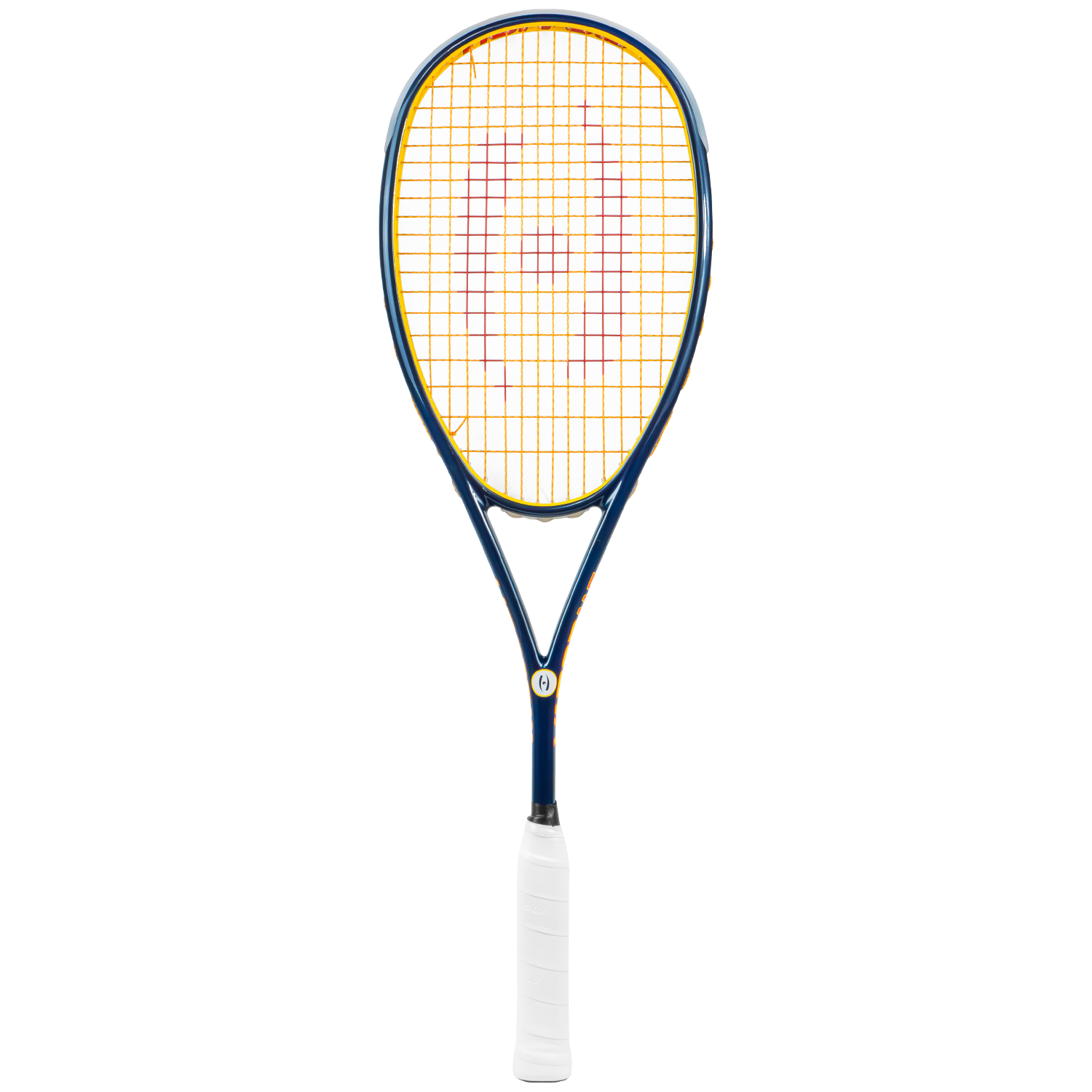
- Harrow: the Vapor has an open throat; the Response and the Reflex are teardrops with a closed throat.
- Wilson Pro Staff UL: a 485 cm² traditional head and closed throat, designed for precision.
- Oliver Apex 720 CE: bridge shape, closed throat.
- Black Knight Quicksilver Echo: hybrid bridge head with elongated main strings.
- Unsquashable: the Y-Tec Pro 125 is a teardrop; the Tour-Tec Pro 125 has a classic head.
Same weight, opposite shapes: Head Speed 135 vs. Radical 135
The best way to understand the effect of shape is to compare two racquets with the same weight. The Head Speed 135 2025 and the Head Radical 135 2026 are 135 g unstrung with a 20 mm frame. Everything else changes:
- Speed 135: teardrop, open throat, 500 cm², 12x17 pattern, and a head-light balance. A power shape with the weight near the hand.
- Radical 135: traditional, closed throat, 460 cm², 14x16 pattern, and a head-heavy balance. A control shape with mass at the top.
Note the detail: the Radical, the control racquet, puts weight in the head to compensate for the power that the small head and closed throat take away. The Speed, the power racquet, does the opposite and lightens the head because the shape already generates rebound.
Open vs. closed head: Head, Dunlop, Tecnifibre, and Harrow
6 racquets: swipe sideways to see them all1–2 of 6 →




Highlighted: what differs between the racquets. In bold: the best value in the row.
Strengths
- + Compact 460 cm² head
- + Closed throat, traditional shape
- + Hy-Bor (carbon with boron) in the handle
- + 14x16 pattern and head-heavy balance
Drawbacks
- − Small sweet spot
- − 135 g with a heavy head demands arm strength and technique
Who should choose each shape
Choose an open throat (teardrop) if:
- You are just starting or still miss the center of the strings often.
- You play a lot from the back of the court and need depth with a short swing.
- You want a racquet that forgives balls caught late.
Choose a closed throat (traditional) if:
- You already hit the center consistently.
- Your points come from drops, short volleys, and tight drives.
- Your current racquet sends the ball too long on touches.
Consider a hybrid if:
- You want the control of a head with a bridge, but without losing so much power. The Dunlop CX 120 and the Head Radical 135 X are examples.
The guides to the best squash racquets for beginners and for intermediate players apply this criterion to each level.
Selection by shape
Open throat (teardrop): power and forgiveness
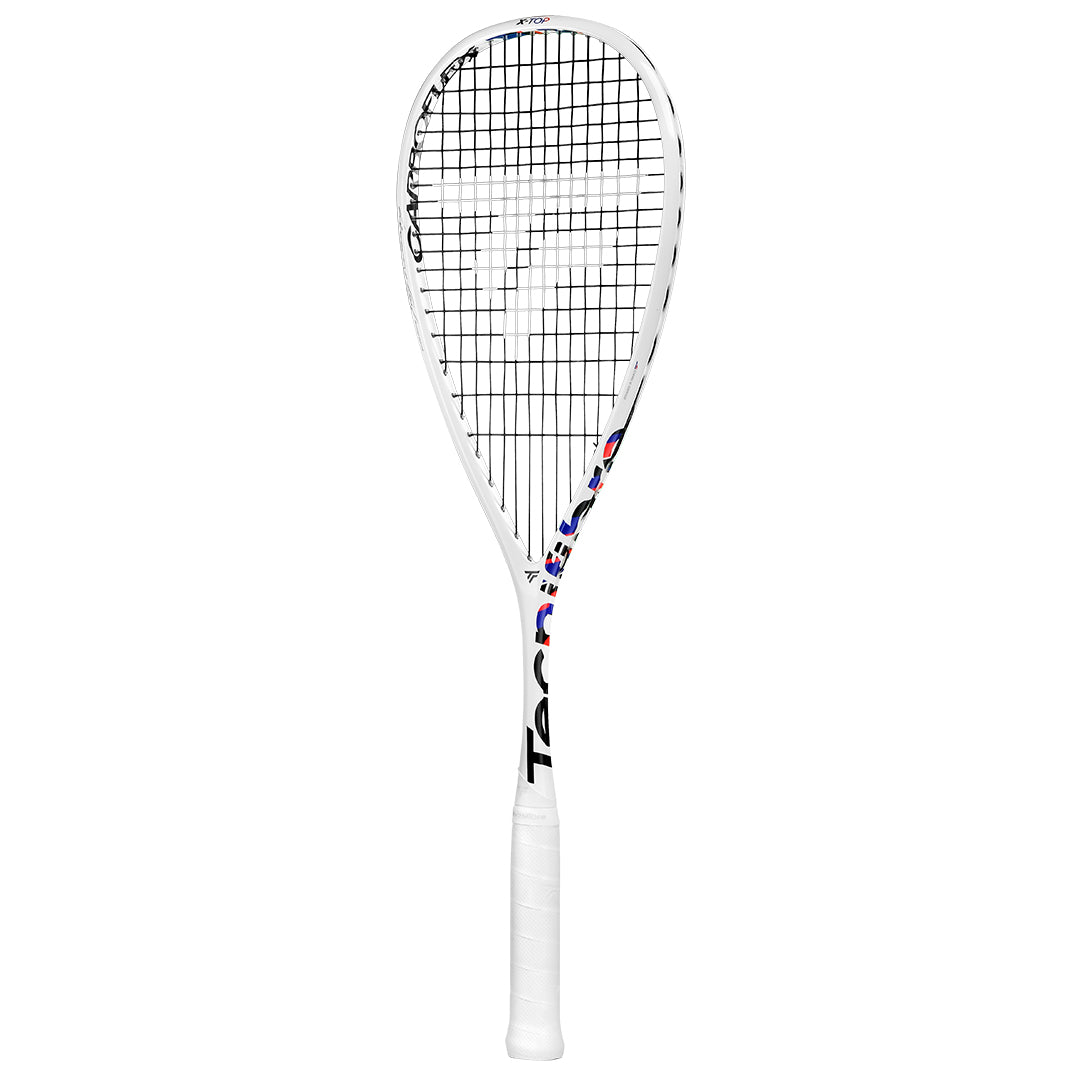

- Weight
- 125 g
- Head
- 77.5 in²
- Strings
- 14x18






Closed throat and hybrids: control and precision
Heads up
Don't compare shape alone. A 485 cm² teardrop with a 14x18 pattern can play more controlled than a traditional 500 cm² head with a 12x17 pattern. Read the whole spec sheet: area, pattern, weight, and balance.
How to feel the difference on court
If you can test a racquet of each shape, use drills that show the difference clearly:
- Straight drive from the back of the court: with an open throat, the ball reaches the back with less effort. With a closed one, you need to complete the stroke more, but the ball tends to stay tighter to the side wall.
- Drop shot up front: here the closed head usually has the advantage, because the ball comes off with less rebound and dies closer to the front wall.
- Ball caught late, low, and close to the body: the teardrop forgives more, because the sweet spot extends down toward the handle.
Myths about head shape
- "A closed head is only for pros." It isn't. It is for players who already have a consistent stroke. Many club players play better with it.
- "Teardrops have no control." They do, but in a different way. Control comes more from the string pattern, weight, and technique. The Dunlop FX 128 Pro, for example, has an open throat with a 14x19 pattern.
- "Shape matters more than weight." Rarely. A difference of 15 g or in balance changes the feel as much as the bridge does.
Shape and rules: why almost all are 500 cm²
World Squash limits the strung area to 500 cm². The open-throat teardrop is the simplest way to reach that limit, because it uses the throat region as string area. That is why so many power racquets are exactly 500 cm². Several closed-throat racquets come in below, between 460 and 490 cm², because the bridge takes up part of that region, but there are exceptions: the Dunlop CX 132 reaches 500 cm² with a traditional head. To see the other official limits and how to read each number on the spec sheet, see the guide on how to choose a squash racquet.
Want to see each model's shape? The spec sheets in the squash racquet catalog show area and pattern, and the squash comparison tool puts the models side by side. If you are still in doubt, Find Your Racket suggests models by your level and style, and the ranking of the best squash racquets of 2026 shows the picks for each profile.
What is the difference between open and closed head squash racquets?
An open-head (open-throat) racquet doesn't have the bridge between the head and the handle, so the main strings are longer: more power and a bigger sweet spot. A closed-head racquet has that bridge, shorter strings, and a firmer stringbed: more control and a more predictable ball.
Is a teardrop racquet the same as an open throat?
They almost always go together, but they are not the same thing. Teardrop describes the teardrop shape of the head; open throat describes the absence of the bridge. The Harrow Response 120, for example, has a teardrop shape with a closed throat.
Is an open-head squash racquet better for a beginner?
In most cases, yes. An open throat generates power with less effort and has a bigger sweet spot, which helps players who still miss the center and have a short swing. A closed head usually performs better in the hands of players who already have technique.
Do professionals use open or closed heads?
Both. Open-throat racquets, like the Tecnifibre Carboflex and the Dunlop FX 128 Pro, and closed-throat ones, like the Head Radical 135, show up in the hands of professionals. The choice depends on each player's style, not level.
Does a closed-head racquet have less power?
It tends to have less free power, because the main strings are shorter. Many compensate with more weight in the head, like the Head Radical 135, or with elongated strings in a hybrid shape, like the Dunlop CX 120.
Where to buy the racquets in this guide
- Speed 135 2025 HEAD135 g · 77.5 in² · 12x17See priceSquashGear.com
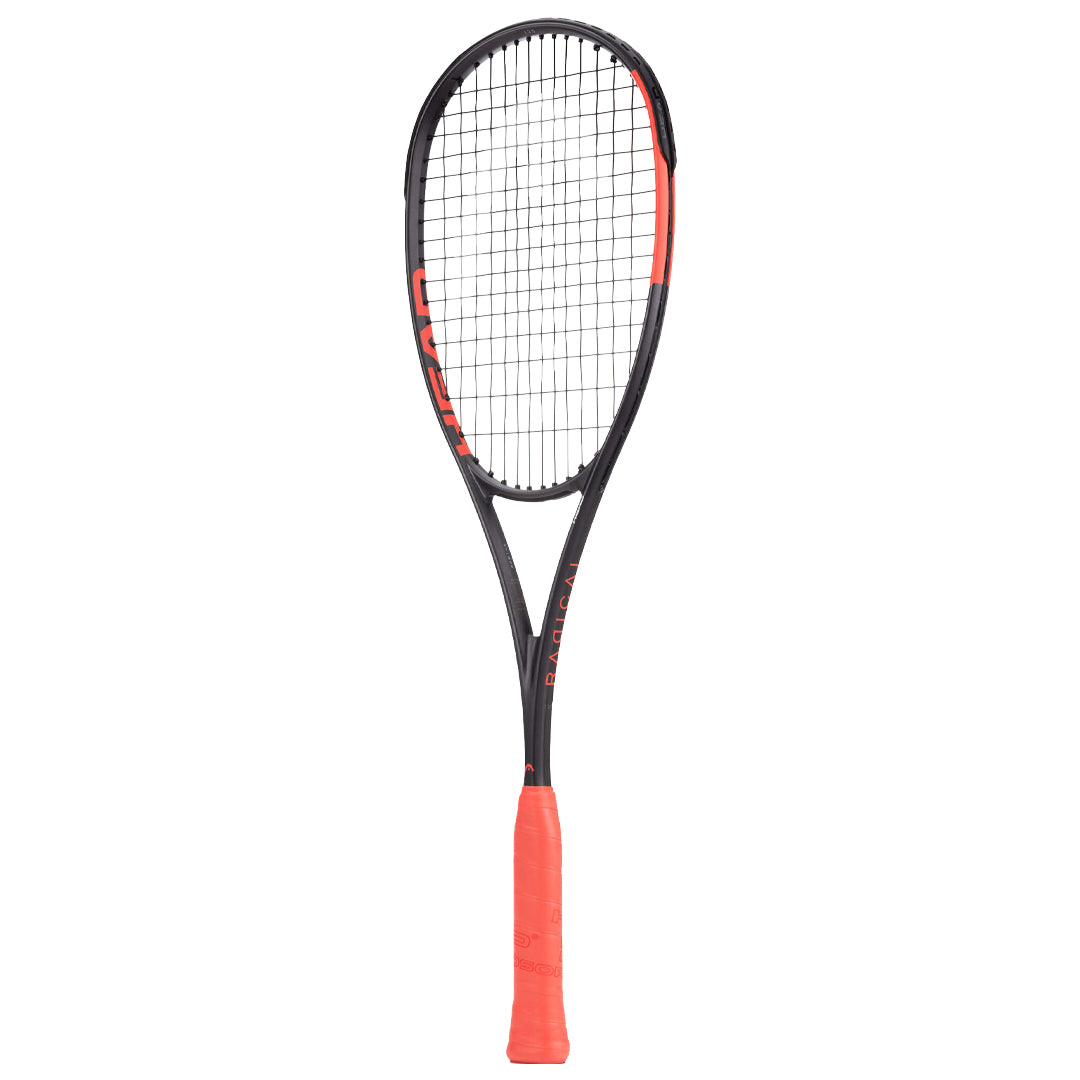 Radical 135 2026 HEAD135 g · 71.3 in² · 14x16See priceSquashGear.com
- FX 128 Pro 2026 Dunlop128 g · 77.5 in² · 14x19See priceSquashGear.com
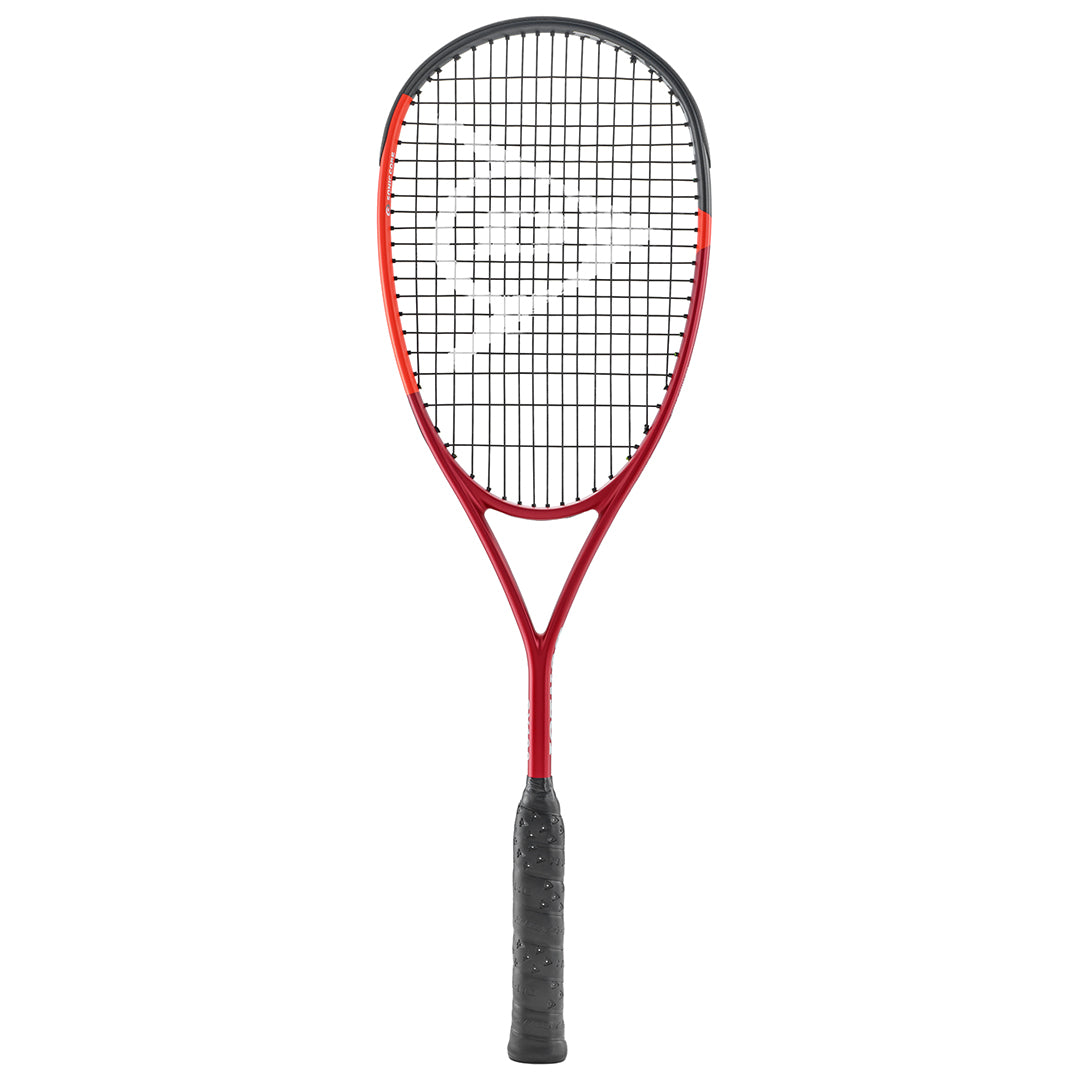 CX 132 2025 Dunlop132 g · 77.5 in² · 16x19See priceHolabird Sports
- Carboflex 125 X-Top V2 Tecnifibre125 g · 77.5 in² · 14x18See priceHolabird Sports
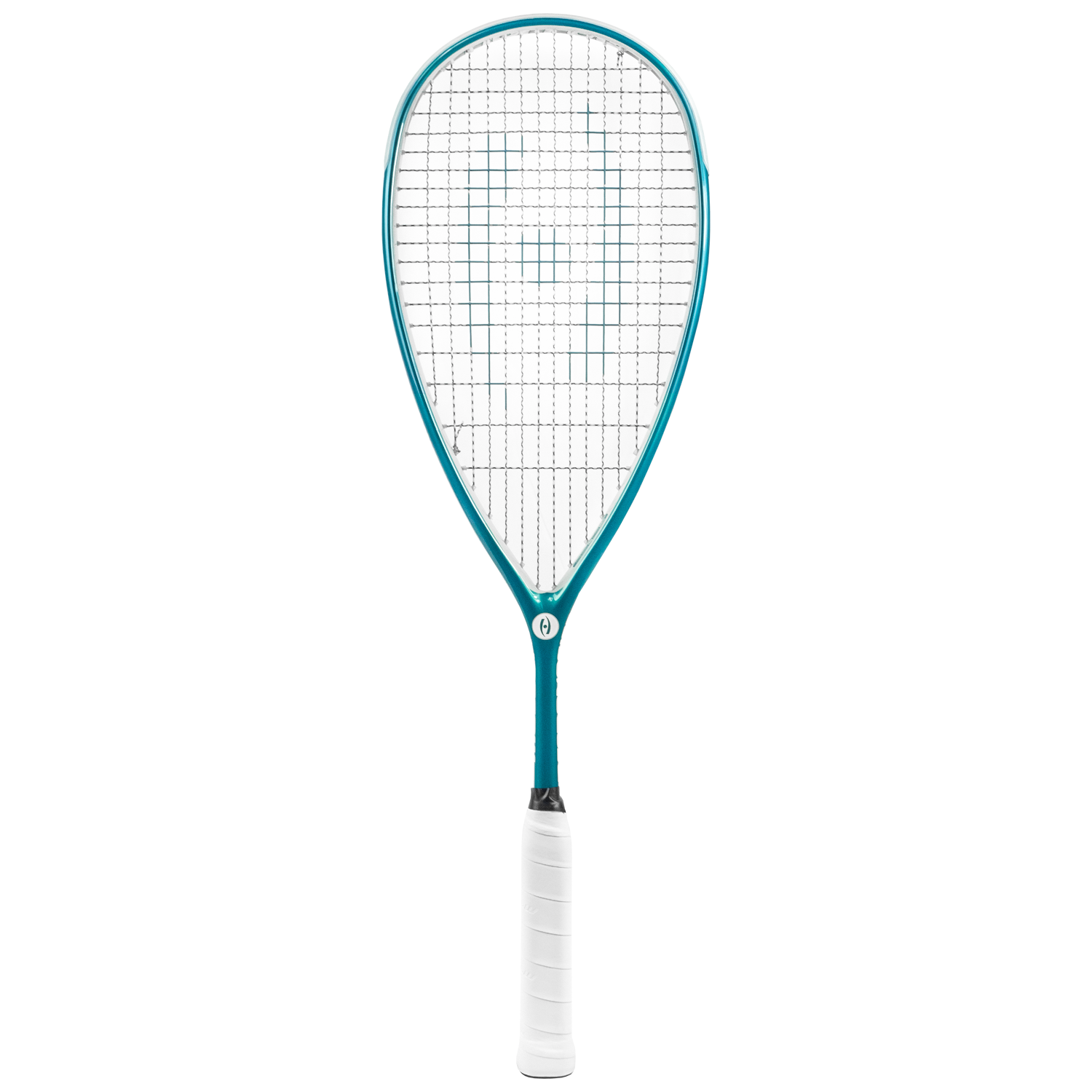 See priceSquashGear.com
- See priceAmazon
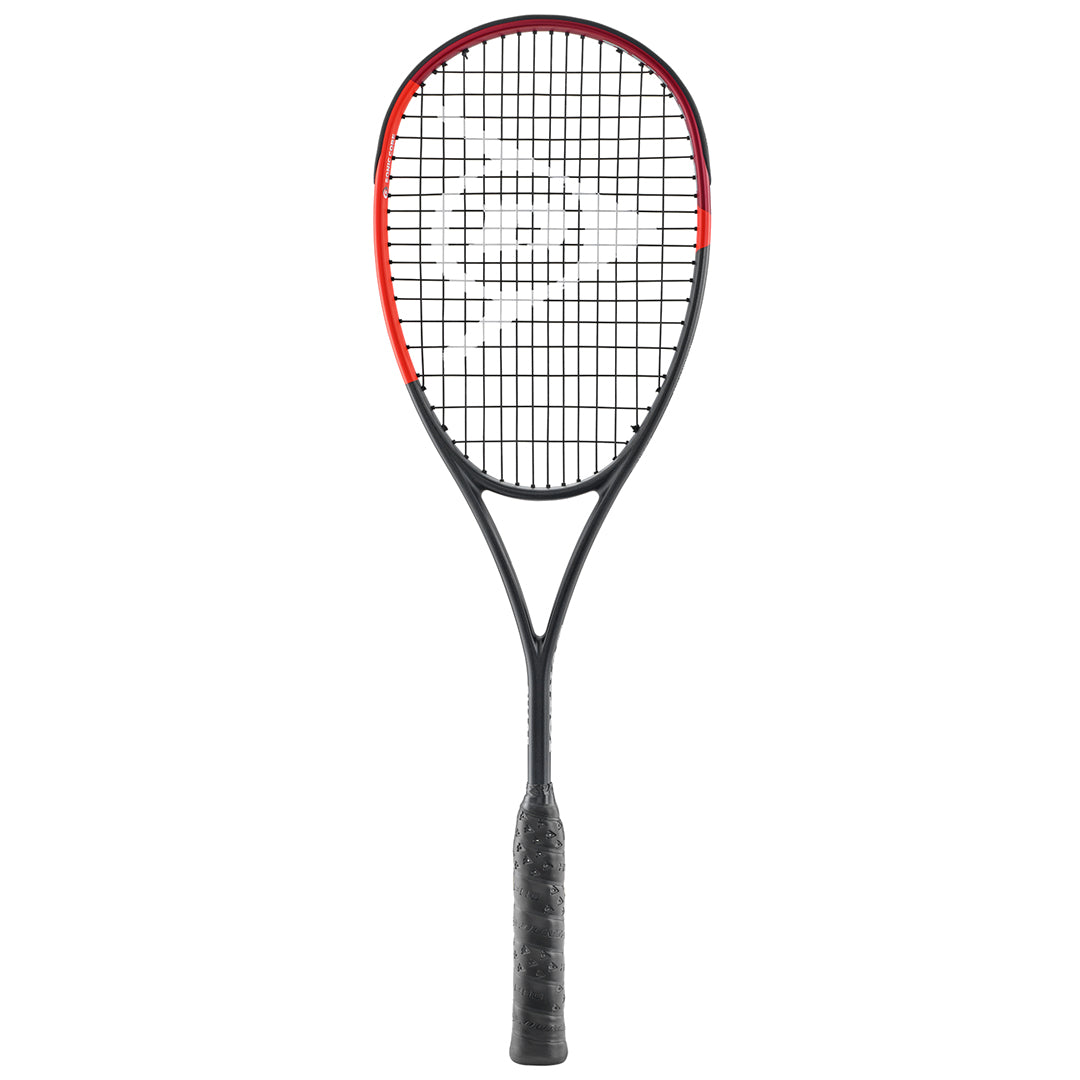 CX 125 2025 Dunlop125 g · 72.9 in² · 14x18See priceAmazon
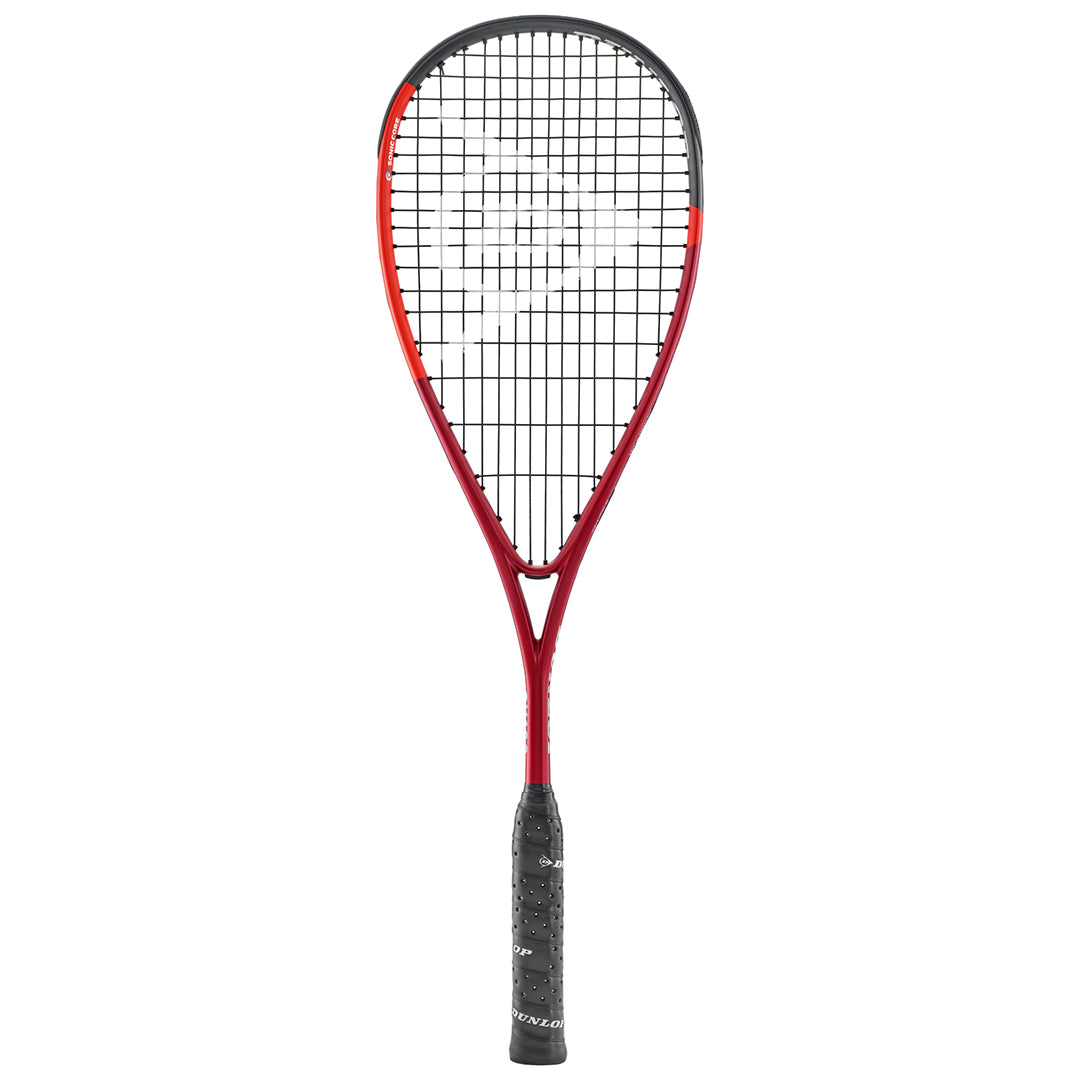 CX 120 2025 Dunlop120 g · 76 in² · 14x18See priceAmazon
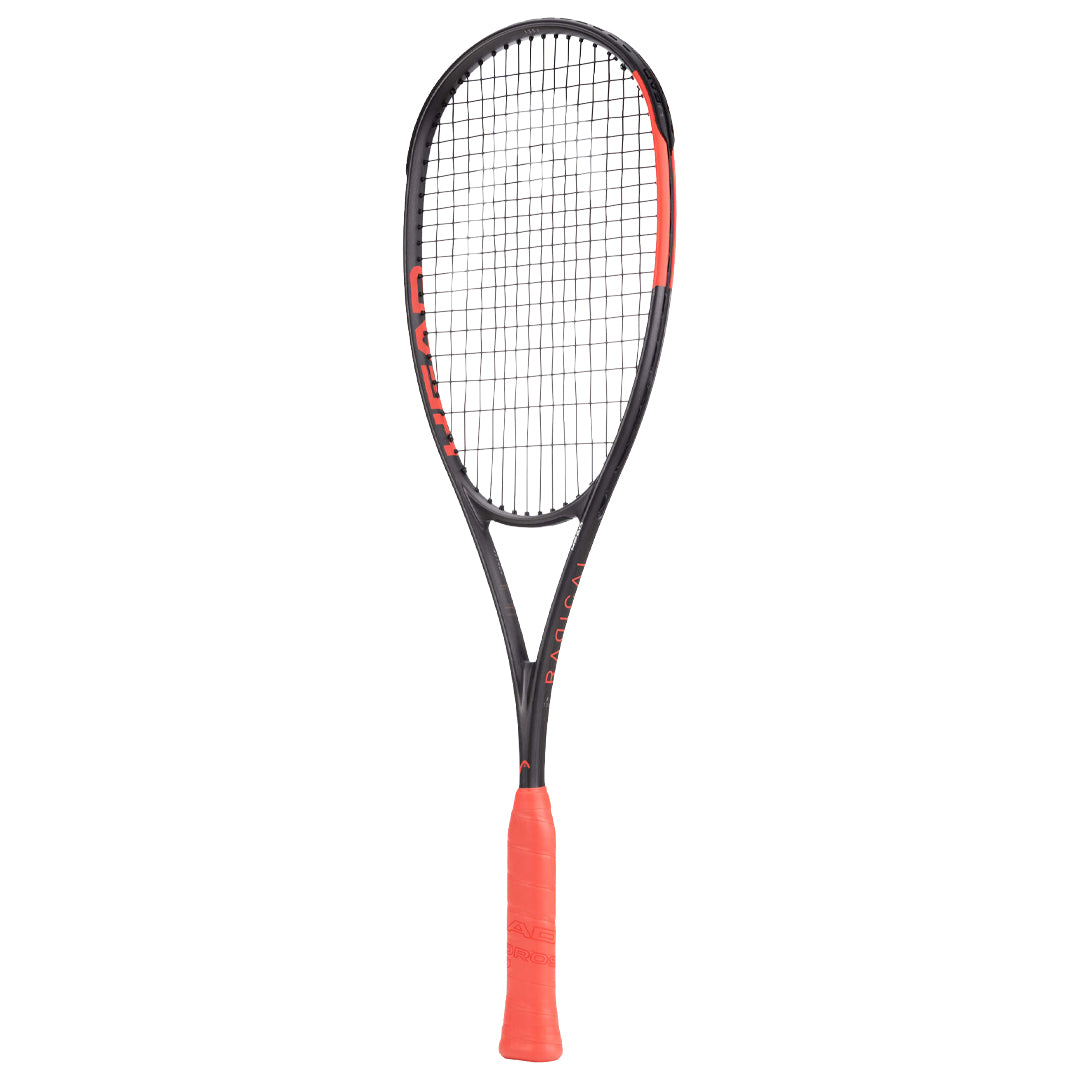 Radical 135 X 2026 HEAD135 g · 76 in² · 16x19See priceSquashGear.com
The prices above are checked automatically at each store and may have changed since the last check. The price that counts is the one shown on the store's website at checkout. We may earn a commission on purchases made through store links, at no extra cost to you.