


 Brasil
 Canada
 United Kingdom
 Australia
 Netherlands
 France
 España
 Italia
 السعودية
7 best beach tennis rackets for competition in 2026
Seven professional-level rackets for tournaments, what the ITF rules say about the racket and how to build a matched pair of identical rackets, with weight tolerance.
Updated on 10/07/2026
On this page
- 1.Tournament racket checklist
- 2.What the ITF rule says (and what it doesn't)
- 3.The 7 best beach tennis rackets for competition in 2026
- 4.Backup racket: why two identical ones
- 5.Weight tolerance: the number almost nobody looks at
- 6.How to build the pair in five steps
- 7.Customization within the rules
- 8.Treatment and core: beach tennis's "fresh string"
- 9.Signature models: what we can state
- 10.Tournament week
- 11.Where to compare and buy
For competition, the best beach tennis racket is the one you can have in two practically identical units, within the ITF rules, with a professional-level spec sheet that you already master in training. The Heroe's Arion 2026, developed with André Baran for tournament players, opens our list. Below are the seven we picked and what changes in your equipment when every point counts toward the bracket.
The models are in the beach tennis catalog with spec sheets and current prices.
Tournament racket checklist
Before looking at models, check that your choice passes these seven points:
- It's within ITF Appendix II (dimensions, no strings, no communication device).
- It has a professional-level spec sheet: firm carbon face, 20 to 22 mm profile, 315 to 335 g.
- You've trained with it for at least a few weeks before your first tournament.
- A second identical unit exists in your bag, not at the store.
- Both units have been weighed and the difference between them is small.
- The face treatment is up to date and the same on both.
- The organizer doesn't prohibit anything you've changed on it.
Items 4 and 5 are the ones that most separate people who compete from people who play a tournament once in a while.
What the ITF rule says (and what it doesn't)
The ITF defines the rules of beach tennis. The racket's dimensions (up to 50 cm in length, 26 cm in width, a constant profile of up to 38 mm, hitting area and holes) are explained in the guide how to choose a beach tennis racket. For those who compete, other passages of the ITF Rules of Beach Tennis matter more:
- One racket at a time. The rule states directly that a player may not use more than one racket at the same time during play.
- A broken racket gets no extra time. The rule provides reasonable time to change clothing, footwear or broken equipment, but excludes the racket from that list. If it breaks, the backup needs to be within reach.
- Altering the racket is allowed, except when the organizer prohibits it or when the alteration takes the racket outside the Appendix II specifications.
- No communication. The racket can't have a device that gives guidance to the player during the match. Analysis technologies approved by the ITF are the exception.
- Compliance, not approval. The rules don't include a list of approved rackets, as there is for balls. What counts is being within Appendix II, and the ITF decides when a model is questioned.
The ball has a rule too: the tournament ball must be on the ITF's official list of approved stage 2 balls. Training with the same ball as the tournament avoids surprises in your racket timing.
Good to know
Tournaments may have their own rules beyond the ITF rules, including on face treatment or stickers. Read the event's rules before you travel, especially if you use a racket with any modification.
The 7 best beach tennis rackets for competition in 2026
7 best beach tennis rackets for competition in 2026
- 1
- Weight
- 325 g
- Face
- 18K forged carbon
- Thickness
- 20 mm
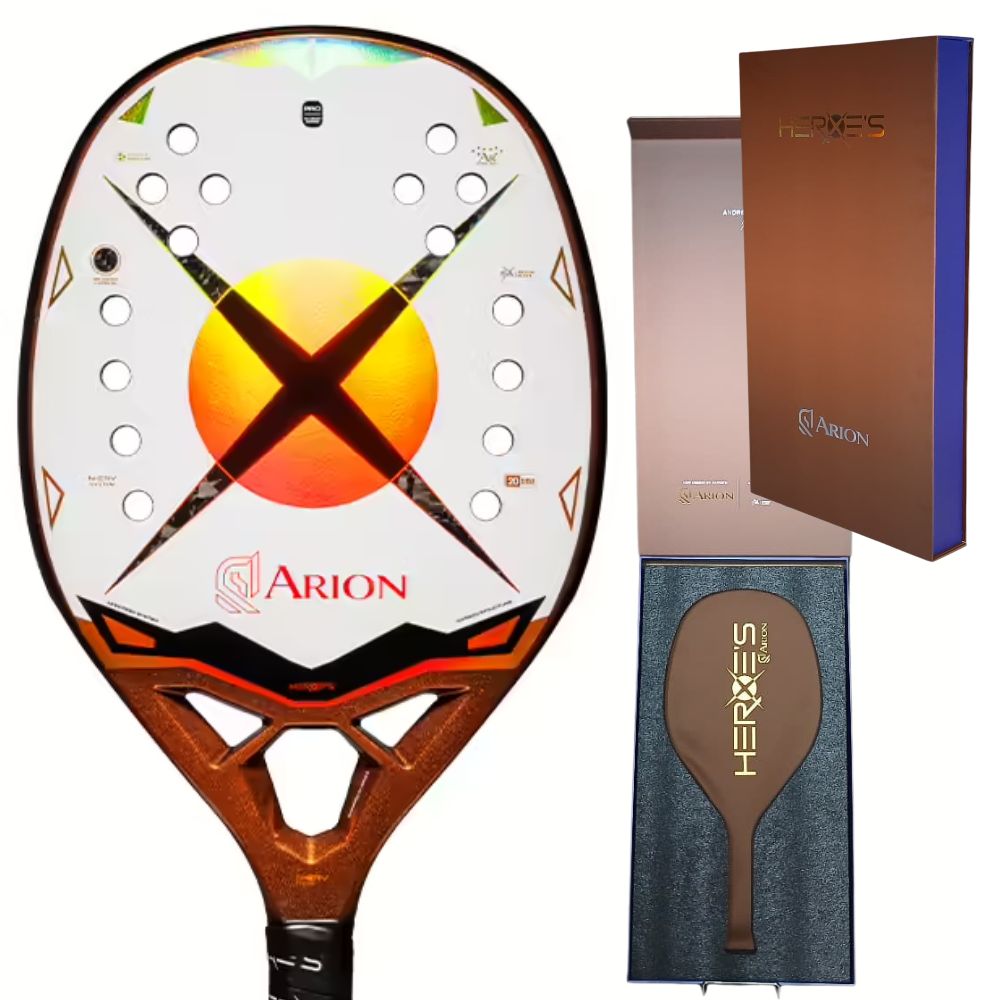
Developed with André Baran for tournament players who want stability. Heroe's first 18K forged carbon face, with EVA Medium Black, a 20 mm profile and 325 g (±10 g). The frame was redesigned to resist twisting, and the Arion Holes Tech drilling with Nerv System makes the response more uniform off-center. The face comes smooth: plan for the treatment.
- 2
- Weight
- 330 g
- Face
- 18K aluminized carbon
- Thickness
- 20 mm
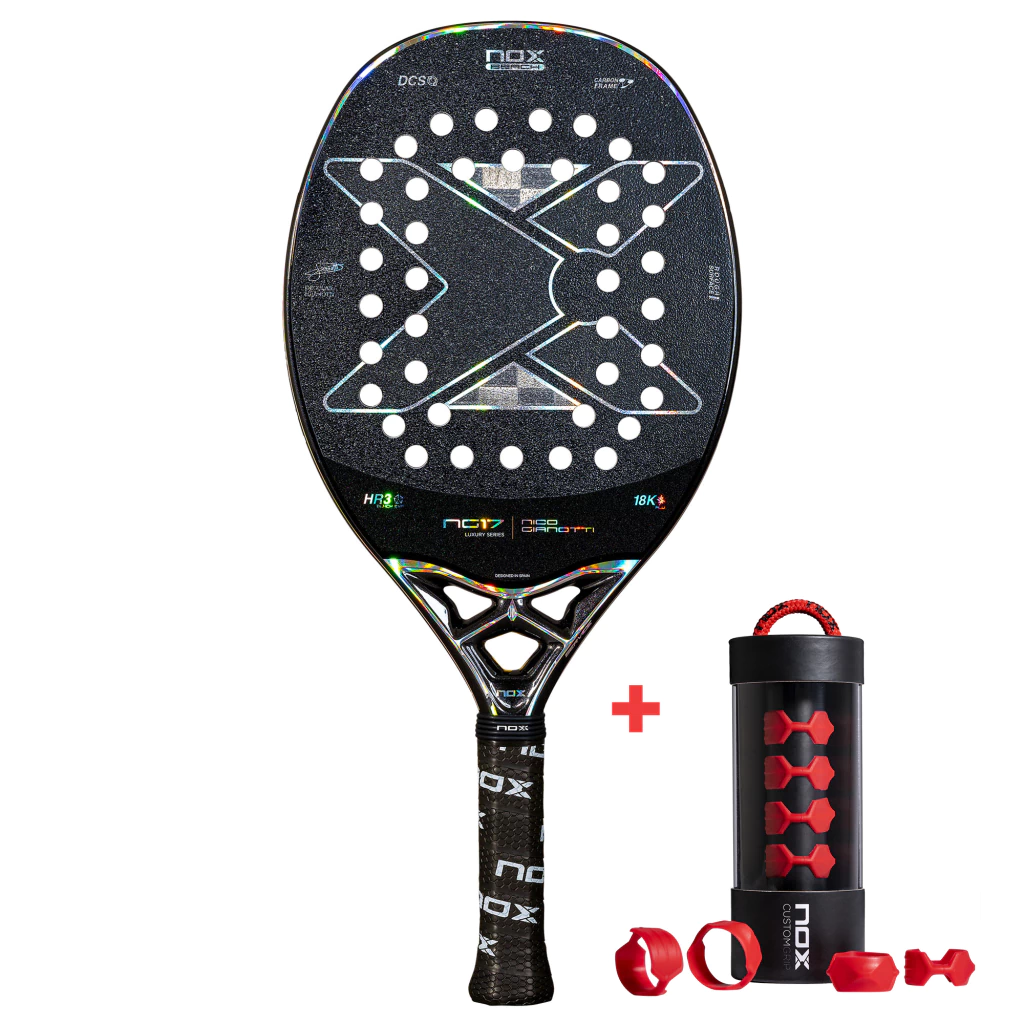
Nico Gianotti's racket for the 2025 season. Aluminized 18K carbon, HR3 Black EVA, 20 mm, 325 to 335 g, 40 holes, rough surface and a 25.5 cm balance. NOX gives it 100 out of 100 for power and 95 for control. Three stores in the catalog.
- 3
- Weight
- 325 g
- Face
- 21K Silver carbon
- Thickness
- 22 mm
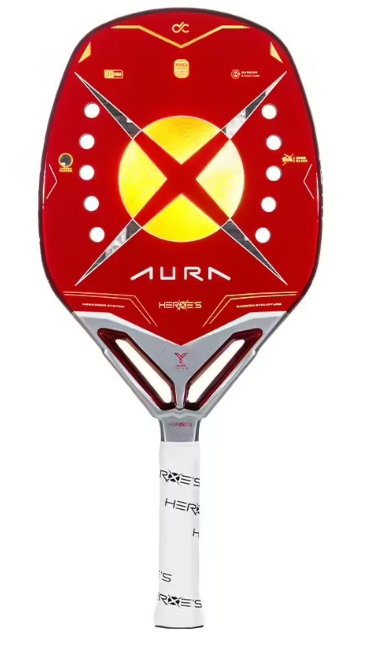
From the Coach Series, developed with coach Danny Cirella. Debuts Heroe's 21K Silver carbon over EVA Hard, with 22 mm, 325 g (±10 g) and a Y Aura System frame for stability. A crisp, precise hit for players with technique and arm strength. Not a choice for anyone seeking comfort.



The top six in the competition ranking side by side
Highlighted: what differs between the racquets. In bold: the best value in the row.
Look at the core before the face. There is EVA Soft (Shark Elite 18K), medium (Arion, Supernova) and firm (Head Speed, Aura). In a tournament you play tired, in the heat, several matches: choose the core you can handle in the last round, not the one that performs best in the first.
Backup racket: why two identical ones
The rule excludes the racket from the extra time for broken equipment, so the backup needs to be on the bench. But the main reason isn't even breakage: it's the treatment that wears off, the overgrip that gets soaked, the racket that fell on wet sand. In any of these cases, you switch rackets in the middle of the match.
If the backup is a different model, you change your ball timing at the worst moment. If it is the same model with a 15 g difference, the same happens. A backup only does its job when the switch goes unnoticed by your arm.
Weight tolerance: the number almost nobody looks at
Many brands state weight as a range or with a margin. This means two rackets of the same model, bought on the same day, can be different. Here is what the catalog's spec sheets say:
| Racket | Stated weight | Possible difference between two units |
|---|---|---|
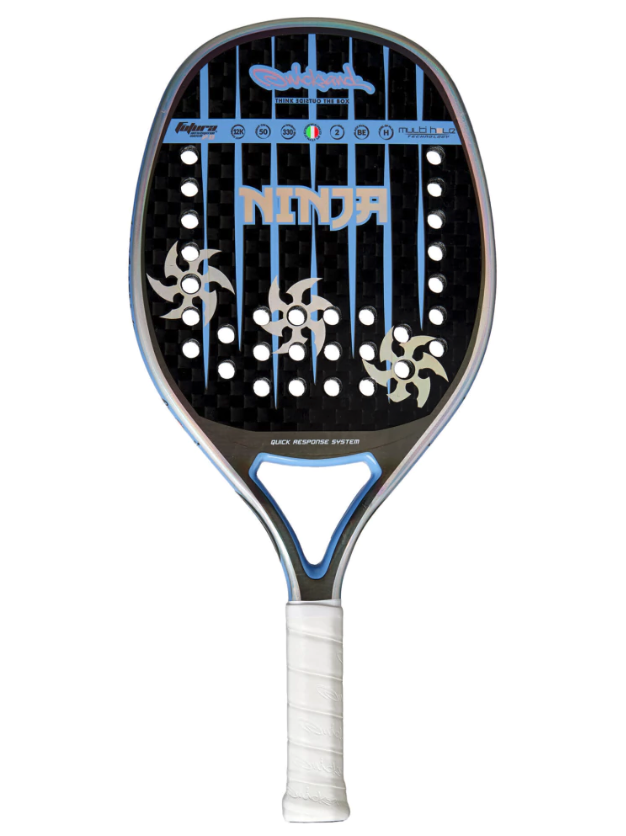
| Quicksand Ninja 2025 | 328 to 332 g ("little variation between units," according to the brand) | up to 4 g |
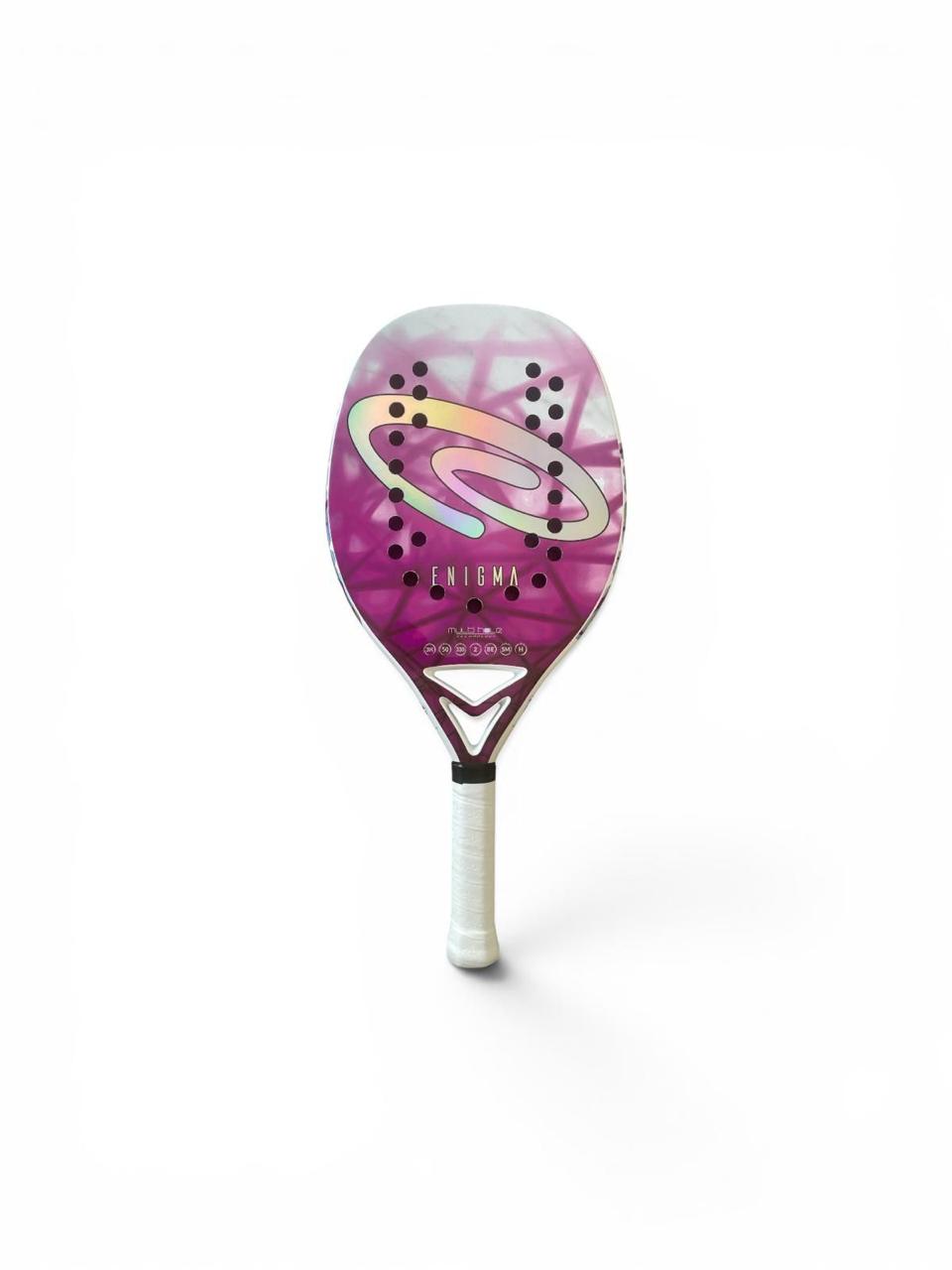
| Quicksand Enigma 2026 | 321 g (±3 g) | up to 6 g |
| Shark Elite 18K 21 mm 2026 | 320 g (±5 g) | up to 10 g |
| NOX NG17 18K 2025 | 325 to 335 g | up to 10 g |
| ZEIQ Supernova Next Gen 18K | 320 g (±10 g) | up to 20 g |
| Heroe's Arion 2026 | 325 g (±10 g) | up to 20 g |
| Drop Shot Orion Attack 2026 | 310 to 330 g | up to 20 g |
A wide margin doesn't make the racket bad. It just changes the work: instead of buying two blind, you need to pick the two.
Models with the lowest weight tolerance stated in the catalog

How to build the pair in five steps
- Buy both together, at the same store when possible. Models sold at several stores, like the Drop Shot Orion Attack, make this easier.
- Weigh both on a kitchen scale, without a cover and with the same grip. Write it down.
- Compare the balance. Rest each racket on a thin edge (a broom handle works) and mark with tape where it balances. Measure from the base of the handle to the mark. Two rackets with the same weight and a different balance are not the same in your hand.
- Match what you can. Overgrip and frame tape change a few grams and the balance. Adjust the lighter one to match the heavier one.
- Alternate in training. Use both in equal proportion so the treatment and the core age together. Number or mark each one; the ZEIQ Supernova already comes with a serial number.
Customization within the rules
What competitors usually change, and what to watch for:
- Face treatment (sand, sticker, spray). Allowed by the ITF rule, unless the organizer prohibits it. Apply the same product to both units on the same day.
- Overgrip. Bring several. On a hot day, change between matches.
- Frame protection tape. Protects balls hit close to the sand and adds weight to the head. Use the same tape on both.
- Vibration dampener and handle accessories. Check that nothing works as a communication device; sensors only if they are ITF-approved technology.
Any adjustment must keep the racket within the Appendix II dimensions. If in doubt, ask the head referee before the first match, not in the middle of it.
Treatment and core: beach tennis's "fresh string"
In tennis, the competitor restrings before the tournament. In beach tennis, the equivalent is the face treatment and the condition of the core. Three habits of those who compete:
- Renew the treatment a few days before, not the night before. You need one practice session to recalibrate your slice.
- Protect the core from heat. EVA loses elasticity with sun and a hot trunk, and that changes ball output. The guide to thickness and core explains the wear.
- Retire the primary when it becomes different from the backup. If one returns more than the other, the more used one has probably lost response. Time to form a new pair.
Signature models: what we can state
Several rackets on this list carry the name of a player or coach: André Baran, Greta Giusti, Nico Gianotti, Ariadna Costa, Danny Cirella. What the manufacturer states is that the model is signed or was developed with that person. We haven't confirmed whether the athlete plays today with the stock unit, unmodified, and so we don't claim that.
In practice, the name tells you which style the racket was designed for. If your game is similar to the athlete's, it's a good starting point. If it isn't, the spec sheet matters more than the signature. The guide to beach tennis rackets for advanced players helps you choose by style, and the one on attack or defense, by your position in the pair.
Tournament week
| When | What to do with the racket |
|---|---|
| 3 to 4 weeks before | A new racket only up to here. After that, play with what you know. |
| 1 week before | Weigh and compare the pair. Renew the treatment on both. |
| 2 to 3 days before | Train with both, alternating. Confirm the switch goes unnoticed. |
| Night before | Fresh overgrip on both, frame tape checked, thermal cover in the bag. |
| Match day | Primary in hand, backup in the shade and within reach, extra overgrips. |
Where to compare and buy
Use the beach tennis racket comparison tool to cross the spec sheets of your pair of finalists. The Heroe's, Drop Shot and ZEIQ pages gather each brand's other models. If you're still between advanced and tournament level, the racket finder cross-checks your profile with the catalog, and the methodology explains how we calculate the RR Score.
Where to buy the racquets in this guide
- Arion 2026 André Baran Heroe's325 g · 18K forged carbon · 20 mmSee priceiamBeachTennis
- NG17 18K 2025 by Nico Gianotti NOX330 g · 18K aluminized carbon · 20 mmSee priceiamBeachTennis
- Aura 2026 Danny Cirella Heroe's325 g · 21K Silver carbon · 22 mmSee priceiamBeachTennis
- Ninja 2025 Quicksand330 g · 12K carbon · 22 mmSee priceiamBeachTennis
- Enigma 2026 Quicksand321 g · 3K carbon · 22 mmSee priceiamBeachTennis
The prices above are checked automatically at each store and may have changed since the last check. The price that counts is the one shown on the store's website at checkout. We may earn a commission on purchases made through store links, at no extra cost to you.