


 Brasil
 Canada
 United Kingdom
 Australia
 Netherlands
 France
 España
 Italia
 السعودية
10 best table tennis paddles for advanced players in 2026
Blades for players who have mastered topspin and want the right wood for their own style, with the signs that you're advanced and what changes on the spec sheet from intermediate.
Updated on 10/07/2026
On this page
For the advanced player, the best table tennis paddle is not the fastest one on the shelf: it is the blade that amplifies the style you already have. Players who put a lot of spin on the ball need contact time, players who close out the point on the first ball need stiffness, and players who defend far from the table need a wood that holds the backspin. Below are the ten blades in our catalog that best serve each of these profiles, all available from stores.
The 10 best table tennis paddles for advanced players in 2026
- 1
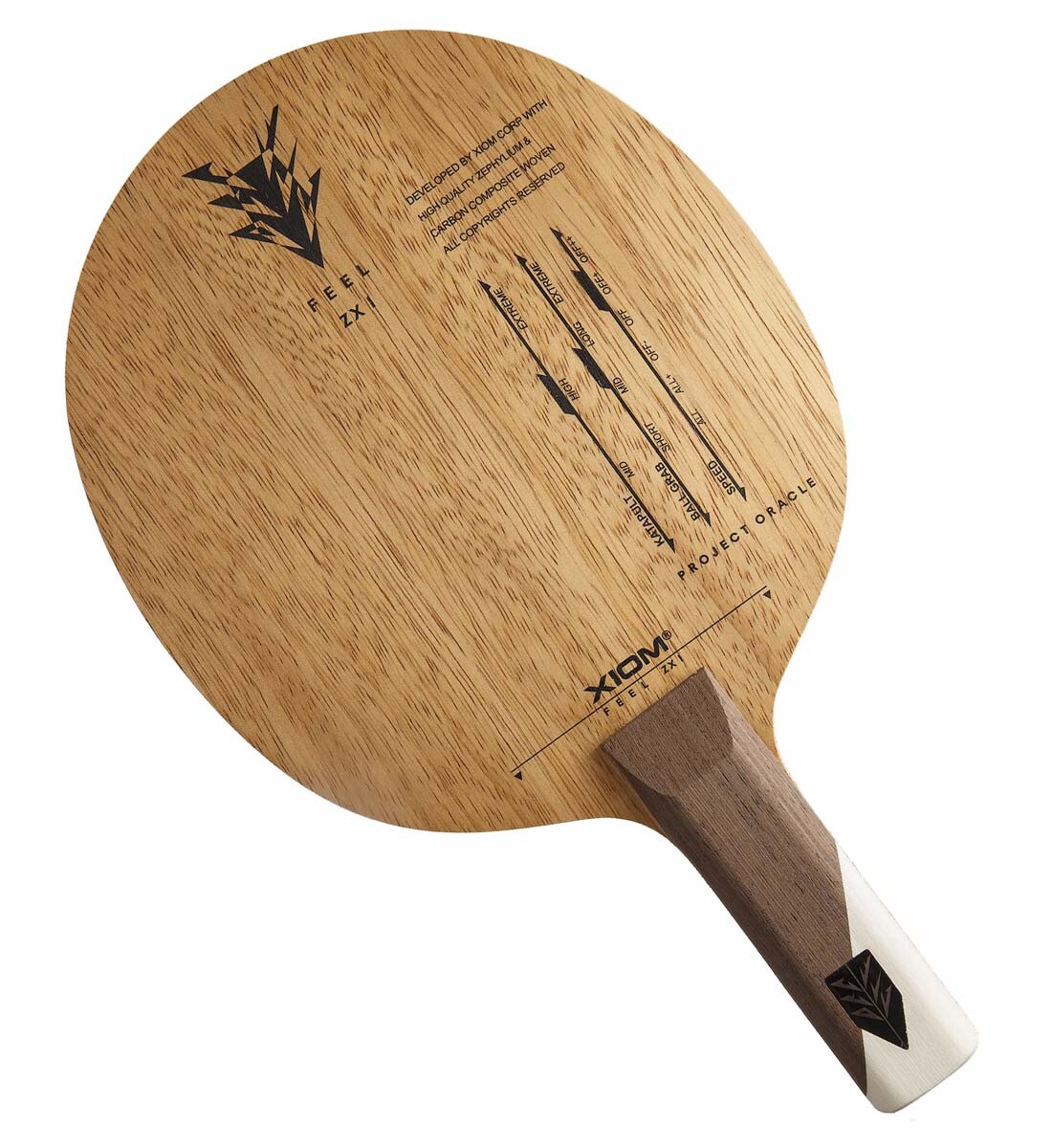 Best for complete topspinFeel ZXi Xiom
- Composition
- 5 wood
- Blades
- 7
- Handle
- Concave (FL)
Made in Japan, with a kiso hinoki face and Zephylium Carbon next to the core. Xiom classifies it as OFF, with low vibration. The inner carbon shows up when you accelerate and fades away in the short game, which gives margin to players who build the point with topspin close to the table and at mid-distance.
- 2
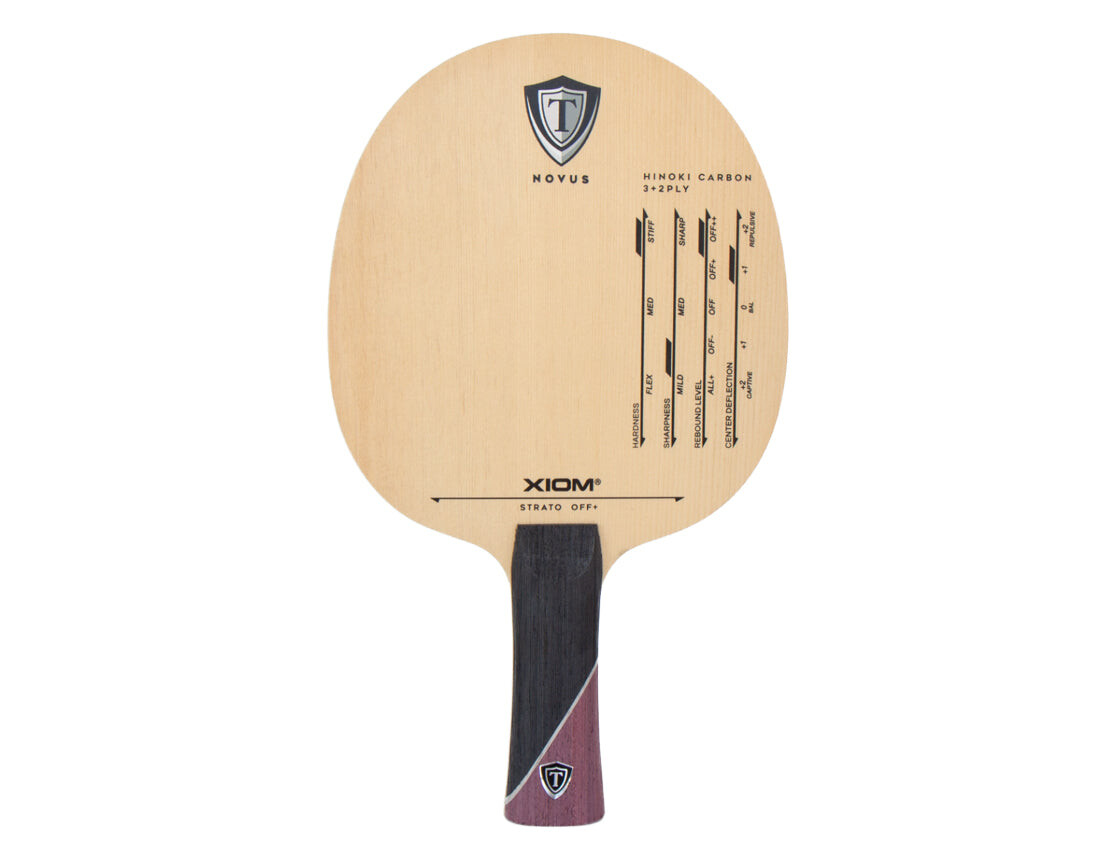 Power with hinokiNovus Strato Xiom
- Composition
- 3 wood
- Blades
- 5
- Handle
- Concave (FL)
3 woods with a kiso hinoki face and 2 layers of Energy Carbon, 7.0 mm and 88 g on average. Xiom classifies it as OFF+. It is the power option on the list for players who attack from mid-distance and want topspin that still draws an arc.
- 3
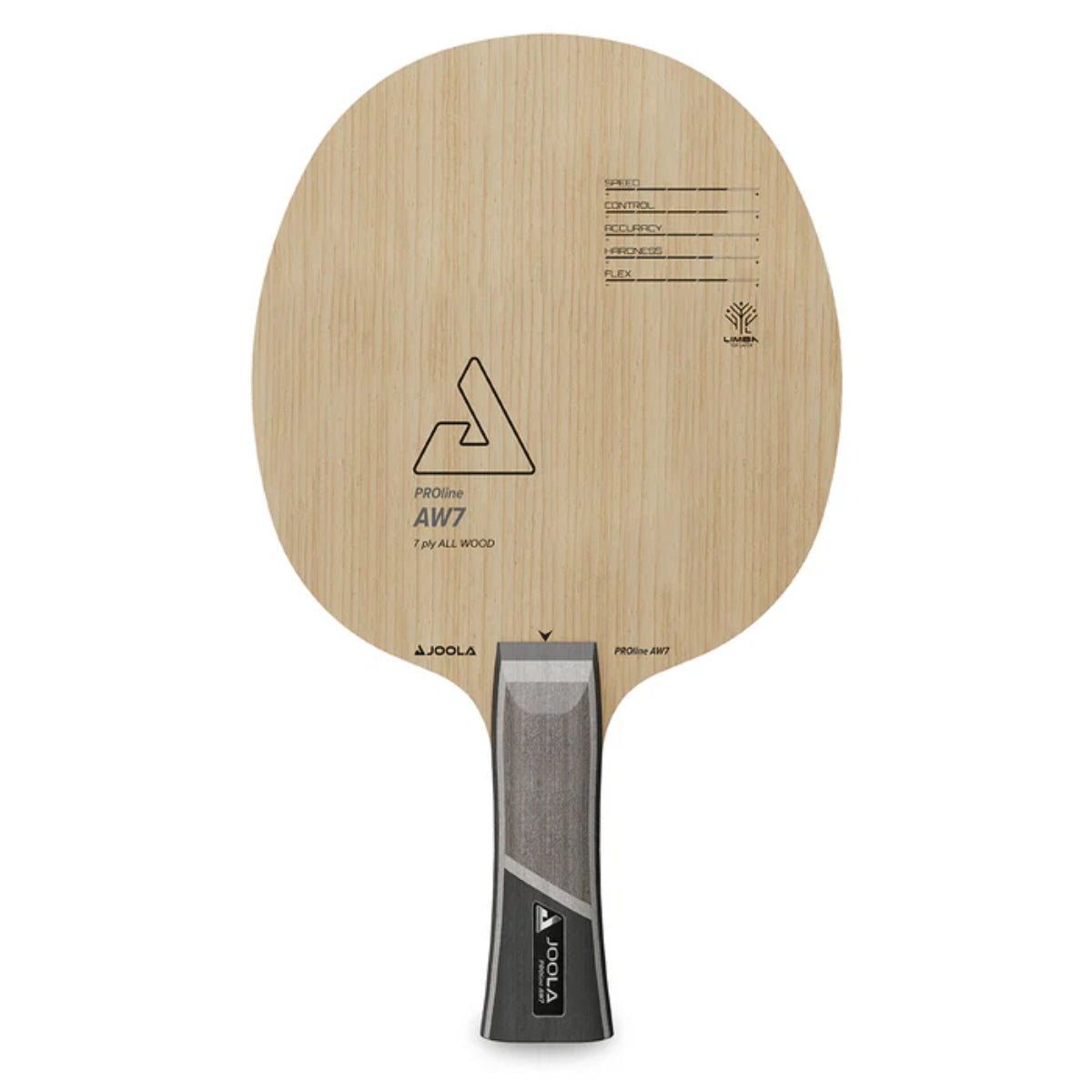 Comfort without carbonProline AW7 JOOLA
- Composition
- Limba and ayous
- Blades
- 7
- Handle
- Concave (FL)
7 layers of wood only, 6.9 mm and 90 g, with darkened kiri in the core and a limba face. The power of 7 layers with a natural feel and little vibration, according to player reports. Good for players who want power without the dry response of fiber.


How to tell if you're an advanced player
"Advanced" has nothing to do with how many years you've played, but with what you already control. Check whether at least four of these items describe your game:
- You topspin from both sides against backspin balls and against topspin balls. Not only the first ball: also the counter-topspin, once the opponent has already attacked.
- Your serve has at least three real spin variations (backspin, sidespin, no spin) with the same motion, and you know where the return tends to go.
- You change distance during the point and know which distance you perform best at.
- You notice the difference between two rubbers of the same model in different thicknesses after one or two sessions.
- You play tournaments or a club league and lose points through tactical choices, not basic execution errors.
- You've already had at least one complete setup and can say what you liked and what it lacked.
If item 6 hasn't happened yet, start with the guide to paddles for intermediate players. That is where the first composites with inner fiber and the 5-ply woods that teach contact are. This guide starts from the point where you already have a reference to compare against.
Intermediate vs. advanced: what changes on the spec sheet
The difference between the two stages isn't "more speed." It's reading the spec sheet with different eyes. The intermediate player looks for the blade that forgives; the advanced player looks for the blade that reacts the way they expect.
| Spec item | What the intermediate player looks for | What the advanced player looks for |
|---|---|---|
| Speed class | ALL+ to OFF, to have margin | OFF- to OFF+, chosen by the distance they play at |
| Fiber position | Inner, so as not to lose the short game | Inner or outer, depending on how they want to win the point |
| Thickness | 5.5 to 6.0 mm, flexible | Up to 7.0 mm or more, if the game is mid-distance |
| Face wood | Little attention | Limba, koto or hinoki change the feel and the trajectory |
| Weight | Light so as not to tire | 85 to 93 g for the blade, thinking of the final weight with two thick rubbers |
| Speed and control ratings | A loose reference | Compared within the same source (for example, all from Megaspin) |
Two points in this table deserve detail.
The face wood. The outer layer is the first one the ball meets. Limba is softer and tends to give more contact time and a high trajectory, which favors spin. Koto is harder and gives a more direct, precise hit. Kiso hinoki is light and elastic, with a discreet catapult that helps the topspin clear the net. For a player who has mastered the stroke, this difference shows up in the first practice session.
The thickness. 7 mm blades, like the Tibhar MK 7 and the Xiom Novus Strato, have more mass at impact and return more energy on long strokes. Close to the table, the same thickness can make a passive block too fast. That is why the distance you play at weighs more than the nominal speed.
The explanations of ALC, ZLC and inner vs. outer fiber are in the intermediate guide and we won't repeat them. Here the focus is which of these constructions matches each style.
Options by playing style
You build the point with topspin and spin variation
This is the most common style among advanced club players: a short serve, a slow and heavy topspin opening, and a finish when the ball rises. You need contact time and a blade that doesn't "hide" the spin.
The Xiom Feel ZXi and the Andro Synteliac VCI are the main choices. Both have carbon next to the core, so the short serve, the flip and the push come out with a wood touch. When you accelerate the topspin, the fiber kicks in and the ball gains speed without losing spin. The Feel ZXi has a kiso hinoki face and performs very well close to the table and at mid-distance. The Synteliac VCI is OFF- on Megaspin and a little more forgiving in the transition game.
If you prefer pure wood, the Nittaku Septear reaches the OFF class without any fiber. It is seven layers of kiso hinoki at 6.7 mm. Hinoki's high trajectory gives security to players who open many points with a forehand topspin against backspin.
Tip
A practical test for players choosing between inner carbon and pure wood: do ten short flips and ten long topspins with a blade borrowed from a teammate, with a rubber similar to yours. If the flip comes out longer than usual, the blade is too fast for your short game. If the long topspin dies before the end line, it is too slow for your distance.
You attack from mid-distance and want weight of shot
If you like to step back and trade topspin against topspin, the blade needs mass and stiffness. Here thickness and power matter more than short-game touch.
The Xiom Novus Strato is the strongest option on the list: Energy Carbon right under the hinoki face, 7.0 mm, OFF+ class according to Xiom. The Xiom Ice Cream AZXi is more versatile: the inner carbon keeps the short game controlled, and the two faces with different fibers let you put the more direct ZLC on the forehand and the ALC, with more contact time, on the backhand (or the other way around).
For power without carbon, the JOOLA Proline AW7 has 7 layers of wood, 6.9 mm and a darkened kiri core, which makes the blade harder. It weighs 90 g, so pair it with rubbers that don't go much above medium weight.
For players who play at mid-distance


You play close to the table, block and counterattack
Close-to-the-table play demands stability: the ball arrives fast, you have little time and you need the blade not to deform too much on the block. 7-layer blades of wood only are usually good at this, because they are stiffer than 5-ply ones without the dry response of outer carbon.
The Tibhar Szöcs Signature is the clearest example: 7 layers at 6.6 mm, hard inner and soft outer layers, speed 83 and control 74 on Megaspin. The Tibhar MK 7 is a bit faster and also works when you need to step back. Both weigh 85 g on average, light for 7-layer blades.
You defend with backspin
The modern advanced defender chops from far from the table, but also attacks with the forehand when they get a high ball. They need a blade with a head that holds the backspin and enough stiffness for the counterattack.
The JOOLA Chen Weixing was made for this: a kiri core, limba faces and a thin layer of carbon, between DEF+ and OFF- according to JOOLA. The typical defender setup uses an inverted rubber on the forehand and, on the backhand, a soft inverted rubber or a long-pips rubber. The choice of rubber is in the guide to inverted rubber, short pips or long pips.
Building the advanced paddle: blade and rubber by style
At the advanced level, the rubber stops being "the medium tensor rubber everyone uses" and is chosen together with the blade. The table below summarizes coherent combinations. The rubber types are categories, not models: check at the store that the model you choose is on the ITTF list.
| Style | Blade from the ranking | Forehand | Backhand |
|---|---|---|---|
| Topspin and variation | Feel ZXi, Synteliac VCI | Hard tensor or hybrid, max | Medium tensor, 2.0 mm or max |
| Topspin with pure wood | Septear | Medium or hard tensor, max | Soft or medium tensor |
| Mid-distance | Novus Strato, Ice Cream AZXi | Hard tensor or Chinese tacky, max | Medium tensor, max |
| Close to the table | Szöcs Signature, MK 7 | Medium tensor, max | Medium tensor, 2.0 mm |
| Defense | Chen Weixing | Medium inverted, 2.0 mm | Soft thin inverted or long pips |
Notice two things. First, the "hybrid" rubber (tacky surface and tensor sponge) appears more and more on advanced players' forehands, because it adds the spin of a Chinese rubber to the catapult of a European one. Second, the advanced player's backhand is no longer necessarily softer: players who hit a strong backhand topspin usually use the same hardness on both sides.
Final weight matters more than it seems
An 88 to 93 g blade with two max-thickness rubbers easily goes over 180 g. For the advanced player, final weight defines how fast you recover between one stroke and the next. Before buying, add the blade's average weight to the weight of the rubbers you plan to use and ask yourself whether you can handle that number in the third game of a tournament match.
Common mistakes of players reaching the advanced level
- Moving up to OFF+ because you lost a match to someone faster. Almost always the problem was placement or reading the serve, not the blade.
- Changing blades every three months. Each new blade needs weeks of adaptation. Players who change a lot are always in the adaptation period.
- Copying a professional's equipment. Signature lines are great blades, but the athlete uses rubbers and thicknesses chosen for strokes that few amateurs have. The guide to paddles for competition explains what can be stated about professionals' equipment.
- Ignoring the handle. At the advanced level, the wrong handle gets in the way of switching grips between forehand and backhand. See the differences in the guide to FL, ST or AN handle.
- Comparing ratings from different manufacturers. Speed 9 at one brand is not the same as speed 9 at another. Use a single source, like the Megaspin ratings cited on the spec sheets, or compare the blades side by side in the table tennis comparison tool.
Where to compare and buy
All ten blades in the ranking had offers from stores when we put this list together. If you're loyal to a brand, the Xiom, Tibhar and JOOLA pages gather the full lines. To see everything at once, with filters by level and composition, use the table tennis catalog. The methodology explains how the site's scores and levels are defined.
What is the best table tennis paddle for an advanced player?
It depends on your style. For those who build the point with topspin, an inner-carbon blade like the Xiom Feel ZXi or the Andro Synteliac VCI. For mid-distance, the Xiom Novus Strato. For close-to-the-table play, a 7-layer wood-only blade like the Tibhar Szöcs Signature. For defenders, the JOOLA Chen Weixing.
Should an advanced player use carbon?
It isn't required. Many advanced players perform better with pure wood, like the Nittaku Septear or the Tibhar MK 7, because the longer contact time helps with topspin. Carbon makes sense when you need power and stability and already have your short game well sorted.
Inner or outer carbon at the advanced level?
Inner if your game depends on the short game, the flip and opening with spin. Outer if you win the point on speed and the counterattack, and accept a harder touch in the short game. When in doubt, inner is the safer choice.
How much should an advanced player's assembled paddle weigh?
Most fall between 175 and 195 g with two max-thickness rubbers. Below that, the paddle loses stability in the counter-topspin. Above it, recovery between strokes gets slower. The right weight is the one you can handle without losing speed at the end of a long match.
Is it worth buying a professional's signature blade?
It is, if the construction matches your style, and not because of the name. Read the spec sheet: speed class, fiber position, thickness and face wood. If those details match your game, the signature blade is a good choice; if they don't, the name isn't worth it.
Where to buy the racquets in this guide
- Feel ZXi Xiom5 wood · 7 · Concave (FL)See priceTableTennisStore.us
- Novus Strato Xiom3 wood · 5 · Concave (FL)See priceMegaSpin
- Proline AW7 JOOLALimba and ayous · 7 · Concave (FL)See priceJOOLA
The prices above are checked automatically at each store and may have changed since the last check. The price that counts is the one shown on the store's website at checkout. We may earn a commission on purchases made through store links, at no extra cost to you.