


 Brasil
 Canada
 United Kingdom
 Australia
 Netherlands
 France
 España
 Italia
 السعودية
7 best table tennis paddles for competition in 2026
Tournament blades sold by stores and everything the ITTF requires of the assembled paddle: LARC, thickness, glue, racket control, an identical backup and allowed customization.
Updated on 10/07/2026
On this page
In a tournament, the best table tennis paddle for competition is the one that passes the umpire's check, performs from the first game to the last and exists in duplicate in your paddle case. That is why this list brings together two things: the seven professional-level offensive blades in our catalog with offers from stores, and what the ITTF rules require of the assembled paddle, from the rubber to the glue.
The 7 best table tennis paddles for competition in 2026
- 1
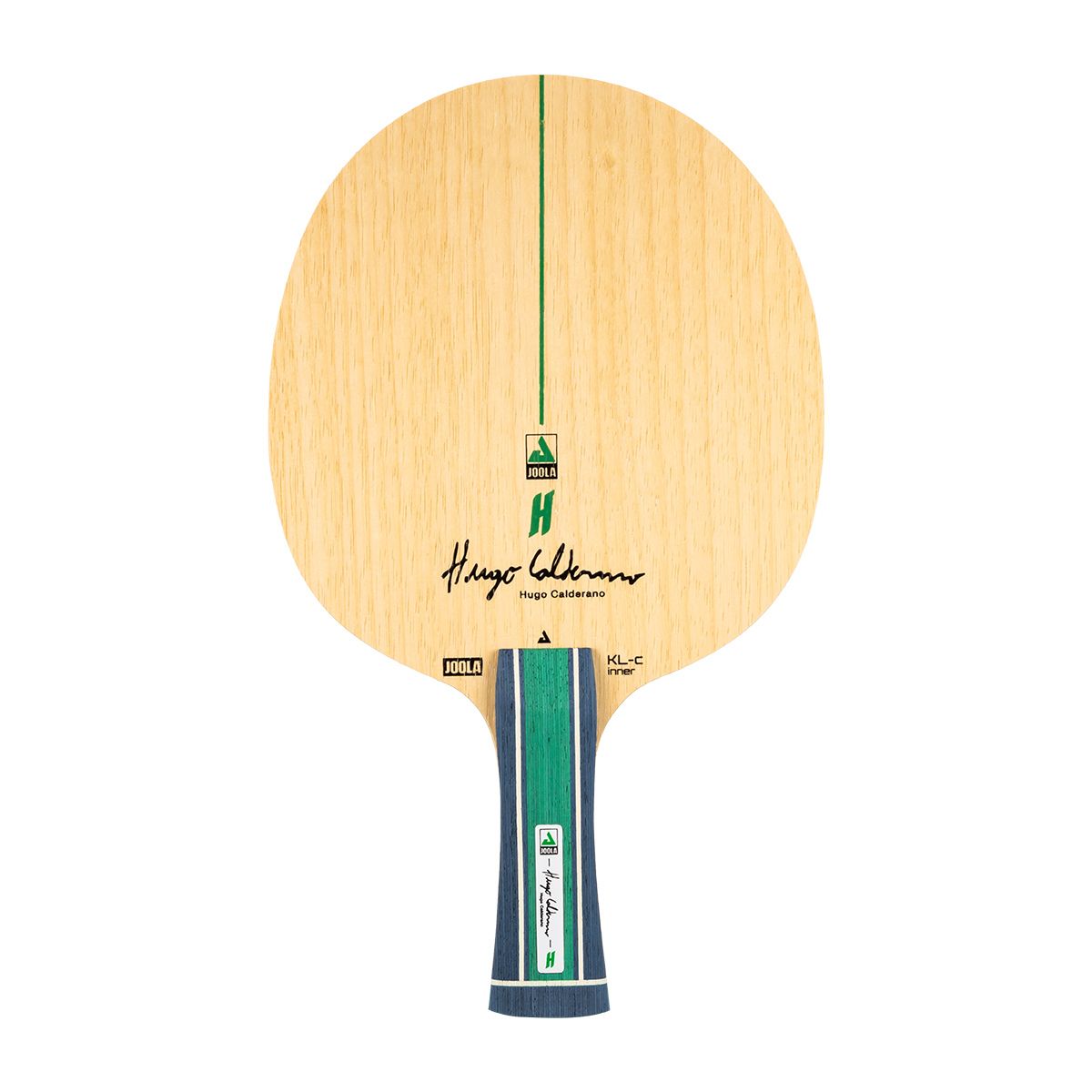 Best inner carbon for tournamentsHugo Calderano KL-C Inner JOOLA
- Blades
- 7
- Handle
- Concave (FL)
5+2 construction with KL-c, a mix of aramid and carbon, near the core. JOOLA lists OFF speed and a weight of around 85 g. Linear ball exit, a large sweet spot and little vibration. Sold in flared, straight and penhold handles, which makes it easy to have an identical backup.
- 2
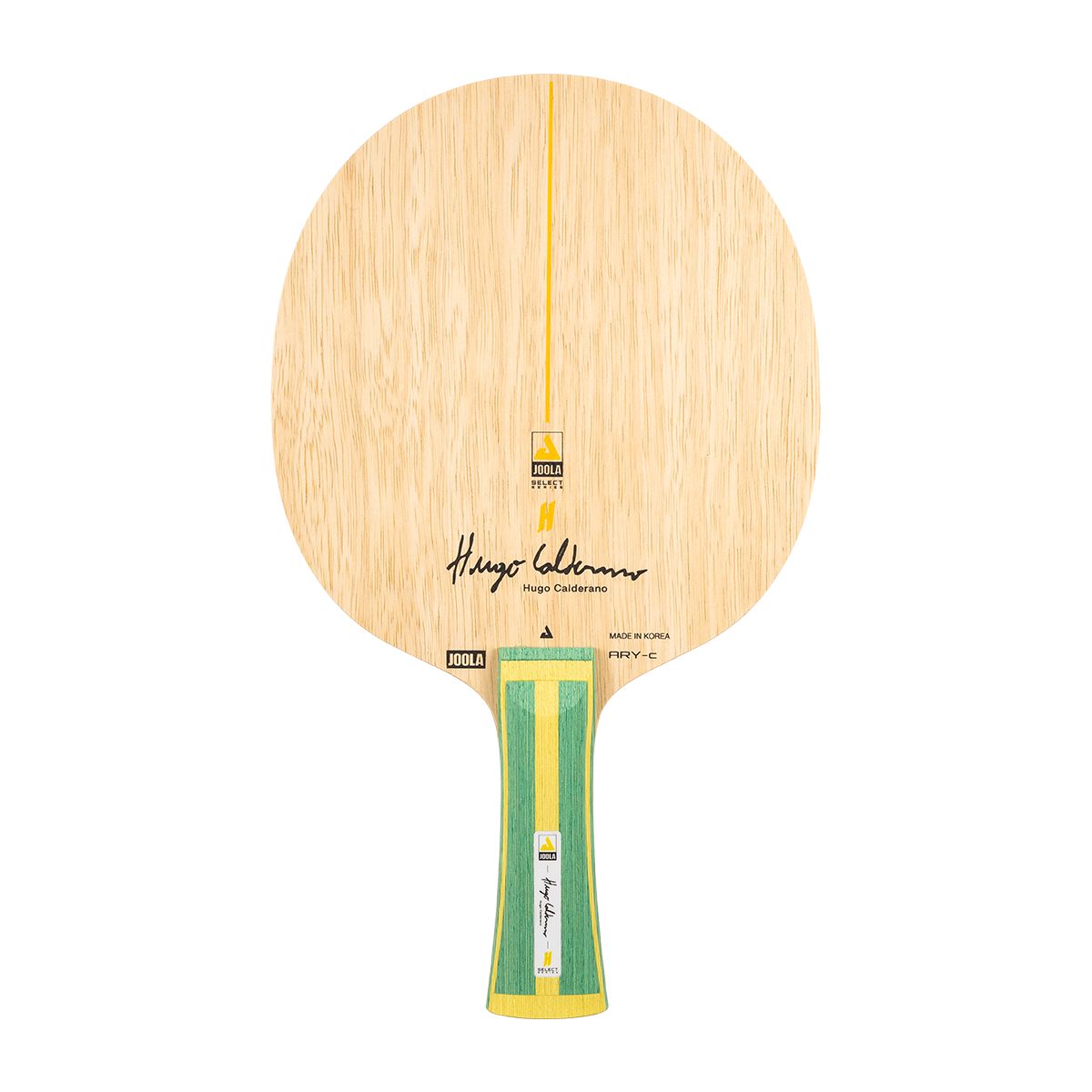 Hugo Calderano lineHugo Calderano ARY-C 2026 JOOLA
- Composition
- 5 wood + 2 ARY-C
- Blades
- 7
- Handle
- Concave (FL)
Developed in collaboration with Hugo Calderano, according to JOOLA. Limba faces, a kiri core and two inner ARY-C fibers, about 88 g, 6 mm and a 157 x 152 mm head. A smooth short game and power on hard attacks.
- 3
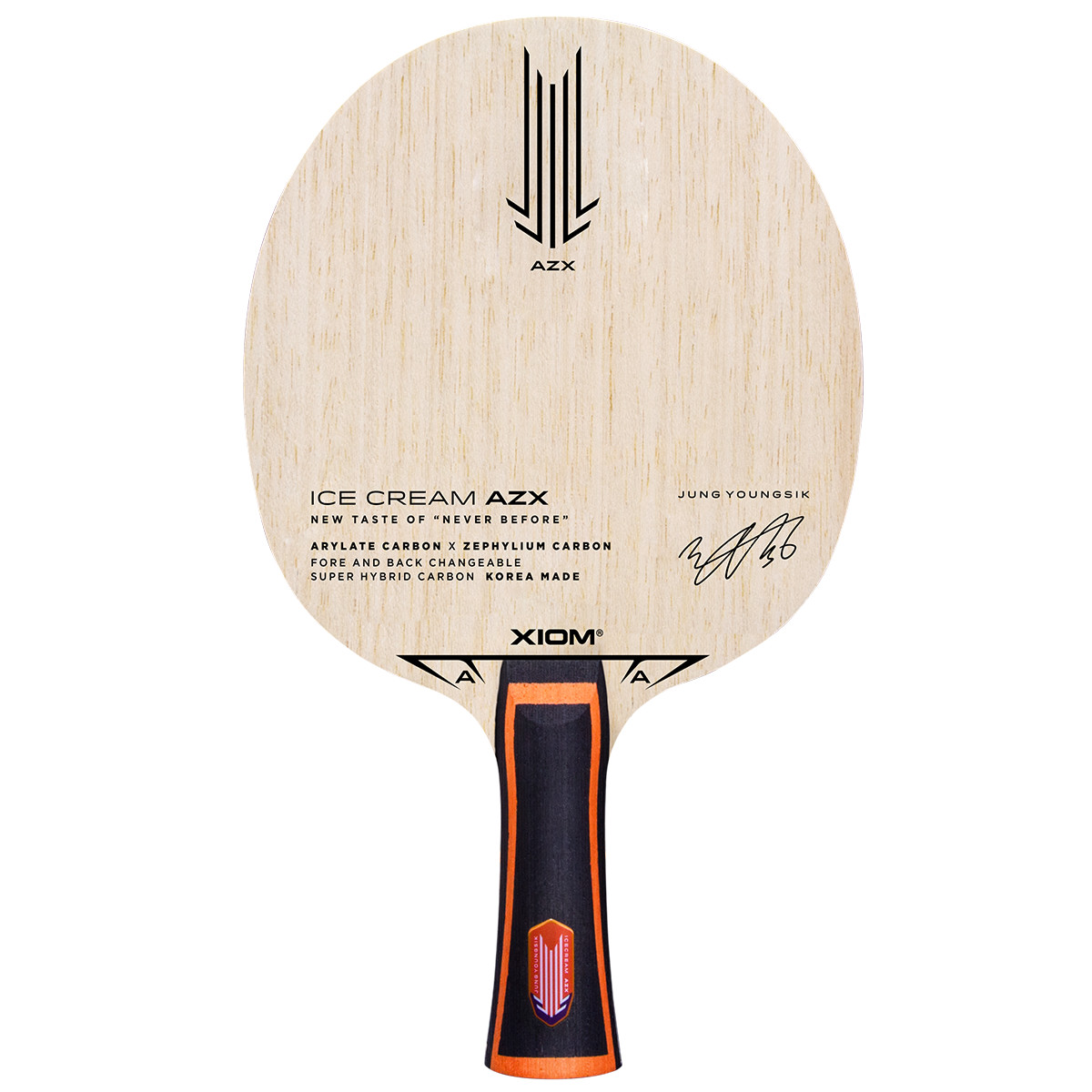 Two-faced outer carbonIce Cream AZX Xiom
- Composition
- 5 wood
- Blades
- 7
- Handle
- Concave (FL)
ZLC on one side and ALC on the other, near the surface, with a koto face. 5.7 mm, 88 g on average, speed 96 and control 79 on Megaspin. Faster and firmer than its inner-carbon sister, for players who decide the point early.
- 4
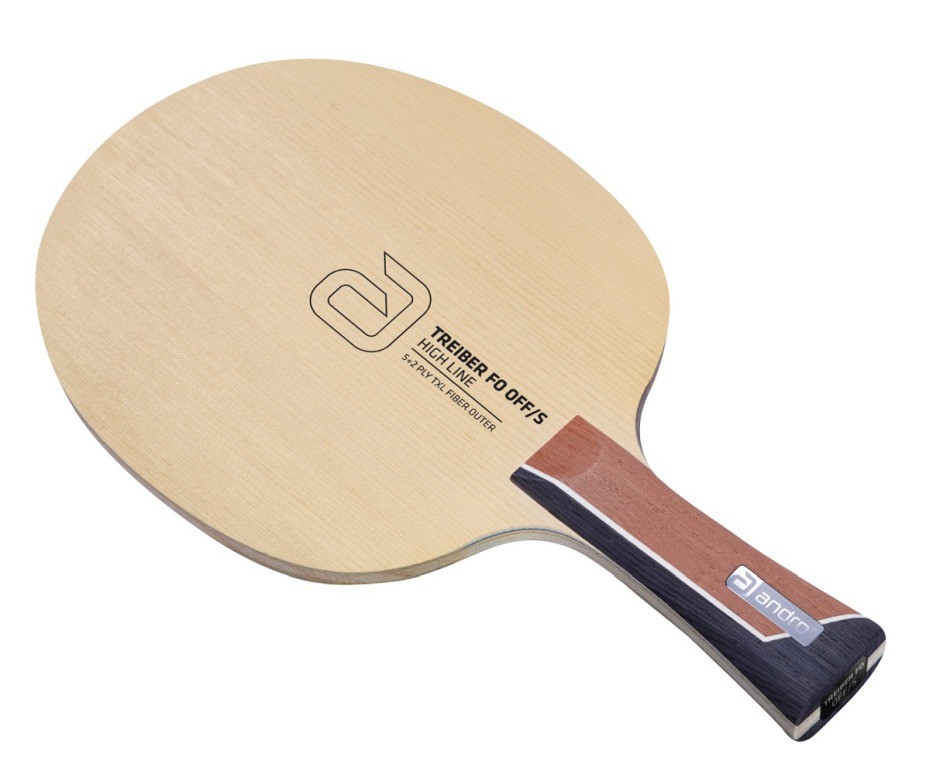 Fastest on the listTreiber FO OFF/S Andro
- Composition
- 5 wood
- Blades
- 7
- Handle
- Concave (FL)
TXL fiber right under the hinoki face, 6.8 mm and 90 g on average. Megaspin lists OFF+, speed 97 and control 63. A direct hit for the first ball against backspin and for topspin exchanges, with hinoki's high arc.


What the ITTF approves and what it doesn't
The most common question from someone about to play their first federation tournament is "is my paddle approved?" The answer has two parts, because the ITTF treats blade and rubber differently.
The rubber must be authorized. The ITTF maintains the List of Authorised Racket Coverings (LARC), searchable on the ITTF equipment website. Only models on this list are valid in competition under the international rules. The rubber carries the ITTF logo and, where applicable, the authorization number, and this information has to remain visible near the handle once glued.
The blade has no list. The ITTF doesn't authorize blades. What exists is the rule every blade must meet, set out in the ITTF handbook, rule 2.4:
- Flat and rigid, of any size, shape or weight (2.4.1).
- At least 85% natural wood by thickness (2.4.2). Carbon, aramid or glass fibers go in thin layers, within that limit.
- Continuous layers of uniform thickness (2.4.4), a rule that also applies to the glue and the rubber on the hitting side.
This means none of the blades above is "approved" in the sense of having a seal, and none needs to be. What you bring to the inspection table is the combination: a regular blade, LARC rubbers, glued the right way.
The rubber limits that knock paddles out
| Rule | What it says | Where amateurs go wrong |
|---|---|---|
| Thickness (2.4.3) | Rubber with sponge: less than 4.05 mm in total, including the glue. Pips without sponge: less than 2.05 mm | Several layers of old glue accumulated under the new rubber |
| Edge (2.4.5) | The covering goes up to the edge of the blade, without going past it | Loose trimming that overhangs |
| Colors and gloss (2.4.6) | Matte, one side black and the other a bright color | Old rubber with a surface polished by use |
| Treatment (2.4.7) | Nothing physical or chemical after manufacture | Oils and "boosters" to increase speed |
| Glue | Only glue without harmful volatile solvents, or adhesive sheet | Old solvent-based glue kept in the paddle case |
The permitted colors and rubber types are detailed in the guide to inverted rubber, short pips or long pips, so here it's enough to remember: the ITTF logo on the rubber is necessary, but it doesn't prove the model is still on the list. The ITTF umpiring manual says exactly this. Check the current LARC before buying, especially clearance rubber, which may be leaving the list.
How racket control works
At large competitions, the organizers set up a racket control center. According to the ITTF umpiring manual, it checks for the presence of prohibited solvents, thickness, flatness and other points, normally before matches. At tournaments without such a center, the umpire does the checking, at the inspection before warm-up.
What this changes for you:
- Before the match, the paddle is shown to the umpire and the opponent, who may examine it (rule 2.4.8). The same applies if you change paddles.
- A paddle that fails before the match is retained and you play with another. If there is no time to test the second one, it is tested after the match.
- A paddle that fails after the match leads to sanctions provided for in the ITTF guidelines for referees.
- You can ask for the test voluntarily before the match, without penalty. It's worth it with a freshly glued paddle.
- During intervals, the paddle stays on the table. It only leaves with the umpire's authorization.
Backup paddle: why have two identical ones
The rule is strict: you don't change paddles during an individual match, unless it has been accidentally damaged to the point of being unusable. In that case, the replacement is the one you brought to the playing area. Changing an undamaged paddle can lead the referee to disqualify the player.
In practice, this means the backup comes in at a bad moment: in the middle of a game, without warm-up. If it is different from the main one, you play the rest of the match with a strange paddle. That is why tournament players usually have two identical builds.
How to build two truly identical paddles
- Same blade, same handle. The blades in the ranking are sold at stores, which makes it easy to buy two of the same model. The JOOLA KL-c Inner and the Tibhar Lebruns come in different handle versions; buy both in the same format.
- Weigh the blades before gluing. A blade is wood, and wood varies. Spec sheets list an "average weight" precisely because each unit comes out a little different. If the store allows it, choose two units of similar weight.
- Same rubbers, same thickness, same glue. Glue both on the same day, with the same number of layers.
- Alternate use in training. A backup that sits in storage ages one way and the main paddle another. Switching between them during the week keeps the rubbers' grip similar.
- Check the final weight of both assembled paddles. If one came out much heavier, you will feel it at the moment of the switch.
Heads up
Don't glue a new rubber on tournament day. Gluing can swell the sponge and increase the total thickness, and a freshly glued paddle is the one most at risk in the control check. Glue a few days ahead, practice with it and, if there is a control center, ask for the voluntary test before the first match.
Customization: what the rules allow
| Allowed | Prohibited |
|---|---|
| Shaping the handle by adding material (2.4.4): tape, thin overgrip, putty | Changing the thickness or continuity of the hitting area |
| Leaving without rubber, or covering with any material, the part near the handle where the fingers go (2.4.5) | Rubber extending past the edge of the blade |
| Edge tape and protectors that don't alter the surface (2.4.7.1) | Any treatment of the rubber after manufacture (2.4.7) |
| Choosing any rubber thickness within the limit | Glue with volatile solvents |
| A blade of any size, shape and weight (2.4.1) | A blade that isn't flat and rigid |
| Rubber colored red, blue, green, pink or violet, with the other side black | A glossy surface or a color outside the standard |
For those who sand down the FL handle or thicken it with tape, the guide to FL, ST or AN handle has practical guidance.
Inner or outer carbon in a tournament
In tournament play, pressure makes small errors show up. That weighs on the choice between the two blade families on the list.
Competition blades: inner carbon vs. outer carbon
4 racquets: swipe sideways to see them all1–2 of 4 →
Highlighted: what differs between the racquets. In bold: the best value in the row.
Inner carbon (KL-c Inner, Felix Lebrun Hyper Carbon, ARY-C): the short serve and the receive are more controlled, because on soft touches it is the wood that responds. It is the safest choice for players who lose points on the receive under pressure.
Fiber near the face (Ice Cream AZX, Treiber FO OFF-S): the first ball comes off faster and more direct, which shortens the point. It makes sense for players with a solid receive who want to win on initiative. The Butterfly Viscaria, with ALC, appears in the comparison as the market reference for this family; it is covered in the guide to the best table tennis paddles of 2026.
If you're still deciding on a style, the blades by profile in the guide to paddles for advanced players are the step before this list.
Professional players' lines: what we can state
Several blades in the ranking carry an athlete's name. The name indicates the model was developed with the player or carries his signature, but the manufacturer doesn't always disclose which paddle, rubber and thickness the athlete uses in each competition. That is why we state only what the brand publishes:
- Hugo Calderano (JOOLA): JOOLA describes the Hugo Calderano ARY-C as developed in collaboration with the Brazilian player. The KL-c Inner, first in our ranking, is part of the same line.
- Félix and Alexis Lebrun (Tibhar): the French brothers have their own lines. Félix's Hyper Carbon is sold in the penhold version, his grip.
- Shang Kun (Tibhar): the Hybrid ZC was designed for Tibhar's hybrid rubbers.
Use the name as a clue to the blade's style, not as a guarantee that it will work for your game.
Tournament week checklist
- Check on the LARC that both rubbers on the main paddle and the backup are still authorized.
- See whether the ITTF logo is visible near the handle on all four faces.
- Run your finger along the edge: the rubber can't overhang the blade.
- Check that no face is peeling, bubbling or has a large tear.
- Bring both paddles in the case. If you need to reglue something, use only solvent-free glue and only in the ventilated area indicated by the organizers.
- If there is a control center and the paddle is recent, take the voluntary test.
To compare the blades in the ranking with other options, use the table tennis comparison tool or the pages for Tibhar, JOOLA, Xiom and Andro. The table tennis catalog shows them all with a competitive-level filter.
Which table tennis paddle is allowed in competition?
Any flat, rigid blade with at least 85% natural wood by thickness, covered with rubbers from the ITTF list of authorized racket coverings (LARC), glued with glue free of volatile solvents, with one side black and the other a bright color. The ITTF doesn't approve blades, only rubbers.
Does the ITTF approve table tennis blades?
No. The ITTF only authorizes coverings, that is, rubbers. The blade must meet rule 2.4 (flat, rigid, at least 85% natural wood by thickness), but there is no list of approved blades.
Can I change paddles in the middle of a match?
Only if it is accidentally damaged to the point of being unusable. In that case, you use the backup you brought to the playing area, and it must be shown to the umpire and the opponent. Changing an undamaged paddle can lead to disqualification.
Can a ready-made paddle be used in a tournament?
It can, if the rubbers are on the LARC, with the ITTF logo, and respect the color rules. But at the competitive level the assembled paddle is the norm, because it lets you choose the blade and rubbers and replace only the rubber when it wears out.
What is the maximum rubber thickness in competition?
For rubber with sponge, the total thickness, including the glue, must be less than 4.05 mm. For pips-out rubber without sponge, less than 2.05 mm. Accumulated layers of glue count toward this measurement.
Do I need two paddles to play a tournament?
The rule doesn't require it, but it is strongly recommended. If the main one breaks in the middle of a match, only the backup you brought can replace it. A backup identical to the main one keeps you from finishing the match with a strange paddle.
Where to buy the racquets in this guide
- Hugo Calderano KL-C Inner JOOLAlimba, ayous and KL-c (aramid and carbon) · 7 · Concave (FL)See priceJOOLA
- Hugo Calderano ARY-C 2026 JOOLA5 wood + 2 ARY-C · 7 · Concave (FL)See priceJOOLA
- Ice Cream AZX Xiom5 wood · 7 · Concave (FL)See priceMegaSpin
- Treiber FO OFF/S Andro5 wood · 7 · Concave (FL)See priceAmazon
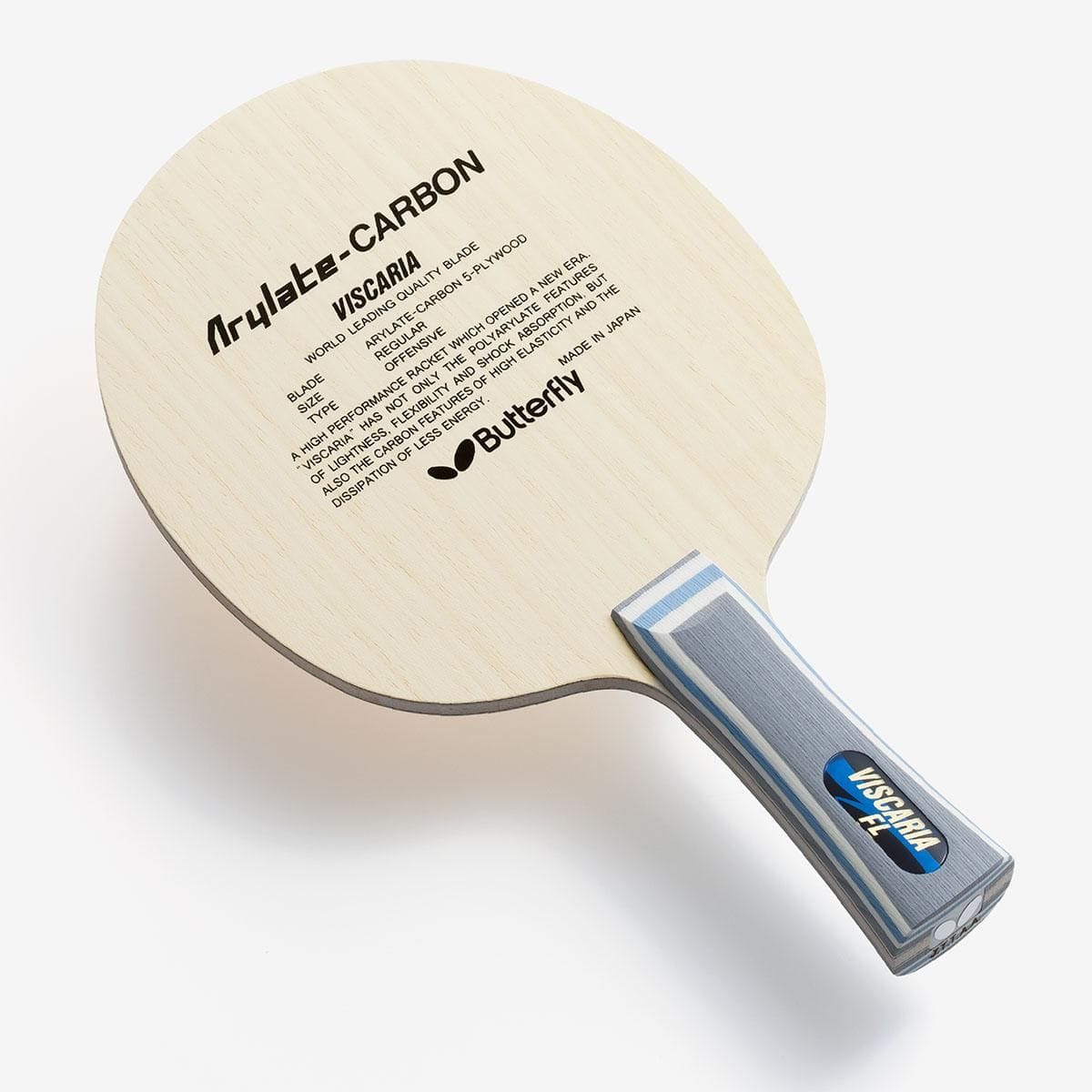 Viscaria Butterfly5 wood + 2 ALC · 7 · Concave (FL)See priceAmazon
The prices above are checked automatically at each store and may have changed since the last check. The price that counts is the one shown on the store's website at checkout. We may earn a commission on purchases made through store links, at no extra cost to you.