


 Brasil
 Canada
 United Kingdom
 Australia
 Netherlands
 France
 España
 Italia
 السعودية
How to Choose a Table Tennis Paddle: Complete Buying Guide
Sponge, hardness, blade, handle, and weight explained in court terms, with the ITTF rules and a starting point for each type of player.
Updated on 10/07/2026
On this page
- 1.Speed, spin, and control: the triangle that doesn't close
- 2.Sponge thickness: the adjustment that changes the ball the most
- 3.Sponge hardness
- 4.The blade: plies, composition, and thickness
- 5.Handle type
- 6.Weight and balance
- 7.ITTF rules that affect your purchase
- 8.Pre-assembled or custom-built, in brief
- 9.A starting point for each type of player
To choose a table tennis paddle, decide in this order: how much control you need, which rubber (sponge thickness and hardness), which blade (speed and composition), which handle, and finally the weight. This sequence avoids the classic mistake of picking a famous player's blade and discovering later that the combination is too fast for your stroke.
This buying guide explains each of these characteristics in court terms: what changes on the ball, in which game situation you will feel the difference, and which range usually suits each type of player.
Speed, spin, and control: the triangle that doesn't close
Every paddle is a compromise between three things, and improving one almost always costs another:
- Speed is how fast the ball comes off with the same effort. It comes from blade stiffness and sponge elasticity.
- Spin is the ability to rotate the ball. It comes from the grip of the rubber surface and the time the ball spends in contact with it.
- Control is the margin for error: how much the ball keeps going where you want even when the angle or timing wasn't perfect.
A very stiff blade with very elastic rubber is fast, but it shortens contact and reduces control. A flexible blade with thin sponge gives a lot of control, but needs arm strength to generate speed. The right balance depends on how much you train and where you play at the table.
Good to know
The speed, spin, and control ratings printed on boxes use different scales at each brand, so they are no use for comparing manufacturers. To compare paddles, look at the spec sheet: sponge thickness, plies, composition, and weight.
Sponge thickness: the adjustment that changes the ball the most
Between the rubber surface and the wood there is a layer of sponge. It is the paddle's engine: the thicker it is, the more the ball sinks in and the more energy comes back. Thickness is measured in millimeters and usually runs from 1.5 mm up to each model's "max" version, which is normally between 2.1 and 2.3 mm.
The effect shows up in three game situations:
- Receiving a short serve. With thin sponge, the ball sinks in little and it is easier to keep the return short. With thick sponge, it tends to pop up and sail high.
- Topspin away from the table. Thick sponge helps the ball gain depth without needing a huge swing.
- Blocking against heavy topspin. Thin sponge absorbs less and returns the ball faster than you expect; thick sponge cushions more, but demands a closed angle.
Butterfly's Timo Boll series illustrates the difference well: the same 5-ply blade and the same Pan Asia rubber, with 1.7 mm sponge on the 1000, 1.9 mm on the 2000, and 2.1 mm on the 3000. Since only the sponge changes, the series shows the general rule: the thicker it is, the more ball speed and the less margin in the short game. The three models are in the catalog as a reference, but are not currently listed by stores.
Same paddle, different sponge: Timo Boll 1000, 2000, and 3000




Highlighted: what differs between the racquets. In bold: the best value in the row.
The ITTF rule limits sponge-and-rubber coverings to 4.0 mm in total (rubber plus sponge) and pips-out rubber without sponge to 2.0 mm. The max versions of offensive rubbers already sit near that ceiling, so it is not a concern for those who buy approved rubber and glue it the normal way.
Sponge hardness
Two rubbers with the same thickness can play very differently because of hardness. Soft sponge sinks in with little force, which helps players with a short swing or who play very close to the table. Hard sponge only "opens up" with a full, accelerated stroke, but returns more speed and spin when it does.
- Soft: more control on blocks and in the short game, good for the backhand, forgives short strokes.
- Medium: the middle ground for most club players.
- Hard: more power and spin on forehand topspin, more demanding.
Hardness is given in degrees, but each manufacturer measures it differently. A "47.5 degree" sponge from a German brand is not equivalent to 47.5 degrees from a Chinese or Japanese brand. Compare within the same family or read how the manufacturer classifies it (soft, medium, hard).
Traditional Chinese rubbers, with a tacky surface and hard sponge, sit at one extreme: they generate a lot of spin, but little catapult. That is why they are usually used with faster blades.
The blade: plies, composition, and thickness
The blade is the foundation. Three characteristics define how it plays:
| Characteristic | More | Less |
|---|---|---|
| Plies (5, 7) | 7 plies: stiffer and faster, generally heavier | 5 plies: more flexible, more feel |
| Fibers (carbon, ALC, ZLC) | Bigger sweet spot, more speed, less vibration | Wood only: more contact time, more feedback in the hand |
| Thickness (mm) | Thicker: faster and more stable | Thinner: flexes more, holds the ball |
The outer face also counts. Limba, common on European blades, is soft and helps "grab" the ball. Koto and hinoki are harder and give a more direct response.
Stores and brands group blades into speed classes: DEF (defensive), ALL (all-round), and OFF (offensive), with plus and minus variations. Defenders and developing players sit between DEF and ALL+; most club attackers do better between OFF- and OFF. The guide to paddles for intermediate players goes deeper into this choice, including the difference between inner and outer fiber.
Handle type
In the shakehand grip, the handle is almost always one of these three types:
- FL (flared, concave): wider at the base and thinner in the middle. It holds well in the hand on hard strokes and is the best seller. Recommended for most attackers and for beginners.
- ST (straight): uniform width. It makes it easier to rotate the paddle in your hand and change grip between forehand and backhand. Widely used by defenders and by players with a strong wrist-based backhand.
- AN (anatomic): wider in the middle, fits into the palm. It gives firmness, but slightly limits grip changes.
For the penhold grip, there are dedicated handles: CS (Chinese penhold, short) and the Japanese penhold handle, with a cork support. The Butterfly Nitchugo I is an example of a pre-assembled paddle with a Japanese handle.
Hand size matters. Players with large hands may find the FL too thin and prefer the AN; those with small hands usually do well with thinner handles and smaller-headed blades, like the Nittaku Latika Light.
Weight and balance
A blade without rubber generally weighs 75 to 95 g. Each cut rubber adds roughly 40 to 50 g, so a custom-built paddle usually ends up between 165 and 195 g. Entry-level pre-assembled paddles tend to be lighter.
Weight has a direct effect on your game:
- A light paddle returns to the ready position faster, which helps in fast exchanges close to the table and for players with less wrist strength.
- A heavy paddle has more inertia: on blocks and mid-distance topspin, the ball comes off with more weight, but the arm tires more and recovery is slower.
Where the weight sits matters too. A blade with weight concentrated in the handle feels lighter than the scale says. Larger heads, like the Harimoto Innerforce ALC, make the paddle a bit heavier at the tip.
Light and heavy blades in the catalog
Highlighted: what differs between the racquets. In bold: the best value in the row.
ITTF rules that affect your purchase
If you plan to play in sanctioned tournaments, check these points before buying. The full rules are in the ITTF handbook, and national and regional federations, such as Brazil's CBTM, follow the same regulations.
- Rubber on the authorized coverings list. Each approved model and color appears on the ITTF equipment site. The rubber must have the ITTF logo visible.
- Colors. One side black and the other a bright color, clearly different from black and from the color of the ball.
- Blade predominantly wood. At least 85% of the thickness must be natural wood. Carbon and similar fibers go in thin layers, within that limit.
- No treatment. The rubber must be used as it leaves the factory, without "boosters" or products that alter its properties, and gluing must be done with glue free of volatile solvents.
Blade size, shape, and weight are free. That is why there are larger heads and even different shapes, like the hexagonal one in Stiga's Cybershape line.
Pre-assembled or custom-built, in brief
A pre-assembled paddle comes with the blade and rubbers glued on and is the right choice for casual players or those in their first months of training. A custom-built paddle (a blade plus two rubbers bought separately) lets you match each side to your game and replace only the rubber when it wears out. The costs, gluing, and durability are in the guide to pre-assembled vs. custom-built paddles.
A starting point for each type of player
| Player type | Sponge | Blade | Handle |
|---|---|---|---|
| Casual at home | 1.5 to 1.8 mm, soft | Pre-assembled 5-ply | FL |
| Club beginner | 1.8 to 2.0 mm, soft or medium | Approved pre-assembled or ALL | FL |
| Developing attacker | 1.9 to 2.1 mm, medium | 5-ply ALL+ or OFF- | FL or AN |
| Club attacker | Max, medium or hard | OFF with or without fiber | FL |
| Defender | Thin on the chop side, long pips optional | DEF or ALL, wide head | ST or FL |
Catalog examples for each type of player
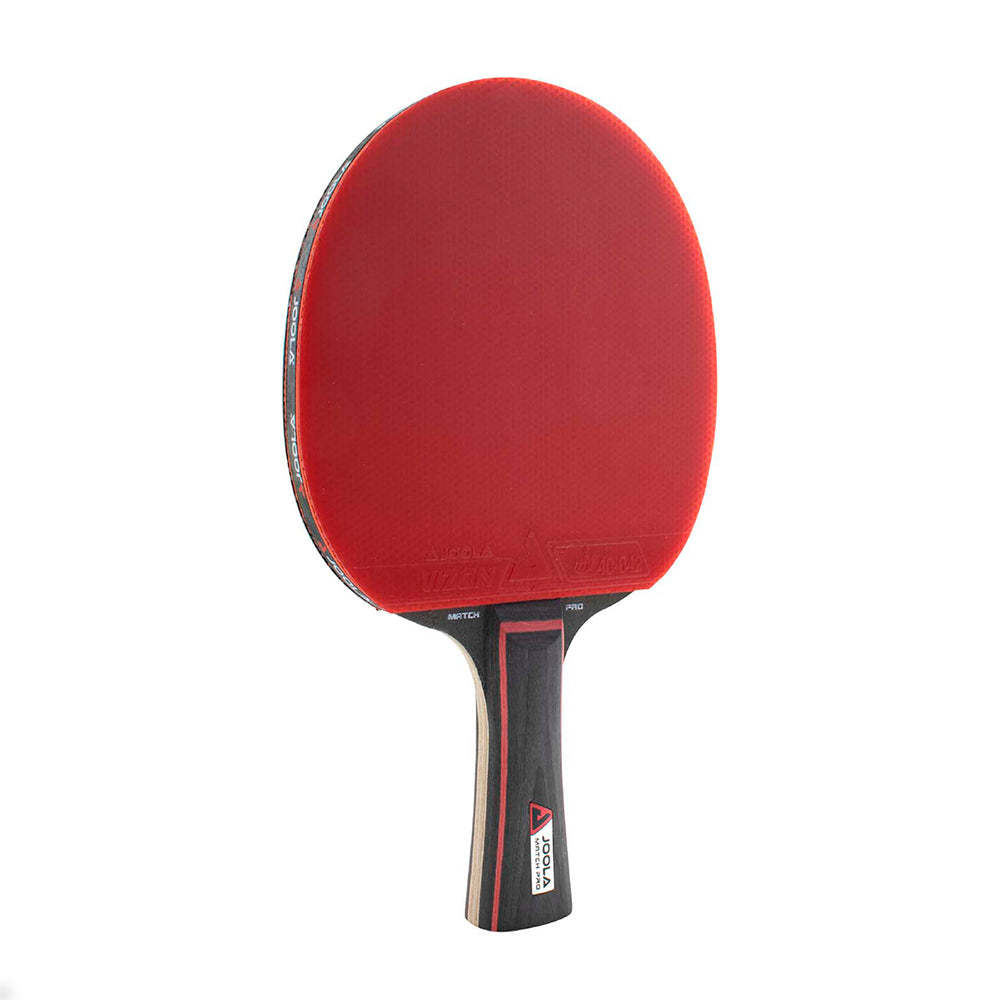



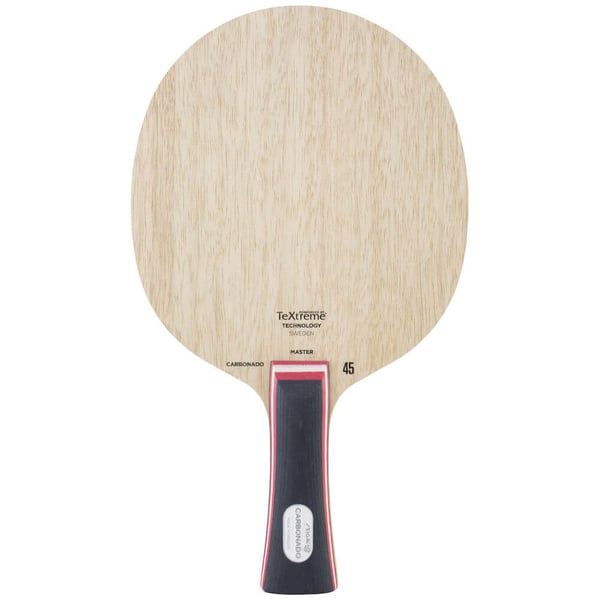


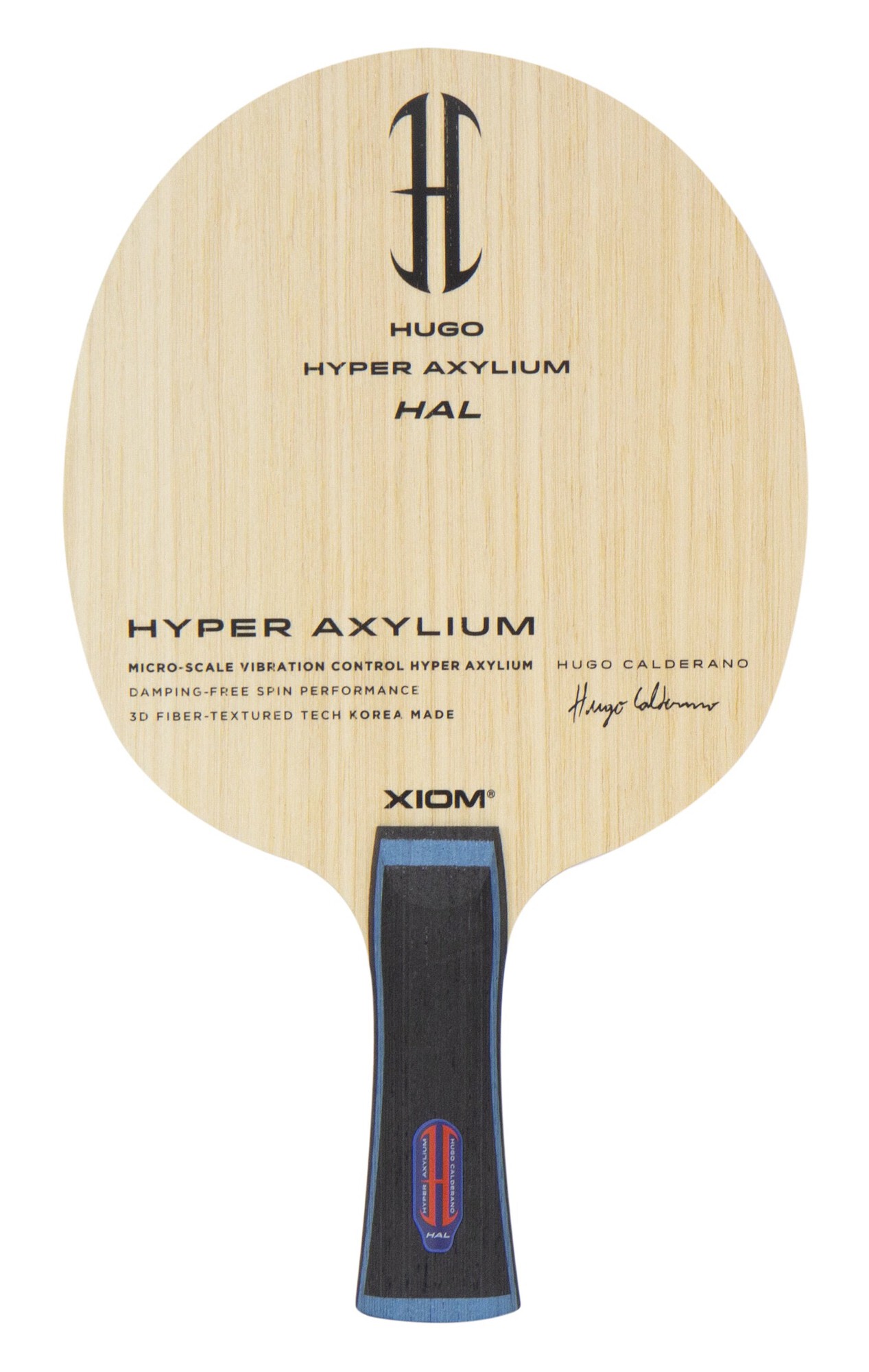

If you would rather be guided through the choice, Find Your Racket matches your answers against the table tennis catalog. To see ready-made recommendations by category, the guide to the best table tennis paddles of 2026 gathers the highlights, and the one on paddles for beginners details the first purchase. To understand how the site's scores are calculated, see the methodology.
How do I choose a table tennis paddle for my level?
Start with control. Beginners should look for a pre-assembled paddle with 1.5 to 1.8 mm sponge and approved rubber. Players who already hit topspin can move up to 2.0 mm sponge and an ALL+ or OFF- blade. Club attackers choose an OFF blade and rubbers at maximum thickness.
What is the difference between FL, ST, and AN handles?
FL is flared (concave), wider at the base, and holds the hand better on hard strokes. ST is straight and makes it easier to rotate the paddle to change grip, so it is common among defenders. AN is anatomic, wider in the middle, and fits into the palm. Most players use FL.
Is thicker sponge always better?
No. Thicker sponge gives more speed and depth, but reduces control on serve receive and in the short game. It only pays off when you already have the technique to take advantage of the extra energy.
What is the ideal weight for a table tennis paddle?
Built, most end up between 165 and 195 g. Lighter paddles favor fast exchanges close to the table; heavier ones give stability on blocks and power at mid-distance. If your forearm tires at the end of a session, go for something lighter.
How can I tell if a rubber is ITTF-approved?
Look for the ITTF logo printed on the rubber, near the handle, and check the model on the authorized coverings list published on the federation's equipment site. Approval applies to the rubber, not the whole paddle.
Can sponge hardness be compared across brands?
Not directly. Each manufacturer measures hardness differently, so degrees from a German brand are not equivalent to those from a Chinese or Japanese one. Compare within the same brand or use the manufacturer's classification: soft, medium, or hard.
Where to buy the racquets in this guide
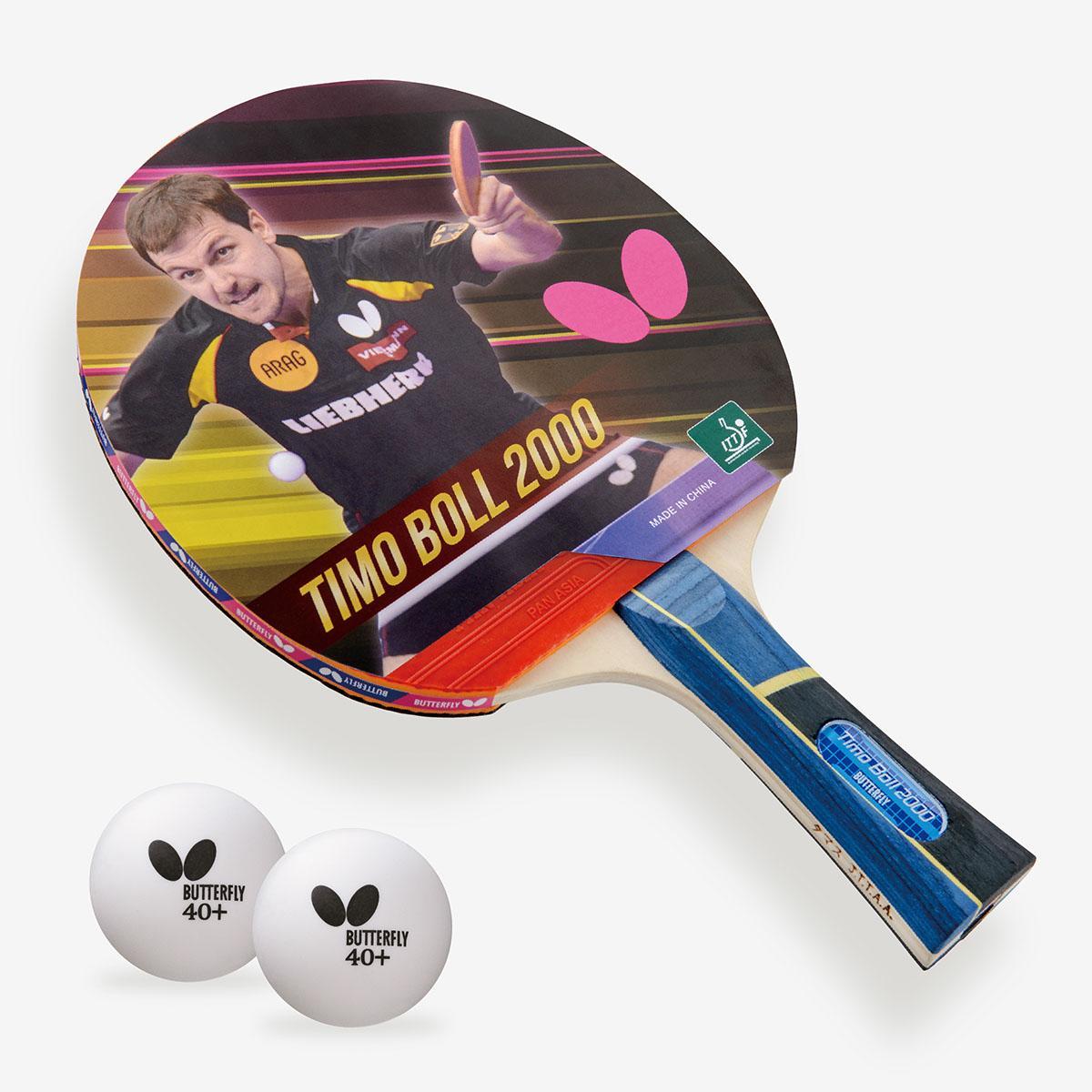 Timo Boll 2000 Butterfly5 wood · 5 · Concave (FL)See priceButterfly
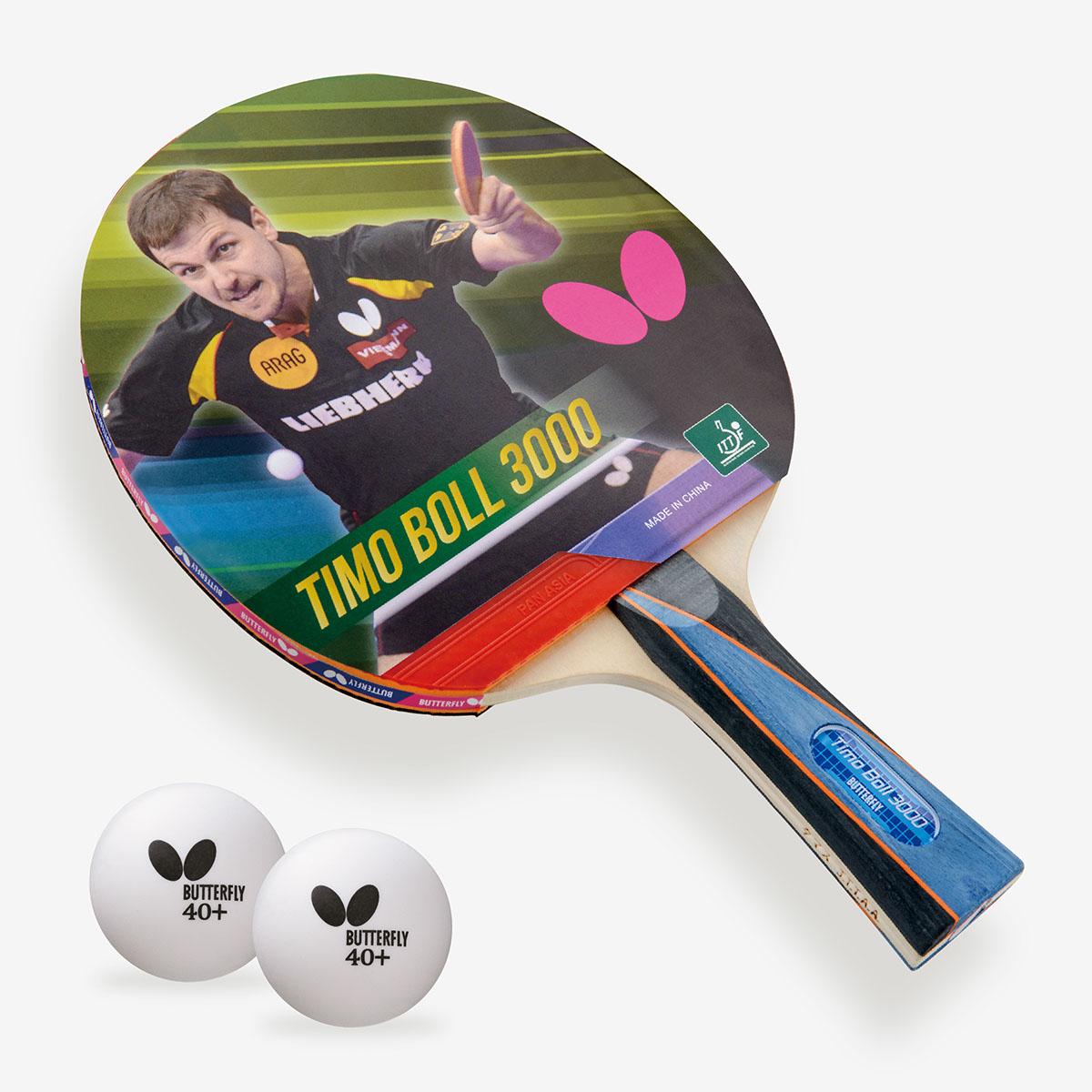 Timo Boll 3000 Butterfly5 wood · 5 · Concave (FL)See priceButterfly
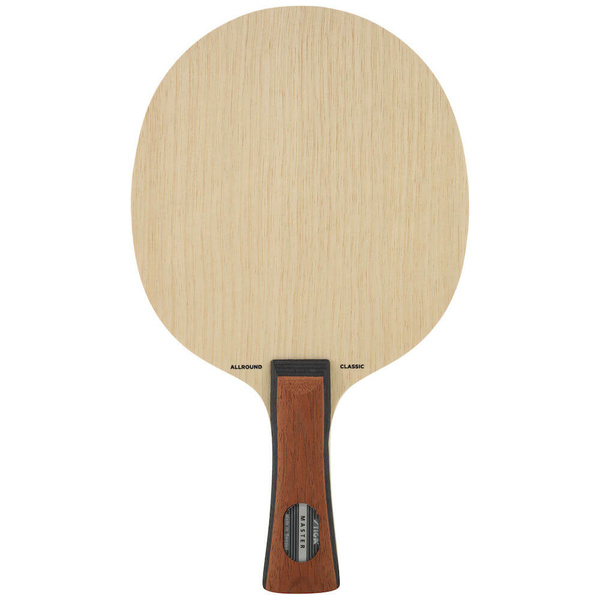 Allround Classic Stiga5 wood, limba surface · 5 · Concave (FL)See priceMegaSpin
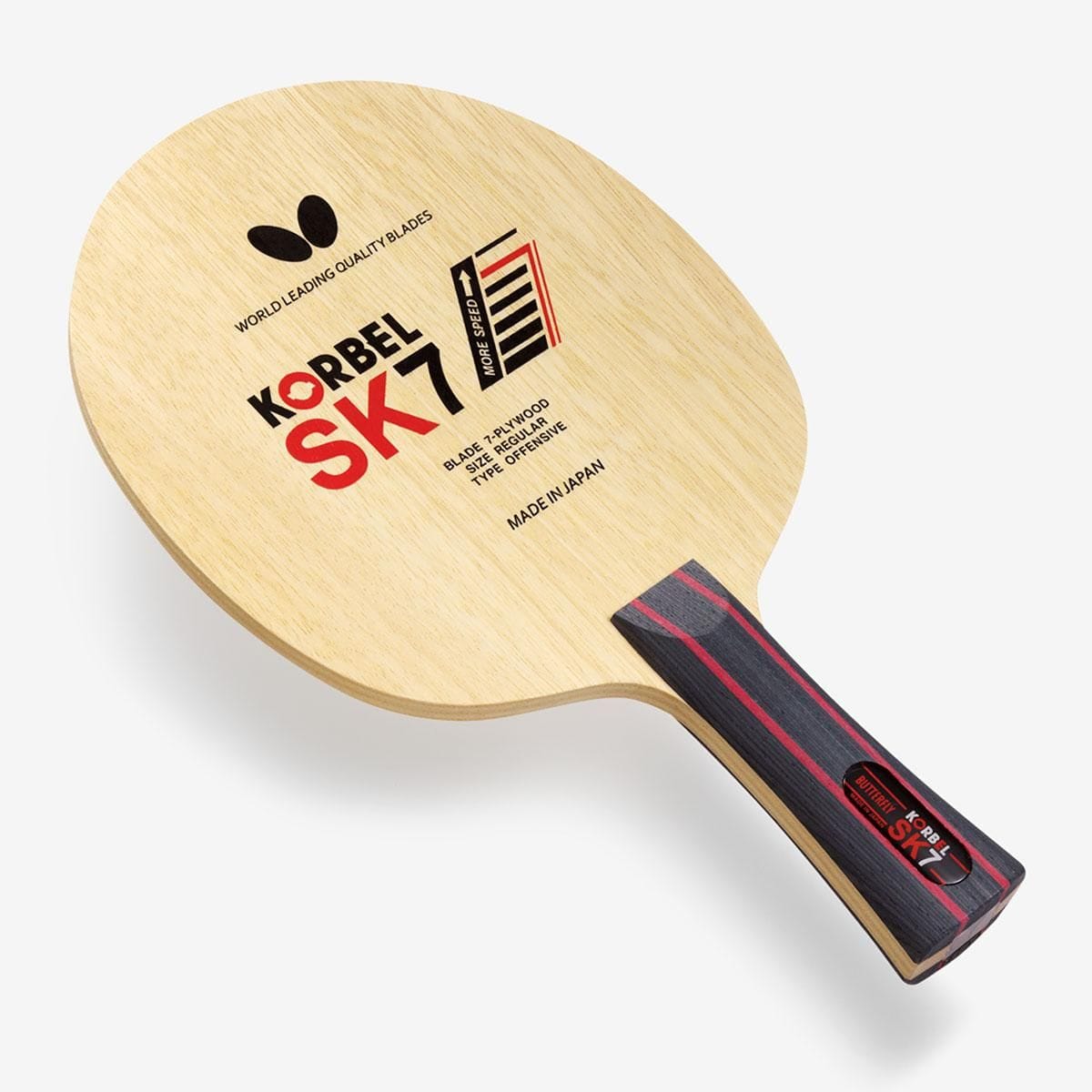 Korbel SK7 Butterfly7 wood · 7 · Concave (FL)See priceButterfly
- Match Pro JOOLA5 wood · 5 · Concave (FL)See priceAmazon
- Carbonado 45 Stiga5 wood + 2 TeXtreme carbon 64 g/m² · 7 · Concave (FL)See priceAmazon
- Hugo HAL Xiom5 wood + 2 Hyper Axylium (arylate) · 7 · Concave (FL)See priceMegaSpin
The prices above are checked automatically at each store and may have changed since the last check. The price that counts is the one shown on the store's website at checkout. We may earn a commission on purchases made through store links, at no extra cost to you.