


 Brasil
 Canada
 United Kingdom
 Australia
 Netherlands
 France
 España
 Italia
 السعودية
Pre-Assembled or Custom-Built Table Tennis Paddle: Which Is Worth It?
Pre-assembled or custom-built? We compare rubber, cost over time, gluing, rubber changes, and durability so you know when it is time to switch.
Updated on 10/07/2026
On this page
- 1.What each one is
- 2.Side-by-side comparison
- 3.Performance: where the pre-assembled paddle stops
- 4.Value over time
- 5.How to choose the parts for your first custom build
- 6.Gluing: how to build the paddle
- 7.Replacing rubber: when and why
- 8.Durability and care that make a difference
- 9.Who each path makes sense for
Pre-assembled or custom-built table tennis paddle? Pre-assembled if you play for fun or are in your first year of training; custom-built once you train often and can say what you want from the rubber on each side. The pre-assembled paddle costs less to start. The custom-built one costs more up front, but lets you replace only the rubbers when they wear out and tune the paddle to your game.
What follows is the full comparison: what changes in performance, how much each path costs over time, how gluing works, when to replace the rubber, and how long each part lasts.
What each one is
A pre-assembled paddle (also called factory-assembled or pre-built) leaves the factory with the blade and both rubbers already glued on and cut to shape. The manufacturer picks the combination, almost always with control and durability in mind. Examples in the catalog range from entry-level models, like the Butterfly Stayer 1200, to paddles with carbon in the blade, like the Stiga Raptor.
A custom-built paddle is put together by you or by the store: a blade bought separately, plus one rubber for the forehand and another for the backhand, glued on with glue made for table tennis. Each part is chosen to suit your style.
Side-by-side comparison
| Criterion | Pre-assembled | Custom-built |
|---|---|---|
| Cost to start | Low | Medium to high (blade + 2 rubbers + glue) |
| Performance | Limited by the factory rubber | Depends only on the parts you choose |
| Customization | None | Total: blade, rubber, thickness, handle |
| Rubber replacement | Possible on some, rarely worth it | Normal, part of maintenance |
| Durability | The whole paddle is replaced when the rubber wears out | The blade lasts years; only the rubbers are replaced |
| ITTF approval | Only if the rubbers are authorized | Just pick authorized rubbers |
| Who it's for | Casual play, beginners, schools | Players who train often and already have a defined style |
Performance: where the pre-assembled paddle stops
The weak point of a pre-assembled paddle is almost never the blade; it is the rubber. To keep costs low and the paddle easy to use, manufacturers use entry-level rubbers, with thin or low-density sponge and a surface that loses grip faster.
This shows up in very specific situations:
- Spin serves. Basic rubber doesn't "bite" the ball enough to generate much spin on a short serve.
- Topspin against backspin. To lift a chopped ball, you need grip and a sponge that lets the ball sink in. With entry-level rubber, the ball tends to go into the net.
- Blocking against heavy topspin. Thin sponge returns the ball without cushioning your opponent's spin, and it sails high.
On a custom-built paddle, each of these points is solved by your choice of rubber. That is why, when your stroke is already right and the ball still doesn't respond, the limitation has become the equipment.
Pre-assembled paddles that stretch the time before you switch
Some pre-assembled paddles come close to the level of a simple custom build. The Stiga Evolution has a 6-ply blade with Crystal and WRB technologies and approved rubbers with 2 mm sponge, and is among the most-reviewed in the category on Amazon. The Donic Top Team 800 has Alpha Slick rubber with 1.8 mm sponge. The JOOLA Hugo Calderano Carbon Speed has carbon in the blade and ITTF-approved VIZON 2.0 rubbers. They are options for players who want to step up without yet taking on the maintenance of a custom build.
Strengths
- + Approved by the ITTF and the JTTA
- + Addoy rubbers with 1.5 mm sponge
- + Comes with 2 40+ balls and edge tape
- + Traditional brand in the sport
Drawbacks
- − 1.5 mm sponge is thin for players who already attack
- − Factory rubber was not designed to be replaced
- − Loses its point once the player starts attacking hard
Value over time
At purchase, the pre-assembled paddle wins by a wide margin: an entry-level paddle usually costs less than a single club rubber. But the math changes when you look at two or three years of training.
On a pre-assembled paddle, when the rubber loses grip, the practical solution is to buy another paddle. On a custom-built one, the blade stays; you replace only the rubbers. Since the blade is the part that lasts longest, players who train several times a week end up spending more efficiently with a custom build, because each rubber change restores the whole paddle.
For players who play once a week or less, the pre-assembled paddle remains the best balance between cost and use. The rubber wears slowly and the paddle lasts a long time.
Part prices change every day. To keep up, use the table tennis catalog, which shows current offers, or the table tennis paddle comparison tool.
How to choose the parts for your first custom build
For a first build, the most expensive mistake is choosing a blade that is too fast. Start with an all-round or light offensive 5-ply and tensor rubbers with soft or medium sponge, between 1.9 and 2.0 mm. That way you get the grip and sponge of a club rubber without losing the control you had on the pre-assembled paddle.
- Donic Appelgren Allplay: according to Donic, the best-selling blade in the brand's history. All-wood all-round.
- Xiom Allround S: ALL+ class, 80 g, slightly larger face.
- Stiga Allround Evolution: from the same family as the Allround Classic, for players who want to stay with a Stiga all-round.
- Tibhar Samsonov Alpha: OFF-, 85 g, for players who already want to attack.
- Sanwei Fextra 7: 7 plies of wood. Like any 7-ply, it tends to be a bit heavier and stiffer than 5-plies.
The guide to paddles for intermediate players goes deeper into the choice between pure wood and composites.
Gluing: how to build the paddle
Many specialty stores glue the rubber on for the customer. If you prefer to do it at home, the process is simple:
- Use water-based glue made for table tennis. Glues with volatile solvents have been banned by the ITTF since 2008, and the rubber must be used without treatment.
- Apply a thin, even coat to the rubber's sponge and another to the face of the blade. Spread it with the applicator sponge that comes with the glue.
- Wait for it to dry until the glue turns clear. Gluing while it is still white leaves bubbles.
- Lay the rubber down starting at the handle, working toward the tip, and press with a roller to push out the air.
- Trim the excess with sharp scissors or a hobby knife, following the edge of the blade, with the rubber facing down.
- Apply edge tape (optional). It protects the blade from table knocks and adds a few grams.
Tip
Before the first gluing, check whether the face of the blade has varnish or sealer. On blades without a finish, the glue soaks into the wood and, when you replace the rubber, can pull off splinters from the outer ply. A thin coat of blade sealer solves it. Some classic limba blades, like the Stiga Offensive Classic, are known for splintering when not sealed.
Replacing rubber: when and why
The rubber is the part that wears. It loses grip with use, dust, and time, and the sponge loses elasticity too. Signs that it is time:
- The ball slides on serves and the spin you used to put on it is gone.
- Topspin loses its arc: the ball comes off flat and sails past the table, or goes into the net against backspin.
- The surface changed color or became shiny in the area where you hit most.
- The sponge has bubbles or has started to crack near the edge.
There is no fixed schedule. Players who train several times a week usually replace the forehand rubber every few months; those who play once a week can go much longer with the same one. The backhand generally lasts longer, because it takes less intense strokes.
Can you replace the rubber on a pre-assembled paddle?
On many, yes. But it is rarely worth it. The factory rubber was glued on with glue that doesn't always come off cleanly, and the blade of an entry-level pre-assembled paddle is usually basic. Adding up two new rubbers and the risk of damaging the face, the math almost always favors buying a better blade and building a custom paddle once and for all.
Durability and care that make a difference
With care, the blade of a custom-built paddle lasts years. The rubber sets the pace of spending, and a few habits greatly extend its useful life:
- Adhesive protective film over the rubber when it is not in use, to maintain grip.
- Cleaning after every session, with a dedicated cleaner or water and a soft sponge.
- A hard case or box, away from the sun and the heat of a car, which dry out the surface and can peel the rubber off.
- Edge tape, if you tend to hit the paddle on the table on low balls.
On a pre-assembled paddle, the same care applies, and matters even more, because worn-out rubber is the end of the paddle.
Who each path makes sense for
- Casual play, rec room, family: pre-assembled. See the options in the guide to paddles for beginners.
- Started training at a club: approved pre-assembled in the first year; custom-built when your topspin is consistent.
- Trains two or more times a week: custom-built. Replacing rubber becomes normal maintenance.
- Still undecided: a higher-level pre-assembled paddle, like the Stiga Evolution, while you define your style.
In the catalog, the ladder usually looks like this: a controlled pre-assembled paddle like the Vollo Impulse or the Butterfly Stayer 1200; then an intermediate pre-assembled paddle, like the Stiga Titan, or one with carbon in the blade, like the Stiga Raptor; and then the first custom build, with an all-round blade like the Donic Appelgren Allplay or, for players who already attack and use Chinese rubber, a 7-ply wood blade like the DHS Power G7.
From pre-assembled to first custom build: catalog examples
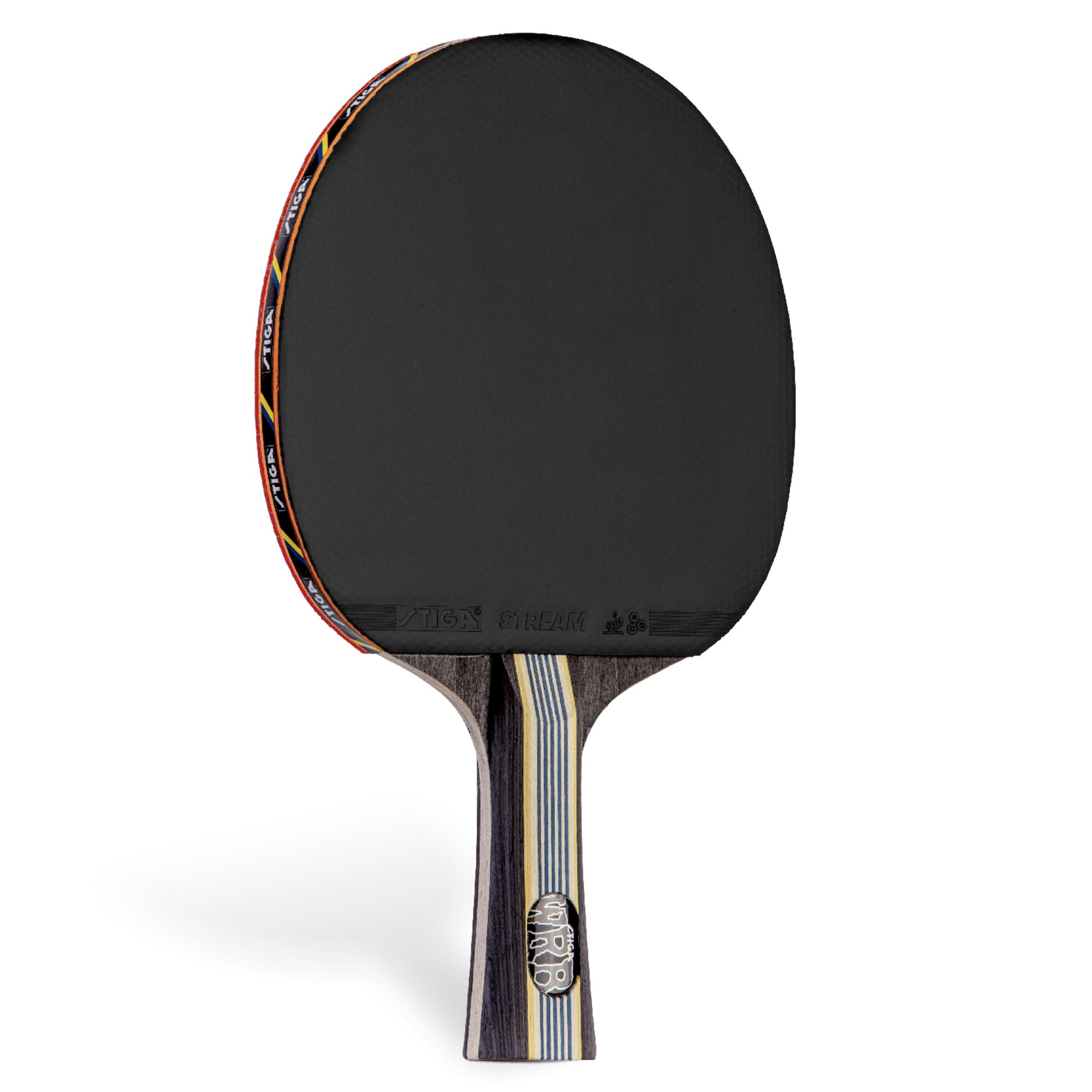


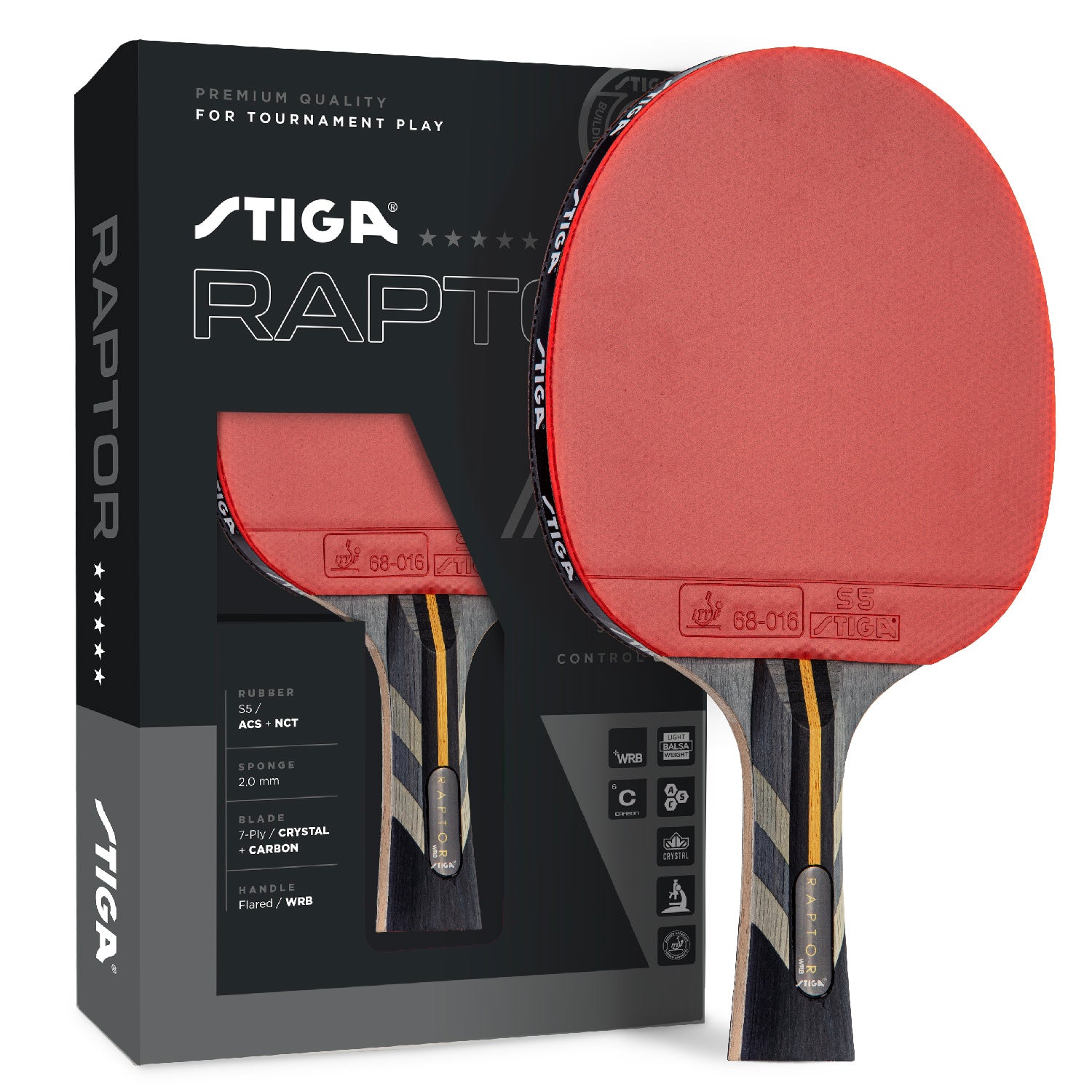



For the highlights of each category, see the best table tennis paddles of 2026. To understand sponge, hardness, handle, and weight in detail, read how to choose a table tennis paddle. And if you want a suggestion based on your profile, use Find Your Racket. Blades from Donic, Stiga, and Xiom have their own pages in the catalog.
Is it worth building your own table tennis paddle?
It is when you train often and already have consistent topspin. A custom-built paddle costs more up front, but lets you choose each rubber and replace only that one when it wears out. For casual players, the pre-assembled paddle remains the best balance between cost and use.
How long does the rubber on a table tennis paddle last?
There is no fixed schedule. Players who train several times a week usually replace the forehand rubber every few months. Players who play once a week can use the same one for much longer. The right signal is loss of grip: the ball slides on serves and topspin loses its arc.
Can I replace the rubber on a pre-assembled paddle?
On many, yes, but it is rarely worth it. The factory glue can damage the face of the blade when it comes off, and the blade of an entry-level pre-assembled paddle is usually basic. In general, it is better to invest in a new blade and build a custom paddle once and for all.
What glue should I use to attach table tennis rubber?
Water-based glue made for table tennis. Glues with volatile solvents have been banned by the ITTF since 2008. Apply thin coats to the sponge and the blade, wait until it turns clear, and only then press them together.
Are pre-assembled paddles allowed in tournaments?
Yes, as long as the rubbers are on the ITTF's authorized coverings list, carry the federation's logo, and one side is black. Approval applies to the rubber, not to whether the paddle is pre-assembled or custom-built.
Does the blade on a custom-built paddle need to be replaced?
Rarely. With care, the blade lasts years. It only needs replacing if it cracks, splinters badly, or if you change your playing style and want a different speed or handle type.
Where to buy the racquets in this guide
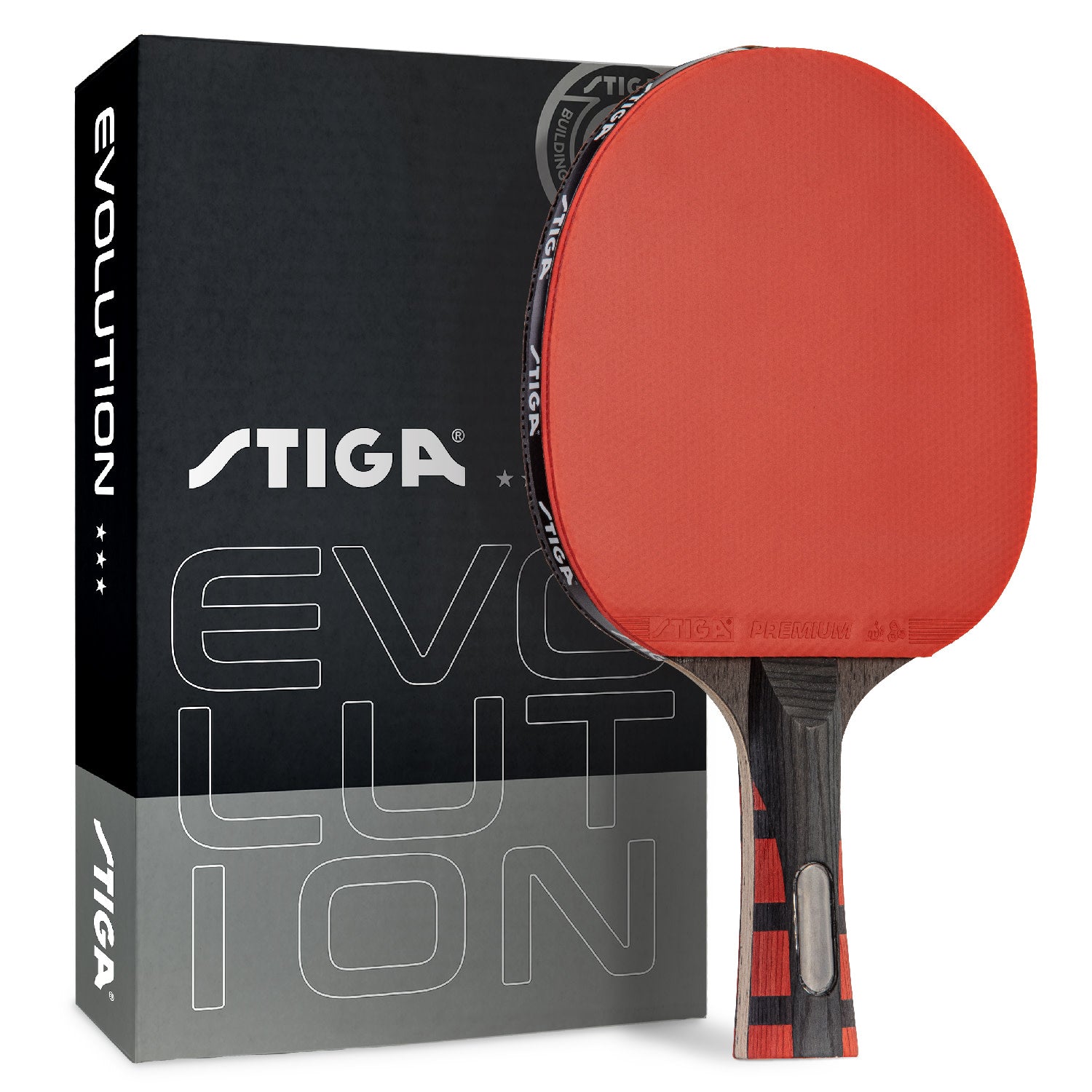 Evolution Stiga6 wood plies · 6 · Concave (FL)See priceEscalade Sports
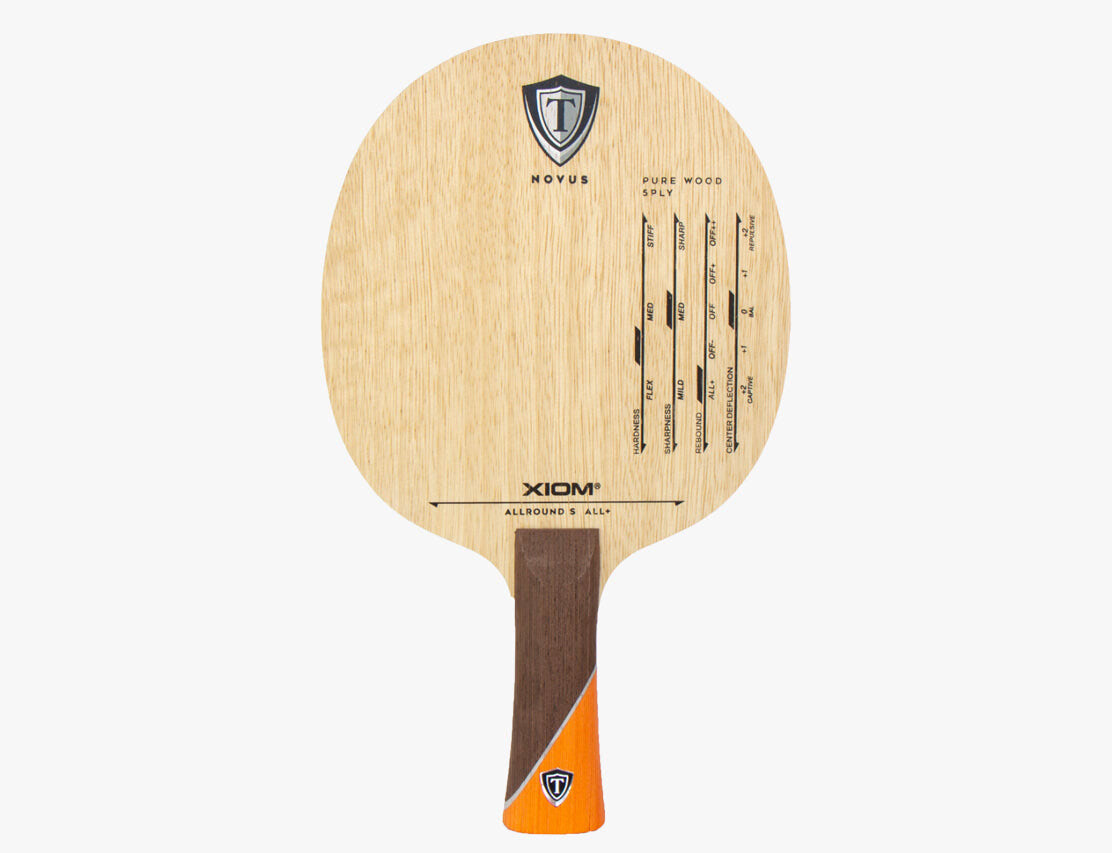 Allround S Xiom5 wood with limba surface · 5 · Concave (FL)See priceTableTennisStore.us
- Titan Stiga5 balsa plies · 5 · Concave (FL)See priceEscalade Sports
- Raptor Stiga5 balsa plies + 2 fiber… · 7 · Concave (FL)See priceAmazon
The prices above are checked automatically at each store and may have changed since the last check. The price that counts is the one shown on the store's website at checkout. We may earn a commission on purchases made through store links, at no extra cost to you.