


 Brasil
 Canada
 United Kingdom
 Australia
 Netherlands
 France
 España
 Italia
 السعودية
10 best tennis racquets for advanced players in 2026
For players who already generate their own pace: ten 97 to 100 sq in racquets sorted by style, what changes on the spec sheet compared to an intermediate frame, and a test to see whether you're advanced.
Updated on 10/07/2026
On this page
- 1.The 10 best tennis racquets for advanced players
- 2.Are you already an advanced player? Take the test
- 3.What changes on the spec sheet: from intermediate to advanced
- 4.Which racquet matches your style
- 5.Customize before you switch
- 6.How to test an advanced racquet
- 7.The string matters as much as the frame
- 8.Frequently asked questions
The best tennis racquets for advanced players weigh 300 to 310 g unstrung, have a 97 to 100 sq in head and a swingweight between 317 and 330. From this level on, you stop choosing by level and start choosing by style: you already generate your own pace, and the racquet doesn't need to help you, it needs to keep up with how you build a point.
Below are ten 2026 options sorted by style (control, spin, power, comfort and net play), a test to find out whether you're already an advanced player, and what changes on the spec sheet compared to an intermediate racquet.
The 10 best tennis racquets for advanced players
The 10 best tennis racquets for advanced players in 2026
- 1
- Weight
- 300 g
- Head
- 100 in²
- Strings
- 16x19
- RA
- 60 RA
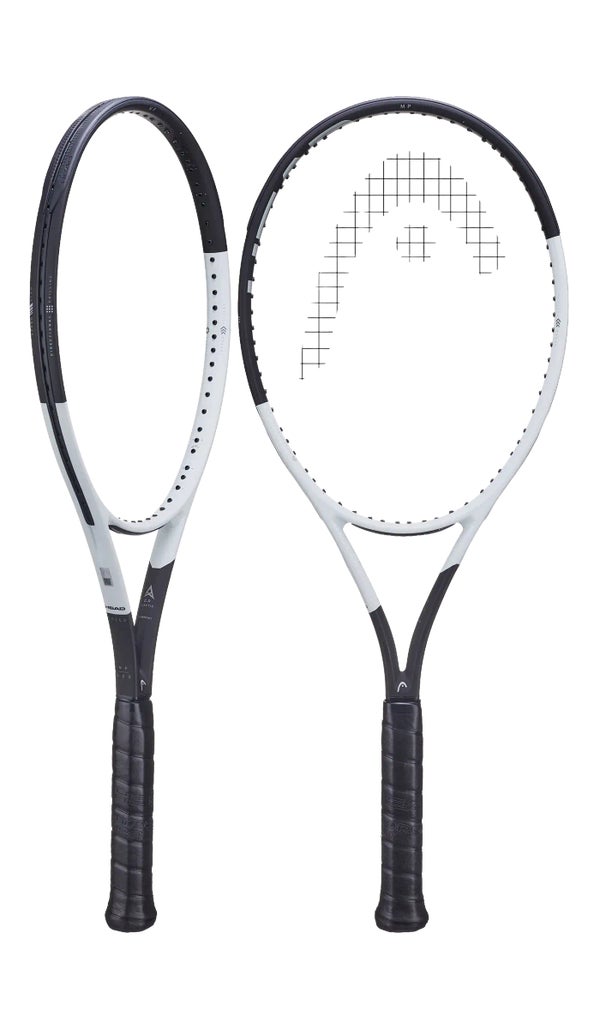
300 g, 100 sq in head, 16x19 pattern and a constant 23 mm beam, with a swingweight of 330 and stiffness of 60 RA. It is rare to find this much moving mass in such a soft frame. It works from the baseline, on the serve and at the net, for the advanced player who does a bit of everything and doesn't want to give up arm comfort.
- 2
- Weight
- 305 g
- Head
- 98 in²
- Strings
- 16x19
- RA
- 61 RA
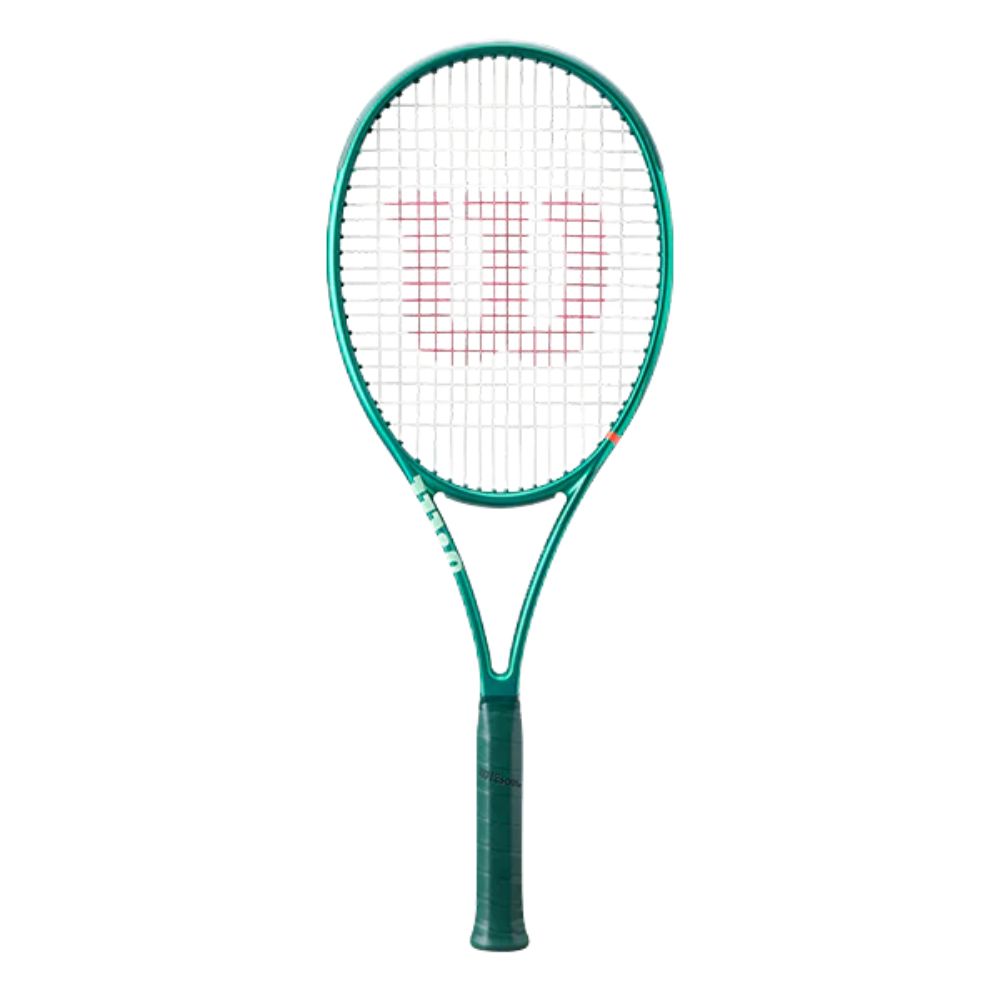
305 g, 98 sq in, 16x19 pattern and 61 RA, with a thin 21.5/20.5 mm beam and a swingweight of 317. The Blade line is Wilson's control benchmark, and the 16x19 version makes spin easier than the 18x20. For players who aim for the lines and still want to lift the ball with topspin.
- 3
- Weight
- 305 g
- Head
- 98 in²
- Strings
- 16x19
- RA
- 63 RA
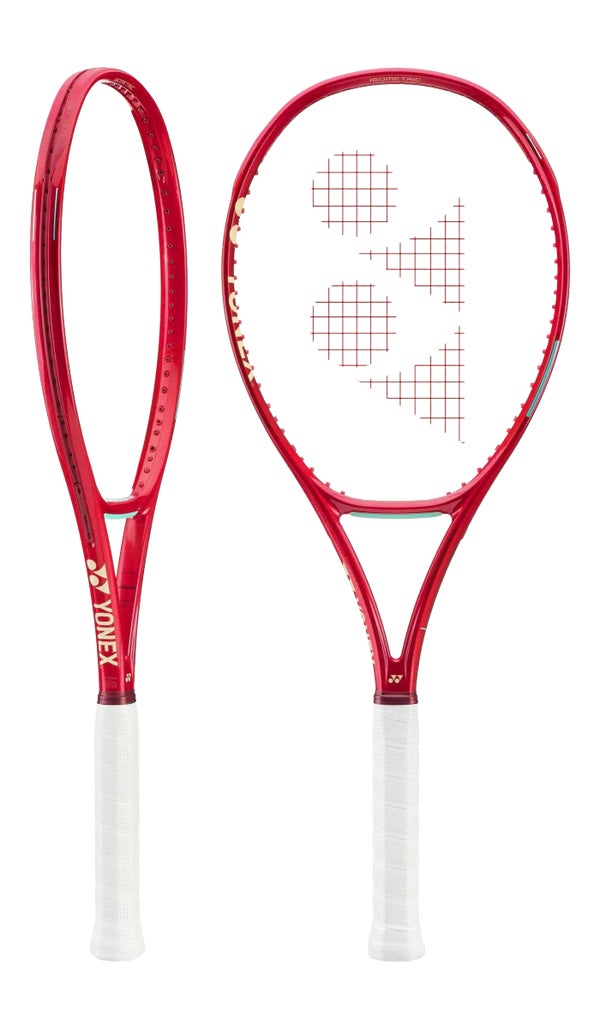
305 g, 98 sq in, 16x19, 63 RA and a swingweight of 321. In the 2026 generation, Yonex widened the grommet holes so the strings move more and gave the frame a more aerodynamic profile, according to the spec sheet. For the baseline player who spins the ball a lot and wants the precision of a smaller head.
- 4
- Weight
- 305 g
- Head
- 98 in²
- Strings
- 16x20
- RA
- 69 RA
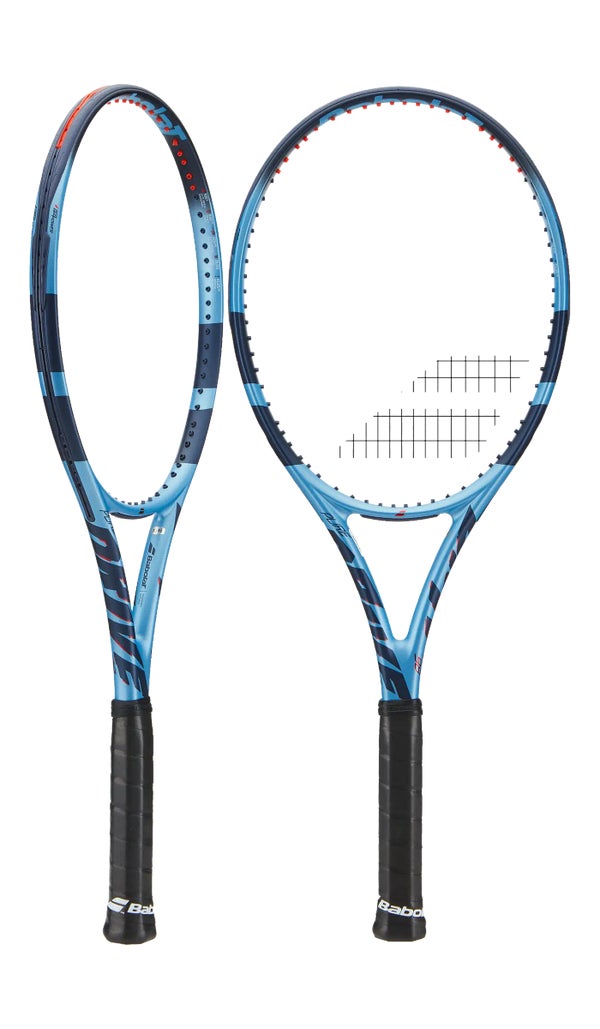
305 g, 98 sq in, 16x20 pattern, 21/23/21 mm beam and a swingweight of 326. The 69 RA stiffness keeps the fast ball exit of the Pure Drive family, now in a smaller head with a slightly tighter pattern. For players who attack from the baseline and want heavy shots without watching the ball fly long.
- 5
- Weight
- 300 g
- Head
- 98 in²
- Strings
- 16x19
- RA
- 64 RA
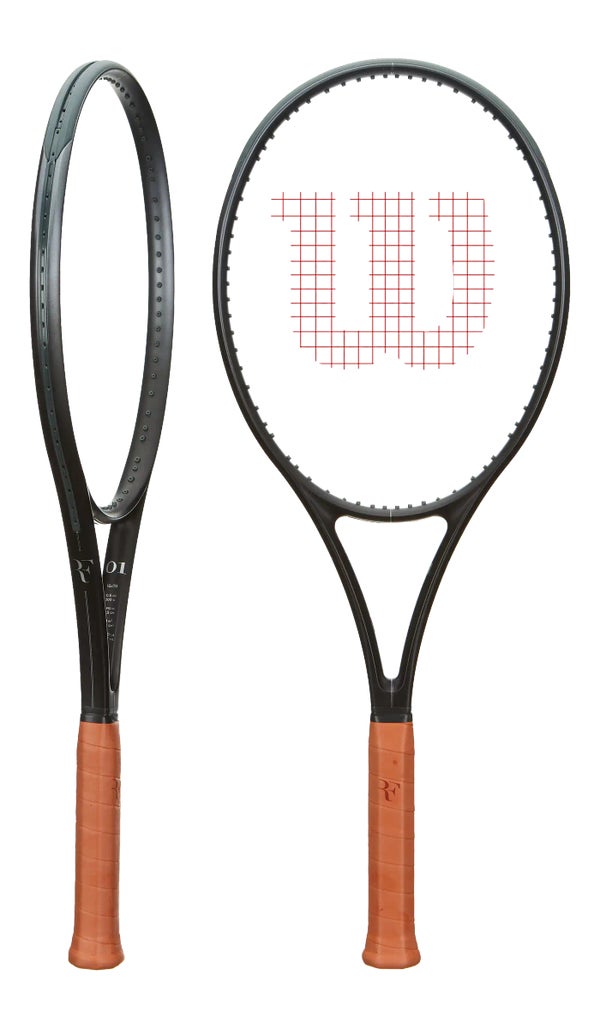
300 g, 98 sq in, 16x19, 64 RA and a swingweight of 319. It is the lighter version of the collection developed with Roger Federer. It reacts quickly on volleys and returns and takes lead tape well for anyone who wants more stability later.
- 6
- Weight
- 305 g
- Head
- 98 in²
- Strings
- 16x19
- RA
- 63 RA
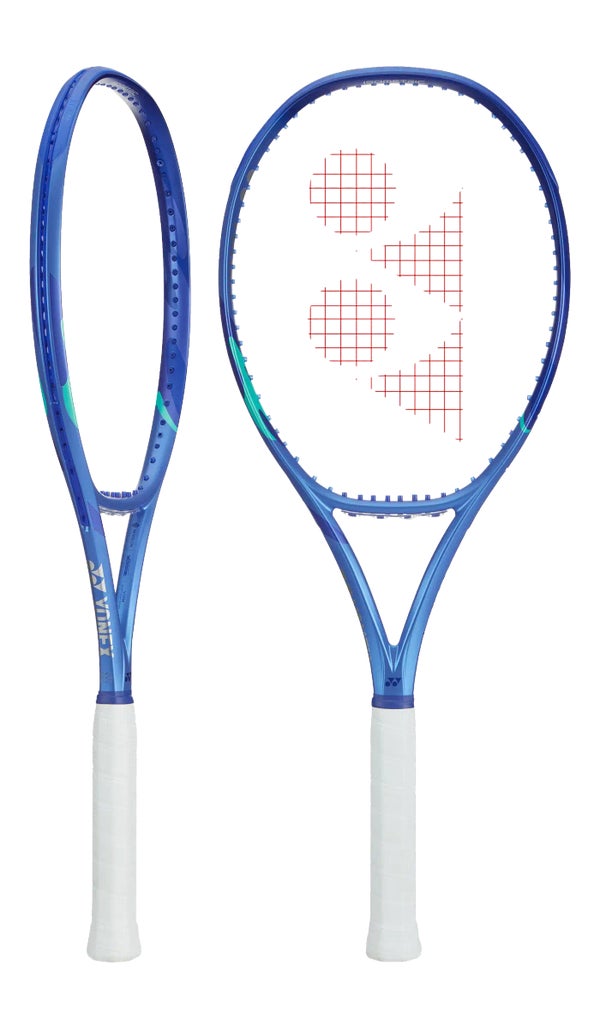
305 g, 98 sq in Isometric head, 16x19, 63 RA and a swingweight of 320. Yonex thickened the beam at the top of the frame and put Minolon in the throat to damp vibration, according to the spec sheet. The spec sheet highlights good power for a 98 and a soft feel.
- 7
- Weight
- 305 g
- Head
- 98 in²
- Strings
- 16x19
- RA
- 64 RA
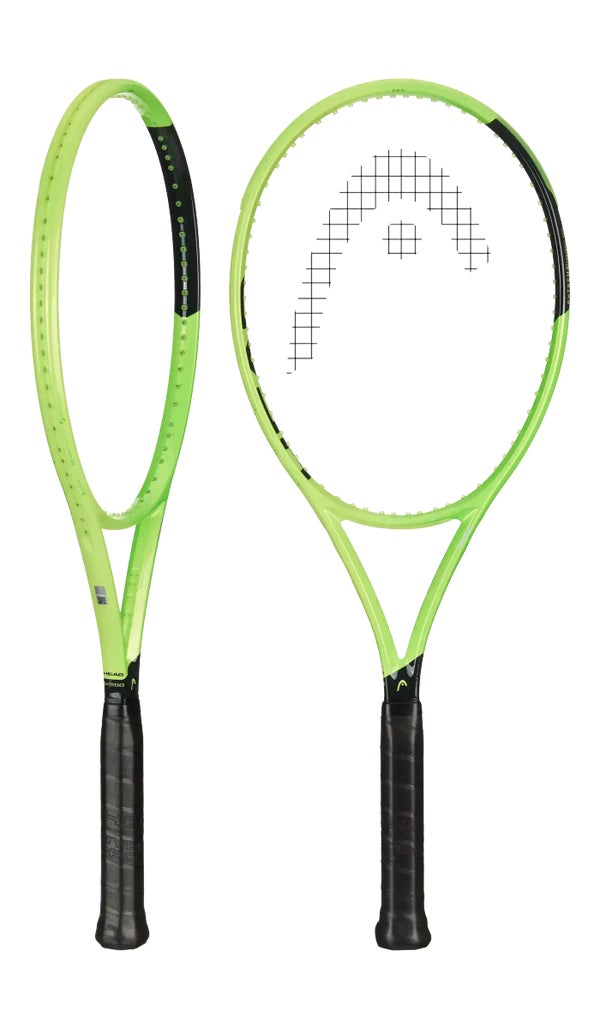
305 g, 98 sq in, 16x19, 64 RA and a swingweight of 319, with a 22/23/21 mm beam. It is the control version of the Extreme line, Head's spin-oriented family. Fast to accelerate, it suits players who hit aggressive topspin from the baseline and want more precision than the Extreme MP.
- 8
- Weight
- 310 g
- Head
- 97 in²
- Strings
- 16x20
- RA
- 63 RA
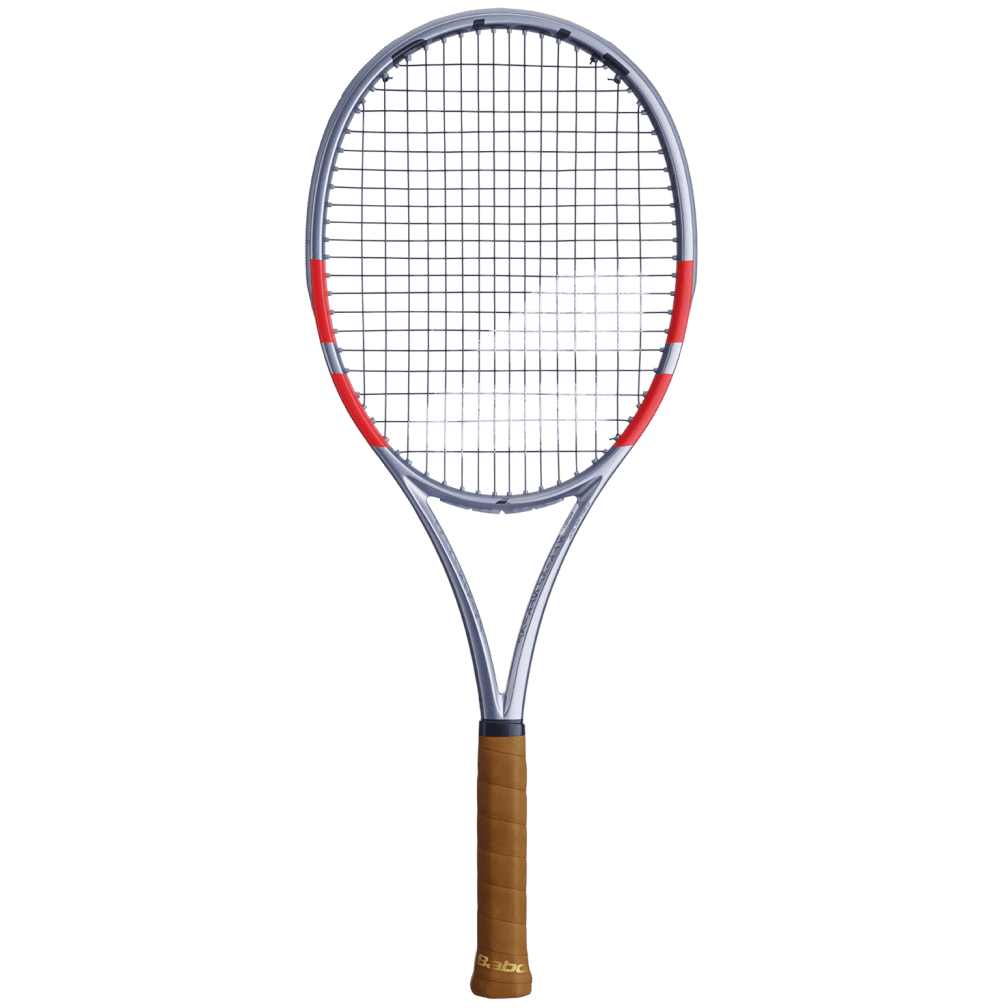
310 g, 97 sq in, 16x20 pattern, 21/22/21 mm beam, 63 RA and a 310 mm balance, well toward the handle. The compact head and low balance make the racquet quick in the hand for its weight. For players who serve, hit flat and close out the point at the net.








Are you already an advanced player? Take the test
On the NTRP scale of the American federation (USTA), an advanced player is a 4.5 or above: they have power and spin available, control depth, vary their game according to the opponent and serve with pace and direction on the first serve. The official description of the NTRP levels helps you place yourself, but in practice the signs show up on the court:
- You choose the depth. The ball lands near the baseline because you wanted it to, not by luck.
- Your second serve has spin and doesn't turn into a double fault when the score gets tight.
- You have more than one ball on each side: heavy topspin, low slice, a flat ball to close out the point.
- Your 300 g racquet "opens up" against heavy balls. On returns of big serves, it twists in your hand or the ball lands short even with a center hit.
- Your long errors aren't technique errors. The stroke is right, but the racquet returns too much energy and the ball sails.
- You break strings often, a sign that you swing fast and spin the ball a lot.
If three or more items describe your game, the racquets in this list make sense. If you still miss the center of the strings a lot, get to fast balls late or tire your arm after two sets, stay a while longer with racquets for intermediate players. A racquet that is too demanding doesn't speed up your progress: it gets in the way of practice.
What changes on the spec sheet: from intermediate to advanced
An advanced racquet is not a "better" intermediate racquet. It is a racquet that gives back less free energy and, in exchange, offers more stability and precision for someone who already hits hard.
| Measure | Intermediate | Advanced | Why it changes |
|---|---|---|---|
| Unstrung weight | 285 to 305 g | 300 to 320 g | More mass holds up against heavy balls without the racquet twisting |
| Swingweight | 310 to 325 | 317 to 335 | Adds weight of shot and stability at impact, but demands more from your arm |
| Head size | 98 to 100 sq in | 97 to 100 sq in | A smaller head concentrates the response and favors precision |
| Pattern | 16x19 | 16x19, 16x20 or 18x20 | A tighter pattern lowers the trajectory for players who already have spin |
| Beam | 21 to 26 mm | 20 to 24 mm | A thin beam flexes more and returns less power |
| Stiffness | below 68 RA | choose by comfort | Players who play a lot feel stiffness more in the arm |
Three points deserve attention.
Swingweight matters more than static weight. Two racquets with the same weight can play very differently. In the list above, the RF 01 and the Speed MP 2024 are both 300 g, but their swingweights are 319 and 330: the first is quicker at the net, the second pushes the ball more from the baseline. The guide how to choose tennis racquet weight explains the relationship between weight, balance and swingweight.
A 100 sq in head is not just for intermediate players. Many advanced players use a 100 sq in head and a 16x19 pattern their whole lives. Switching to a 98 or 97 makes sense when you hit the center almost every time and want to tighten your direction. The guide on tennis racquet head size details what each size changes.
A tight pattern is optional. The 18x20 gives a low trajectory and control, but it requires a fast swing for the ball to arrive deep with spin. On this list, all racquets are 16x19 or 16x20; the 18x20 options are gathered in the guide to the 5 tennis racquets for control for advanced players, and the full comparison between patterns is in 16x19 or 18x20.
Which racquet matches your style
You aim for the lines and build the point with direction
You don't need power; you need the ball to come out the same every time. Look for a thin beam, moderate stiffness and a swingweight that gives stability without slowing down the stroke.

305 g, 98 sq in, 16x19, 61 RA and a swingweight of 317. The control and feel of the Blade line, with the pattern that makes spin easiest among the control racquets.
The Blade 98 16x19 V10 is the most balanced choice for this profile, and the Solinco Whiteout 305 V2, with a 21.7 mm straight beam and a swingweight of 328, is the alternative for those who want more mass at impact.
You spin the ball a lot from the baseline
Your game is a heavy topspin forehand and the high ball that pushes the opponent back. The racquet needs to let the strings work (16x19 pattern) and be quick to accelerate at the end of the stroke.

305 g, 98 sq in, 16x19, 63 RA and a swingweight of 321. Grommets with wider holes so the strings can move, according to the spec sheet of the 2026 generation.
The Vcore 98 2026 and the Extreme Pro 2026 are the two 98s on this list designed for spin. The Vcore has a 23/23.5/22 mm beam and a swingweight of 321; the Extreme Pro, a 22/23/21 mm beam and a swingweight of 319. If you prefer a 100 sq in head, you'll find other options in the guide to the 10 tennis racquets for topspin.
You want heavy shots without losing your aim
You attack from the baseline and want the ball to arrive heavy, but a 100 sq in power racquet sends the ball long when you swing out. The solution is a 98 with a bit more stiffness or a fuller beam.

305 g, 98 sq in, 16x20, 69 RA and a swingweight of 326. The power of the Pure Drive family in a smaller head, with a thinner 21/23/21 mm beam.
The Pure Drive 98 2025 (69 RA, swingweight of 326) is the more explosive of the two; the Ezone 98 2025 (63 RA, swingweight of 320) delivers power with a softer feel.
You play all over the court and come to the net
Serve and volley, slice to approach, blocked return. Here, maneuverability and stability count at the same time.

300 g, 100 sq in, 16x19, 60 RA and a swingweight of 330. The moving mass of a heavy racquet in a soft 300 g frame.
The Speed MP 2024 is the most versatile on the list. The RF 01 2024, with a swingweight of 319, is quicker in net exchanges. The Pure Strike 97 2024, with 97 sq in and a 310 mm balance, is the most compact, for players who serve and hit flat.
You train a lot and want to spare your arm
Advanced players play more hours per week, hit harder and often use polyester. Low stiffness helps. The Clash 98 V2 (60 RA) and the Speed MP 2024 (60 RA) are the softest on this list. If you already feel your elbow, also see the 7 tennis racquets for tennis elbow and see a healthcare professional: a racquet helps, but it doesn't treat an injury.
Racquets for advanced players: different styles side by side
5 racquets: swipe sideways to see them all1–2 of 5 →
Highlighted: what differs between the racquets. In bold: the best value in the row.
In the table, compare the stiffness column with the swingweight column. The Clash 98 V2 and the Speed MP 2024 combine 60 RA with a swingweight above 325, meaning stability without a hard frame. The Pure Drive 98 has a similar swingweight but 69 RA: more ball exit, more vibration in the arm.
Customize before you switch
Many advanced players don't need another racquet: they need to adjust the one they already have. Two simple changes solve most complaints:
- Lacking stability against heavy balls? Add 2 to 4 g of lead tape on the sides of the head, at 3 and 9 o'clock. The swingweight goes up without changing the handling much.
- Lacking weight of shot on the serve? Lead tape at the top of the head, at 12 o'clock, raises the swingweight faster, but makes the racquet slower at the net. Go little by little.
If you use more than one racquet, make the same change on all of them. The guide to racquets for competition shows how to make two units identical and what the rules allow you to put on the frame.
How to test an advanced racquet
A ten-minute rally says almost nothing about a 305 g racquet. If your store or club lends demo racquets, use at least two sessions and notice what happens when the match gets tight:
- Returning a big serve: does the racquet hold the ball or twist in your hand? This is where swingweight and weight show up.
- End of the second set: do you still get to the ball in time? If your stroke starts to run late, the racquet is too heavy for your fitness today.
- Second serve: does the ball rise and drop in with spin, or do you have to force your arm to keep it from going into the net?
- Transition balls and volleys: does the racquet react quickly when the ball arrives low and with no time?
- The next day: are your elbow, wrist and shoulder the same as before? New discomfort is a sign of a racquet that is too stiff or too heavy, or of a hard string.
Also test against a partner who hits harder than you. Against a slow ball, almost every player's racquet feels good.
The string matters as much as the frame
At the advanced level, the string changes the racquet. A fresh polyester at medium tension gives control and spin; the same polyester after a few weeks loses tension and the ball starts to fly without direction. Before concluding that the racquet "no longer works," restring it. The details on material, tension and frequency are in the guide to tennis racquet string tension.
Tip
Test the new racquet with the same string and the same tension you use today. If the demo racquet comes with a different string, the comparison is unfair: a good part of the difference you feel may be just the string.
Frequently asked questions
What is the best tennis racquet for an advanced player?
It depends on your style. For players who do a bit of everything, the Head Speed MP 2024 (300 g, 100 sq in, 60 RA, swingweight of 330) is the most complete on this list. Players who aim for the lines tend to do well with the Wilson Blade 98 16x19 V10; those who spin the ball a lot, with the Yonex Vcore 98 2026; those who want heavy shots, with the Babolat Pure Drive 98 2025.
What is the ideal racquet weight for an advanced player?
Between 300 and 320 g unstrung, with a swingweight of 317 to 335. The right number depends on your fitness and style: net players and reaction players prefer a lower swingweight; baseliners who face heavy balls prefer more mass. When in doubt, choose the 300 to 305 g version and add lead tape little by little.
Do advanced players need to use an 18x20 racquet?
No. The 18x20 pattern is an option for players who already have a fast swing and want a low trajectory and maximum control. Most advanced players use 16x19 or 16x20, which make spin easier. The 18x20 options are in the guide to the 5 tennis racquets for control for advanced players.
Is a 100 sq in head just for intermediate players?
No. Many players' racquets have 100 sq in, like the Head Speed MP 2024 on this list. A 98 or 97 sq in head concentrates the response and favors precision, but punishes off-center hits more. Choose a 98 if you hit the center regularly; if not, the 100 won't limit your level.
When should I switch from an intermediate racquet to an advanced one?
When your current racquet twists in your hand against heavy balls, when your long errors happen even with correct technique and when you can play two or three sets without tiring your arm. Make the switch in steps: before changing models, try lead tape on your current racquet to see whether more mass solves it.
To compare other combinations, use the tennis racquet comparison tool or filter the tennis racquet catalog by advanced level. To understand how the scores are calculated, see the Racquet Rank methodology.
Where to buy the racquets in this guide
- Speed MP 2024 HEAD300 g · 100 in² · 16x19See priceAmazon
- Blade 98 16x19 V10 Wilson305 g · 98 in² · 16x19See priceAmazon
- VCORE 98 2026 Yonex305 g · 98 in² · 16x19See priceAmazon
- Pure Drive 98 2025 Babolat305 g · 98 in² · 16x20See priceAmazon
- RF 01 2024 Wilson300 g · 98 in² · 16x19See priceAmazon
- EZONE 98 2025 Yonex305 g · 98 in² · 16x19See priceAmazon
- Extreme Pro 2026 HEAD305 g · 98 in² · 16x19See priceAmazon
- Pure Strike 97 2024 Babolat310 g · 97 in² · 16x20See priceAmazon
The prices above are checked automatically at each store and may have changed since the last check. The price that counts is the one shown on the store's website at checkout. We may earn a commission on purchases made through store links, at no extra cost to you.