


 Brasil
 Canada
 United Kingdom
 Australia
 Netherlands
 France
 España
 Italia
 السعودية
7 Kids' Tennis Racquets by Age: Size, Height and Models
A size chart by age and height, the test to measure at home, and seven kids' and junior racquets, from 25 and 26 in up to the first lightweight adult racquet.
Updated on 10/07/2026
On this page
- 1.Kids' tennis racquet size chart by age and height
- 2.How to measure the right racquet at home or in the store
- 3.The 7 kids' racquets, in order of age
- 4.Weight: the number that changes the most among junior racquets
- 5.Aluminum, graphite or hybrid
- 6.Signs the child needs a new racquet
- 7.When to move up to an adult racquet
- 8.Grip and string on kids' racquets
- 9.Other junior racquets in the catalog
- 10.Frequently asked questions
A kid's tennis racquet is chosen by size first, and size depends more on the child's height than on age. As a rule of thumb: 19 to 21 in up to about age 6, 23 in between 6 and 8, 25 in between 8 and 10, and 26 in from age 10 or 11, until the child passes about 1.55 m and moves up to the 27 in adult racquet. The chart and the seven racquets below detail each stage.
Kids' tennis racquet size chart by age and height
| Size | Length | Approximate age | Approximate height | Most common ball and court |
|---|---|---|---|---|
| 19 in | 48 cm | up to 4 or 5 years | up to about 1.10 m | Red ball (foam or low compression), short court |
| 21 in | 53 cm | 5 to 6 years | 1.10 to 1.20 m | Red ball, red court |
| 23 in | 58 cm | 6 to 8 years | 1.20 to 1.30 m | Red or orange ball |
| 25 in | 63.5 cm | 8 to 10 years | 1.27 to 1.40 m | Orange or green ball |
| 26 in | 66 cm | 10 to 12 years | 1.40 to 1.55 m | Green or yellow ball, full court |
| 27 in (adult) | 68.6 cm | from age 12, generally | above about 1.55 m | Yellow ball |
Age and height ranges vary a little between manufacturers, so use the chart as a starting point and confirm it with the hands-on test in the next section. The ball column follows the logic of the rules of the International Tennis Federation (ITF) for competitions up to age 10: red ball up to age 8, with a racquet of up to 23 in; orange ball from 8 to 10, with a racquet of 23 to 25 in; and green ball for advanced players aged 9 to 10, with a racquet of 25 to 26 in.
How to measure the right racquet at home or in the store
Height settles most cases, but the test with the racquet in hand is what confirms it. It takes less than a minute:
- The child stands in sneakers, with arms relaxed at their sides.
- They hold the racquet by the end of the handle, with the head pointing at the ground, on the side of the arm they play with.
- Look at the distance between the tip of the racquet and the ground. Ideally a small gap is left, 2 to 3 cm. If the tip touches the ground, the racquet is too big. If there is a lot of space left, it is too small.
- Ask for a forehand swing in the air. If they have to hold the middle of the handle to control the racquet, or if the head drops at the end of the stroke, the racquet is too big or too heavy.
If the child is between two sizes, choose the smaller one when they are just starting out and the larger one when they already train regularly and have a developed stroke. Buying a big racquet so it lasts longer is the most common mistake: the child compensates with the wrist, shortens the stroke and learns the wrong motion.
The 7 kids' racquets, in order of age
The catalog concentrates on 25 and 26 in racquets, which is the stage where the choice of model really changes the game. In the 19 to 23 in sizes, what matters is getting the size right and preferring the lightest racquet.
7 kids' and junior tennis racquets, from smallest to largest
- 1
- Weight
- 230 g
- Head
- 100 in²
- Strings
- 16x19
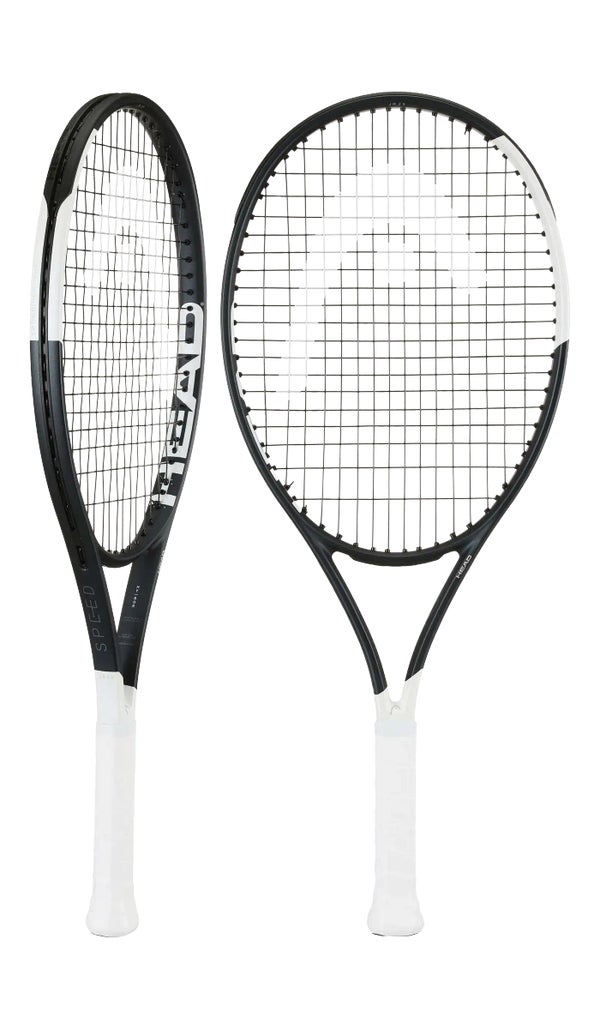
25 in, about 230 g, 100 sq in and a graphite frame with Auxetic 2. Lighter and firmer than the aluminum ones, it helps the child develop full strokes before the 26 in. For ages 9 and 10, between 1.27 m and 1.40 m.
- 2
- Weight
- 245 g
- Head
- 100 in²
- Strings
- 16x19
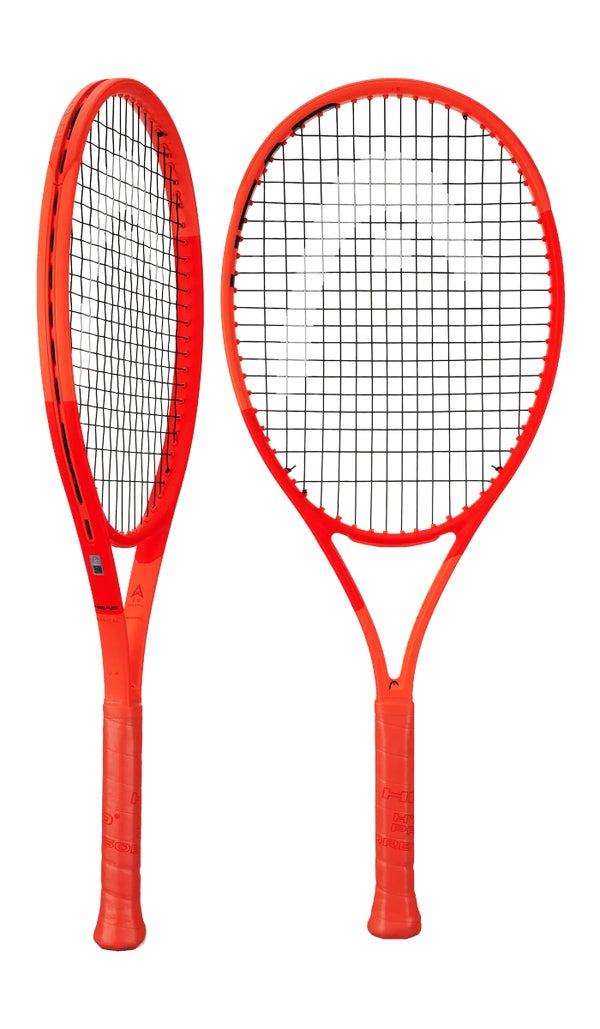
26 in, about 245 g, 100 sq in, graphite with Auxetic 2 and 325 mm balance. The intermediate weight eases the transition to the adult racquet. For ages 10 to 12, from about 1.40 m. Comes strung.



Weight: the number that changes the most among junior racquets
Two 25 in racquets can differ by 20 g, and for a 9-year-old that is significant. In the catalog's spec sheets, 25 in racquets fall between about 230 and 250 g, and 26 in racquets between 245 and 255 g unstrung. The first lightweight adult racquet starts at 255 g.
In practice, choose the lighter end of the range for a child who is just starting or who is shorter for their age. The heavier end makes sense for those who already train several times a week and have a complete stroke, because the mass gives stability against faster balls. Also look at the balance: the TFight Team 25, at 290 mm, has its mass very close to the hand, which makes the 250 g easier to handle than the number suggests. The guide to weight, balance and swingweight explains this relationship in more detail.
Aluminum, graphite or hybrid
Kids' racquets come in three constructions, and the difference is bigger than it seems.
- Aluminum: cheaper and very durable, good for group lessons and for kids who slam the racquet on the ground. It vibrates more and, at the same size, is usually heavier than a graphite one. The Yonex Junior 25 is this type.
- Hybrid (graphite and aluminum): graphite in the throat and aluminum in the head, as in the Tecnifibre TFight Team 25. A middle ground between durability and response.
- Graphite: lighter for its size, with more ball feel and less vibration. It is the material of the line-based junior racquets, such as the Speed Junior, the Pure Aero Junior and the Blade 26. It makes sense when the child trains more than once a week.
For a child who is trying out the sport, aluminum does the job. For one who already trains often, graphite helps them learn the full stroke with less effort.
Signs the child needs a new racquet
Kids grow fast, and the racquet that fit at the start of the year may be too small six months later. Watch for:
- The tip of the racquet sits well above the ground in the measuring test.
- The child bends over to reach low balls or seems to shorten the arm to hit.
- The coach has started using a green or yellow ball with them, or they have moved to the full court.
- They already have the height of the next range in the chart.
- The racquet feels like a toy in the hand: the stroke comes out too fast and without control, a sign the mass has become too small for their strength.
The opposite sign exists too: if the child holds the middle of the handle, lets the head drop at the end of the stroke or complains of arm fatigue, the racquet is too big or too heavy.
When to move up to an adult racquet
The move to the 27 in racquet usually happens between ages 11 and 13, when the child passes about 1.55 m and already plays with a yellow ball on a full court. The mistake is jumping straight to a 300 g adult racquet. The natural bridge is a heavier 26 in or a very light adult racquet.
The Blade 26 V10 weighs 255 g unstrung, the same weight as the Pure Aero Super Lite, which is already 27 in. In other words, the switch to a lightweight adult racquet does not have to mean a gain in weight, only in length. The Ultra 100UL V5 weighs 260 g and has a slightly head-heavy balance (348 mm), which gives more power to a junior who does not yet have a fast swing. All three are good for this stage; the choice depends on whether the young player prefers spin (Pure Aero) or easy power (Ultra).
After the first lightweight adult racquet, the path follows the guidance in the best tennis racquets for beginners and, later, the best racquets for intermediate players.
Grip and string on kids' racquets
Junior racquets usually have smaller grips than adult ones. The Yonex Junior 25, for example, has a 3 7/8 in grip, and the Speed Junior 26 is sold in L0 and L1. Because the child's hand grows, it is common to use an overgrip to thicken the handle gradually. To measure the right grip, see the guide to tennis racquet grip size.
Almost all kids' racquets come strung, and the factory string is basic. For small children, this makes no difference. For juniors who train several times a week with a graphite racquet, switching to a better, softer string is worth more than moving up a model. Avoid stiff polyester on a child: it is a rigid string designed for those who hit hard.
Other junior racquets in the catalog
Other 25 and 26 in junior racquets
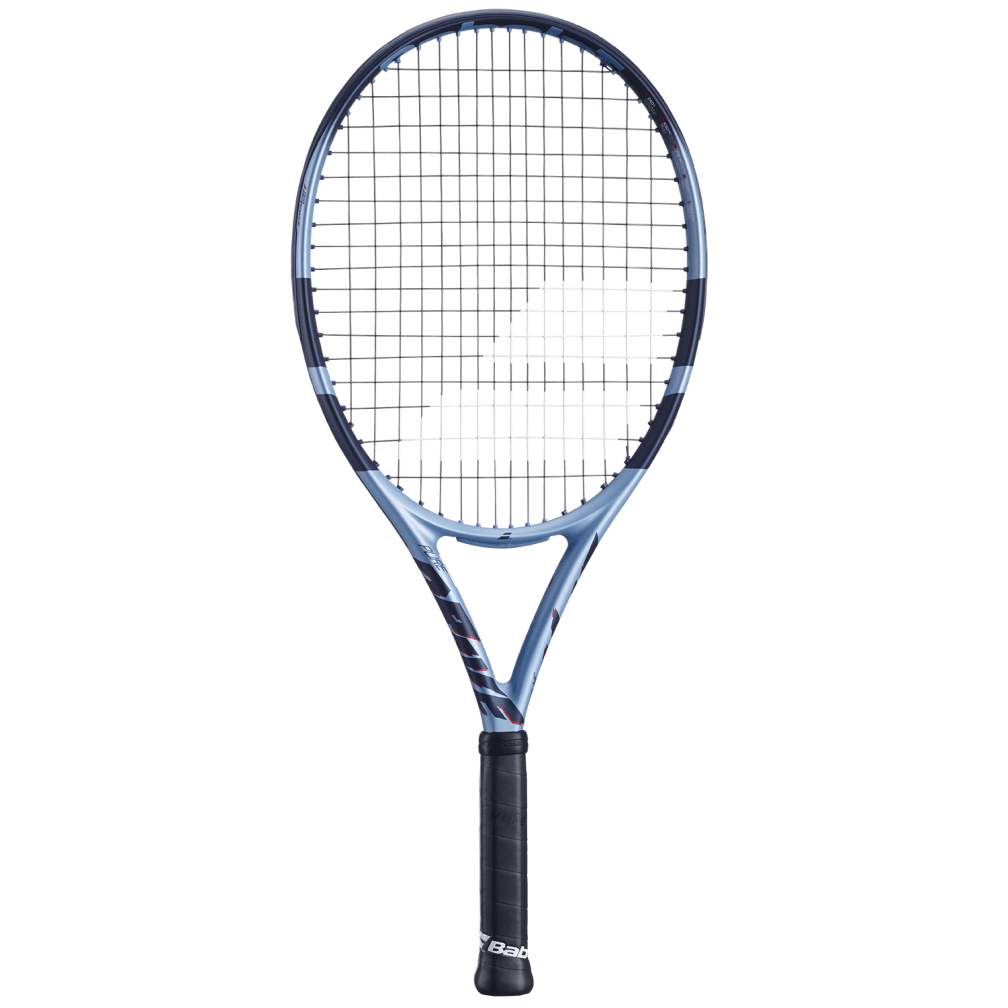

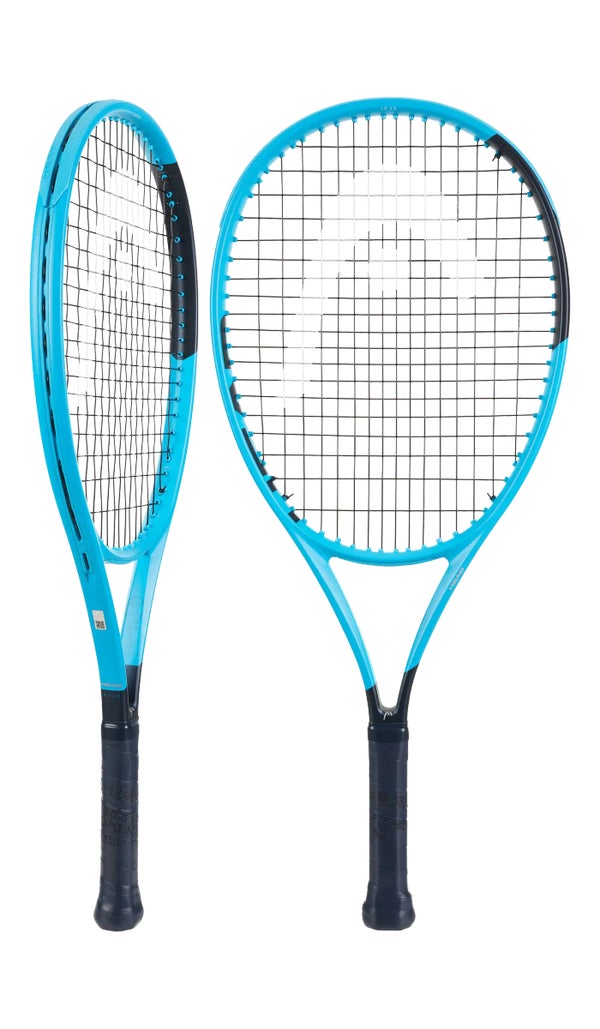

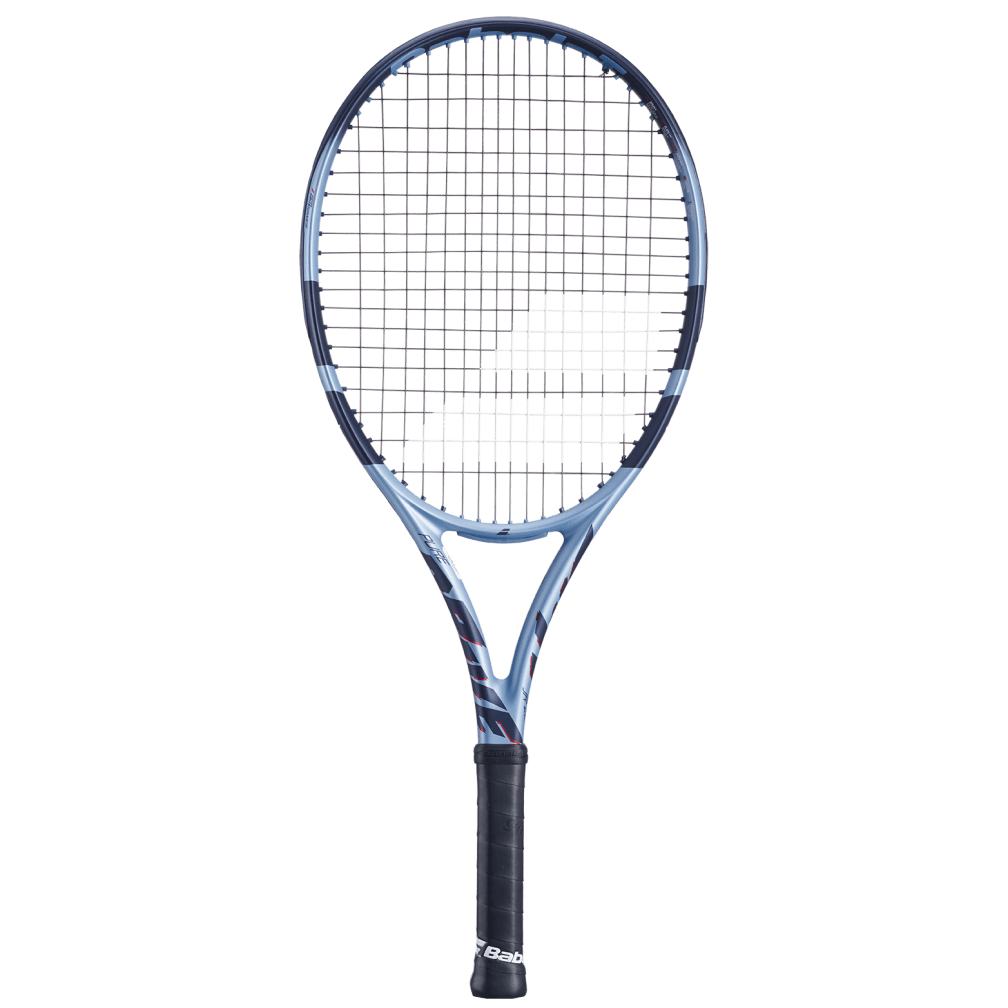
The junior versions follow the personality of the adult ones. The Pure Drive Junior line focuses on easy power; the Pure Aero Junior and the Extreme Junior, an open pattern for spin; the Blade, feel and control. For a child who is just starting, the difference between them is small, and the right size matters more. For a junior who already trains, choosing the line that matches their style makes the move to the adult version of the same family easier, which you can find on the pages for Head racquets, Babolat racquets and Wilson racquets.
Frequently asked questions
What size tennis racquet does an 8-year-old need?
Generally 23 or 25 in. Shorter 8-year-olds, up to about 1.30 m, usually do well with 23 in; taller ones, or those who already play with an orange or green ball, with 25 in. Confirm with the test: holding the racquet at their side, the tip should be a few centimeters from the ground.
At what age can a child use an adult racquet?
There is no fixed age. The reference is a height above about 1.55 m and playing with a yellow ball on a full court, which usually happens between ages 11 and 13. The first adult racquet should be light, around 255 to 265 g unstrung.
Can I buy a bigger racquet so the child grows into it?
It is not recommended. A big or heavy racquet makes the child compensate with the wrist and shorten the stroke, which gets in the way of learning. It is better to change size at the right time.
Is an aluminum kids' racquet bad?
No. For lessons and for those just starting, aluminum is durable and sufficient. Graphite makes a difference when the child trains often, because it is lighter for its size and vibrates less.
To see all tennis racquets with a filter by level and size, go to the tennis racquet catalog.
Where to buy the racquets in this guide
- Speed Junior 25 2026 HEAD230 g · 100 in² · 16x19See priceAmazon
- Radical Junior 26 2025 HEAD245 g · 100 in² · 16x19See priceMidwest Racquet Sports
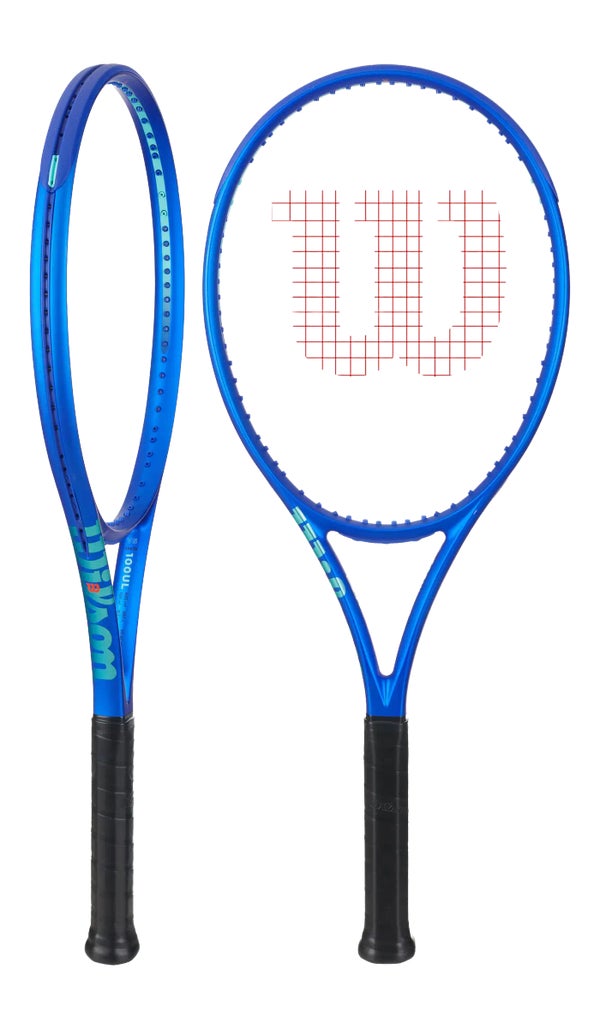 Ultra 100UL V5 Wilson260 g · 100 in² · 16x19See priceAmazon
- Pure Drive Junior 25 2025 Babolat240 g · 98 in² · 60 RASee priceAmazon
- Boom Junior 25 2026 HEAD230 g · 100 in² · 16x19See priceAmazon
- Pure Drive Junior 26 2025 Babolat250 g · 100 in² · 16x19See priceAmazon
The prices above are checked automatically at each store and may have changed since the last check. The price that counts is the one shown on the store's website at checkout. We may earn a commission on purchases made through store links, at no extra cost to you.