


 Brasil
 Canada
 United Kingdom
 Australia
 Netherlands
 France
 España
 Italia
 السعودية
10 best tennis racquets for intermediates in 2026
For players who can already sustain rallies and want to improve: the 10 best 98 to 100 sq in racquets of 2026, sorted by playing style, and the signs that it is time for a heavier racquet.
Updated on 10/07/2026
On this page
You can already sustain rallies from the baseline, serve without double-faulting all the time and are starting to choose where to send the ball. It is at this stage, between levels 3.0 and 4.0 on the NTRP scale, that the racquet starts to make a real difference. The best tennis racquets for intermediates have a 98 to 100 sq in head, weigh 285 to 305 g unstrung and are already performance models, just without the demands of the Pro versions.
Below are ten 2026 options organized by playing style, a comparison with the numbers that matter and an objective criterion for knowing when to move up in weight.
The 10 best tennis racquets for intermediates
The 10 best tennis racquets for intermediates in 2026
- 1
- Weight
- 300 g
- Head
- 100 in²
- Strings
- 16x19
- RA
- 61 RA
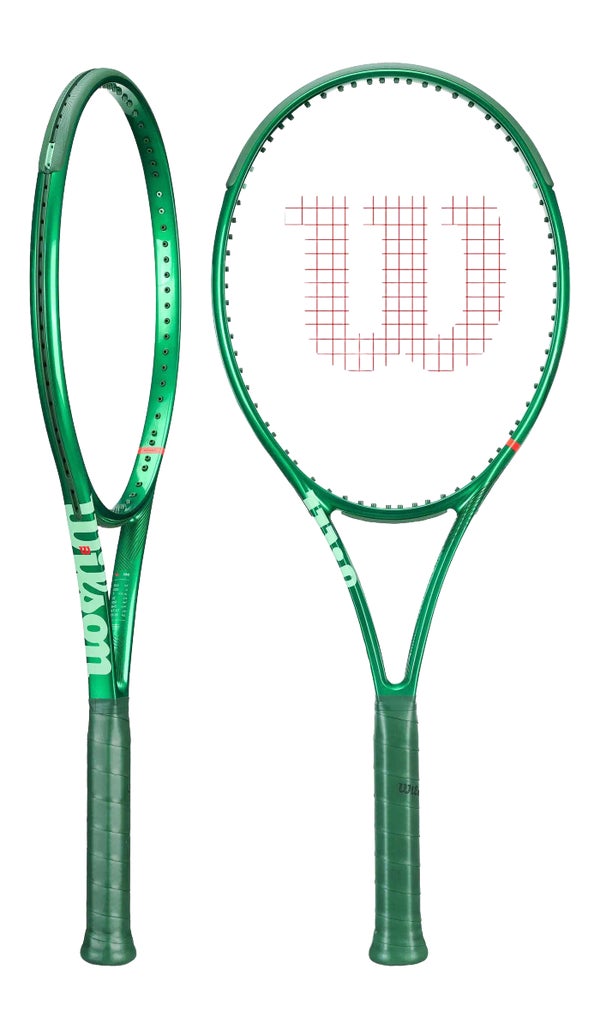
300 g, 100 sq in head, 16x19 and 61 RA. It is the 100 sq in version of the Blade line, with more head area than the Blade 98. A spec sheet that handles the move from 3.5 to 4.0 well without needing a change along the way.
- 2
- Weight
- 300 g
- Head
- 100 in²
- Strings
- 16x19
- RA
- 67 RA
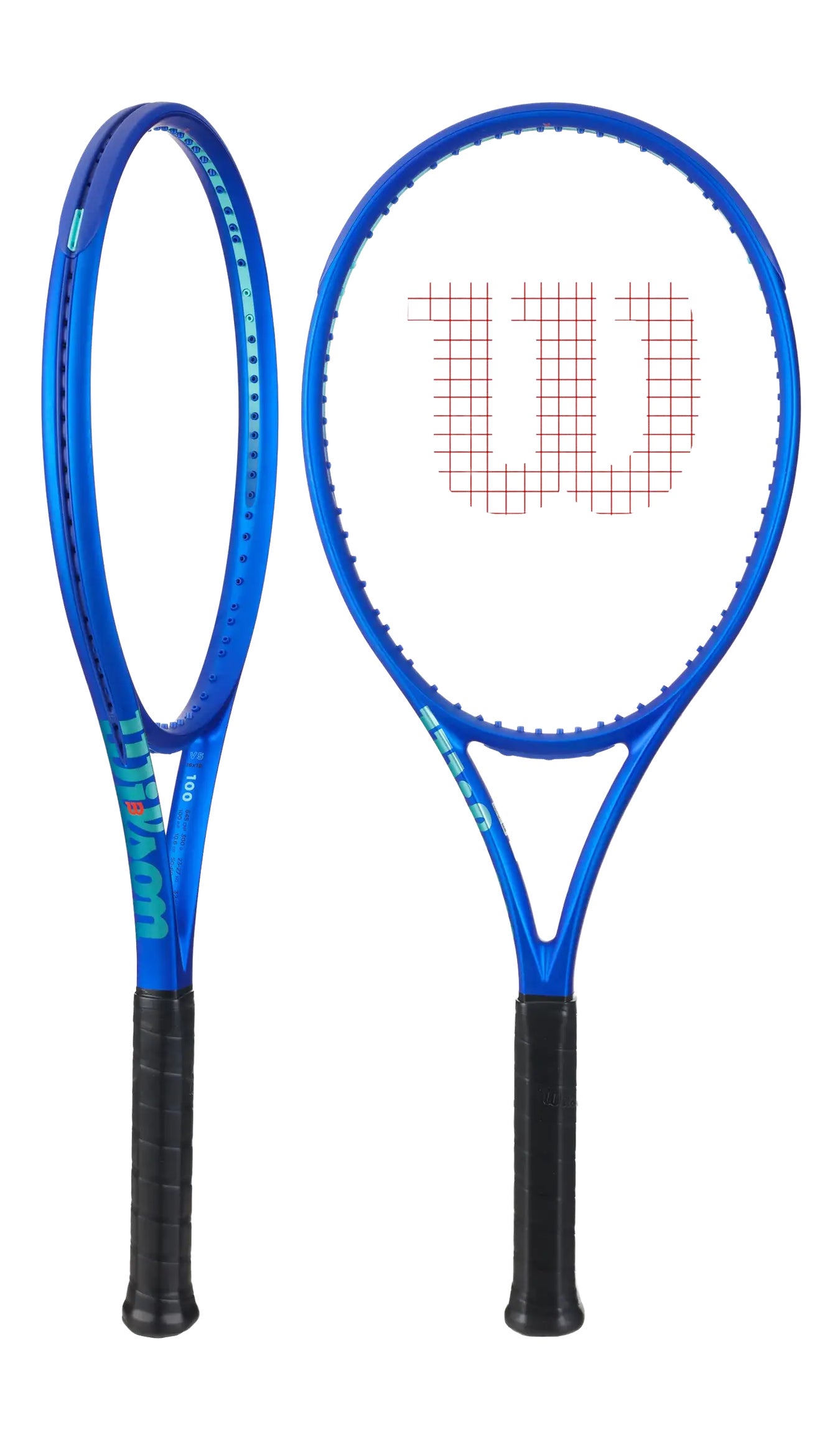
26.5 mm beam, 300 g, 100 sq in head and 67 RA. A wide beam and high stiffness tend to return more energy to the ball. Good for the player who still shortens the stroke under pressure and needs the ball to reach the back of the court.
- 3
- Weight
- 295 g
- Head
- 100 in²
- Strings
- 16x20
- RA
- 57 RA
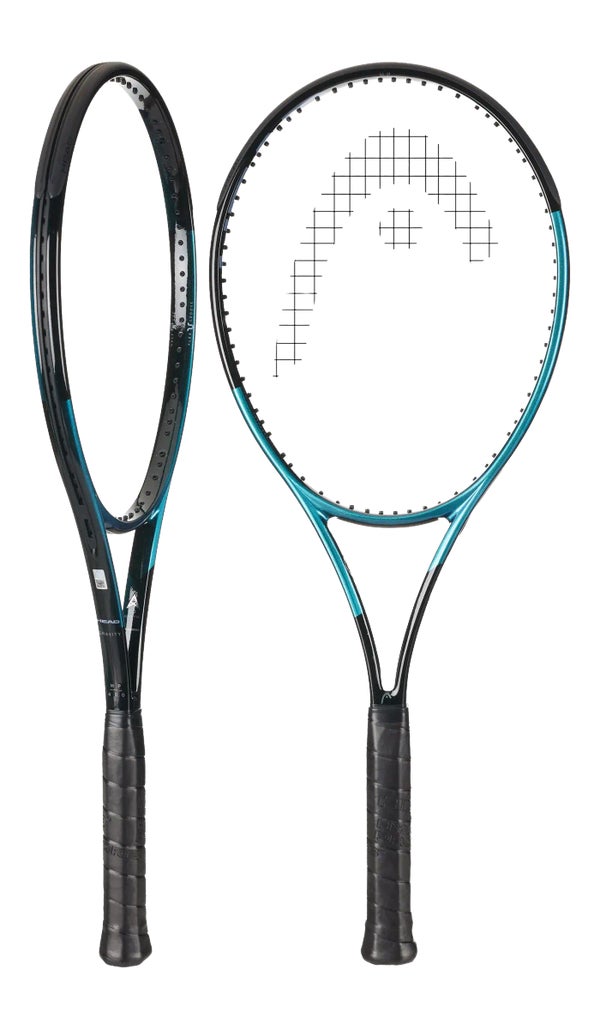
57 RA stiffness, 16x20 pattern, a thin 22 mm beam and 323 swingweight. A flexible, thin-beam spec sheet for players who already generate their own speed and prefer a soft response.
- 4
- Weight
- 285 g
- Head
- 100 in²
- Strings
- 16x19
- RA
- 61 RA
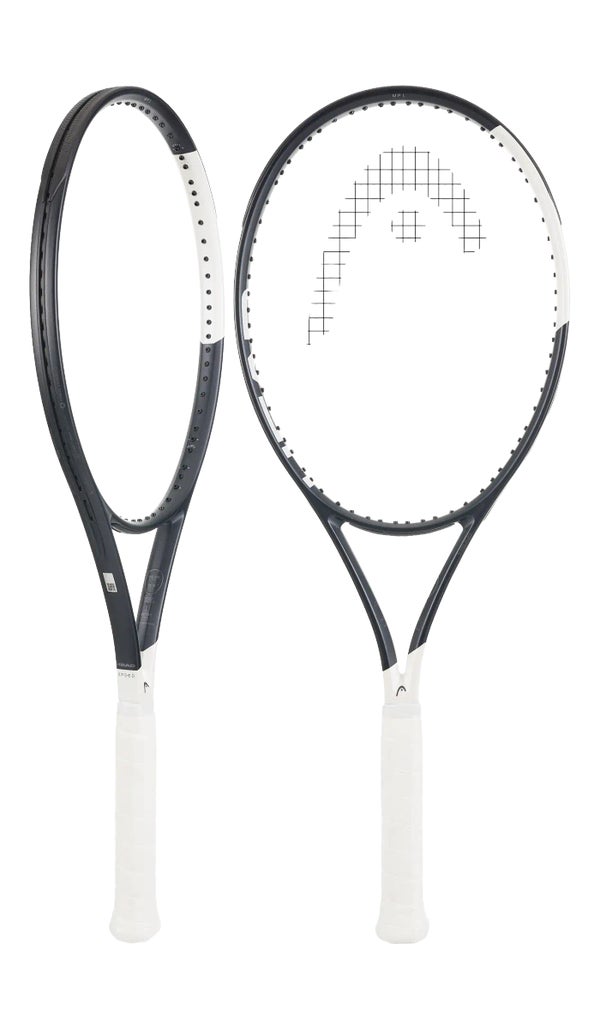
285 g unstrung and a 316 swingweight, high for the weight. A middle ground for players moving up from 270 g racquets who have not yet adapted to 300 g.
- 5
- Weight
- 285 g
- Head
- 100 in²
- Strings
- 16x19
- RA
- 64 RA
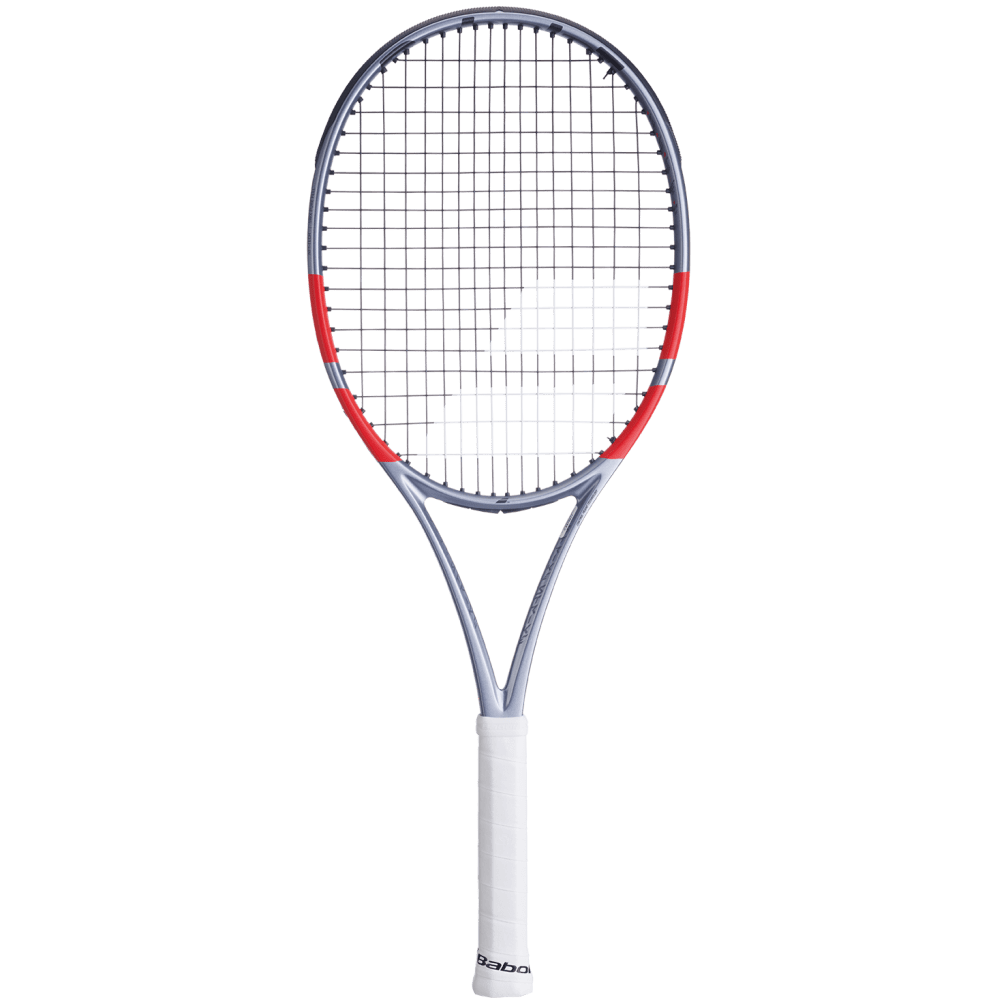
285 g, 16x19, 64 RA and a thin 21/23/21 mm beam. A thin beam tends to favor control. For the intermediate who prefers placing the ball over hitting hard.
- 6
- Weight
- 300 g
- Head
- 100 in²
- Strings
- 16x19
- RA
- 65 RA
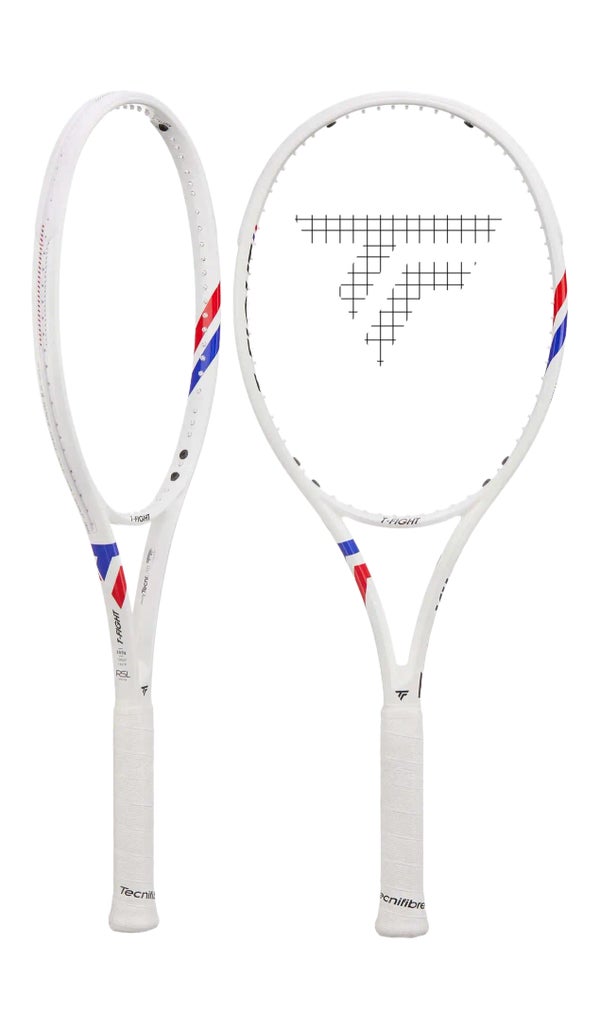
300 g, 100 sq in head, 16x19 pattern, 65 RA and 318 swingweight, in the middle of the most common range for the level. The straight 22.5 mm beam sits between the thin control beams and the wide power ones. For the intermediate who wants a balanced racquet for the baseline and the net.
- 7
- Weight
- 295 g
- Head
- 100 in²
- Strings
- 16x19
- RA
- 61 RA
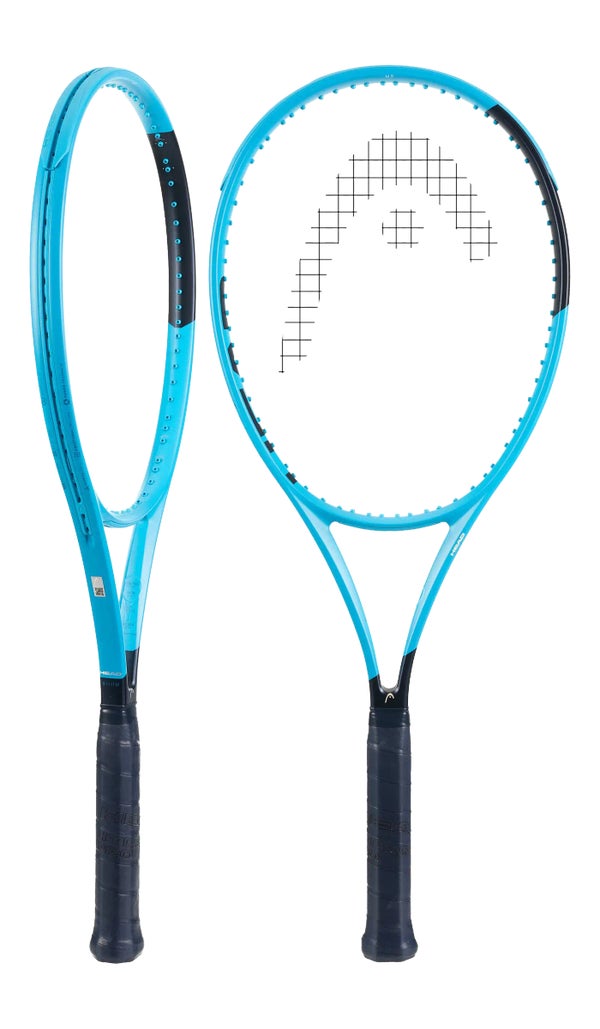
295 g, 100 sq in head, 16x19 pattern and 61 RA. A friendly spec sheet with no extremes. A good transition for players at 3.0 who still make many off-center hits.







Who the intermediate player is
The NTRP scale, created by the United States Tennis Association (USTA) and used worldwide as a level reference, helps you place yourself. In short, according to the official description of the NTRP levels:
| Level | How they play | What to ask of the racquet |
|---|---|---|
| 3.0 | Consistent on medium-pace balls, but without control of direction and depth | Forgiveness and easy power: 100 sq in head, 280 to 295 g |
| 3.5 | Already directs moderate shots; lacks depth and variety; starts coming to the net | Balance: 100 sq in, 290 to 300 g, 16x19 |
| 4.0 | Reliable strokes on both sides, uses lob, smash and volley with some success | Control and stability: 98 or 100 sq in, 295 to 305 g |
If you are between two levels, choose the racquet for the lower level. A slightly easier racquet does not stop anyone from improving; one that is too hard disrupts the whole training.
The spec that works for intermediates
98 to 100 sq in head. This is the range where the racquet already gives precision but still forgives. The 100 sq in ones are the standard choice; the 98 sq in ones make sense for players who hit the center consistently and want more directional control.
285 to 305 g unstrung. Below 285 g, the racquet starts losing the battle against heavy balls. Above 305 g, the 3.0 to 3.5 player tends to arrive late. More important than static weight, though, is swingweight: between 310 and 325 strung is the most common range at this stage.
Stiffness below 68 RA. Intermediates play more hours per week than beginners and still have uneven technique. A very stiff racquet, combined with polyester string, is a shortcut to arm pain.
21 to 26 mm beam. Thin beams (21 to 23 mm) flex more and give control; wider beams (24 to 26 mm) return more energy. Choose according to your most common mistake: long balls call for a thin beam; short balls call for a wider beam.
Tennis racquets for intermediates: technical comparison
4 racquets: swipe sideways to see them all1–2 of 4 →
Highlighted: what differs between the racquets. In bold: the best value in the row.
The picks in detail
Wilson Blade 100 V10. The Blade is a line associated with control, and the 98 version demands clean contact. The 100 V10 keeps the thin 22 mm beam and the low stiffness (61 RA) and gains 2 sq in of head. For players who still miss the center with some frequency, that extra area is the main difference.
Babolat Pure Aero 2026. It has an aerodynamic beam profile, a 16x19 pattern and 66 RA stiffness, a spec sheet designed for players who hit topspin from the baseline: an open pattern tends to make spin easier, and higher stiffness helps with depth. Players who hit flat may prefer a tighter pattern.
Wilson Ultra 100 V5. The Ultra line is Wilson's power proposition. The wide beam and 67 RA tend to give power off the strings, and the 322 swingweight puts mass into the impact. It is an option for players who still shorten the stroke and want help from the racquet.
Head Gravity MP 2025. It has 57 RA and a teardrop-shaped head, wider near the tip. The 16x20 pattern and 22 mm beam complete a control spec sheet. Flexible, thin-beam racquets usually give little free power, so it calls for a full stroke.
Head Speed MP L 2026. At 285 g with a 316 swingweight, it has a high swingweight for the weight. It is the choice for players who feel that 270 g racquets have become too light but still tire with 300 g.
Babolat Pure Strike Team. Light (285 g), with a thin 21/23/21 mm beam and 64 RA. It suits the intermediate who builds the point with direction rather than power. Against very heavy balls, light racquets tend to lack mass.
Head Radical MP 2025. A 300 g, 98 sq in racquet, for players who want a smaller head without going to a 315 g racquet. The 323 swingweight puts mass behind attacking shots, and the spec sheet suits players who do a bit of everything.
Tecnifibre TFight 300 2025. This is the 100 sq in version of the TFight line: 300 g, 16x19 pattern, 65 RA and 318 swingweight, numbers that fall in the center of the intermediate range. The straight 22.5 mm beam is not as thin as the Blade's nor as wide as the Ultra's, and the result is a balanced response, with no strong lean toward power or control. It suits players who hit from the baseline and also come to the net and prefer a racquet without extremes. Against very heavy balls, it may lack a little mass.
ProKennex Ki Q+5 300 g and Head Boom MP 2026. Two niche picks: the ProKennex for players who need stability and arm protection at the same time; the Boom MP for players who have just left the beginner level and want a 100 sq in racquet with low stiffness (61 RA).
Which racquet matches your playing style
Baseline player with topspin
You hit your forehand with a semi-Western grip, like long rallies and use the height of the ball to push your opponent back. You need an open pattern (16x19), a beam that helps you accelerate and a bit of stiffness so the ball does not lose speed. The Pure Aero 2026 brings these characteristics together. If you prefer a 98 sq in head, the Vcore 98, mentioned in the guide to the best tennis racquets of 2026, is the next step.
Aggressive player with a flatter ball
You hit flatter, like to shorten the point and miss when the ball goes past the baseline. You need control: a thin beam, moderate stiffness and, if possible, a slightly tighter pattern. Blade 100 V10 and Pure Strike Team have that spec sheet. The Radical MP, with a 98 sq in head, is the choice for those who already hit the center often.
All-court player who comes to the net
You serve and volley, use the slice to approach and need a racquet that responds quickly at the net. What matters here is the balance between maneuverability and stability: swingweight between 315 and 325 and balance toward the handle. Head Radical MP (323) and Head Speed MP L (316) fall in that range.
Player who needs to spare the arm
You play three or four times a week, have already felt your elbow or shoulder, or simply prefer a soft response. The Gravity MP (57 RA) and the ProKennex Ki Q+5 300 g (Kinetic system) are the list's options for this profile. In the tennis racquet comparison tool you can check the stiffness of other models side by side.
Strengths
- + 100 sq in version of the Blade line
- + Low stiffness: 61 RA
- + 16x19 pattern, the most common
- + Works from 3.5 to 4.5 without needing to change
Drawbacks
- − Low stiffness: players with a short swing may miss free power
- − At 300 g, it can be too much for players coming from 270 g racquets (there is the 100L version)
- − Players who face very heavy balls may want to add lead
When to move up in weight
Many intermediates change racquets too early, or never change. The signs that you are ready for a heavier racquet are concrete:
- The racquet shakes or twists in your hand when you return a hard serve or a deep ball on the backhand.
- Your ball falls short against opponents who hit heavy, even when you hit the center.
- You get to the ball with time to spare and feel you could accelerate more, but the racquet "runs out" before the stroke does.
- You can play two sets without fatigue in your forearm or shoulder.
The opposite signs, which indicate the racquet is too heavy: a drop in performance late in the match, late contact (ball hit beside the body), shoulder pain when serving and many errors in the net at the end of rallies.
When the signs are favorable, move up in small steps. Jumping from 270 g straight to 305 g rarely works. The safest path is to use the L version of a family (285 g) and, later, the 300 g version. Or keep your current racquet and add 3 to 6 g of lead, which costs little and is reversible. The guide how to choose tennis racquet weight explains where to put the lead and how it changes the swingweight.
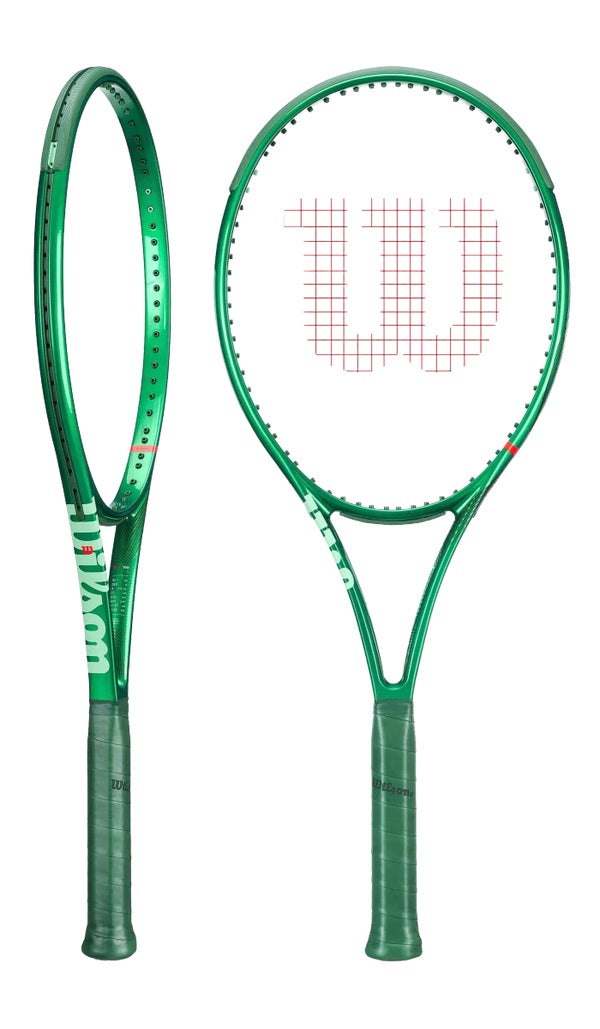
The same racquet in two weights: Blade 100L V10 and Blade 100 V10
Highlighted: what differs between the racquets. In bold: the best value in the row.
Both Blades have the same 100 sq in mold and 16x19 pattern. The 15 g difference in static weight becomes 6 points of swingweight (313 versus 319), and the L version has its balance more toward the head to make up for the lightness. In general, a lower swingweight makes the racquet easier to accelerate, and a higher swingweight helps against heavy balls. Notice that the 100L is also stiffer (67 versus 61 RA). To see other families with versions in several weights, use the Wilson racquet comparison tool or the Head racquet comparison tool.
98 or 100 square inches for an intermediate?
The 2 sq in difference seems small, but it changes the behavior. A 100 sq in head has more usable area and the strings work more, which usually makes power and spin easier. A 98 sq in head concentrates the response and tends to favor precision.
A simple test: in one practice session, count how many balls you hit on or near the frame. If there are several per set, stay with 100 sq in. If they are rare, a 98 like the Radical MP starts to make sense. In general, most 3.0 to 3.5 players do better with 100 sq in, and many 4.0 players stay with it without losing anything.
Tip
Before switching racquets for lack of control, switch the string. Many intermediates play with the factory string or with stringing from months ago, which has already lost tension. A fresh string, or a hybrid with polyester in the mains and multifilament in the crosses, changes control without touching the frame.
Frequently asked questions
What is the best tennis racquet for the intermediate level?
The Wilson Blade 100 V10 is our balanced pick for players between 3.5 and 4.0: 300 g, 100 sq in head and 61 RA. For baseline players who hit a lot of topspin, the Babolat Pure Aero 2026 (16x19, 66 RA) is the alternative; for players with a short swing, the Wilson Ultra 100 V5, with a wide beam and 67 RA.
What is the ideal racquet weight for an intermediate?
Between 285 and 305 g unstrung. 3.0 players do better near 285 to 295 g; 4.0 players usually adapt well to 300 to 305 g. Look at swingweight too: between 310 and 325 strung is the most common range for this level.
How do I know if I am at the intermediate level?
If you sustain rallies at medium pace, direct your shots most of the time and already play full scored matches, you are probably between 3.0 and 3.5. If you have reliable strokes on both sides and use the volley, lob and smash with some success, you are close to 4.0.
Can an intermediate use an 18x20 racquet?
Yes, but it is rarely the best choice. The 18x20 pattern gives control and a low trajectory, but it requires a fast swing for the ball to arrive deep and with spin. Most intermediates do better with 16x19, or with 16x20 if they want a little more control.
Is it worth buying the Pro version of a racquet as an intermediate?
In most cases, no. Pro versions are 310 to 320 g with a high swingweight. For a 3.5 player, that means late contact and fatigue. Start with the 300 g version or the L version and, if you miss the stability, add lead gradually.
How often should an intermediate restring?
A common reference is to restring every one or two months for players who play two or three times a week. Polyester loses tension faster and should be changed sooner, even if it has not broken.
To compare other combinations, use the tennis racquet comparison tool or filter the tennis racquet catalog by intermediate level. If you prefer a guided suggestion, find your racquet crosses your level, style and injury history.
Where to buy the racquets in this guide
- Blade 100 V10 Wilson300 g · 100 in² · 16x19See priceAmazon
- Ultra 100 V5 Wilson300 g · 100 in² · 16x19See priceAmazon
- Gravity MP 2025 HEAD295 g · 100 in² · 16x20See priceAmazon
- Speed MP L 2026 HEAD285 g · 100 in² · 16x19See priceAmazon
- Pure Strike Team 2024 Babolat285 g · 100 in² · 16x19See priceAmazon
- TFight 300 2025 Tecnifibre300 g · 100 in² · 16x19See priceTennis Warehouse
- Boom MP 2026 HEAD295 g · 100 in² · 16x19See priceAmazon
 Blade 100L V10 Wilson285 g · 100 in² · 16x19See priceAmazon
The prices above are checked automatically at each store and may have changed since the last check. The price that counts is the one shown on the store's website at checkout. We may earn a commission on purchases made through store links, at no extra cost to you.