


 Brasil
 Canada
 United Kingdom
 Australia
 Netherlands
 France
 España
 Italia
 السعودية
Tennis Racquet Head Size: From 95 to 115 sq in
What each head size, from 95 to 115 sq in, does to the ball, who should use each one and how to compare racquets from the same family in different sizes.
Updated on 10/07/2026
On this page
A tennis racquet's head size defines the string area and, with it, the size of the sweet spot, the power the racquet returns without effort and the precision it allows. The short answer: 100 sq in suits most players; 95 to 98 sq in is for those who hit the center often and want precision; 102 sq in or more is for those who want forgiveness and easy power.
The few square inches between one size and the next change more than they seem to. Below you will find each size explained with real racquets from the catalog, comparisons within the same family and signs that your head is too big or too small.
Quick answer: which head size to choose
- Starting out, returning to the game or with a short stroke: 102 to 107 sq in.
- Intermediate player who wants to improve without losing forgiveness: 100 sq in.
- Strong intermediate or advanced player looking for precision: 98 sq in.
- Advanced player with a long, consistent stroke and clean contact: 95 to 97 sq in.
- Recreational play, little mobility or a very short swing: 110 sq in or more.
Tennis racquet head size chart
The measurement is given in square inches (sq in). One square inch equals 6.45 cm². The weight column shows the median unstrung weight of adult racquets of 27 in or more in the Racquet Rank catalog in each range, and it reveals a trend: the bigger the head, the lighter the racquet.
| Head | Approximate area | Catalog median weight | Profile | Example |
|---|---|---|---|---|
| 95 sq in | 613 cm² | 312 g (95 to 97 range) | Maximum precision, small sweet spot | Yonex VCORE 95 2026 |
| 97 sq in | 626 cm² | 312 g (95 to 97 range) | Control with a bit more forgiveness | Head Speed Tour 2026 |
| 98 sq in | 632 cm² | 305 g (98 to 99 range) | The size of player's racquets | Yonex VCORE 98 2026 |
| 99 sq in | 639 cm² | 305 g (98 to 99 range) | Bridge between 98 and 100 | Wilson Shift 99 Pro |
| 100 sq in | 645 cm² | 300 g | The market standard | Head Speed MP 2026 |
| 102 sq in | 658 cm² | 270 g (101 to 105 range) | Extra forgiveness, still maneuverable | Head Radical Team 2025 |
| 104 to 105 sq in | 671 to 677 cm² | 270 g (101 to 105 range) | Forgiveness and power, often extended length | Wilson Blade 104 V9 |
| 107 sq in | 690 cm² | 274 g (107 or more range) | Moderate oversize | Babolat Pure Drive 107 |
| 110 to 115 sq in | 710 to 742 cm² | 274 g (107 or more range) | Maximum power for a short swing | Dunlop LX 1000 |
In the catalog, 132 of the 246 racquets have 100 sq in and 55 have 98 sq in. The other sizes add up to less than a quarter of the models.
What head area changes on court
Sweet spot and forgiveness
A bigger head has longer strings and more usable area, so the region where the ball comes off well is larger. Also, a wide head resists twisting better when you hit near the edge: the racquet rotates less in your hand and the ball does not "die." Typical situation: returning a wide slice serve, you stretch your arm out and catch the ball off-center. With 107 sq in the ball still comes back deep; with 95 sq in, it comes back short or hits the frame.
Power
Longer strings deform more and work like a bigger trampoline. With the same stroke, the ball comes off faster from a big head. That is why racquets of 105 sq in or more are usually recommended for those with a short swing: the racquet makes up for part of the speed missing from the arm.
Precision and control
The same trampoline that gives power makes the ball's exit less predictable. On a small head, the string bed is firmer and the ball leaves in a more consistent direction. Players who already have power to spare, and who miss more by hitting long than by hitting short, gain from a smaller head.
Maneuverability and aerodynamics
A bigger head meets more air resistance and, in general, has more mass far from the hand. On a quick volley and in exchanges near the net, this translates into the racquet arriving a bit later. Manufacturers compensate by making big heads lighter, as the weight column of the chart shows.
Spin
The relationship here is indirect. With the same string pattern, a bigger head has bigger gaps between the strings, which helps the mains slide. The bigger head also gives more margin for a low-to-high swing without hitting the frame. But spin depends more on the string pattern, the string and swing speed. The guide to string pattern 16x19 vs. 18x20 explains that part in detail.
Size by size: who uses each one
95 sq in: precision for those who hit the center
This is the smallest common size today in new adult racquets. The small, firm string bed gives direction and feel, but demands clean contact and a full swing. It makes sense for advanced players who train several times a week.
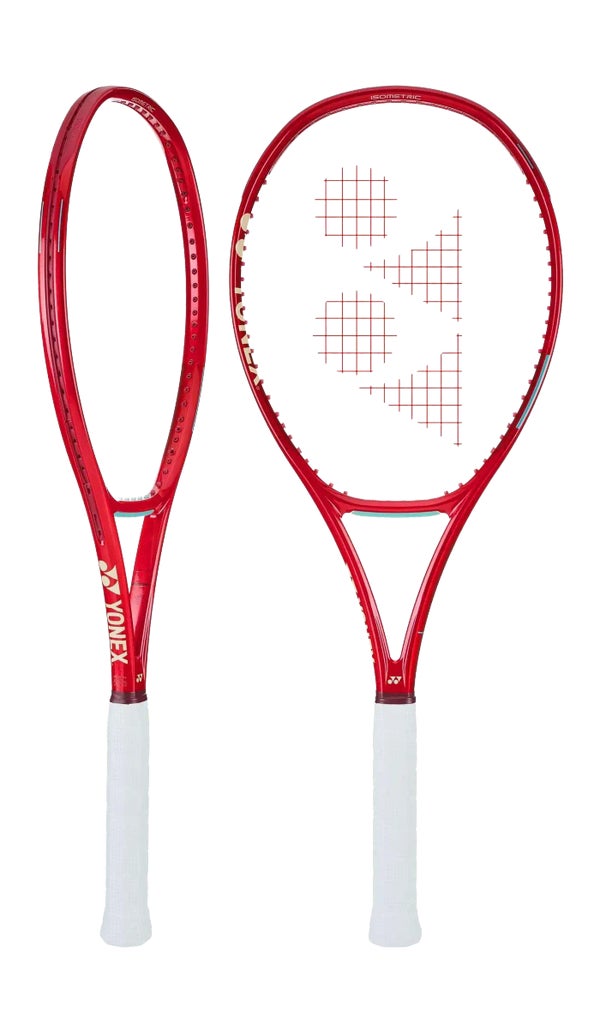




95 sq in, 310 g unstrung, 16x20 pattern and a swingweight of 323. The 62 RA stiffness keeps the impact soft for such a precise racquet.
97 and 98 sq in: player's racquet territory
With 97 or 98 sq in, you gain a bit of forgiveness compared with the 95 without giving up precision. It is the size of a good part of the control lines and of many "Pro" and "Tour" versions. For someone coming from a 100 sq in, the adjustment usually takes a few weeks: the first symptom is the ball landing a bit shorter on off-center hits.
97 and 98 sq in racquets





Note the Wilson Pro Staff 97L Classic 2026: 97 sq in at 290 g. It is a way to get the precision of a smaller head without the weight of a tournament racquet. The guide to tennis control racquets for advanced players goes deeper into this range.
99 sq in: uncommon, but useful
The 1 sq in difference from the 98 or the 100 is small in practice. 99 sq in models exist for those who want an exact middle ground, such as Wilson's Shift line and the Ultra 99 Pro.
100 sq in: the balance point
This is the size that accounts for more than half of the catalog, and not by chance. It offers a generous sweet spot, enough power and good maneuverability for almost every kind of game. Beginners can progress with it, and many advanced players never leave it. If you do not have a clear reason to choose another size, stay at 100 sq in.
102 to 105 sq in: extra forgiveness
This range is the choice of those who still miss the center often, those who play doubles and want easier volleys and those returning to tennis. Many racquets in this range are extended length (27.5 in), which adds reach on the serve.
The Head Radical Team 2025 has 102 sq in and 280 g, for those who want a bit more area without a heavy racquet. The Wilson Blade 104 V9 combines 104 sq in, 290 g and 27.5 in, with a swingweight of 311: it is a player's racquet with a big head, designed for those with a full stroke who want more forgiveness. The ProKennex Ki 15 300 g takes the idea further, with 105 sq in, 27.5 in and a swingweight of 327, a spec that demands a strong arm.
107 sq in: moderate oversize
107 sq in is big enough to give a lot of easy power and is still manageable for those with a decent stroke. A good path for veteran players who want to keep hitting the ball deep without increasing effort.
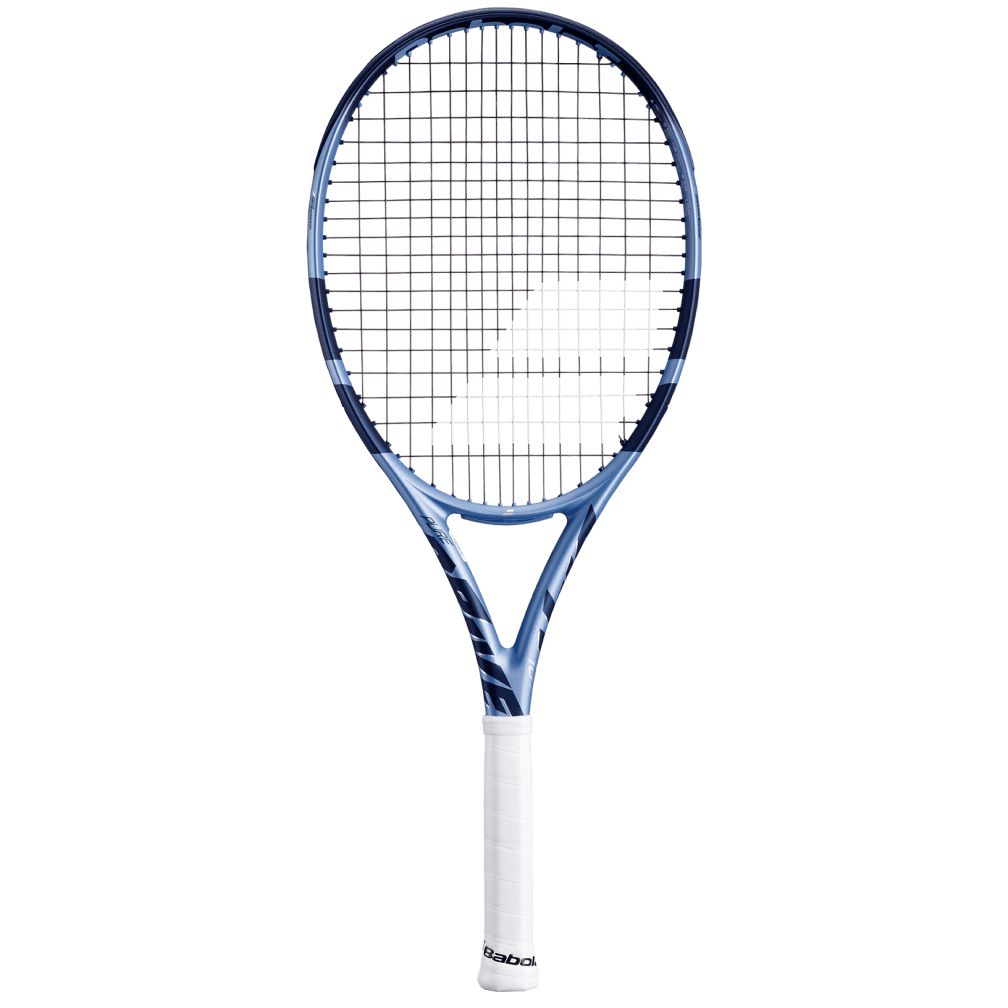
107 sq in, 285 g and 27.2 in, with a swingweight of 307 and 69 RA. The big-head version of the Pure Drive, for those who want power and forgiveness in a light racquet.
110 to 115 sq in: maximum power
Heads this size almost always come head-heavy, with a wide beam and high stiffness. The combination returns a lot of energy to a short swing, which is great for recreational play and for those who can no longer make a long stroke. The other side: the ball flies when you really accelerate, and the racquet feels slow at the net.
The Dunlop LX 800 (110 sq in) and LX 1000 (115 sq in) weigh 255 g, have a balance of 364 and 365 mm (well toward the head) and 75 RA. The Wilson Tour Slam Lite 2025 has 112 sq in, 274 g and 27.5 in, and is an entry-level racquet. If you are starting from scratch, the guide to tennis racquets for beginners helps you decide whether you really need that much head.
The same family in different sizes
The best way to isolate the effect of the head is to compare versions of the same model. Two families in the catalog show this well.
Babolat Pure Drive 2025: 98, 100 and 107 sq in
3 racquets: swipe sideways to see them all1–2 of 3 →
Highlighted: what differs between the racquets. In bold: the best value in the row.
All three have 69 RA. As the head grows, the weight falls (305, 300 and 285 g) and so does the swingweight (326, 317 and 307). The Pure Drive 98 also changes the pattern to 16x20, reinforcing the control side. Those who find the traditional Pure Drive "too loose" tend to do better with the 98; those who find it demanding, with the 107. More models from the brand in the Babolat racquet catalog.
On the Blade V9, the beam is around 21 to 22 mm in all three versions, and the pattern is 16x19. The 98 has 305 g and a swingweight of 324; the 100 has 300 g and 322; the 104 has 290 g, 27.5 in and 311. By the specs, the 104 is the easiest to spin with and the most forgiving, while the 98 is the most precise. See the other versions in the Wilson racquet catalog.
Signs the head is wrong for you
Head too small:
- The ball hits the frame often, especially on high balls and the serve.
- Your off-center balls come out short and without weight.
- You feel vibration in your arm on center misses.
- Late in the match, your serve return gets shorter and shorter.
Head too big:
- The ball goes past the baseline when you accelerate, even with good contact.
- The racquet feels slow on quick volleys.
- You have difficulty aiming near the lines.
- You have to "brake" the stroke to keep the ball in.
If the signs point to a head that is too big, moving to 98 sq in is usually easier than going straight to 95. If they point to a head that is too small, going from 98 to 100 already solves a good share of cases.
Tip
When changing head size, compare the swingweight too. A 98 sq in with a much higher swingweight than your current racquet will feel heavy, and you may blame the head for what is an effect of weight. The racquet weight guide explains this number.
Swingweight is covered in the guide to how to choose tennis racquet weight.
What the official rule says
The ITF Rules of Tennis do not fix a head size in sq in, but they limit the strung surface to 39.4 cm (15.5 in) in length and 29.2 cm (11.5 in) in width. Commercial oversizes, including the 115 sq in ones, are designed within that limit. In practice, size is a choice of playing style, not of rules.
Frequently asked questions
What is the best tennis racquet head size?
For most players, 100 sq in. It balances sweet spot, power and control. 98 sq in is for those seeking more precision who already hit the center often; 102 sq in or more is for those who want forgiveness and easy power.
Are big-head racquets only for beginners?
No. Heads of 102 to 107 sq in also suit doubles players, veterans and anyone with a short swing. And there are player's racquets with big heads, such as the Wilson Blade 104 V9, with 290 g and a swingweight of 311.
What is the difference between a 98 and a 100 racquet?
The 100 sq in has about 2% more string area. In practice, it is a bit more forgiving and returns a bit more power. The 98 sq in tends to be more precise and usually comes in heavier racquets, with a thinner beam. The difference is noticeable, but the adjustment is quick.
Does a bigger head give more spin?
It helps a little, because with the same string pattern the gaps between the strings are bigger. But spin depends much more on the string pattern, the string type and swing speed.
How many cm² does a 100-square-inch racquet have?
About 645 cm². One square inch equals 6.45 cm², so 98 sq in is about 632 cm² and 107 sq in is about 690 cm².
To cross head size with the other measurements, use the tennis racquet comparison tool or let the Find Your Racquet quiz suggest models for your level.
Where to buy the racquets in this guide
- VCORE 95 2026 Yonex310 g · 95 in² · 16x20See priceAmazon
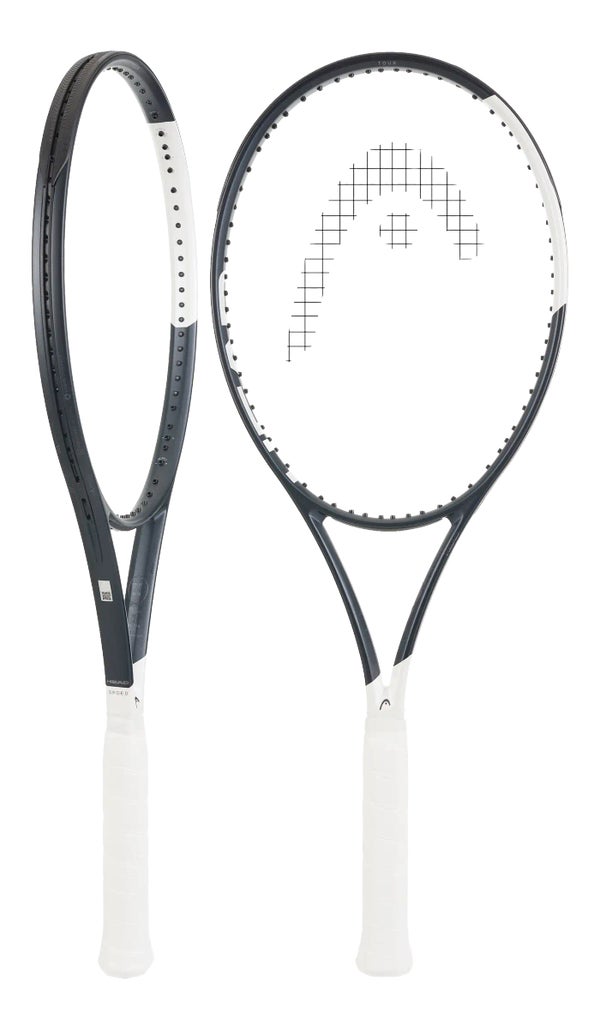 Speed Tour 2026 HEAD305 g · 97 in² · 16x19See priceAmazon
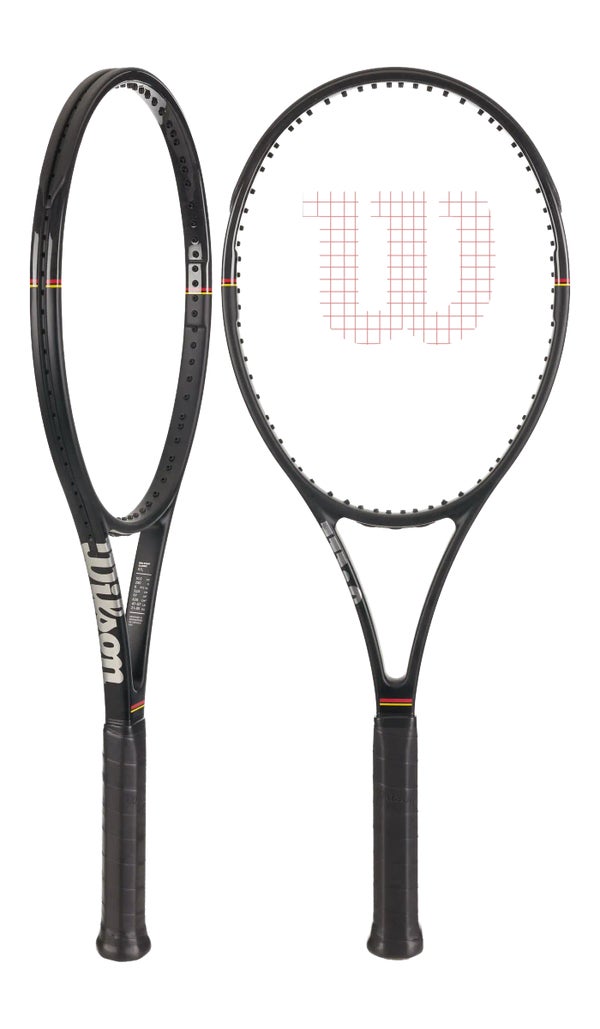 Pro Staff 97L Classic 2026 Wilson290 g · 97 in² · 16x19See priceAmazon
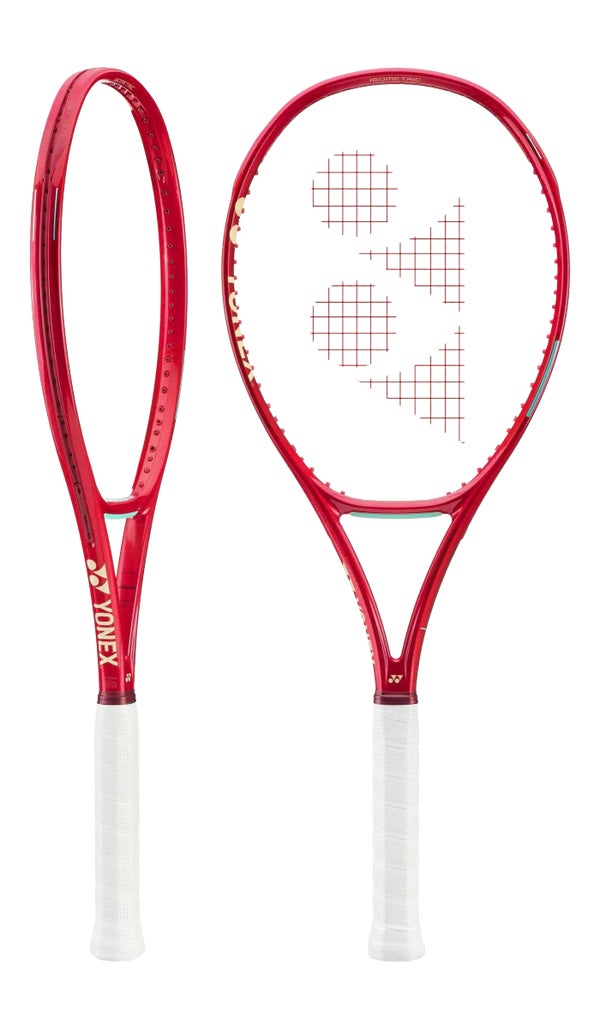 VCORE 98 2026 Yonex305 g · 98 in² · 16x19See priceAmazon
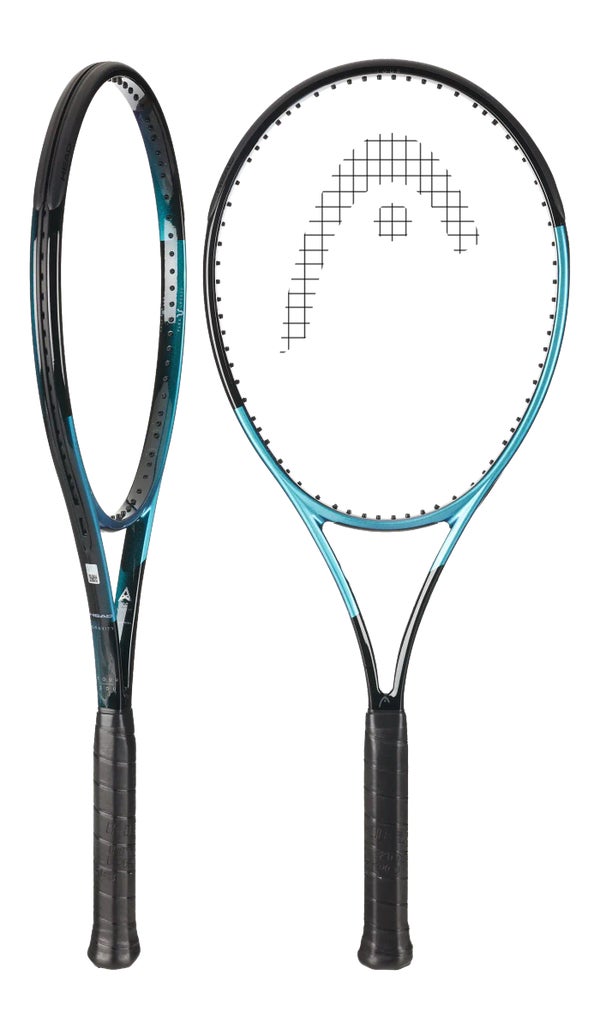 Gravity Tour 2025 HEAD305 g · 98 in² · 16x19See priceAmazon
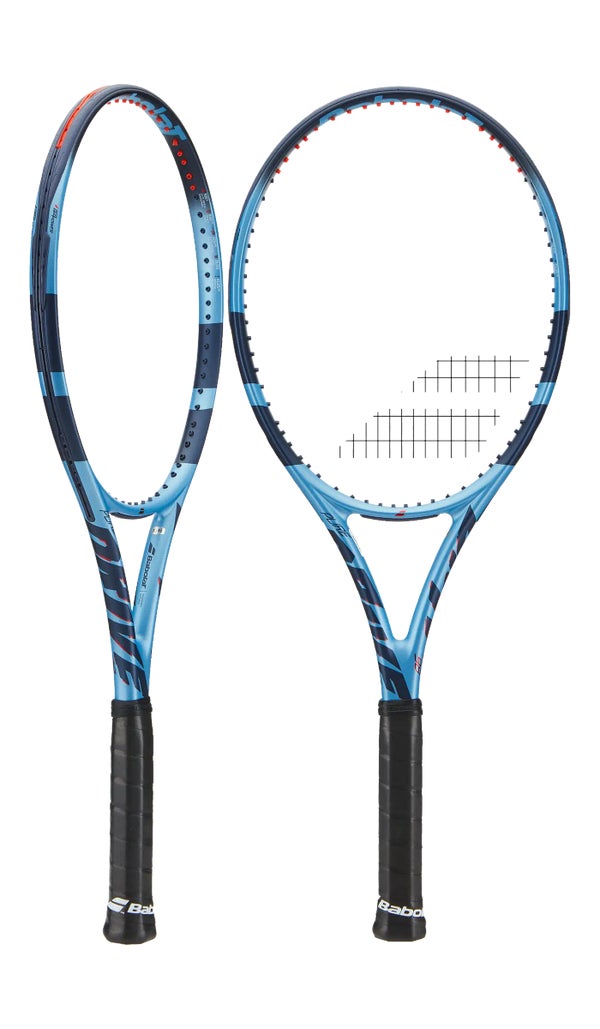 Pure Drive 98 2025 Babolat305 g · 98 in² · 16x20See priceAmazon
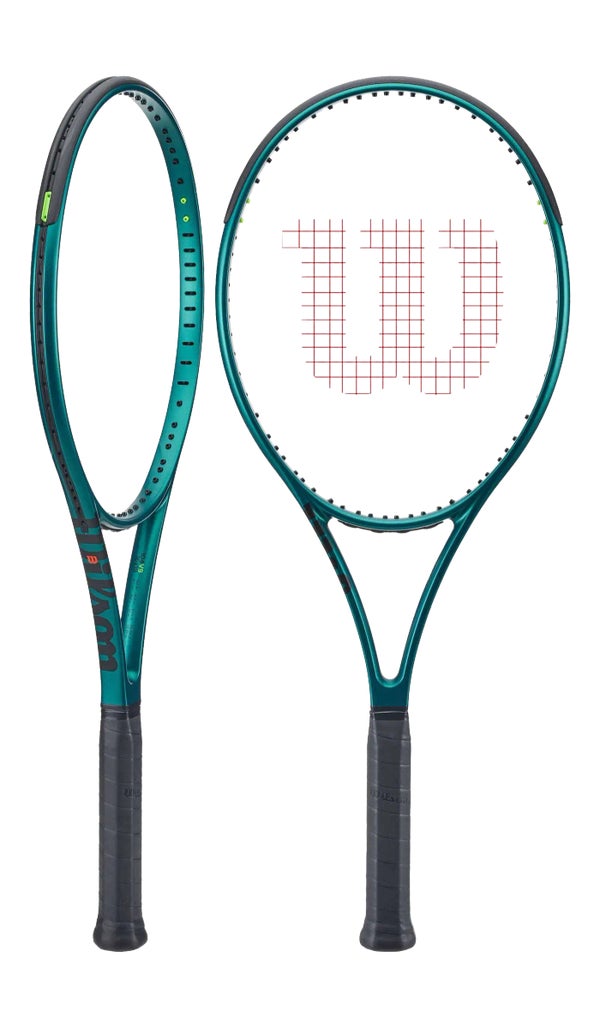 Blade 104 V9 Wilson290 g · 104 in² · 16x19See priceAmazon
- Pure Drive 107 2025 Babolat285 g · 107 in² · 16x19See priceAmazon
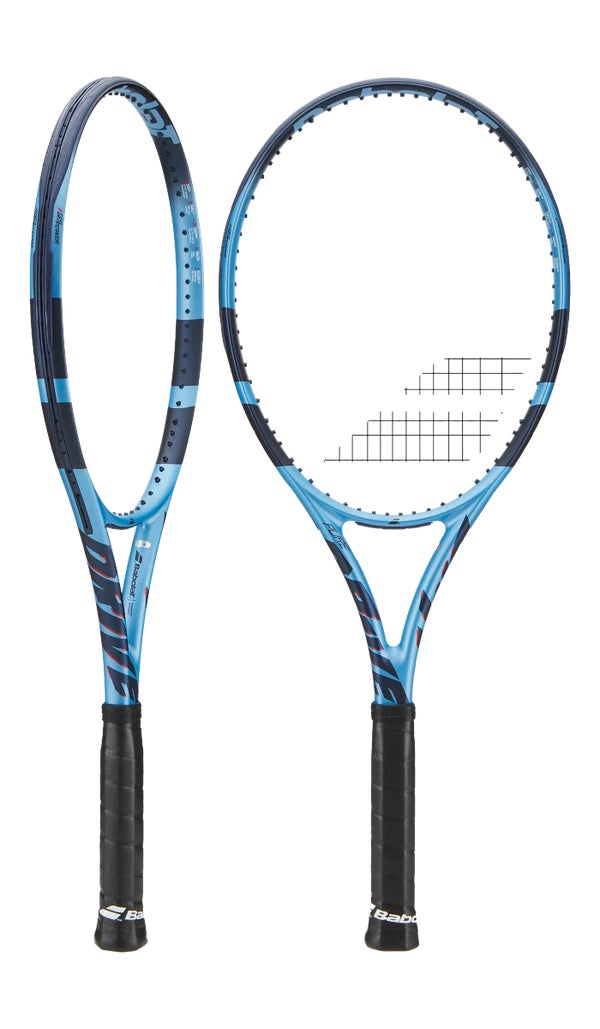 Pure Drive 2025 Babolat300 g · 100 in² · 16x19See priceAmazon
The prices above are checked automatically at each store and may have changed since the last check. The price that counts is the one shown on the store's website at checkout. We may earn a commission on purchases made through store links, at no extra cost to you.