


 Brasil
 United States
 United Kingdom
 Australia
 Netherlands
 France
 España
 Italia
 السعودية
7 best padel rackets for competition in 2026
Professional-level rackets for tournament players, with what the FIP rules allow, why you need two identical units and how to match the weight of your primary and backup.
Updated on 2026-10-07
On this page
- 1.Competition racket checklist
- 2.The 7 best padel rackets for competition in 2026
- 3.What the FIP rules say about your racket
- 4.Backup racket: why you should have two identical ones
- 5.Allowed customization and where it tends to go wrong
- 6.What top players use
- 7.Heat, cold and court: the racket on tournament day
- 8.When to replace your competition racket
- 9.Frequently asked questions
- 10.Verdict
The best padel racket for competition is a professional-level racket that you can repeat: within the FIP rules, with a stable spec sheet, easy to find in two identical units and adjustable without turning into a different racket. Anyone who plays tournaments can't depend on a single racket that, if it breaks in the second set, takes your game down with it. Below are the 7 best padel rackets for competition in 2026 and the equipment routine that makes a difference on tournament day.
Competition racket checklist
Before the ranking, the six points that separate a tournament racket from one that is merely good:
- It's within the rules. Dimensions, holes, surface and leash as per the FIP regulations, which apply in affiliated competitions.
- It has a professional-level spec sheet. Carbon on the face and frame, a medium-to-hard core and 360 to 375 g in most cases.
- It matches your position. Players who finish from the left side and players who build from the right side compete with different rackets.
- It's available from more than one store. Buying two identical units, or replacing a broken one in the middle of the season, depends on availability.
- It has a known weight range. Brands state a range, not an exact weight. Knowing the range is the first step to having two similar rackets.
- It accepts adjustment. Factory counterweights or weight tape let you match the backup to the primary.
If you're still deciding on a style, the guide to the best padel rackets for advanced players organizes the options by playing style. Here the focus is what a tournament demands on top of that.
The 7 best padel rackets for competition in 2026
The 7 best padel rackets for competition in 2026
- 1
- Weight
- 370 g
- Shape
- Hybrid
- Face
- X-Tend Carbon 3K
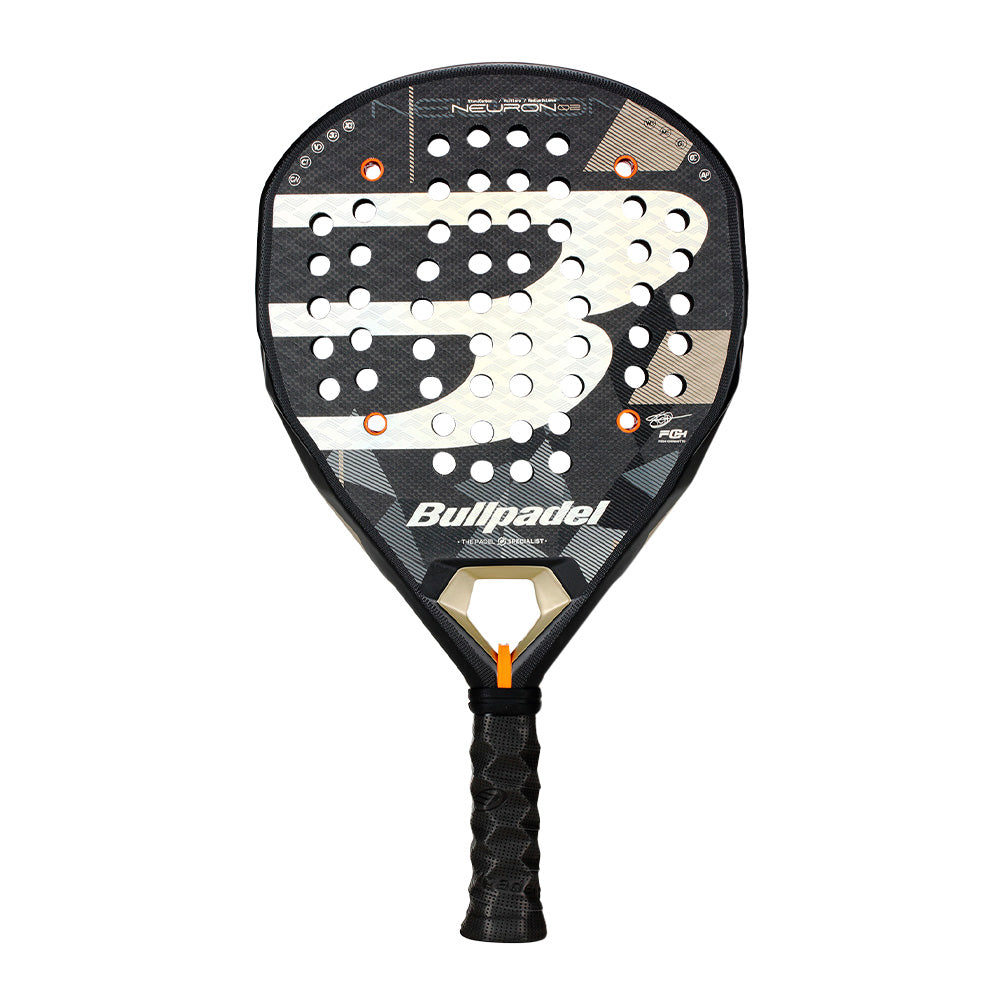
Fede Chingotto's racket in the 2026 collection. Hybrid shape with a balance near 25.5 cm, X-Tend Carbon 3K face, MultiEva core and a PrismLock frame that reduces twisting on impact. Weighs 365 to 375 g. Quick on defense and in transitions, with enough power to close out the high ball.
- 2
- Weight
- 370 g
- Shape
- Diamond
- Face
- Hybrid carbon
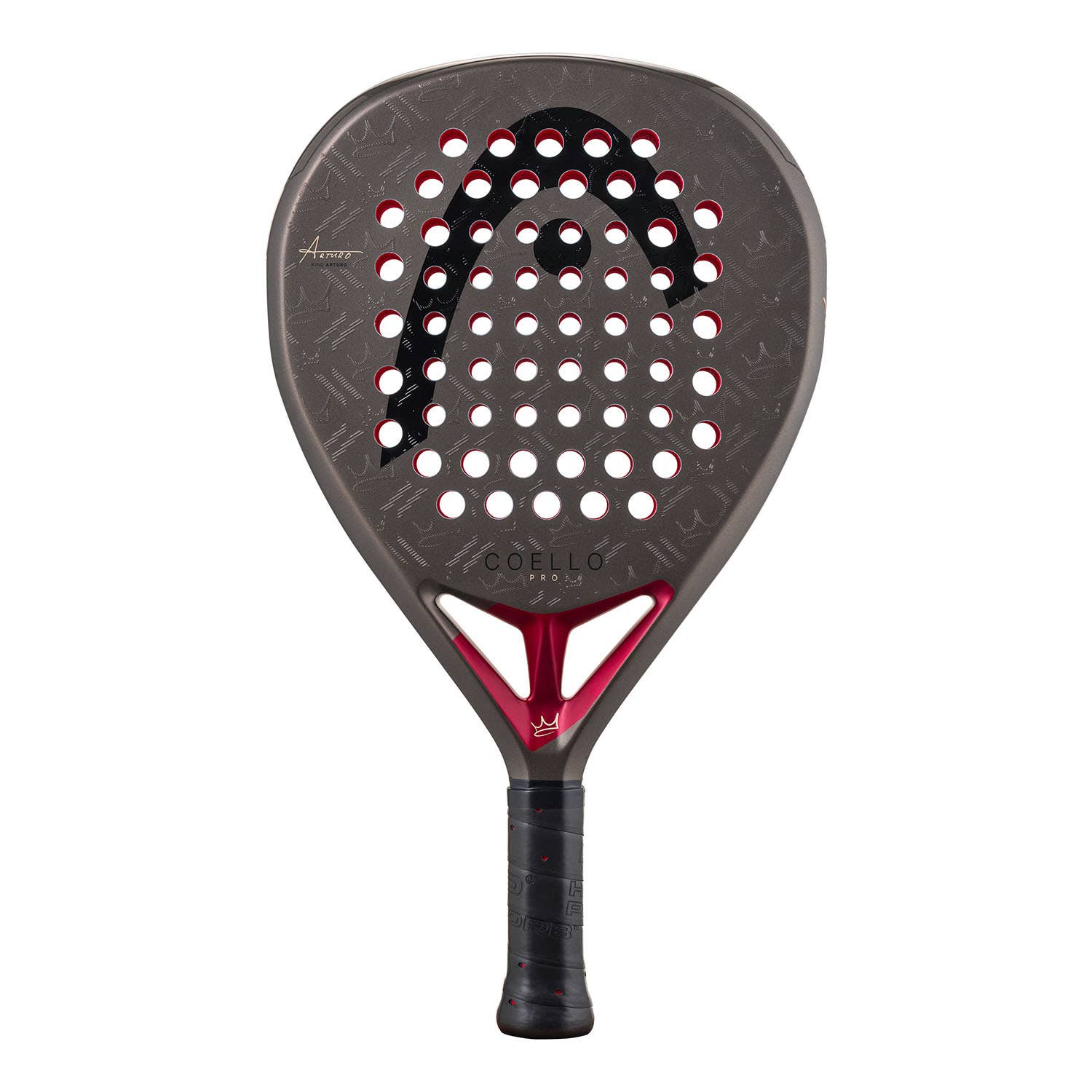
Arturo Coello's second racket with Head and the heaviest in the family. A 370 g diamond with a 272 mm balance, a Power Foam core and a hybrid carbon face with an Extreme Spin surface. 475 cm² area. For players who close out points with the smash and the por 3 and can handle the weight in the third set.
- 3
- Weight
- 357.5 g
- Shape
- Diamond
- Face
- 16K aluminized carbon
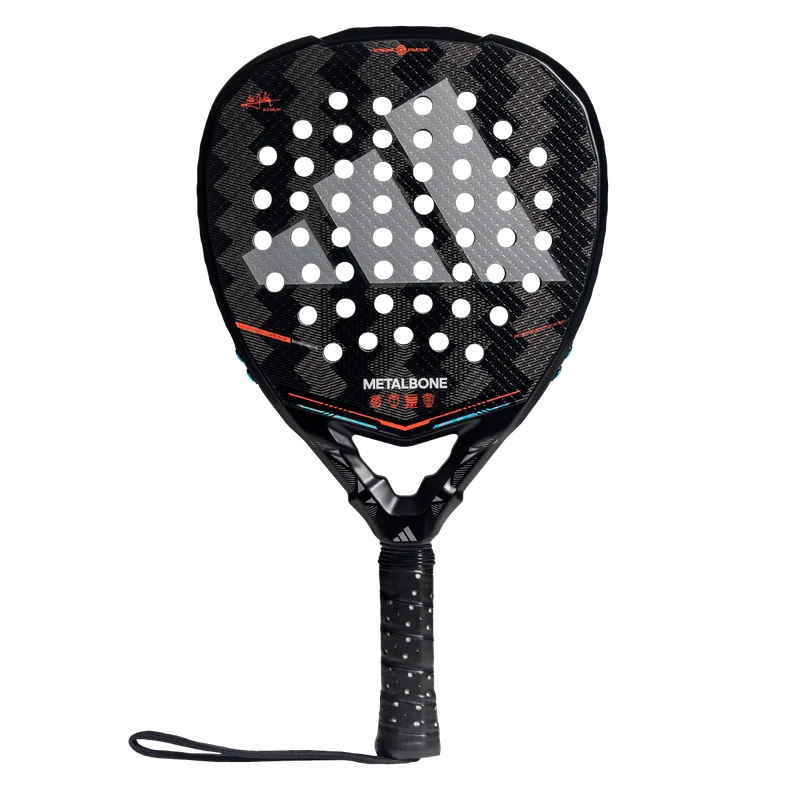
Ale Galán's racket: a high-balance diamond, 16K aluminized carbon and a Soft Performance core, with a more comfortable feel than the HRD version. It weighs 350 to 365 g and accepts up to 11.2 g in removable weights, which makes it easy to give the primary and the backup the same weight.
- 4
- Weight
- 370 g
- Shape
- Diamond
- Face
- X-Tend Carbon 12K
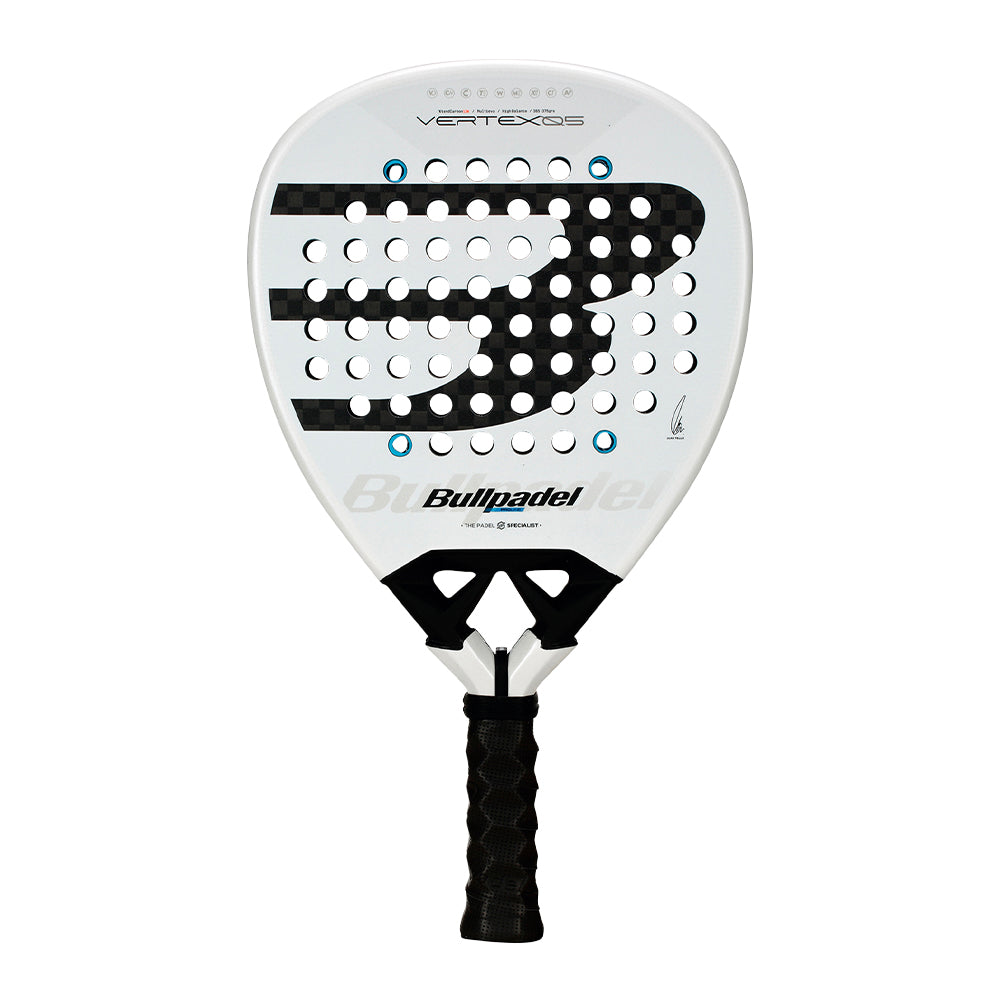
Juan Tello's official racket and, according to the spec sheet, Bullpadel's best-selling Vertex in Brazil. Diamond with an X-Tend Carbon 12K face, a three-layer MultiEva core, 365 to 375 g and a balance near 25.4 cm. The Custom Weight system adds up to 12 g.






The selection considers the spec sheet, the competition level indicated by the sources, the RR Score and availability in stores. Other professional-level rackets are in the padel catalog.
What the FIP rules say about your racket
The racket's maximum dimensions, such as 45.5 cm in length, 26 cm in width and 38 mm in thickness, are in the table in the guide how to choose a padel racket. For those who compete, there are other points in the FIP rules, in force since January 1, 2026, that matter as much as the dimensions:
| Rule point | What it says | What to do |
|---|---|---|
| Manufacturing | The racket must follow the FIP racket approval annex | Prefer line models from known brands and avoid structural modifications |
| Measurement tolerance | In a dimension check, thickness has a 2.5% tolerance | Very thick protectors and extra layers on the frame may draw attention |
| Objects on the racket | Only items to prevent wear, reduce vibration or distribute weight are allowed, of reasonable size and position | A discreet frame protector, vibration dampener and weight tape are within the spirit of the rule |
| Surfaces and sounds | Nothing that reflects light or makes noise capable of disturbing play | Avoid mirrored stickers and loose accessories |
| Devices | Any visible or audible device that communicates, warns or gives instructions during play is prohibited | Sensors with a screen or audible alert stay out of the match |
| Leash | A non-elastic leash of up to 35 cm, attached to the handle and the wrist, is mandatory | Replace a worn leash before the tournament |
| Racket on the floor | If the leash breaks or the racket falls, the pair loses the point | A new leash and a dry overgrip prevent needlessly lost points |
| Equipment change | If equipment needs to be replaced, reasonable additional time is allowed | Have the backup ready, with overgrip and leash, next to the court |
In Brazil, the Confederação Brasileira de Padel (Cobrapa) has been affiliated with the FIP since 1994, according to the international federation itself. Club tournaments may have their own rules, so read the event's rules before you sign up.
Backup racket: why you should have two identical ones
A padel racket has no strings to break, but it does break. A hit against the glass, a knock against your partner, the frame striking the floor on a low ball: a small crack in the face already changes the sound and the response. In a tournament, this can happen in the middle of a match, and the rules only give reasonable time to switch.
Having a backup of a different model solves the racket problem, but creates another: you play the rest of the match with a different balance, weight and feel. The recommendation from people who compete is simple: two units of the same model, from the same generation.
When buying, remember that the generation matters. The Vertex 05 2026 and the Vertex 05 2027 are different rackets in the catalog, and the same goes for AT10s from different years. Buying the backup a year later, when the generation has already changed, almost always means buying a different racket.
Weight tolerance between units
Brands don't sell rackets at an exact weight. They state a range, and each unit leaves the factory at some point within it. Here is the range stated on the spec sheets of the rackets in the ranking:
| Racket | Stated weight range | Possible difference between two units |
|---|---|---|
| Nox AT10 Genius 12K Alum Xtrem 2026 | 360 to 375 g | Up to 15 g |
| Bullpadel Neuron 02 2026 | 365 to 375 g | Up to 10 g |
| Adidas Metalbone 3.5 2026 | 350 to 365 g | Up to 15 g |
| Bullpadel Vertex 05 2026 | 365 to 375 g | Up to 10 g |
| Drop Shot Explorer Pro Attack 2.0 2026 | 350 to 370 g | Up to 20 g |
For the Head Coello Pro 2026 and the Babolat Viper Juan Lebrón 3.0, the spec sheets state a reference weight (370 g and about 365 g), without a range.
Ten grams seem like little, but if they are concentrated in the head, they change the balance enough for you to feel it on the smash. Three precautions solve most of the problem:
- Weigh both units. A digital kitchen scale is enough. Write down the weight of each one with the overgrip you use.
- Check the balance. Rest the racket lying on a pencil and find the balance point. Compare the distance to the base of the handle on both.
- Match to the lighter one. Use the factory counterweights, when available, or weight tape on the frame of the lighter one until both feel alike.
Rackets with a factory weight system, such as the Metalbone (up to 11.2 g), Vertex 05 (up to 12 g) and AT10 with Weight Balance, make this adjustment easier. For those who compete, this is worth as much as the spec sheet.
Three competition rackets with an adjustable weight system
Highlighted: what differs between the racquets. In bold: the best value in the row.
Allowed customization and where it tends to go wrong
The rules allow items that protect the racket, reduce vibration or distribute weight. In the practice of the tournament player, this means:
- Frame protector. Reduces chips from hits on the floor and the glass. It also adds a few grams to the head, so put the same protector on both rackets.
- Weight tape. Thin strips on the frame change the balance. At 12 o'clock, they move weight to the head; on the sides, they increase stability on off-center balls. Change a little at a time.
- Overgrip. Each layer thickens the handle and adds weight near the hand, which lowers the balance. Use the same number of layers on both rackets.
- Vibration dampener. Allowed within the spirit of the rule, as long as it is discreet and well attached.
The common mistake is customizing only the primary. After weeks with weight tape and a new protector, the backup, which stayed stock, feels like a different racket just when you need it.
What top players use
Brands associate certain line models with athletes on the professional circuit. The table below shows these associations according to the catalog's spec sheets, which follow the manufacturers' information for the collection indicated:
| Player | Associated line model | Shape |
|---|---|---|
| Agustín Tapia | Nox AT10 Genius (2026 collection) | Teardrop |
| Fede Chingotto | Bullpadel Neuron 02 2026 | Hybrid |
| Arturo Coello | Head Coello Pro 2026 | Diamond |
| Ale Galán | Adidas Metalbone 3.5 2026 | Diamond |
| Juan Tello | Bullpadel Vertex 05 2026 | Diamond |
| Juan Lebrón | Babolat Viper Juan Lebrón 3.0 2026 | Diamond |
| Lucas Campagnolo | Drop Shot Explorer Pro Attack 2.0 2026 | Teardrop |
| Pablo Lima | Drop Shot Canyon Pro Attack 2.0 2026 | Diamond |
Two observations. First, these associations change from one season to the next, with changes in sponsorship and generation. Second, the shape follows the role: the building players, like Chingotto, appear with hybrids and teardrops; the finishers appear with diamonds. Copying your idol's racket only makes sense if you play the same position he does.
The Canyon Pro Attack 2.0 from Brazilian player Pablo Lima and other pure-attack rackets are in the list of 5 power padel rackets for advanced players.
Heat, cold and court: the racket on tournament day
Tournaments are played at times you don't choose: a cold morning, a sunny afternoon on an outdoor court, a humid night. The core foam changes behavior with temperature. In the cold, it hardens and the ball comes off less; in the heat, it softens and the ball comes off more. The guide to EVA foam soft, medium or hard explains this relationship in detail.
For those who compete, the practical consequences are:
- Warm up with your match racket. The mandatory warm-up minutes also serve to recalibrate your feel to the day's temperature.
- Don't leave your rackets in the car. Extreme heat affects resin and foam, and a backup kept in the trunk won't respond like the primary.
- Consider an aluminized face if you play in varying temperatures. Nox describes the 12K Alum Xtrem carbon as stable through temperature changes.
When to replace your competition racket
A tournament racket loses performance before it breaks. The core gradually loses its memory with intense use, and the rough face gets smooth. Signs that the time has come:
- The ball comes off less than it did on shots you know well, such as the bandeja and the finishing volley.
- The surface has lost its roughness in the center of the face and the spin has become shorter.
- There are visible cracks in the face or new popping sounds on impact.
- The backup, used less, has started to feel livelier than the primary.
When you replace, replace the pair. Keeping a new primary with a worn backup recreates the problem of differences between units. To compare candidates before the season, use the padel racket comparison tool.
Frequently asked questions
What is the best padel racket for competition?
In our selection, the Nox AT10 Genius 12K Alum Xtrem 2026 is the most complete for competing: all-round, with counterweights to adjust the balance and a face that the brand describes as stable with temperature. For right-side players, the Bullpadel Neuron 02 2026; for finishers, the Head Coello Pro 2026 or the Adidas Metalbone 3.5 2026.
Do I need an approved racket to play a padel tournament?
The FIP rules require the racket to be manufactured according to the federation's approval annex and to respect dimensions, holes, surface and leash. Adult line rackets from known brands are made for this. Before the tournament, also check the event's rules.
Can I put weight tape or a protector on my padel racket in a tournament?
The FIP rules allow objects used to prevent wear, reduce vibration and distribute weight, as long as they are of reasonable size and position and neither reflect light nor make noise. A discreet frame protector and weight tape fit that description.
Do two rackets of the same model have the same weight?
Not necessarily. Brands state a range, such as 365 to 375 g, and each unit comes out at some point within it. Weigh both, compare the balance and match them with counterweights or weight tape.
What happens if the racket breaks during a match?
The FIP rules provide reasonable additional time when equipment needs to be replaced. That is why it's worth having the backup ready next to the court, with overgrip and leash. If the leash breaks or the racket falls during the point, the pair loses the point.
Verdict
Still torn between two models? The Racket finder cross-references your style with the catalog, and the Nox and Bullpadel pages show every version of each family.
Where to buy the racquets in this guide
- Neuron 02 2026 Bullpadel370 g · Hybrid · X-Tend Carbon 3KSee priceAmazon
- Coello Pro 2026 HEAD370 g · Diamond · Hybrid carbonSee priceAmazon
- Metalbone 3.5 2026 Adidas Padel357.5 g · Diamond · 16K aluminized carbonSee pricePadelGo
- Vertex 05 2026 Bullpadel370 g · Diamond · X-Tend Carbon 12KSee priceAmazon
The prices above are checked automatically at each store and may have changed since the last check. The price that counts is the one shown on the store's website at checkout. We may earn a commission on purchases made through store links, at no extra cost to you.