


 Brasil
 United States
 United Kingdom
 Australia
 Netherlands
 France
 España
 Italia
 السعودية
How to choose a padel racket: weight, balance, core and face
Shape, weight, balance, core and face, in that order: the guide that explains every number on a padel racket's spec sheet, with the official FIP measurements.
Updated on 2026-10-07
On this page
- 1.How to choose a padel racket in 5 steps
- 2.Shape: the summary
- 3.Weight: the ranges and what each one demands
- 4.Balance: where the weight is
- 5.Core: hard EVA, soft EVA, foam and polyethylene
- 6.Face: fiberglass, carbon and what 3K to 24K means
- 7.Texture: smooth, sand or 3D
- 8.38 mm thickness and the FIP rules
- 9.Handle, overgrip and leash
- 10.Practical examples by profile
- 11.Frequently asked questions
- 12.Verdict
To choose a padel racket, decide in this order: shape, weight, balance, core and face. The first three define where the ball meets the racket and how much effort the arm makes; the last two define how the ball comes off. Finish, color and brand come last. This guide explains how to choose a padel racket item by item, with spec-sheet numbers and real examples from the catalog.
How to choose a padel racket in 5 steps
- Define your level and your side of the court. Beginner, intermediate or advanced; right side, left side or both.
- Choose the shape. Round for control and forgiveness, teardrop for balance, diamond for attack.
- Get the weight and balance right. They decide whether the racket tires you or not.
- Choose the core. Soft rubber for easy power and comfort, hard for power on fast strokes.
- Choose the face. Fiberglass for a soft feel, carbon for precision and response.
If you would rather skip the theory, Find your racquet asks these questions and returns filtered suggestions from the padel catalog.
Shape: the summary
The shape defines the position of the sweet spot, the area that returns the ball with the most energy and the least vibration.
| Shape | Sweet spot | Typical balance | Who it is for |
|---|---|---|---|
| Round | Central, near the middle of the head | Low | Beginners and control players |
| Teardrop | A little above the center | Medium | All-rounders |
| Diamond | High, near the tip | High | Attackers with technique |
| Hybrid | Varies | Medium to high | Players who want attack with some forgiveness |
There is a lot of nuance here, such as models that break the rule and families that offer the same mold in three shapes. All of that is in the guide round, teardrop or diamond.
Weight: the ranges and what each one demands
The weight of an adult padel racket runs from about 340 to 380 g. It seems like a small difference, but 15 g more in the head can be felt in the third set.
| Range | Recommended for | Catalog example |
|---|---|---|
| 310 to 340 g | Junior, sensitive arm, return from injury | Nox AT10 Genius Ultra Light |
| 345 to 360 g | Beginners, women players, those who prioritize quick hands | Bullpadel Indiga W, Head Speed Motion |
| 360 to 370 g | Standard for intermediates and advanced players | Nox AT10 Pro Cup, Head Coello Motion |
| 370 g or more | Strong attackers at the advanced level | Head Coello Pro, Bullpadel Hack 04 |
Two details that few people know:
- Weight comes in a range. Manufacturers such as Wilson and Dunlop list something like 365 g with a variation of 10 g up or down. Bullpadel publishes ranges such as 365 to 375 g. Two units of the same model can have different weights.
- Lighter is not always more comfortable. A racket that is too light is unstable against hard balls and passes more vibration to the arm. For players who feel their elbow, a medium-weight racket with a soft core is usually better than an ultralight.
Balance: where the weight is
Balance is the point at which the racket balances, measured in millimeters from the butt of the handle. The higher the number, the more weight in the head.
- Low (up to about 260 mm): the racket feels lighter than it is. Quick hands at the net and on the wall exit. Example: Head Radical Team 2026, at 255 mm.
- Medium (about 260 to 265 mm): balances maneuverability and power. Example: Head Radical Motion 2024, at 265 mm.
- High (above 265 mm): more inertia on the smash and the víbora, more effort to move the racket. Example: Head Coello Pro 2026, at 272 mm.
The ranges are approximate and vary depending on how the brand measures. What matters is comparing models from the same source. Two 365 g rackets, one at 255 mm and the other at 270 mm, feel very different in the hand.
Adjustable weights
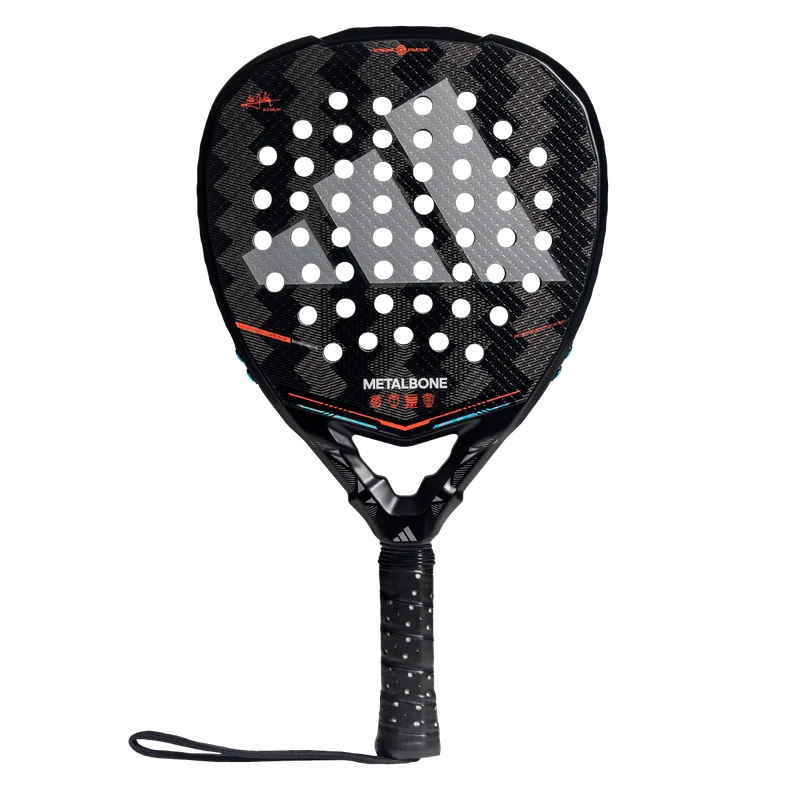
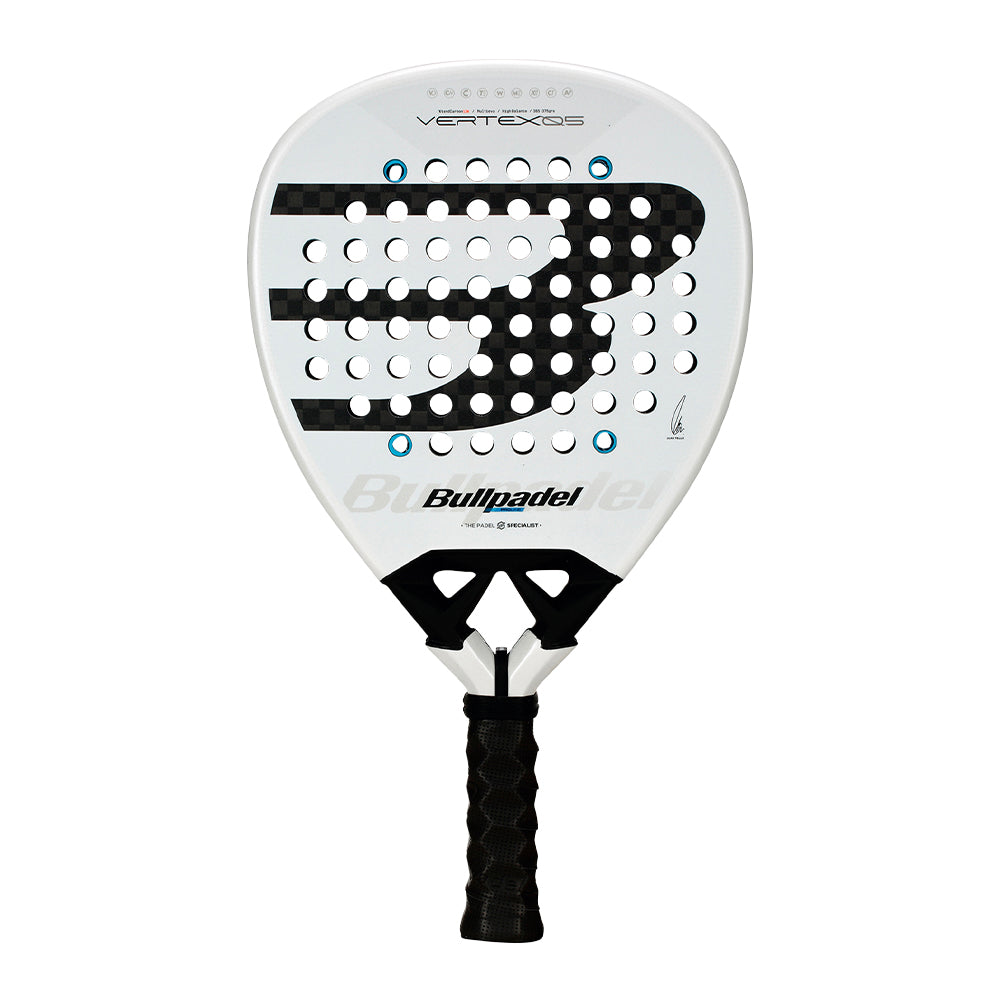
Some 2026 rackets let you change the balance with counterweights. The Adidas Metalbone accepts up to 11.2 g extra; the Bullpadel Vertex 05 has Custom Weight, of up to 12 g; Nox's AT10 line uses Weight Balance. It is a good way out for players between two profiles who want to test before deciding.
Core: hard EVA, soft EVA, foam and polyethylene
The core is the rubber center between the faces. It is what most changes the feel of the impact.
- Hard EVA (high density): returns a lot of energy on fast strokes and little on slow ones. More control and precision for players who accelerate. It takes arm.
- Soft EVA (low density): deforms more and returns the slow ball without effort. More comfort, less explosiveness on a hard smash.
- Medium-density or multilayer EVA: most intermediate and advanced rackets use combinations, such as Bullpadel's MultiEva or Babolat's X-EVA, with stiffer outer layers and a softer center.
- Foam: a more elastic foam, used by Head (Power Foam, Control Foam) and by Wilson. Lively ball with a soft feel.
- Polyethylene: a very soft, high-recovery rubber, used by Royal Padel. The brand recommends it for those who want to avoid epicondylitis.
The best way to understand the difference is to compare rackets with the same mold and different cores. Nox does this with the AT10 Pro Cup and the Equation: the Soft and Hard versions have the same shape, face and thickness.
Same mold, different core: Nox Soft and Hard versions


Highlighted: what differs between the racquets. In bold: the best value in the row.
The AT10 Pro Cup Hard uses an HR3 Hard EVA core, and the Soft, HR3 Soft EVA. By the logic of cores, the hard version tends to have a firmer feel and call for an accelerated stroke, while the soft one is usually more forgiving on the slow ball. The choice between them says more about your stroke than about your level.
Face: fiberglass, carbon and what 3K to 24K means
The face is the outer layer that receives the ball. It works together with the core.
Fiberglass is more flexible and heavier than carbon. It works like a trampoline: easy power, soft feel, less precision on fast balls. It dominates entry-level rackets.
Carbon is stiffer and lighter. The ball comes off more precisely and the racket responds better when the stroke is hard. On slow balls, it demands more from the arm.
Mixed faces combine the two. Each brand has its own name: Glaphite and Fibrix at Bullpadel, Carbon Flex at Babolat, hybrid carbon at Head.
As for the number, 3K, 12K, 18K and 24K indicate thousands of filaments per strand of the fabric. In the 2026 lines, 3K appears in rackets with a more sensitive feel, such as the Head Radical Pro, and higher numbers in firm, powerful versions, such as the Bullpadel Hack 04 (TriCarbon 18K). But the final stiffness depends on resin, layers and core; do not choose by the number alone. Other names, such as UD (unidirectional) carbon and TeXtreme, also describe the type of fabric.
See the difference in the face in two rackets from the same family, with the same weight and shape:
Fiberglass versus carbon in the same Head Coello mold


Highlighted: what differs between the racquets. In bold: the best value in the row.
The Coello Team uses fiberglass, a material that usually gives a softer feel; the Coello Motion uses hybrid carbon, which tends to call for a more accelerated stroke. Both are 360 g and diamond-shaped.
Texture: smooth, sand or 3D
The surface can be smooth, rough (with a sand texture) or have a 3D relief. Roughness increases friction with the ball and helps put spin on the bandeja, the víbora and the sliced wall exit.
- Smooth: less spin, cleaner feel. Common in entry-level rackets and in some control ones, such as the Head Radical Motion.
- Sand: moderate spin. The texture usually wears down with use.
- 3D relief: high-relief patterns that grip the ball more. Examples: 3D Grain from Bullpadel, 3D Spin+ from Babolat, Dual Spin from Nox.
For players who do not yet slice the ball, roughness makes almost no difference. For players who live on the bandeja, it weighs in the choice.
38 mm thickness and the FIP rules
The International Padel Federation (FIP) defines the maximum measurements of a racket valid for competition:
| Measurement | FIP limit |
|---|---|
| Total length (head + handle) | Up to 45.5 cm |
| Width | Up to 26 cm |
| Thickness | Up to 38 mm |
| Handle | Up to 20 cm in length and 50 mm in width and thickness |
| Holes in the central zone | Cylindrical, 9 to 13 mm in diameter |
| Safety leash | Mandatory, up to 35 cm |
| Surface | May be smooth or rough |
Almost all adult rackets sold already use the maximum 38 mm, because thickness helps stability. Some older models are 37 mm, and juniors can be thinner: the Nox AT10 Genius JR, for example, is 30 mm.
Handle, overgrip and leash
The handle of padel rackets has similar measurements across brands. Fine adjustment is done with an overgrip:
- A thinner handle gives more wrist freedom to slice the ball, but increases the tendency for the racket to twist in the hand on hard balls.
- A thicker handle stabilizes the impact and reduces grip force, but takes away a bit of wrist mobility.
A practical reference: when holding the racket, there should be a small gap between your fingertips and your palm. Replace the overgrip when it gets slick or hard. The leash is required by the rules and must always be attached to your wrist.
Practical examples by profile
Padel rackets that illustrate each spec choice
 Adidas Padel· Padel
Metalbone 3.5 2026 Adidas Padel
- Weight
- 357.5 g
- Shape
- Diamond
- Face
- 16K aluminized carbon







- Royal Padel Whip Poly 2026: soft polyethylene core, round shape and low balance. An example of a racket designed for comfort.
- Adidas Metalbone 3.5 2026: diamond with removable weights. An example of adjustable balance.
- Nox VK10 Ventus Control 12K 2026: round with 12K carbon and a core with an intermediate-to-firm feel. An example of a round with a stiffer face.
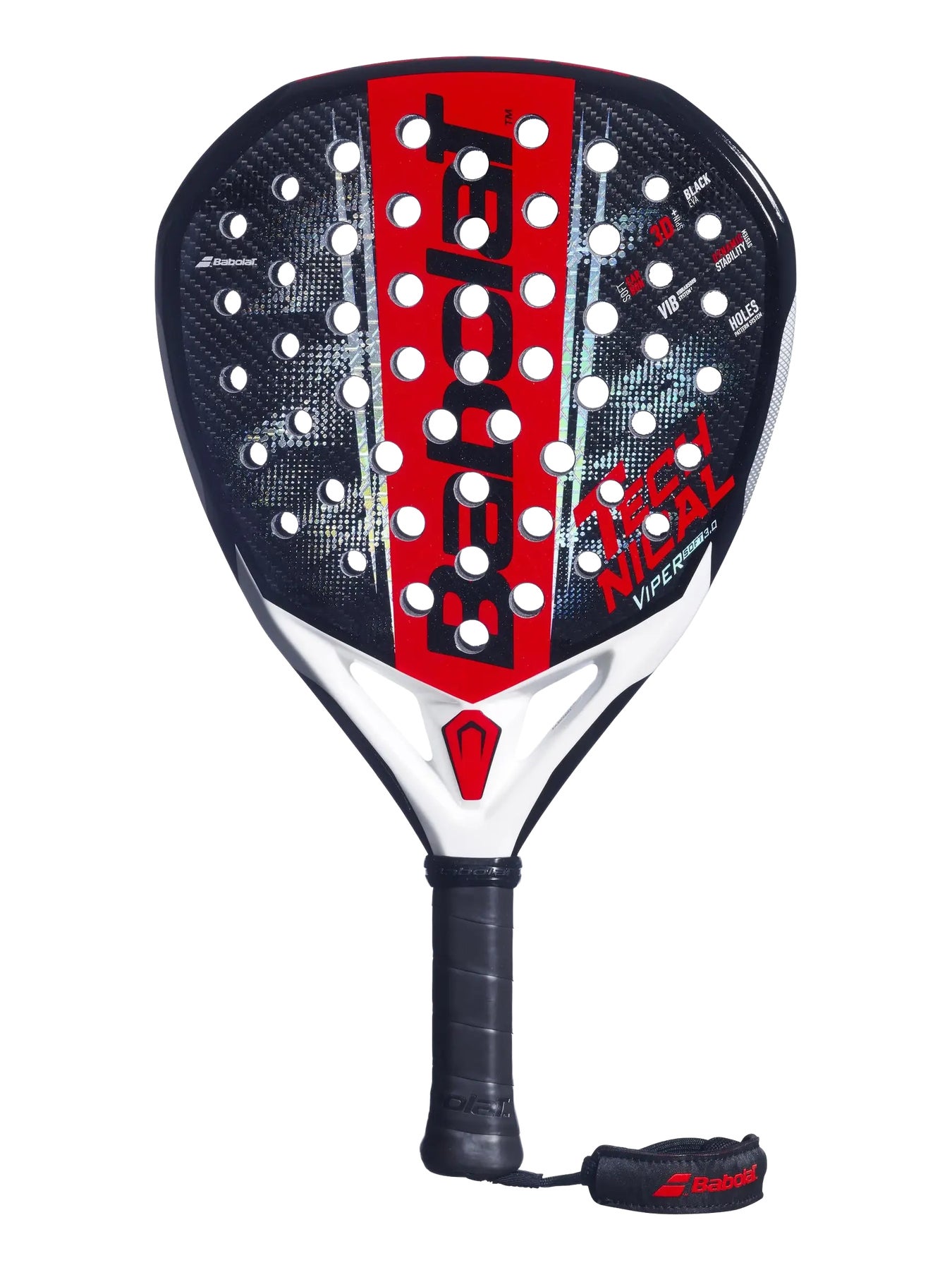
- Babolat Technical Viper Soft 3.0: diamond with a more elastic core and 3K carbon face. An example of an attacking racket with a softened feel.
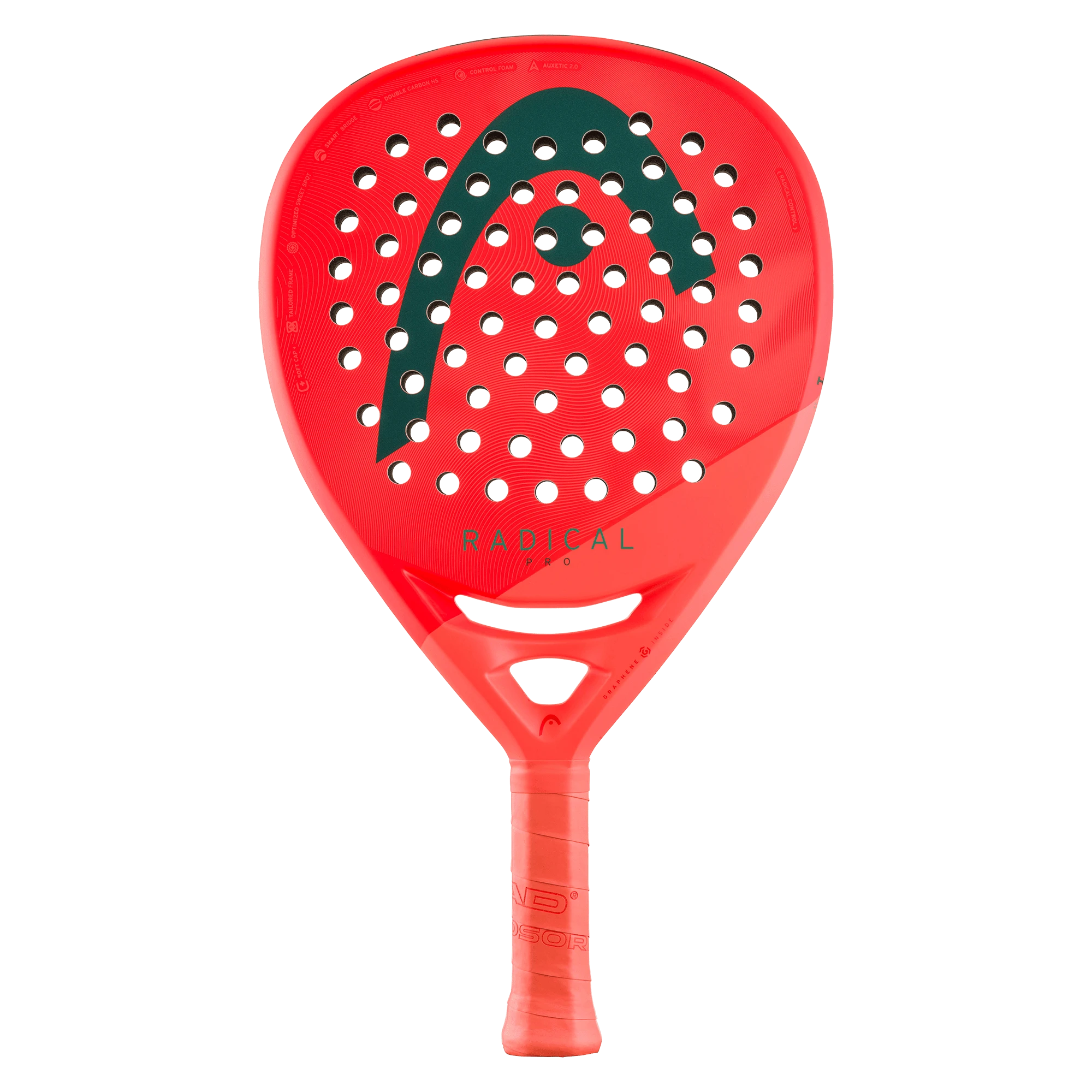
- Head Radical Pro 2026: 370 g, but a low balance of 260 mm. An example of a heavy racket that does not feel heavy.
- Bullpadel Vertex 05 2026: 12K carbon diamond with an extra weight system. An example of a diamond with adjustable balance.
To put any of them side by side with others, use the padel racket comparison tool.
Heads up
Before buying, check the spec sheet: shape, weight range, balance, core and face. If the store does not list the core or balance, look for the spec sheet on the manufacturer's site or on Racquet Rank. Photos and the model name are not enough: the same line often has soft, hard, light and attacking versions that look almost identical.
Frequently asked questions
How do I know which padel racket to buy?
Start with your level and the side you play on. Then choose the shape, get the weight and balance right and, finally, decide on core and face. Beginners should go with a soft fiberglass round; intermediates, a teardrop or carbon round; advanced attackers, a diamond.
What is the ideal weight for a padel racket?
For most adults, 355 to 370 g. Beginners and women players usually adapt better to 345 to 360 g. Above 370 g is only for attackers with a prepared arm. Also consider the balance, which changes how heavy the racket feels.
What is the difference between EVA and foam in a padel racket?
Both are core rubbers. EVA comes in several densities, from soft to hard, and is the most common. Foam is a more elastic foam that gives a lively ball with a soft feel. The density matters more than the name of the material.
Carbon or fiberglass padel racket?
Fiberglass for those just starting out or who want comfort, because it returns the slow ball well. Carbon for those who already accelerate the stroke and want precision. Mixed faces are a good middle ground for the intermediate.
What is the maximum thickness of a padel racket?
38 mm, under the International Padel Federation rule. The maximum total length is 45.5 cm and the maximum width is 26 cm. Almost all current adult rackets use the maximum thickness.
Smooth or rough padel racket: which to choose?
Rough or with 3D relief if you use the bandeja, víbora and sliced balls a lot, because the friction helps with spin. Smooth if you prefer a cleaner feel or do not yet put spin on the ball. Both are allowed by the rules.
Is an adjustable-weight racket worth it?
It is worth it for players between two profiles or who want to test more weight in the head gradually. Models such as the Adidas Metalbone, Bullpadel Vertex 05 and Nox's AT10 line let you add a few grams and change the balance.
Verdict
With the spec defined, see the ready-made picks in the guides to the best padel rackets of 2026, rackets for beginners and rackets for intermediates. If you already have a preferred brand, the Head padel comparison tool and the Nox one show the complete families.
Where to buy the racquets in this guide
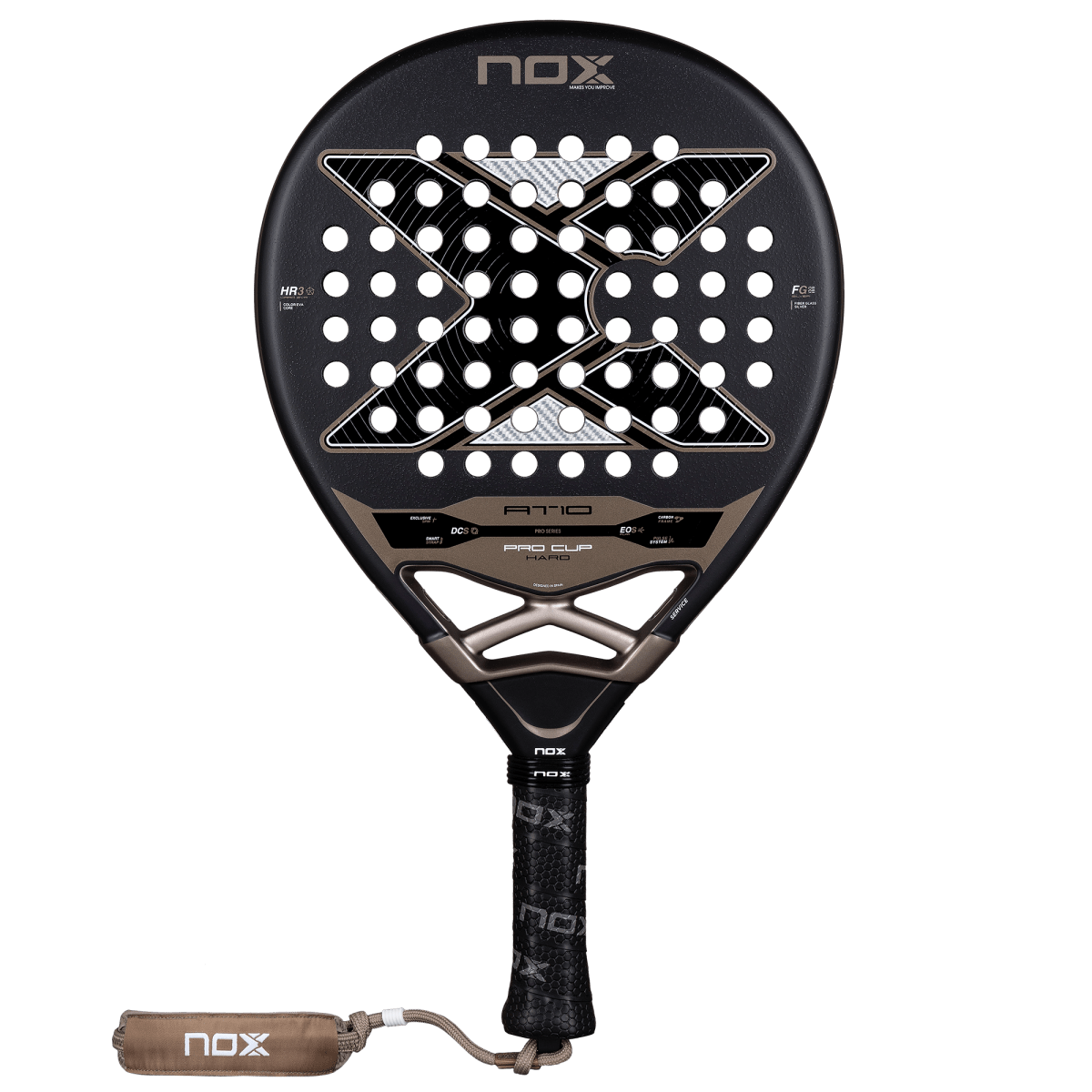 AT10 Pro Cup Hard 2026 NOX367.5 g · Teardrop · Aluminized fiberglassSee pricePadelGo
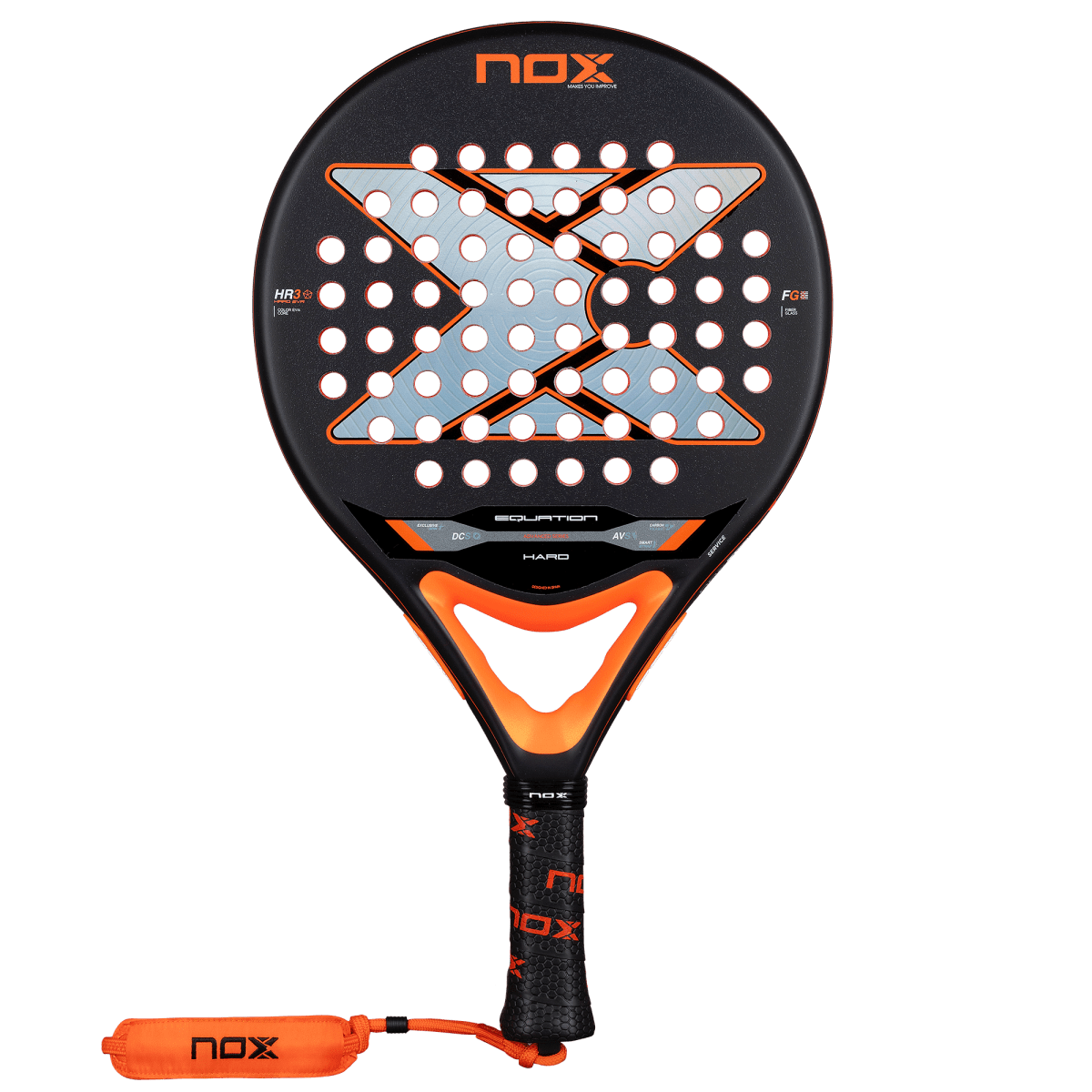 Equation Hard Advanced 2026 NOX360 g · Round · 3K fiberglassSee pricePadelGo
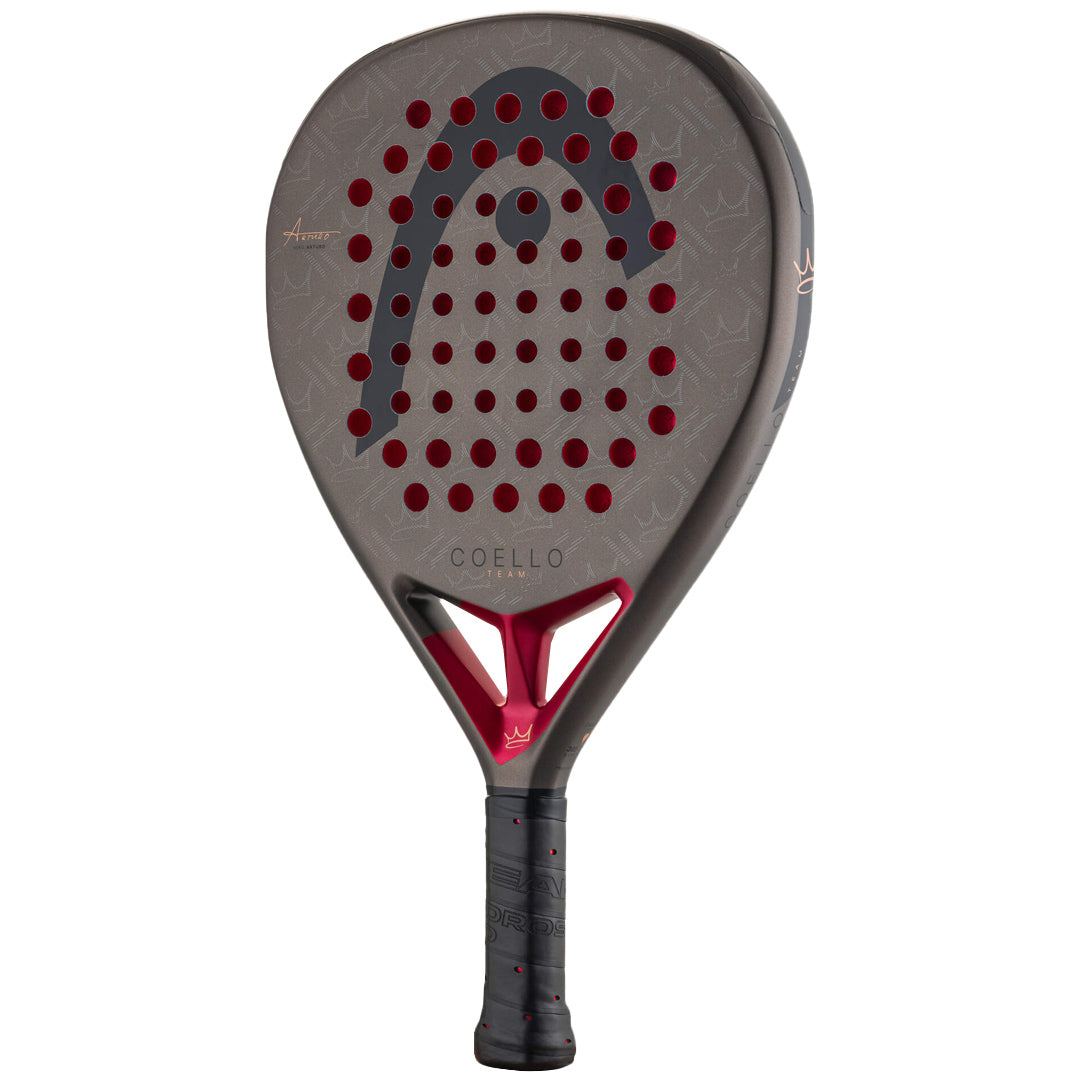 Coello Team 2026 HEAD360 g · Diamond · FiberglassSee priceAmazon
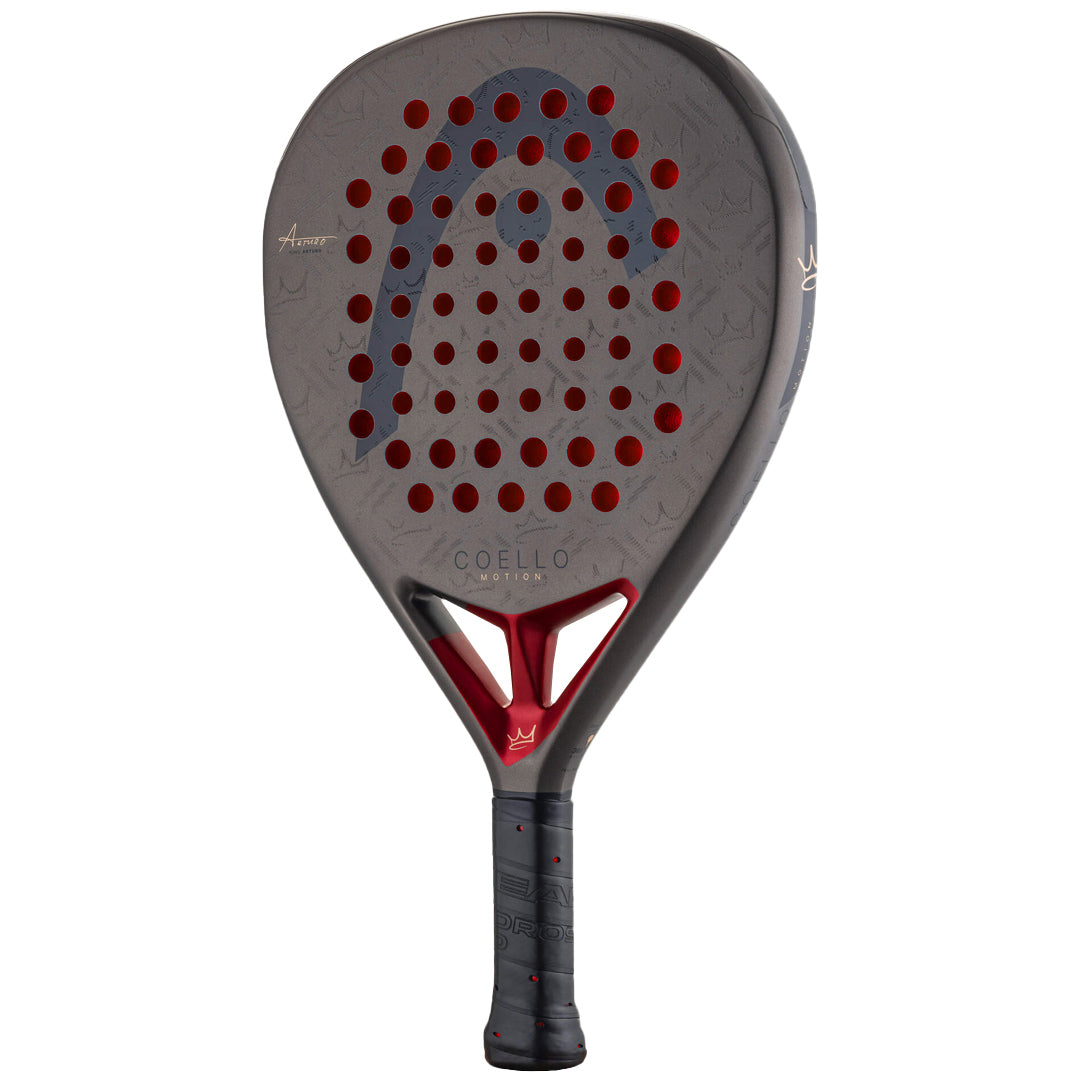 Coello Motion 2026 HEAD360 g · Diamond · Hybrid carbonSee priceAmazon
- Metalbone 3.5 2026 Adidas Padel357.5 g · Diamond · 16K aluminized carbonSee pricePadelGo
- Technical Viper Soft 3.0 2026 Babolat365 g · Diamond · 3K carbon (Soft Carbon)See priceBabolat
- Radical Pro 2026 HEAD370 g · Teardrop · 3K carbonSee priceAmazon
- Vertex 05 2026 Bullpadel370 g · Diamond · X-Tend Carbon 12KSee priceAmazon
The prices above are checked automatically at each store and may have changed since the last check. The price that counts is the one shown on the store's website at checkout. We may earn a commission on purchases made through store links, at no extra cost to you.