


 Brasil
 United States
 United Kingdom
 Australia
 Netherlands
 France
 España
 Italia
 السعودية
Round, teardrop or diamond padel racket: which to choose
Where the sweet spot sits, how much weight goes to the head and who each padel racket shape suits, with real catalog examples and the same family in three molds.
Updated on 2026-10-07
On this page
- 1.Round, teardrop or diamond padel racket: the summary
- 2.Round racket: low, central sweet spot
- 3.Teardrop racket: the middle ground
- 4.Diamond racket: high sweet spot and weight in the head
- 5.Hybrids: what brands call them
- 6.The same family in three shapes
- 7.Shape is not everything: what can flip the rule
- 8.Which shape for each playing situation
- 9.How to transition between shapes
- 10.How to recognize the shape just by looking
- 11.Frequently asked questions
- 12.Verdict
Round is for control, diamond is for attacking and teardrop sits in the middle. That rule works as a starting point for choosing between a round, teardrop or diamond padel racket, but what really separates the shapes is how high the sweet spot sits and how much of the weight is in the head. Understanding this avoids the most common mistake of players who switch rackets: buying a shape that does not match the balls you receive most.
Round, teardrop or diamond padel racket: the summary
| Round | Teardrop | Diamond | Hybrid | |
|---|---|---|---|---|
| Sweet spot | Central, wide | Medium-high | High, smaller | Varies by mold |
| Balance | Low | Medium | High | Medium to high |
| Maneuverability | High | Medium | Low | Medium |
| Forgiveness | High | Medium | Low | Medium |
| Overhead power | Low | Medium | High | Medium to high |
| Typical profile | Beginner, defender, right-side player | All-rounder | Attacker, left-side player | Attacker who wants more defense |
Notice that balance and sweet spot go together. When the manufacturer widens the upper part of the head, it moves mass upward. That is why diamonds almost always have a high balance.
Round racket: low, central sweet spot
A round head is widest near the middle. The sweet spot is centered and, in general, the widest of the three shapes. The weight tends to sit closer to the handle.
On court, this translates into:
- Easier wall exits. The ball coming off the glass arrives low and often meets the racket below the center. The round racket still has usable area there.
- Quick hands at the net. With little weight in the head, the reflex volley comes out faster.
- Deep, controlled lobs. The ball goes where you aim it, without explosiveness.
- A lighter smash. There is not enough inertia in the head for the ball to run after the bounce.
Round padel rackets in the catalog
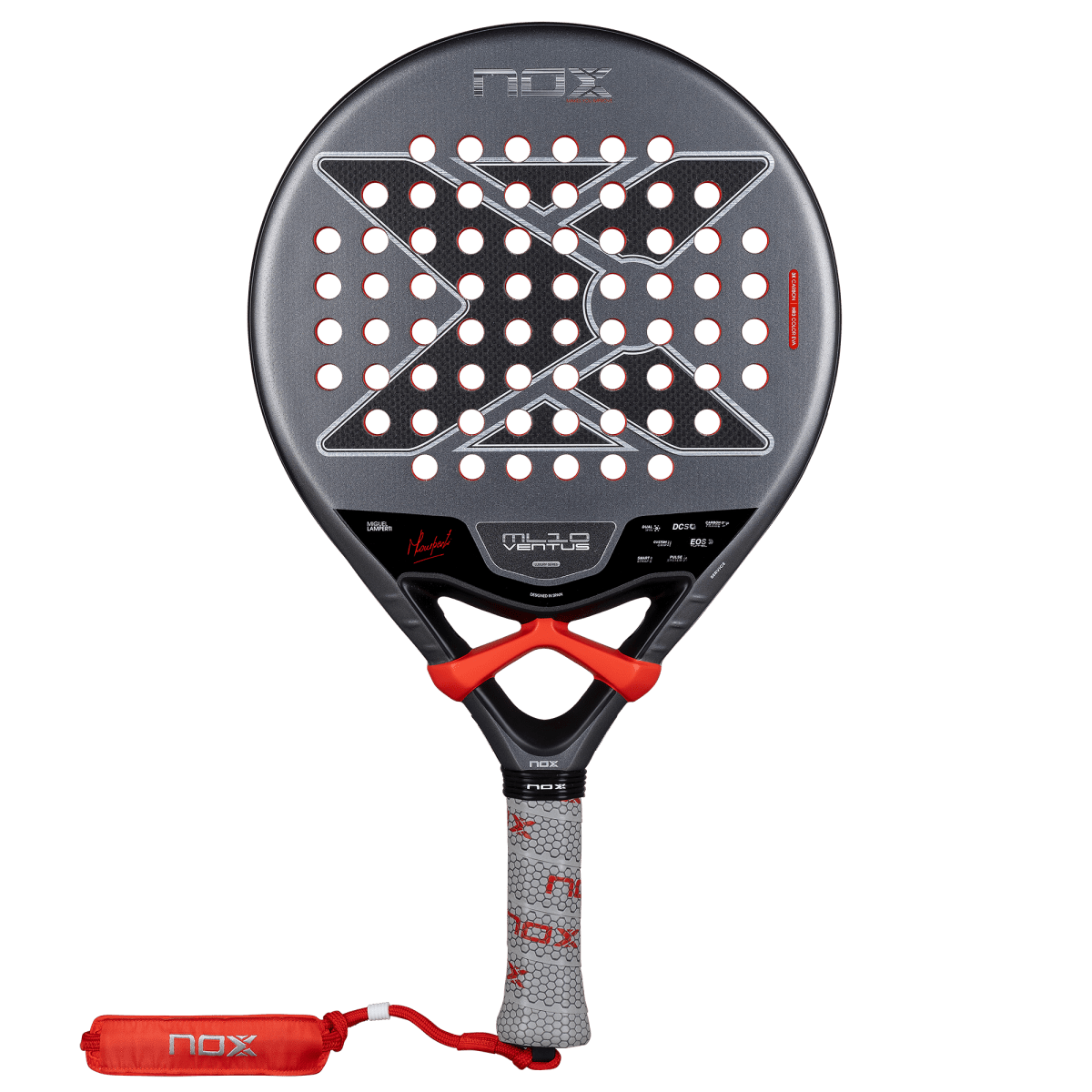




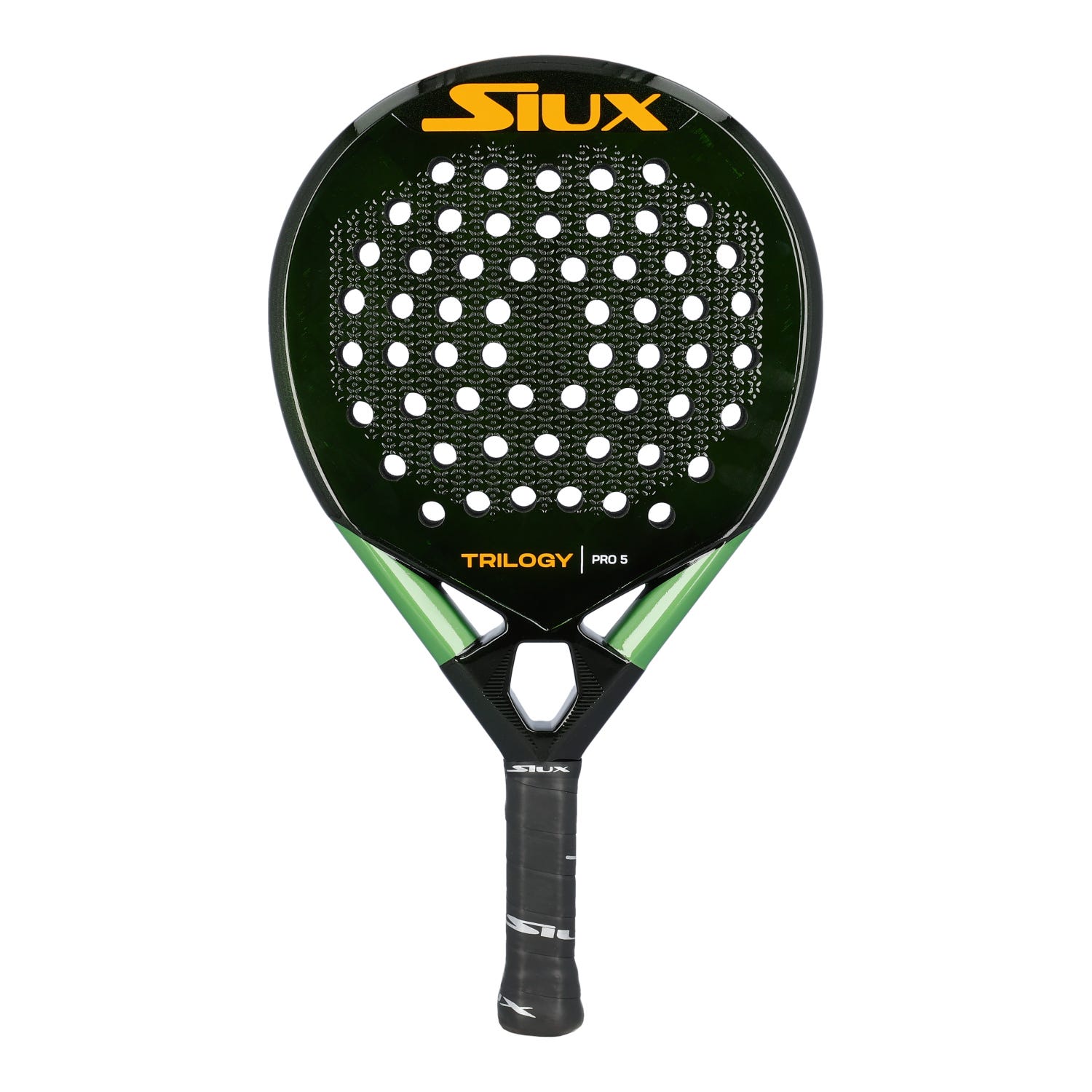




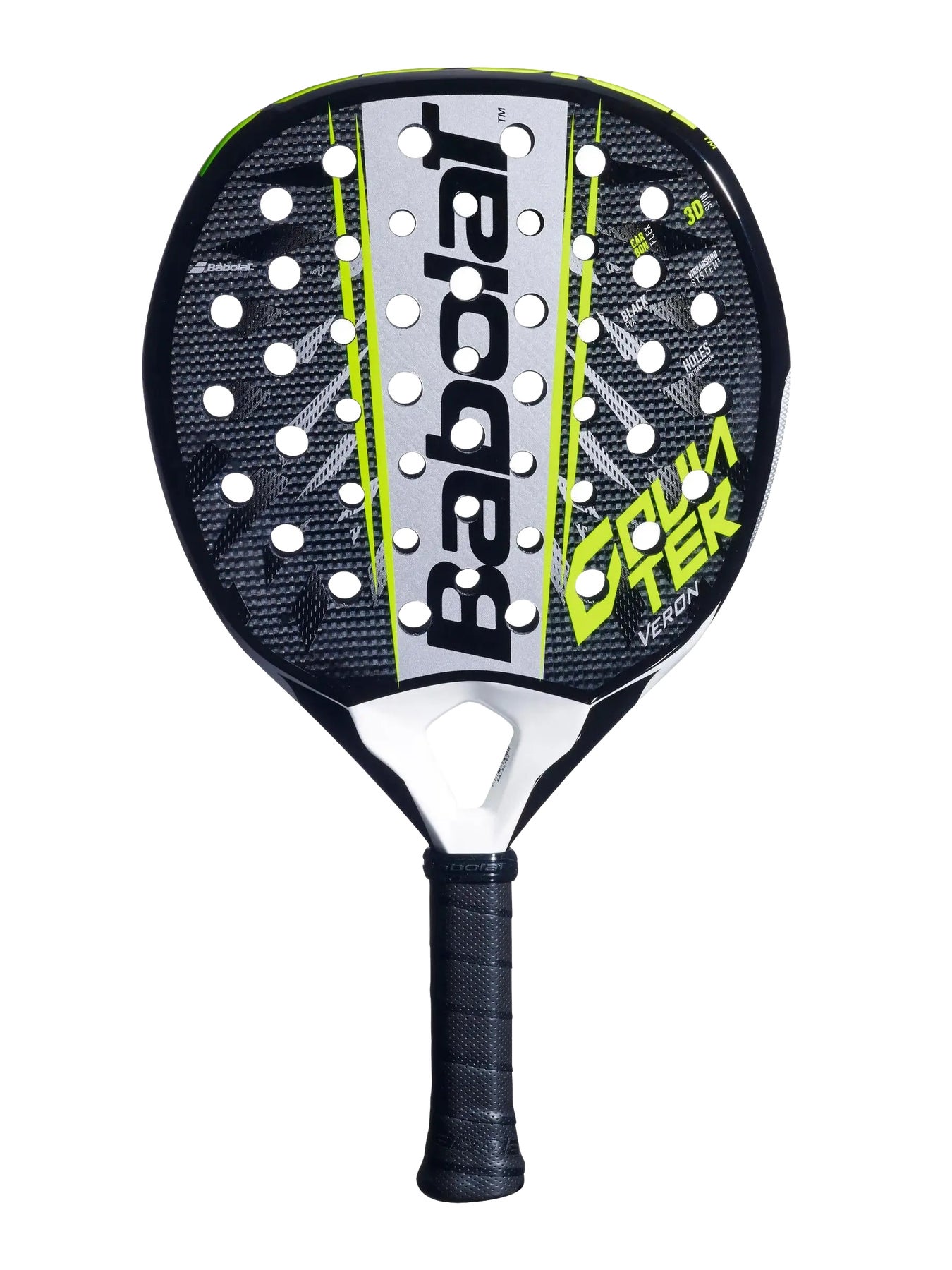



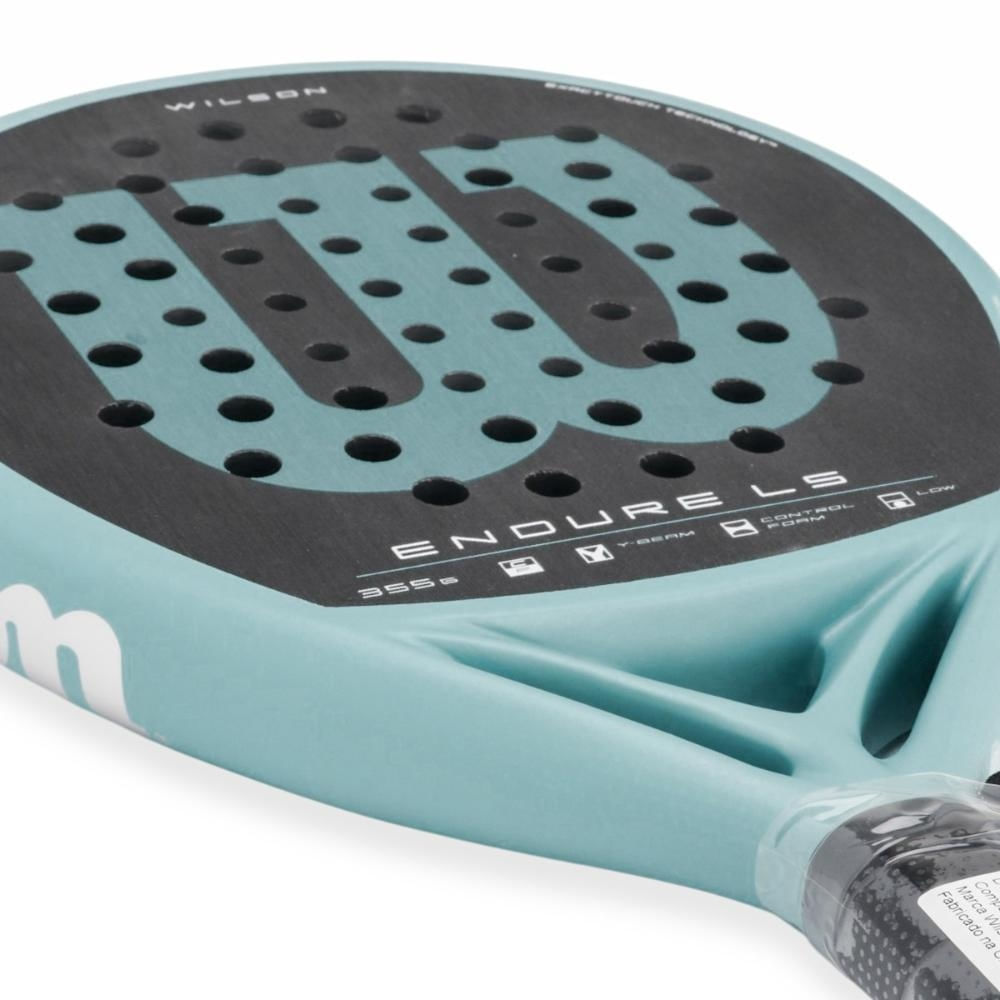




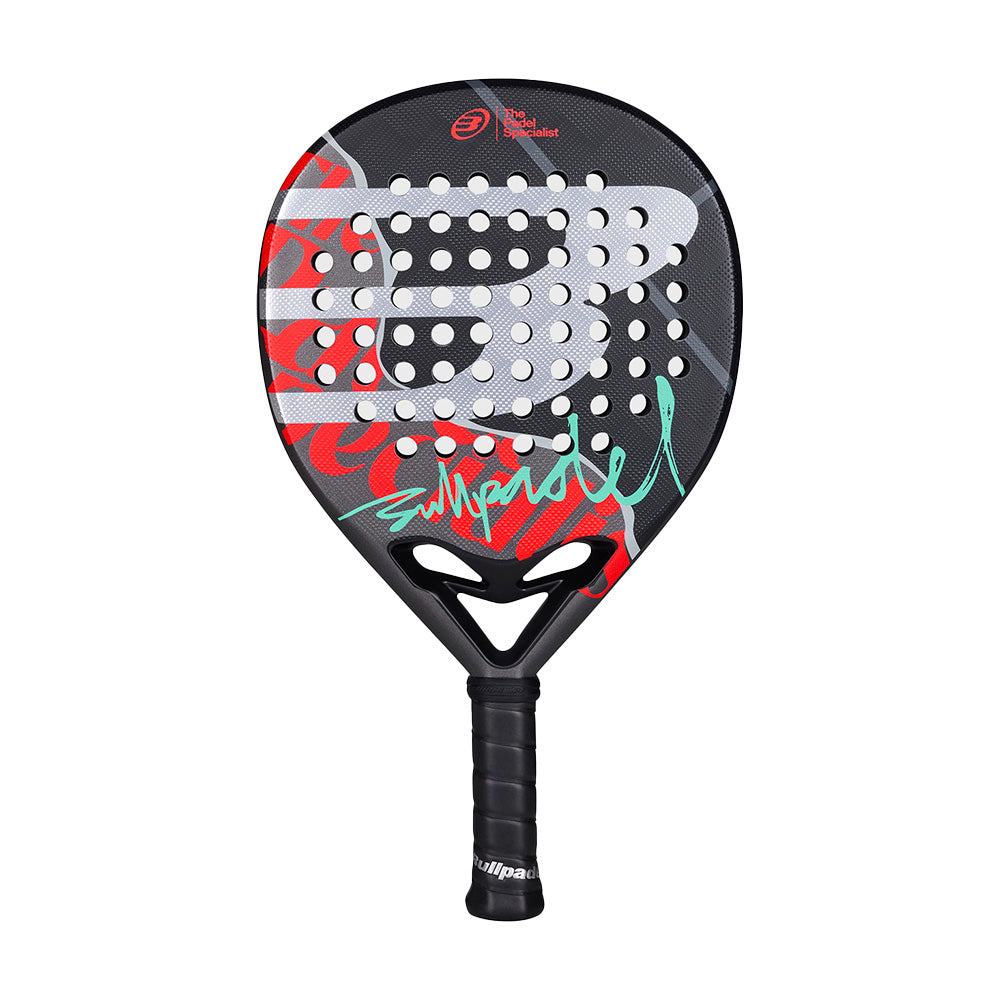


Do not confuse round with a beginner's racket. The Nox ML10 Ventus Control 3K and the Siux Trilogy Pro 5 are round carbon rackets aimed at advanced players. The Babolat Counter Veron 2.6, at about 365 g and with a Carbon Flex face, is made for players who counterattack from the back of the court and, even though it is round, has a high balance. The Royal Padel Whip Poly pairs the round shape with a soft polyethylene core, a combination designed for comfort.
Teardrop racket: the middle ground
The teardrop narrows near the throat of the racket and widens a little above the center. The sweet spot rises compared with the round, and the balance is medium.
It is the most versatile shape because it does not give up anything entirely:
- It defends well enough for right-side players.
- It has mass in the head to give weight to the bandeja and the víbora.
- It lets you attack without the diamond's penalty when the ball is struck off-center.
Teardrop padel rackets in the catalog
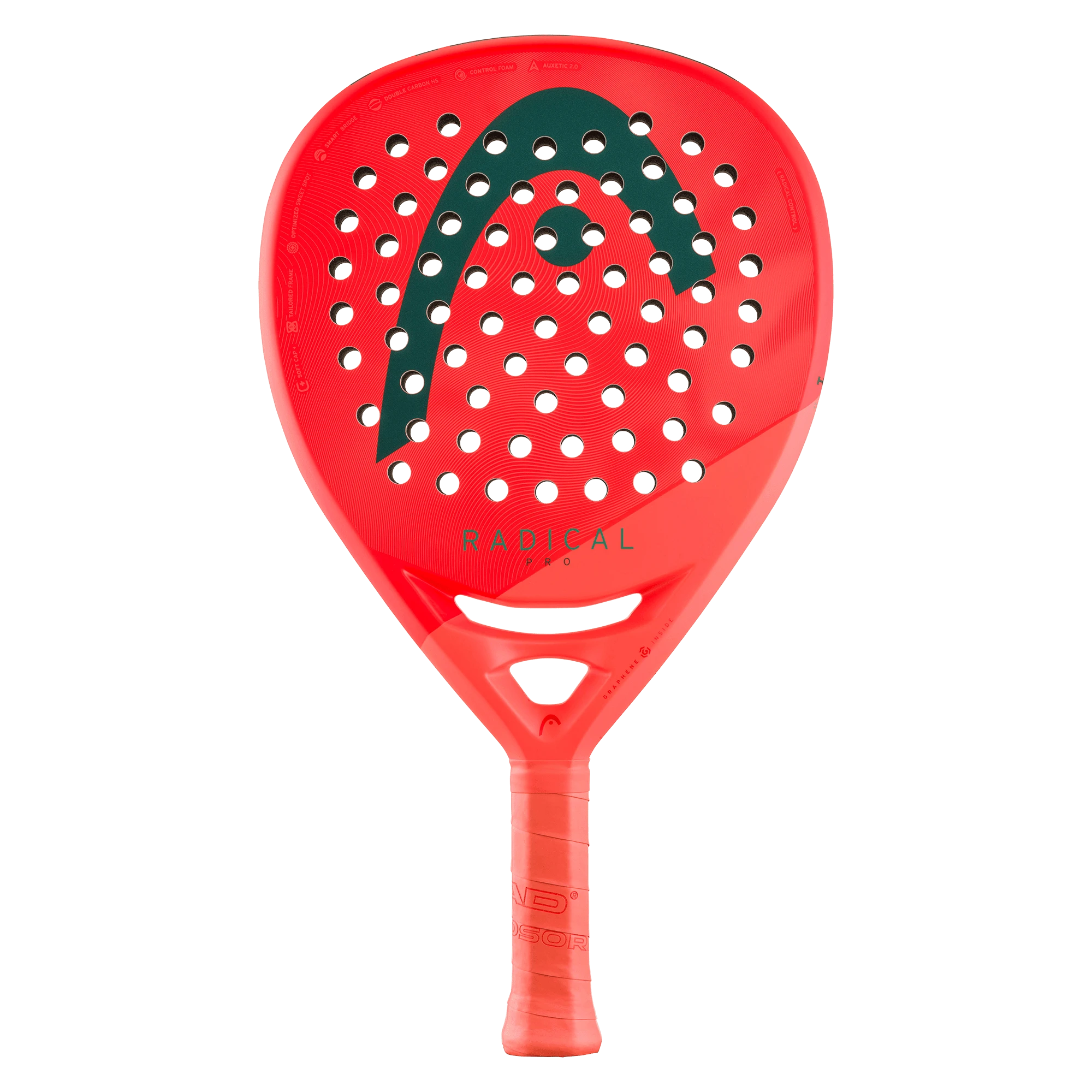

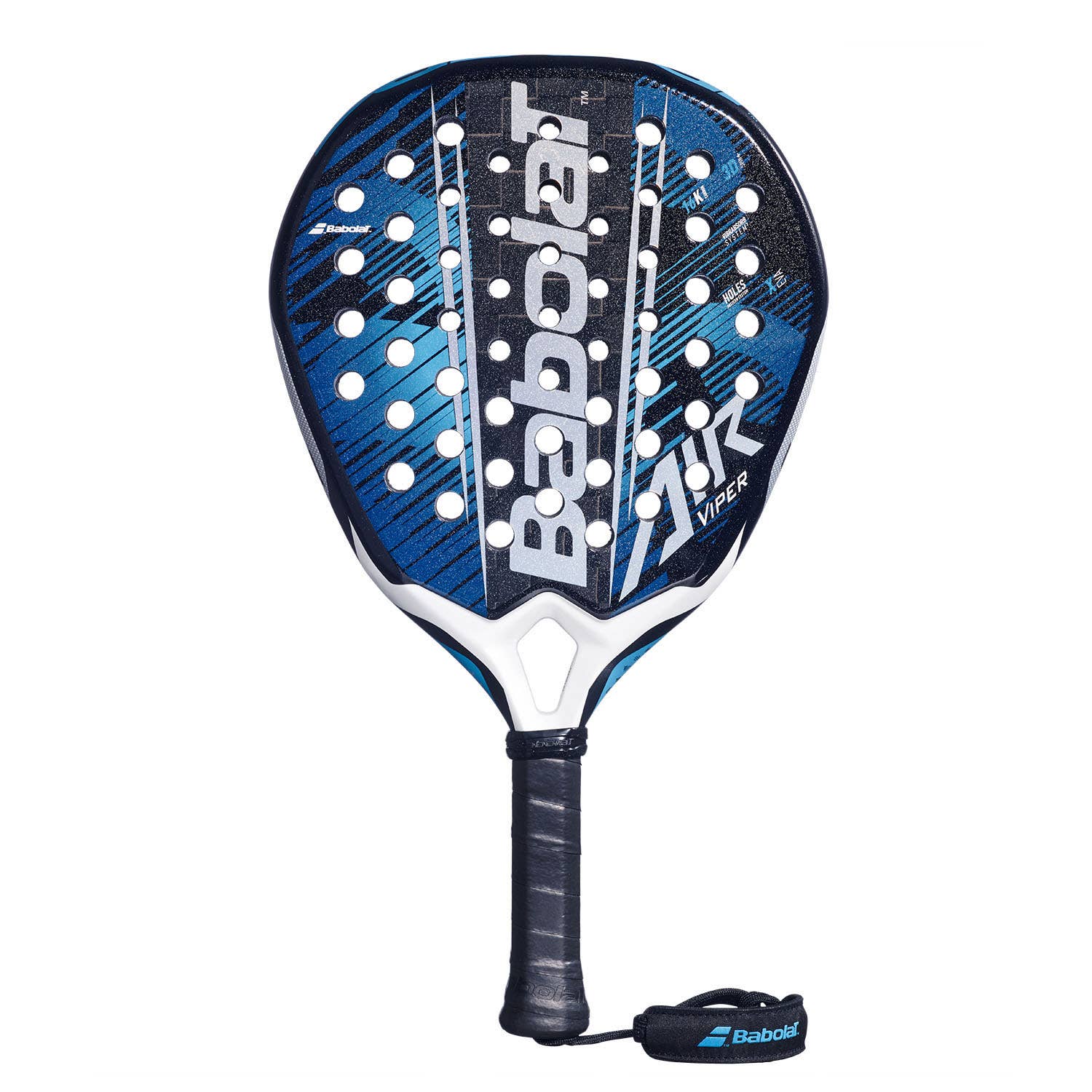
The Nox AT10 Genius 18K Alum 2025 is one of the teardrops with the most buyer reviews, with hundreds of ratings on Amazon and a high average. The Head Radical Pro 2026 shows that a teardrop does not need a medium balance: at 370 g with a low balance of 260 mm, it is a control teardrop. The Head Speed Motion 2025, at 355 g with a high balance, pulls the teardrop toward the offensive side. The Babolat Air Viper 2.6, at about 355 g with an even balance, is the light teardrop for players who want to attack without the weight of the diamonds.
Diamond racket: high sweet spot and weight in the head
A diamond is widest near the tip and has a more angular design. The sweet spot is high and usually smaller. The balance is high, which increases the head's inertia on overhead shots.
On court:
- Smash and víbora gain speed. The heavy head keeps accelerating after impact.
- A more aggressive bandeja. Even with little motion, the ball comes off heavy.
- Low defense gets harder. A ball that meets the lower part of the head comes off without power and with vibration.
- More fatigue. Moving weight at the tip for two hours takes a prepared shoulder and forearm.
Diamond padel rackets in the catalog
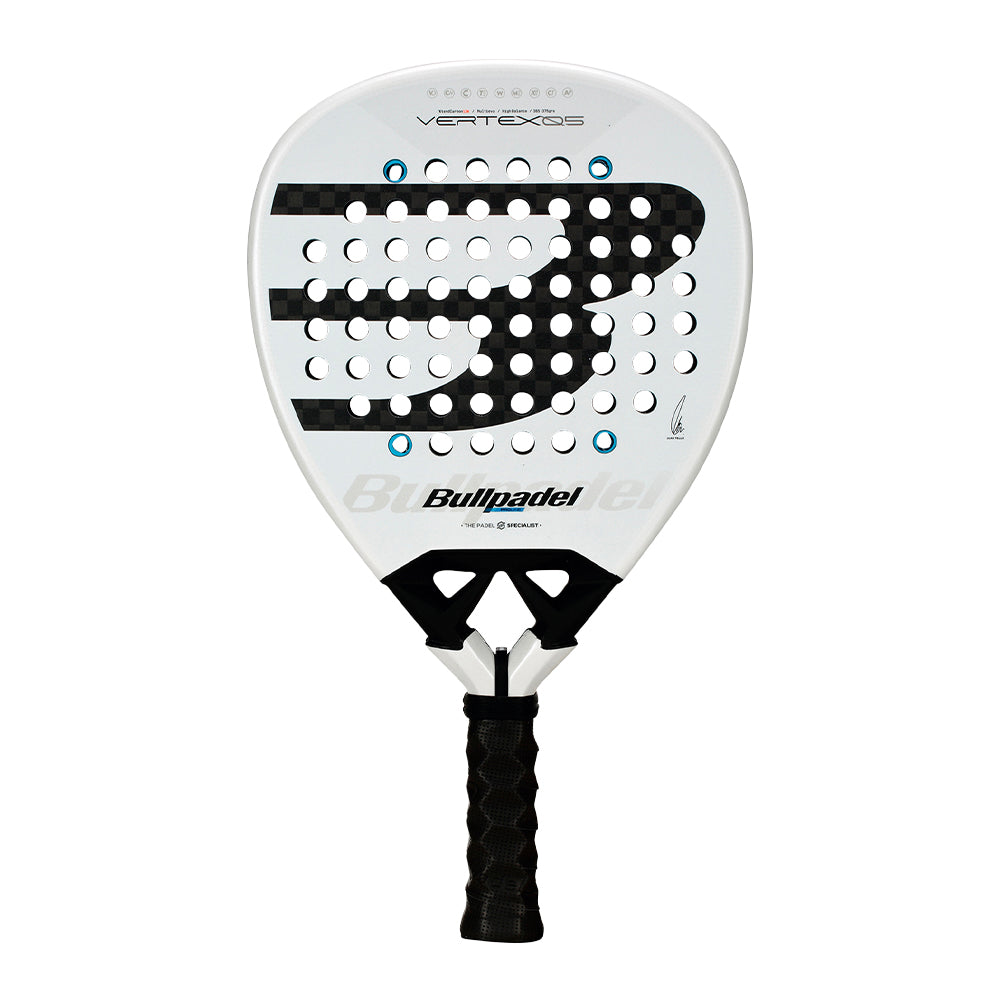
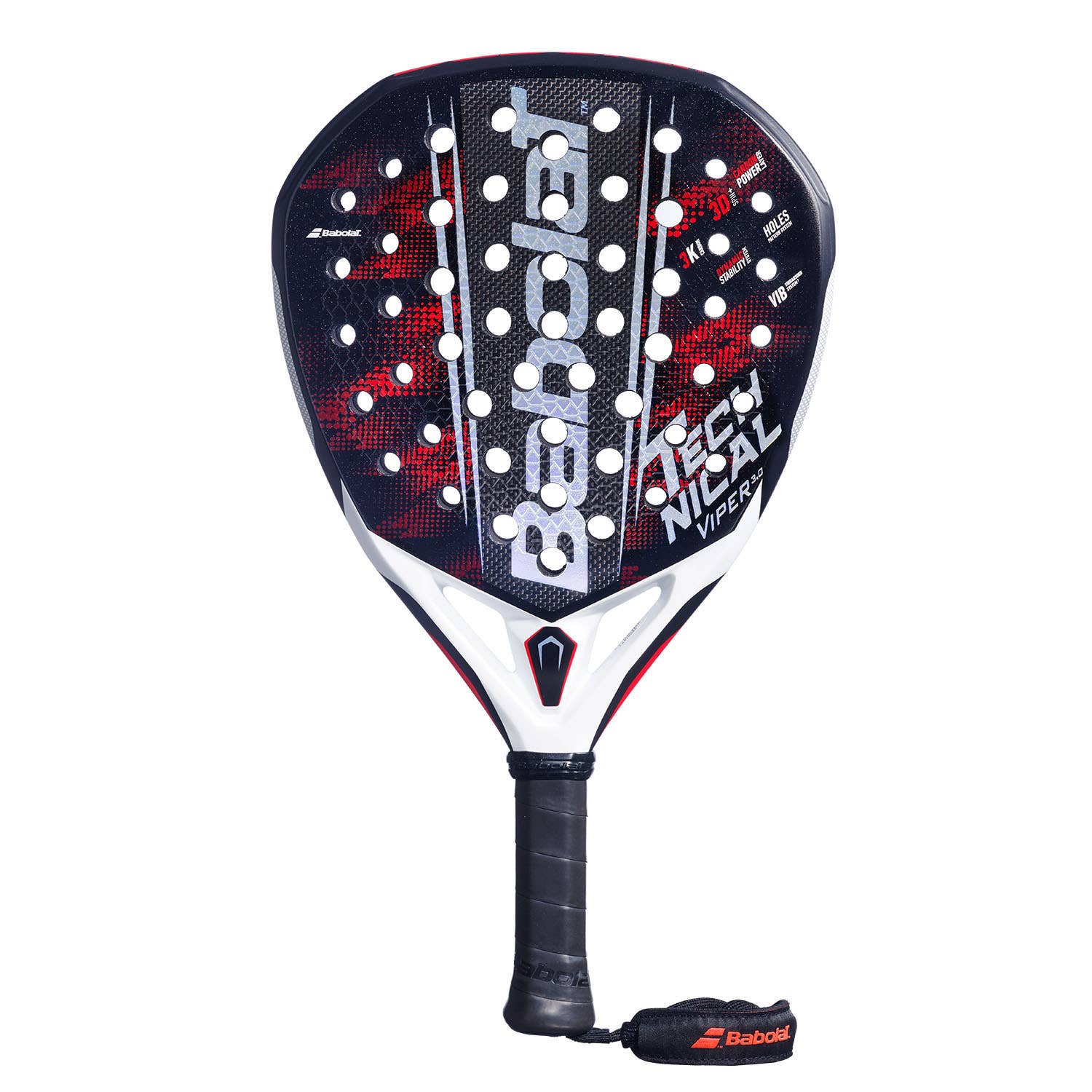
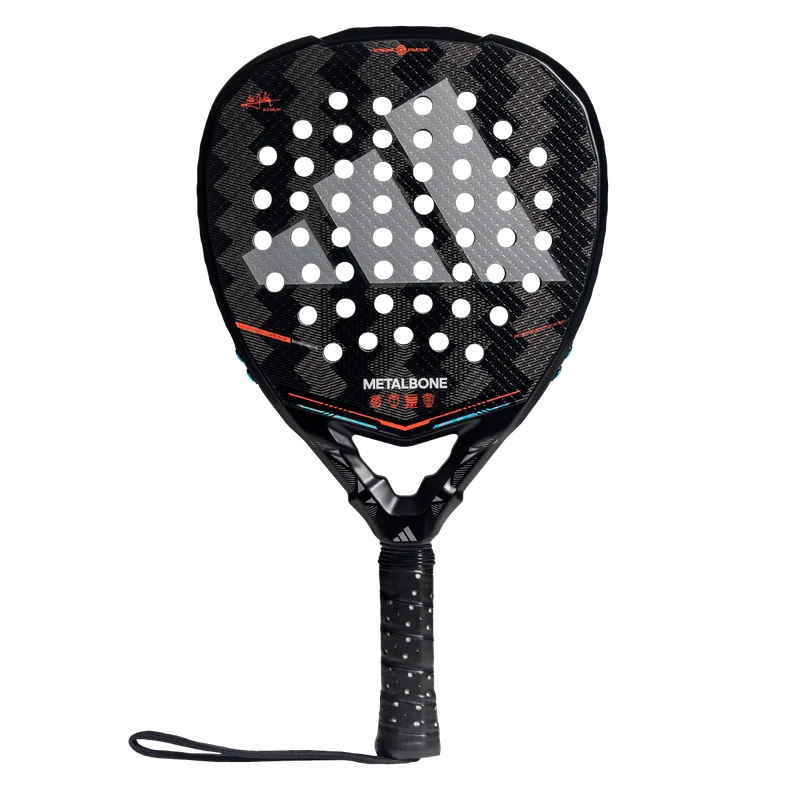
 Adidas Padel· Padel
Metalbone 3.5 2026 Adidas Padel
- Weight
- 357.5 g
- Shape
- Diamond
- Face
- 16K aluminized carbon
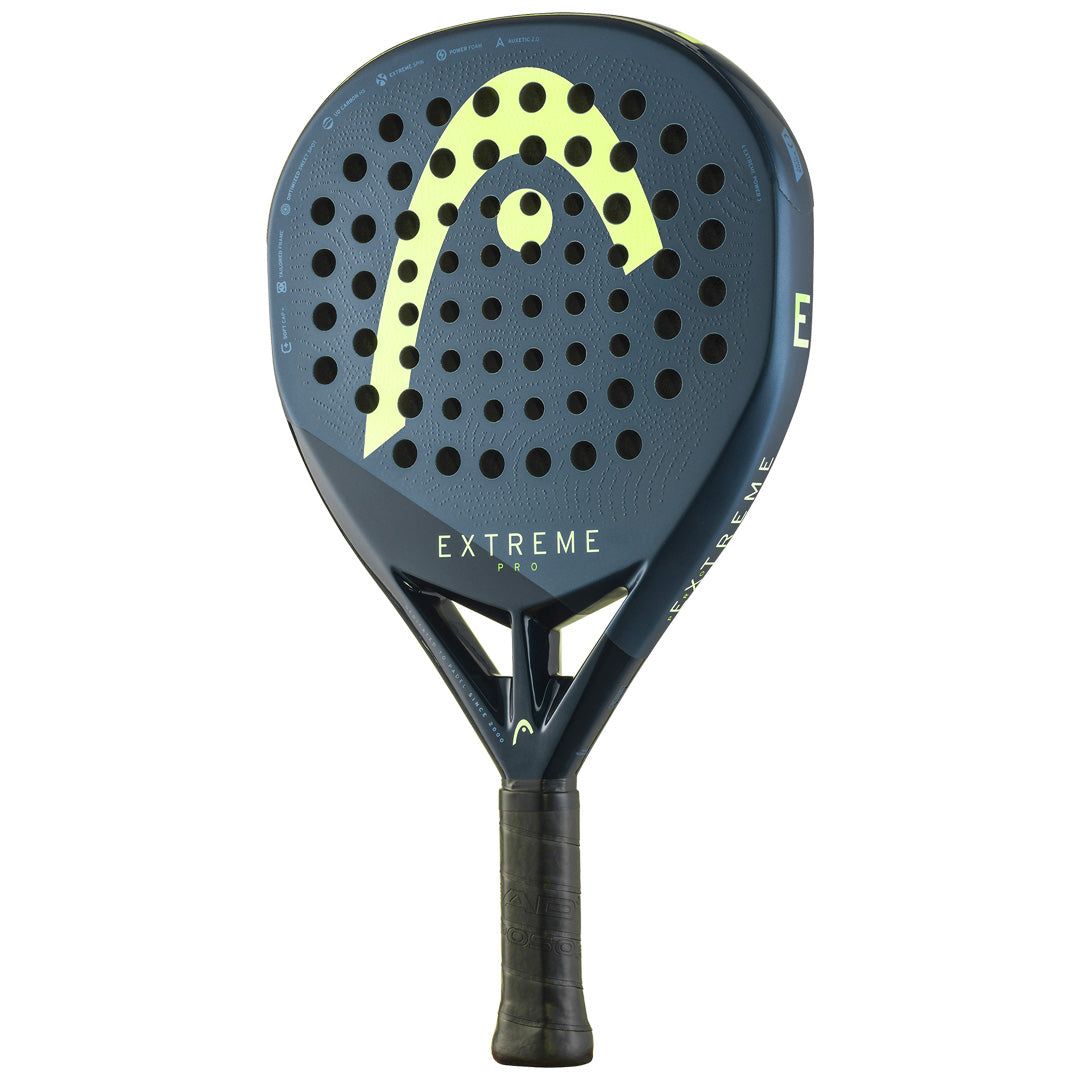

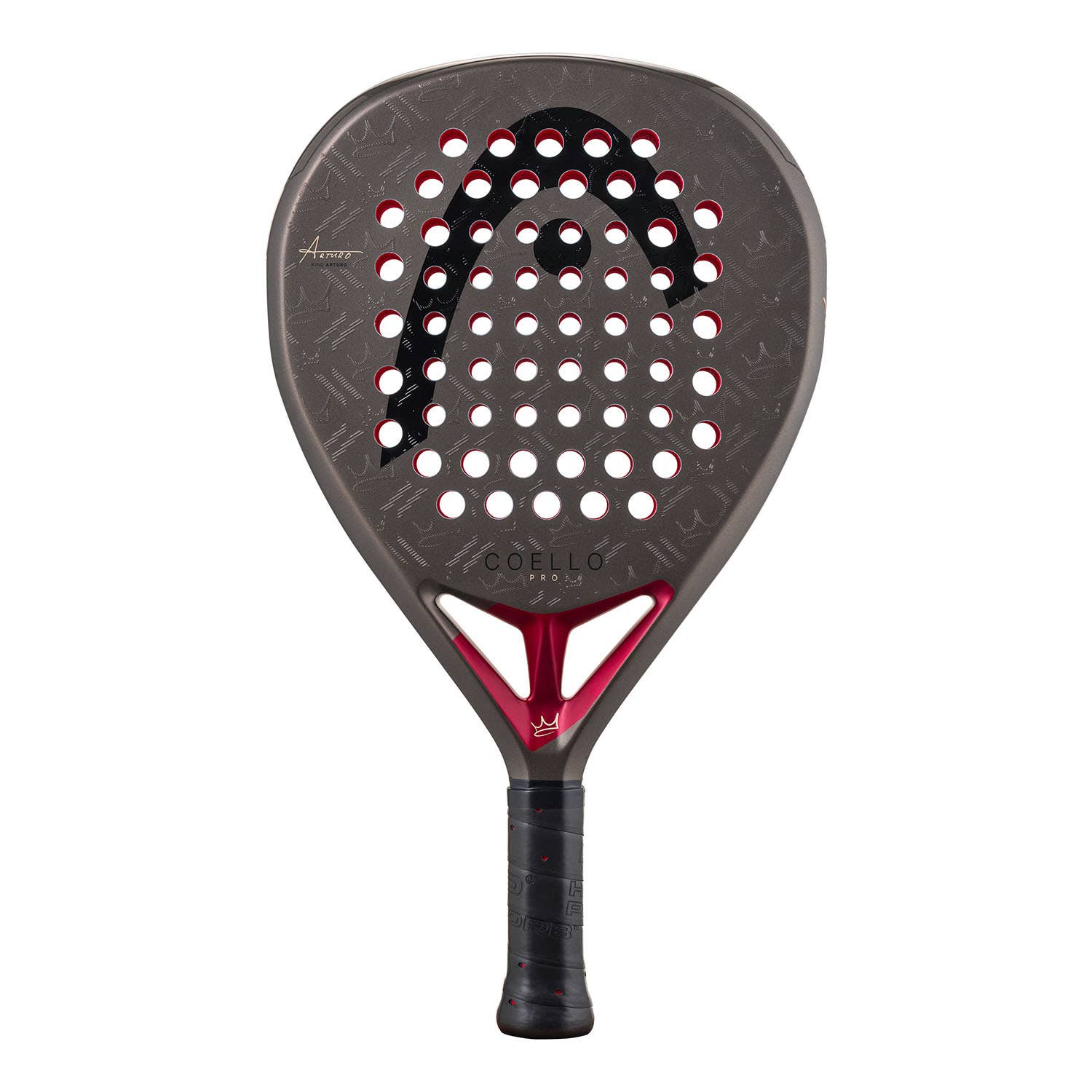
The Head Coello Pro 2026, at 370 g with a high balance, is the extreme of the shape. The Adidas Metalbone 3.5 is a more versatile diamond, with a Soft Performance core and adjustable weight. The Wilson Defy V1 combines a diamond shape and head-weighted balance with a Power Foam core, which feels softer than that of hard diamonds.
Hybrids: what brands call them
Hybrid is not an official category. It is the name brands give to molds that mix characteristics, almost always between the teardrop and the diamond. The goal is to keep the diamond's high area with a more restrained balance.
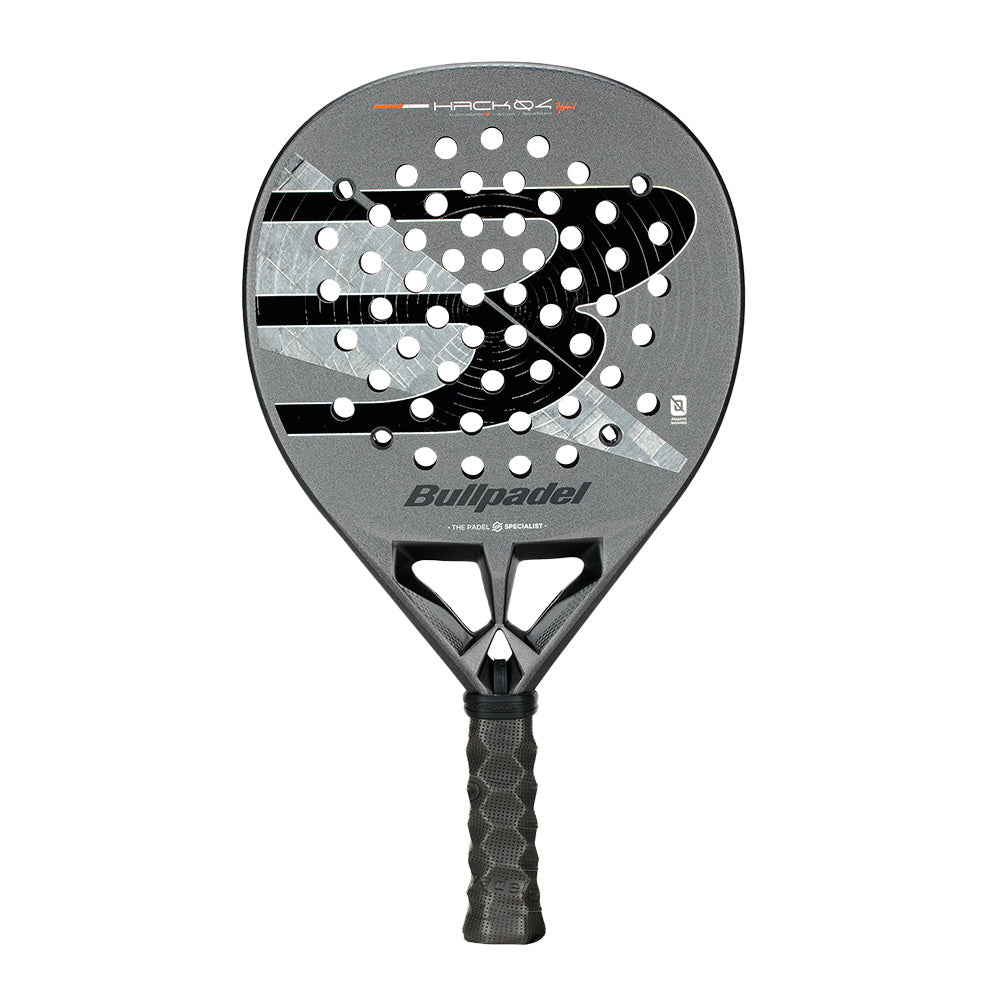
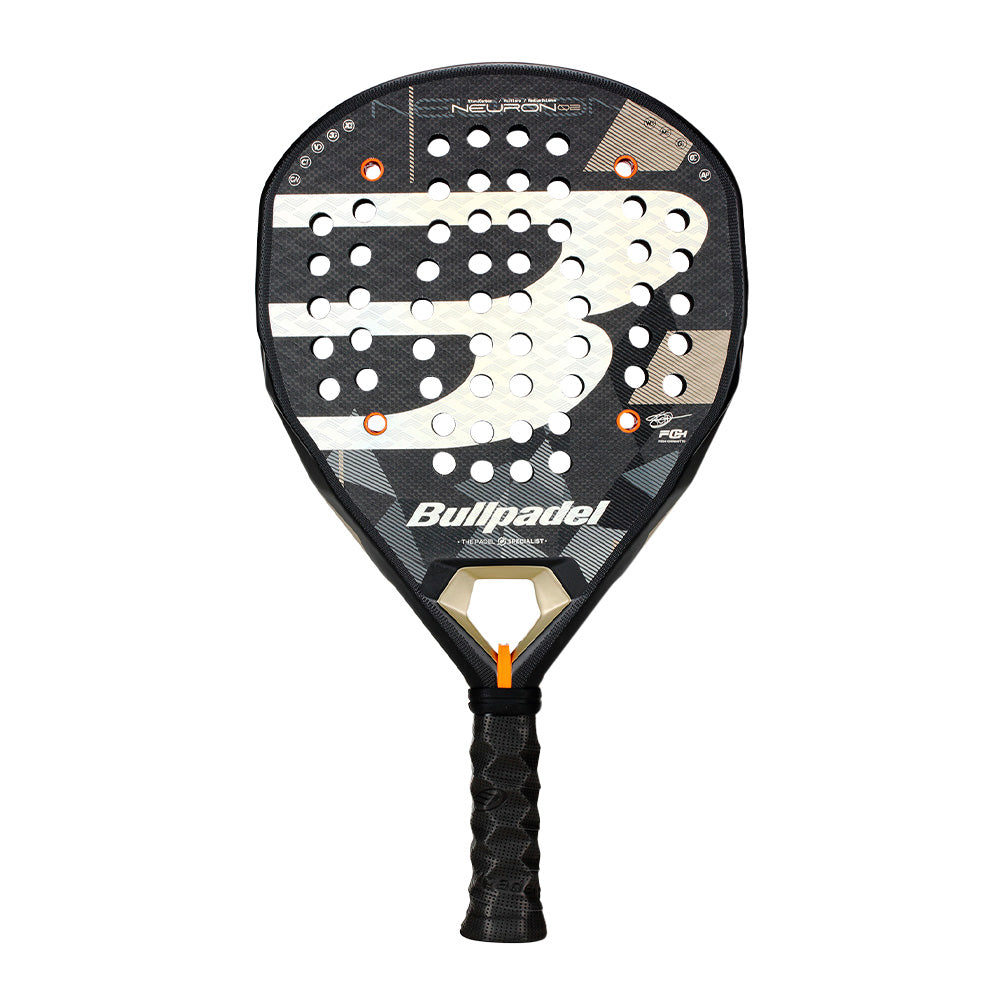
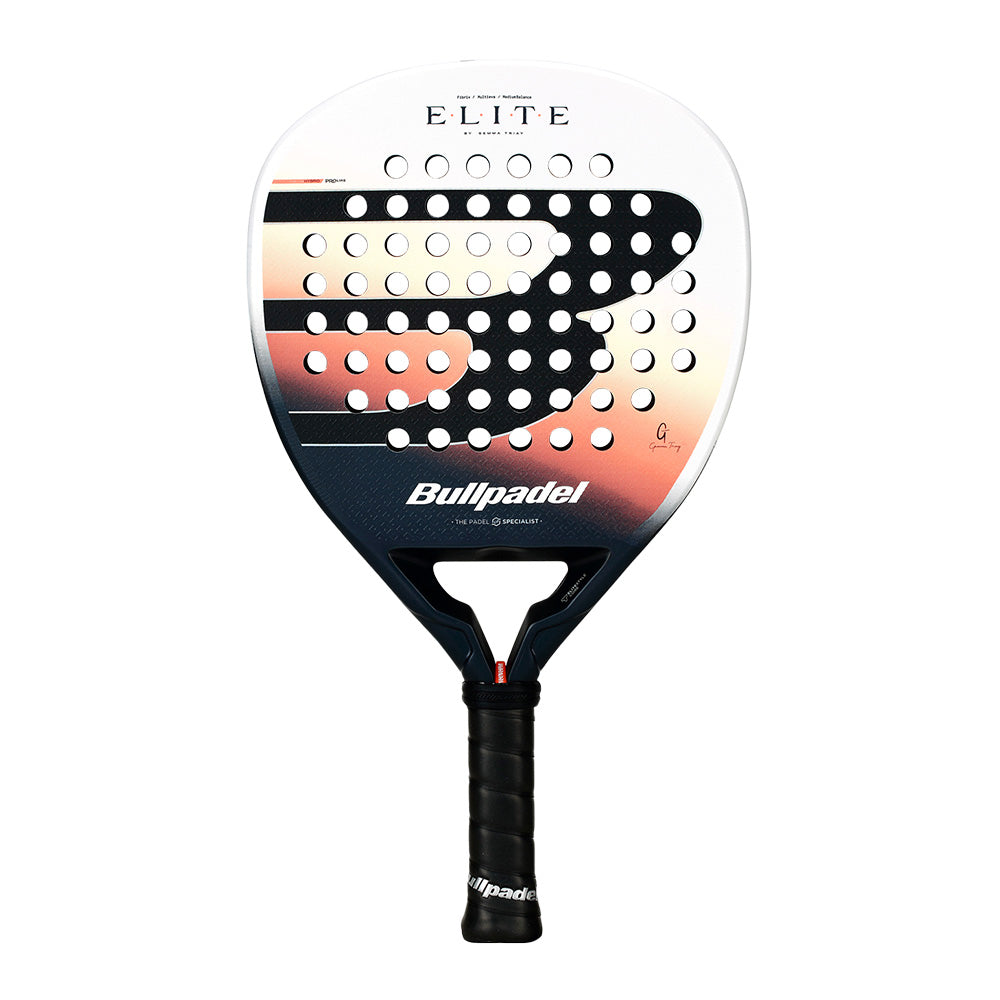
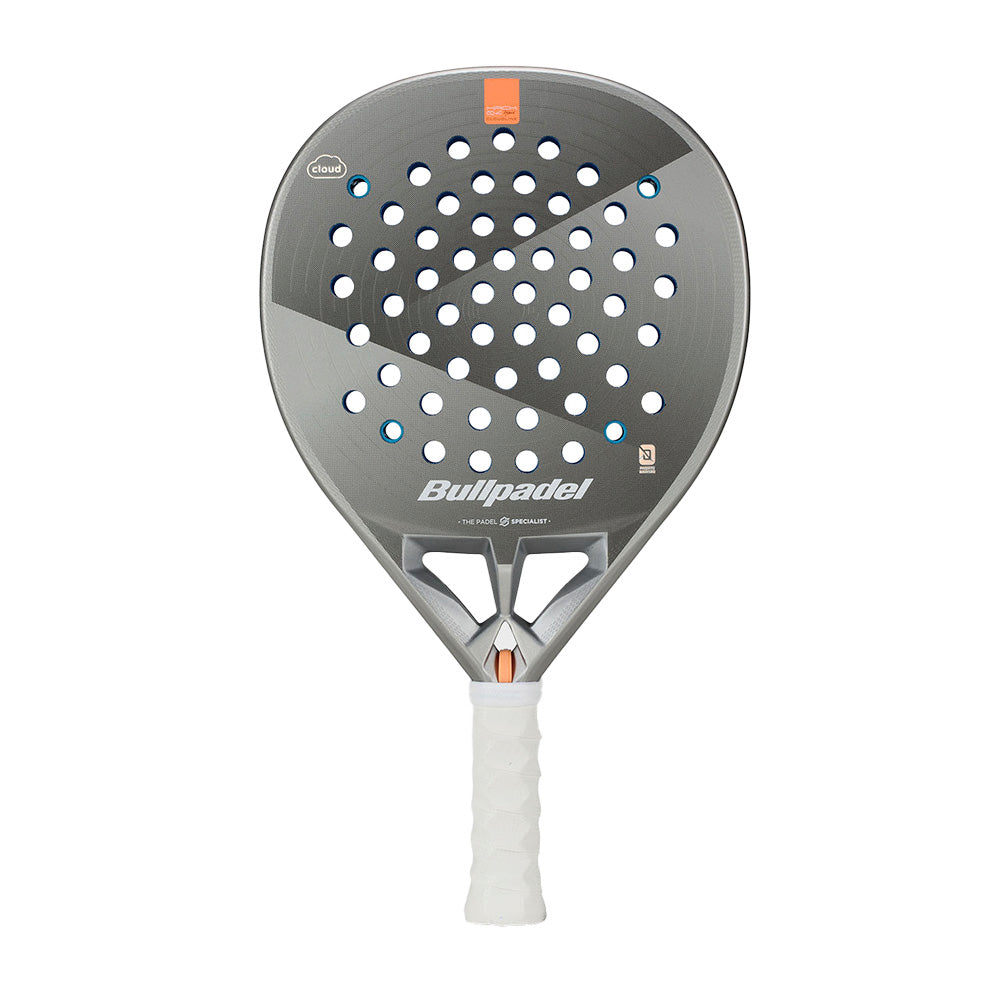
Hybrid padel rackets in the catalog
- Weight
- 370 g
- Shape
- Hybrid
- Face
- Elastic Fiber
The Bullpadel Hack 04 Hybrid is the clearest example: the original Hack 04 is a diamond with a balance near 26.4 cm; the Hybrid version drops to near 25 cm. The Bullpadel Neuron 02, which the brand also classifies as a hybrid, has a balance near 25.5 cm and a large head of 525 cm². The Bullpadel Elite Woman is also a hybrid, according to the brand itself.
Because each brand uses the term in its own way, always check the balance on the spec sheet. It is the number that says the most about how a hybrid behaves.
The same family in three shapes
The best way to see the effect of shape is to compare rackets with the same materials and different molds. Bullpadel's Ionic 2026 line does exactly that: all three use a Glaphite face, MultiEva core, CarbonTube frame and 38 mm thickness.
Bullpadel Ionic 2026: round, hybrid and diamond with the same materials
3 racquets: swipe sideways to see them all1–2 of 3 →
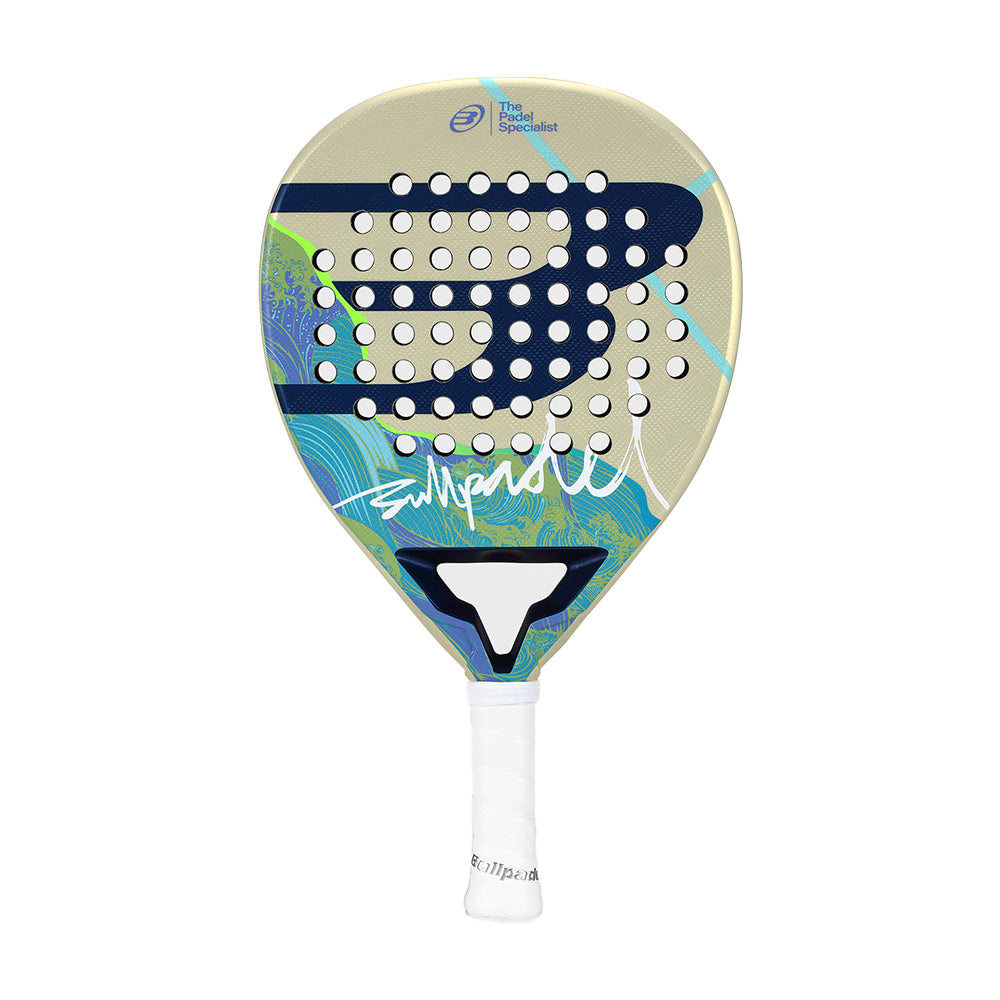
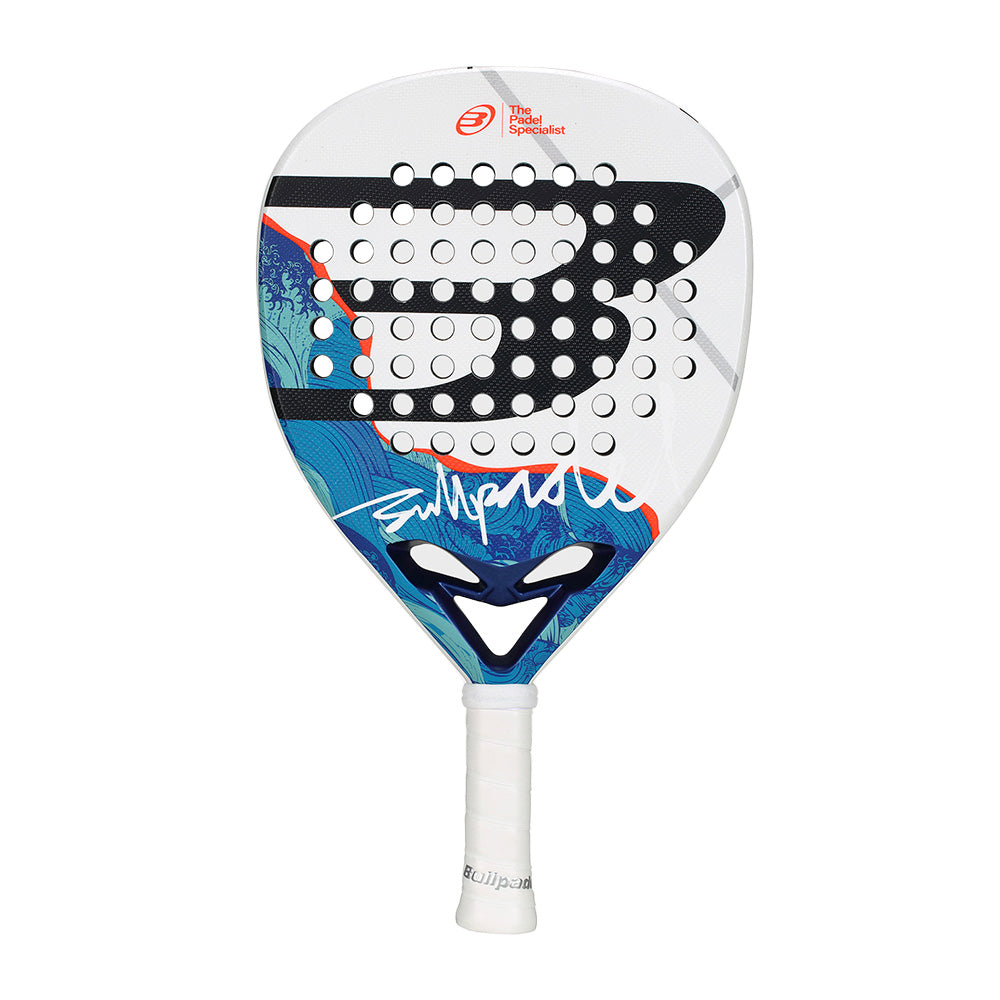
Highlighted: what differs between the racquets. In bold: the best value in the row.
- Ionic Control: round, low balance, 365 to 375 g. Defense and consistency.
- Ionic Light: hybrid, medium balance, 350 to 360 g. A transition between defense and attack with less weight.
- Ionic Power: diamond, high balance, 365 to 375 g. Acceleration on overhead shots.
Nox and Adidas do the same in their top lines. The Nox AT10 Genius 18K Alum comes in a teardrop and in the Attack version, a diamond with a longer handle. The Adidas Metalbone has the round CTRL version, with low balance, alongside the diamond Metalbone.
Shape is not everything: what can flip the rule
Three factors change a racket's behavior as much as shape does:
Actual balance. The Head Radical Pro is a teardrop with a low balance; the Head Speed Motion is a teardrop with a high balance. Both have the same shape, but the weight sits in very different places.
Head area. Shape does not define size. The hybrid Bullpadel Neuron 02 has a 525 cm² head, well above the teardrop Head Radical, at 461 cm². The Bullpadel XPLO Comfort, with a geometric mold, reaches 535 cm². A larger head widens the usable area, even in less forgiving shapes.
Core and face. A fiberglass diamond, such as the Head Coello Team, can be easier to play on slow balls than a round racket with a rigid carbon face and hard EVA. The shape decides where the sweet spot is; the materials decide how much the racket helps when you hit without acceleration.
The guide how to choose a padel racket explains weight, balance, core and face in detail.
Which shape for each playing situation
| Situation | Shape that helps most | Why |
|---|---|---|
| Low wall exit | Round | Central sweet spot and light head |
| Fast volley exchanges | Round or light teardrop | Less weight to move |
| Control bandeja | Teardrop | Enough mass with precision |
| Víbora and aggressive bandeja | High-balance teardrop or diamond | Inertia in the head |
| Smash out of the court | Diamond | High sweet spot and weight at the tip |
| Counterattack from the back of the court | Round or hybrid | Forgiveness with some weight |
How to transition between shapes
Changing shapes takes a few technique adjustments. Knowing what to expect keeps you from giving up on a good racket in the first sessions.
From round to teardrop. The sweet spot rises a few centimeters. In the first matches, it is common to catch the defensive ball a little below the ideal spot. The fix is simple: bend your knees more on the wall exit to meet the ball at the right height on the racket. In return, the bandeja gains weight almost immediately.
From teardrop to diamond. The biggest change is in reaction time. With the weight at the tip, the fast volley comes late if you do not prepare earlier. Shorten your preparation at the net and hit farther in front of your body. On the smash, the ball will come off faster, so directional control takes a few weeks.
From diamond to round. Players going back to a round racket, because of pain or a change of side, usually find the lack of overhead inertia strange. The bandeja needs a little more arm, but defense and wall exits improve quickly.
In any case, give the new racket at least three or four sessions before judging it. If possible, change shape while keeping the same family and the same core, as in the Ionic line, to isolate the effect of the mold.
How to recognize the shape just by looking
Not every store lists the shape. To identify it:
- Stand the racket upright and look at where the head is widest.
- If the maximum width is in the middle and the head is almost a circle, it is round.
- If the top is wider and the bottom narrows toward the handle, forming a drop, it is teardrop.
- If the sides rise straight and the head is wide and angular near the tip, it is diamond.
To confirm, find the spec sheet in the padel racket catalog or in the comparison tool, which show the shape and balance of each model.
Frequently asked questions
What is the difference between a round, teardrop and diamond padel racket?
The round has a central sweet spot and low balance, for control and forgiveness. The teardrop has a slightly higher sweet spot and medium balance, for players who attack and defend. The diamond has a high sweet spot and head-weighted balance, for power on overhead shots.
Which padel racket shape is best for beginners?
The round. The wide, central sweet spot forgives off-center hits and helps with wall exits, which are the most common ball at the start. Teardrops and diamonds make more sense once your overhead technique is solid.
Are diamond padel rackets only for professionals?
No. There are diamonds with a fiberglass face, soft core and moderate weight, such as the Bullpadel Ionic Power and the Head Coello Team, made for intermediates. The rigid carbon versions with very high balance, such as the Head Coello Pro, are for advanced players.
What is a hybrid padel racket?
It is the name brands give to molds between teardrop and diamond, with a high area and a more restrained balance. It is not an official category, so behavior varies a lot between models. Check the balance on the spec sheet to see how much it leans toward attack.
Which padel racket shape is best for left-side players?
Left-side players usually finish more points, so high-balance teardrops, hybrids and diamonds work better. Level decides the choice: carbon diamond for advanced players, a hybrid or softer diamond for intermediates.
Does a round shape have less power?
In general, yes, because the low balance takes inertia out of the head. But a round carbon racket with a firm core, such as the Nox VK10 Ventus Control 12K, tends to return more ball when the stroke is accelerated.
Verdict
To see the shapes applied to each level, check out the best padel rackets of 2026, the selection for beginners and the selection for intermediates. If you prefer a brand, the Bullpadel padel catalog shows all the families, each with its shapes.
Where to buy the racquets in this guide
- ML10 Ventus Control 3K 2026 NOX367.5 g · Round · 3K carbonSee pricePadelGo
- Trilogy Pro 5 2025 Siux365 g · Round · CarbonSee priceTenniszon
- Counter Veron 2.6 2026 Babolat365 g · Round · Carbon Flex (carbon and fiberglass)See pricePadelGo
- Endure LS V1 Wilson355 g · Round · Fiberglass and carbon (Comfort Flex)See priceAmazon
- Ionic Control 2026 Bullpadel370 g · Round · GlaphiteSee pricePadel Nation
- Radical Pro 2026 HEAD370 g · Teardrop · 3K carbonSee priceAmazon
- Neuron 02 2026 Bullpadel370 g · Hybrid · X-Tend Carbon 3KSee priceAmazon
- Coello Pro 2026 HEAD370 g · Diamond · Hybrid carbonSee priceAmazon
- Vertex 05 2026 Bullpadel370 g · Diamond · X-Tend Carbon 12KSee priceAmazon
- Technical Viper 3.0 2026 Babolat370 g · Diamond · 3K carbonSee pricePadelGo
- Metalbone 3.5 2026 Adidas Padel357.5 g · Diamond · 16K aluminized carbonSee pricePadelGo
- Extreme Pro 2025 HEAD370 g · Diamond · UD carbonSee priceAmazon
- Hack 04 Hybrid 2026 Bullpadel370 g · Hybrid · A-18K aluminized carbonSee priceAmazon
- Air Viper 2.6 2026 Babolat355 g · Teardrop · 16K carbonSee pricePadelGo
- Elite Woman 2026 Bullpadel355 g · Hybrid · FibrixSee priceAmazon
- Hack 04 Hybrid Cloud 2026 Bullpadel370 g · Hybrid · Elastic FiberSee pricePadel Nation
The prices above are checked automatically at each store and may have changed since the last check. The price that counts is the one shown on the store's website at checkout. We may earn a commission on purchases made through store links, at no extra cost to you.