


 Brasil
 United States
 United Kingdom
 Australia
 Netherlands
 France
 España
 Italia
 السعودية
5 Power Padel Rackets for Advanced Players: Smash and Por 3
Five attacking diamonds for players who already close points from above, with the specs that explain where the power comes from and the signs it is not for you yet.
Updated on 2026-10-07
On this page
A power padel racket for advanced players combines four things: a diamond shape, a high balance, a high-density core and a stiff carbon face. That combination makes the ball come off heavy on the smash, the vibora and the por 3, but it only works for those who generate arm speed; for everyone else, it punishes more than it helps. Below, the specs that define an attacking racket and the 5 best in the catalog for those who close points from above.
The specs of a power padel racket
Before the ranking, the reference chart. If a racket departs from two or more items, it can be good, but it is not a pure power racket.
| Spec item | Power racket | What it does on court |
|---|---|---|
| Shape | Diamond or a geometric mold wide at the top | Moves the sweet spot up, where you meet the ball on the smash |
| Balance | High: close to 26 cm or more, or 265 to 272 mm on brands that measure in millimeters | More inertia in the head, which keeps accelerating after impact |
| Weight | 360 to 375 g | More mass to push the ball and less twisting on a hard volley |
| Core | High-density EVA, hard or firm foam | Returns energy quickly on an accelerated stroke and keeps the ball on line |
| Face | Carbon, often 12K, 18K, 24K or TeXtreme | Stiffness: the face deforms less and the response is more direct |
| Surface | Rough or 3D | Friction for the spin that makes the por 3 and the vibora work |
The guide to how to choose a padel racket explains each item on its own. Here the focus is on how they add up in attacking play.
5 power padel rackets for advanced players
- 1
- Weight
- 370 g
- Shape
- Diamond
- Face
- X-Tend Carbon 12K
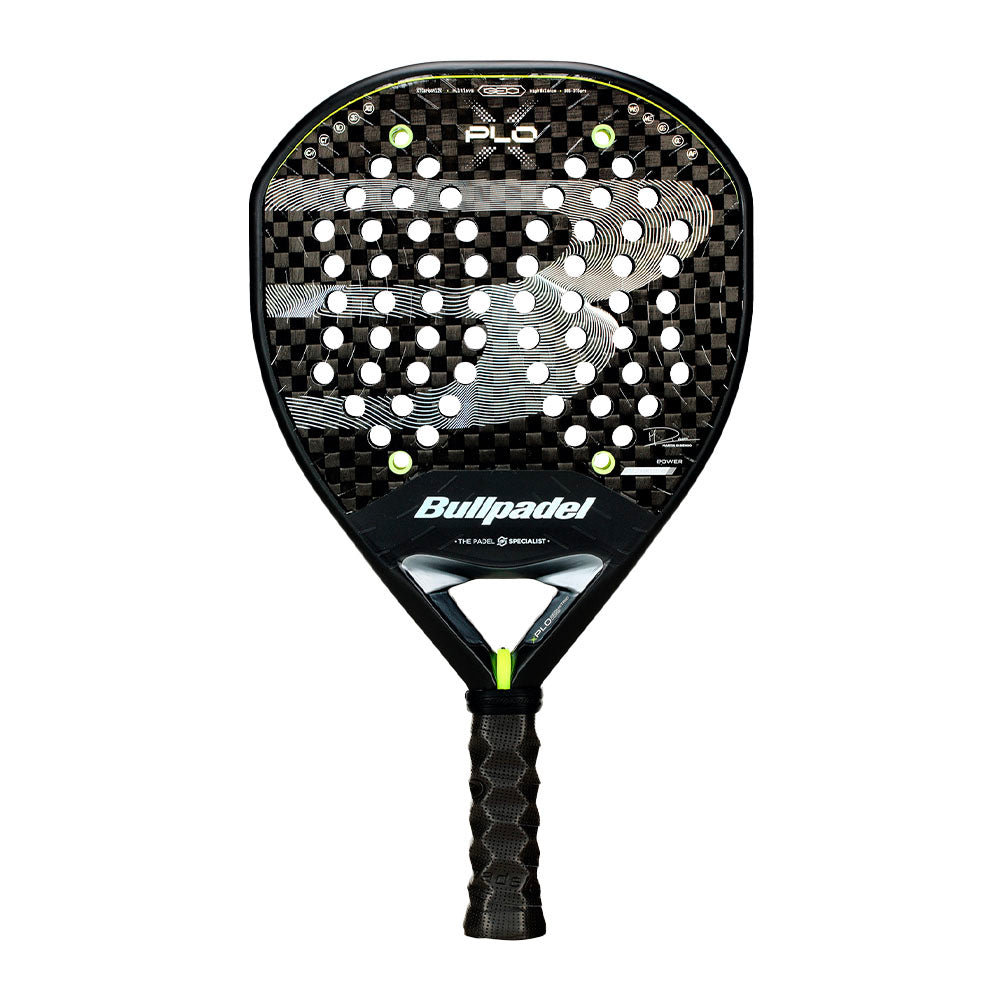
Martín Di Nenno's racket has a geometric mold that widens the head at the 2 and 10 o'clock positions, a 535 cm² area and a balance close to 26.5 cm. X-Tend Carbon 12K face, MultiEva core, CarbonTube frame and 365 to 375 g. It is the one that concentrates the most mass and area at the top, which is why it leads for those who decide the point on the smash.
- 2
- Weight
- 365 g
- Shape
- Diamond
- Face
- 24K carbon
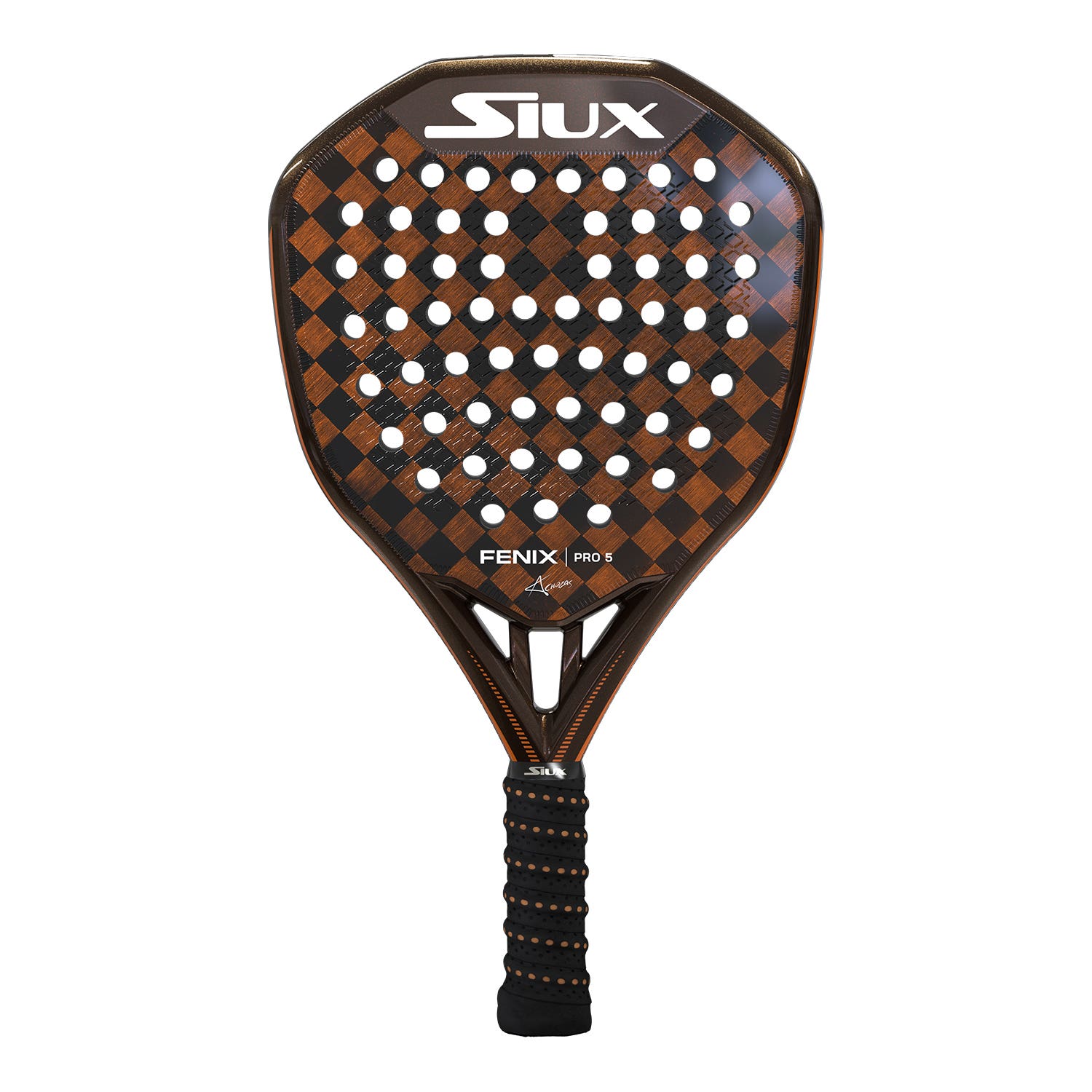
High-balance diamond with 24K carbon faces and a Hard EVA core, a weight between 355 and 375 g and a rough 3D finish. It is the driest of the group: it returns a lot of energy on a fast stroke and almost none on a slow one. For those who spend the match at the net looking for the finish.
- 3
- Weight
- 360 g
- Shape
- Diamond
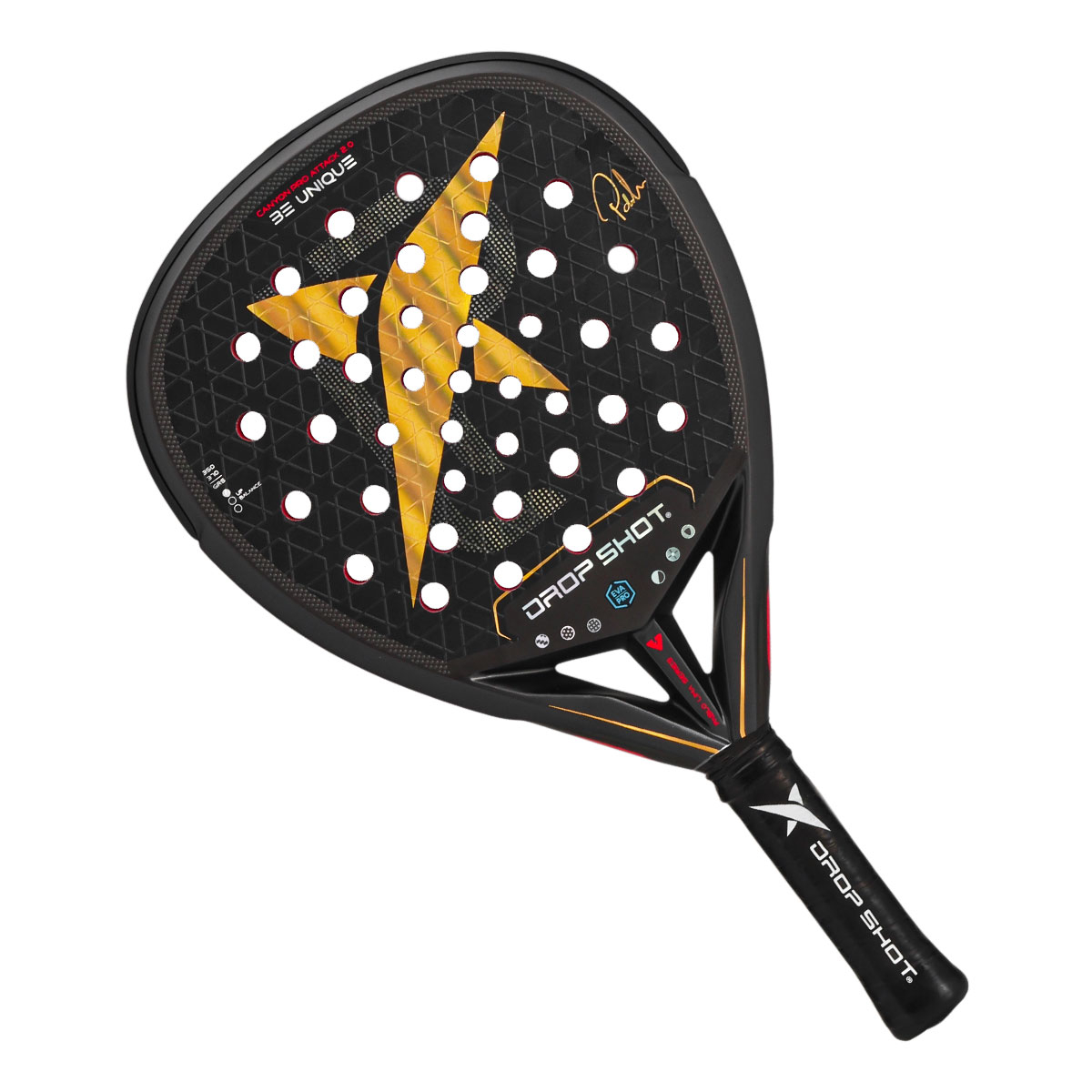
Pablo Lima's racket combines 24K Twill and TeXtreme carbon with a high-density EVA Pro core, a double-tube frame and a Power Beam in the throat to increase stiffness. It weighs between 350 and 370 g, with a 3D Face surface and 41 holes.






Why each one is in the ranking
1. Bullpadel XPLO 2026: area and mass at the top
The XPLO solves the classic problem of the diamond, which is the small sweet spot, by widening the head precisely at the height where the ball is hit on the smash. With a 535 cm² area and a balance close to 26.5 cm, it has the most aggressive profile on the list.
Strengths
- + A balance close to 26.5 cm gives a lot of inertia on the smash and the vibora
- + A 535 cm² geometric head widens the usable area at the top
- + X-Tend Carbon 12K face and 3D Grain texture for a firm ball with spin
Drawbacks
- − A very high balance is heavy on defense and coming off the wall
- − Demands a fast arm and consolidated technique
- − Poorly suited to those who build the point through control
Those who want the same mold with a softer touch can look at the XPLO Comfort, with a Fibrix face, which appears in the guide to rackets for intermediate players. See the full family in the Bullpadel catalog.
2. Adidas Metalbone HRD 3.5: power you calibrate
The Metalbone HRD is the stiff version of the line. The High Memory EVA core is high density, and the spec sheet warns: it returns a lot of energy on fast strokes and demands technique on slow balls. The differentiator is the lower base weight, 345 to 360 g, combined with the system that accepts up to 11.2 g. In practice, you can start without weights, adapt your arm and add mass to the head as the smash demands.
3. Siux Fenix Pro 5 2025: the hardest touch
24K carbon with Hard EVA is the driest combination on the list. It is a racket for those who hit hard all the time: the ball comes off fast and on line when the stroke is accelerated, and comes off dead when it is not. That is why it rewards those who play near the net and finish, and punishes those who still defend many low balls. There is also the Black version, used by Leo Augsburger, with a Black EVA core and a longer handle, mentioned further below.
4. Drop Shot Canyon Pro Attack 2.0: stiffness in the throat
Drop Shot attacks power through structure. The Power Beam in the throat and the double-tube frame make the racket stiffer, which reduces the energy lost to twisting when the ball hits off-center. At 350 to 370 g, it is a bit lighter than the XPLO and Defy Pro, which helps reaction time at the net. See other options from the brand in the Drop Shot catalog.
5. Wilson Defy Pro V1 SE: power without hard EVA
The Defy Pro uses Power Foam, a solid-feeling foam, instead of hard EVA. The 265 mm balance is high, but sits below the 272 mm of Head's most extreme diamonds. The Duo Grid hole pattern, with bigger holes in the upper part, is Wilson's bet for the ball to come off faster precisely where the smash happens.
Comparison of the 5 power rackets
The 5 power padel rackets side by side
3 racquets: swipe sideways to see them all1–2 of 3 →
Highlighted: what differs between the racquets. In bold: the best value in the row.
To put other rackets in this same chart, use the padel racket comparison tool.
Power on court: what changes on each stroke
The specs only matter if they change the result of the stroke. See where a power racket makes a difference and where it charges you.
Smash por 3
On the por 3, the ball bounces in the opponent's court, hits the back glass and leaves the court over the side. Three things need to happen: the ball has to bounce high, reach the glass with speed and have enough spin to rise again. Technique decides almost everything, but the racket helps on two fronts:
- Head inertia. With a high balance, the racket keeps accelerating through impact, and the ball reaches the glass faster.
- Rough or 3D surface. Friction helps put on the spin that makes the ball "rise" after the glass.
Smash por 4 and flat smash
On the por 4, the ball leaves through the side door. What counts here is pure speed and direction. A hard core and a stiff carbon face help the ball go exactly where you aimed, without the trampoline effect of a soft racket.
Vibora and aggressive bandeja
The vibora is a sidespin stroke, with slice and a lot of speed. A heavy head gives the ball weight even with a short motion, and the texture holds the ball on the face longer, which helps with the slice. It is the stroke where the five rackets on the list differ the most from a teardrop.
Finishing volley
At the net, with a high, slow ball, the power racket finishes with little effort. But in a fast exchange of volleys, the weight in the head delays preparation. Shorten the motion and hit in front of your body.
Defense and coming off the wall
This is where the power racket charges you. A high sweet spot, a heavy head and a hard core make the low, slow ball harder. If you play a lot on the forehand side, defending, a pure power racket can take more points than it gives.
Signs the power racket is not for you
- Your defensive ball lands short. If your balls coming off the wall die at the net, the hard core is asking for a speed you are not generating on those balls.
- The smash hits the glass and comes back playable. You lack the acceleration to take advantage of the head's inertia. A heavier racket does not fix it; technique does.
- Quick volleys arrive late. A sign of a balance too high for your arm.
- You feel your shoulder, elbow or wrist after the match. A stiff, heavy racket transmits more load to the arm. Review your equipment and see a health professional if the pain persists.
- Fatigue shows up in the third set. Moving 370 g with weight at the tip for two hours is real physical effort.
If two or more signs appear, a medium-balance teardrop or a softer-touch diamond usually does better. The guide to round, teardrop or diamond helps you find the middle ground, and the guide to Soft, Medium or Hard EVA rubber explains why a hard core demands so much.
Fine-tuning for those who already play with an attacking racket
- Removable weights. The Metalbone HRD, with up to 11.2 g, and the Bullpadel Vertex 05, with the Custom Weight, let you raise the balance gradually. Test in practice before taking it to a match.
- Overgrip. Each layer of overgrip adds weight to the handle, which slightly lowers the balance. Those who find the racket "tip-heavy" can use that to their advantage.
- Frame protector. It protects against hits on the glass and the floor, but adds weight to the head. On rackets with an already high balance, the difference is felt.
- Longer handle. The Siux Fenix Pro 5 Black and the Nox EA10 Ventus Attack 12K Xtrem have a longer handle, useful for those who hit the backhand with two hands.
Other power rackets to consider
More attacking padel rackets for advanced players
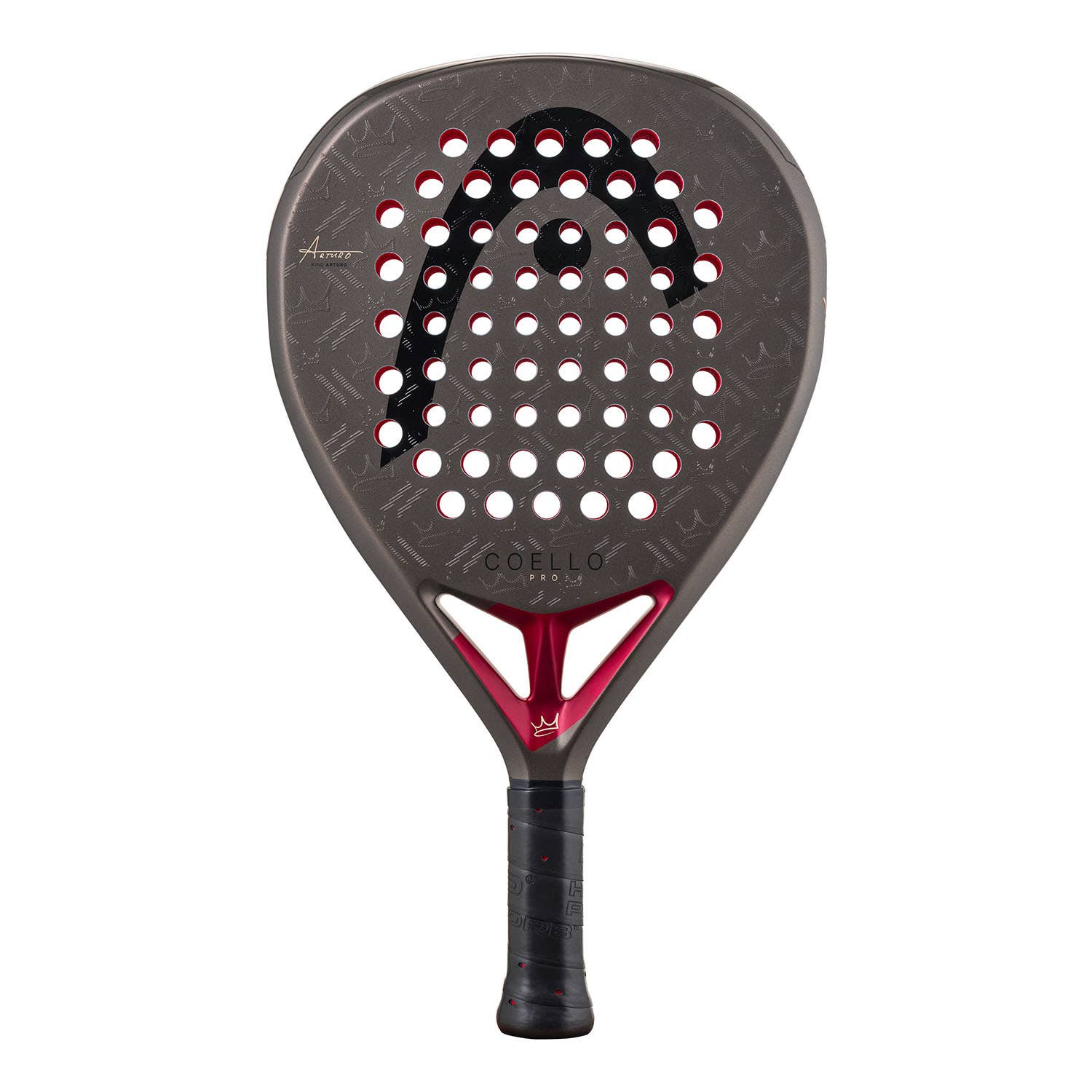

- Nox EA10 Ventus Attack 12K Xtrem: 12K Xtrem carbon, an MLD Black EVA core with an intermediate-to-firm touch and a long handle.
- Siux Fenix Pro 5 Black: the sister of the Fenix Pro 5 with a Black EVA core and a longer handle.
- Lõk Maxx Hype Gen 2: 18K carbon, high-density Custom EVA and an asymmetric throat.
- Bullpadel Hack 05 2027: 18K TriCarbon with a balance close to 26.5 cm, the new generation of Bullpadel's most offensive line.
- Babolat Viper Juan Lebrón 3.0: the most powerful of the Viper line, with 3K carbon and a multi-density X-EVA core.
- Head Coello Pro 2026: 370 g and a 272 mm balance, already reviewed in the best padel rackets of 2026.
Verdict
Still unsure between attack and control? The Find Your Racket quiz cross-references your style with the padel racket catalog. And if the idea is power while spending less, the guide to best-value padel rackets shows professional diamonds from earlier seasons.
Where to buy the racquets in this guide
- Xplo 2026 Bullpadel370 g · Diamond · X-Tend Carbon 12KSee priceAmazon
- Fenix Pro 5 2025 Siux365 g · Diamond · 24K carbonSee priceTenniszon
- Canyon Pro Attack 2.0 2026 Drop Shot360 g · Diamond · 24K Twill and TeXtreme carbonSee priceAmazon
- Coello Pro 2026 HEAD370 g · Diamond · Hybrid carbonSee priceAmazon
The prices above are checked automatically at each store and may have changed since the last check. The price that counts is the one shown on the store's website at checkout. We may earn a commission on purchases made through store links, at no extra cost to you.