


 Brasil
 United States
 United Kingdom
 Australia
 Netherlands
 France
 España
 Italia
 السعودية
7 best padel rackets for intermediates in 2026
Time to leave the round racket? See when to move to a teardrop or hybrid, what changes between 3K, 12K and 18K carbon, and which shape suits right-side or left-side players.
Updated on 2026-10-07
On this page
- 1.Signs that you are already an intermediate
- 2.The 7 best padel rackets for intermediates in 2026
- 3.When to swap the round for a teardrop or hybrid
- 4.3K, 12K, 18K carbon: what the number really changes
- 5.Harder rubber: when it is worth it
- 6.Right side or left side: the racket changes with your side
- 7.Comparison of the main intermediate rackets
- 8.Options for intermediate women players
- 9.Intermediate range or top of the line?
- 10.How to test before deciding
- 11.Frequently asked questions
- 12.Verdict
You have reached the intermediate level in padel when the round starter racket begins to hold your game back: the bandeja comes off with no weight, the víbora does not run and the smash dies in the net even when you arrive well positioned. The best padel rackets for intermediates solve this with more stiffness and a bit more weight in the head, without taking away the forgiveness you still need. This selection of the 7 best of 2026 shows when to move to a teardrop or hybrid, which carbon to choose and how the racket changes for right-side or left-side players.
Signs that you are already an intermediate
Level in padel is not a matter of time on court, but of what you already do with the ball. You are probably at the intermediate level if:
- You exit the back wall with direction, and not just by sending the ball up.
- You hit the bandeja with intent, going for the side wall or the back.
- You already try the víbora, even if you still miss a lot.
- You can keep up a volley exchange at the net without backing off.
- You have a preferred side of the court and know what your role is there.
If you have not reached that point yet, the starter racket is still the best choice. The guide to padel rackets for beginners helps you confirm.
The 7 best padel rackets for intermediates in 2026
The 7 best padel rackets for intermediates in 2026
- 1
- Weight
- 370 g
- Shape
- Hybrid
- Face
- A-18K aluminized carbon
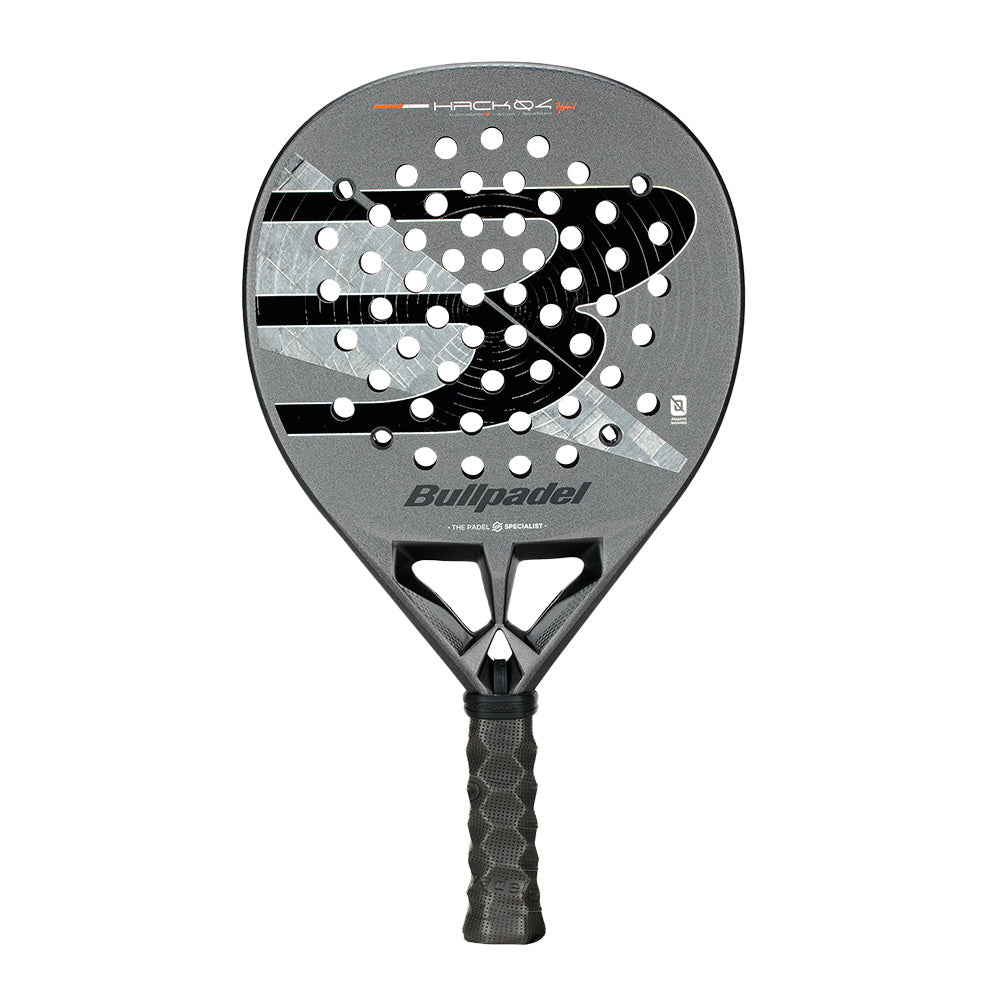
Shape between teardrop and diamond, balance near 25 cm, A-18K aluminized carbon face and MultiEva core. The lower balance than the diamond Hack 04 tends to make defense and transitions easier. 529 cm² area.
- 2
- Weight
- 370 g
- Shape
- Diamond
- Face
- Glaphite
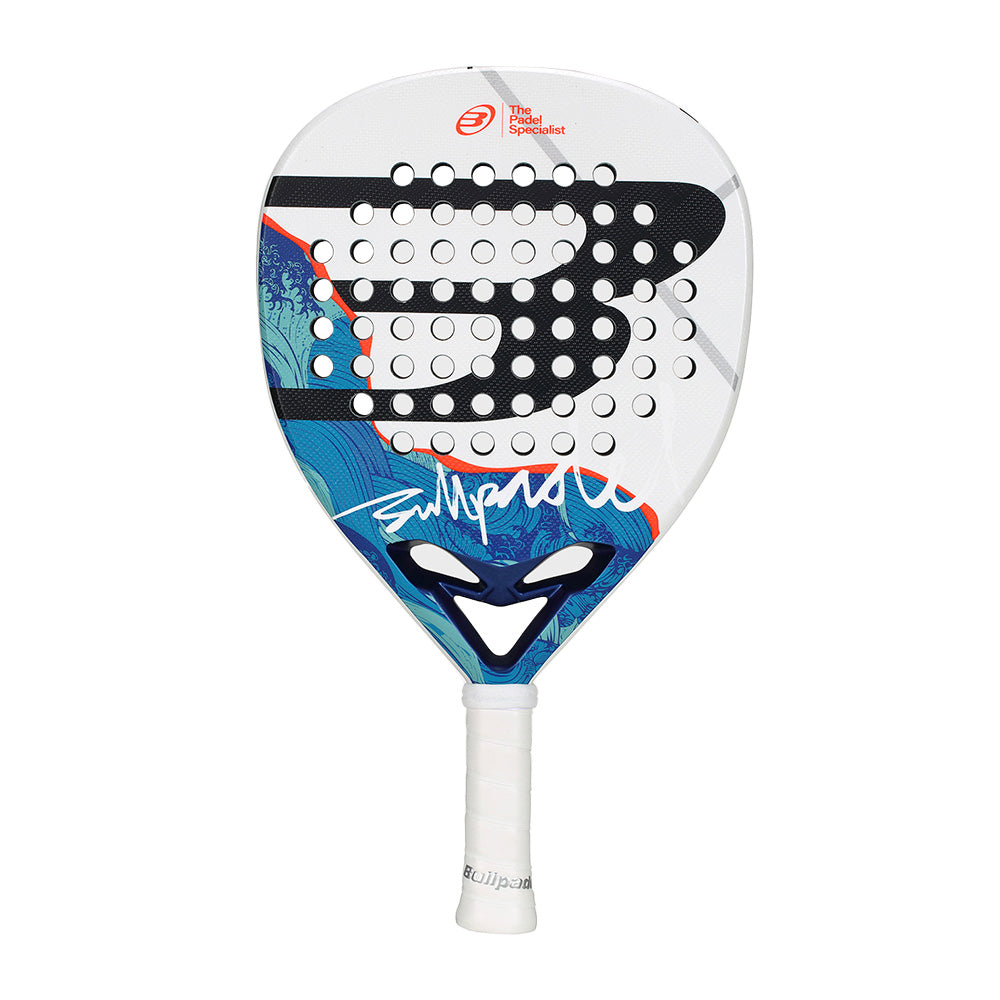
Entry-level diamond with a Glaphite face, which mixes fiberglass and carbon, and a dual-density MultiEva core. The diamond shape favors the overhead shot, and the mixed face usually has a softer feel than pure carbon. A starting point for left-side players.
- 3
- Weight
- 365 g
- Shape
- Diamond
- Face
- Fibrix
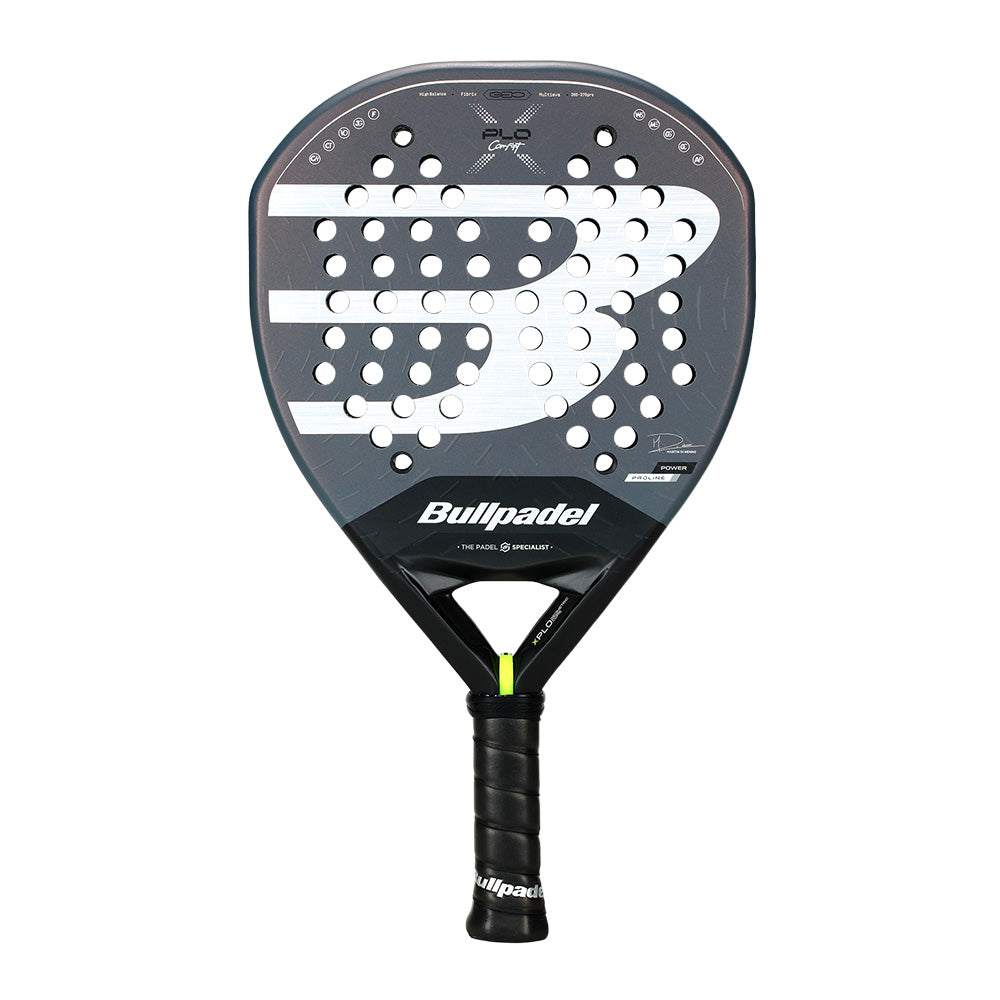
XPLO geometric mold with a high balance near 26.5 cm and 535 cm² of area, but with a Fibrix fiberglass and carbon face. The mixed face aims for a less dry feel than all-carbon faces.
- 4
- Weight
- 355 g
- Shape
- Hybrid
- Face
- Fibrix
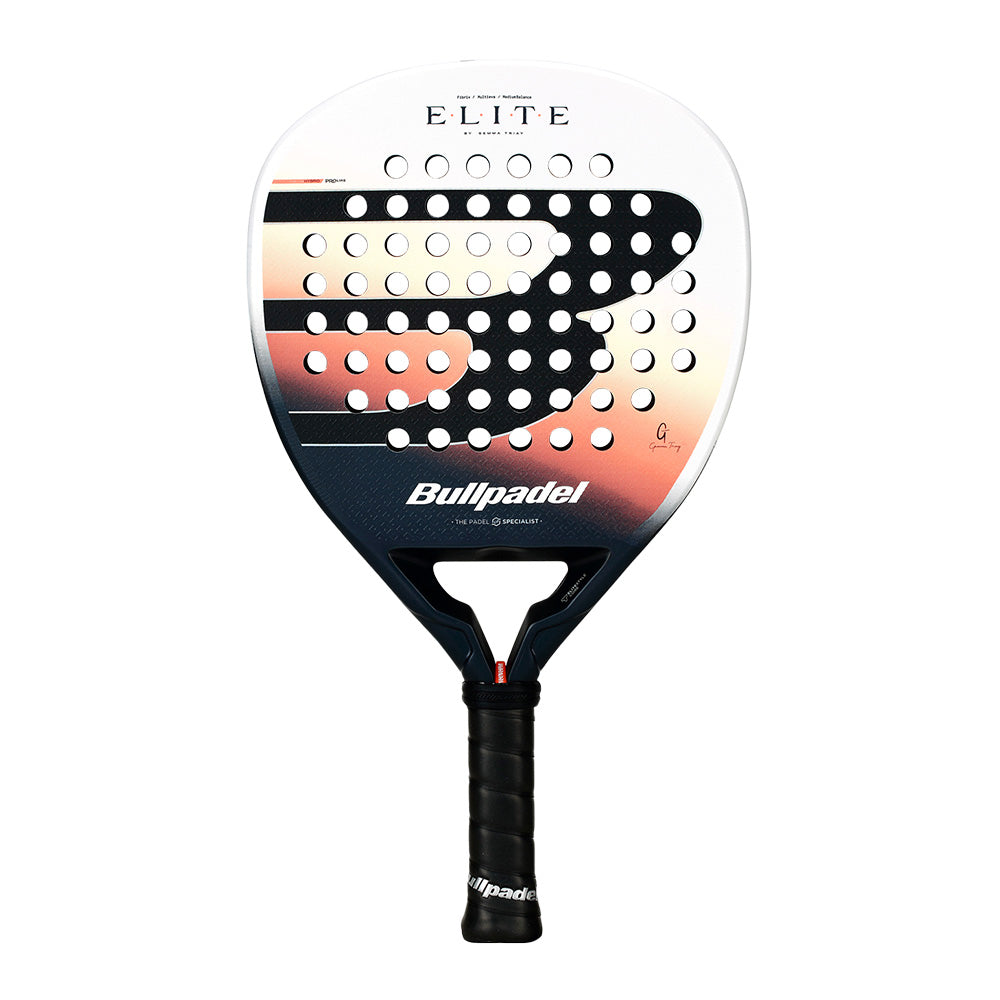
Hybrid shape, 350 to 360 g, Fibrix face and MultiEva core, with 524 cm² of area. The hybrid shape and the weight below the standard versions let you use it on either the right or the left side.






The selection criteria follow the Racquet Rank methodology: verified specs, level indicated by the manufacturer and the sources, reviews and availability at the stores.
When to swap the round for a teardrop or hybrid
The round has its sweet spot in the center and a low balance. That is great for defending, but it takes inertia out of overhead shots. The teardrop raises the sweet spot and puts a bit more mass in the head. The hybrid sits between the teardrop and the diamond.
Go to the teardrop when you already meet the high ball with the racket in front of your body and want the bandeja and the víbora to gain weight, but you still spend a good part of the point defending.
Go to the hybrid when you play on the left side and attack often, but do not yet have the consistency for a pure diamond. The Bullpadel Hack 04 Hybrid is the classic example: it looks like a diamond, but the medium balance tends to make defense easier.
Stay with the round when your game is about building, you play on the right side and your problem is not power but precision. In that case, swap the fiberglass face for carbon, but keep the shape.
The full explanation of each shape, with catalog examples, is in the guide round, teardrop or diamond.
3K, 12K, 18K carbon: what the number really changes
The "K" indicates how many thousands of carbon filaments there are in each strand of the fabric. A 3K fabric has 3,000 filaments per strand; an 18K, 18,000.
In padel practice, brands usually use higher-K fabrics in the firmer, more powerful versions, and 3K in rackets with a more sensitive feel. But the number alone does not define the racket. The final feel also depends on the resin, the number of layers, the core rubber and the mold. A 3K face over hard EVA can feel drier than an 18K over soft EVA.
For the intermediate, the useful rule is:
| Face | Typical feel | Who it is for |
|---|---|---|
| Fiberglass or mixed (Glaphite, Fibrix) | Soft, easy power | Players who still hit with little acceleration |
| 3K carbon | Firm, with good touch | Players who build the point and want precision |
| 12K carbon | Stiffer and more stable | Players who already accelerate well and want more response |
| 18K carbon or more | Stiff, powerful | Advanced intermediates with a good arm |
Aluminized faces, such as those from Nox and Bullpadel, receive a metallic treatment. Manufacturers claim this makes behavior more stable across temperature changes.
Harder rubber: when it is worth it
Hard rubber (hard EVA or high density) only returns energy when the stroke is fast. For the intermediate, it starts to make sense when:
- You already accelerate the bandeja and the víbora well.
- You feel the soft racket "explodes" too much and the ball flies off the back glass.
- You play on fast courts or in the heat, where the ball already travels a lot.
If you still defend many low, slow balls, soft EVA remains better. The AT10 Pro Cup family exists in exactly both versions, Soft and Hard, with the same mold. The guide how to choose a padel racket compares the two side by side.
Right side or left side: the racket changes with your side
In doubles padel, each player has a role. That changes the kind of ball you receive and, therefore, the racket that works best.
| Right-side player (drive side) | Left-side player (backhand side) | |
|---|---|---|
| Most common role | Build, keep the ball in play, defend | Finish, attack high balls through the middle |
| Most frequent strokes | Wall exit, chiquita, lob, control volley | Aggressive bandeja, víbora, smash |
| Shape that usually works | Round or teardrop | High-balance teardrop, hybrid or diamond |
| Balance | Low or medium | Medium or high |
| Core | Soft to medium | Medium to hard |
This is a tendency, not a rule. Many pairs swap roles, and there are very aggressive right-side players.
Right-side player
Prioritizes control and quick hands. The Head Radical Motion 2024 is the obvious pick on the list: 3K carbon, balanced balance and 355 g. The Siux Electra Lite 3 is the alternative for players who prefer to stay with the round shape.
In practice, think about the balls that decide your points on the right side: the chiquita at the feet of the opponent coming to the net, the crosscourt lob to take the pair out of position and the side-wall exit. All of them call for touch and direction, not power. A racket with a light head and medium-density rubber gives you time to prepare the stroke and lets the ball come off in the right place.
Left-side player
Needs inertia on overhead shots. The Bullpadel Ionic Power 2026 is the friendliest diamond to start with. Players with more arm can go to the Bullpadel Hack 04 Hybrid, with an aluminized carbon face, or to the Bullpadel XPLO Comfort, with a high balance near 26.5 cm and a mixed face.
On the left side, the typical play is the high ball in the middle of the court that calls for an aggressive bandeja or víbora. If the racket has no mass in the head, you have to compensate with your arm, and the stroke loses precision. That is where a high balance pays off.
Comparison of the main intermediate rackets
Soft teardrop, carbon teardrop, hybrid and diamond for intermediates
Highlighted: what differs between the racquets. In bold: the best value in the row.
Notice that all four are in the same weight range. What changes is where the weight sits (balance), the face material and the shape. To build other combinations, use the padel racket comparison tool or, if you want to stay with a single brand, the Bullpadel comparison tool.
Strengths
- + Hybrid shape between teardrop and diamond
- + Balance near 25 cm, below the diamond Hack 04
- + 529 cm² area
- + MultiEva core
Drawbacks
- − Less weight in the head than the diamond version
- − 18K carbon face with a firm feel
- − Weight of 365 to 375 g calls for a prepared arm
Options for intermediate women players
The women's versions of the intermediate lines usually weigh 350 to 360 g, about 10 to 15 g less than the standard version of the same family. With less mass to move, the hand is quicker at the net and the shoulder tires less.
Padel rackets for intermediate-level women players

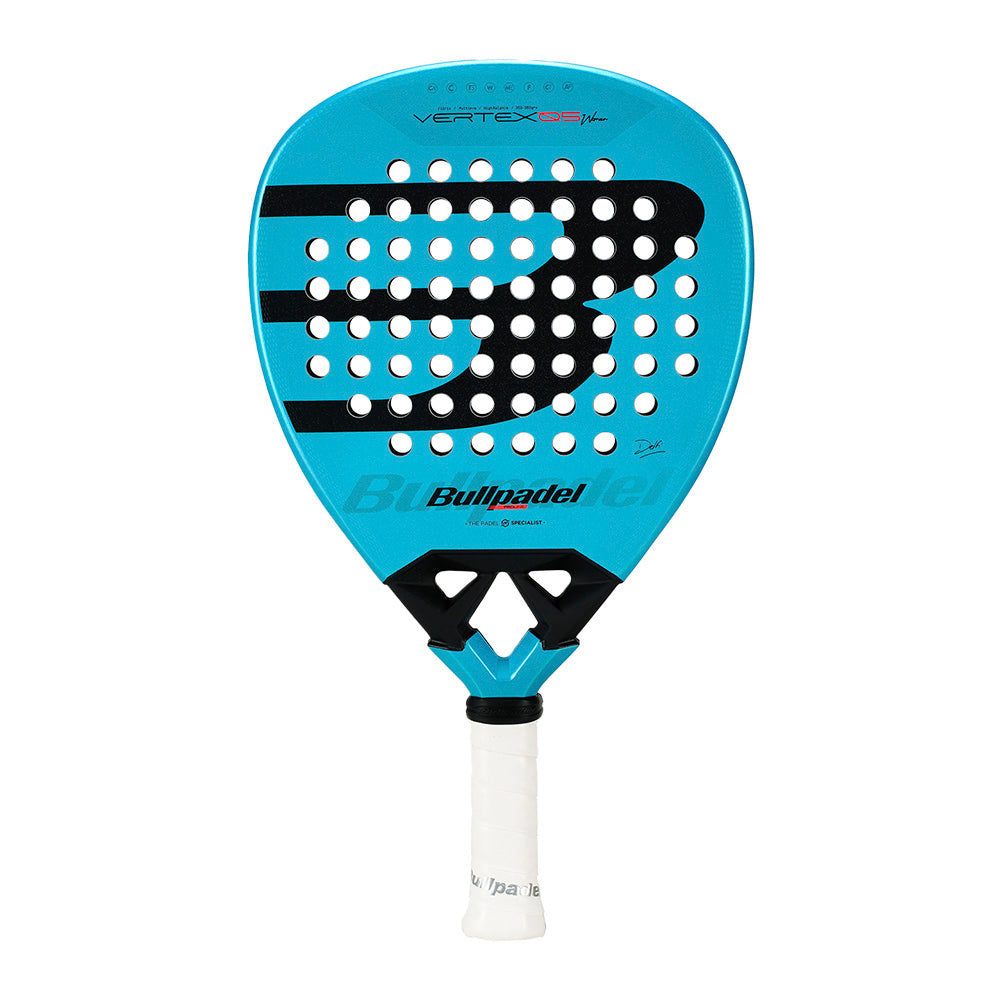


- Weight
- 355 g
- Shape
- Diamond
- Face
- Fibrix
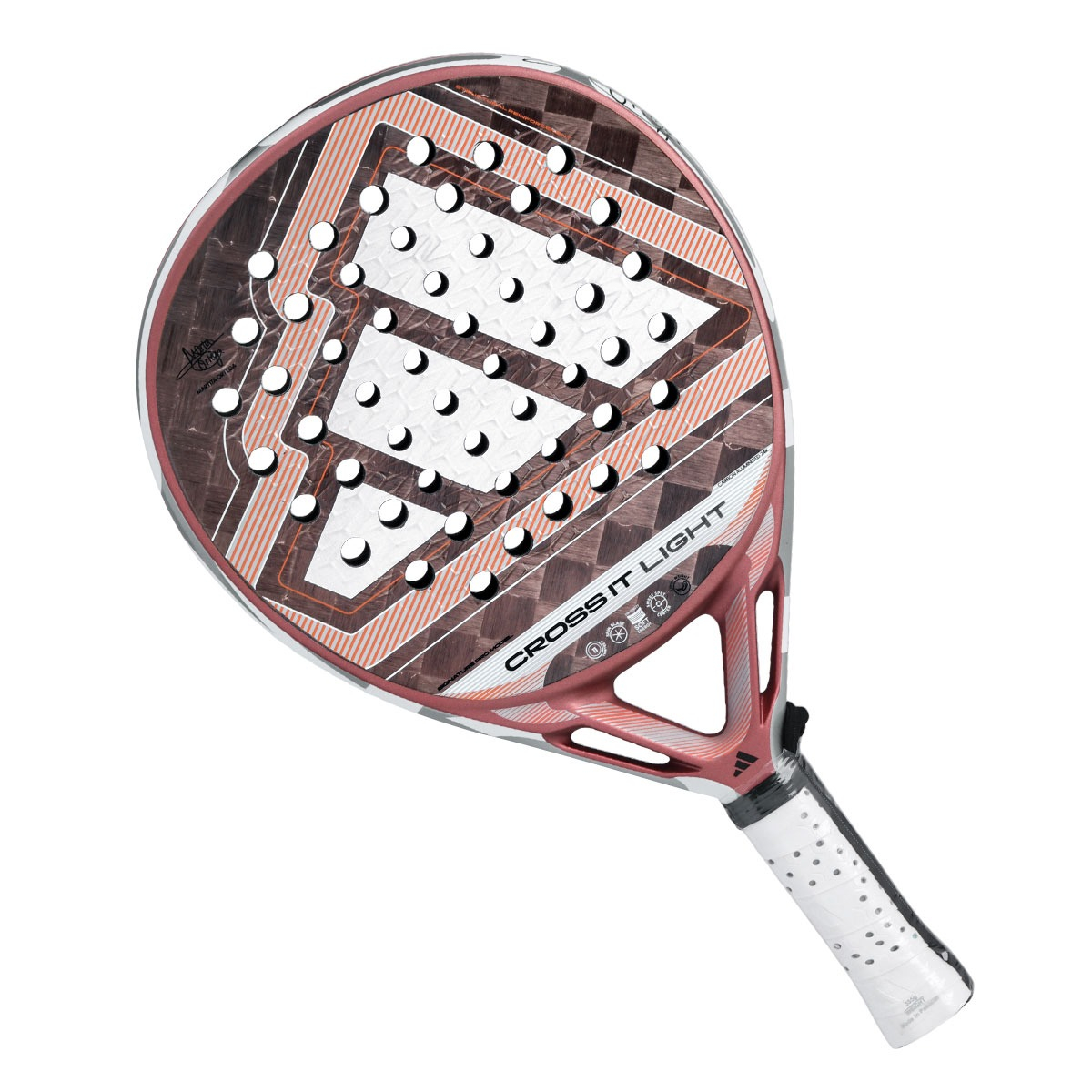
 Adidas Padel· Padel
Cross It Light 3.5 2026 Adidas Padel


- Weight
- 352.5 g
- Shape
- Round
- Face
- 24K aluminized carbon

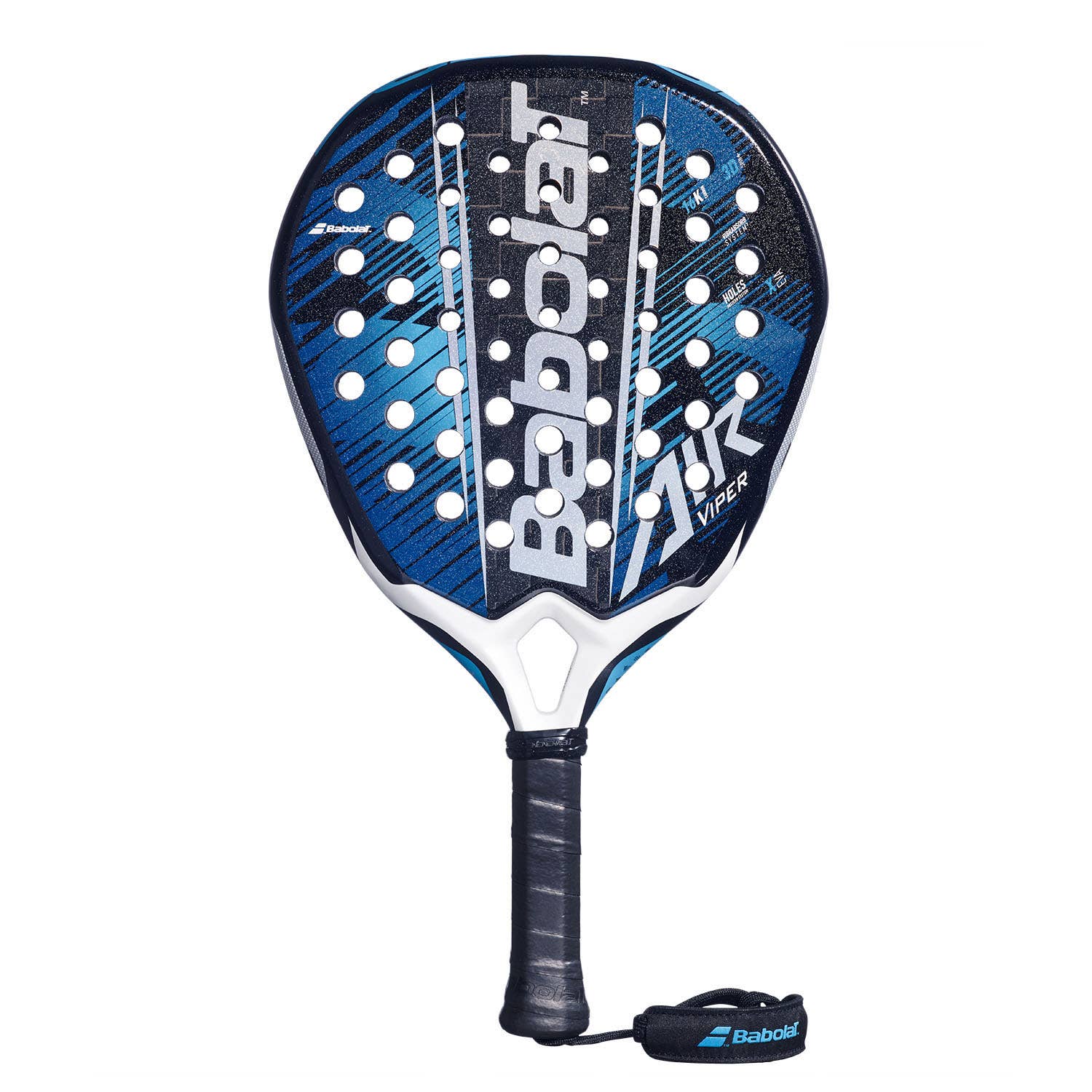

The Bullpadel Vertex 05 Woman is a 350 to 360 g diamond with a Fibrix face, for the player who attacks. The Adidas Cross It Light 3.5 is round, with 24K carbon, for those who prefer to play from the back and build the point. The Babolat Air Viper 2.6, at about 355 g and with a hybrid shape, suits the quick attacker who finds diamonds heavy.
Intermediate range or top of the line?
The intermediate sits between two temptations: keep saving or jump straight to a top-of-the-line racket. In most cases, the intermediate range gives more.
Rackets such as the Nox AT10 Pro Cup, the Bullpadel Ionic Power and the XPLO Comfort use molds from the professional lines with mixed or aluminized fiberglass faces. You get the right shape and balance without the stiffness that only works with a very accelerated stroke.
Top of the line starts to make sense when:
- You play three or more times a week and already compete in amateur tournaments.
- You feel the current racket flexes too much on hard volleys and the ball loses direction.
- You already know exactly what shape and balance you want, because you have tested.
At that point, models such as the Head Radical Motion are natural steps, because they bring carbon without requiring the weight of the professional versions. When the switch is for real, the selection of padel rackets for advanced players shows the options by playing style.
How to test before deciding
Changing rackets at the intermediate level is the phase with the most risk of error. A few practices help:
- Change one variable at a time. If you are going to the teardrop, keep the soft core. If you are going to carbon, keep the shape.
- Test for at least two sessions. The first impression of any stiffer racket is odd.
- Watch your defense, not just your attack. The new racket may improve the smash and worsen the wall exit. The net result is what counts.
- Mind your elbow. Pain in the first few days may indicate a racket that is too head-heavy or too hard.
It is also worth filtering by brand: the Nox padel catalog and the Bullpadel one have several families with soft, hard, light and hybrid versions of the same mold, which makes it easier to change one variable at a time.
Frequently asked questions
What is the best padel racket for the intermediate level?
It depends on your side and style. For players leaving the round, the Nox AT10 Pro Cup Soft 2026 is the safest transition. For right-side players, the Head Radical Motion 2024; for left-side players, the Bullpadel Hack 04 Hybrid or the Ionic Power.
Can an intermediate use a diamond racket?
Yes, especially players on the left side who attack a lot. The ideal is to start with a mixed-face diamond with a softer feel, such as the Bullpadel Ionic Power or the XPLO Comfort, before going to stiff carbon models.
What is the difference between 3K, 12K and 18K carbon in a padel racket?
The number indicates how many thousands of filaments are in each strand of the carbon fabric. Brands usually use higher K in firmer, more powerful rackets, but the feel also depends on the resin, the layers and the core. Compare the whole racket, not just the number.
Is a padel racket different for right-side and left-side players?
It tends to be. Right-side players defend and build more, and do better with rounds or teardrops with low to medium balance. Left-side players finish more and take advantage of high-balance teardrops, hybrids or diamonds.
When should I switch from soft EVA to hard EVA?
When you already accelerate overhead strokes well and feel that the soft racket sends back too much ball. If you still defend many slow balls, soft rubber still helps more than it hurts.
Verdict
Want an overview of every level? See the best padel rackets of 2026 or take Find your racquet to get suggestions from the catalog.
Where to buy the racquets in this guide
- Hack 04 Hybrid 2026 Bullpadel370 g · Hybrid · A-18K aluminized carbonSee priceAmazon
- Ionic Power 2026 Bullpadel370 g · Diamond · GlaphiteSee priceAmazon
- XPLO Comfort 2026 Bullpadel365 g · Diamond · FibrixSee priceAmazon
- Elite Woman 2026 Bullpadel355 g · Hybrid · FibrixSee priceAmazon
- Vertex 05 Woman 2026 Bullpadel355 g · Diamond · FibrixSee priceAmazon
- Cross It Light 3.5 2026 Adidas Padel352.5 g · Round · 24K aluminized carbonSee pricePadelGo
- Air Viper 2.6 2026 Babolat355 g · Teardrop · 16K carbonSee pricePadelGo
The prices above are checked automatically at each store and may have changed since the last check. The price that counts is the one shown on the store's website at checkout. We may earn a commission on purchases made through store links, at no extra cost to you.