


 Brasil
 Canada
 United Kingdom
 Australia
 Netherlands
 France
 España
 Italia
 السعودية
Badminton Racket Balance and Flex: Complete Guide
Head heavy, even, or head light? Flexible, medium, or stiff shaft? Learn how balance and flex change a racket and which combination suits your game.
Updated on 10/07/2026
On this page
Balance is the position of the racket's center of mass along its length; flex is how much the shaft bends during the swing. In badminton, these two characteristics define the racket's behavior more than total weight does, because almost all modern rackets weigh between 80 and 85 g. Two 4U rackets can be completely opposite on court just because one has a heavy head and an extra stiff shaft and the other has a light head and a flexible shaft.
This guide goes deeper into both concepts, shows how they combine, and uses real examples from the Yonex Astrox, Nanoflare, and Arcsaber lines, plus Li-Ning and Victor, so you can understand what is written on the spec sheets.
Badminton racket balance
How balance is measured
Balance is given by the balance point, measured in millimeters from the end of the handle. If you rest the racket lying flat on your finger, the point where it stays still is the center of mass. The farther from the handle, the heavier the head.
You can measure it at home: rest the racket on the edge of a ruler or a pencil, find the balance point, and measure the distance to the end of the handle. Do this with the racket the way you play with it, with string and grip, because both change the result.
What confuses many people is that each brand uses its own yardstick to classify balance. Some numbers from the spec sheets we reviewed show this:
- Yonex Arcsaber 71 Light: 288 mm, classified as even balance.
- Li-Ning Bladex 900 (2025): 295 mm, described as leaning head-light.
- Yonex Nanoray Light 18i: 300 mm, slightly head-heavy, on a 665 mm racket.
- Li-Ning Halbertec 6000: 301 mm, classified as even.
- Li-Ning Axforce 70: 302 mm, classified as head heavy.
In other words, 300 mm can be "head heavy" at one brand and "even" at another, and the racket's length counts too: 300 mm on a 665 mm racket sits relatively closer to the head than on a 675 mm one. Compare numbers only within the same brand and the same measuring method. Across different brands, the classification (head heavy, even, head light) is a more useful guide than the millimeter figure.
Head heavy
With more mass in the frame, the racket has more inertia. Once accelerated, it holds its speed at impact and transfers more energy to the shuttlecock. The smash arrives heavier and the clear goes deeper with less effort.
The flip side of inertia is that it also resists changes of direction. After a smash, the racket takes longer to return to the defensive position, and switching from forehand to backhand on a fast drive gets harder. A heavy head also tires the wrist and shoulder in long matches.
This is the balance of the attacking lines: Yonex Astrox, Li-Ning Axforce, and Victor Thruster.
Even balance
The center of mass sits near the middle. The racket favors neither attack nor defense, which makes it predictable from any position on the court. It is the balance best suited to players who haven't settled on a style yet, to singles players who build the point, and to doubles players who rotate between front and back.
Examples: Yonex Arcsaber, Li-Ning Halbertec, Victor Jetspeed, and DriveX.
Head light
With the weight closer to your hand, the racket swings around quickly. It gets to the shuttlecock sooner on smash defenses, body shots, and drive exchanges at net height. It also helps the net game, where the stroke is short and reaction time is minimal.
The price is "free" power: the smash depends more on arm speed and shaft than on head mass, and the long clear demands technique.
Examples: Yonex Nanoflare, Li-Ning Bladex, and Victor Auraspeed.
The three rackets above are all 4U, averaging 83 g and 675 mm. The difference in on-court behavior comes almost entirely from balance and shaft.
Shaft flex
What the shaft does in the stroke
During the swing, the shaft bends backward when you start to accelerate and springs forward near contact. If that return happens at the right moment, it adds speed to the racket head. It's the famous whip effect.
The point is that the shaft only gives energy back if you can bend it:
- A flexible shaft bends with little arm speed. It helps players with a slow swing gain depth, but it returns more slowly and with more oscillation, which costs precision on fast strokes.
- A medium shaft is the middle ground: it still helps with depth and already returns quickly enough to give direction.
- A stiff shaft bends little and returns fast. With a fast swing, the stroke comes out precise with immediate response. With a slow swing, there is almost no whip, and the shuttlecock comes off short.
- An extra stiff shaft takes this to the extreme. It is the shaft of professional rackets such as the Astrox 100ZZ and the Nanoflare 1000Z.
Different scales across brands
Yonex uses four grades (flexible, medium, stiff, and extra stiff) and calls its softest shafts Hi-Flex. Li-Ning and Victor also classify by grades, but stores and spec sheets sometimes describe the same racket in different ways. The Halbertec 6000, for example, shows up as medium in some sources and as stiff in others, and the Halbertec 3000 is described by the brand as "firm flex."
There are also cases where flex changes with weight. The 2025 Li-Ning Axforce 90 has a medium shaft in the 4U version and a stiff one in the 3U. That is why you should always check the spec sheet for the exact version you are going to buy.
Shaft diameter is not flex
Modern spec sheets highlight shaft thickness: 6.2 mm on the Li-Ning Axforce 100 II, 6.5 mm on the Victor Thruster Ryuga III, 6.6 mm on the Jetspeed S 12 II, 7.0 mm on the Brave Sword 12. A thinner shaft offers less air resistance and makes the swing faster, but that does not mean it is more flexible. Stiffness depends mainly on the material and the construction.
How balance and flex combine
The table below crosses the three balances with the four shaft grades, using rackets from our badminton racket catalog.
| Flexible shaft | Medium shaft | Stiff shaft | Extra stiff shaft | |
|---|---|---|---|---|
| Head heavy | Easy attack for beginners: Astrox Lite 27i, Voltric Lite 47i, Thruster K Hammer Light Extra | Forgiving attack: Astrox 88D Game, Axforce 70, Axforce 80 | Advanced attack: Astrox 99 Pro, Thruster Ryuga II Pro, Axforce 100 II | Extreme attack: Astrox 100ZZ, Voltric Z-Force II |
| Even | Easy control: Arcsaber 73 Light, Arcsaber 2 Feel, Auraspeed 9 | Forgiving versatility: Arcsaber 7 Pro, Brave Sword 12 Pro, Halbertec 9000 | Precise control: Arcsaber 11 Pro, DriveX 10 Metallic, Halbertec 7000 | Fast even-balance attack: Duora Z-Strike |
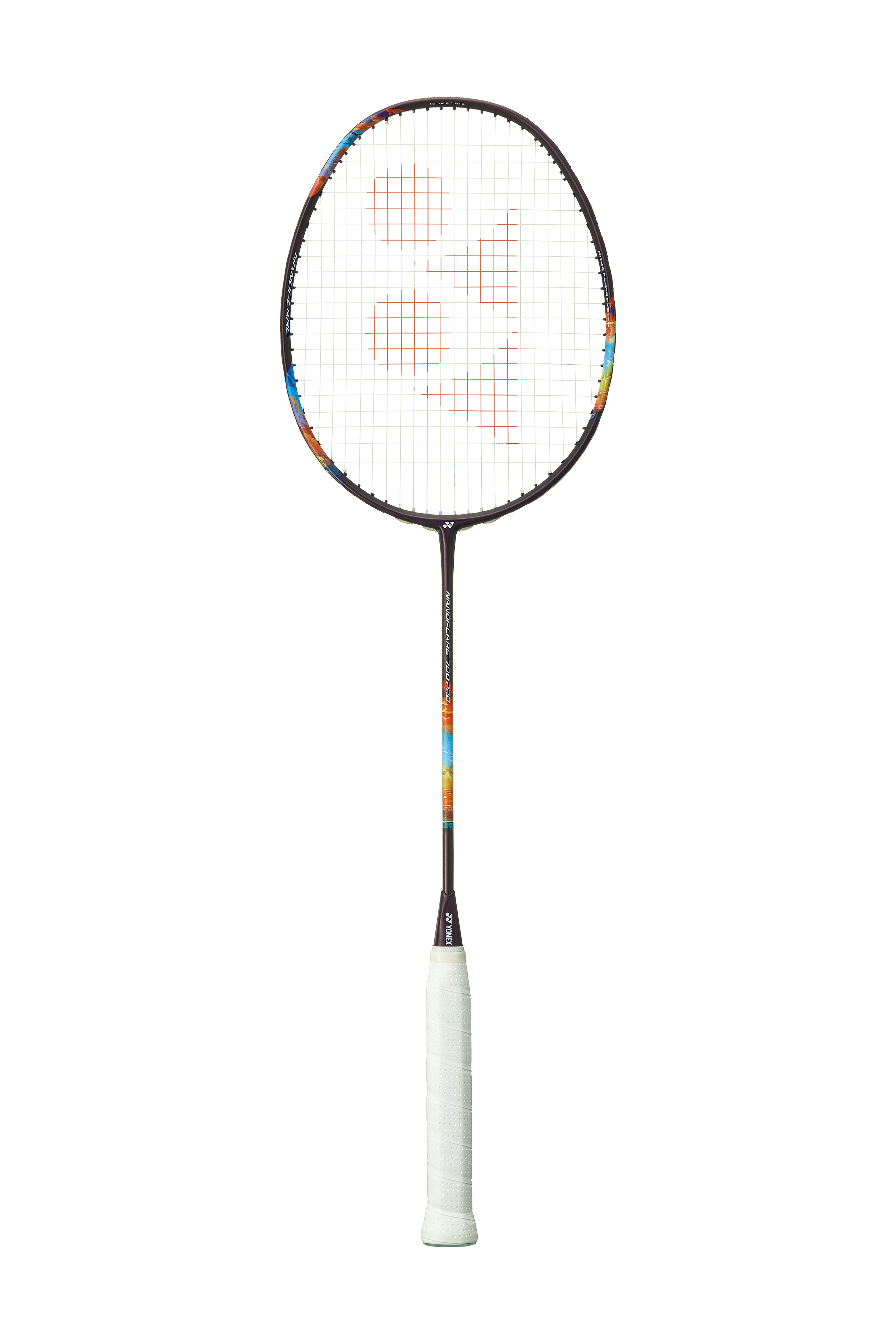
| Head light | Easy speed: Nanoflare 001 Feel, Nanoray 10F | Forgiving speed: Nanoflare 700 Pro, Bladex 700 | Advanced speed: Nanoflare 800 Pro, Auraspeed 90K II, Bladex 800 | Extreme speed: Nanoflare 1000Z |
A few important takeaways from the table:
Head heavy with a flexible shaft is the classic combination of lightweight attacking rackets for beginners. The mass in the frame and the soft shaft add up to help: the shuttlecock goes far even with a short swing. The cost is precision on fast strokes.
Head light with an extra stiff shaft looks contradictory, but it is the Nanoflare 1000Z formula. The light head allows a very short, fast swing, and the stiff shaft returns energy without delay. It works for very fast arms; for everyone else, it is the least forgiving combination in the table.
Even balance with a medium shaft is the safest starting point for anyone in doubt. It doesn't excel at anything, but it doesn't fall short either.
Good to know
A rule of thumb: balance chooses your style, shaft chooses your level. First decide whether you attack, defend, or play balanced. Then match the stiffness to the speed of your swing.
Same family, different shaft
Yonex's families show well how stiffness changes within the same design. In the Nanoflare 800, all versions are head light, but the shaft changes: Pro and Tour are stiff, Game and Play are medium. The materials change too, which alters the feel of the hit.
This has a practical consequence: if you like the style of a top-tier racket but find the shaft too stiff, there is almost always a softer version in the same family. The guide to rackets for intermediate players uses exactly this ladder to point out the next step for players who are improving.
Which combination to choose by level and style
Beginner. Flexible shaft, always. Even balance to learn the complete game, or a slightly head-heavy racket if you like to attack. See options in the guide to badminton rackets for beginners.
Intermediate. A medium shaft in most cases, stiff if your swing is already fast. Balance now follows your style: heavy for players who attack from the back, light for those who defend and play at the net, even for those who cover the whole court.
Advanced. A stiff or extra stiff shaft, with the balance that reinforces your strength. The ranking of the best badminton rackets of 2026 organizes the options by profile.
Singles. Long rallies and lots of court coverage favor even balance or a slightly head-heavy racket, to attack from the back without losing defense.
Doubles, back of the court. Head heavy, to sustain a sequence of smashes.
Doubles, net. Head light or even, to react to pushes and to put away the short shuttlecock.
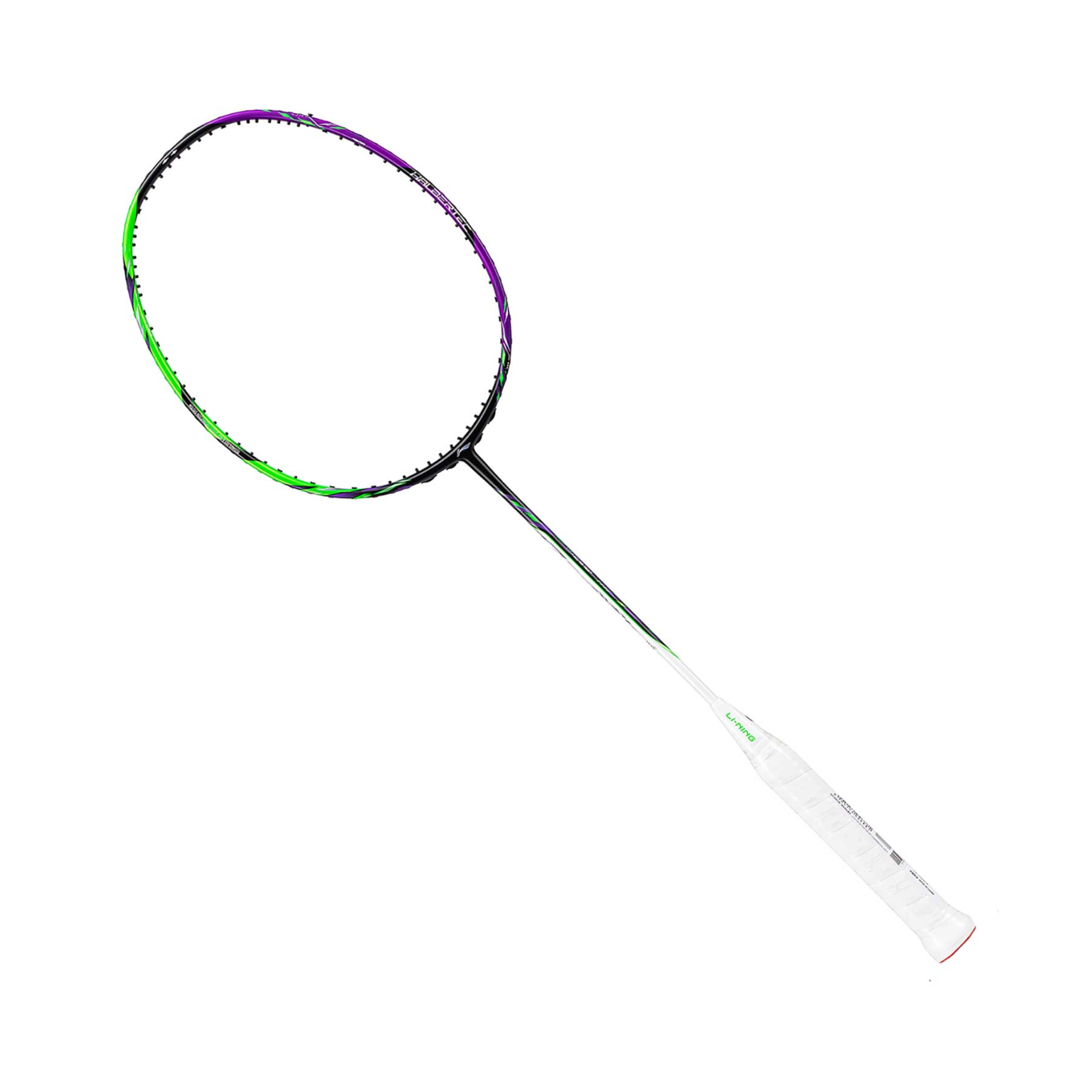
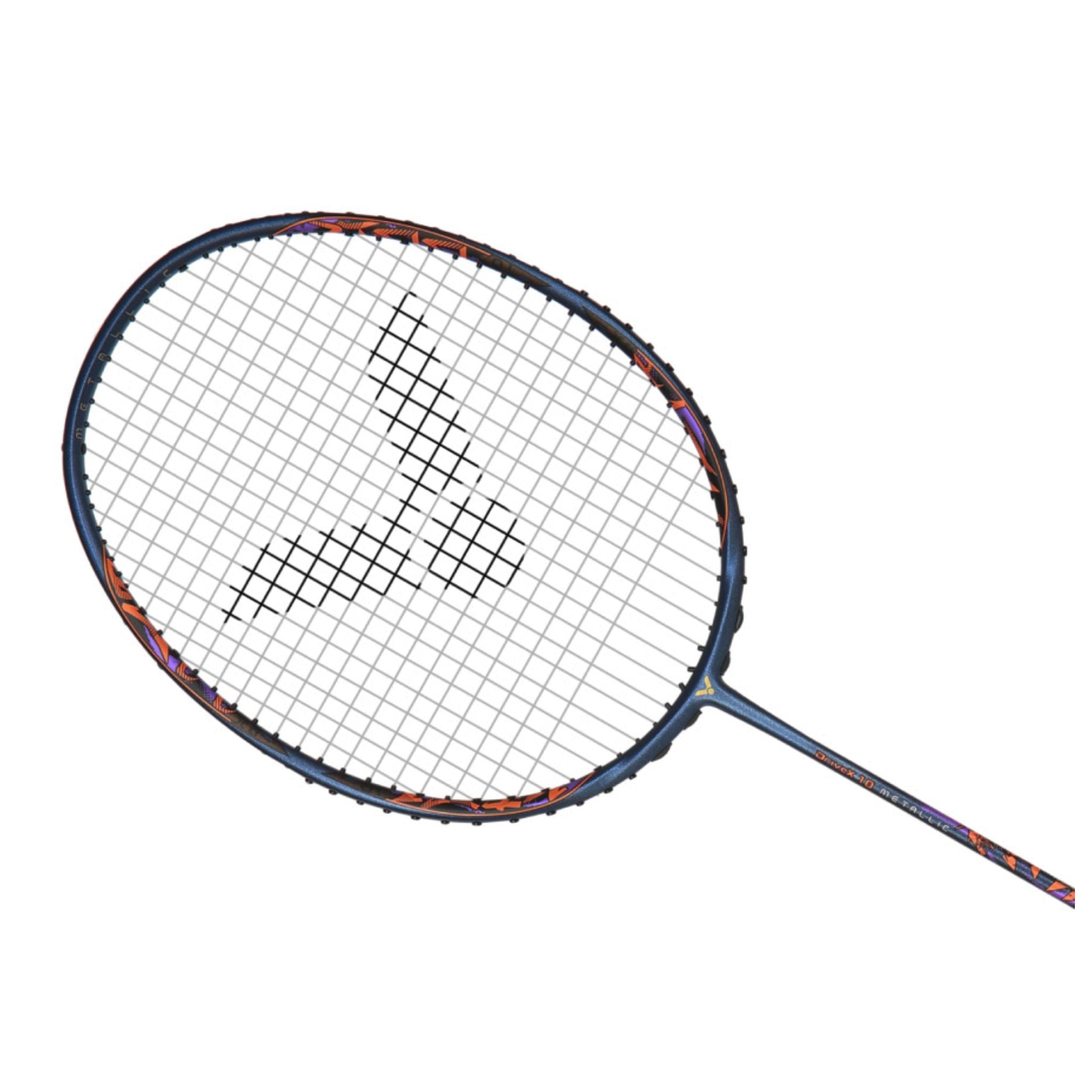
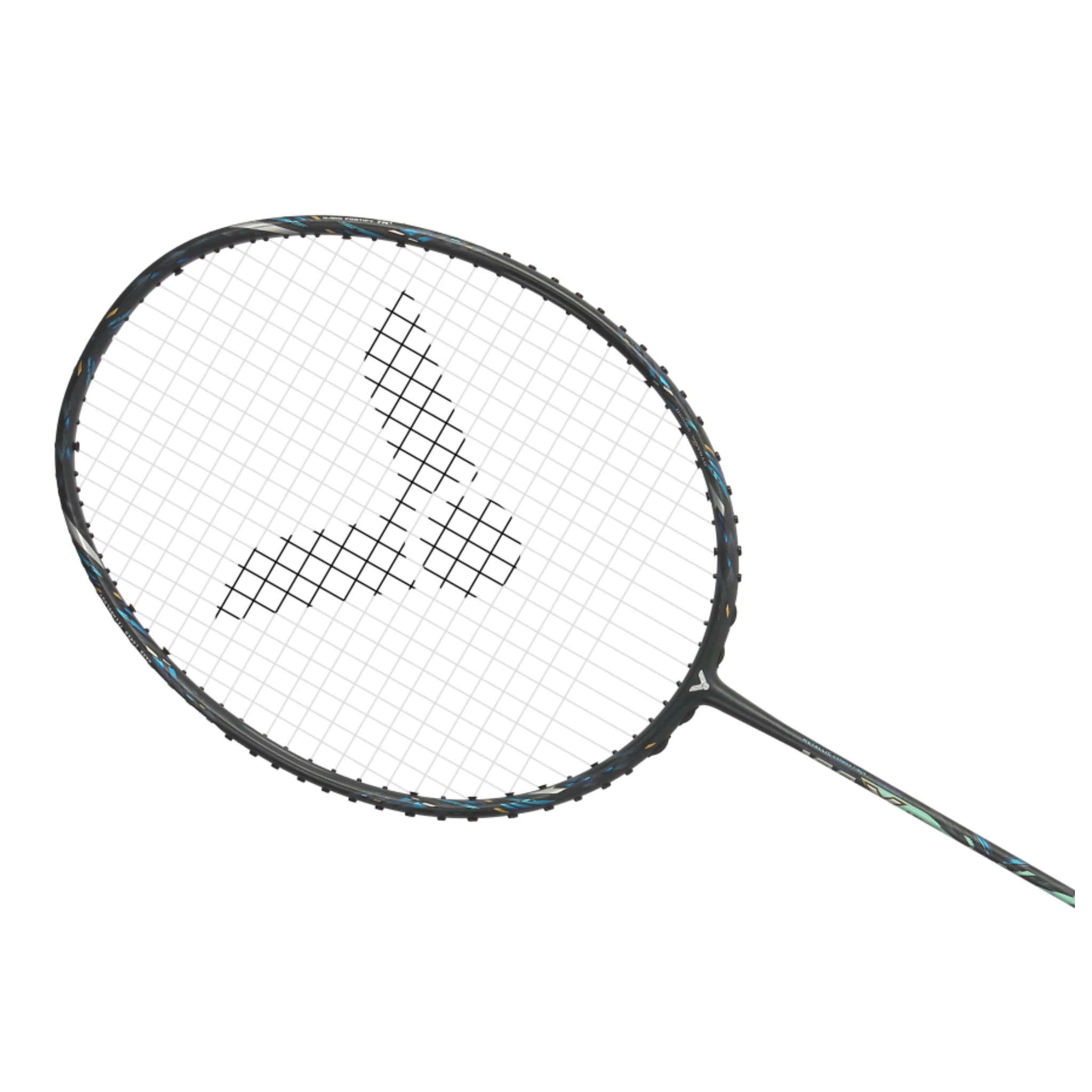
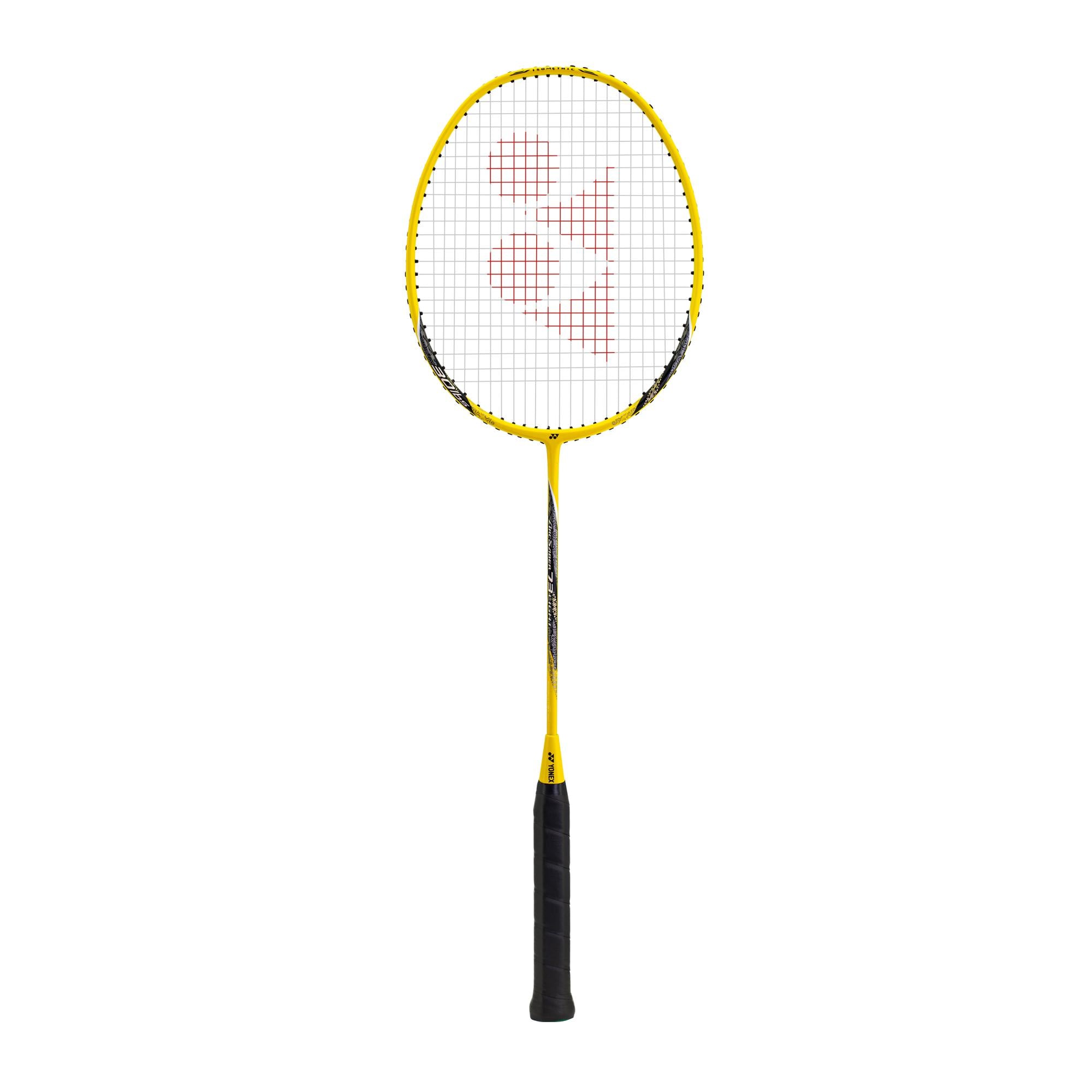
Examples of each profile from Li-Ning, Victor, and Yonex










What changes balance after you buy
The factory balance is not final. Some details change the feel:
- Overgrip and towel grip add weight to the handle and make the racket slightly lighter in the head.
- String adds weight to the frame. Thicker strings weigh a little more.
- Head protection tape adds mass at the top of the frame and pulls the balance toward the head.
- Tension does not change the balance, but it does change the feeling of stiffness: tighter strings make the racket feel "harder" even with the same shaft.
These are small adjustments, but sensitive players notice. If the racket feels too heavy at the tip, an extra overgrip may solve it before you think about switching.
Common myths
"A flexible shaft gives more power." Only for players with a slow swing. With a fast swing, the flexible shaft returns late and real power drops.
"A heavy head always gives a faster smash." It tends to give a heavier smash, which is not the same as a faster one. A head-light racket with a stiff shaft allows a shorter, more agile swing, and in the hands of a player with a fast arm that also produces a fast smash. That is the idea behind models like the Nanoflare 1000Z.
"A pro racket improves anyone's game." An extra stiff shaft in the hands of someone who cannot bend it just plays like a harder, less forgiving racket, nothing more.
To compare balance and shaft across several models side by side, use the badminton racket comparison tool or the brand comparison pages for Yonex, Li-Ning, and Victor. For the other buying factors, such as weight, grip, and tension, see the guide on how to choose a badminton racket. And if you want a ready-made suggestion based on your style, find your racket can help.
What is a head-heavy badminton racket?
It is a racket with its center of mass closer to the head. It transfers more energy to the shuttlecock on the smash and the clear, but it is slower to get back to defense. It is the typical balance of attacking lines, such as Yonex Astrox, Li-Ning Axforce, and Victor Thruster.
How do I find the balance of my badminton racket?
Rest the racket lying flat on the edge of a ruler or a pencil, find the point where it stays still, and measure the distance to the end of the handle, in millimeters. Take the measurement with string and grip, the way you play with it.
Flexible or stiff shaft: which is better?
It depends on the speed of your swing. A flexible shaft helps players with a slow swing gain depth. A stiff shaft gives precision and quick response to players with a fast swing. Using a shaft that is too stiff for your arm makes the stroke come out short.
Is even balance good for a beginner?
Yes. Even balance favors neither attack nor defense, so it is predictable in any situation. Combined with a flexible shaft, it is one of the safest choices for someone who is learning.
Does an overgrip change a racket's balance?
A little. Because it sits on the handle, the overgrip adds weight near the hand and makes the racket slightly lighter in the head. A towel grip has a bigger effect because it is heavier.
Can I compare the balance point across different brands?
With care. Each brand classifies balance with its own criteria, and the way of measuring varies. In the spec sheets we reviewed, 301 mm appears as even on a Li-Ning, while 300 mm appears as slightly heavy on a 665 mm Yonex. Compare numbers within the same brand and use the classification across brands.
Where to buy the racquets in this guide
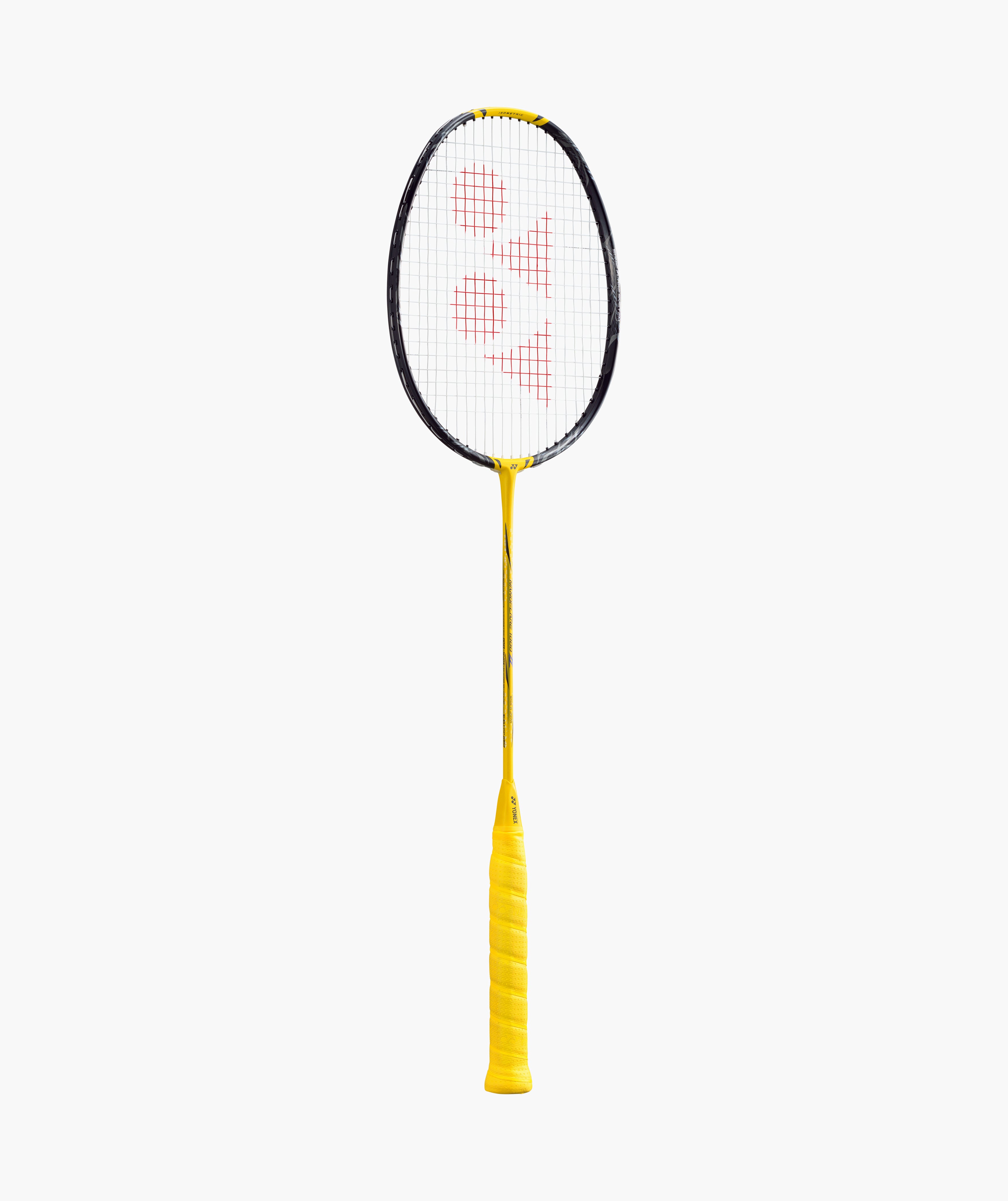 Nanoflare 1000Z 2023 Yonex4U · Lighter head · Extra stiffSee priceAmazon
- Halbertec 9000 Li-Ning4U · Even balance · MediumSee priceJoyBadminton
- DriveX 10 Metallic Victor4U · Even balance · StiffSee priceBadminton Warehouse
- Auraspeed 100X Ultra Victor4U · Lighter head · StiffSee priceBadminton Warehouse
- Arcsaber 73 Light Yonex5U · Even balance · FlexibleSee priceAmazon
- Nanoflare 700 Pro 2024 Yonex4U · Lighter head · MediumSee priceBadminton Avenue
The prices above are checked automatically at each store and may have changed since the last check. The price that counts is the one shown on the store's website at checkout. We may earn a commission on purchases made through store links, at no extra cost to you.