


 Brasil
 Canada
 United Kingdom
 Australia
 Netherlands
 France
 España
 Italia
 السعودية
Best Badminton Rackets 2026: Ranked by Playing Style
The 2026 ranking of the best badminton rackets by profile: attack and smash, defense and speed, control for singles, and back-court and front-court rackets for doubles.
Updated on 10/07/2026
On this page
- 1.How we chose the rackets in this ranking
- 2.Best badminton rackets for attack and smash
- 3.Best rackets for defense, drives and speed
- 4.Best all-round and control rackets for singles
- 5.Doubles: back-court racket and front-court racket
- 6.Comparison of the best badminton rackets by style
- 7.Before buying a top-end racket
- 8.Yonex, Li-Ning or Victor?
The best badminton racket of 2026 depends on where you win your points: if you decide with the smash, you need a head-heavy racket and a stiff shaft; if you live on defense and drives, you need a head-light one; and if you play singles, you need control to move your opponent around the court. That's why this selection of the best badminton rackets is organized by playing profile, rather than as a single list that would try to serve everyone.
Most of the models below are advanced-level rackets. If you're still learning your strokes, go straight to the guide to badminton rackets for beginners. If you already play at a club and want to move up a step without jumping to a racket that's too demanding, see the best rackets for intermediate players.
How we chose the rackets in this ranking
We started from Racquet Rank's badminton racket catalog and kept only published models, with a complete spec sheet, that are still in the product line or circulating in stores. Then we cross-checked four things:
- Weight class and balance, which define whether the racket leans toward attack or defense.
- Shaft flexibility, which tells you how much technique the racket demands.
- Maximum tension and materials, which separate a top-end racket from a simplified version of the same family.
- RR Score, which summarizes the spec sheet, reviews and positioning. The calculation is explained in our methodology.
One point many people miss: almost all top rackets of 2026 come in 4U (80 to 84.9 g), with a G5 grip and 675 mm in length. The difference between them isn't in total weight, but in where that weight sits and how much the shaft bends on the stroke. That's what this ranking tries to translate.
Best badminton rackets of 2026 by profile
- 1
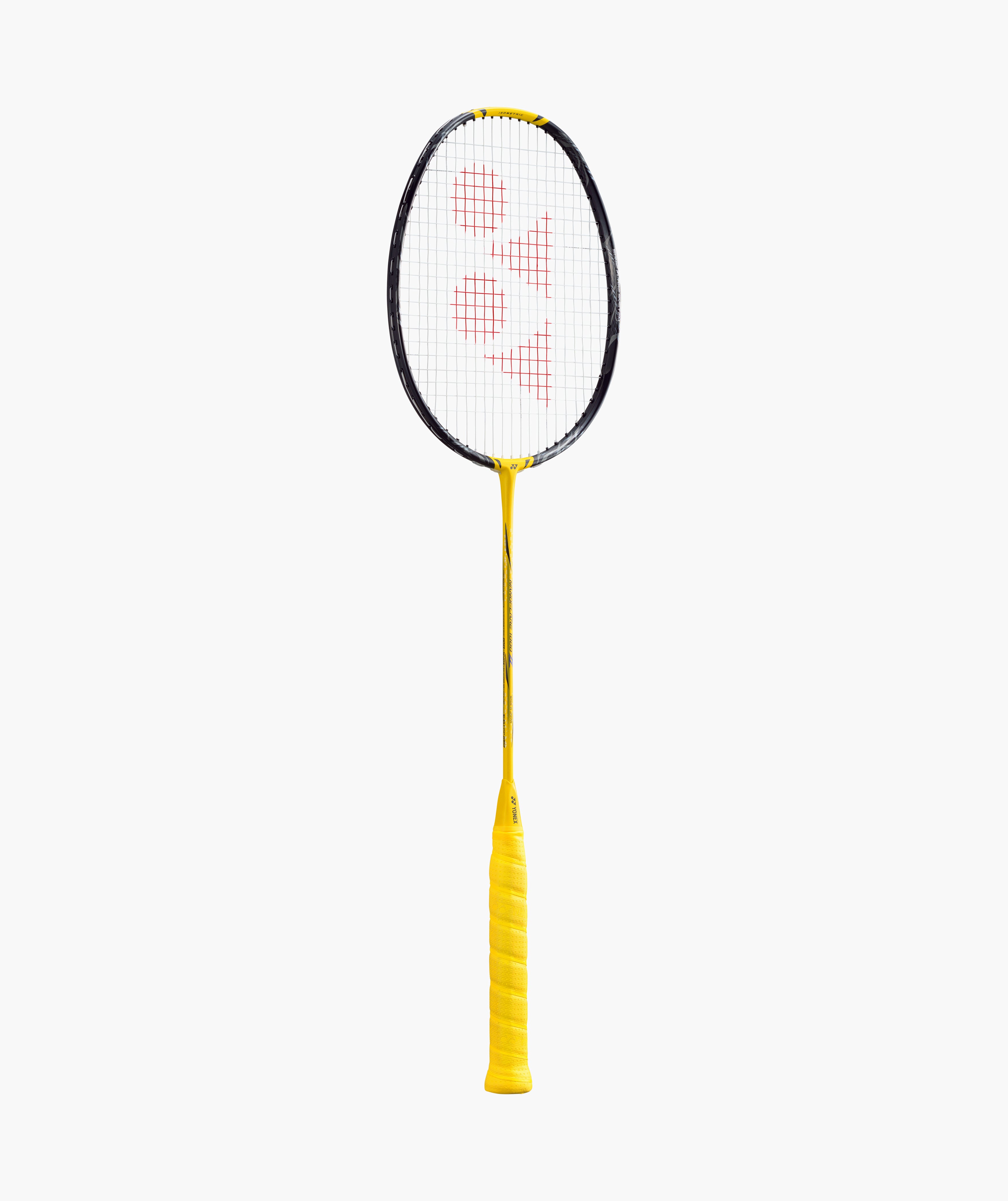
- Weight class
- 4U
- Balance point
- Lighter head
- Flexibility
- Extra stiff
Yonex's top Nanoflare, with a head-light balance, an extra stiff shaft and 675 mm. It's a combination designed for those with a fast arm and clean technique.
- 2
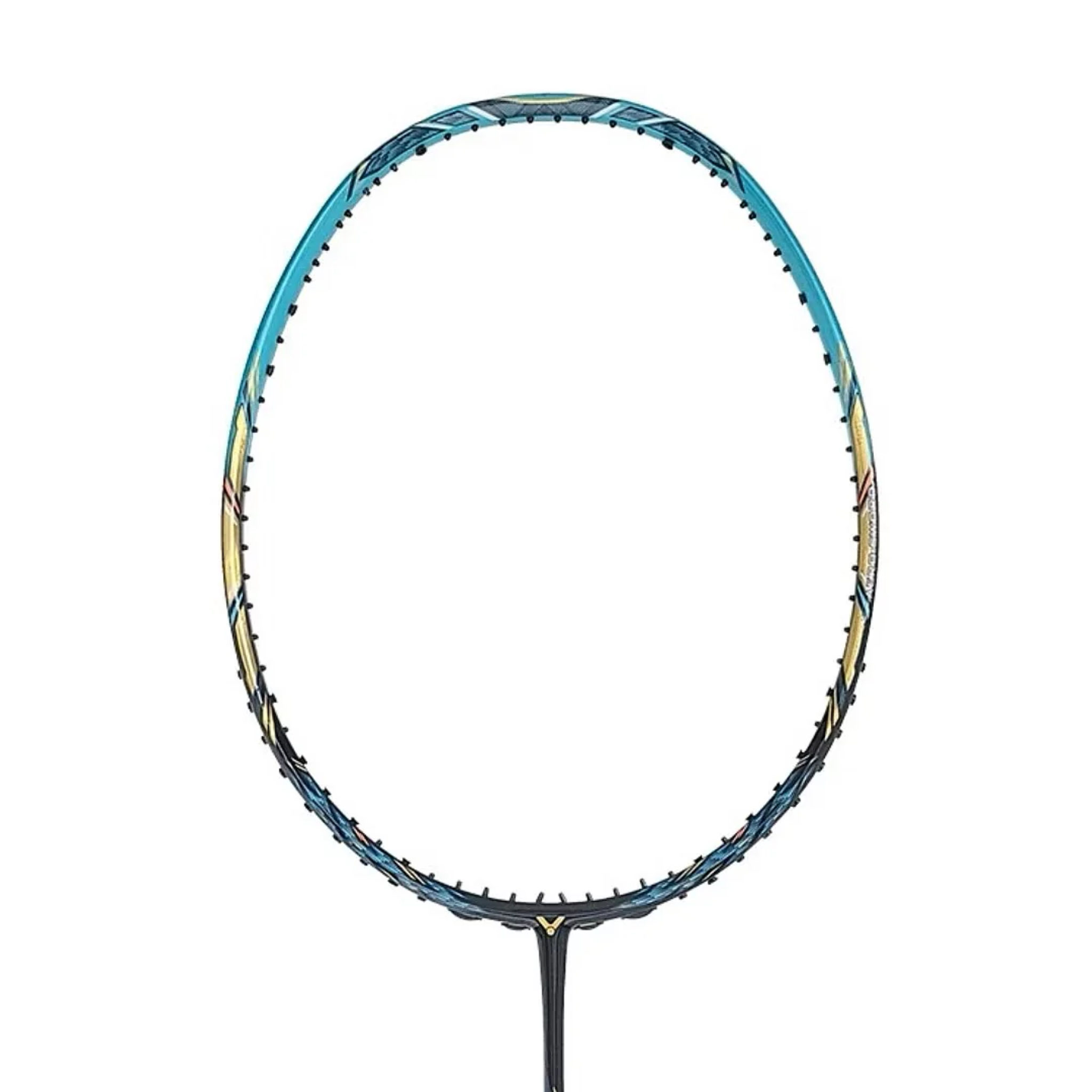
- Weight class
- 4U
- Balance point
- Even balance
- Flexibility
- Stiff
Even balance, a stiff 6.6 mm shaft and options in 4U and 3U. A versatile profile for those who rotate between front and back in doubles.
- 3
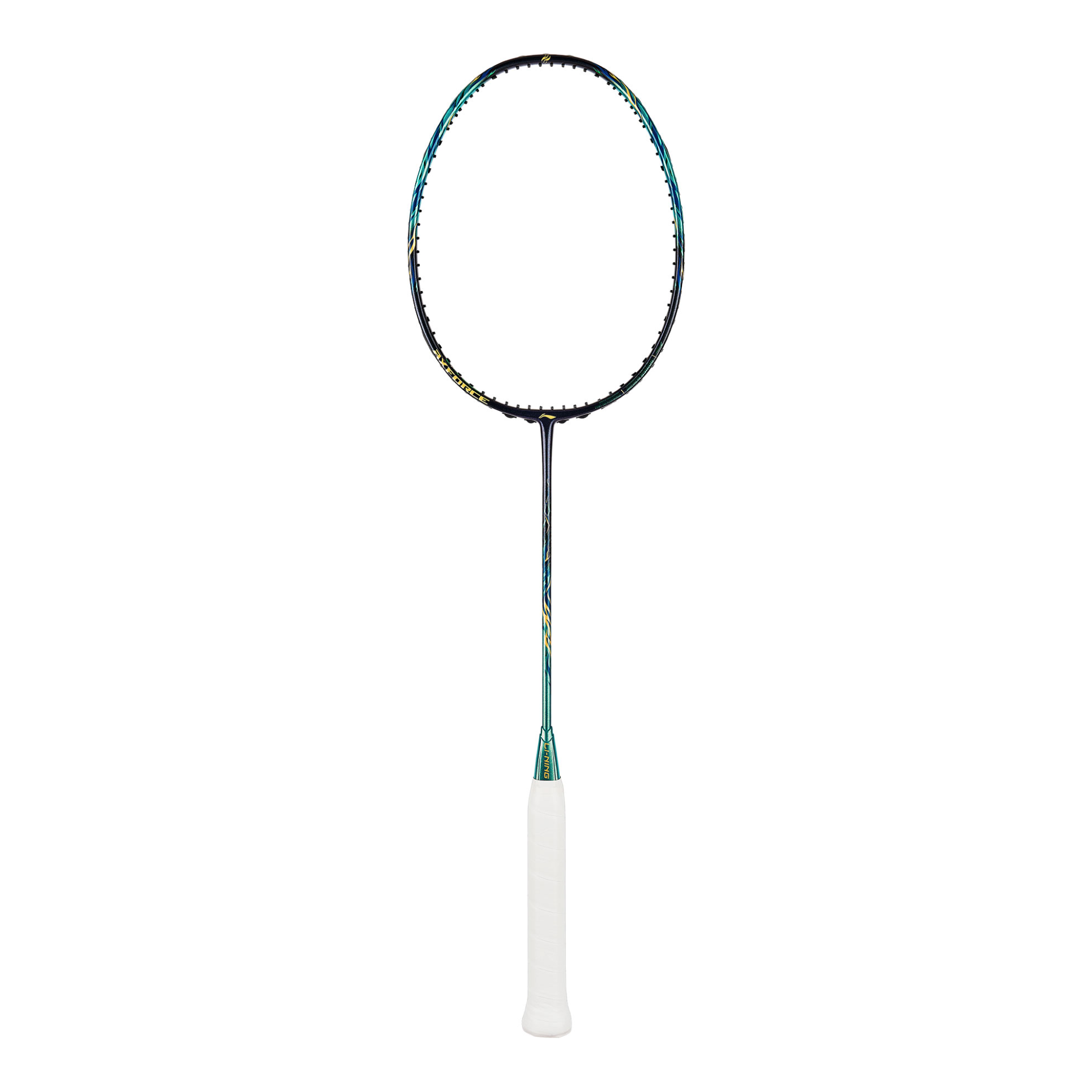
- Weight class
- 4U
- Balance point
- More head weight
- Flexibility
- Stiff
Second generation of the Axforce 100, the top of Li-Ning's attack line. A head-heavy balance and a stiff 6.2 mm shaft in M46, T1100 and ULTRA carbon, with options in 4U and 3U.
- 4
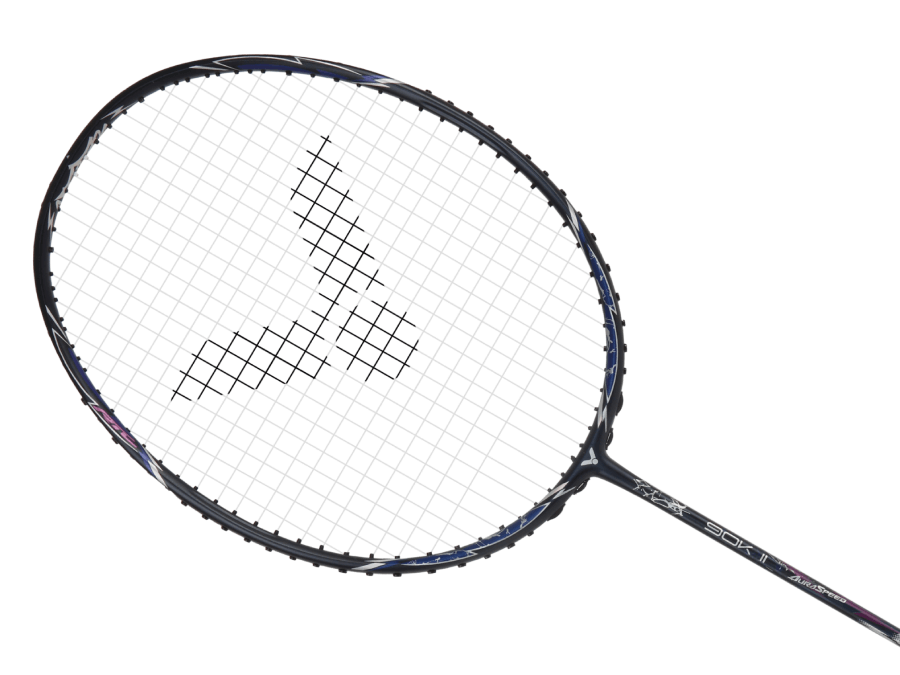
- Weight class
- 4U
- Balance point
- Lighter head
- Flexibility
- Stiff
A head-light balance and a stiff shaft with an anti-twist system, according to Victor. It's a common combination among those who alternate between defense and counterattack all the time.
- 5
- Weight class
- 3U
- Balance point
- Lighter head
- Flexibility
- Medium
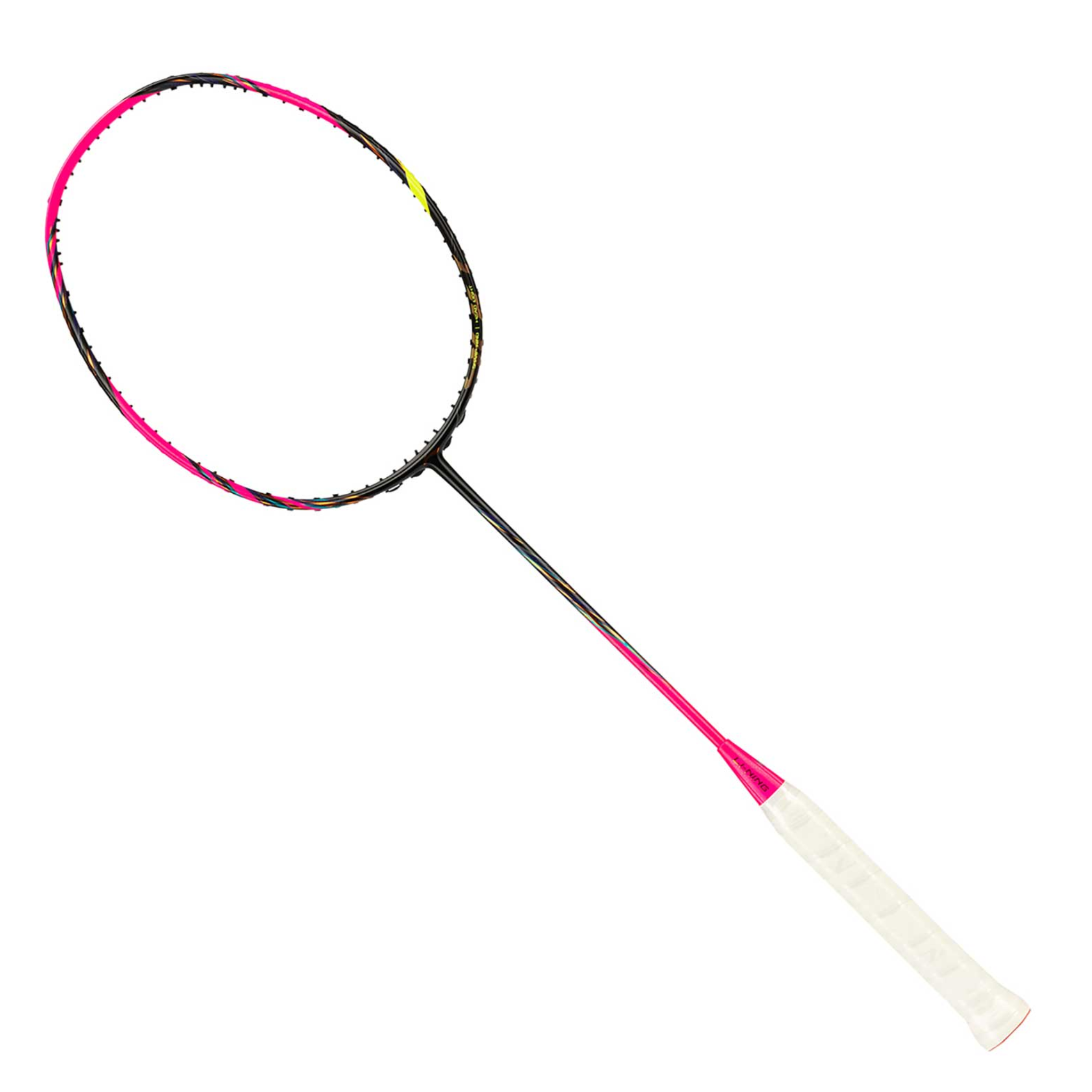
The top of Li-Ning's head-light Bladex line. Balance point at 295 mm, a thin frame and a medium shaft, in 3U and 4U. A common profile among those who play at the front and middle of the court.
- 6
- Weight class
- 4U
- Balance point
- Even balance
- Flexibility
- Medium
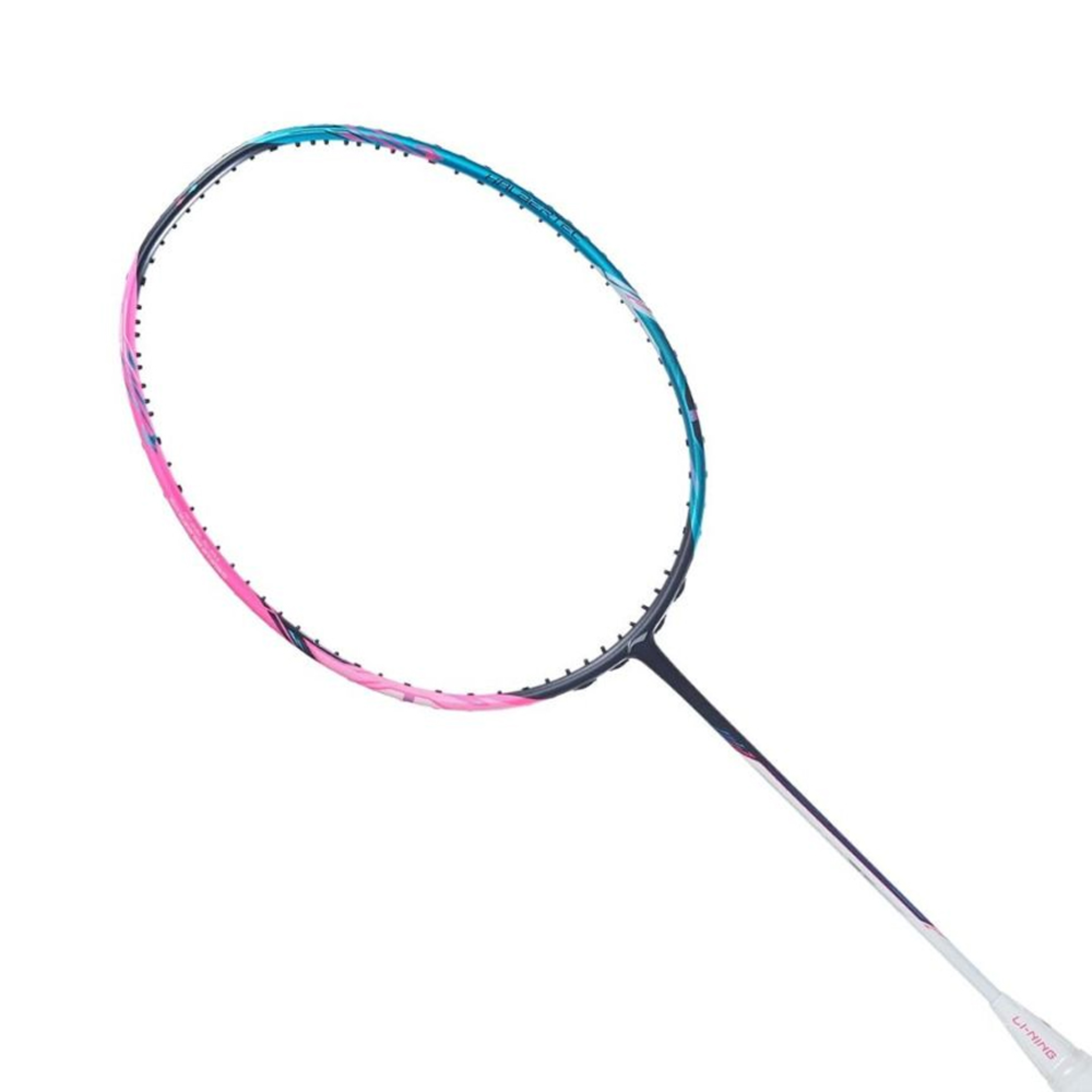
Even balance and a medium shaft, in 4U and 3U. Good for those who play singles and doubles and don't want a racket with an extreme style.







Best badminton rackets for attack and smash
An attack racket concentrates mass in the frame. After your arm accelerates, that mass keeps pushing the shuttle, and the smash arrives heavier and steeper at your opponent's floor. In singles, it's what lets you finish a long rally with a shot from the back. In doubles, it's what gives the partner at the front easy balls to put away.
The price shows up right after the smash. A heavy head takes longer to return in front of your body, so the opponent's fast counterattack at your chest or cross-court drive catches you a bit late. Anyone buying an attack racket needs a full stroke preparation and good court recovery.
Yonex Astrox 99 Pro (2025)
The third generation of the 99 Pro keeps the family recipe: a head-heavy balance and a stiff 2G-Namd shaft, with tungsten in the frame. It comes in 4U (83 g on average) and 3U, at 675 mm, with tension of 20 to 28 lbs in 4U. A stiff shaft snaps back quickly when the swing is fast, but it takes a fast arm to work.
This profile suits those who play singles on the attack or stay at the back in doubles. It's not for those who play glued to the net the whole time.
Strengths
- + Head-heavy, a typical back-court attack profile
- + Stiff 2G-Namd shaft and tungsten in the frame
- + 675 mm and tension of 20 to 28 lbs in 4U
- + Options in 4U and 3U
Drawbacks
- − A head-heavy balance tends to slow fast defense
- − A stiff shaft demands a full swing and good ball timing
- − Not well suited to those who mainly play at the net
Victor Thruster Ryuga III (2026)
The Ryuga III arrived in September 2026 as the new generation of Victor's attack line. It has a head-heavy balance and a 6.5 mm shaft. According to Victor, the frame has a spiral structure against twisting and the handle uses Free Core 2.0, designed to filter vibration. It comes in 4U and 5U, with a maximum tension of 32 lbs in 4U.
Because it's so recent, there's still little independent analysis. Anyone who wants an attacking Victor already tested by many people can look at the previous generation on the Victor rackets page.
Li-Ning Axforce 100 II
The Axforce 100 II is the top of Li-Ning's attack line in the catalog. It has a head-heavy balance, a stiff 6.2 mm shaft in M46, T1100 and ULTRA carbon and, according to the brand, a polymer in the frame to absorb impact. In 4U it weighs 80 to 84 g and accepts up to 30 lbs. It also comes in 3U, at 85 to 89 g.
Best rackets for defense, drives and speed
In modern doubles, a good share of points is decided in exchanges at net height, with the shuttle coming back in a fraction of a second. What matters there is how long the racket takes to leave one position and arrive at the other. A head-light balance reduces that time. That's why front-court and mid-court players usually prefer speed rackets.
Yonex Nanoflare 1000Z
This is Yonex's top Nanoflare: a head-light balance, an extra stiff shaft and 675 mm. The combination seems contradictory, but it has a logic. In general, a head-light balance makes a short, fast swing easier, and a hard shaft returns the energy without delay when the arm is fast. It's a racket designed for those who already have that arm.
The downside is the demand. With a slow swing, the extra stiff shaft barely works and the shot comes out short and hard on the arm.
Victor Auraspeed 90K II
The 90K II is a head-light racket with a stiff shaft, associated with Danish player Anders Antonsen. Victor describes the shaft as 6.8 mm with an anti-twist system. It comes in 4U and 3U. A head-light balance with a firm shaft is a common combination among those who alternate between defending and counterattacking all the time.
Li-Ning Bladex 900 (2025)
The Bladex 900 is the top of Li-Ning's head-light Bladex line. It has a balance point at 295 mm, a thin frame and a medium shaft, in 3U and 4U. A medium shaft usually forgives more than the stiff ones of the other top rackets in this section. With the head-light balance, the smash from the back depends more on the arm than on weight in the frame.
Best all-round and control rackets for singles
In singles you cover the entire court by yourself, and the rallies are long, full of clears, drops and lifts. A racket that puts the shuttle exactly on the back line, or lets the drop die right at the tape, is worth more than a slightly faster smash.
Yonex Arcsaber 11 Pro
The Arcsaber 11 Pro is the top of the Arcsaber line, which Yonex positions for control. According to the brand, the frame was designed to hold the shuttle on the strings a moment longer. The even balance lets you defend and attack with the same racket. The smash depends more on your technique than on the weight of the head, and the stiff shaft forgives little mistiming.
Victor Jetspeed S 12 II
The Jetspeed S 12 II is the new generation of Victor's Jetspeed line, with a stiff 6.6 mm shaft. It has an even balance and comes in 4U and 3U. This profile tends to work well in doubles for those who play reactively, and also in singles for those who prefer to counterattack rather than force the smash.
Li-Ning Halbertec 8000
The Halbertec 8000 opened Li-Ning's even-balance Halbertec line. The shaft has medium flexibility, and in general a medium shaft makes the deep clear easier and gives a softer hit than a stiff one. Those who hit very hard may prefer a firmer shaft.
Doubles: back-court racket and front-court racket
Yonex solved the doubles problem by creating two sister rackets. The Astrox 88D Pro is the version the brand recommends for those who stay at the back and decide with the smash, with a head-heavy balance and a stiff shaft. The Astrox 88S Pro is recommended for those who play at the front and is 670 mm long. A slightly shorter racket tends to be more agile on pushes, drives and finishes near the net.
In practice, few amateur players stay in one position the whole match. If you rotate a lot between front and back, an even-balance racket, like the Jetspeed S 12 II or the DriveX 10 Metallic, is usually a safer choice than either of the two specialists.
Comparison of the best badminton rackets by style
The table below puts one racket from each profile side by side. Notice how the weight is practically the same and what changes is the balance and the shaft.
Attack, speed and control side by side
3 racquets: swipe sideways to see them all1–2 of 3 →
Highlighted: what differs between the racquets. In bold: the best value in the row.
| If your game is... | Look for | Examples from this ranking |
|---|---|---|
| Smash from the back, offensive singles | Head-heavy, stiff shaft | Astrox 99 Pro, Axforce 100 II, Thruster Ryuga III |
| Defense, drives, net play in doubles | Head-light, stiff shaft | Nanoflare 1000Z, Auraspeed 90K II |
| Point construction, tactical singles | Even balance, stiff shaft | Arcsaber 11 Pro |
| Rotation in doubles | Even balance | Jetspeed S 12 II, DriveX 10 Metallic |
| Versatility with a more forgiving shaft | Even balance, medium shaft | Halbertec 8000 |
If you want to understand why each combination behaves this way, the guide to badminton racket balance and flexibility explains it in detail.
Before buying a top-end racket
Pro, Tour, Game and Play are not the same racket. In Yonex's families, the Pro version has the most expensive materials and, usually, the stiffest shaft. Tour sits just below, Game is more forgiving and Play is the entry point, already strung. If the Astrox 99 Pro seems like too much for you, the Astrox 99 Tour keeps the head-heavy balance and stiff shaft with slightly simpler construction.
3U or 4U. The 3U has a few more grams, which gives stability and weight in the shot, but tires you more in long matches. Most advanced amateurs do better with 4U.
String tension. The recommended range for these rackets is normally 20 to 28 lbs. Stringing at the maximum just because pros do it usually makes your game worse: the effective area of the strings shrinks and off-center shots die short.
Sold unstrung. Many Pro and Tour versions leave the factory without strings. Check the listing and plan for the stringing service.
Heads up
Top-end rackets are the most counterfeited on the market. Prefer established stores that provide a receipt, be wary of prices far below the going rate and check the authenticity seal when the brand offers one. The blocks on this page show live prices for the offers we track.
Yonex, Li-Ning or Victor?
All three brands dominate high-level badminton and have excellent rackets in every profile. Yonex is the easiest to find and has the most organized line (Astrox for attack, Nanoflare for speed, Arcsaber for control). Li-Ning follows a similar logic with Axforce, Bladex and Halbertec. Victor splits into Thruster (attack), Auraspeed (speed), Jetspeed and DriveX (balance).
You can compare models from each in the badminton racket comparison tool or directly by brand: Yonex, Li-Ning and Victor. If you don't know your profile yet, find your racket asks a few questions and suggests models.
It's also worth reading the guide on how to choose a badminton racket before you commit to a purchase: it explains weight, grip, material and tension more thoroughly.
What is the best badminton racket of 2026?
There isn't a single best for everyone. For smash and offensive singles, look for a head-heavy balance and a stiff shaft, like the Yonex Astrox 99 Pro. For defense and drives, a head-light balance, like the Nanoflare 1000Z. For building the point, an even balance, like the Arcsaber 11 Pro. For doubles with rotation, an even balance, like the Victor Jetspeed S 12 II. Choose by your style, not by the overall ranking.
What racket does Viktor Axelsen use?
Axelsen is associated with the Yonex Astrox 100ZZ, a head-heavy racket with an extra stiff shaft. In 2025 Yonex released the Astrox 100ZZ VA, an edition made in partnership with him. It's a very demanding racket, designed for those who already have a full swing.
Is an expensive badminton racket worth it for an amateur?
It's worth it when you already have the technique to use what it offers. A top-end racket with a stiff shaft pays off a lot with a fast swing, but with a slow swing it feels hard and the shot comes out short. For those still improving, a Tour or Game version of the same family usually delivers more.
What is the best badminton racket for doubles?
It depends on your position. Those who stay at the back and attack tend to get more out of a head-heavy racket, like the Astrox 88D Pro. Those who play at the net usually prefer more agile rackets, like the 670 mm Astrox 88S Pro, or a head-light one, like the Nanoflare 1000Z. Those who rotate between positions usually do better with an even balance, like the Jetspeed S 12 II.
3U or 4U racket for an advanced player?
Most advanced amateur players use 4U, which is faster and tires you less. The 3U brings more stability and weight in the shot, and suits those who play singles with lots of smashing and have the fitness to sustain the heavier racket in long matches.
What is the difference between Yonex Astrox, Nanoflare and Arcsaber?
They're Yonex's three main lines. Astrox is head-heavy and geared toward attack. Nanoflare is head-light and geared toward speed and defense. Arcsaber has an even balance and is geared toward control and placement.
Where to buy the racquets in this guide
- Nanoflare 1000Z 2023 Yonex4U · Lighter head · Extra stiffSee priceAmazon
- Jetspeed S 12 II Victor4U · Even balance · StiffSee priceBadminton Alley
- Axforce 100 II Li-Ning4U · More head weight · StiffSee priceJoyBadminton
- Auraspeed 90K II Victor4U · Lighter head · StiffSee priceBadminton Warehouse
- Bladex 900 2025 Li-Ning3U · Lighter head · MediumSee priceAmazon
- Halbertec 8000 2023 Li-Ning4U · Even balance · MediumSee priceJoyBadminton
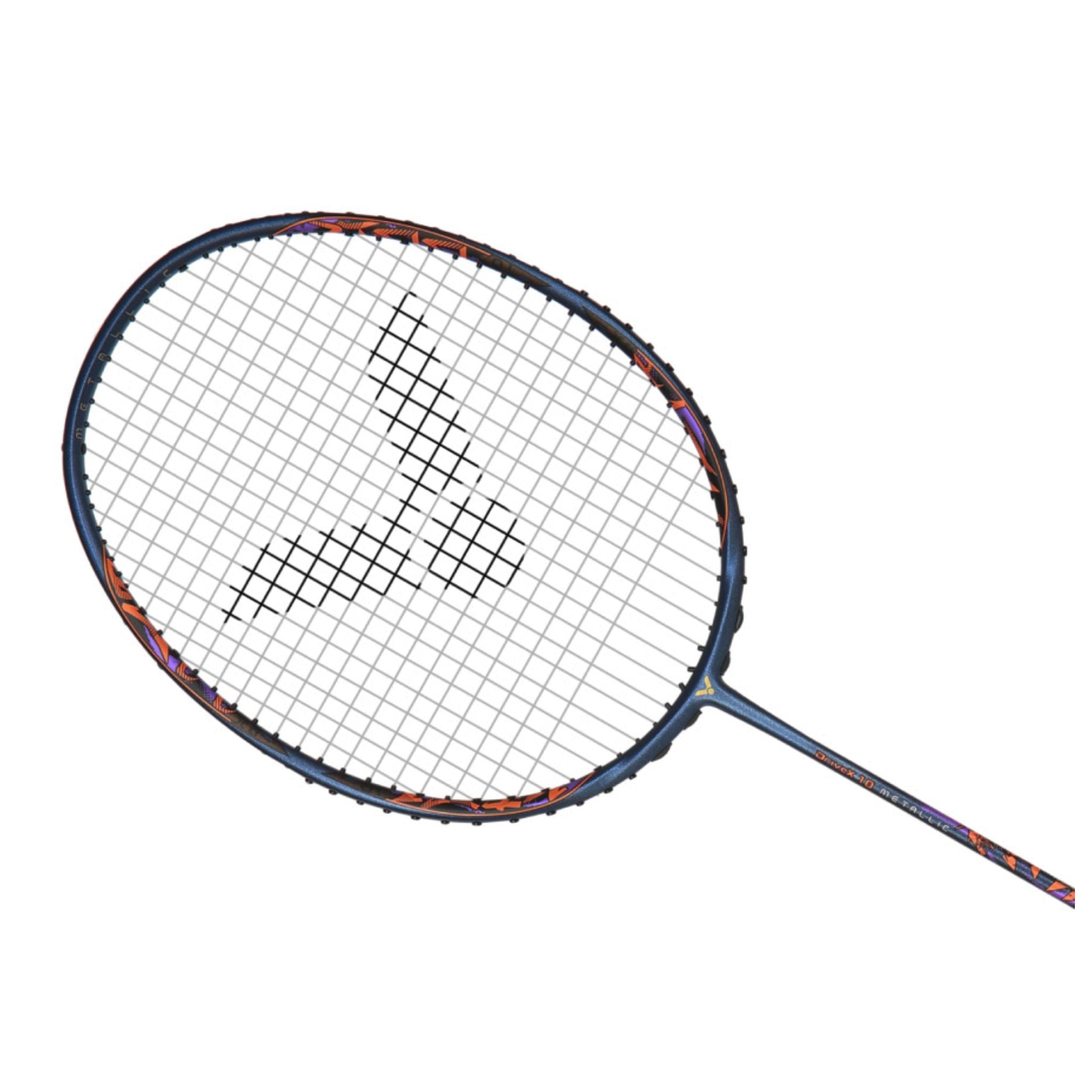 DriveX 10 Metallic Victor4U · Even balance · StiffSee priceBadminton Warehouse
The prices above are checked automatically at each store and may have changed since the last check. The price that counts is the one shown on the store's website at checkout. We may earn a commission on purchases made through store links, at no extra cost to you.