


 Brasil
 Canada
 United Kingdom
 Australia
 Netherlands
 France
 España
 Italia
 السعودية
10 best badminton rackets for advanced players in 2026
Already master your strokes and want a racket that reinforces your style? See how to recognize the advanced level, what changes on the spec sheet and 10 rackets by role on court.
Updated on 10/07/2026
On this page
- 1.Are you already advanced? Five signs on court
- 2.From intermediate to advanced: what changes on the spec sheet
- 3.The 10 best badminton rackets for advanced players
- 4.Which to choose by your role on court
- 5.Tour or Pro: do you need the tournament version?
- 6.String and tension at the advanced level
- 7.Common mistakes of players reaching the advanced level
- 8.Where to find and compare
The best badminton rackets for advanced players have a stiff shaft, weigh 4U or 3U and are chosen by the role you play on court: attacking from the back, deciding at the net, defending at speed or placing the shuttle. At this level the racket no longer teaches you anything. It amplifies what your swing already does, for better and for worse.
That is why this guide starts with an honest question (are you already advanced?), shows what changes on the spec sheet compared to the intermediate level and lists ten rackets sorted by style, almost all one step below the tournament versions.
Are you already advanced? Five signs on court
There is no official exam, but the advanced level shows up in very concrete situations:
- Your baseline-to-baseline clear comes from the forearm and wrist, without throwing your whole body into the shot, and you alternate between the attacking clear, which is lower, and the defensive one, which is higher, depending on your opponent's position.
- Your smash has variation. With the same preparation you choose between the full smash, a half-speed smash and the fast drop, and your opponent can't read it in advance.
- On defense you choose the response. A short block when the attacker is at the back, a long drive when he has moved up to the net.
- In doubles the formation rotates on its own. Side by side on defense, front and back on attack, without having to agree on it every point.
- You break strings often and already have a preferred tension, instead of using the one that came from the factory.
If three or more signs describe your game, the rackets below make sense. If the clear still takes effort to reach the back, the right place is the guide to the best badminton rackets for intermediate players, which covers medium shafts.
From intermediate to advanced: what changes on the spec sheet
| Spec item | Intermediate | Advanced |
|---|---|---|
| Shaft | Medium, sometimes stiff | Stiff; extra stiff only with a very fast swing |
| Weight | 4U, sometimes 5U | 4U on most; 3U for singles and for those who want stability |
| Version at Yonex | Game or Tour | Tour, or Pro for those who already play tournaments |
| Maximum tension | Up to 28 lbs is enough | It counts more: those who like hard strings look at the racket's ceiling |
| Selection criterion | General style (attack or defend) | Role on court (back, net, middle, singles) |
The most important change is the shaft. When your arm really accelerates, a stiff shaft snaps back into position at the right time and the shuttle goes where you aimed. A medium shaft, which helped with depth, starts to delay the stroke precisely on drives and fast smashes. The guide to balance and flexibility explains the physics of this in detail.
The second change is in the criterion. The intermediate player chooses between "attacker" and "defender." The advanced player, especially in doubles, chooses by the position they occupy: the racket for the player at the back and the one for the player at the net can come from the same family and still be different, as the Astrox 88D and 88S show.
The 10 best badminton rackets for advanced players
The 10 best badminton rackets for advanced players in 2026
- 1
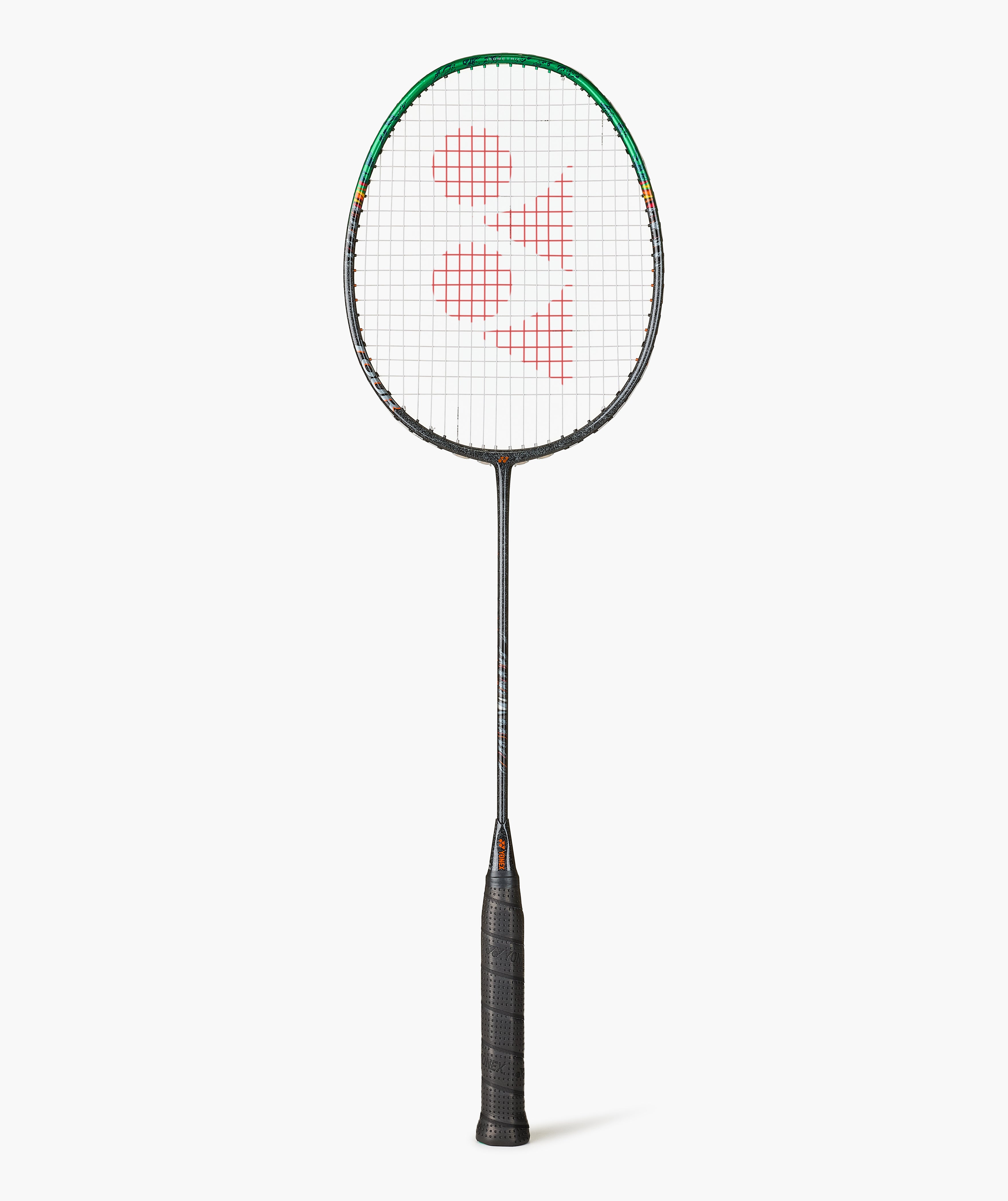
- Weight class
- 4U
- Balance point
- More head weight
- Flexibility
- Stiff
Version just below the 99 Pro in the line's third generation, made in Taiwan. Head-heavy, stiff shaft with 2G-Namd Flex Force, 675 mm and 83 g on average in 4U, with 20 to 28 lbs. For players who decide the point with the smash and want a feel close to the Pro.
- 2
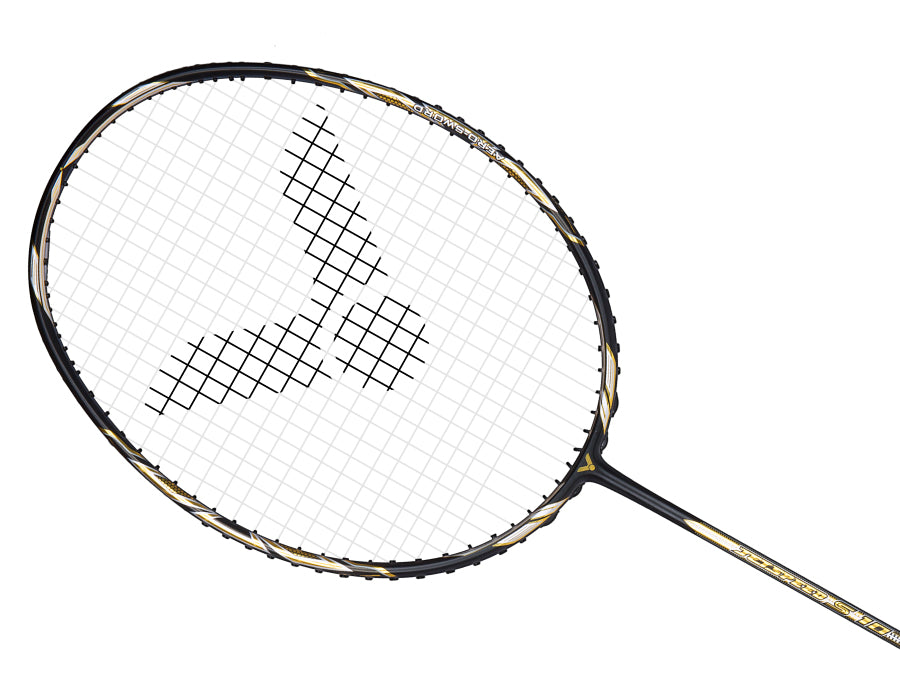
- Weight class
- 4U
- Balance point
- Even balance
- Flexibility
- Stiff
Top of the Jetspeed line: even balance, a 6.8 mm stiff Pyrofil shaft and a small head, which speeds up the swing. Very precise on drives and at the net. The smaller sweet spot demands clean contact.
- 3
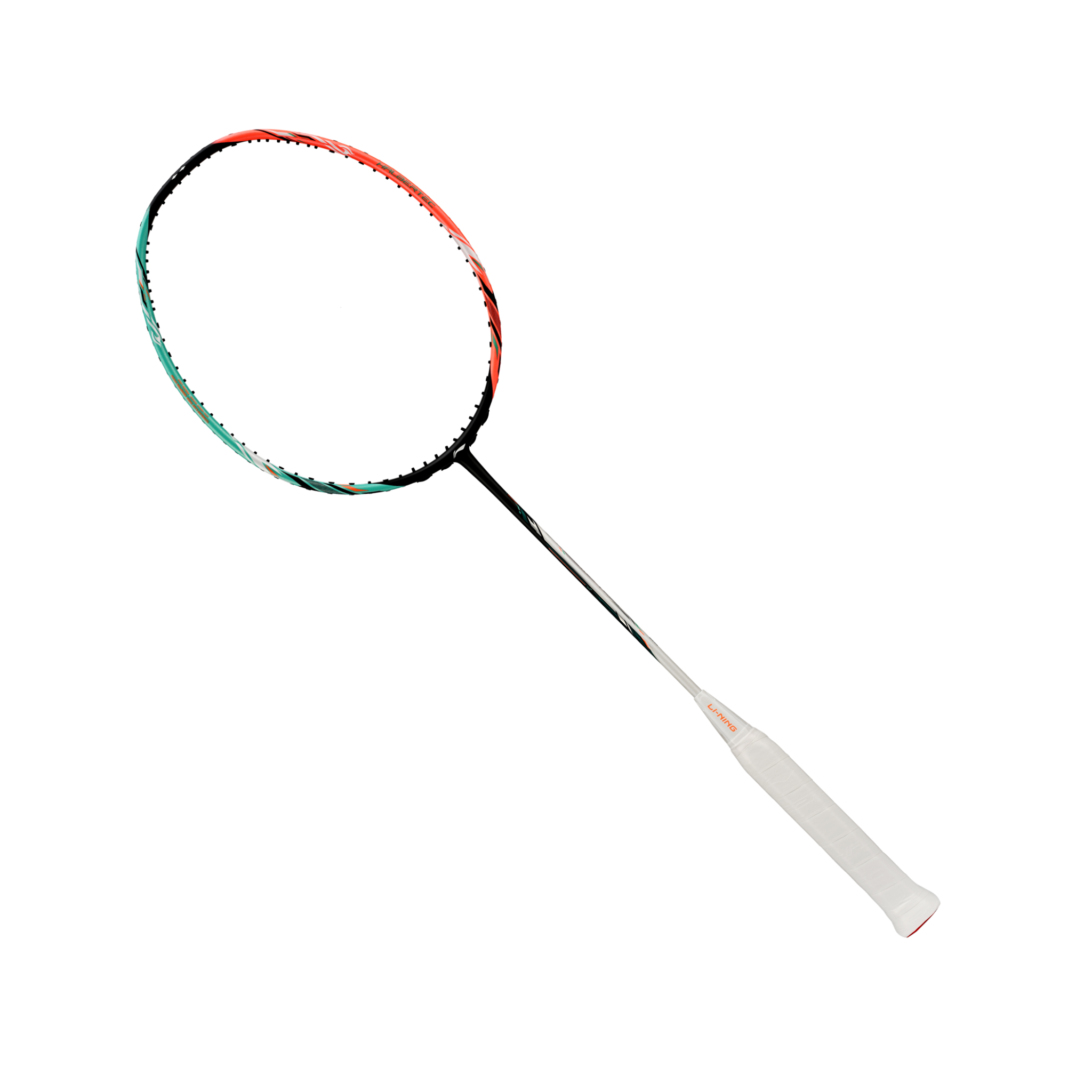
- Weight class
- 4U
- Balance point
- Even balance
- Flexibility
- Stiff
Even balance, with the balance point at 301 to 302 mm, a firm ULTRA carbon shaft and tension of up to 30 lbs in 4U (31 lbs in 3U). Stable for defending, driving and attacking.
- 4
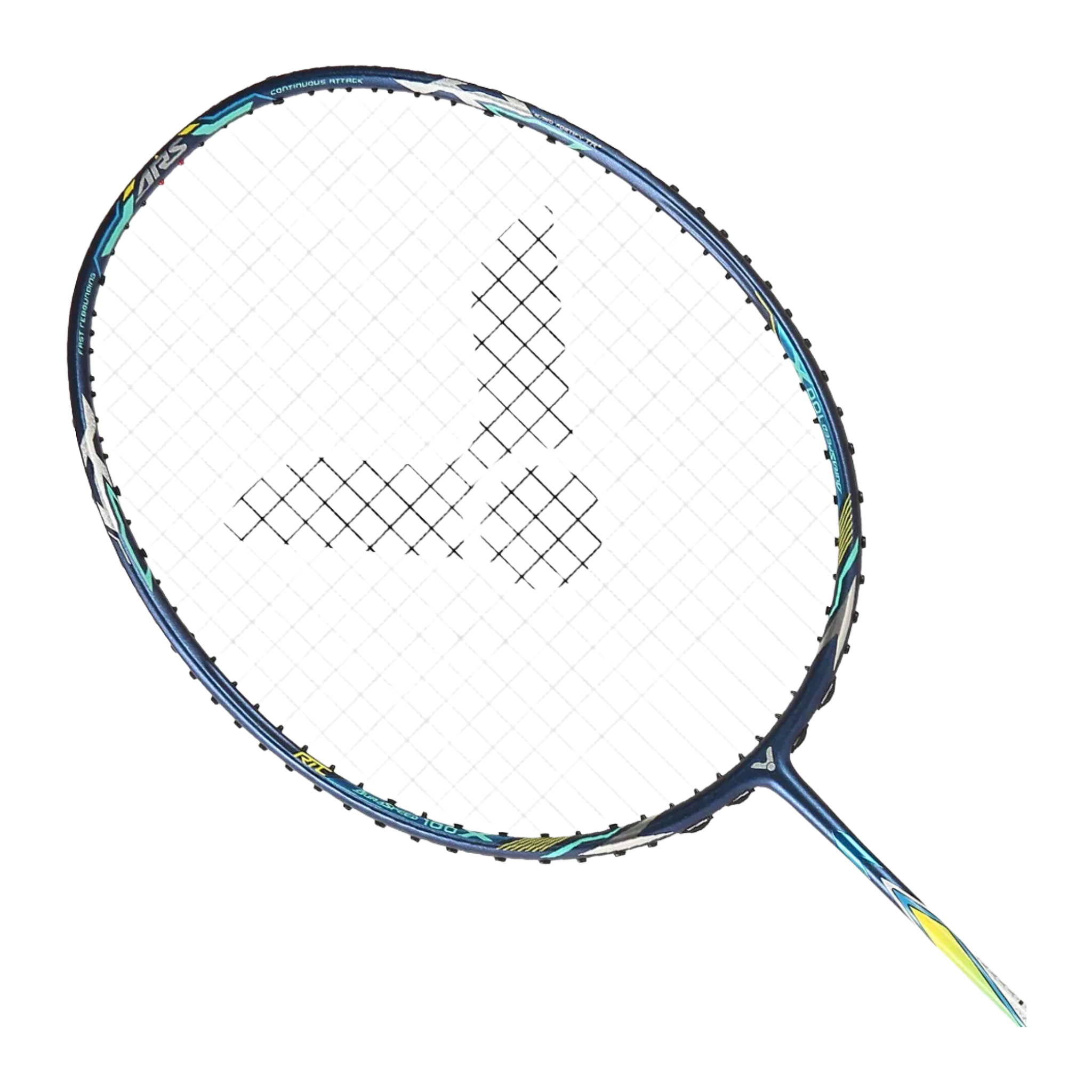
- Weight class
- 4U
- Balance point
- Lighter head
- Flexibility
- Stiff
Head-light, 6.8 mm stiff Pyrofil shaft and a Free Core handle. Quick at the front and in the middle of the court, made for players who play with short preparation. Loses some weight on the smash from the back.
- 5
- Weight class
- 3U
- Balance point
- More head weight
- Flexibility
- Stiff
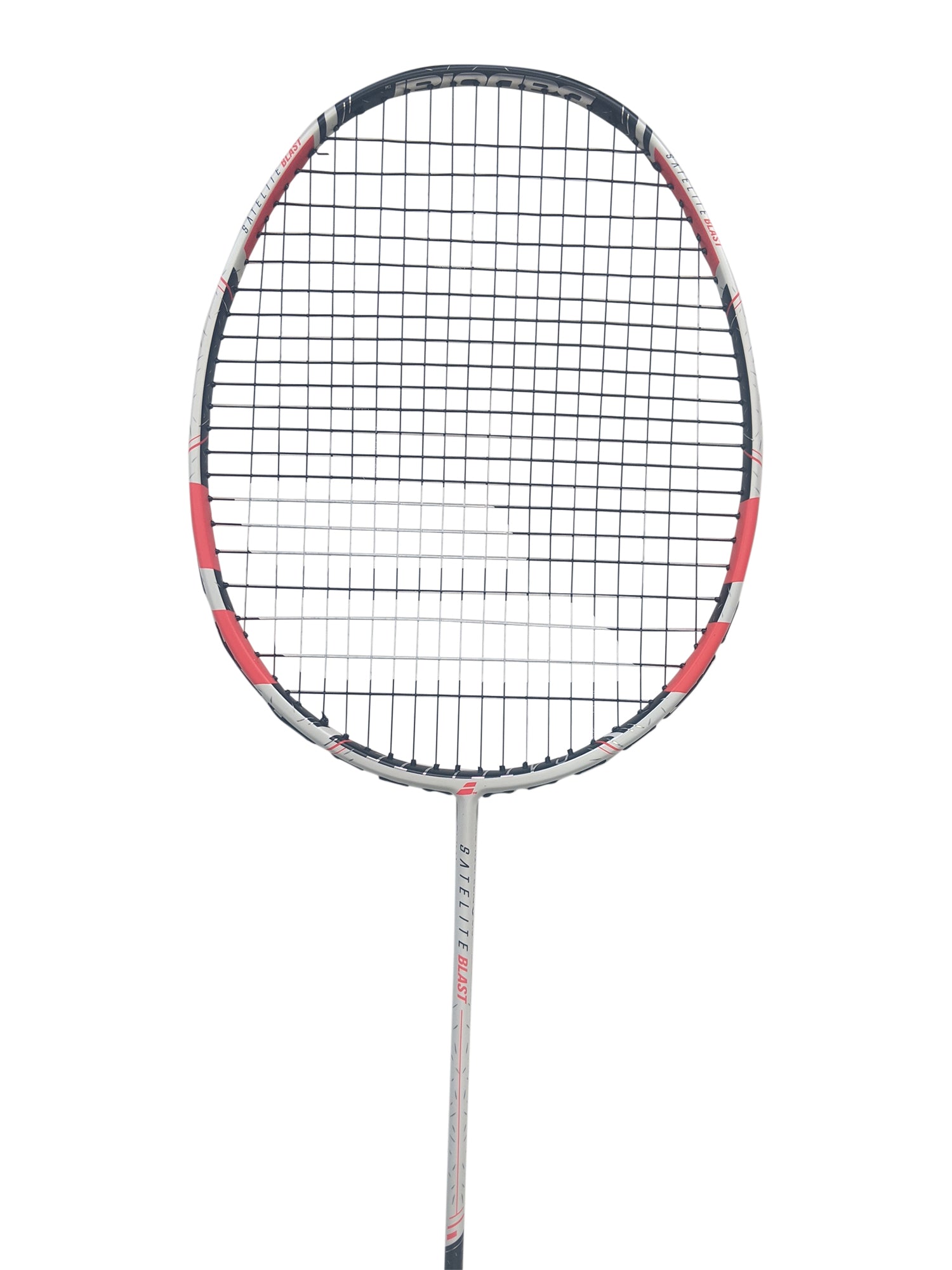
88 g, head-heavy and a stiff shaft, for heavy smashes and deep clears. Comes pre-strung from the factory, at 25 lbs, and accepts up to 27 lbs, a lower ceiling than the Asian brands.






Which to choose by your role on court
| If you... | Look for | In the ranking |
|---|---|---|
| Decide the point with the smash, in singles or at the back in doubles | Head-heavy and a stiff shaft | Astrox 99 Tour, Astrox 88D Tour, Satelite Blast |
| Play at the front in doubles and kill the shuttle at the net | A shorter or head-light racket | Astrox 88S Tour, Nanoflare 800 Tour |
| Defend smashes and live on drives | Head-light and a stiff shaft | Nanoflare 800 Tour, Auraspeed 100X |
| Build the point with placement | Even balance and a stiff shaft | Arcsaber 11 Tour, Jetspeed S 10, Halbertec 7000, BR 990 V |
Back-court attacker: head weight you can sustain
At the advanced level, the attacker doesn't need a racket that "gives power." They need one that holds up through a sequence: smash, the return comes at the body, another smash. That is where the difference between the options shows.
The Astrox 99 Tour is the most direct for those who play singles or always stay at the back. The head-heavy balance gives mass to the smash and the 2G-Namd shaft returns energy quickly. The Astrox 88D Tour was designed for the back of doubles, where the attacker hits three or four times in a row before the partner closes at the net; the Rotational Generator System distributes weight to make recovery between strokes easier. The Satelite Blast, on the other hand, is the 3U option, at 88 g, and arrives pre-strung from the factory, which appeals to those who want to play the day after buying.
If the attacker is your profile and you want to see more options, including cheaper ones, the list of 10 badminton rackets for attack goes deeper into the subject.
Three attacking rackets for advanced players
Highlighted: what differs between the racquets. In bold: the best value in the row.
Net and defense: the racket that gets there first
Players at the front in doubles almost never take a full swing. The stroke is short, from the wrist, and the shuttle arrives fast. The Astrox 88S Tour solves this differently from head-light rackets: it keeps the weight in the head so you can still finish with power, but shortens the racket to 670 mm, which makes the handling more agile.
The Nanoflare 800 Tour and the Auraspeed 100X follow the classic speed recipe: head-light and a stiff shaft. The Nanoflare has copper in the frame, which the spec sheet associates with a softer hit, and the Auraspeed has Victor's Free Core handle. Both defend smashes easily and return drives with direction, but neither will give your back-court smash the weight of an Astrox.
For doubles players who want an even lighter racket, the list of 7 light badminton rackets for doubles gathers options in 4U and 5U.
Control and singles: even balance with a firm shaft
The control player wins the point with placement, changes of pace and patience. They want to feel the shuttle on the strings and place it centimeters from the line. The four even-balance rackets in the ranking do this with different personalities.
The Arcsaber 11 Tour was designed to "hold" the shuttle on the strings, thanks to the frame's Pocketing Booster. The Jetspeed S 10 has a small head and a 6.8 mm shaft, so it tends to be the most agile of the four, but has a smaller sweet spot. The Halbertec 7000 accepts up to 30 lbs in 4U, for those who like very hard strings. And the BR 990 V is 3U, at 89 g, which gives stability on back-court strokes for singles players.
Strengths
- + Very good control and shuttle retention
- + Versatile even balance between attack and defense
- + Stable on drives and defense
- + Available in 4U and 3U
Drawbacks
- − Stiff shaft demands technique
- − Smash less heavy than attacking rackets
- − Comes without strings
Tour or Pro: do you need the tournament version?
For most advanced club players, no. At Yonex, the Tour is made in Taiwan with construction very close to the Pro and, on our catalog's spec sheets, it usually has the same shaft flexibility. The full explanation of the Play, Game, Tour and Pro ladder is in the guide for intermediate players.
The Pro starts to make sense when you play tournaments often and want the top version of the family you already master. That is the subject of the guide to the best badminton rackets for competition, which also covers backup rackets, BWF rules and tournament stringing.
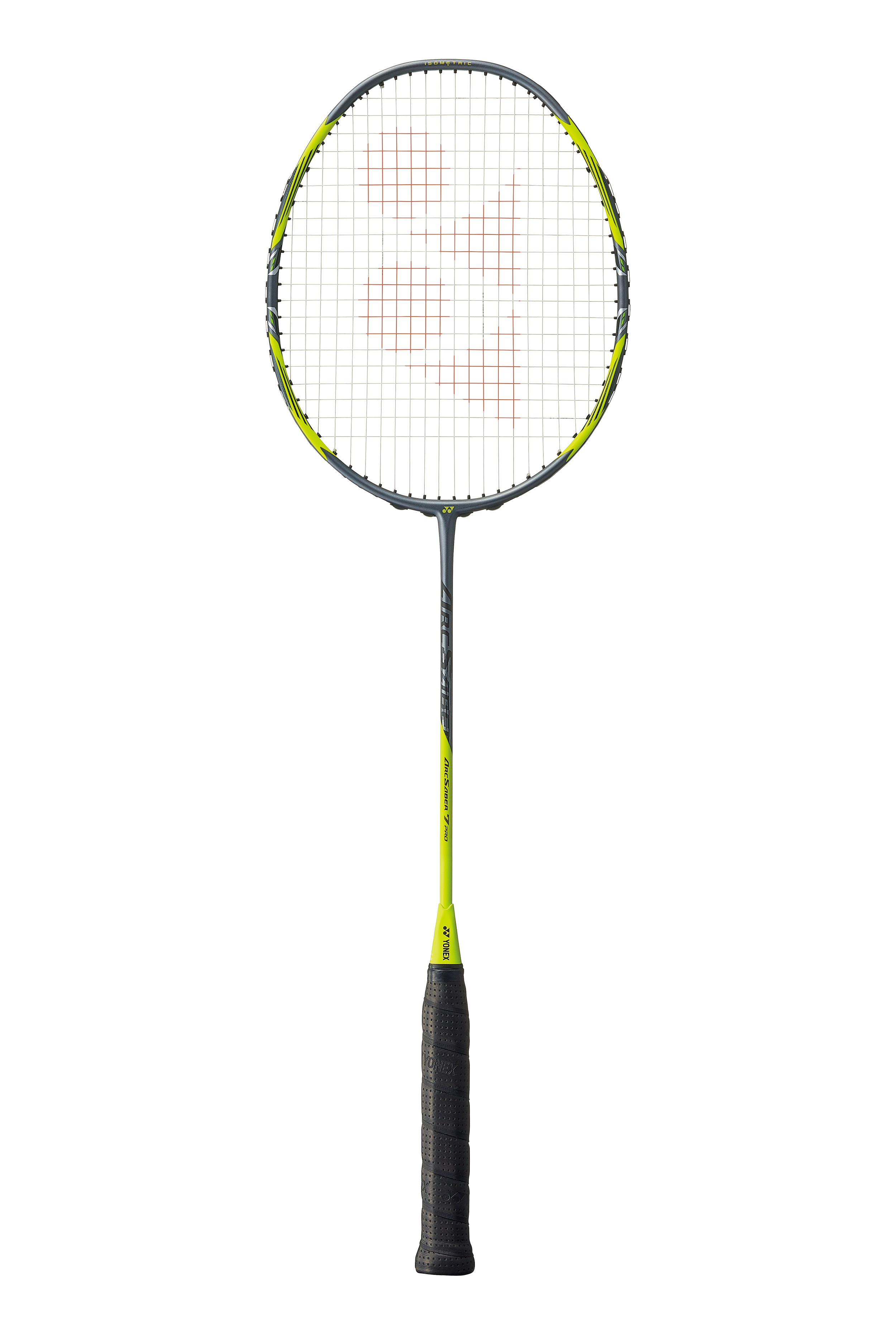
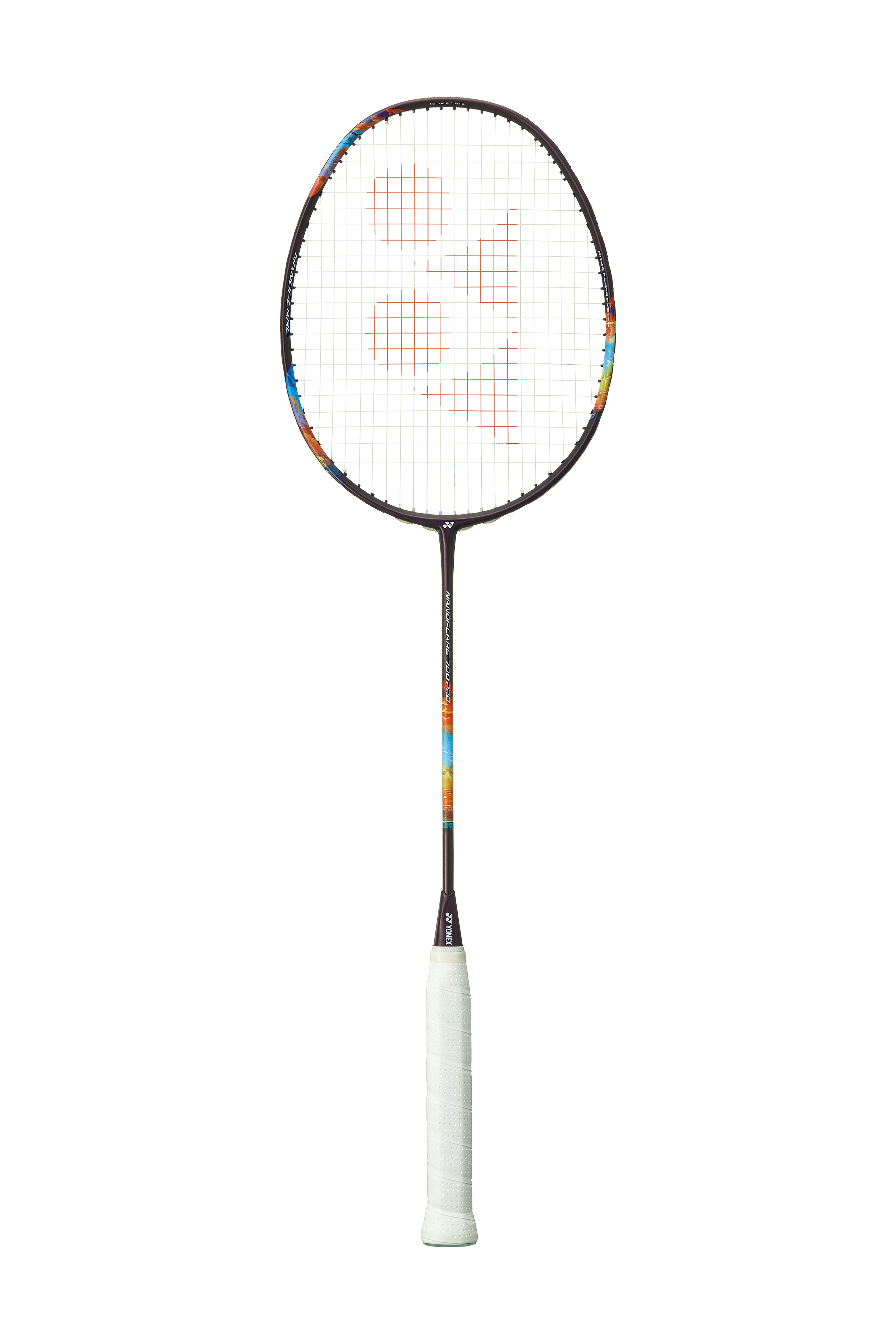
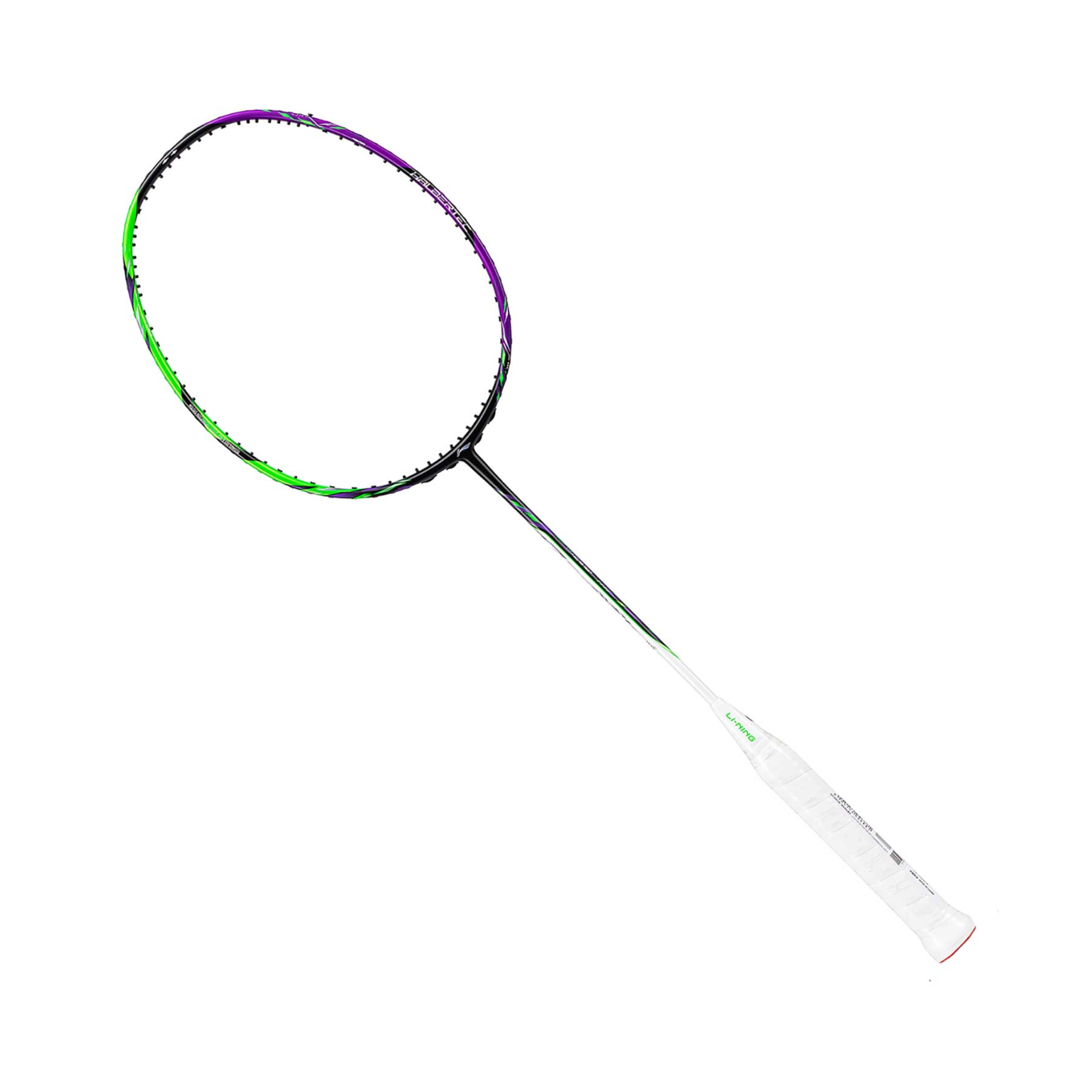
There is also a middle path that people rarely remember: top-tier rackets with a medium shaft, such as the Astrox 77 Pro, the Arcsaber 7 Pro and the Nanoflare 700 Pro. They use top-tier materials, but with a shaft that flexes more, and suit advanced players who have technique but not a very fast arm, or who play many hours a week and want less load on the arm.
Top-tier rackets with a medium shaft, for those who don't want a hard shaft




String and tension at the advanced level
Advanced players tend to raise the tension because they hit the center of the strings regularly and want a crisper response. Before asking your stringer for a tension, check your racket's ceiling, because it varies quite a bit among those in the ranking:
- Up to 27 lbs: Satelite Blast, and the Jetspeed S 10 and Arcsaber 11 Tour in the 4U version.
- Up to 28 lbs: the Yonex Tours, such as the Astrox 99 Tour, 88D Tour, 88S Tour and Nanoflare 800 Tour, and the Auraspeed 100X in 4U.
- Up to 30 lbs: Halbertec 7000 in 4U, which reaches 31 lbs in 3U.
The ceiling isn't a goal. High tension shrinks the area that responds well and increases the vibration that reaches your arm. It is only worth it if your contact is centered and you feel the shuttle is "sinking" too much into the strings. Go up one pound at a time and keep the same string, so you know what caused the difference.
Tip
Write down the tension and string model every time you restring. After three or four restrings, you'll have a history of what worked, and your stringer can repeat exactly the setup of the racket that was playing well.
Common mistakes of players reaching the advanced level
Buying the extra stiff for status. Rackets like the Astrox 100ZZ and the Nanoflare 1000Z have an extra stiff shaft and were made for very fast swings. If your smash loses depth when you're tired, the stiff shaft of a Tour is more useful.
Switching families every season. The advanced player gains a lot from repetition. Moving from an Astrox to a Nanoflare changes balance, ball timing and feel. If your current racket works, replace it with the same family.
Ignoring your position in doubles. If you always play at the front, a racket designed for the back will slow your blocks. The opposite applies to someone who plays at the back with a net racket.
Forgetting the grip. At the advanced level many players prefer a thin handle with an overgrip, because a thin handle makes it easier to rotate the grip between forehand and backhand. The guide to badminton racket weight and grip explains the G and U codes.
Where to find and compare
All the rackets in this guide are in the badminton racket catalog, with spec sheets and updated offers. You can browse the lines from Yonex, Victor, Li-Ning, Perfly and Babolat, put up to six models side by side in the badminton racket comparison tool or answer a few questions in the racket finder. To understand how we score, see the methodology.
What is the best badminton racket for advanced players?
It depends on your role on court. To attack from the back, the Yonex Astrox 99 Tour or the Astrox 88D Tour. To play at the front in doubles, the Astrox 88S Tour. To defend and drive, the Nanoflare 800 Tour or the Victor Auraspeed 100X. For control and singles, the Arcsaber 11 Tour.
Does an advanced racket need an extra stiff shaft?
No. A stiff shaft already suits most advanced players. Extra stiff only works with a very fast swing and consistent technique; with a tired arm, it loses depth and demands more from the arm.
3U or 4U for an advanced player?
4U is the most common choice, especially in doubles. 3U makes sense for those who play singles or stay at the back and want more stability and weight on the smash, as long as the arm can handle a full match.
Do I need the Pro version or is the Tour enough?
For most advanced club players, the Tour is enough: at Yonex it has construction very close to the Pro and, on the catalog's spec sheets, it usually has the same shaft flexibility. The Pro makes more sense for those who play tournaments often.
What tension should I use on an advanced racket?
The one you can control. Many advanced players play near the racket's ceiling, but the ceiling varies: 27 lbs on some, 28 lbs on most Yonex Tours and 30 lbs on several Li-Nings. Go up one pound at a time and only if your contact is centered.
Where to buy the racquets in this guide
- Astrox 99 Tour 2025 Yonex4U · More head weight · StiffSee priceBadminton Warehouse
- Jetspeed S 10 2022 Victor4U · Even balance · StiffSee priceBadminton Alley
- Halbertec 7000 Li-Ning4U · Even balance · StiffSee priceJoyBadminton
- Auraspeed 100X Victor4U · Lighter head · StiffSee priceBadminton Warehouse
- Satelite Blast Babolat3U · More head weight · StiffSee priceAmazon
- Arcsaber 7 Pro 2022 Yonex4U · Even balance · MediumSee priceAmazon
- Nanoflare 700 Pro 2024 Yonex4U · Lighter head · MediumSee priceBadminton Avenue
- Halbertec 9000 Li-Ning4U · Even balance · MediumSee priceJoyBadminton
The prices above are checked automatically at each store and may have changed since the last check. The price that counts is the one shown on the store's website at checkout. We may earn a commission on purchases made through store links, at no extra cost to you.