


 Brasil
 Canada
 United Kingdom
 Australia
 Netherlands
 France
 España
 Italia
 السعودية
10 Best Badminton Rackets for Intermediate Players in 2026
Time to replace your entry-level racket? See how to choose weight, shaft and tension at the intermediate level, and the 10 best rackets of 2026 for each playing style.
Updated on 10/07/2026
On this page
- 1.Signs you're already intermediate
- 2.3U or 4U for the intermediate player
- 3.Medium or stiff shaft: the clear test
- 4.The 10 best badminton rackets for intermediate players by style
- 5.Comparison by style
- 6.String tension for intermediate players: 22 to 26 lbs
- 7.Game, Tour or Pro?
- 8.Common mistakes when switching to an intermediate racket
- 9.The next step after the intermediate racket
If the light, flexible racket that taught you to play has started to feel "soft" on fast shots, you've reached the intermediate level. The best badminton rackets for intermediate players weigh 3U or 4U, swap the flexible shaft for a medium or stiff one, and are chosen by playing style, because now you know whether you prefer to attack from the back, defend and counterattack, or build the point with placement.
This guide shows how to make that switch without landing on a pro racket that will ask more of you than you can deliver, and lists current Yonex, Li-Ning and Victor models sorted by profile.
Signs you're already intermediate
There's no official test, but a few signs are quite clear:
- You get your clear to the back of the court consistently, without needing extra effort.
- You can smash with trunk rotation, and not just with your arm.
- You sustain drive exchanges at net height without losing the shuttle all the time.
- You already have a position preference in doubles, front or back.
When that happens, the flexible shaft of your entry-level racket starts to get in the way. It bends too much and returns late, so the shot comes out late and without direction precisely when you accelerate. It's time to look for a firmer shaft.
3U or 4U for the intermediate player
Today's intermediate rackets come almost all in 4U (80 to 84.9 g) and some also in 3U (85 to 89.9 g). The few grams of difference change the behavior:
- 4U is quicker to react, tires you less and is the default choice for doubles and for those who play many hours in a row.
- 3U has more mass to stabilize the shot. The smash gets heavier and the racket twists less when the shuttle hits off-center. It suits those who play singles or stay at the back and have a strong arm.
If you're in doubt, stay with 4U. It's easier to make up for a lack of weight with technique than to make up for a delay on defense.
Medium or stiff shaft: the clear test
The most important question at the intermediate level is how much the shaft should bend. A simple way to decide is to watch your clear from back line to back line:
- If the clear still takes effort to reach the back line, stay with the medium shaft. It keeps helping you gain depth, but returns fast enough to give the shot direction.
- If the clear arrives easily and you feel the racket "late" on smashes and drives, go to the stiff shaft. It returns the energy right away, and the shot comes out more precisely.
The extra stiff shaft of top-end rackets is still off target for most intermediate players. It only works with a very fast swing.
Good to know
Yonex's families show this ladder well. In the 2025 Astrox 99, the Play and Game versions have a medium shaft, while Tour and Pro have a stiff shaft. In the Nanoflare 1000, Play and Game are medium and Tour and 1000Z are extra stiff. For the intermediate player, Game and Tour are usually the right steps.
The 10 best badminton rackets for intermediate players by style
The 10 best badminton rackets for intermediate players in 2026
- 1
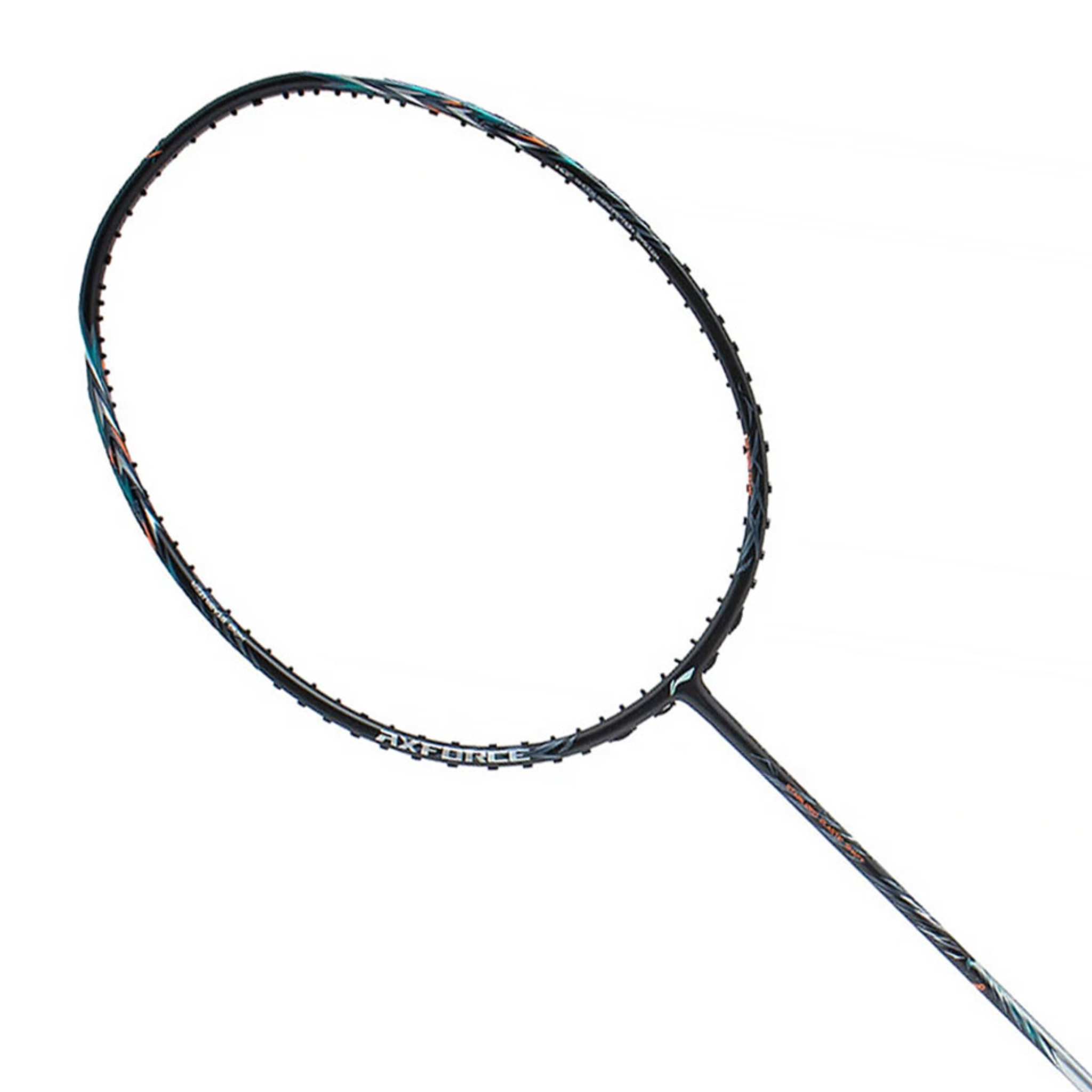
- Weight class
- 4U
- Balance point
- More head weight
- Flexibility
- Medium
Li-Ning's attack line, with a balance point at 302 mm and a 6.6 mm medium shaft. It comes in 4U and 5U and accepts up to 30 lbs.
- 2
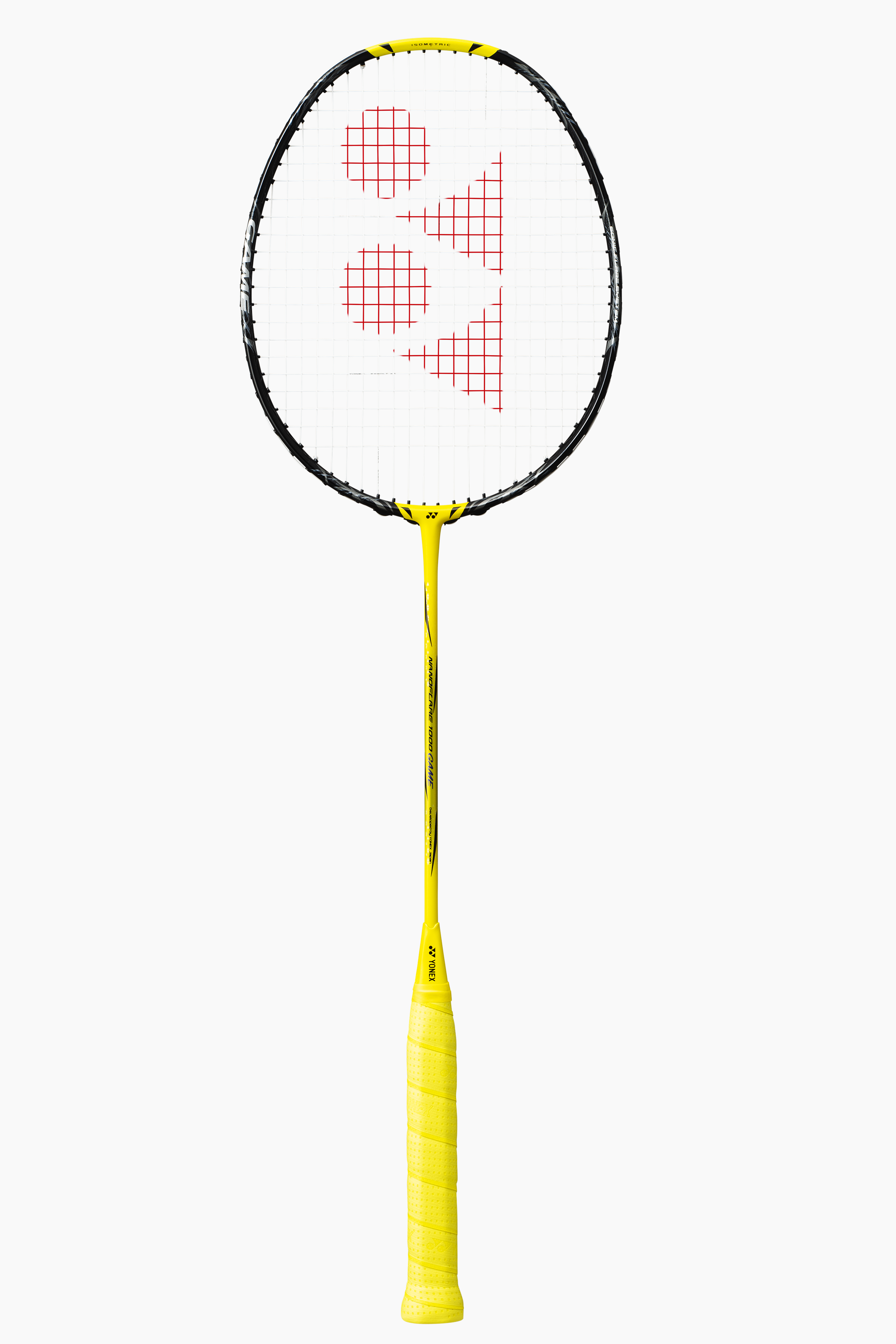
- Weight class
- 4U
- Balance point
- Lighter head
- Flexibility
- Medium
Brings the Nanoflare 1000Z design to a medium shaft, more forgiving than the extra stiff one on the top version. Head-light and already strung.
- 3
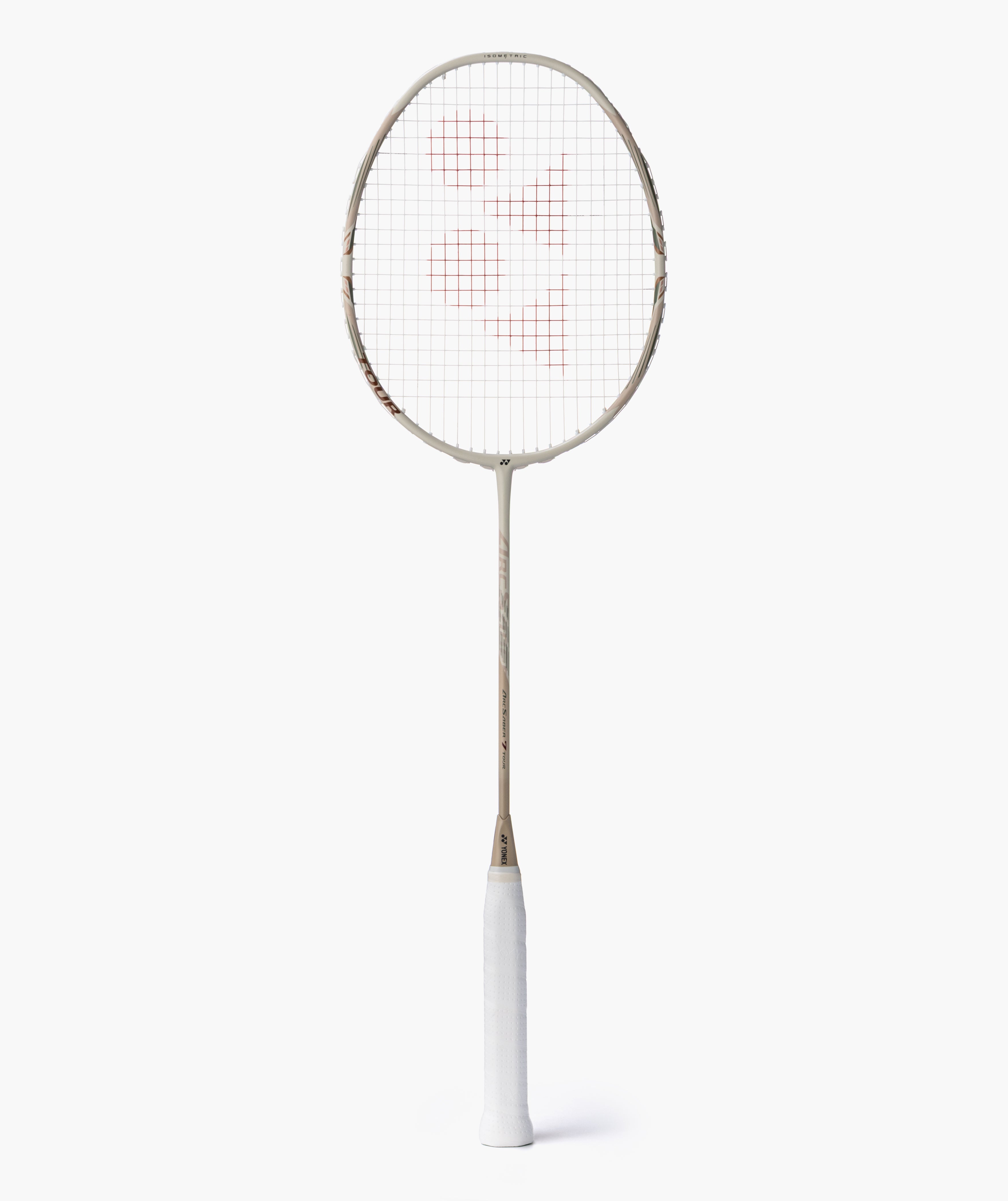
- Weight class
- 4U
- Balance point
- Even balance
- Flexibility
- Medium
The Arcsaber line, which Yonex positions for control, with an even balance and a medium shaft. It's a step softer than the stiff shaft of the Arcsaber 11 Pro and the 11 Tour.
- 4
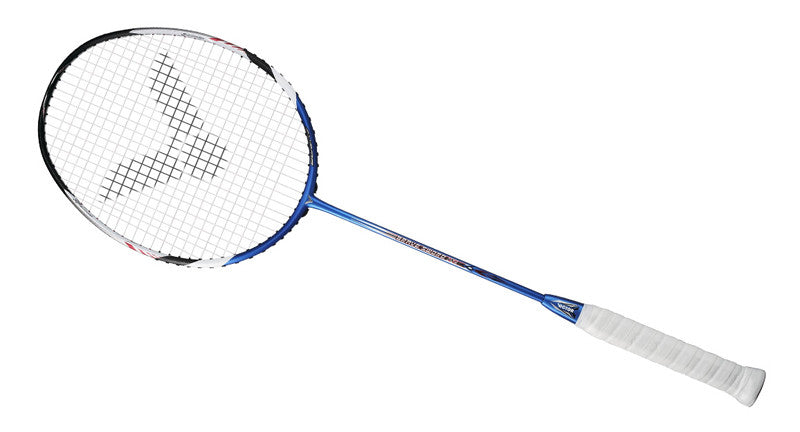
- Weight class
- 3U
- Balance point
- Even balance
- Flexibility
- Medium
A diamond-shaped frame, even balance and a medium shaft, in 3U and 4U. A veteran and very well-known Victor model.
- 5
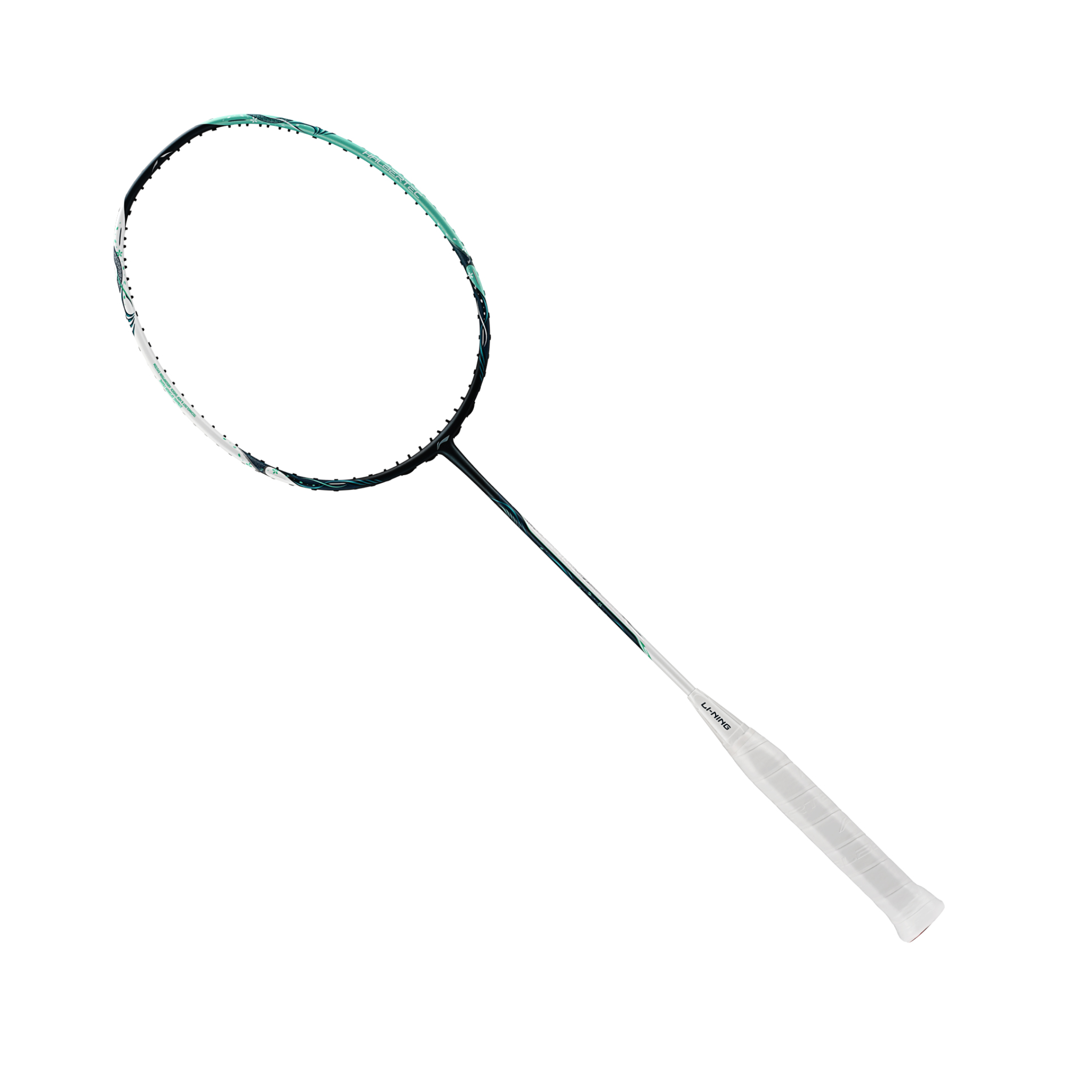
- Weight class
- 4U
- Balance point
- Even balance
- Flexibility
- Medium
Even balance, a thin 6.8 mm shaft and flexibility between medium and firm. Options in 4U and 5U for those who want balance without paying for the top of the line.




For the attacker
You like to finish the point from the back and stay at the rear in doubles. Look for a heavy head with a medium shaft. The Astrox 88D Game is the most direct: it's the intermediate version of the 88D, with a medium shaft in place of the Pro's stiff one. The Astrox 77 Tour has a head that's only slightly heavy, which usually weighs less on defense, good for those who still rotate between front and back. At Li-Ning, the Axforce 70 is the intermediate attack racket of the line, with a balance point at 302 mm, and the Axforce 80, associated with Chen Long, follows the same recipe with a similar balance point.
A word of caution: intermediate attackers tend to get carried away with a head that's too heavy. If you lose a lot of points on balls at your body right after your smash, the racket may be too heavy at the tip for your recovery time.
For the defender and net player
You take smashes, return drives, put away balls at the net. Look for a head-light balance. The Nanoflare 700 Tour has a light head, a medium shaft and a technology that Yonex describes as a vibration filter, and it comes in 5U for those who want an even lighter racket. The Nanoflare 1000 Game brings the 1000Z design to a medium shaft. The Bladex 600 plays this role at Li-Ning, and Victor's Auraspeed 100X, with a stiff shaft, is a firmer alternative for those already close to the advanced level.
For the all-rounder and singles player
You run around the court and like to place the shuttle. Look for an even balance. The Arcsaber 7 Tour brings the Arcsaber line's design to a medium shaft. Victor's Brave Sword 12 is a doubles classic, with a diamond-shaped frame. Li-Ning's Halbertec 6000 is even and comes in 4U and 5U, and the Duora 88 has a frame with two different profiles, which Yonex designed with the backhand in mind.
Comparison by style
One intermediate racket for each style
3 racquets: swipe sideways to see them all1–2 of 3 →
Highlighted: what differs between the racquets. In bold: the best value in the row.
| Style | Balance | Shaft | Examples |
|---|---|---|---|
| Back-court attacker | Head-heavy | Medium | Astrox 88D Game, Axforce 70 |
| Attacker who covers the court | Slightly heavy | Medium | Astrox 77 Tour |
| Defender and net player | Head-light | Medium | Nanoflare 700 Tour, Nanoflare 1000 Game, Bladex 600 |
| All-rounder and singles | Even | Medium | Arcsaber 7 Tour, Brave Sword 12, Halbertec 6000 |
| All-rounder with a fast swing | Even | Stiff | Duora 88, Arcsaber 11 Tour |
String tension for intermediate players: 22 to 26 lbs
In the beginner phase, low tension helped the shuttle come off. Now the goal changes: you already hit the center of the strings often and want control and direction. Raising the tension makes the strings give less, contact time gets shorter and the shuttle comes off "drier" and more precise.
- 22 to 23 lbs: transition. Keeps comfort and still gives some help with depth.
- 24 to 25 lbs: the most common range for intermediate players who play often.
- 26 lbs: for those who already hit fast and want a firm response on drives and smashes.
Go up one to two pounds at a time. If your clear starts landing short, you've gone up too much for your current swing. Always check the racket's maximum tension: Yonex's intermediate rackets usually go up to 28 lbs, and several from Li-Ning and Victor reach 30 lbs.
Game, Tour or Pro?
At Yonex, the same family usually has four versions. The Play is entry-level and comes strung. The Game sits in the middle and, in the families in our catalog, has a shaft one step softer than the Pro's (the Astrox 99 Game is medium while the 99 Pro is stiff, for example). The Tour is made in Taiwan with construction very close to the Pro and, in the spec sheets we gathered, keeps the same shaft flexibility as the Pro. The Pro is the top version.
For the intermediate player, the rule of thumb is: Game if you still depend on the shaft to gain depth, Tour if your swing is already fast. Since Tour and Pro usually share the same shaft flexibility, for many intermediate players the Tour is enough. The details of why these versions behave so differently are in the guide to balance and flexibility.
Strengths
- + Head-heavy with a medium shaft, more forgiving than the 88D Pro's stiff one
- + Tungsten in the frame
- + Comes strung
- + 675 mm and tension of 20 to 28 lbs
Drawbacks
- − A head-heavy balance tends to slow fast defense near the net
- − A medium shaft can feel soft for those who already have a very fast swing
- − Not well suited to those who mainly play at the front
Common mistakes when switching to an intermediate racket
Jumping straight to the stiff shaft. This is the most frequent mistake. The player feels the entry-level racket as soft and buys the hardest one they can find. The result is usually a clear that goes back to landing short and a sore arm after practice. The medium shaft solves most cases.
Raising the tension and changing rackets at the same time. If you change both together, you don't know which one caused the difference you felt. Change the racket while keeping a tension similar to what you were already using, and only then adjust the pounds.
Choosing by your doubles partner's racket. They may occupy a different position on court. A back-court racket in the hands of someone who plays at the net slows every quick response.
Ignoring the grip. Li-Ning intermediate rackets often come in G6, thinner than the G5 of most Yonex models. If your hand is used to a thicker handle, an overgrip brings back the feel you had before.
Assuming the most expensive version of the family is always the best for you. In many families, the difference between the intermediate version and the top one is precisely in stiffness, and that can work against someone who is still gaining arm speed.
The next step after the intermediate racket
When your game calls for more firmness, these are the rackets that bridge to the advanced level without jumping straight to the most demanding versions:
Rackets for those moving on from the intermediate level
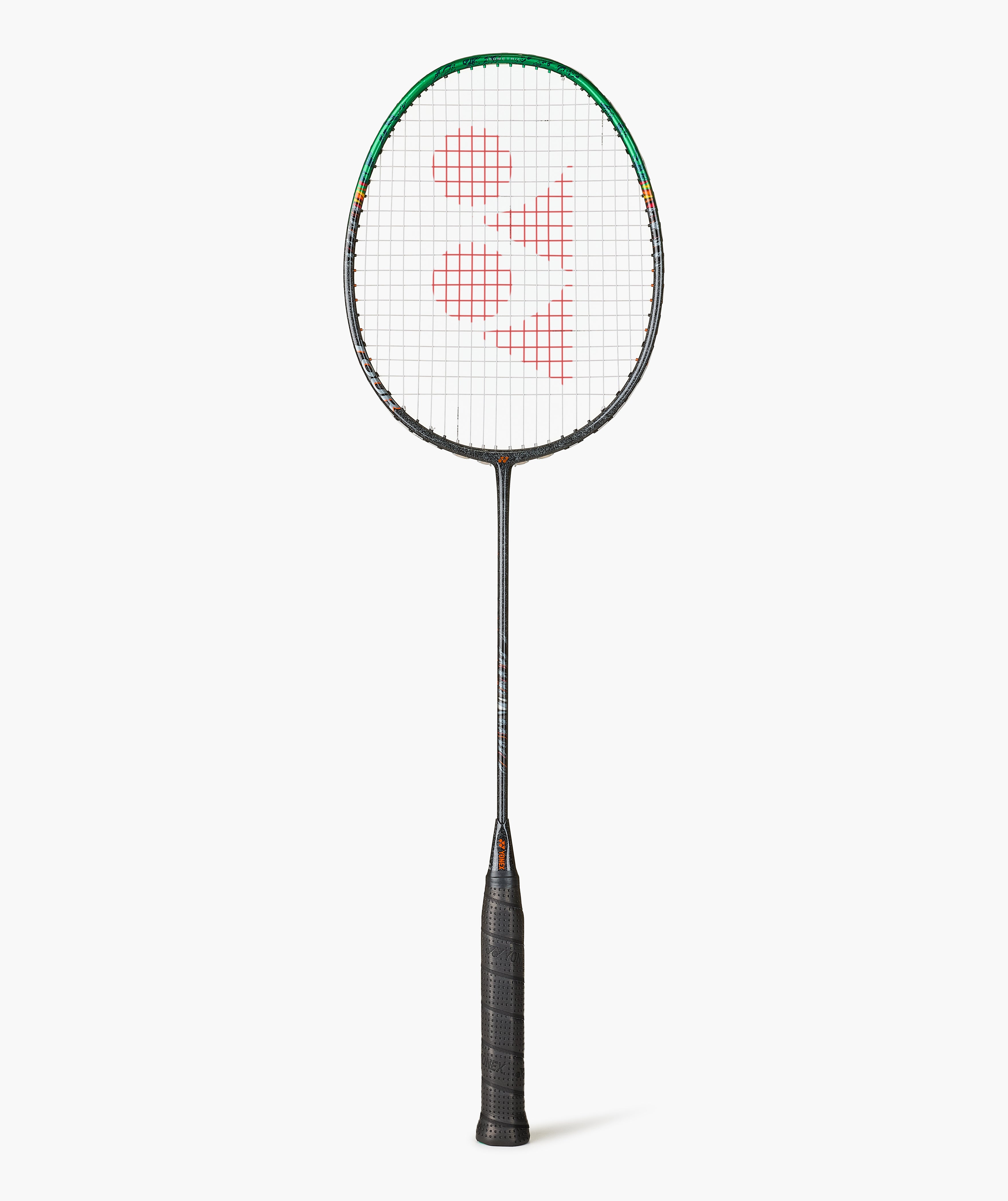

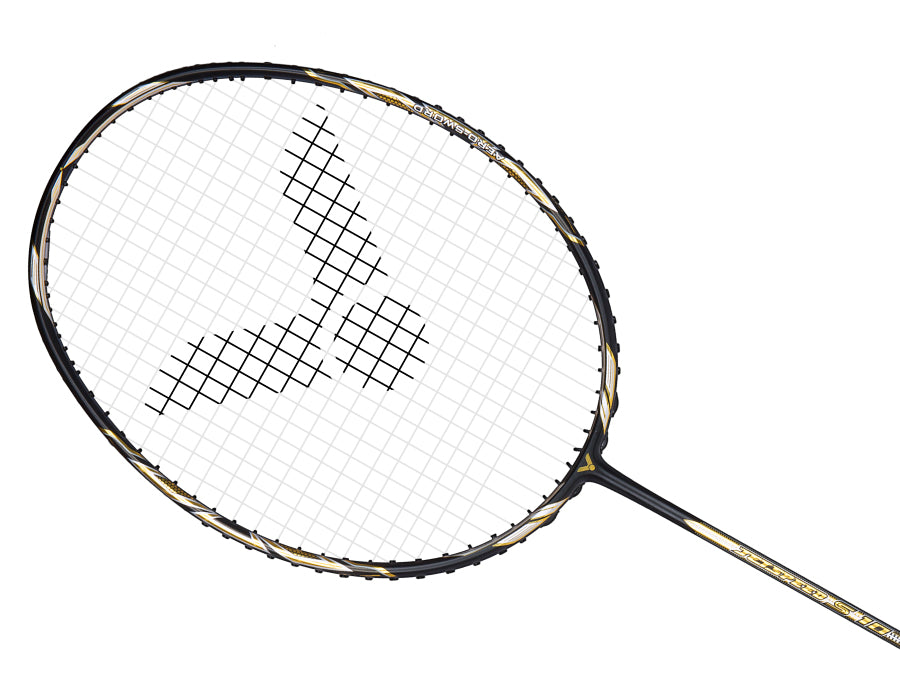



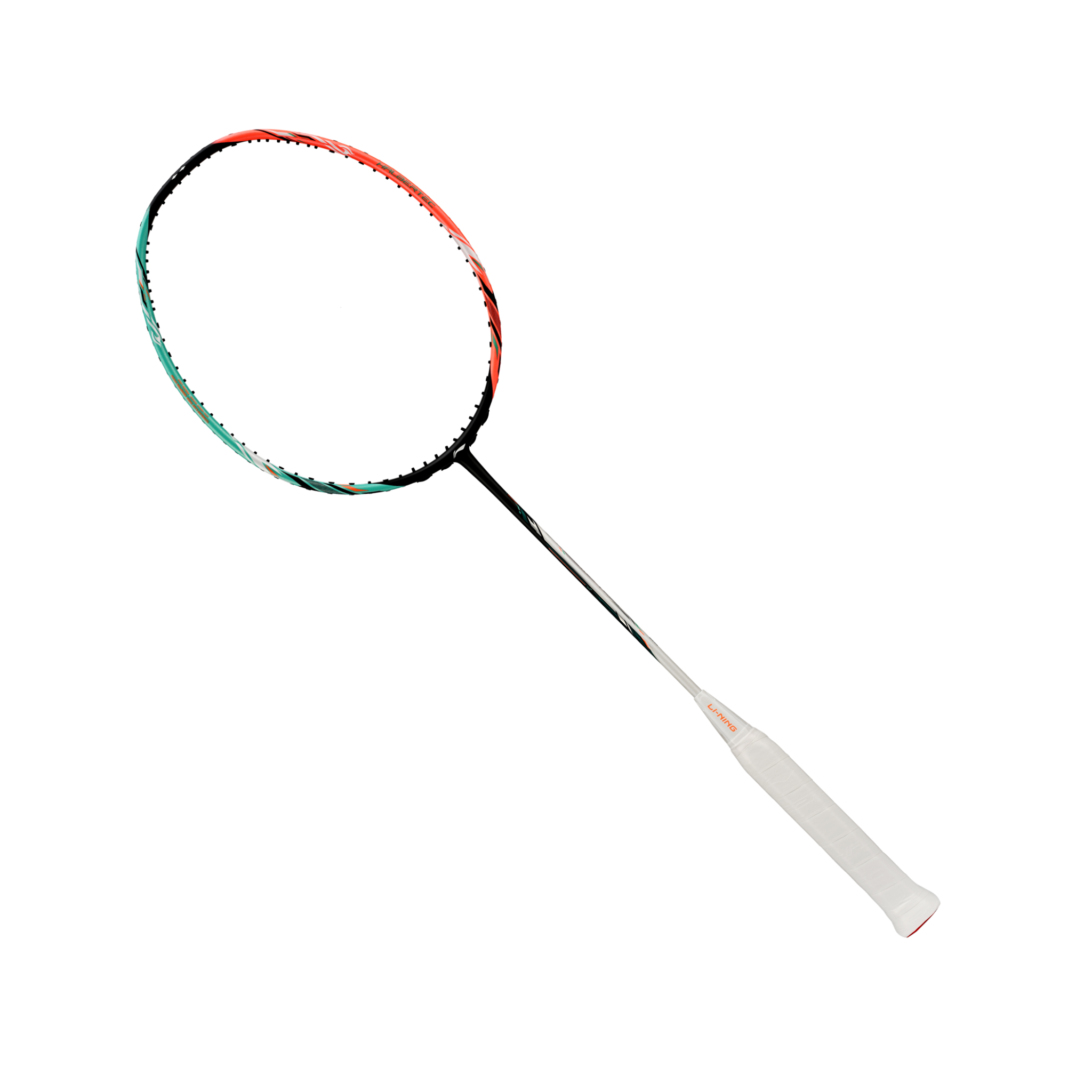

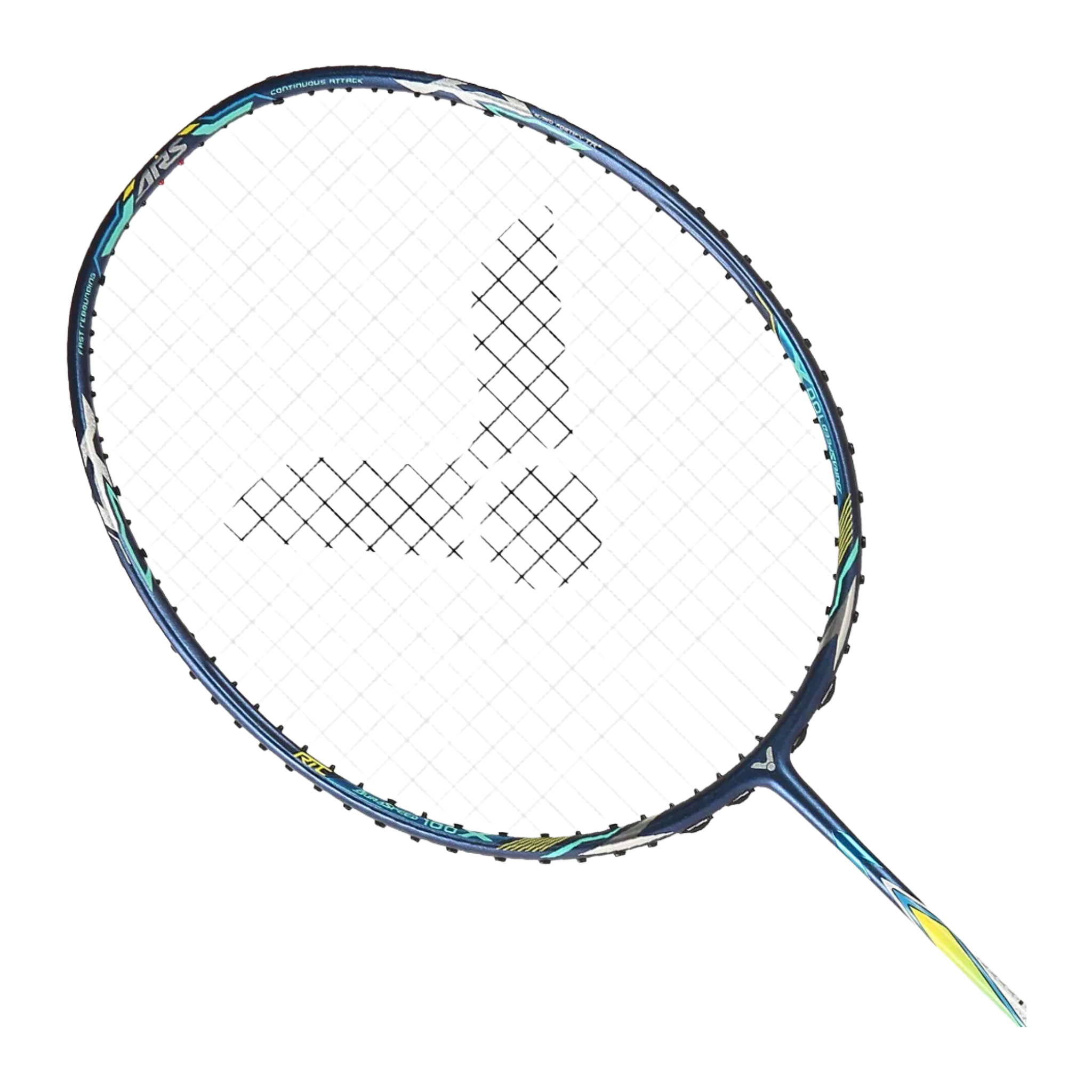
When you get there, the guide to the best badminton rackets for advanced players sorts the options by role on court, and the ranking of the best badminton rackets of 2026 gathers the top options by profile. And if you still have questions about grip, weight or material, the guide on how to choose a badminton racket covers the basics.
To see all the intermediate rackets, filter the badminton racket catalog by level, or explore the lines from Yonex, Li-Ning and Victor. The badminton racket comparison tool puts up to six models side by side, and find your racket suggests models based on your style.
What is the best badminton racket for an intermediate player?
It depends on your style. To attack from the back, the Yonex Astrox 88D Game or the Li-Ning Axforce 70. To defend and play at the net, the Nanoflare 700 Tour. For control and singles, the Arcsaber 7 Tour or the Victor Brave Sword 12.
Medium or stiff shaft for an intermediate player?
If your clear still takes effort to reach the back, stay with the medium shaft. If it arrives easily and you feel the racket late on fast shots, a stiff shaft will give more precision. An extra stiff shaft is still too early for most people.
What tension should I use at the intermediate level?
Between 22 and 26 lbs. Start around 22 or 23 lbs and go up one or two pounds at a time. If your clear starts landing short, the tension has gone past the point for your swing.
Is it worth buying the Pro version as an intermediate player?
In most cases, no. Pro versions usually have a harder shaft and demand a fast swing. The Game or Tour of the same family keeps the design, the Game has a softer shaft and both usually cost less.
3U or 4U for an intermediate player?
4U is the default choice: faster and less tiring, especially in doubles. 3U makes sense for those who play singles or stay at the back, have a strong arm and want more stability and weight on the smash.
Is a head-heavy racket good for doubles?
It suits those who play at the back and attack. For those who stay at the net or defend a lot, a head-light or even balance works better, because the racket returns faster in front of your body between one shot and the next.
Where to buy the racquets in this guide
- Axforce 70 Li-Ning4U · More head weight · MediumSee priceJoyBadminton
- Nanoflare 1000 Game 2023 Yonex4U · Lighter head · MediumSee priceAmazon
- Arcsaber 7 Tour 2022 Yonex4U · Even balance · MediumSee priceYonex
- Brave Sword 12 Victor3U · Even balance · MediumSee priceBadminton Alley
- Halbertec 6000 Li-Ning4U · Even balance · MediumSee priceJoyBadminton
- Astrox 99 Tour 2025 Yonex4U · More head weight · StiffSee priceBadminton Warehouse
- Jetspeed S 10 2022 Victor4U · Even balance · StiffSee priceBadminton Alley
- Halbertec 7000 Li-Ning4U · Even balance · StiffSee priceJoyBadminton
- Auraspeed 100X Victor4U · Lighter head · StiffSee priceBadminton Warehouse
The prices above are checked automatically at each store and may have changed since the last check. The price that counts is the one shown on the store's website at checkout. We may earn a commission on purchases made through store links, at no extra cost to you.