


 Brasil
 United States
 United Kingdom
 Australia
 Netherlands
 France
 España
 Italia
 السعودية
10 pickleball paddles with the most spin in 2026
Raw carbon, a shape that speeds up the head and a stable build: the 10 pickleball paddles in our catalog that spin the ball the most, and what on the spec sheet really creates spin.
Updated on 2026-10-07
On this page
- 1.The 10 pickleball paddles with the most spin
- 2.Which one to pick if you...
- 3.Where spin comes from in a pickleball paddle
- 4.The four types of texture and how long each lasts
- 5.Four elongated raw carbon paddles side by side
- 6.Fine-tuning: lead tape and grip
- 7.Where spin wins points in pickleball
- 8.Spin has a limit under the rules
- 9.How to make the texture last longer
- 10.Frequently asked questions
- 11.Verdict
The pickleball paddles with the most spin combine three things: a raw carbon face or one with an applied texture, a shape that lets the paddle head accelerate, and a construction stable enough that the ball doesn't "slip" at impact. Below are the 10 that deliver the most of that in our catalog, and an explanation of what on the spec sheet actually makes the ball spin.
A pickleball is smooth plastic with no felt, with 26 to 40 holes and a weight between 22.1 and 26.5 g, according to the USA Pickleball equipment standards manual. With no felt to "bite" into, almost all the friction has to come from the paddle face. That is why texture matters so much more here than in tennis.
The 10 pickleball paddles with the most spin
10 pickleball paddles with the most spin
- 1
- Weight
- 8.1 oz
- Core
- 14 mm
- Face
- T700 carbon
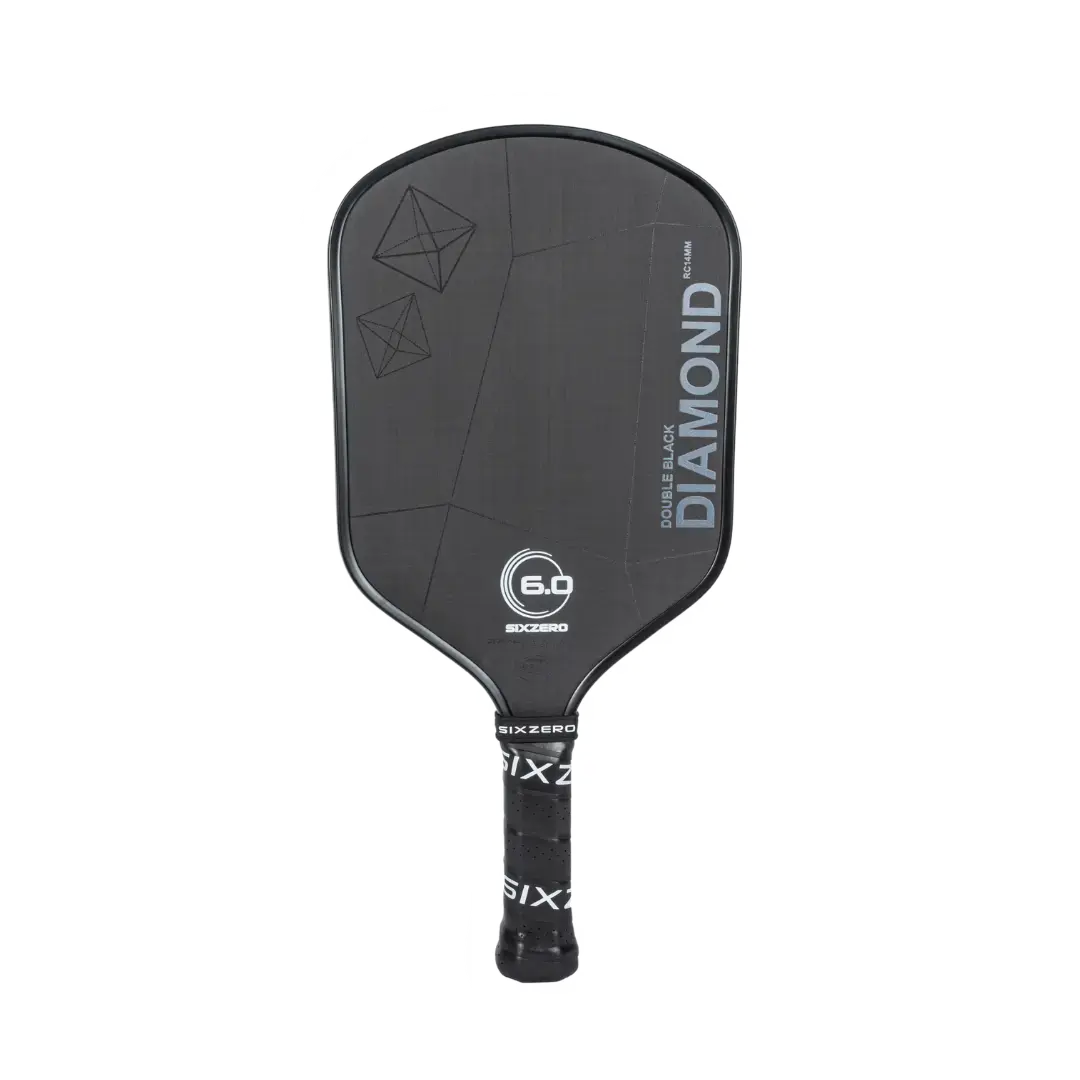
Textured raw Toray T700 carbon face, thermoformed edges and a 16.3 in hybrid shape. The swing weight of 110 is low for a paddle this long, so the head accelerates quickly on baseline topspin and rolled dinks. The 14 mm core gives a little more pop than the 16 mm version.
- 2
- Weight
- 8.6 oz
- Core
- 15 mm
- Face
- Raw micro-forged carbon
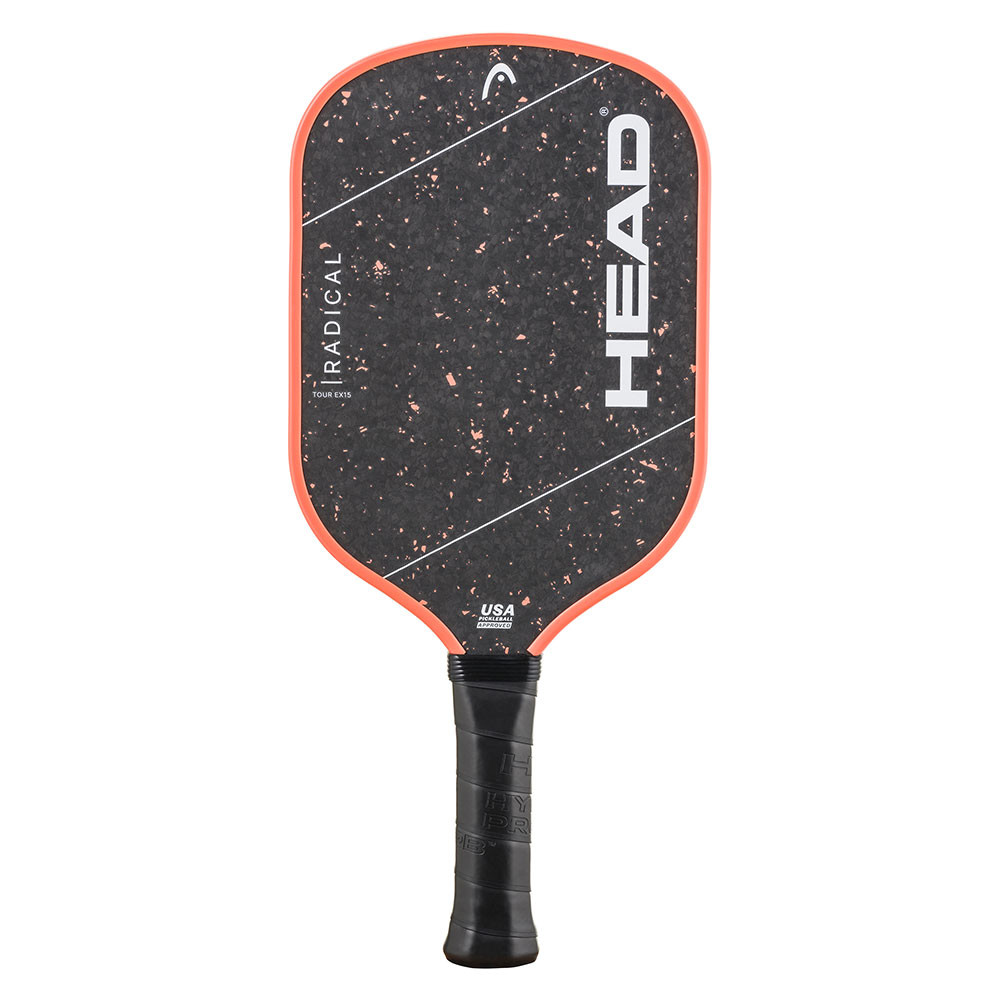
Micro-forged raw carbon face, an elongated 16.5 x 7.5 in shape and thermoformed construction. It averages 8.6 oz, the heaviest on the list: the face twists less when the ball lands off-center, and the spin is more consistent on drives. 5.5 in handle for a two-handed backhand.
- 3
- Weight
- 7.9 oz
- Core
- 12.7 mm
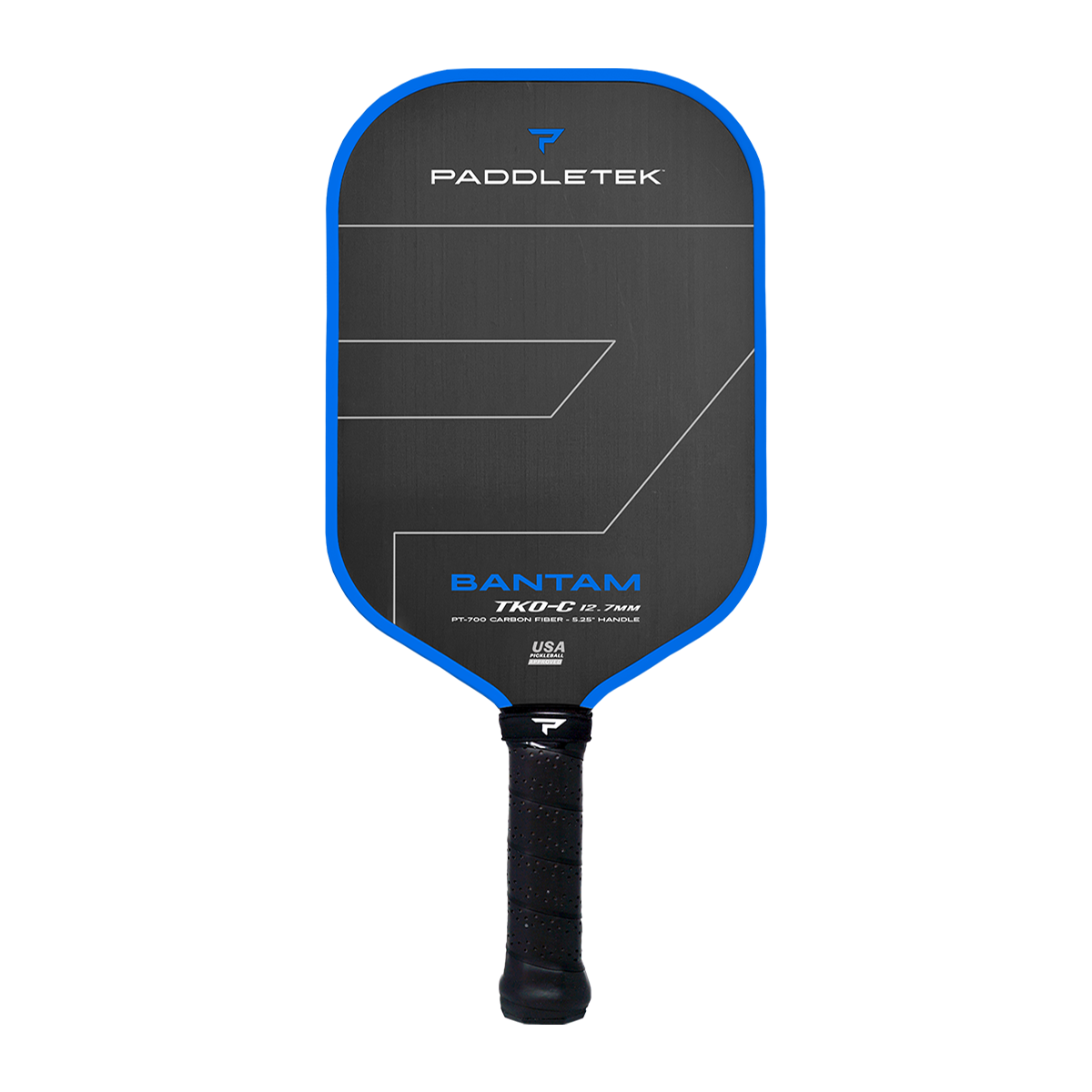
Unidirectional raw PT-700 carbon with a 12.7 mm core and a 16.45 x 7.5 in shape, which the brand designed to increase head speed at impact. It is the pick for players who want a drive with heavy topspin and an aggressive third shot. It demands control in the short game.
- 4
- Weight
- 8 oz
- Core
- 12.7 mm
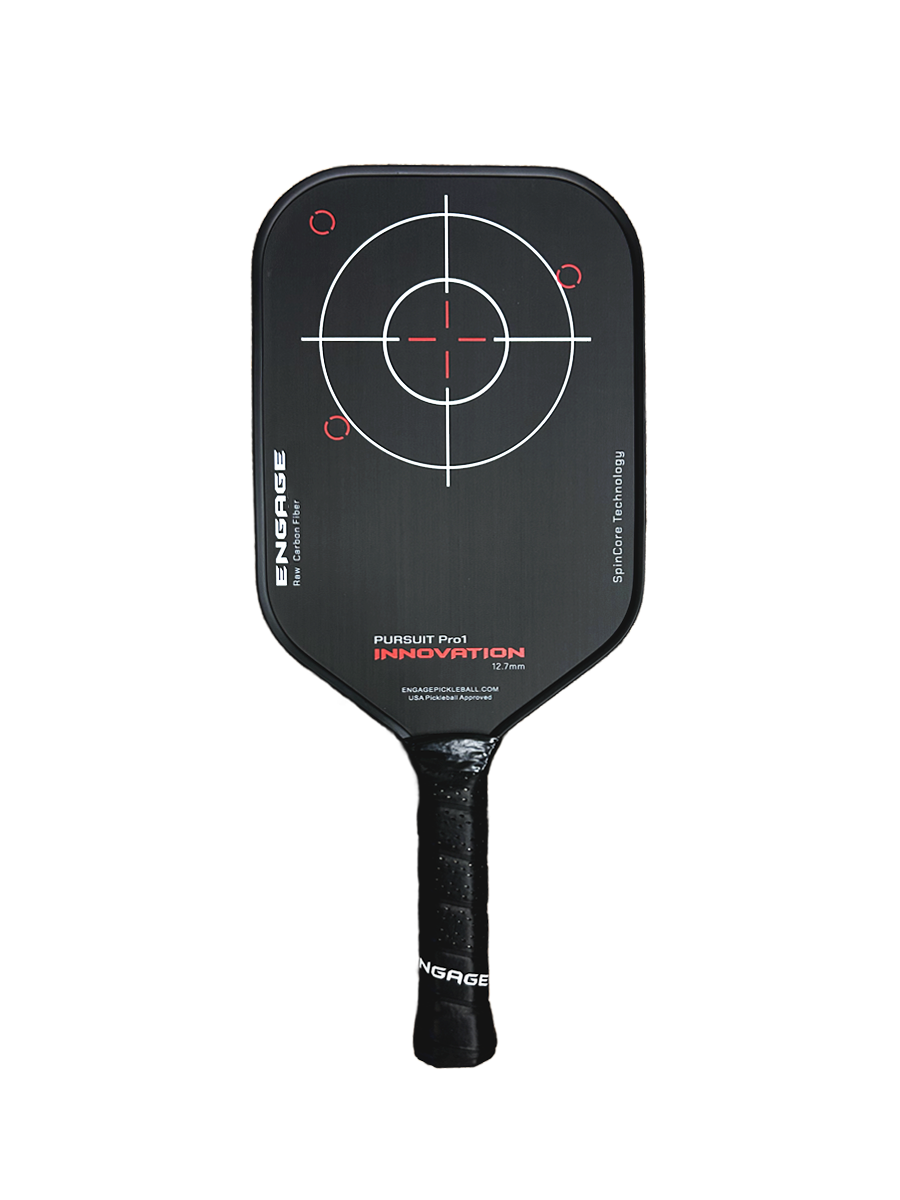
SpinCore technology concentrates mass in the handle and the sweet spot to accelerate the face, according to Engage. Raw carbon face with an inner layer, a 12.7 mm core and a 16.6 x 7.4 in shape. The 6 in handle is the longest on the list and gives leverage to a two-handed topspin backhand.
- 5
- Weight
- 8.1 oz
- Core
- 16 mm
- Face
- Textured carbon fiber
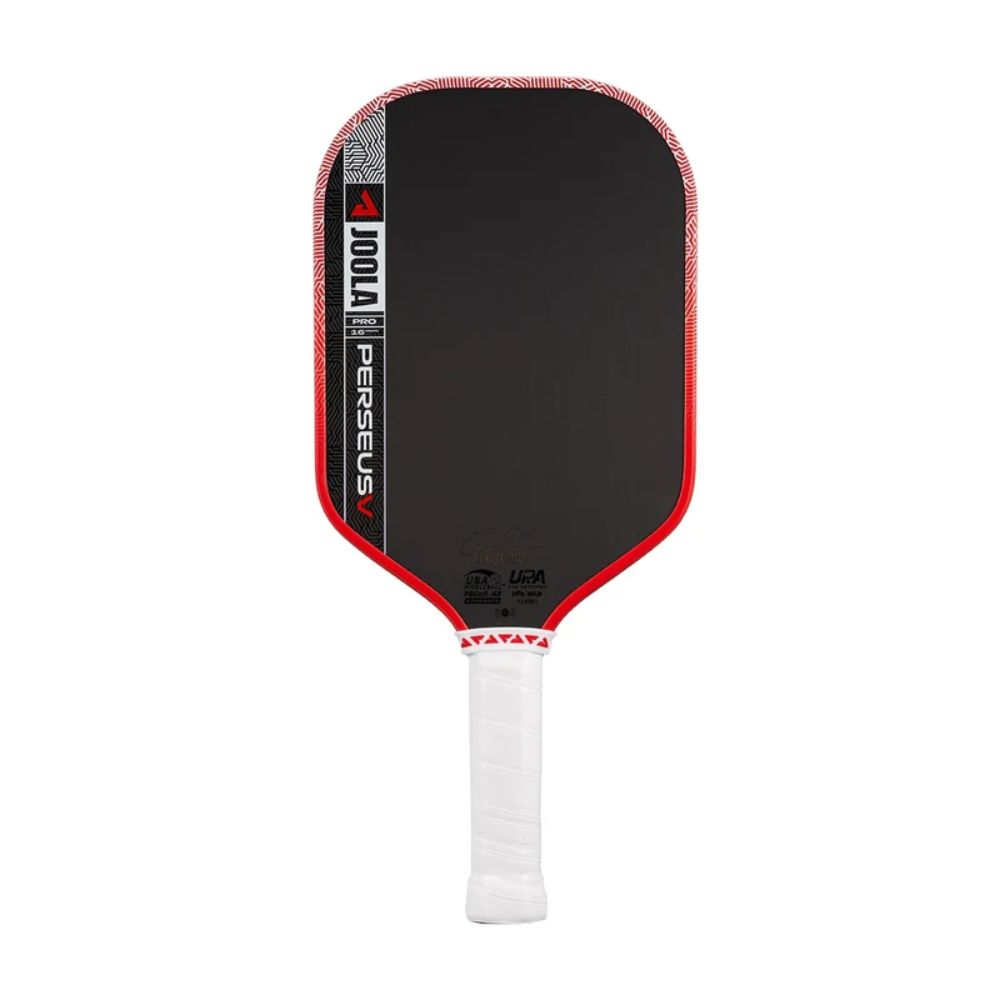
Textured carbon fiber face, a 16 mm Propulsion Core, thermoformed construction and the KineticFrame, a thinner throat that flexes at impact. Elongated 16.5 x 7.5 in shape and 8.1 oz. It is listed at 4 stores, so it is one of the easiest to buy. Recommended for advanced players.
- 6
- Weight
- 8 oz
- Core
- 16 mm
- Face
- Aramid with carbon weave
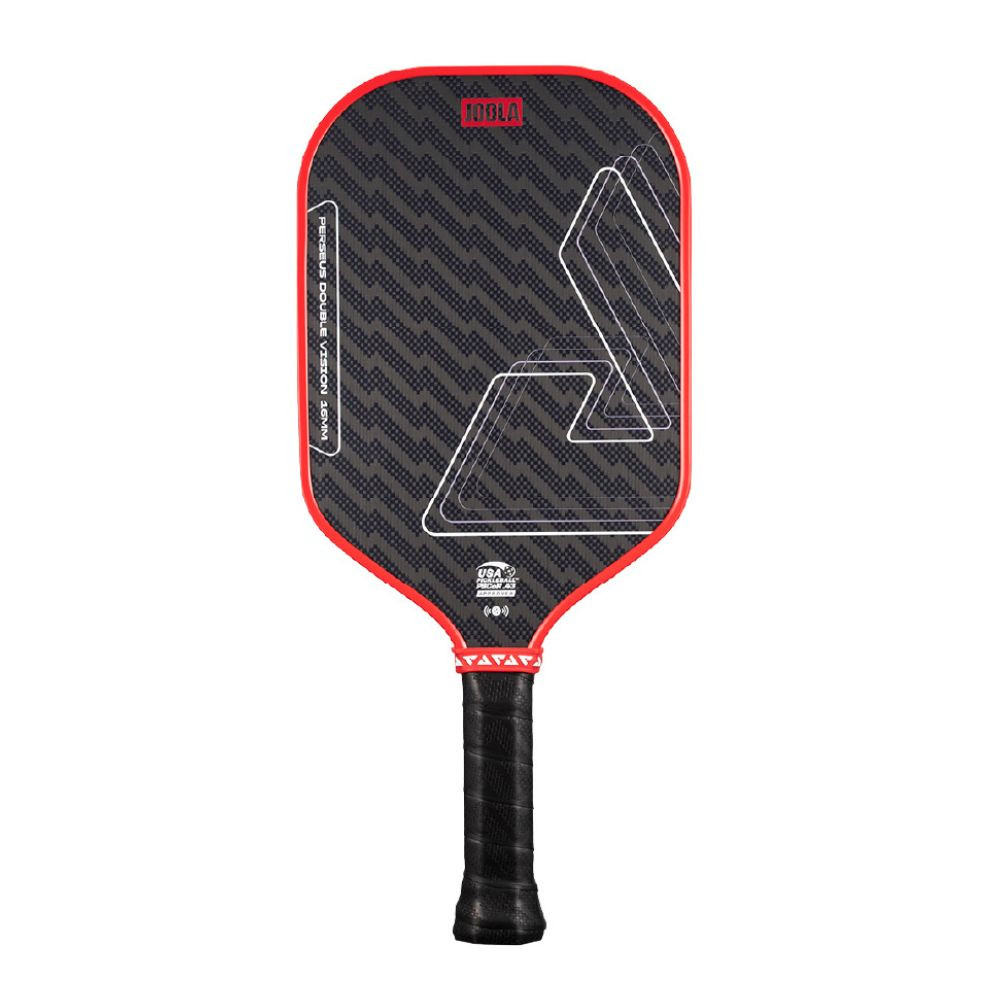
Aramid face with a carbon weave, an SK film between the face and the core to filter vibration, and a thermoformed 16 mm core. The cross weave grips the ball well and the aramid absorbs impact. Elongated 16.5 x 7.5 in shape, about 8.0 oz and the USAP PBCoR .43 mark.








Which one to pick if you...
| If you... | Pick | Why |
|---|---|---|
| Want a spin paddle for everything | Six Zero Double Black Diamond Control 14mm | Raw carbon, hybrid shape and low swing weight |
| Have an arm that's sensitive to weight | Friday Challenger | About 7.7 oz with a double-layer raw face |
| Attack from the baseline with topspin | Paddletek Bantam TKO-C 12.7mm | Thin core and a shape that accelerates the head |
| Live at the kitchen and want spin on dinks | Wilson Blaze Tour 16 | 16 mm honeycomb with raw carbon |
| Use a two-handed backhand | Engage Pursuit Pro1 Innovation 12.7mm | 6 in handle |
| Often miss the center of the paddle | Wilson Cadence Pro 16 | Wide 8.3 in shape |
If you don't know your style yet, the Find Your Paddle tool matches your answers to the catalog. To see the spec sheets side by side, use the pickleball paddle comparison tool.
Where spin comes from in a pickleball paddle
Spin comes from a simple equation: the faster the face brushes across the ball and the more it grips, the more rotation you get. The paddle affects three parts of that equation.
1. Face friction
This is the most obvious part. A raw carbon face leaves the fiber weave exposed; a face with an applied grit has particles that create a micro-relief. Both increase grip at contact. A smooth painted fiberglass face, on the other hand, makes the ball slide, and you feel it on the dink: the ball comes out "straight," with no curve.
2. Head speed
Spin depends on tangential speed, and speed comes from length and from how the mass is distributed. That is why almost the entire list is elongated (16.4 to 16.6 in): the head sits farther from your hand and travels a bigger arc in the same motion. Swing weight completes the story. A paddle with a low swing weight, like the 110 of the Double Black Diamond 14mm, accelerates with less effort. One with a high swing weight pushes the ball more, but rotates more slowly in the wrist.
A long handle also helps. With a 5.5 to 6 in handle, someone using a two-handed backhand can make the same low-to-high motion they use on the forehand, and that motion is what generates topspin.
3. Stability at contact
A face that twists at impact "steals" part of the spin, because the angle changes in the middle of contact. Thermoformed edges, foam walls and higher weight make the face firmer. That is why the HEAD Radical Tour EX 15, at 8.6 oz and with thermoformed construction, keeps the spin consistent even when the ball lands a little off-center.
Core thickness comes in here indirectly. 16 mm cores hold the ball longer and give more precision to short spin; thin cores return the ball quickly and suit attacking topspin. The topic has its own guide: pickleball paddle core thickness.
Good to know
The paddle only multiplies the spin your motion creates. If your swing goes straight toward the ball, the grittiest face on the market will generate little rotation. Real spin calls for a low-to-high path on topspin and a high-to-low path on slice.
The four types of texture and how long each lasts
The difference between the approved textures is not so much in maximum spin, because the rule caps all of them, but in how long the roughness lasts. The basics of each fiber are in the guide to pickleball paddle materials and shapes. Here the focus is on how the texture behaves with use.
| Texture | Examples from the list | How it grips the ball | Wear |
|---|---|---|---|
| Raw carbon (exposed weave) | Friday Challenger, Wilson Blaze Tour 16 | The fiber weave itself creates the relief | Gradual; the center of the face smooths out first |
| Unidirectional raw carbon | Paddletek Bantam TKO-C 12.7mm | Fibers aligned in a single direction, uniform surface | Gradual, similar to raw carbon |
| Micro-forged or etched carbon | HEAD Radical Tour EX 15 | Relief created in the surface itself | Doesn't depend on an applied layer, which tends to favor durability |
| Applied coating or grit | Diadem Icon (Spin RP) | A layer over the face | Can wear down with heavy use |
In practice, a raw carbon face tends to lose its "bite" gradually, especially in the center. An applied coating may start out rougher and drop off more noticeably once the layer wears through. Neither is a defect: it is the reason competitive players replace their paddles often.
Four elongated raw carbon paddles side by side
The four below have a raw face and an elongated shape of about 16.5 in. What changes is the core and the weight, and that decides whether the spin will serve the short game or the attack.
Raw carbon and elongated shape: what changes with core and weight
Highlighted: what differs between the racquets. In bold: the best value in the row.
The Friday Challenger and the Wilson Blaze Tour 16 use 16 mm and suit players who want dinks and drops with spin. The HEAD Radical Tour EX 15 sits in the middle, with 15 mm and the most weight of the group. The Bantam TKO-C 12.7mm is the liveliest: attacking topspin, less margin in the short game. More models from the brand are at Paddletek pickleball paddles and Wilson pickleball paddles.
Fine-tuning: lead tape and grip
Two simple changes, both allowed by the rules, alter the spin you get from the same paddle:
- Lead tape on the edge. Placed on the sides, near the middle of the head, it increases stability against twisting, and the face holds its angle on off-center balls. Placed on top, it increases swing weight: more ball weight on the drive, less wrist speed on the rolled dink. On a light paddle like the Friday Challenger, a few grams on the sides are usually enough. Start with a little and test it for a few games before adding more.
- Thinner grip. Short spin depends on wrist mobility. A thin handle lets you "close" and "open" the face more easily on a dink with spin. If it gets too thin, build it up with an overgrip. How to measure your grip is covered in how to choose a pickleball paddle.
Tape and overgrip can't encroach on the face beyond what is allowed: decals and tape may extend at most 1 in above the grip and at most 0.5 in inward from the edge.
Where spin wins points in pickleball
Spin in pickleball is not decoration. It solves specific situations:
- Third-shot drive with topspin: the ball passes high over the net and dips before the baseline. Without spin, a drive at the same height would sail long.
- Rolled dink: short topspin makes the ball bounce forward and low, forcing your opponent to hit up.
- Dink and drop with slice: the backspin makes the ball "die" in the kitchen, harder to attack.
- Return of serve with slice: the ball arrives low and skids, and the server gets less time for the third shot.
- Lob with topspin: it rises above reach and drops quickly inside the court.
- Serve with spin: under rule 7.B.2 of the 2026 rulebook, the server may not spin the ball by hand when releasing it; the spin can only come from the paddle contact. Here the texture of the face makes all the difference.
Spin has a limit under the rules
USA Pickleball bans surfaces that give "excessive spin" and tests for it in a lab. Since October 1, 2026, paddles submitted for certification must have a measured spin rate of up to 2,100 RPM. The details, including the roughness and friction tests and what can and can't be done to the face, are in the guide to USA Pickleball paddle rules.
The practical takeaway: there is no such thing as an approved "cheater" paddle. If a seller promises spin far above the rest, be skeptical, or check whether the model is on the official list.
How to make the texture last longer
- Don't pick the ball up off the ground by dragging the face. The habit of "scraping" the ball against the floor to lift it wears down exactly the center of the paddle.
- Use a cover. Loose paddles in a bag scrape against each other.
- Wipe off the dust after playing with a damp cloth. Dust from outdoor courts fills the valleys of the texture.
- Don't sand or paint the face. Besides not working well, any change to the surface puts the paddle outside tournament rules.
- Compare the center and the edge. If the center of the face has become visibly smoother and shinier than the edge, the texture is worn where it matters.
Frequently asked questions
Which pickleball paddle has the most spin?
In our catalog, the ones that best combine face, shape and stability for spin are the Six Zero Double Black Diamond Control 14mm, the Friday Challenger and the HEAD Radical Tour EX 15. All have raw or micro-forged carbon and a shape that accelerates the head. The best one for you depends on weight, handle and core thickness.
Does raw carbon give more spin than textured carbon?
Not necessarily. Both solutions aim to increase friction, and the rules cap how much any face can grip the ball. The bigger difference is in wear: the raw weave loses roughness gradually, while applied coatings may start out rougher and drop off faster.
Does a fiberglass paddle give spin?
Less of it. Fiberglass usually has a smoother surface and flexes more at impact, which favors pop and reduces spin precision. Some brands apply texture over the fiberglass to compensate, but for players who prioritize spin, raw carbon is usually the way to go.
Does a pickleball paddle lose spin over time?
Yes. Every texture wears down, mainly in the center of the face. Wiping off dust, using a cover and not dragging the face on the ground help prolong it. When the center gets smooth and shiny, the paddle no longer grips like new.
Does an elongated shape give more spin?
It helps, because the head sits farther from your hand and gains speed in the same motion. But the sweet spot is narrower. If you often miss the center, a hybrid or wide shape can deliver more real spin, even with less head speed.
Is spin allowed on a pickleball serve?
Yes, as long as it comes from the paddle contact. USA Pickleball rule 7.B.2 prohibits spinning the ball with your hand or the paddle before the stroke. The natural rotation of the release is tolerated.
Verdict
If your game is more about patience at the kitchen than spin, see the 7 control pickleball paddles. For the big picture of the market, the list of the best pickleball paddles covers every profile, and the pickleball catalog lets you filter by face material. How we calculate each paddle's score is in the methodology.
Where to buy the racquets in this guide
- Double Black Diamond Control 14mm Six Zero8.1 oz · 14 mm · T700 carbonSee priceAmazon
- Radical Tour EX 15 HEAD8.6 oz · 15 mm · Raw micro-forged carbonSee priceAmazon
- Bantam TKO-C 12.7mm Paddletek7.9 oz · 12.7 mm · Raw unidirectional PT-700 carbonSee priceAmazon
- Pursuit Pro1 Innovation 12.7mm Engage8 oz · 12.7 mm · Raw carbon with inner layerSee pricePickleball Paddles
- Perseus Pro V Ben Johns 16mm JOOLA8.1 oz · 16 mm · Textured carbon fiberSee priceAmazon
- Perseus Double Vision 16mm JOOLA8 oz · 16 mm · Aramid with carbon weaveSee priceAmazon
The prices above are checked automatically at each store and may have changed since the last check. The price that counts is the one shown on the store's website at checkout. We may earn a commission on purchases made through store links, at no extra cost to you.