


 Brasil
 United States
 United Kingdom
 Australia
 Netherlands
 France
 España
 Italia
 السعودية
7 best pickleball paddles for competition in 2026
The 7 best pickleball paddles for tournaments and what changes when you compete: the official list, an identical backup paddle, weight between units and face wear.
Updated on 2026-10-07
On this page
- 1.The tournament kit in one table
- 2.The 7 best pickleball paddles for competition in 2026
- 3.Pickleball paddles for competition: what professional specs have in common
- 4.Approval: the summary you need
- 5.Backup paddle: why have two identical ones
- 6.Weight tolerance between units
- 7.Customization allowed in tournaments
- 8.The face is pickleball's "rubber"
- 9.What top players use (and what that means for you)
- 10.Which of the seven fits your tournament game
- 11.Tournament week checklist
For competition, the best pickleball paddle is a professional-spec model, with approval confirmed on the official list and sold in large enough quantities that you can get two identical units. The JOOLA Perseus Pro V Ben Johns 16mm is our top pick because it combines all three. This guide shows the seven best options and, above all, what changes when the paddle has to perform on tournament day.
The tournament kit in one table
People who compete buy differently from people who play at the club. Before looking at models, check what a competition paddle needs to meet:
| What to check | Why | When |
|---|---|---|
| Exact model on the official list | A paddle found to be off the list during a match can cost you the game | At purchase and again the week of the tournament |
| Event rules | Each tournament defines which list applies (USA Pickleball, UPA-A or another) | At registration |
| Identical backup paddle | A cracked or delaminated face makes the paddle illegal | Before your first tournament |
| Weight of both units | Spec sheets list an average weight or a range; each unit varies | When the paddles arrive |
| Face condition | A worn face loses spin and can fail inspection | Every month during the season |
| Grip and overgrip | A slick grip in the heat makes the paddle spin in your hand | The night before the tournament |
The 7 best pickleball paddles for competition in 2026
7 best pickleball paddles for competition in 2026
- 1
- Weight
- 8.1 oz
- Core
- 16 mm
- Face
- Textured carbon fiber
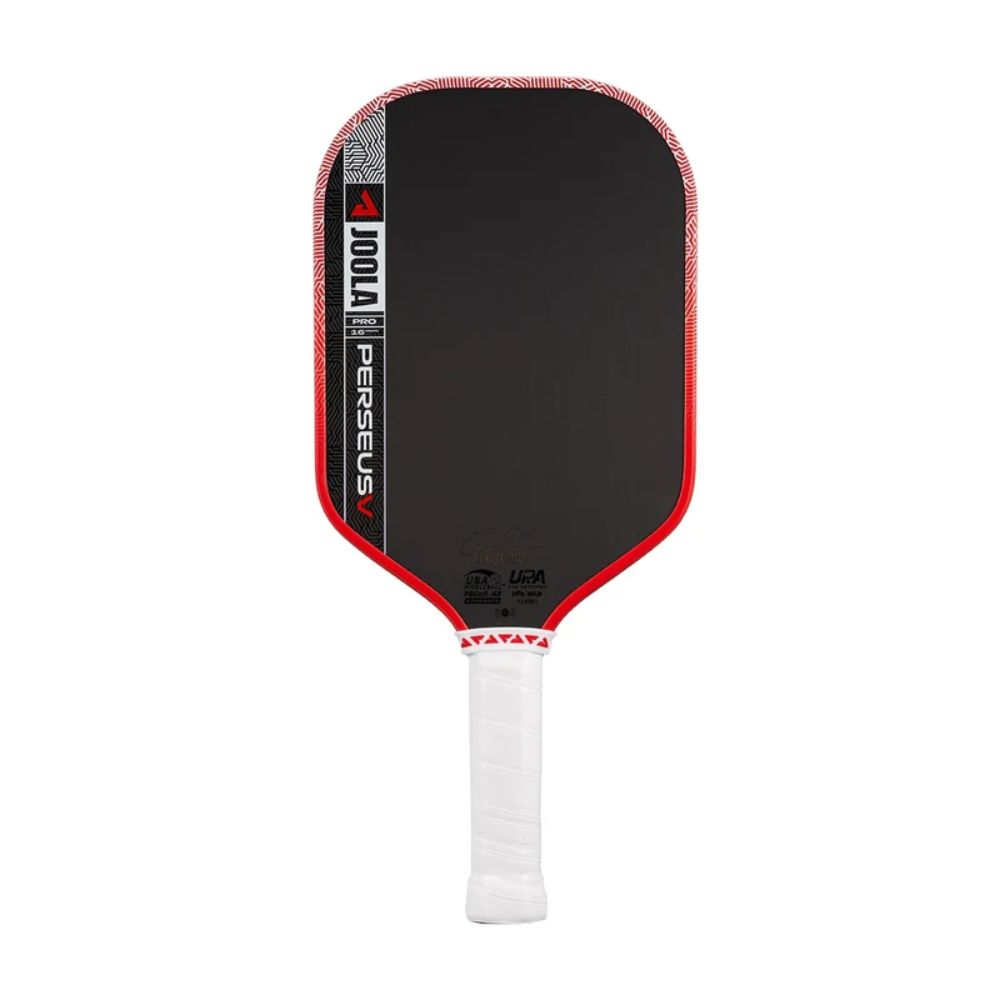
Fifth generation of Ben Johns's signature paddle: elongated at 16.5 x 7.5 in, a 16 mm Propulsion core with a foam wall, a textured carbon face, thermoformed construction and KineticFrame in the throat. About 8.1 oz and a 5.5 in handle. It is sold at more stores in our catalog than most top paddles.
- 2
- Weight
- 8.4 oz
- Core
- 16 mm
- Face
- Textured carbon
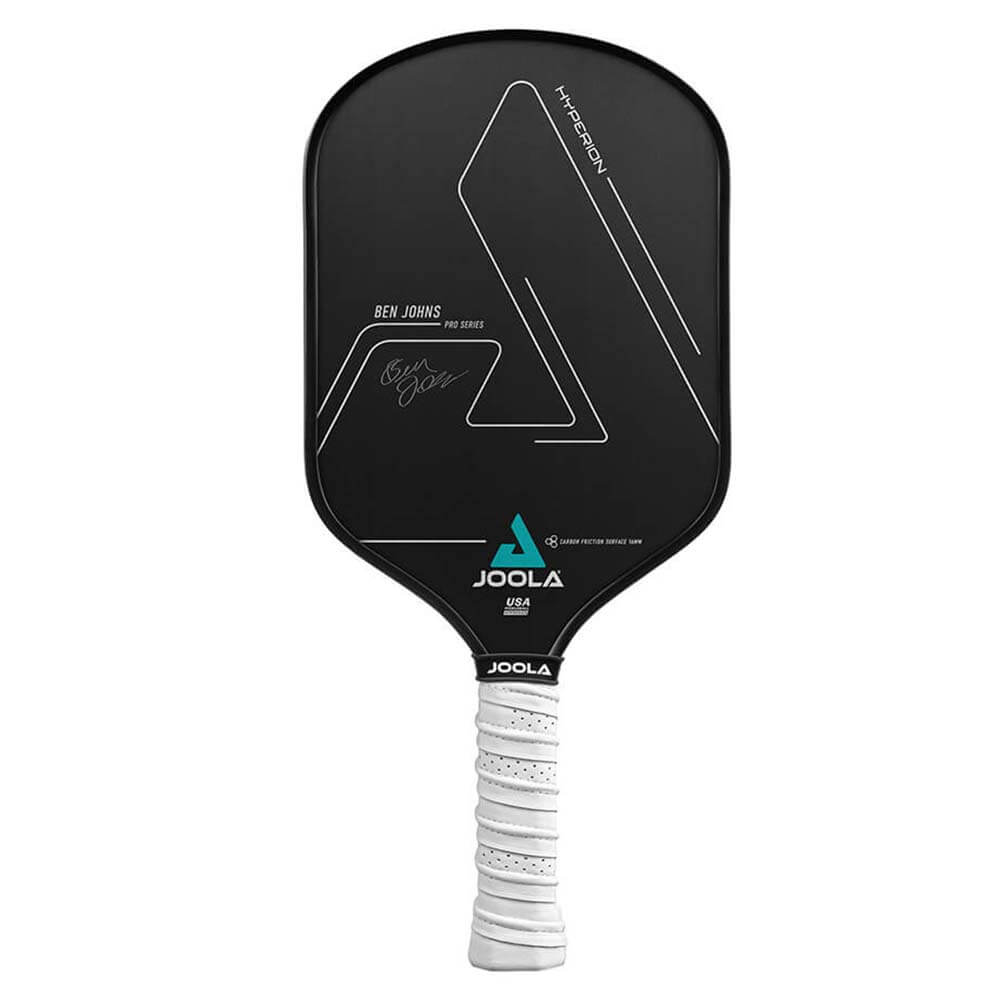
Elongated at 16.5 x 7.5 in with a textured carbon face, a 16 mm core and about 8.4 oz, a weight that gives stability on blocks and drives. A generation before the Pro V line, so check the exact model on the official list before buying two units.
- 3
- Weight
- 7.9 oz
- Core
- 14 mm
- Face
- Textured carbon
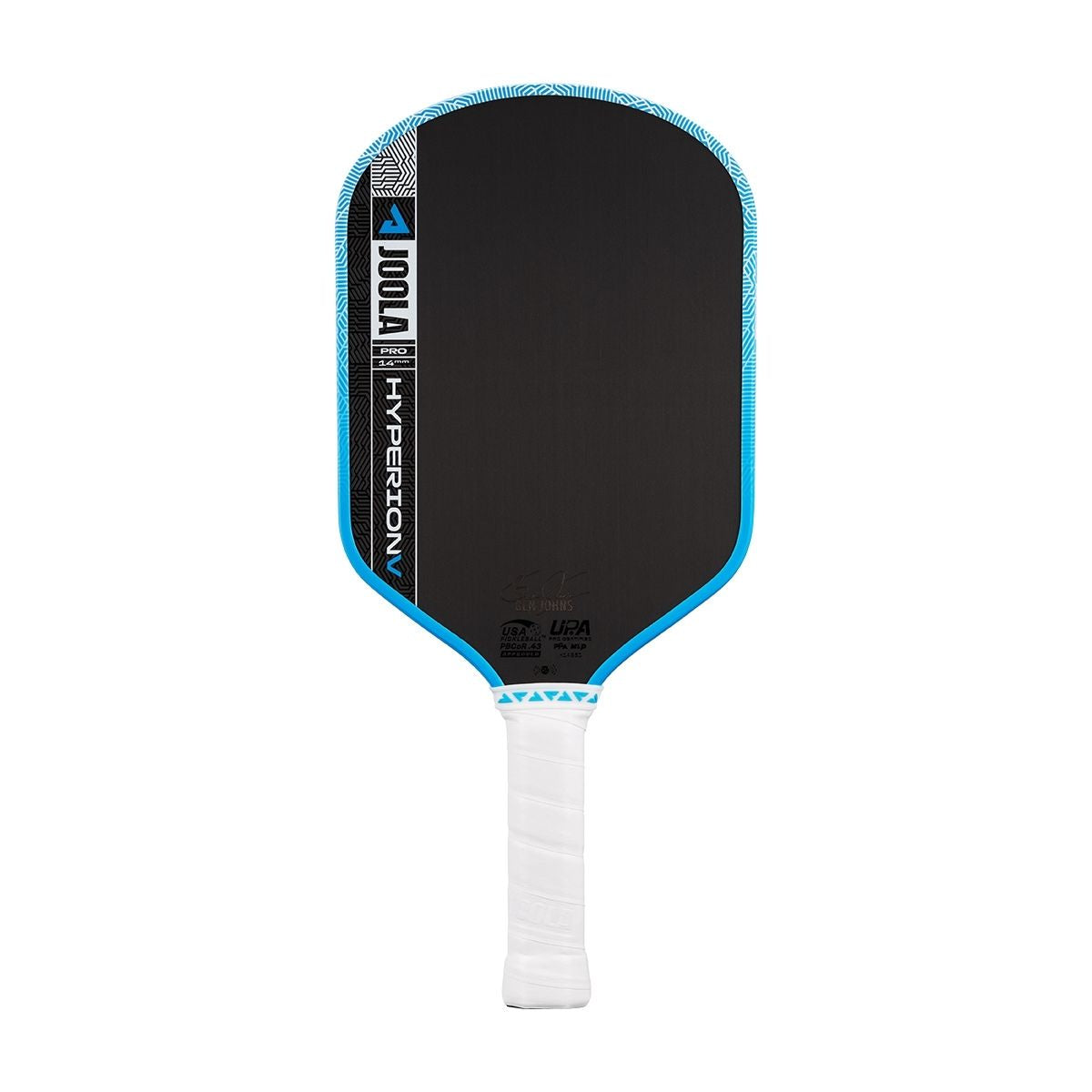
Elongated aero-curve shape at 16.5 x 7.5 in, a 14 mm Propulsion core with a foam wall, thermoformed and with KineticFrame. About 7.9 oz, a 5.5 in handle and a 4.125 grip. The spec sheet indicates USA Pickleball and UPA-A approval.
- 4
- Weight
- 8.1 oz
- Core
- 16 mm
- Face
- Textured carbon
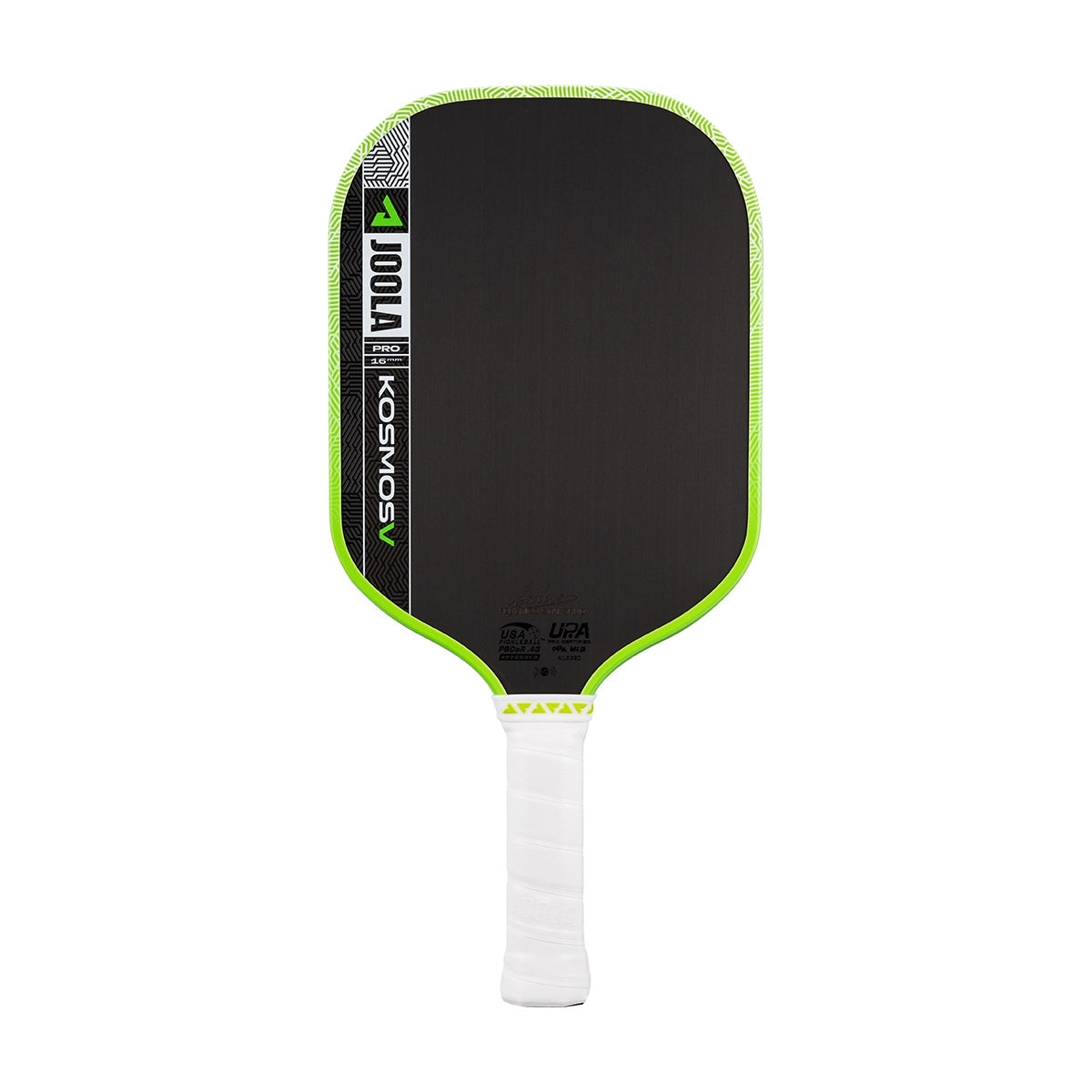
Hybrid shape at 16.3 x 7.7 in, between the elongated Perseus and the wide Scorpeus. A 16 mm Propulsion core, thermoformed, KineticFrame, about 8.1 oz, a 5.25 in handle and a 4.25 grip. The spec sheet indicates USA Pickleball and UPA-A approval.
- 5
- Weight
- 7.7 oz
- Core
- 14.3 mm
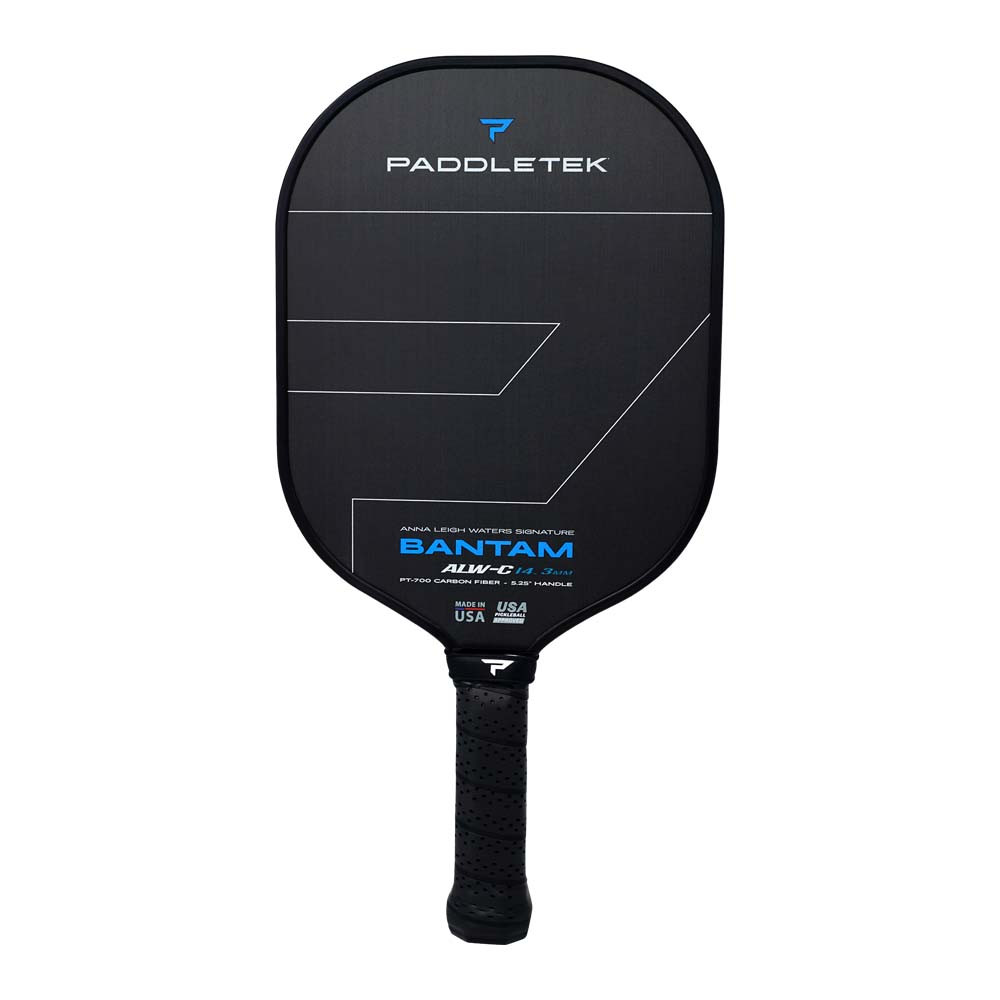
Launched by Paddletek in 2023 as Anna Leigh Waters's signature line. Unidirectional raw PT-700 carbon face, a 14.3 mm Bantam core, a compact 15.625 x 7.75 in shape, from 7.5 to 7.8 oz and a low swing weight. Very quick in volley exchanges.










Pickleball paddles for competition: what professional specs have in common
The paddles used on the pro circuit and in the strongest amateur tournaments follow a similar pattern, and understanding that pattern helps separate a competition paddle from a marketing paddle:
- Thermoformed or foam construction. Face and edge molded together, often with foam in the wall, give a larger sweet spot and consistent response. Five of the seven paddles on the list are thermoformed or foam according to the spec sheet.
- A 14 to 16 mm core. All the paddles on the list fall in that range: 16 mm for players who need resets under pressure, 14 mm for those who want pop on the counterattack.
- Weight near 8 oz. Six of the seven fall between 7.9 and 8.4 oz: stable enough for hard balls, light enough to last several matches in one day. The exception is the Bantam ALW-C, which is lighter.
- A textured face with approval. Every approved paddle has a spin ceiling; the difference is in how long the texture lasts.
JOOLA's Pro V line shows well how shape changes the game within the same technology:
Same technology, three shapes: Perseus, Hyperion and Kosmos Pro V
3 racquets: swipe sideways to see them all1–2 of 3 →
Highlighted: what differs between the racquets. In bold: the best value in the row.
The Perseus has rounded corners that keep the sweet spot centered in an elongated shape. The Hyperion has an aerodynamic profile designed to speed up the hand, and the 14 mm version is the most explosive of the three. The Kosmos is a hybrid, with a slightly wider face and a shorter handle. All are in JOOLA pickleball paddles.
Approval: the summary you need
A tournament requires an approved paddle, and checking is the player's responsibility. The essentials, in a few lines:
- USA Pickleball maintains the approved paddle list, the reference for most amateur tournaments. Since October 1, 2026, paddles submitted for certification also go through a spin rate test, with a limit of 2,100 RPM.
- UPA-A has its own certification, required on the professional circuit (PPA Tour and Major League Pickleball). The tests evaluate power and spin before and after a break-in period.
- At other events, the list is defined by each tournament's rules. If it isn't mentioned, ask the organizers before you register.
The details of dimensions, lab tests, pre-match inspection and the consequences of using a paddle that isn't on the list are in the guide to USA Pickleball paddle rules. There we also explain why different versions of the same commercial name have separate registrations.
Heads up
The Approval field on the catalog spec sheets helps you filter, but it doesn't replace the official list. Approvals can change after new tests, and each generation, thickness and shape has its own registration. Check the exact name of your paddle on the list your tournament uses, the week of the event.
Backup paddle: why have two identical ones
In string sports, the backup racket exists because strings break. In pickleball, the reason is different: USA Pickleball rule 3.D.5 prohibits playing with a cracked, delaminated or dented-face paddle, even if the model is on the list. A hit on the edge against your partner or the ground can knock your paddle out of the tournament in the middle of the day.
The backup needs to be identical, not similar. Same model, same thickness, same shape. Swapping a 16 mm Perseus for a 14 mm one in the middle of the bracket changes the ball output on the dink, precisely when you have no time to adapt. Three practical precautions:
- Buy both together. That reduces the chance of getting different generations or finishes.
- Choose a model that's easy to find. If one unit breaks, you need to replace it. That is why the list prioritizes paddles with several offers, like the Perseus Pro V Ben Johns and the Wilson Cadence Pro 16.
- Alternate use. Playing practice sessions with both keeps face wear similar and keeps the backup from feeling strange when it comes in.
Weight tolerance between units
No paddle leaves the factory with an identical weight. The spec sheets themselves show it: the Selkirk OMNI Widebody appears at 7.9 to 8.2 oz, the Paddletek Bantam ALW-C at 7.5 to 7.8 oz, and the JOOLAs in the Pro V line with a weight "on average." A difference of 0.3 oz seems small on the scale, but it becomes noticeable in the swing of an elongated paddle, because the extra weight may be in the head.
How to match two units:
- Weigh both on a kitchen scale, in grams (1 oz is about 28.35 g). Weigh with the grip and overgrip you will use.
- Identify the lighter one and note the difference.
- Add weight tape to the lighter one, at the same point where the other seems heavier. Tape at the top of the head changes swing weight; on the sides, stability.
- Check in play. Do a dink and volley session with each one. If one still feels "heavier in the hand," adjust the position of the tape, not just the amount.
Paddles with factory adjustable weights, like the OMNI Widebody with the MOI system, make this adjustment easier without tape.
Customization allowed in tournaments
USA Pickleball allows a closed set of changes to an approved paddle: edge tape, weight tape, weights from the manufacturer's original system, grip and overgrip changes, grip inserts and decals or identification writing within position limits. Outside that list, nothing: sanding the face, applying spray to restore spin or sticking on stickers outside the limits makes the paddle illegal. The complete list and the measurements for each limit are in the guide to paddle rules.
In practice, competitors use these changes for three things: matching the backup paddle, adjusting the balance to their style and ensuring grip in the heat. A fresh overgrip before each tournament is the equivalent of a fresh stringing in tennis: cheap and it makes a difference.
The face is pickleball's "rubber"
A pickleball paddle has no string or rubber to replace, but it does have a part that wears out: the face texture. With use, it loses grip and spin drops gradually. This isn't a defect, it's normal wear.
For those who compete, the wear has two consequences. The first is about play: baseline topspin and the spin serve stop landing where they used to. The second is about rules: USA Pickleball began testing paddles on the court at some events and reported that a worn paddle was the most common failure. A paddle with an intact face and texture in good condition avoids surprises at inspection.
A simple way to monitor it: run your finger over the face near the center and at the edge, where the ball barely hits. If the center is smooth and the edge is still rough, the paddle has lost texture. For those who want to choose by spin, the 10 pickleball paddles with the most spin compare the faces that grip the ball most.
What top players use (and what that means for you)
We only cite what the manufacturers have published:
- JOOLA reported that, at the PPA Cape Coral Open in February 2026, Federico Staksrud debuted the Kosmos Pro V and won the singles bracket, Anna Bright won with the Scorpeus Pro V and Ben Johns took gold in men's and mixed doubles with the Perseus Pro V.
- Paddletek launched the Bantam ALW-C line in November 2023 as Anna Leigh Waters's signature paddle, in 12.7 and 14.3 mm versions.
Sponsorship contracts change, and a pro's paddle is usually chosen for their style. What's worth copying is the criterion: a shape that matches your position on the court, a core that matches your type of shot and two identical units in your bag.
Which of the seven fits your tournament game
- Play doubles from the baseline and transition, with a two-handed backhand: Perseus Pro V Ben Johns 16mm or Hyperion CFS 16, both with a 5.5 in handle.
- Counterattack a lot and want pop: Hyperion Pro V 14mm.
- Want reach without losing sweet spot: Kosmos Pro V 16mm, the hybrid.
- Play glued to the kitchen and need stability: Wilson Cadence Pro 16 or Selkirk OMNI Widebody 2026. More models in Selkirk paddles and Wilson paddles.
- Prioritize hand speed: Paddletek Bantam ALW-C 14.3mm, the lightest on the list. Also see Paddletek paddles.
If you're still deciding on a style before thinking about tournaments, the guide to the 7 best pickleball paddles for advanced players organizes the options by playing profile.
Tournament week checklist
- Seven days before: check the exact model on the list the tournament uses and read the rules.
- Five days before: play a practice session with each paddle and check that the backup is matched in weight.
- Three days before: inspect the edge and face of both, looking for cracks, bubbles or loose parts.
- The night before: change the overgrip on both and set aside a towel and an extra overgrip for the day.
- On the day: bring both paddles to inspection and, if you have a question about either, ask the referee before the match, never during it.
To compare your candidates, use the pickleball paddle comparison tool or filter by level in the pickleball catalog. How the scores are calculated is in the methodology.
What is the best pickleball paddle for competition?
The JOOLA Perseus Pro V Ben Johns 16mm, for its professional-level specs, thermoformed construction, 16 mm core and good availability, which makes it easy to have two identical units. For those who prefer pop, the Hyperion Pro V 14mm; for a wide shape, the Wilson Cadence Pro 16.
How many paddles should I bring to a pickleball tournament?
At least two of the same model, thickness and shape, with matched weight. A cracked or delaminated paddle can't be used, and an identical backup keeps you from changing feel in the middle of the bracket.
Can I put lead tape on my paddle in a tournament?
Yes. Weight tape is among the changes allowed by USA Pickleball, along with edge tape, grip and overgrip. Tape and decals on the face have position limits, explained in the paddle rules guide.
How do I know if a worn paddle is still good for a tournament?
If the face has no cracks, bubbles or delamination and the model is on the list, the paddle is legal. Even so, a heavily worn texture reduces spin and was the most common failure in USA Pickleball's on-court tests. When in doubt, use the backup.
Where to buy the racquets in this guide
- Perseus Pro V Ben Johns 16mm JOOLA8.1 oz · 16 mm · Textured carbon fiberSee priceAmazon
- Ben Johns Hyperion CFS 16 JOOLA8.4 oz · 16 mm · Textured carbonSee priceJOOLA
- Hyperion Pro V 14mm JOOLA7.9 oz · 14 mm · Textured carbonSee priceAmazon
- Kosmos Pro V 16mm JOOLA8.1 oz · 16 mm · Textured carbonSee priceAmazon
- Bantam ALW-C 14.3mm Paddletek7.7 oz · 14.3 mm · Raw unidirectional PT-700 carbonSee pricePickleball Superstore
The prices above are checked automatically at each store and may have changed since the last check. The price that counts is the one shown on the store's website at checkout. We may earn a commission on purchases made through store links, at no extra cost to you.