


 Brasil
 United States
 United Kingdom
 Australia
 Netherlands
 France
 España
 Italia
 السعودية
7 Best Pickleball Paddles for Beginners in 2026
Which pickleball paddle to buy to get started: the right core, face, weight and shape, and the seven best entry-level options of 2026.
Updated on 2026-10-07
On this page
- 1.Why your first paddle makes a difference
- 2.What a beginner pickleball paddle needs
- 3.The 7 best pickleball paddles for beginners in 2026
- 4.Comparison: from the basics to carbon
- 5.Our top pick in detail
- 6.Common mistakes on a first purchase
- 7.Standard or elongated for beginners?
- 8.How to care for your first paddle
- 9.Pickleball: a sport you can start without fear
- 10.The next step after your first paddle
- 11.Frequently asked questions
- 12.Verdict
To get started in pickleball, the best paddle is a medium-weight one (around 7.8 to 8.2 oz, or 220 to 232 g), with a thick polypropylene core, preferably 16 mm, and a shape that forgives off-center hits. It holds the ball on dinks, doesn't take strength to get over the net and costs far less than a competition paddle. Our top pick is the JOOLA Agassi Edge Heat Vision 16mm, and below are the alternatives for every budget and every type of beginner.
Why your first paddle makes a difference
At the start, almost every point in pickleball is lost to your own error: the dink that pops up too high, the serve that goes long, the volley that catches the edge. A good beginner paddle doesn't "play for you," but it reduces the size of the mistake. A thicker core slows the ball down, a wide sweet spot keeps an off-center hit from dying in the net, and a medium weight gives stability without tiring your arm over two hours of play.
The opposite path is also common: buying the power paddle your instructor uses and spending months sending dinks out. An advanced player's paddle amplifies everything, including what isn't yet done well.
What a beginner pickleball paddle needs
Polypropylene core, preferably 16 mm
Almost all paddles have a honeycomb core, and polypropylene is the most common material because it's soft and quiet. Thickness is what matters most when you're starting out:
- 16 mm: the ball stays on the face longer and comes off slower and more predictably. It's ideal for learning the dink, drop and reset.
- 14 mm: a middle ground, with a bit more pop. It works well if you're coming from tennis or padel and have a light touch.
- 12 to 13 mm: a lively ball, good for easy power, but harder to control near the net.
Fiberglass or carbon face
The face determines feel and spin. For those just starting, the choice is simpler than it looks:
| Face material | How it behaves | Who it's for |
|---|---|---|
| Fiberglass | Flexible, gives pop without effort, little spin | Those who want to get the ball over easily from day one |
| Polycarbonate or graphite | Firm, comfortable touch, limited spin | Recreational, social play, those who don't want to spend much |
| Carbon | More control, more spin, lasts longer | Those who plan to play every week and improve |
Fiberglass helps at the start because it returns energy even when the swing is short. Carbon demands a little more motion, but rewards you with control. If you already know you'll play often, starting with carbon avoids an early upgrade.
Medium weight and a forgiving shape
Light paddles (under 7.5 oz) are fast, but they wobble when the ball comes in hard. Heavy paddles (over 8.3 oz) are stable, but tire your arm and slow your reaction at the net. The middle of the road is the safest for learning.
On shape, the standard (about 15.5 to 16 in long by 7.75 to 8 in wide) and the wide give the largest sweet spot. The elongated gives reach, but the sweet spot is narrower. Some entry-level elongated paddles use a more rounded head to bring the hitting area up high, like JOOLA's Agassi line.
Entry to mid-range price
There's no reason to start with a top-of-the-line paddle. The entry tier already has carbon, a 14 to 16 mm core and tournament approval. The cards below show live prices at stores.
The 7 best pickleball paddles for beginners in 2026
7 best pickleball paddles for beginners in 2026
- 1
- Weight
- 7.8 oz
- Core
- 16 mm
- Face
- Textured carbon
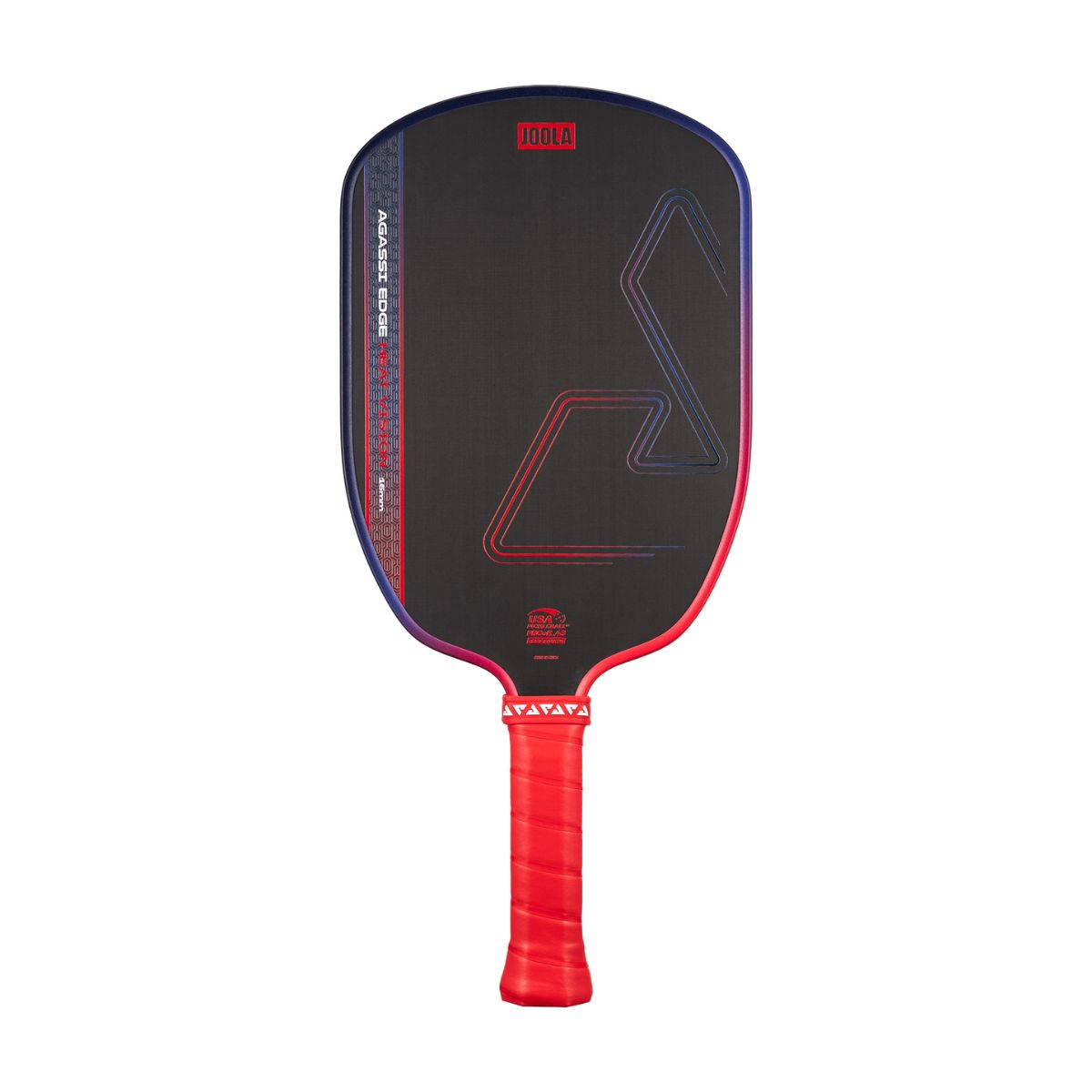
A textured carbon face, a 16 mm polypropylene core thermoformed from the handle to the throat, and SK Film, which JOOLA uses to filter vibration. It weighs about 7.8 oz, has a 5.5 in handle and is approved by USA Pickleball. It works from the first month through the intermediate level.
- 2
- Weight
- 7.9 oz
- Core
- 16 mm
- Face
- T700 CarbonFusion carbon
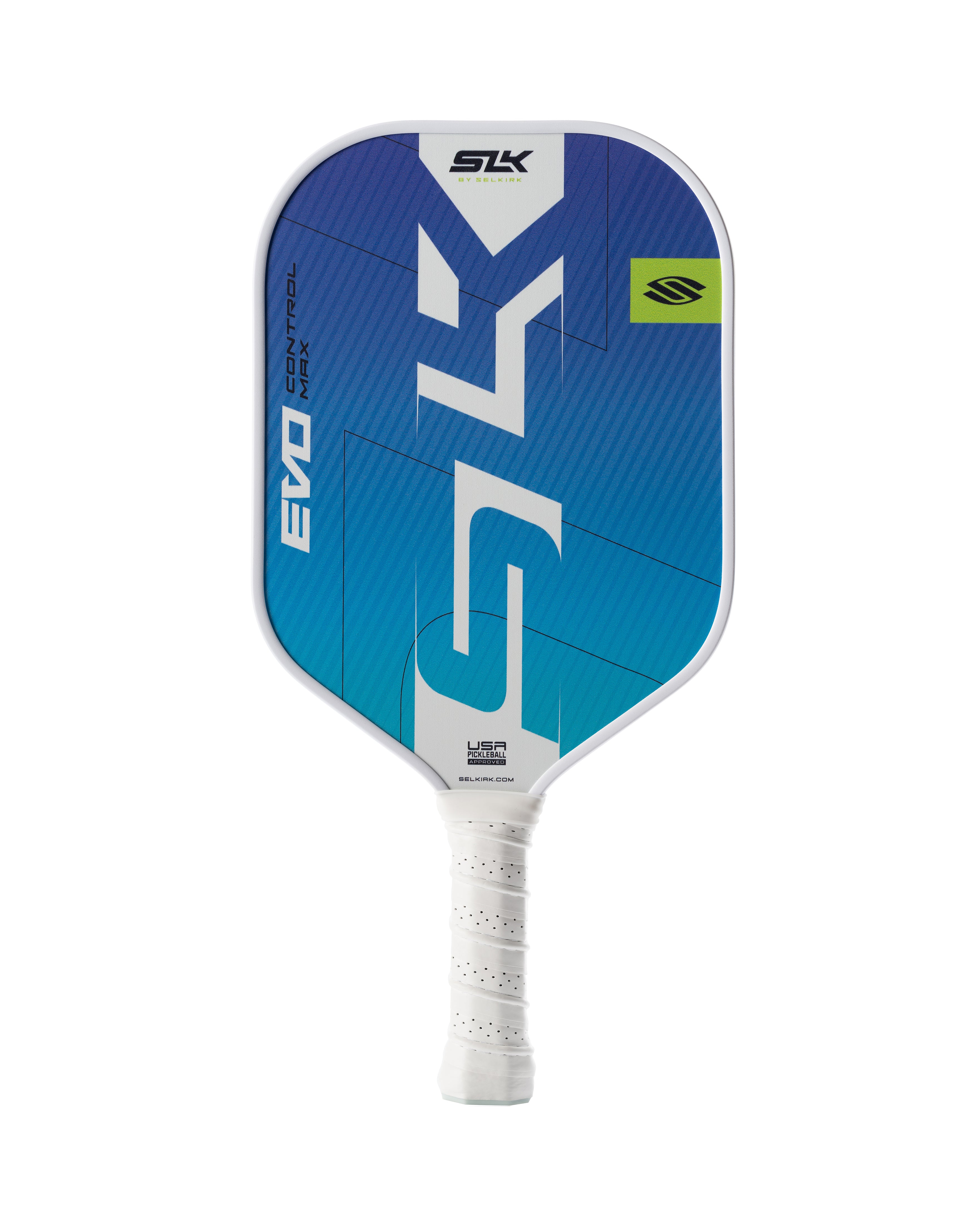
A 16 mm Rev-Control core, a T700 carbon face and a wide 16 x 7.85 in shape, at about 7.85 oz. A thick core and a wide face are the classic combination for learning dinks and resets.
- 3
- Weight
- 7.9 oz
- Core
- 16 mm
- Face
- T700 carbon
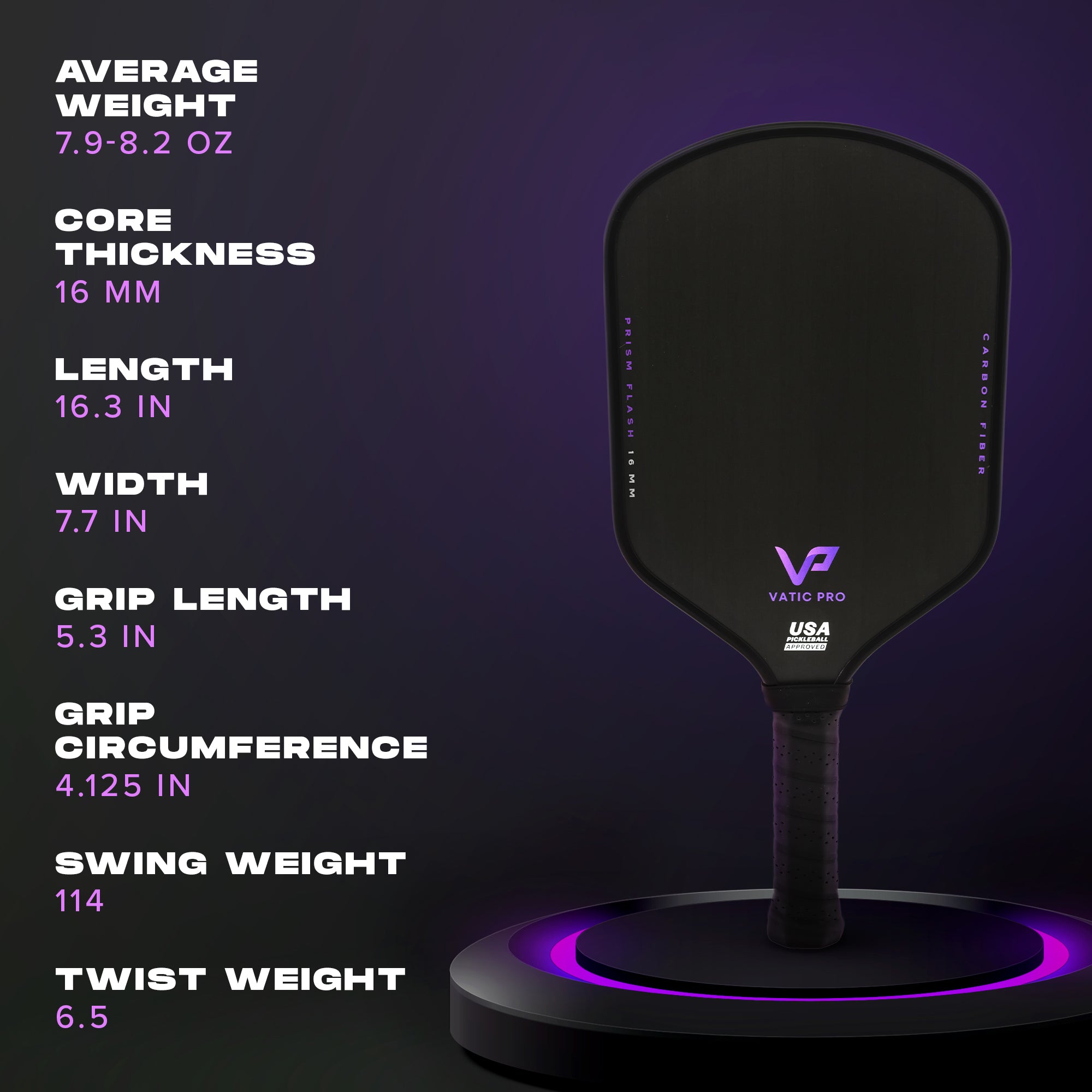
Raw T700 carbon, a 16 mm core with injected foam walls and a hybrid 16.2 x 7.7 in shape, at about 7.9 oz. Intermediate-paddle materials for those who want to start with raw carbon right away.
- 4
- Weight
- 7.9 oz
- Core
- 14.3 mm
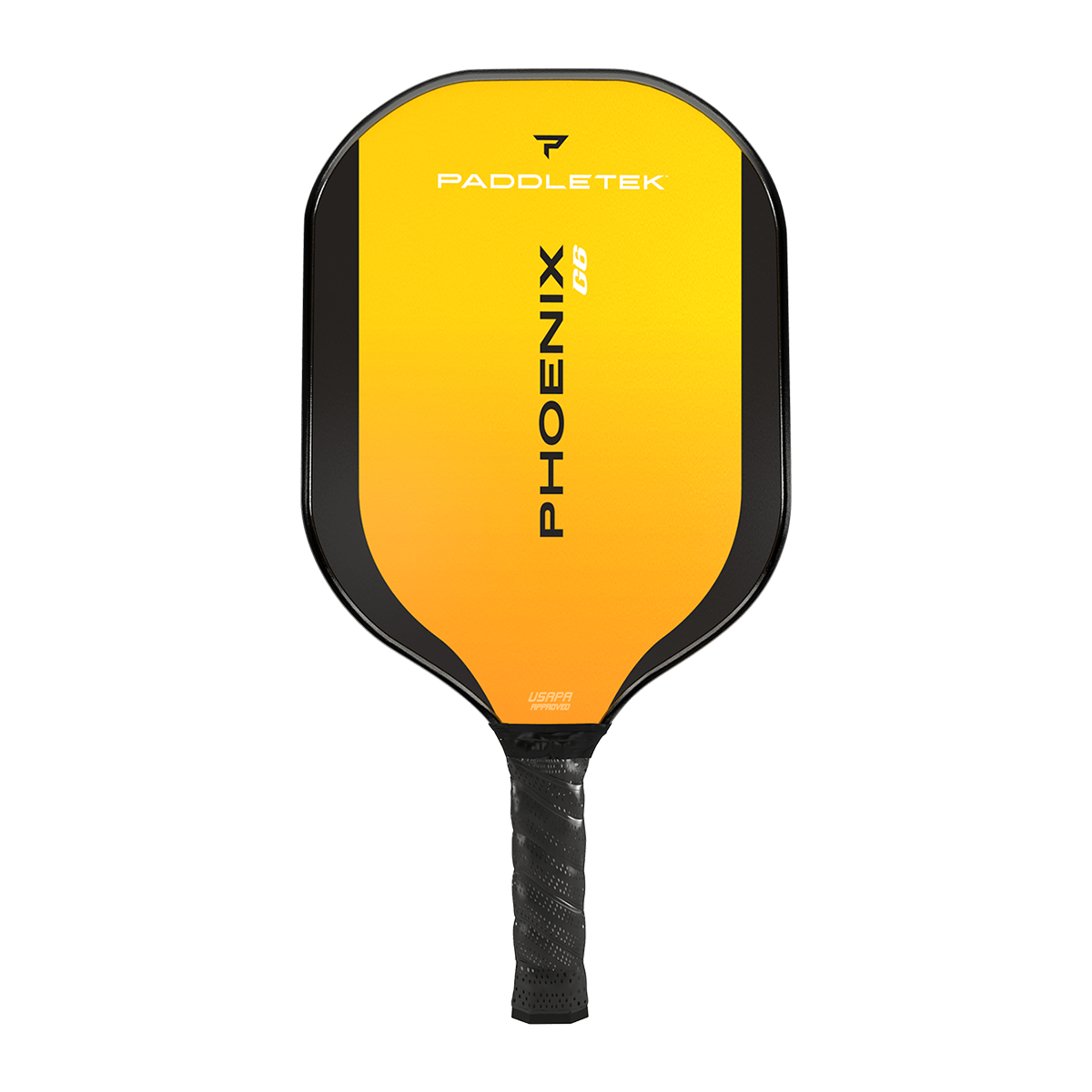
A textured polycarbonate face, a 14.3 mm core with a graphite layer designed to dampen vibration and sound, a standard shape and about 7.9 oz. A 4.5 rating across 519 reviews on Amazon.
- 5
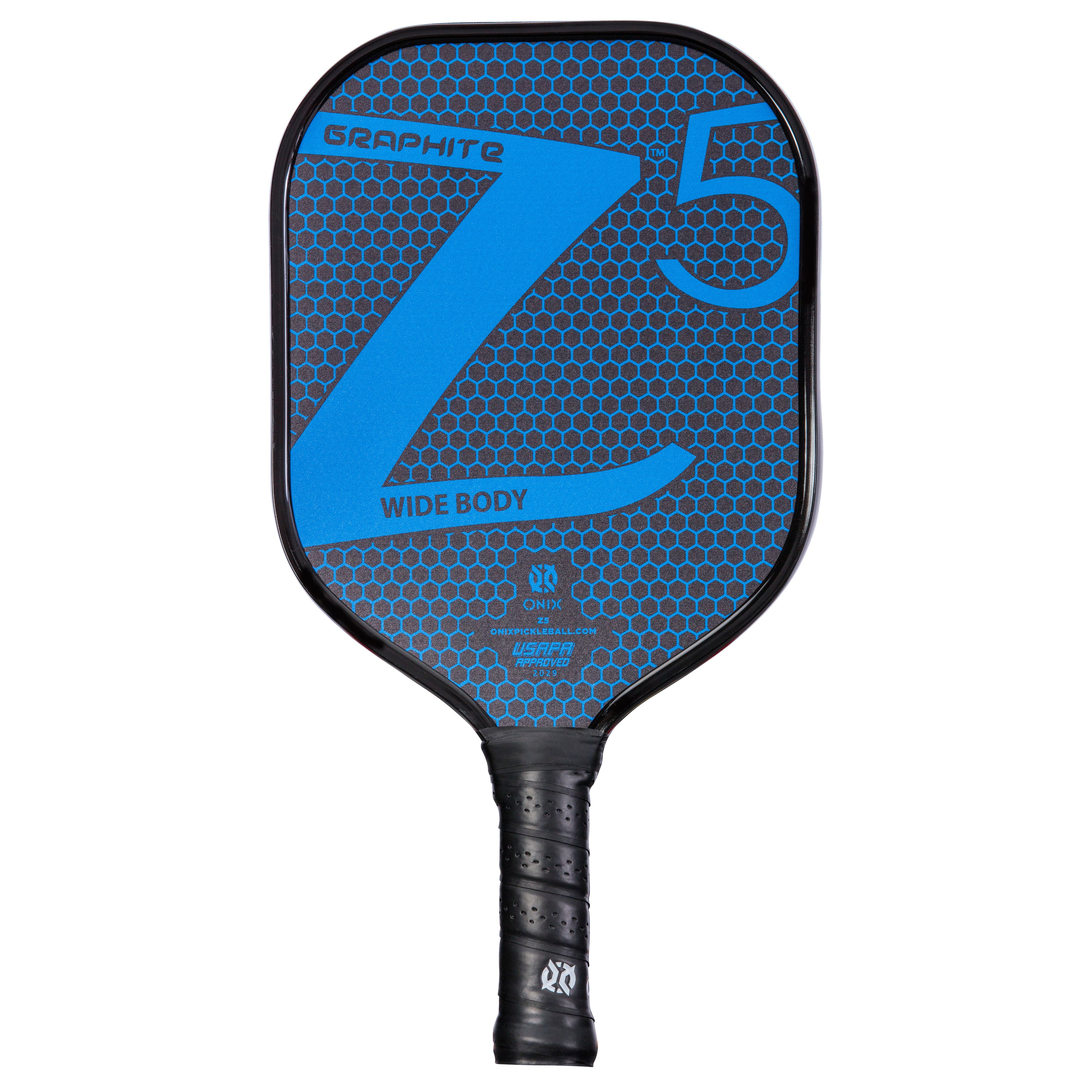
- Weight
- 7.9 oz
- Core
- 12 mm
- Face
- Graphite
A wide 15.5 x 8.125 in shape, a graphite face and a 12 mm Nomex core, a material that tends to give a lively ball exit. One of the most-reviewed models in the catalog, with a 4.6 rating across more than 4,000 reviews on Amazon.









Comparison: from the basics to carbon
Pickleball paddles for beginners: fiberglass vs. carbon
Highlighted: what differs between the racquets. In bold: the best value in the row.
The table shows the typical ladder for someone starting out. The JOOLA Essentials and the HEAD Spark Elite use fiberglass and 12 and 13 mm cores, a combination that tends to give easy pop and a livelier ball on dinks. The Perseus Astral moves up to carbon and 14 mm. The Agassi Edge Heat Vision and the SLK Evo Control Max reach 16 mm, the thickness that helps most in the kitchen game. The brands are covered in detail on the JOOLA paddles, HEAD paddles and Selkirk paddles pages.
Our top pick in detail
JOOLA Agassi Edge Heat Vision 16mm
The Agassi shape is elongated (16.5 x 7.5 in), but has a more rounded head, which makes the paddle look like a tennis racquet. For those coming from tennis, the look and the 5.5 in handle make the transition more natural.
Inside, the 16 mm core is thermoformed and there's an SK Film layer between the face and the core, which JOOLA uses to filter vibration. The 16 mm core is the thickness most recommended for learning the dink, and the weight of about 7.8 oz sits on the light side of the medium range. The textured carbon face lets you start practicing the topspin third shot without changing paddles.
Strengths
- + 16 mm core, the thickness most recommended for learning the dink
- + Thermoformed, with an SK Film layer between face and core
- + 5.5 in handle for the two-handed backhand
- + Approved by USA Pickleball
Drawbacks
- − Priced above fiberglass paddles
- − A 16 mm core isn't the focus for those seeking advanced-level pop
- − Elongated, forgives less on the sides than a widebody
If your budget is smaller
The Perseus Astral 14mm keeps the carbon face and the long handle, swaps the core for 14 mm and usually costs less. It's the best bridge between a "sporting goods store paddle" and a real paddle. The JOOLA Essentials, meanwhile, is the choice for those who don't know yet whether they'll like the sport: durable, approved and easy to find.
If you have arm or shoulder pain
Look for a weight around 7.8 oz or less and a soft face. The Agassi Edge Heat Vision, at about 7.8 oz, is one of the lightest on this list, and the Phoenix G6 has a graphite layer in the core designed to dampen vibration. Avoid very thin cores, which transmit more vibration.
Common mistakes on a first purchase
- Buying the pro's paddle. 13 to 14 mm thermoformed paddles are made for those who already control the ball. At the start, the extra power turns into balls out.
- Ignoring the grip. A grip that's too thick locks the wrist and takes away touch. When in doubt, choose the smallest and build it up with an overgrip. We explain how to measure in how to choose a pickleball paddle.
- Choosing the lightest thinking it's easier. Lightness helps hand speed, but a very light paddle twists on hard balls and takes more arm to get the ball over from the baseline.
- Buying a generic set with no approval. If you're thinking of playing amateur tournaments, check that the paddle is on the USA Pickleball list.
- Choosing by looks. Colors change with every collection; what matters is core, face and weight.
Standard or elongated for beginners?
Both work, but for different reasons. The standard (or the wide) has the sweet spot closer to your hand and wider, so it forgives the volley that hits off-center and keeps your hands quick in kitchen exchanges. The elongated reaches more balls and helps on the serve and drive, but demands precision.
If you're coming from tennis and use a two-handed backhand, an elongated paddle with a more rounded shape, like the Agassi Edge Heat Vision, is a good middle ground. If you've never played a racquet sport, start with the standard or the wide. The confidence gain in the first few weeks is worth more than the extra reach.
How to care for your first paddle
A pickleball paddle has no strings to replace, but it does wear. A few simple habits extend its life:
- Don't leave the paddle in a car in the sun. Excessive heat can affect the bond between the face and the core.
- Avoid scraping the paddle on the ground to pick up the ball. The edge guard is there for accidental impacts, not daily use.
- Clean the face with a damp cloth after play. Court dust reduces grip and spin.
- Replace the grip when it gets slick or soaked. A new overgrip costs little and restores the firmness of your hold.
- Store it in a cover. It protects the face from scratches and knocks in your bag.
Pickleball: a sport you can start without fear
Pickleball keeps growing, driven by tennis clubs, residential communities and gyms that adapt existing courts. The court is smaller than a tennis court, the perforated plastic ball is slower and the serve is underhand, which makes the sport accessible for those who've never played with a racquet and for those coming from tennis, padel or beach tennis.
That short learning curve is the reason many people improve quickly and want to change paddles within a few months. That's why the recommendation to start with a paddle that keeps up with that progress, like carbon ones with a 16 mm core, usually saves money in the end.
The next step after your first paddle
When your dink comes out consistently and you start to miss pop at the net, it's time to look at paddles with raw T700 carbon, thermoformed or with a foam core. The guide to the best pickleball paddles for intermediate players details this transition. A few options that already suit those at the end of the beginner phase:
Paddles for those leaving the beginner phase






To see all the options filtered by level, weight and shape, visit the pickleball paddle catalog. If you'd like to compare two candidates with the full spec sheet, use the pickleball comparison tool. And if you'd prefer a direct recommendation, answer the questions in find your paddle.
Want to understand why fiberglass plays differently from carbon? The guide to pickleball paddle materials and shapes explains each material with examples. And the overall list of best pickleball paddles shows the top models by profile.
Frequently asked questions
What is the best pickleball paddle for a beginner?
For those who want to start and improve with the same paddle, the JOOLA Agassi Edge Heat Vision 16mm: carbon, a 16 mm core, medium weight and approved by USA Pickleball. To spend less, the JOOLA Perseus Astral 14mm. To just try the sport, the JOOLA Essentials.
Should a beginner buy a fiberglass or carbon pickleball paddle?
Fiberglass gives easy pop and costs less, good for those who play now and then. Carbon gives more control and spin and lasts longer. If you plan to play every week, starting with carbon avoids replacing your paddle within a few months.
What is the ideal pickleball paddle weight for a beginner?
Between 7.8 and 8.2 oz, or about 220 to 232 g. That medium weight balances stability and hand speed. Those with arm or shoulder pain can go to 7.3 to 7.7 oz, accepting a bit less stability.
13 mm or 16 mm core for someone just starting?
16 mm. The thicker core keeps the ball on the face longer and slows its exit, which makes dinks, drops and resets easier, the most important shots in doubles. A 13 mm core gives more power, but also more balls out while your technique isn't ready.
Can I use a beach tennis or padel racket for pickleball?
No. Pickleball uses its own paddle, which is solid and smaller, and the ball is a perforated plastic one. In tournaments, the paddle has to be a pickleball paddle and be approved. For casual games, always use a pickleball paddle, because the weight and size completely change the game.
Is it worth buying a set with two paddles and balls?
To try the sport with family or friends, yes. For those who have already decided to play often, it's better to buy a single quality paddle, because sets usually include simpler models with little control in the soft game.
Verdict
Where to buy the racquets in this guide
- Agassi Edge Heat Vision 16mm JOOLA7.8 oz · 16 mm · Textured carbonSee priceAmazon
- SLK EVO Control Max 2024 Selkirk7.9 oz · 16 mm · T700 CarbonFusion carbonSee priceTenniszon
- Prism Flash 16mm Vatic Pro7.9 oz · 16 mm · T700 carbonSee priceTenniszon
- Phoenix G6 Paddletek7.9 oz · 14.3 mm · Policarbonato texturizadoSee priceAmazon
- Z5 Graphite Onix7.9 oz · 12 mm · GraphiteSee priceAmazon
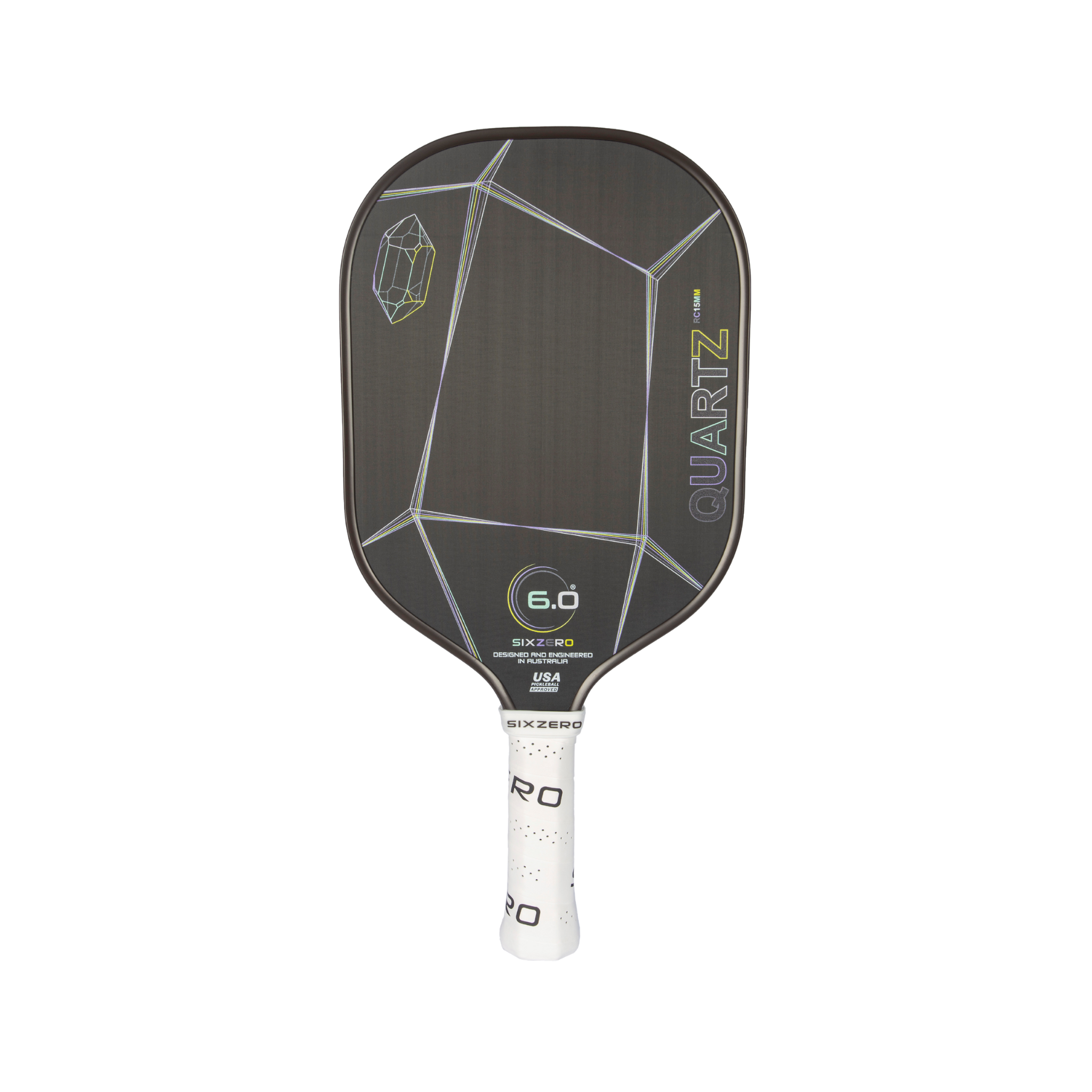 Quartz 15mm Six Zero7.9 oz · 15 mm · T300 carbonSee priceTenniszon
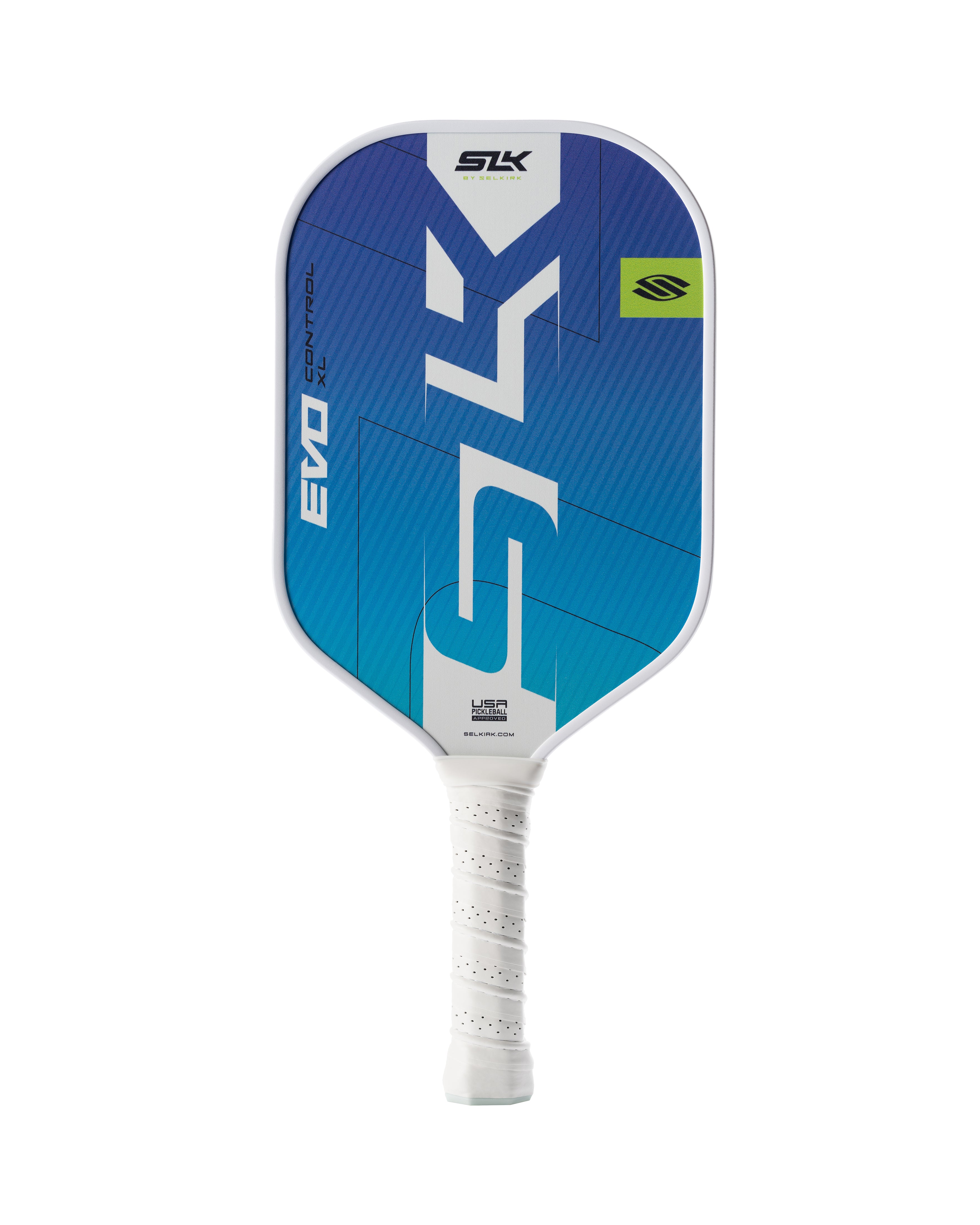 SLK EVO Control XL 2024 Selkirk7.9 oz · 16 mm · T700 CarbonFusion carbonSee priceTenniszon
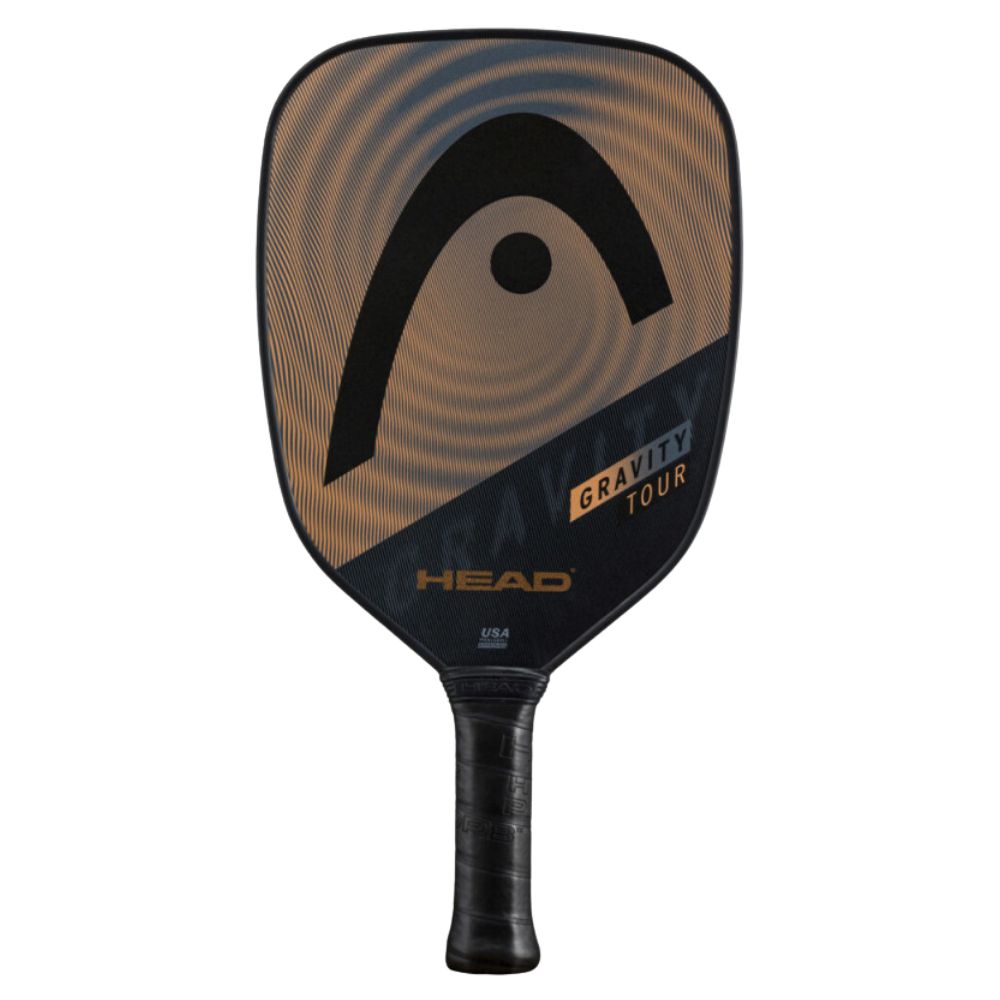 Gravity Tour HEAD8.1 oz · 14 mm · Carbon and fiberglassSee priceAmazon
The prices above are checked automatically at each store and may have changed since the last check. The price that counts is the one shown on the store's website at checkout. We may earn a commission on purchases made through store links, at no extra cost to you.