


 Brasil
 United States
 United Kingdom
 Australia
 Netherlands
 France
 España
 Italia
 السعودية
10 Best Pickleball Paddles for Intermediate Players in 2026
Time to replace your beginner paddle? Understand 14 vs. 16 mm, raw T700 carbon, thermoformed and foam, and see the 10 best options of 2026.
Updated on 2026-10-07
On this page
- 1.Signs your paddle has become too small for your game
- 2.13, 14 or 16 mm: the thickness that changes the kitchen game
- 3.T700 and raw T700 carbon: why everyone talks about it
- 4.Thermoformed, injected foam and foam core
- 5.The 10 best pickleball paddles for intermediate players in 2026
- 6.Analysis of the top picks
- 7.Spin and power: what the paddle does and what depends on you
- 8.Weight and swing weight: the intermediate player's fine-tuning
- 9.When to go to an elongated paddle
- 10.Approval for amateur tournaments
- 11.Frequently asked questions
- 12.Verdict
If you can already sustain dink exchanges, land the third-shot drop with some regularity and are starting to lose points for lack of pop at the net, you're ready for an intermediate pickleball paddle. The jump comes down to three things: a raw T700 carbon face, a well-chosen 14 or 16 mm core, and thermoformed or foam construction. Our top pick is the Vatic Pro V-Sol Pro V7 16mm, which delivers a foam core and elongated reach at a mid-range price.
Signs your paddle has become too small for your game
A beginner paddle was made to forgive. At some point, that forgiveness becomes a limit. A few clear signs:
- Your counterattack doesn't hurt. You win the fast volley exchange, but the ball reaches your opponent easily.
- Your baseline topspin comes out flat. A smooth or fiberglass face doesn't hold the ball enough for it to dip after the net.
- The paddle twists on hard balls. Blocks at your body come out crooked because the paddle is light or has a small sweet spot.
- You already know what you want. Do you prefer to attack from the baseline or decide at the kitchen? That answer defines your next paddle.
If you're still fighting with your dink, hold off for a few more months and see the guide to the best pickleball paddles for beginners.
13, 14 or 16 mm: the thickness that changes the kitchen game
Core thickness is the most important decision at this stage, because it sets the balance between pop and control.
- 13 mm: a fast ball, lots of pop with little motion. Great for those who already have a light touch and want to finish at the volley. On the dink, any excess force turns into a high ball.
- 14 mm: the middle ground for attackers. More exit speed than 16 mm, without the instability of very thin paddles.
- 16 mm: more contact time, more damping, a more stable sweet spot. It's the thickness for those who build the point with drops and resets.
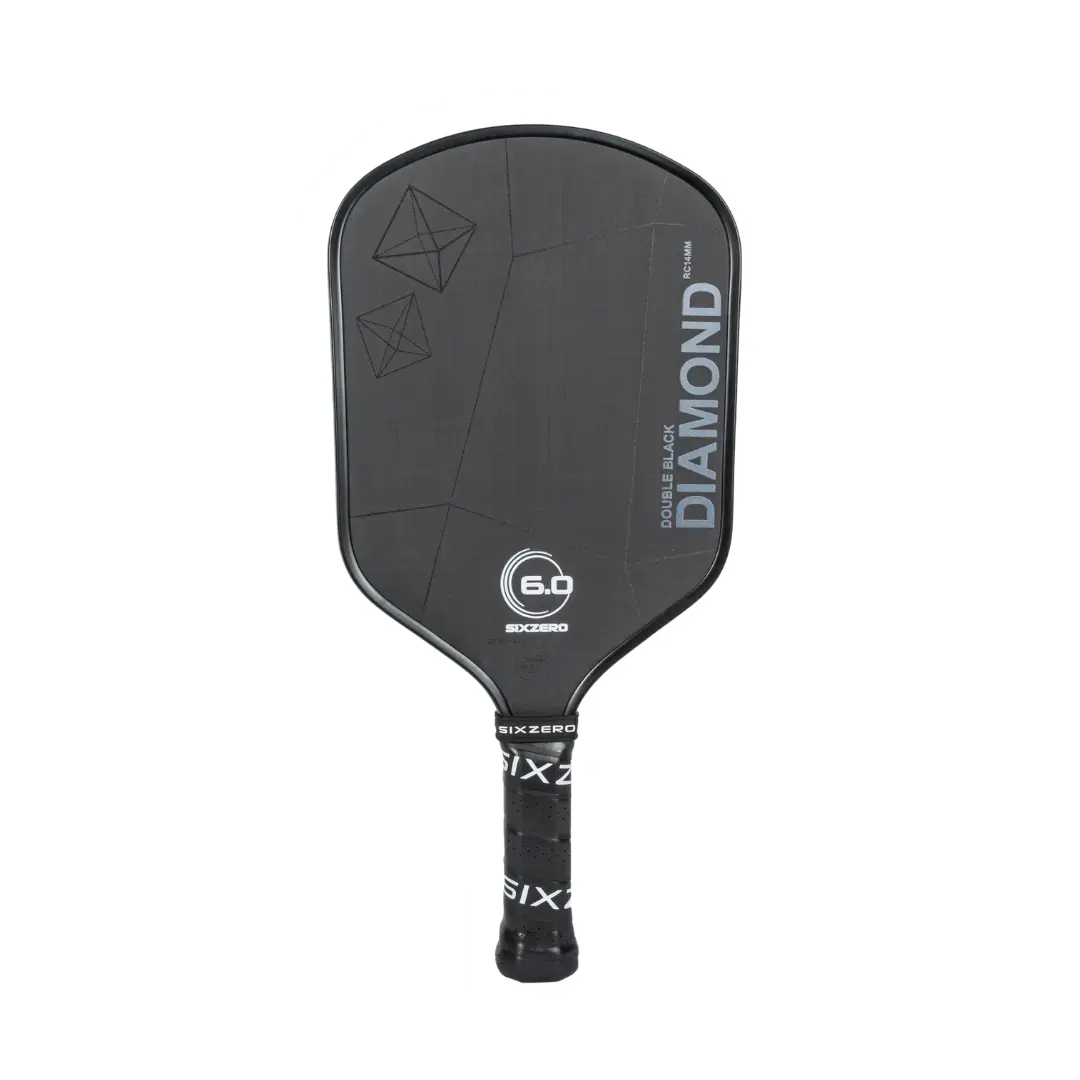
The best way to see the difference is to compare the same paddle in two thicknesses. The Six Zero Double Black Diamond Control comes in 14 and 16 mm, with the same shape and the same face:
13, 14 and 16 mm: what changes in practice
3 racquets: swipe sideways to see them all1–2 of 3 →




Highlighted: what differs between the racquets. In bold: the best value in the row.
The Halo Power XL has the thinnest core in the group, at 13 mm. Between the two DBDs, the general rule holds: the 14 mm tends to have a faster ball exit, and the 16 mm more damping on resets. The V-Sol Pro shows a fourth route: 16 mm of foam, a material that generally returns more energy than a honeycomb of the same thickness.
T700 and raw T700 carbon: why everyone talks about it
T700 is the designation of a carbon fiber from Japan's Toray, also used in bicycle frames and other rackets. Compared to T300, found in entry-level paddles, it has about 40% higher tensile strength, with similar stiffness. On the court, that translates into a firmer face and a more consistent response.
The term raw means the face gets no paint or smooth layer of varnish over the weave. The texture stays exposed and "grips" the ball, which increases spin. Some brands reinforce this roughness with grains applied under heat, like Selkirk's InfiniGrit.
One warning: all texture wears down. A raw carbon paddle used three or four times a week will lose some of its spin over time. That's normal and doesn't mean a defect.
Thermoformed, injected foam and foam core
The market usually divides paddles into "generations" by construction. For the intermediate player, the three that matter are:
| Construction | How it's made | Feel in play |
|---|---|---|
| Cold-pressed | Face bonded over the honeycomb core, no heat | Soft touch, lots of control, little pop |
| Thermoformed | Face and edge molded together under heat and pressure, as a single piece, often with foam injected into the walls | More pop, larger sweet spot, more stability |
| Foam core | Honeycomb replaced by foam (EPP, EVA or a blend) | High power, muted feel, the core doesn't sink |
Injected foam in the perimeter appears in many thermoformed paddles and also in some pressed ones, like Vatic Pro's Prism line. It stabilizes the edge and widens the sweet spot. The 100% foam core, meanwhile, is the latest development: with no honeycomb, there are no cells that can give way and leave the paddle "dead" in one spot on the face, a phenomenon known as core crush.
To understand each material in more depth, see the guide to pickleball paddle materials and shapes.
The 10 best pickleball paddles for intermediate players in 2026
10 best pickleball paddles for intermediate players in 2026
- 1
- Weight
- 8 oz
- Core
- 16 mm
- Face
- T700 carbon
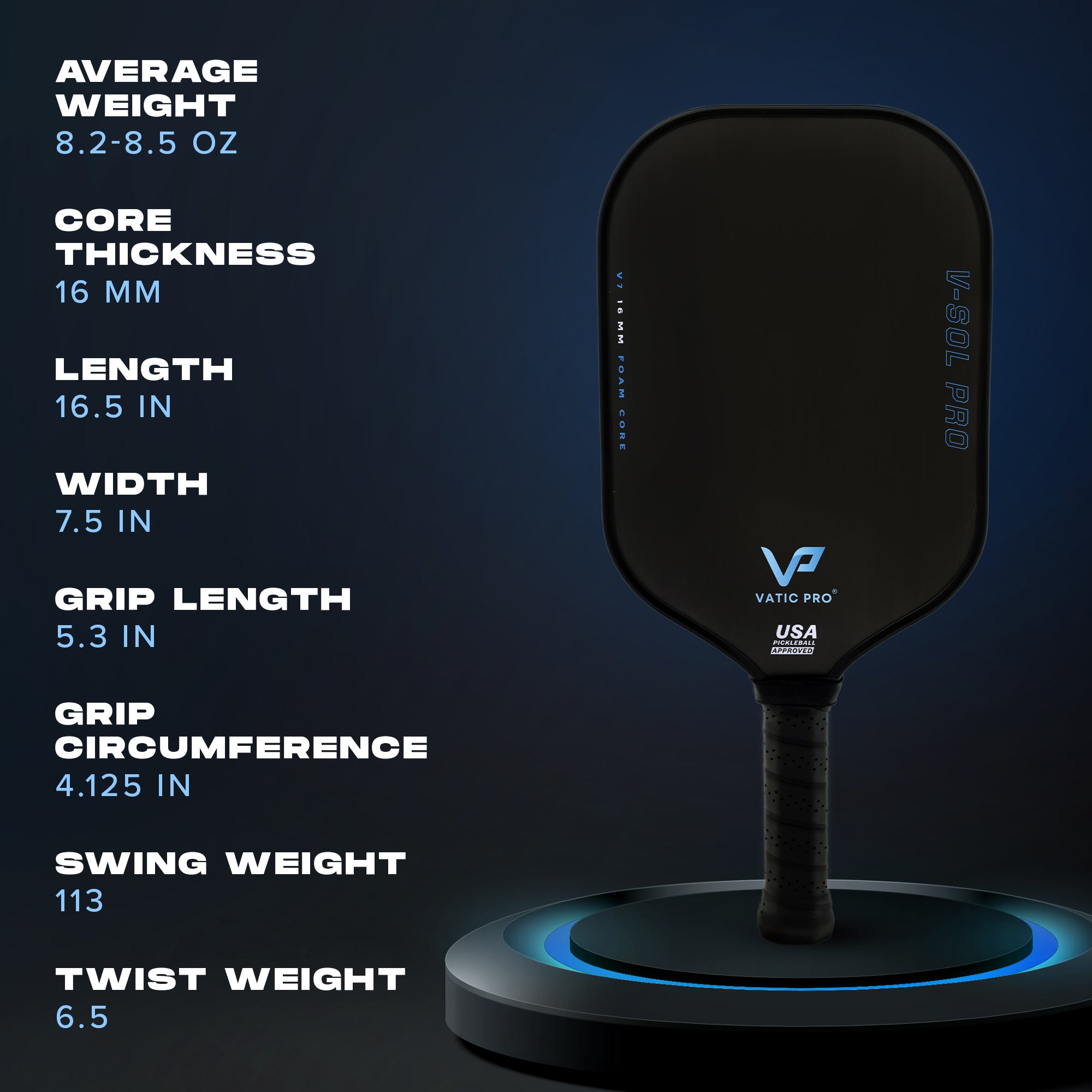
An EPP foam core with an EVA ring on the perimeter, a raw T700 carbon face and an elongated 16.5 x 7.5 in shape, at about 8 oz. A foam core at a mid-range price. A 4.5 rating across 292 reviews on Amazon.
- 2
- Weight
- 8.1 oz
- Core
- 14 mm
- Face
- T700 carbon
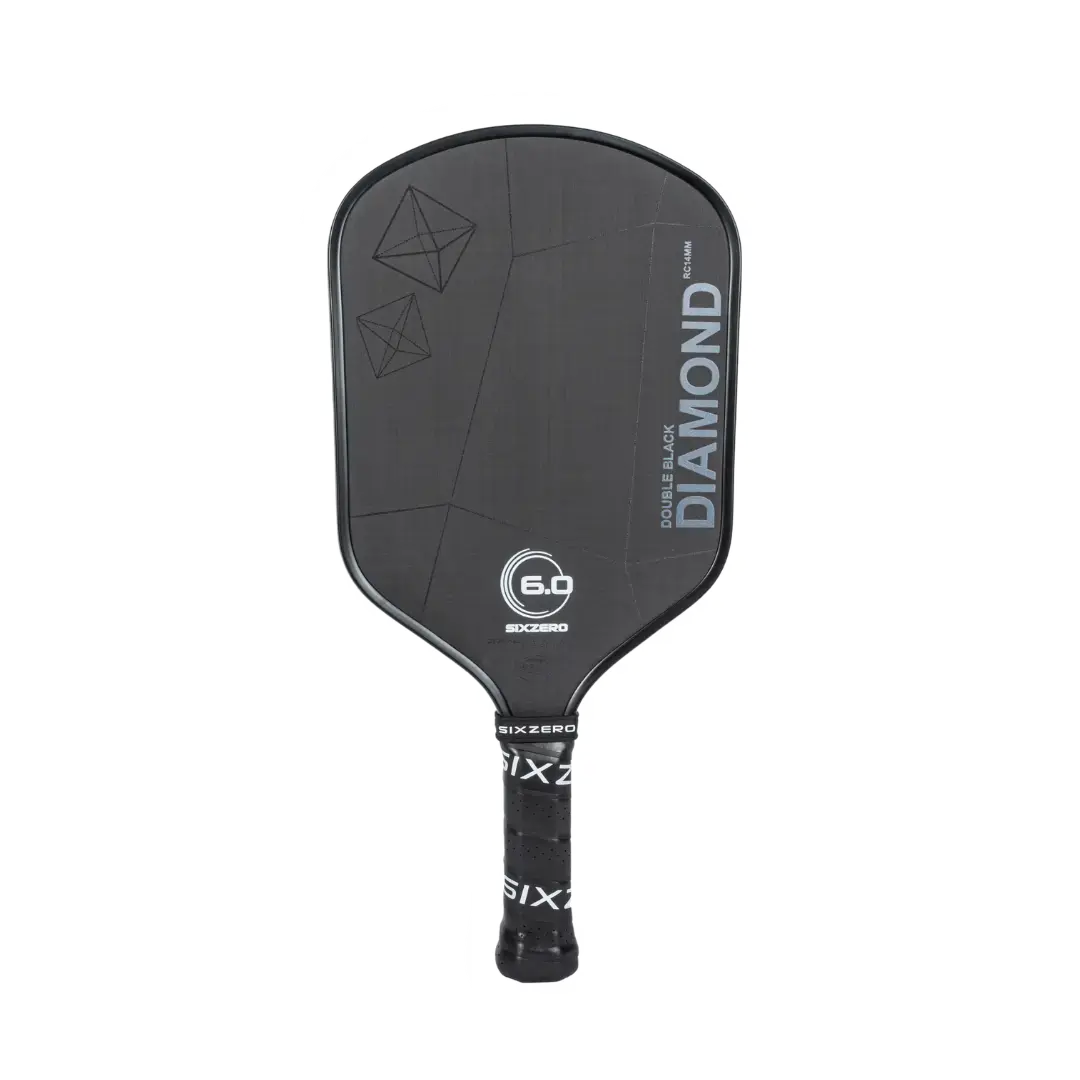
Raw T700 carbon, a 14 mm core, Carbon Fusion edges and a thermoformed carbon handle. A hybrid 16.3 x 7.6 in shape, about 8.1 oz and a swing weight of 110. The same paddle comes in 16 mm.
- 3
- Weight
- 8.2 oz
- Core
- 16 mm
- Face
- T700 carbon and glass
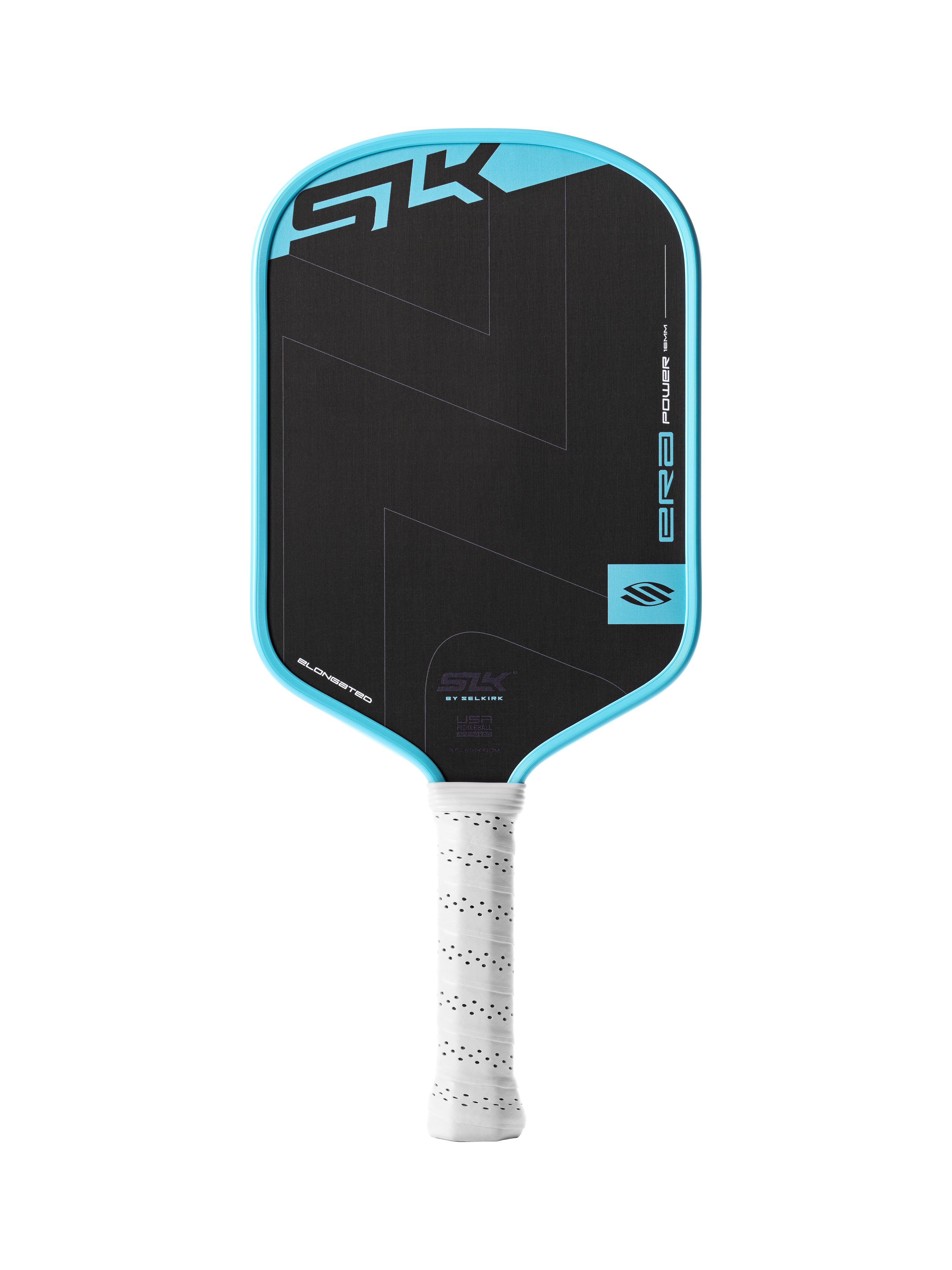
A polypropylene core with an EVA perimeter, a three-layer face with fiberglass and raw T700 carbon, a 5.8 in handle and a swing weight of 118. A typical spec sheet for a paddle for those who attack from the baseline.
- 4
- Weight
- 8 oz
- Core
- 14.3 mm
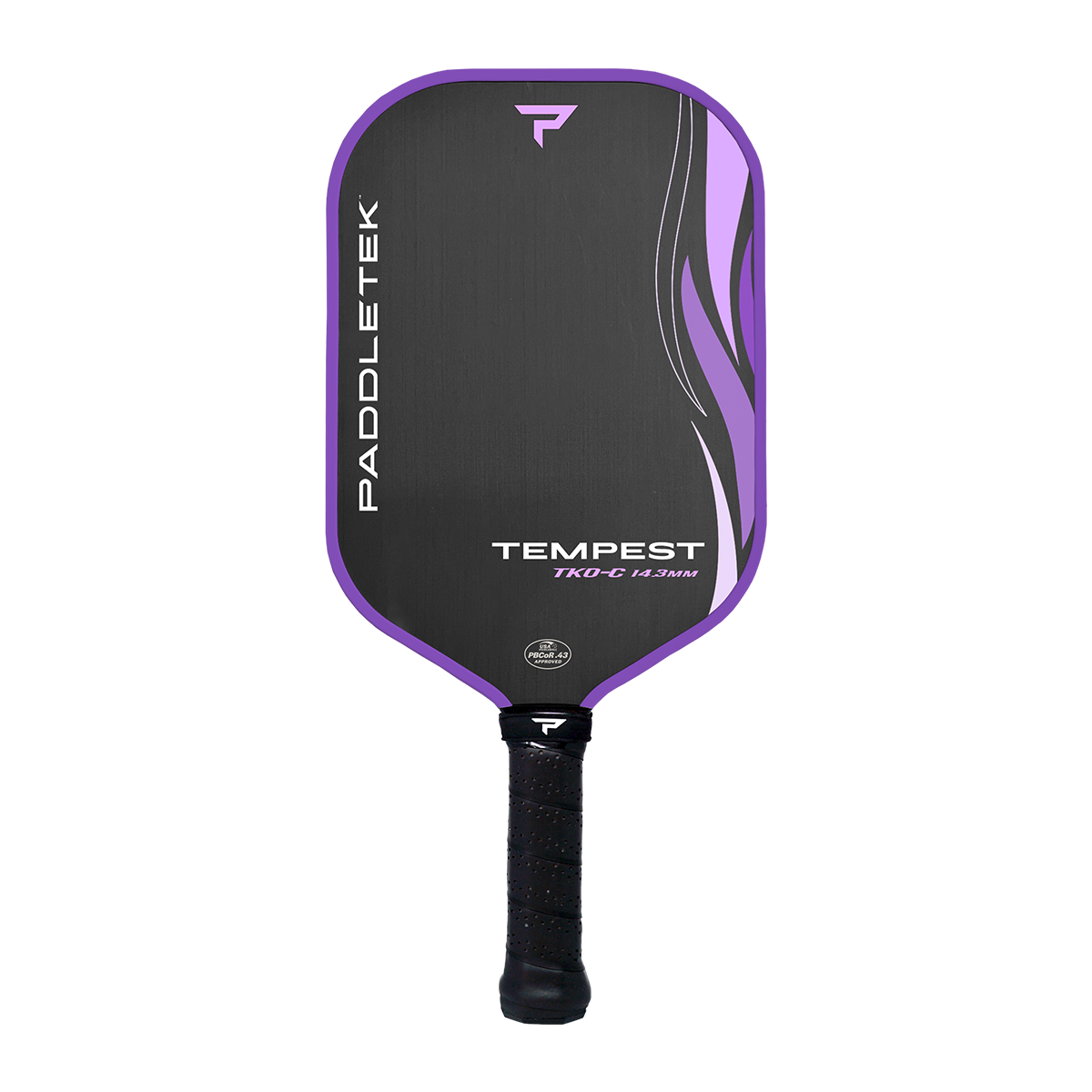
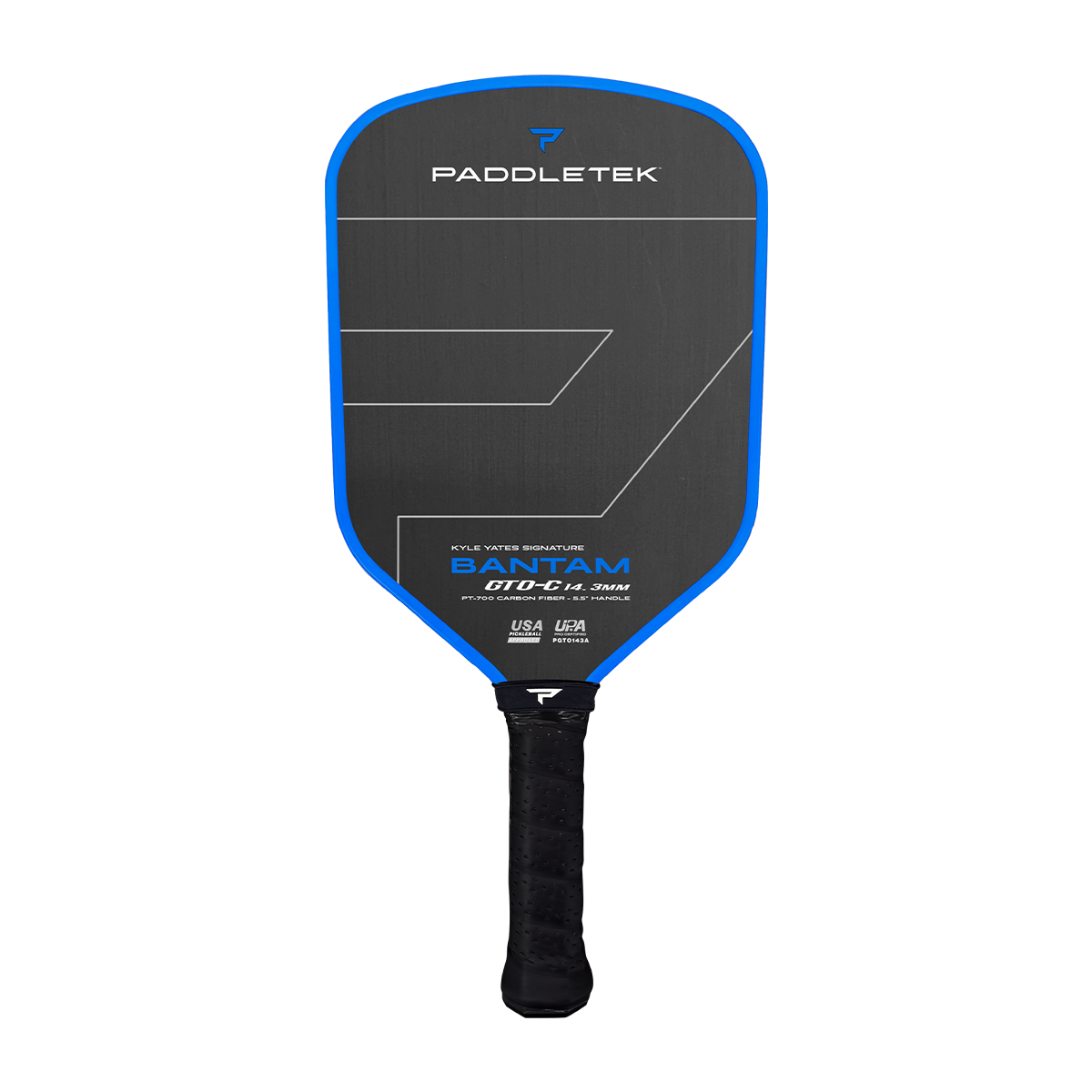
A 16.45 x 7.5 in elongated paddle with a raw unidirectional PT-700 carbon face, a 14.3 mm Smart Response core and about 8 oz. Paddletek's elongated alternative for those who want reach.
- 5
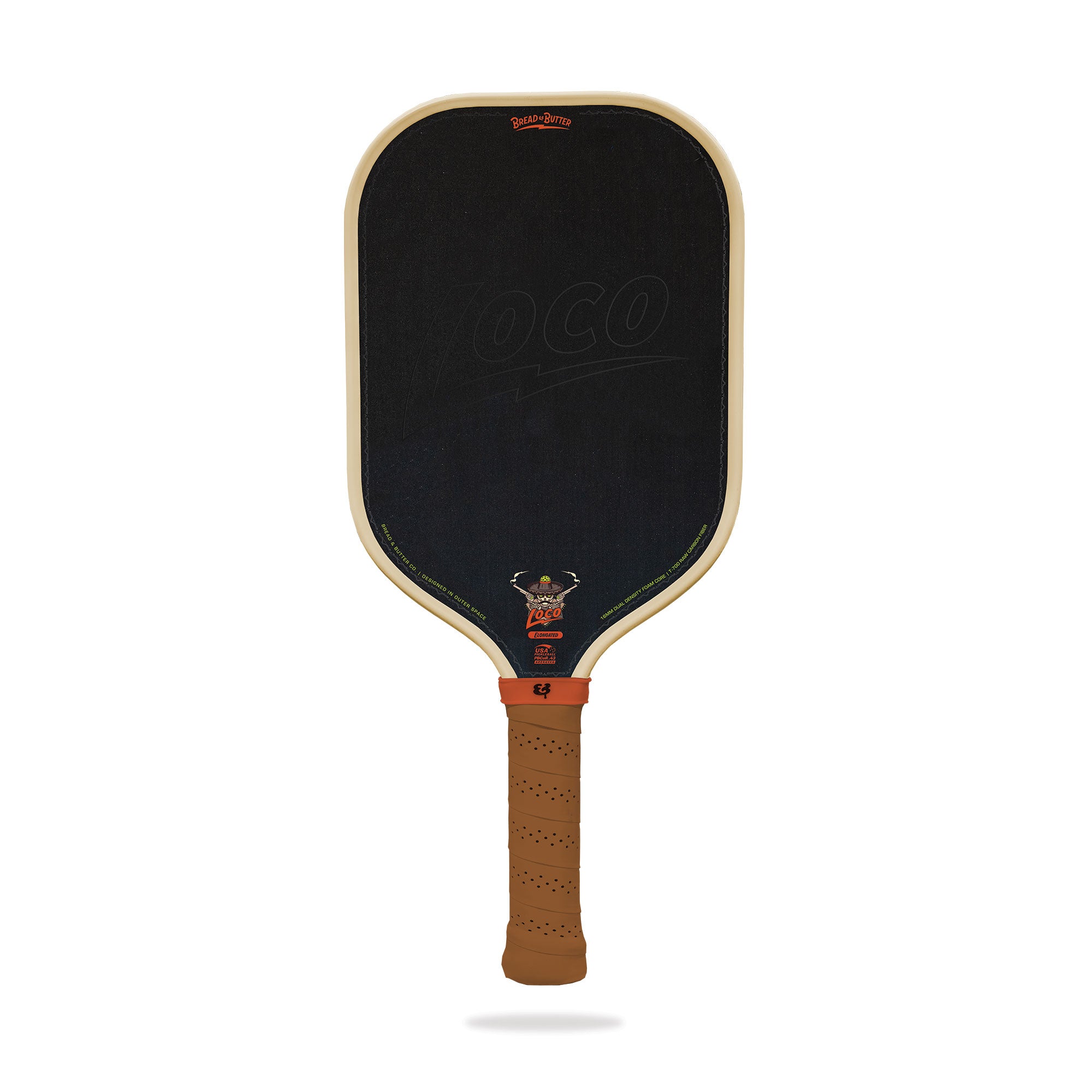
- Weight
- 8.1 oz
- Core
- 16 mm
- Face
- T700 carbon
A 16 mm dual-density core, EPP and EVA, under a T700 carbon face with a fiberglass layer. An elongated 16.5 x 7.375 in shape, about 8.1 oz and a 5.5 in octagonal handle.
- 6
- Weight
- 8.3 oz
- Core
- 16 mm
- Face
- Carbon fiber
Kuikma's most advanced paddle, Decathlon's brand: carbon fiber faces and rim, a 16 mm polypropylene core and an elongated 16.5 x 7.4 in shape, at about 8.3 oz (235 g) and a 5.5 in handle. Approved by USA Pickleball and in the entry-level price range, it's the simplest way to get to a carbon elongated paddle.
- 7
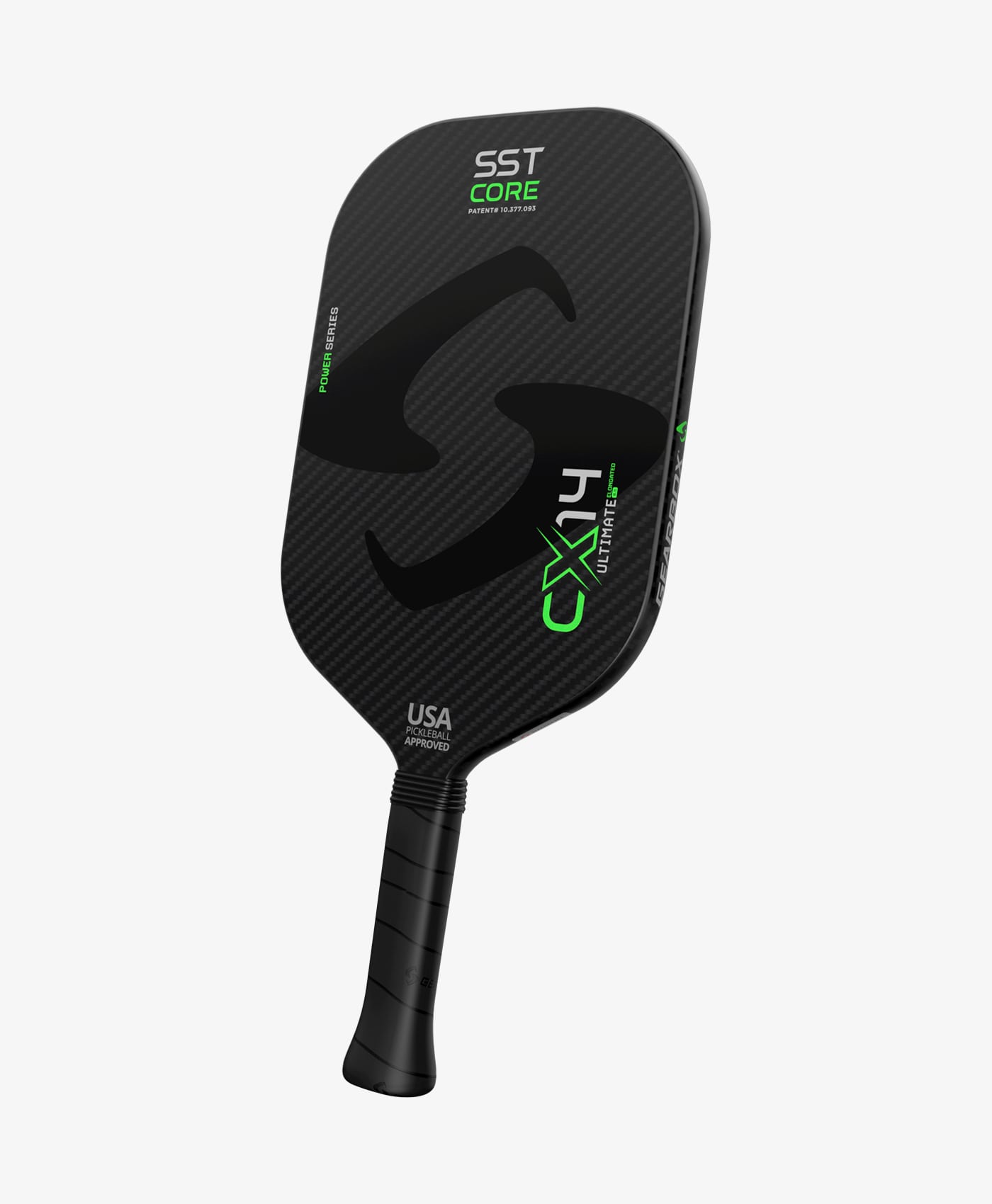
- Weight
- 8.5 oz
- Core
- 14 mm
- Face
- Woven 3K carbon
No honeycomb: the core is made of T700 carbon chambers, and the Power Band technology, according to Gearbox, creates a trampoline effect on the face. It weighs 8.4 to 8.6 oz, with a grip under 4 in. The high weight calls for arm strength and adaptation.





Analysis of the top picks
Vatic Pro V-Sol Pro V7 16mm: foam without the top-tier price
The "floating" EPP core, with a ring of EVA foam on the perimeter, is what sets the V-Sol Pro apart. In general, foam returns more energy than a honeycomb of the same thickness, and the EVA ring serves to stabilize the edge. In the soft game, foam has a muted feel and tends to leave the ball a bit livelier than on a traditional control paddle. Expect a few sessions to calibrate your dink.
Strengths
- + EPP foam core at a mid-range price
- + EVA ring on the perimeter to stabilize the edge
- + Raw T700 carbon face
- + Foam doesn't suffer core crush like honeycomb
Drawbacks
- − A foam core usually takes adaptation on dinks
- − Narrow face forgives less on the sides
- − A 5.3 in handle is snug for the two-handed backhand
Six Zero Double Black Diamond Control 14mm: the most balanced
The DBD is one of the most popular all-court paddles of recent years, and the 14 mm version is the best fit for intermediate players who want to step up their pace. The hybrid shape gives part of the elongated's reach without narrowing the sweet spot as much, and the handle is thermoformed carbon. Those who play more resets may prefer the 16 mm of the same family. The full line is in Six Zero pickleball paddles.
JOOLA Agassi Pro 16mm and Franklin C45 Dynasty 16mm: two elongated paddles, two paths
Both have 16 mm and a long handle, but the weight changes the experience. The Agassi Pro concentrates mass at the top of the head, a distribution that tends to help on the drive and to weigh on fast hand exchanges. The C45 Dynasty is light on the scale (about 7.7 oz) and still has a high swing weight, a rare combination that appeals to those who want reach without tiring the arm. See more models in JOOLA paddles and Franklin paddles.
Selkirk SLK ERA Power Elongated: power with an EVA perimeter
The three-layer face mixes fiberglass, which gives pop, and raw T700 carbon, which gives spin and control. The EVA perimeter serves to stabilize the edge. With a 5.8 in handle and a swing weight of 118, the spec sheet is that of a paddle for those who attack from the baseline. The caution is weight: some units go over 8.3 oz.
Kuikma React: carbon and 16 mm in the entry-level range
The React is Kuikma's most advanced paddle, Decathlon's house brand, and the easiest on this list to find for those who prefer to see the paddle in a store before buying. The spec sheet is that of a genuine intermediate paddle: carbon fiber faces and rim, a 16 mm polypropylene core, an elongated 16.5 x 7.4 in shape and a 5.5 in handle for the two-handed backhand. The weight of about 8.3 oz gives stability on blocks, but can weigh on fast net exchanges, and the narrow face forgives less on the sides. See the full spec sheet in Kuikma pickleball paddles.
Spin and power: what the paddle does and what depends on you
No paddle creates spin on its own. It multiplies what your motion produces. Three practical points:
- Spin needs a low-to-high acceleration. A raw carbon face only shows up when the swing passes through the ball. On a stationary dink, the difference is small.
- Power comes from the timing of the shot. A 14 mm thermoformed paddle returns more energy, but the drive only comes in if contact is in front of your body.
- A high swing weight helps the drive and hurts at the net. Paddles with a swing weight near 118 to 120 push the ball easily from the baseline and arrive a bit late in fast kitchen exchanges.
Weight and swing weight: the intermediate player's fine-tuning
In the beginner phase, medium weight does the job. At the intermediate level, it's worth looking at where that weight sits as well. Two 8 oz paddles can have swing weights of 110 and 118, and that difference shows up on court:
- Lower swing weight (up to about 112): the paddle gets there sooner in fast volley exchanges and body counterattacks. Good for those who play doubles right at the kitchen line.
- Higher swing weight (near 118 to 120): the ball comes off heavier on the drive and serve, and the paddle is more stable on blocks. Good for those who attack from the baseline and play singles.
If the spec sheet doesn't list swing weight, the shape gives a clue: elongated paddles tend to have a higher swing weight than hybrids and widebodies of the same weight. The Franklin C45 Dynasty is an example of an elongated paddle that's light on the scale, at about 7.7 oz, with a high swing weight of 116, because it concentrates mass in the head.
When to go to an elongated paddle
An elongated paddle makes sense when you:
- use a two-handed backhand and need a 5.5 in handle or more;
- play singles, or doubles with lots of baseline play;
- already hit the center of the paddle consistently, because the sweet spot is narrower.
It doesn't make sense when you spend most of the point at the kitchen line trading fast volleys. In that case, a hybrid is the safest middle ground: almost the reach of the elongated, with a wider sweet spot.
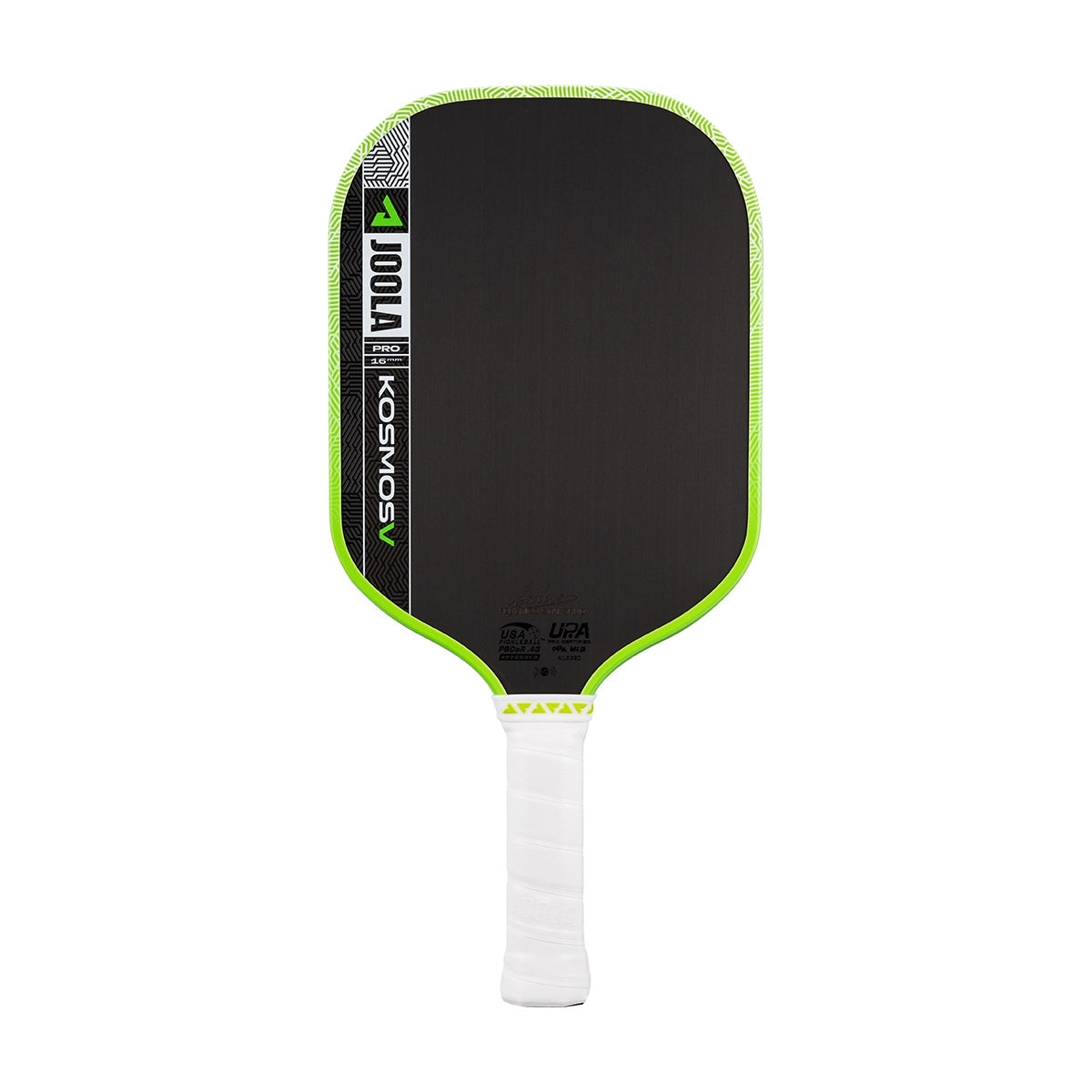
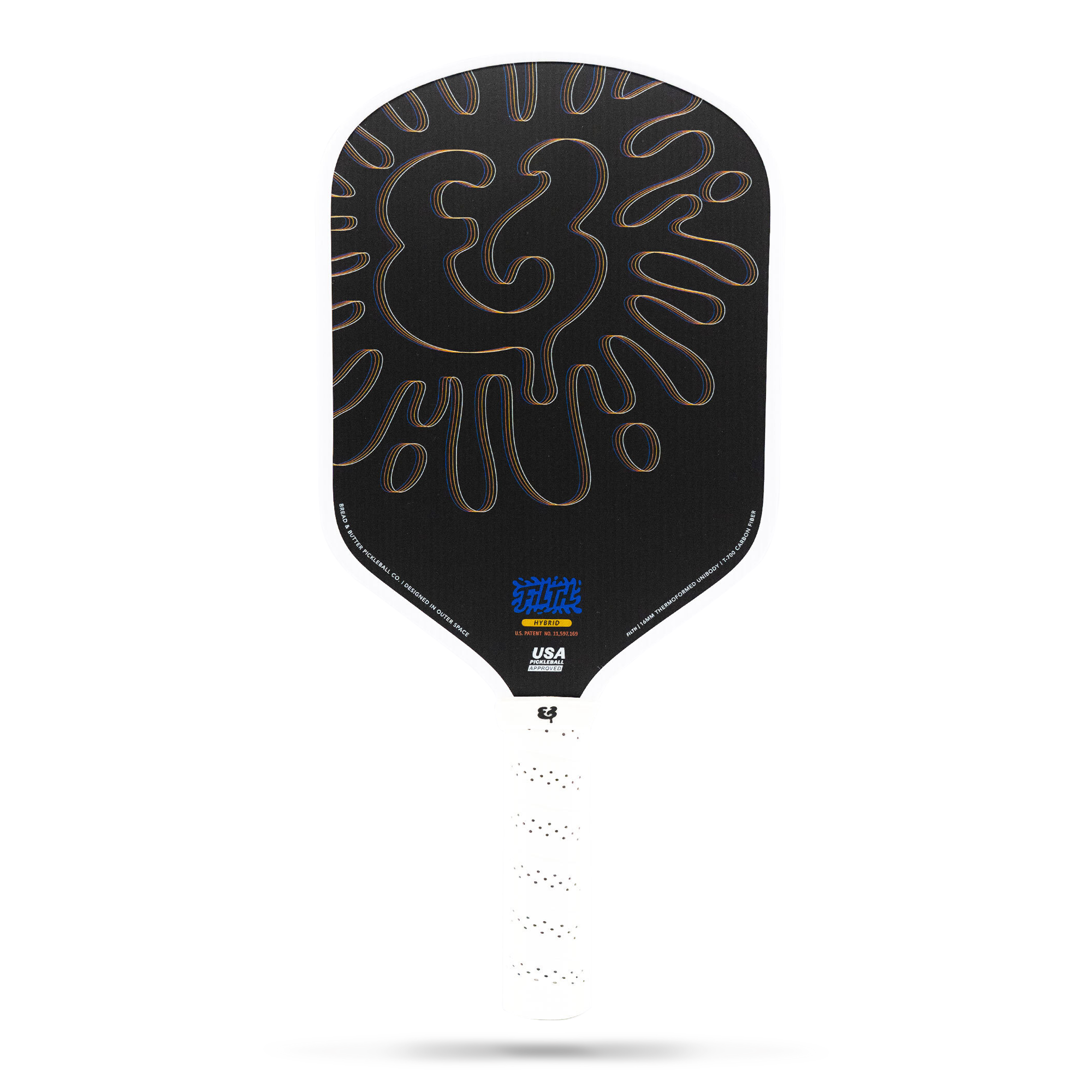
Hybrids for those who haven't decided between elongated and standard




Approval for amateur tournaments
Those who reach the intermediate level usually start playing tournaments. Before buying, check that the paddle is approved by USA Pickleball, the reference used at most amateur tournaments. UPA-A approval is required on the professional circuit (PPA Tour and MLP). Not every model has both, and paddles can come off the list after new testing.
Tip
When comparing intermediate paddles, look at three lines of the spec sheet before the price: core thickness (14 or 16 mm), construction (thermoformed, foam or cold-pressed) and handle length. They tell you more about how the paddle will play than the name of the line or the athlete who signs it.
To put your candidates side by side, use the pickleball paddle comparison tool, or the Selkirk paddle comparison if you're choosing between models from the brand. The pickleball catalog lets you filter by level and thickness, and find your paddle suggests models by your playing style. For grip sizes, weight and approval rules, see how to choose a pickleball paddle. And if you're already thinking about the next level, compare with the overall list of best pickleball paddles.
Frequently asked questions
What is the best pickleball paddle for an intermediate player?
The Vatic Pro V-Sol Pro V7 16mm, for its EPP foam core, raw T700 carbon face and mid-range price. For those who prefer a hybrid shape, the Six Zero Double Black Diamond Control 14mm. For a light elongated paddle, the Franklin C45 Dynasty 16mm, at about 7.7 oz.
14 mm or 16 mm pickleball paddle?
The 14 mm gives more pop and exit speed, good for those who attack and counterattack at the net. The 16 mm gives more control and damping, better for those who build the point with drops, dinks and resets. Many intermediate players start with the 16 mm and only later try the 14 mm.
What is a thermoformed pickleball paddle?
It's a paddle in which the face and edge are molded together under heat and pressure, forming a single piece, often with foam injected into the walls. This increases pop, stability and sweet spot compared to cold-pressed paddles.
Is a paddle with a foam core better?
It's different. Foam returns more energy, has a muted feel and doesn't suffer core crush, when the honeycomb gives way and the paddle loses response in one spot on the face. In exchange, the ball comes off livelier in the soft game and the price is usually higher.
When should I replace my beginner paddle?
When you already keep dink exchanges going consistently, land the third-shot drop often and feel you lose points for lack of pop or spin. If you still miss a lot of dinks, a more powerful paddle tends to make your game worse.
Does raw T700 carbon generate more spin?
Yes, because the exposed weave grips the ball longer than a smooth or painted face. The difference shows up mainly on accelerated shots, like baseline topspin and the serve. The texture wears with use and spin drops gradually.
Verdict
Where to buy the racquets in this guide
- Double Black Diamond Control 14mm Six Zero8.1 oz · 14 mm · T700 carbonSee priceAmazon
 Double Black Diamond Control 16mm Six Zero8.1 oz · 16 mm · T700 carbonSee priceAmazon
- V-Sol Pro V7 16mm Vatic Pro8 oz · 16 mm · T700 carbonSee priceTenniszon
- SLK ERA Power Elongated Selkirk8.2 oz · 16 mm · T700 carbon and glassSee priceAmazon
- Tempest TKO-C 14.3mm Paddletek8 oz · 14.3 mm · Raw unidirectional PT-700 carbonSee pricePickleball Superstore
- Loco 16mm Elongated Bread & Butter8.1 oz · 16 mm · T700 carbonSee priceYumo Pro Shop
- React Kuikma8.3 oz · 16 mm · Carbon fiberSee priceDecathlon
- CX14E Ultimate Power 14mm Gearbox8.5 oz · 14 mm · Woven 3K carbonSee priceAmazon
- Kosmos Pro V 16mm JOOLA8.1 oz · 16 mm · Textured carbonSee priceAmazon
- Filth 16mm Hybrid Bread & Butter8.1 oz · 16 mm · T700 carbonSee priceTenniszon
- Bantam GTO-C 14.3mm Paddletek7.9 oz · 14.3 mm · Raw unidirectional Toray T700 carbonSee priceAmazon
The prices above are checked automatically at each store and may have changed since the last check. The price that counts is the one shown on the store's website at checkout. We may earn a commission on purchases made through store links, at no extra cost to you.