


 Brasil
 United States
 United Kingdom
 Australia
 Netherlands
 France
 España
 Italia
 السعودية
5 Control Tennis Racquets for Advanced Players: 18x20 and Thin Frame
Five closed-pattern, thin-frame racquets for players who generate their own pace, compared on the return, the flat ball, the slice and the long rally.
Updated on 2026-10-07
On this page
- 1.The five side by side
- 2.Why control racquets are for players who generate their own pace
- 3.Match scenarios: which does best in each situation
- 4.Annotated spec sheets
- 5.String and customization on control racquets
- 6.Testing protocol before buying
- 7.Who should not use these racquets
- 8.Alternatives outside the top 5
A control tennis racquet for advanced players has a head of 95 to 98 sq in (or 100 with a closed pattern), an 18x20 pattern, a thin frame of 20 to 22 mm, 305 to 320 g unstrung and a high swingweight. It does not give you free power: it returns with precision the speed you put on the ball. These are the five that best follow that formula in the catalog.
The 5 best control tennis racquets for advanced players
- 1
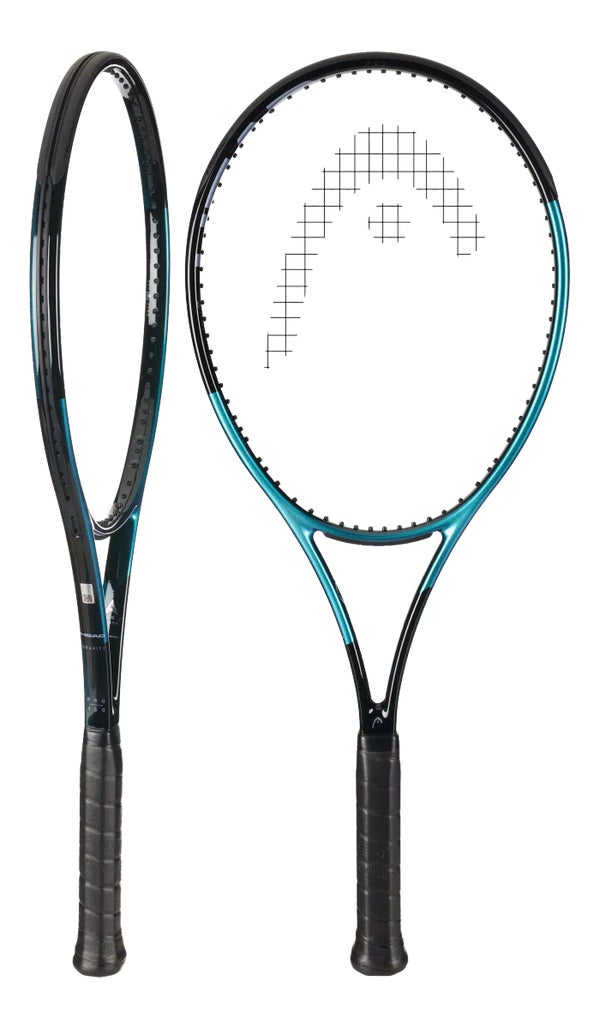
- Weight
- 315 g
- Head
- 100 in²
- Strings
- 18x20
- RA
- 59 RA
100 sq in head with an 18x20 pattern, 20 mm frame, 315 g and 59 RA. The bigger head forgives more than a 98, and the closed pattern holds the trajectory down. A good choice for players who want control without the demands of a small head.



The five side by side
The table shows a detail that splits the group in two. The Pure Strike 98, the Blade 98 and the Gravity Pro have swingweights between 329 and 332: the mass is more distributed toward the head, which gives a heavy ball and stability, but demands racquet preparation speed. The TF40 315 and the CX 200 Tour are heavier overall (315 g unstrung) and still have a lower swingweight, 316, because the mass is concentrated in the handle. In practice, they feel lighter in the hand than the scale indicates.
If you do not yet have a handle on the difference between static weight and swingweight, the guide to weight, balance and swingweight explains it in detail. And why 18x20 lowers the trajectory is in the guide to string pattern 16x19 or 18x20.
Why control racquets are for players who generate their own pace
Control racquets are the opposite of power racquets in almost everything. A thin frame flexes more and returns less energy. A smaller head has shorter strings, which work less. A closed pattern makes the stringbed firmer and reduces the trampoline effect. Together, these items take away free power and make the response more linear: the ball comes off in proportion to what you put into it.
For an advanced player with a long, fast swing, this is an advantage. They already produce enough speed and what they miss most is excess: long balls, a trajectory that rises too much, lack of precision near the lines. For an intermediate player with a short swing, the same racquet becomes a problem, because the ball lands short and they force the arm to compensate.
Match scenarios: which does best in each situation
Returning a heavy serve
Mass and stability win here. The TF40 315 and the CX 200 Tour, at 315 g unstrung, do not twist on contact with a big serve. The Gravity Pro also weighs 315 g and adds the 100 sq in head, which helps when the return comes off a little off-center. For blocking and sending the ball deep, the three are the most reliable.
Flat ball to the line
Players who play flat and aim for the lines need a low, predictable trajectory. That is the territory of the Pure Strike 98 18x20 and the Blade 98 18x20. A swingweight above 330 gives weight to the flat ball, and the closed pattern keeps it from rising too much. The Pure Strike has a slightly firmer response; the Blade, a softer one.
Slice and volley
The slice depends on feel and on the racquet not letting the ball float. The Blade 98 (21 mm frame) and the CX 200 Tour (20.5 mm) are the ones that transmit the ball most in the hand. On the volley, the CX 200 Tour and the TF40 315 have the edge thanks to the lower swingweight: the head gets to the ball faster.
Long baseline rally, on a slow court
On clay, the point is built with many balls and with spin to push the opponent back. The 18x20 pattern limits easy spin, so players who play a lot on clay need a fast swing to get effect out of these racquets. Among the five, the Gravity Pro, with a bigger head, gives a little more margin. If your game depends on heavy topspin, maybe the answer is not an 18x20; see the list of tennis racquets for topspin.
Serve
Control racquets do not give an easy serve, but they give a precise one. High mass and swingweight help on the first flat serve for players with technique. The Pure Strike 98 and the Blade 98, with the highest swingweights, return more weight on the straight serve. The CX 200 Tour, at 95 sq in, demands the cleanest contact.
Annotated spec sheets
Strengths
- + Low, very predictable trajectory
- + Swingweight of 332 gives stability and ball weight
- + String lasts longer in the 18x20 pattern
Drawbacks
- − Less spin than the 16x19 versions
- − Demands full, fast strokes
The Pure Strike 98 18x20 is the most balanced of the group: a 21/23/21 mm frame, a little wider in the middle, gives a minimum of ball exit that the others do not have, and the 320 mm balance keeps the racquet manageable despite the high swingweight.
Strengths
- + 100 sq in head with a closed pattern widens the sweet spot
- + 59 RA, the most flexible of the five
- + 20 mm frame with lots of feel
Drawbacks
- − 315 g and a swingweight of 329 weigh on you in long matches
- − Little free power
The Gravity Pro is the choice for players who like the idea of a control racquet, but know they do not hit the center of the strings on every ball. The 100 sq in head makes up for part of that without giving up the 18x20.
The Blade 98 18x20 V9 has the same weight as the Pure Strike, 305 g, but is softer (60 RA) and has a 330 mm balance, with a bit more mass near the head. That translates into a heavy ball on the slice and on the blocking volley, and into a racquet that feels more connected at contact. The smaller sweet spot is the price: balls hit near the frame lose more depth than on the Gravity Pro.
The TF40 315 18x20 is the heaviest racquet on the list when strung, and the one that best shows why static weight and swingweight are different things. With a balance of 7 points head-light, it does not weigh on you at the end of the stroke the way a 335 g racquet would if the mass were in the head. For net players and aggressive returners, it is the most comfortable to handle among the heavy ones.
The Dunlop CX 200 Tour is the most demanding. A 95 sq in head means less usable area, and the spec sheet does not hide it: it forgives little. In exchange, it is the one that comes closest to the feel of classic small-head racquets.
String and customization on control racquets
The 18x20 pattern changes the relationship with the string. Since the strings sit closer together and move less, friction is lower and they usually last longer, an advantage for players who break strings often. On the other hand, the stringbed is already firm, so a very stiff polyester at high tension can leave the racquet hard and without ball exit. Many 18x20 players use slightly lower tension than they would on a 16x19 to recover depth. The guide to tennis racquet string tension shows how each material and tension behaves.
Control racquets are also the most customized with lead. The logic is simple: lead in the head (at 3 and 9 o'clock) raises swingweight and stability against twisting; lead in the handle increases total mass without making the racquet slower. If you like the TF40 315 or the CX 200 Tour but want more ball weight, a little lead in the head brings their swingweight closer to that of the Pure Strike. Do this with an experienced stringer and in small amounts.
Testing protocol before buying
Control racquets are the category where a demo makes the most difference, because two racquets with similar spec sheets can feel very different. A routine that works:
- String the demo racquets with your string and tension. A different string invalidates the comparison.
- Start with a crosscourt rally at match pace, not warm-up pace. A control racquet only shows what it has with a fast ball.
- Ask your partner to send heavy, deep balls. Watch whether the racquet twists on contact.
- Do a series of serve returns. That is where stability shows.
- Finish with 20 minutes of playing points. When tired, a racquet that is too heavy starts arriving late.
- Repeat the next day. If the shoulder or arm complains, the weight is above what you can handle in a whole match.
Who should not use these racquets
If you recognize yourself in any of these cases, a more forgiving control racquet, like the 100 sq in 16x19 pattern ones in the guide to the best tennis racquets, should perform better:
- Your stroke is short and the ball already lands mid-court with your current racquet.
- You play once or twice a week, with no physical conditioning.
- You feel pain in your arm or shoulder. In that case, also see the tennis racquets for elbow pain.
- Your style depends on very heavy topspin.
Alternatives outside the top 5
Other control racquets for advanced players
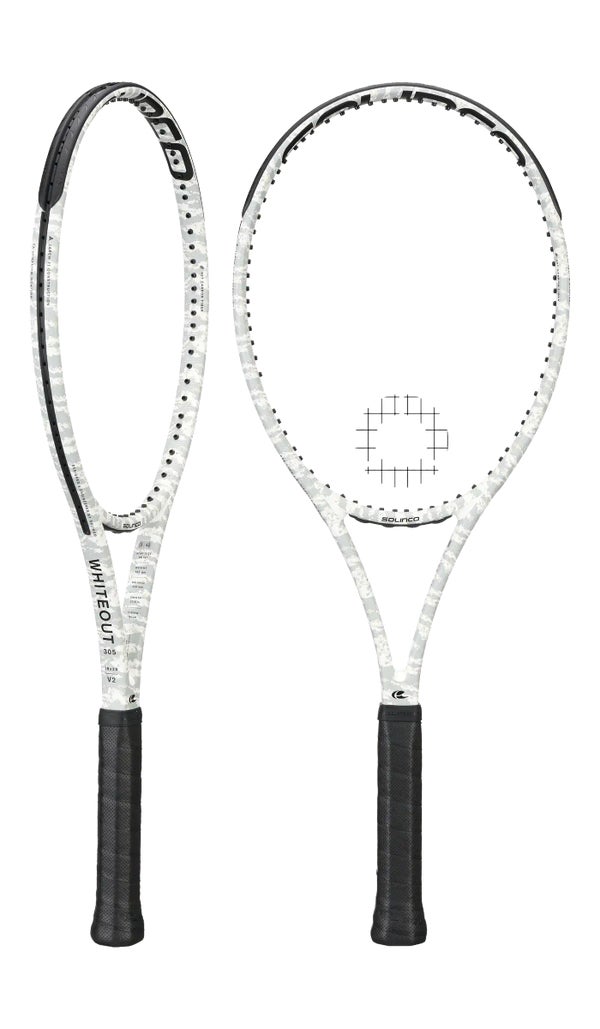




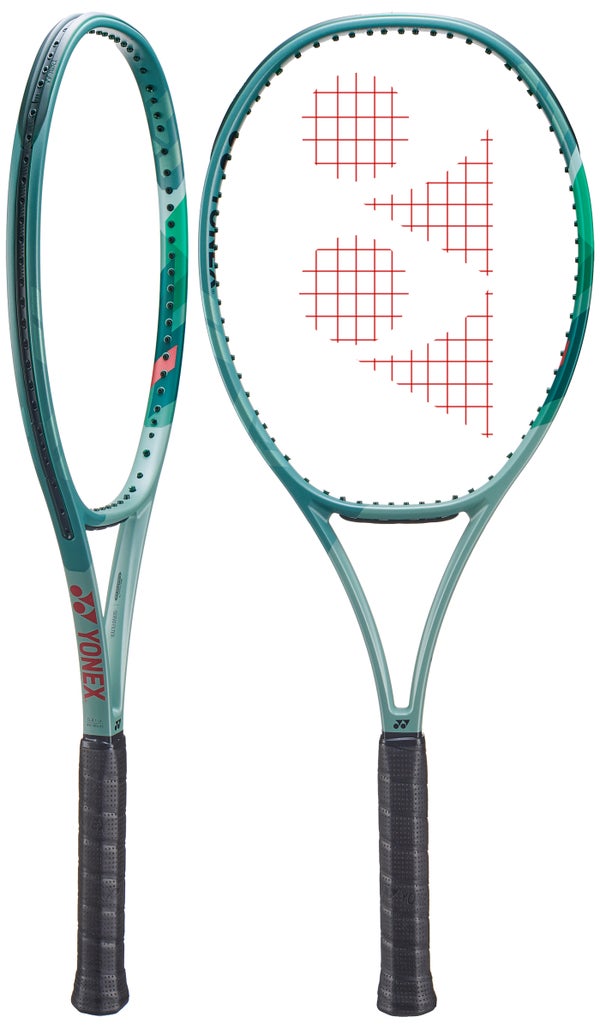


The Solinco Whiteout 305 18x20 v2 has 98 sq in, a straight 21.7 mm frame and a swingweight of 326, with 66 RA, firmer than the five chosen. The Head Speed Pro Legend 2025 combines 100 sq in, 18x20 and 61 RA. The Yonex Percept 97H is a case apart: it uses a 16x19 pattern, but weighs 330 g unstrung, with a swingweight of 333, and is for physically strong players who want to block heavy balls.
To see all the versions and patterns of each line, check the Babolat racquets, the Wilson racquets and the Tecnifibre racquets, or build your own comparison in the tennis racquet comparison tool.
Where to buy the racquets in this guide
- Gravity Pro 2025 HEAD315 g · 100 in² · 18x20See priceAmazon
- Whiteout 305 18x20 V2 Solinco305 g · 98 in² · 18x20See priceSolinco
- Percept 97H 2023 Yonex330 g · 97 in² · 16x19See priceAmazon
The prices above are checked automatically at each store and may have changed since the last check. The price that counts is the one shown on the store's website at checkout. We may earn a commission on purchases made through store links, at no extra cost to you.