


 Brasil
 United States
 United Kingdom
 Australia
 Netherlands
 France
 España
 Italia
 السعودية
String Pattern 16x19 vs. 18x20: Which to Choose on a Tennis Racquet
16x19 makes spin and depth easier; 18x20 keeps the ball low and gives control. Understand string patterns, compare racquets that differ only in pattern and pick yours.
Updated on 2026-10-07
On this page
- 1.Tennis string pattern reference chart
- 2.What the string pattern changes at impact
- 3.16x19 or 18x20: the same racquet in both patterns
- 4.One family, three patterns: Prince Tour
- 5.The less common patterns: 16x18, 16x20, 18x19 and 16x15
- 6.The pattern does not work alone
- 7.Which pattern to choose: a decision tree
- 8.Myths and facts about string patterns
- 9.Frequently asked questions
On a tennis racquet, a 16x19 string pattern makes spin easier, launches the ball higher and gives effortless power; an 18x20 keeps the trajectory lower, gives depth control and makes the strings last longer. For most recreational players, 16x19 is the starting point. The 18x20 pays off for those who already hit hard and flat and lose points on long balls.
Between the two extremes there are the 16x18, the 16x20 and the 18x19, each with its own behavior. This guide explains what happens to the strings at impact, compares racquets that differ only in pattern and ends with a decision tree. If you are still choosing a model from scratch, start with the guide to how to choose a tennis racquet.
Tennis string pattern reference chart
The first number is the main strings (vertical, running from the handle to the tip). The second is the cross strings (horizontal). Multiplying the two gives you the number of intersections, which is a good indicator of how dense the string bed is.
| Pattern | Total strings | Intersections | String bed | On-court tendency | Example in the catalog |
|---|---|---|---|---|---|
| 16x15 | 31 | 240 | Ultra open | Maximum spin, string lasts little | No models in the current catalog |
| 16x18 | 34 | 288 | Very open | Easy spin and ball height | Prince Tour 100 (310 g) |
| 16x19 | 35 | 304 | Open | Balance between spin, power and control | Head Speed MP 2026 |
| 16x20 | 36 | 320 | Intermediate | The spin of a 16 with a slightly lower trajectory | Babolat Pure Strike 100 16x20 |
| 18x19 | 37 | 342 | Semi-dense | Control with a bit more pop | Tecnifibre TFight 305S |
| 18x20 | 38 | 360 | Dense | Low trajectory, precision and durability | Head Gravity Pro 2025 |
To get an idea of how the market splits: of the 246 tennis racquets in the Racquet Rank catalog, 180 use 16x19. The 16x20 appears in 25 models, the 16x18 in 17, the 18x20 in 16 and the 18x19 in just 3. The 16x19 is not the "beginner" choice: it is the pattern of almost every line, including many player's racquets.
What the string pattern changes at impact
The spec sheet shows only two numbers, but they affect four things you feel on court.
1. Spin: the main strings slide and snap back
When you brush the ball from low to high, the main strings slide sideways over the crosses and then snap back into position. That return happens while the ball is still on the racquet and adds rotation. With fewer strings, the gaps are bigger and the mains have more freedom to move. That is why patterns with 16 mains (16x18, 16x19, 16x20) are the favorites of players with heavy topspin.
Note that the number of main strings matters more for spin than the number of crosses. Between 16x19 and 16x20, the mains are the same; the extra cross only makes the string bed a bit firmer. Between 16x19 and 18x20, there are two more mains, and the difference is much bigger.
2. Trajectory: the ball's launch angle
An open string bed gives more and "holds" the ball longer, which tends to launch it at a higher angle. A dense string bed is firmer and returns the ball on a flatter line. Typical situation: with 18x20, the crosscourt forehand you hit hard comes out lower over the net and lands before the baseline; with 16x19, the same forehand clears higher and, if there is not enough spin, goes long.
3. Power and feel
With fewer strings, the string bed deforms more and works like a bigger trampoline, so the ball comes off with a bit more speed for the same stroke. The firmer 18x20 returns less free energy and gives a more predictable response on off-center hits, which many players describe as "a feeling of control."
4. String durability
In open patterns, the mains move more and create grooves in the crosses with every stroke. The string wears at the intersection and breaks sooner. If you break strings every week, an 18x20 or a 16x20 usually extends the life of the stringing without forcing you to change string type.
Good to know
The ITF rules do not fix the number of strings, but they require the pattern to be generally uniform and the string bed to be no less dense in the center than in any other area. That is why there are no official racquets with a more open middle of the head than the edges.
The full rule is in the racquet section of the ITF Rules of Tennis.
16x19 or 18x20: the same racquet in both patterns
The cleanest way to see the effect of the pattern is to compare versions of the same mold. The Tecnifibre TF40 315 exists in 16x19 and in 18x20 with almost everything else the same.
Both weigh 315 g unstrung, have a 98 sq in head, a 22 mm beam and stiffness of 63 and 64 RA. The swingweight is practically the same (319 and 316) and so is the balance (318 and 320 mm). In other words: whatever difference you feel on court comes almost entirely from the pattern. By the general rule, the 16x19 will launch the ball a bit higher and spin more with the same swing; the 18x20 will keep the ball low and be more predictable on flat balls and slice. See other versions in the Tecnifibre racquet catalog.
Here the difference is a single cross string, and the specs are not identical: the 16x20 weighs 305 g versus 300 g, has a balance closer to the handle (310 mm versus 330 mm) and lower stiffness (60 RA versus 63 RA). The swingweight is close (320 and 324). It is a good example that an "intermediate" pattern almost never comes alone: the manufacturer usually also adjusts the weight distribution so that the denser version feels like a control racquet.
One family, three patterns: Prince Tour
Prince's Tour line covers three different patterns with the same beam profile (22/23/20 mm), which helps you understand the scale from open to dense.
- Tour 100 (310 g), 16x18: the most open, with 100 sq in, a swingweight of 321 and 63 RA. It is the one that most favors players who spin the ball.
- Tour 98, 16x19: a slightly smaller head (98 sq in), 305 g, a swingweight of 323. With less area for the same 35 strings, the string bed is denser than a 100 sq in 16x19.
- Tour 100P, 18x20: 305 g, 100 sq in, a swingweight of 325 and 61 RA. The densest of the family, aimed at those who want a low ball and directional control.
Note the detail of the Tour 98: the pattern does not tell the whole story, because the same number of strings on a smaller head makes the gaps smaller. We talk about that further below.
The less common patterns: 16x18, 16x20, 18x19 and 16x15
16x18: spin and height with a more open string bed
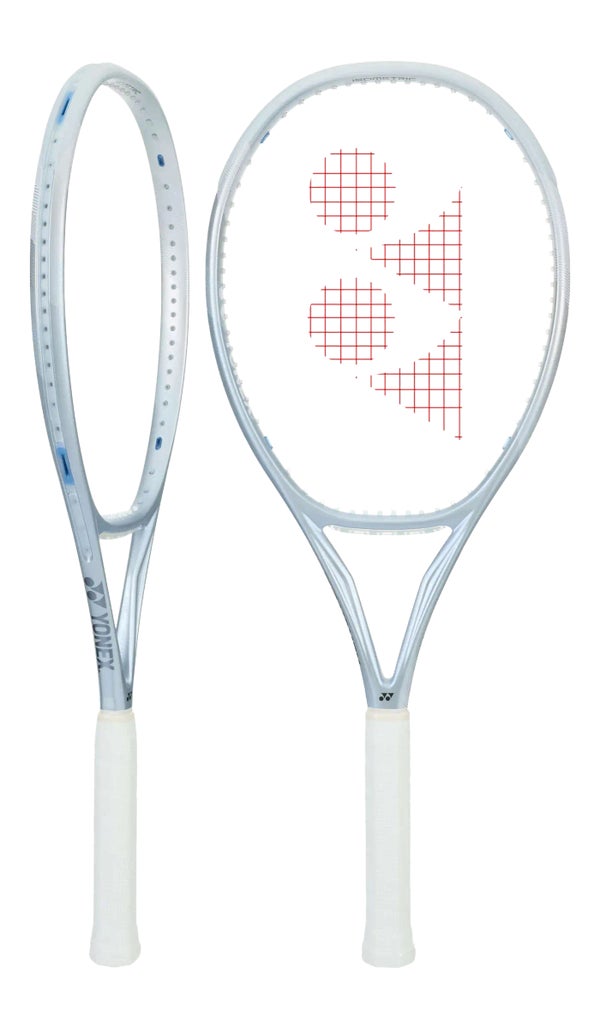
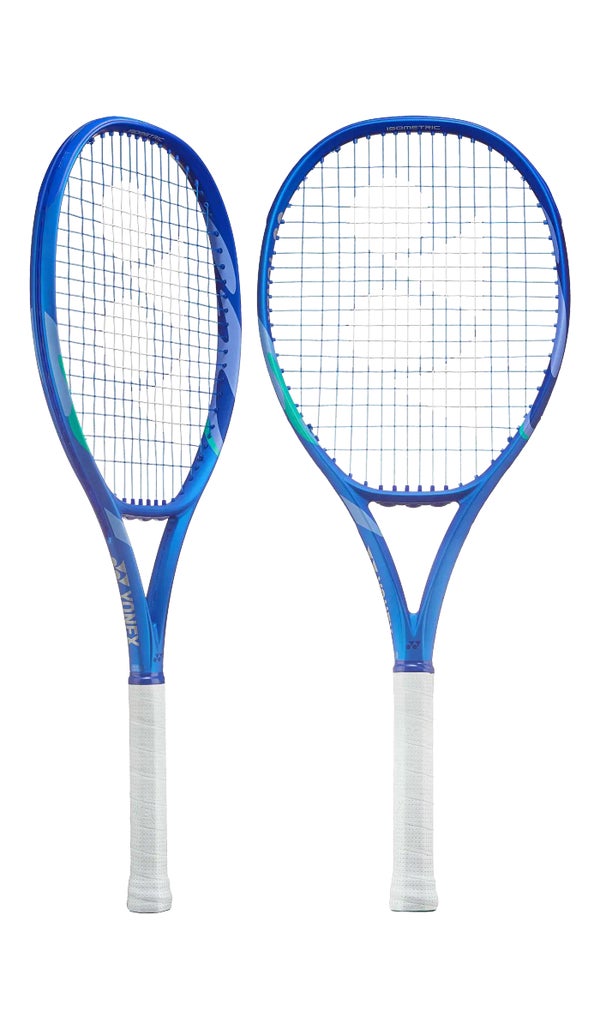
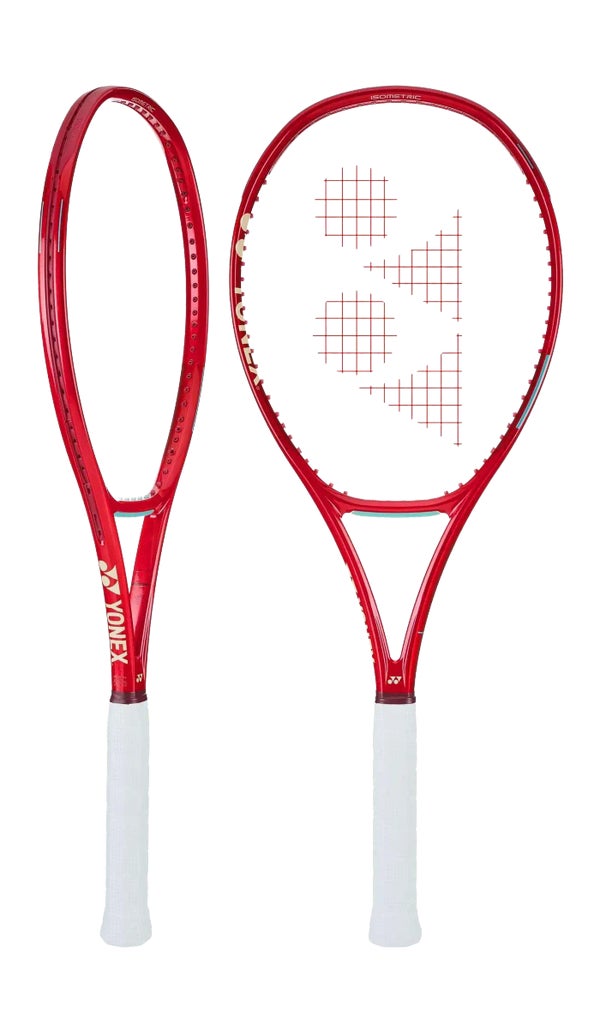
One fewer cross than the 16x19 leaves the center of the string bed more open. It makes sense for those who play from the baseline with topspin and want the ball to clear the net high, and for those looking for a softer string bed. Examples in the catalog: Yonex Muse 100 and Muse 98, Yonex Ezone Alpha, Prince Ripstick 100 and Völkl Vostra V8. For a list focused on rotation, see the tennis racquets for topspin.
16x20: the middle ground
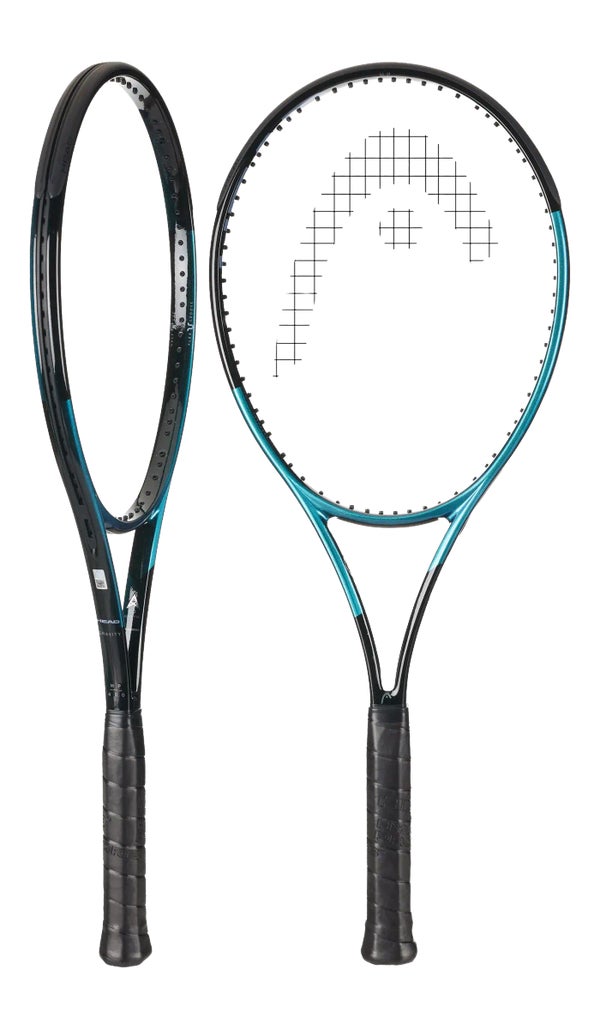
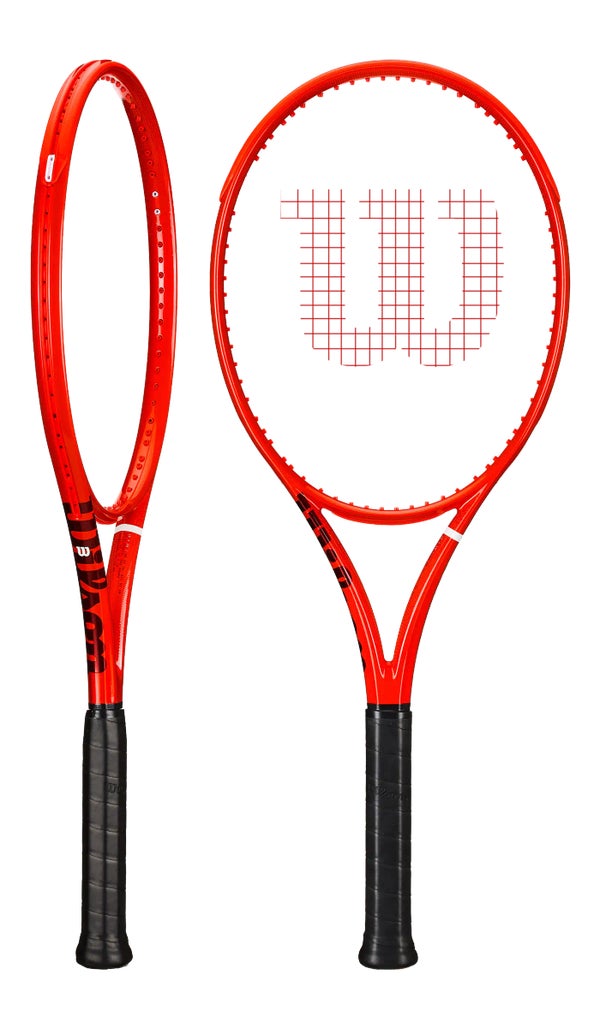
It keeps the 16 mains, which generate spin, and adds a cross, which lowers the trajectory a bit and firms up the string bed. It is a frequent choice in "player" versions of power lines and in control racquets that do not want to give up spin. Examples: Head Gravity MP 2025, Wilson Defyer 98 Pro, Babolat Pure Strike 97, Yonex VCORE 95 and ProKennex Ki Q+5.
18x19: almost an 18x20
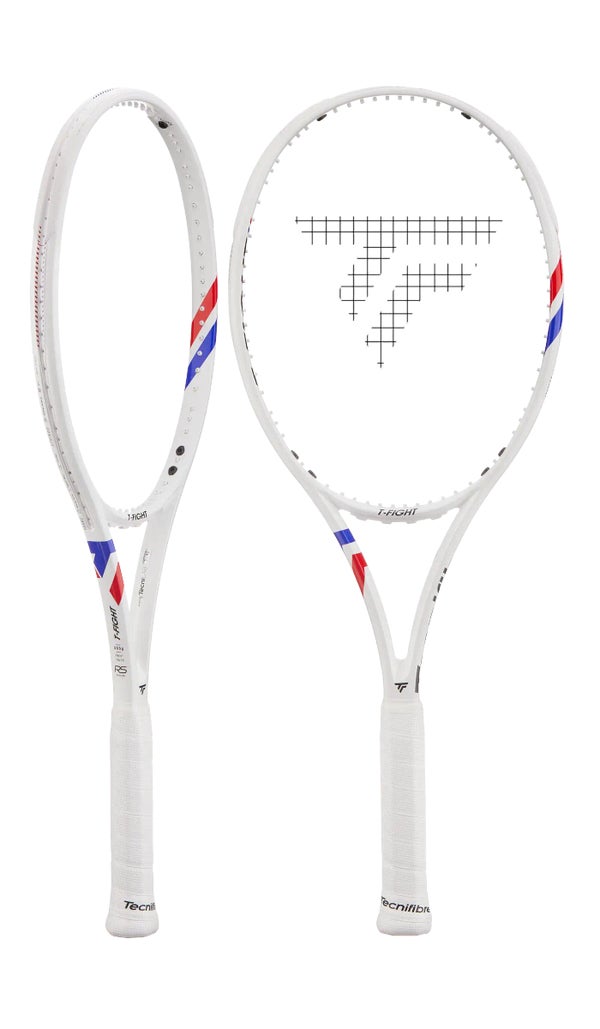
Two more mains than the 16x19, one fewer cross than the 18x20. The feel is close to the 18x20, with a bit more pop. In the catalog, the Tecnifibre TFight 305S is the example.
16x15 and other "spin" patterns
Ultra-open patterns like the 16x15 have appeared in special models from some brands, with the promise of maximum spin. The cost is high: the string moves so much that it wears out very quickly, and the trajectory can get too high for those who do not control rotation well. There are no racquets with this pattern in the current catalog.
Examples: 16x18, 16x20 and 18x19










The pattern does not work alone
Two players with 16x19 can have very different string beds. Four factors change the effect of the pattern.
Head size. The same 16x19 on a 98 sq in head has smaller gaps than on a 100 or 104 sq in one. Likewise, a 100 sq in 18x20, like the one on the Head Speed Pro or the Gravity Pro, is less dense than a 98 sq in 18x20. The guide to tennis racquet head size shows how the area changes the rest of the behavior.
Tension. Lower tension lets the string bed give more and the mains move more easily; high tension does the opposite. That is why players moving from 16x19 to 18x20 commonly lower the tension a bit so they do not find the racquet too stiff. The details are in the guide to tennis racquet string tension.
String type. Polyester is slick and firm, and it makes the most of the mains sliding. Multifilament in a very open pattern tends to fray quickly, precisely because the strings move and rub more.
Beam profile and stiffness. An 18x20 on a thin, flexible beam is the classic recipe for a control racquet. A 16x19 on a wide, stiff beam is the recipe for power. The pattern reinforces or softens what the frame already does.
Which pattern to choose: a decision tree
Answer the questions in order and stop at the first one that describes you.
- Are you starting out or returning to the game after many years? Stay with 16x19. It is more forgiving, helps the ball clear the net and is the pattern with the most model and price options.
- Does your ball land short and without weight, even when you hit it in the center? 16x19 or 16x18. The open pattern helps you gain height and depth.
- Do you hit hard and flat, and the most common error is the ball going past the baseline? 18x20 or 16x20. The lower trajectory brings the ball in without you having to brake the stroke.
- Do you play with a lot of topspin and want even more rotation? 16x19 or 16x18, preferably with polyester.
- Do you break strings often? Before changing racquets, try a thicker string. If that does not solve it, 16x20 or 18x20.
- Do you play a lot of slice, blocks and volleys, and want a low, precise ball? 18x20 or 18x19.
- Does your arm complain? Prefer an open pattern with a soft string and moderate tension, in a flexible racquet. The guide to tennis racquets for tennis elbow goes deeper into the subject, and the guidance of a doctor or physical therapist comes before any equipment change.
If you are in doubt between 16x19 and 18x20, the safest choice for recreational players is the 16x19. Those who already have a long, fast stroke and want maximum control will find options in the guide to control racquets for advanced players.
Myths and facts about string patterns
"With 18x20 you can't generate spin." Myth. You can, but it requires more racquet-head speed. Players with a fast swing spin the ball well with 18x20; those with a short swing feel the difference.
"16x19 is a beginner pattern." Myth. It is the pattern of 180 of the 246 racquets in the catalog, including models of 315 g and more, used by advanced players.
"18x20 always gives more control." Half true. It gives a lower, more predictable trajectory. But if your ball already lands short, the control you need is depth, and the 18x20 can make that worse.
"The string lasts longer on 18x20." Fact, in general. With less movement of the mains, the wear at the intersections is lower.
"Changing patterns is like changing racquets." Almost. On identical frames, like the two TF40 315s, the difference is noticeable in the first practice sessions. Give it at least a few sessions before judging, because your stroke adjusts to the new ball height.
Tip
Before buying, put the versions in the comparison tool and confirm the rest of the spec sheet is similar. If the weight, swingweight or stiffness change a lot along with the pattern, you will not know whether you liked the pattern or the racquet.
Use the tennis racquet comparison tool to put up to six models side by side, or the Find Your Racquet quiz to get suggestions based on your playing style.
Frequently asked questions
What does 16x19 mean on a tennis racquet?
It means the racquet has 16 main strings (vertical) and 19 cross strings (horizontal). It is the most common pattern: of the 246 racquets in the Racquet Rank catalog, 180 use 16x19.
Which is better, 16x19 or 18x20?
It depends on your game. The 16x19 makes spin easier, gives more height and more easy power, and suits most players. The 18x20 gives a lower trajectory, depth control and more durable string, and works better for those who already hit hard and flat.
Is the 18x20 pattern more comfortable?
Not necessarily. The dense string bed is firmer and can feel harder at impact. Comfort depends more on the frame's stiffness, the string type and the tension. Many players lower the tension a bit when moving to 18x20.
Is 16x20 good?
It is an interesting middle ground: it keeps the 16 mains, which help with spin, and gains a cross, which lowers the trajectory a bit and firms up the string bed. It suits those who find the 16x19 too loose and the 18x20 too demanding.
Does the string pattern change string durability?
Yes. In open patterns the main strings move more and wear the crosses at the contact points, so the string tends to break sooner. Dense patterns like the 18x20 usually last longer with the same string.
Can I change my racquet's string pattern?
No. The pattern is set by the holes in the frame. To change pattern you need to change racquets or choose the version of the same model with another pattern, when the manufacturer offers it.
Where to buy the racquets in this guide
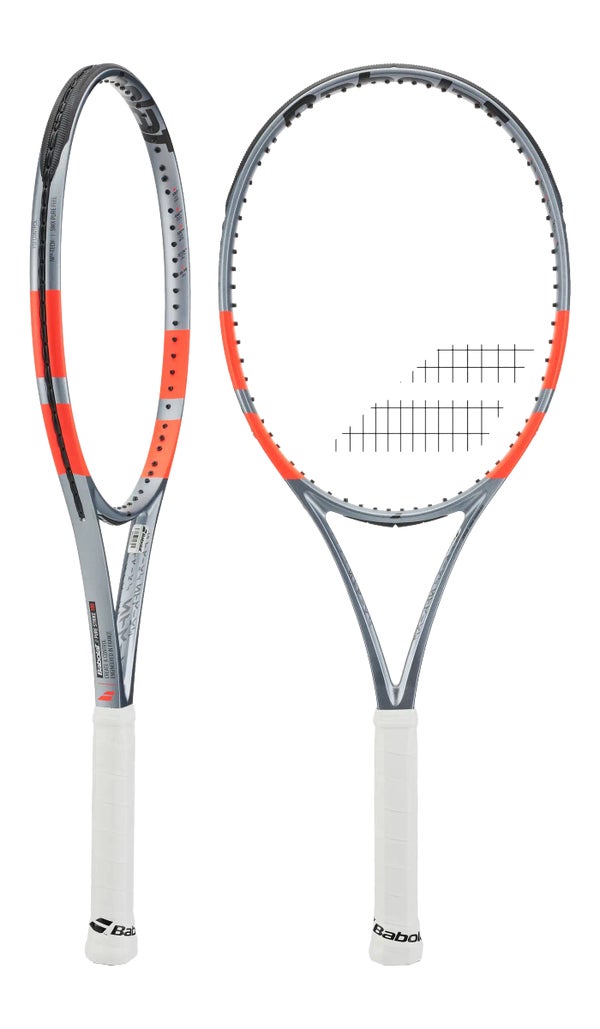 Pure Strike 100 16x19 2024 Babolat300 g · 100 in² · 16x19See priceAmazon
- Muse 100 2026 Yonex295 g · 100 in² · 16x18See priceRacquetGuys.ca
- EZONE Alpha 2025 Yonex275 g · 100 in² · 16x18See priceRacquetGuys.ca
- Gravity MP 2025 HEAD295 g · 100 in² · 16x20See priceAmazon
- Defyer 98 Pro V1 Wilson305 g · 98 in² · 16x20See priceAmazon
- VCORE 95 2026 Yonex310 g · 95 in² · 16x20See priceRacquetGuys.ca
- TFight 305S 2025 Tecnifibre305 g · 98 in² · 18x19See priceAmazon
The prices above are checked automatically at each store and may have changed since the last check. The price that counts is the one shown on the store's website at checkout. We may earn a commission on purchases made through store links, at no extra cost to you.