


 Brasil
 United States
 United Kingdom
 Australia
 Netherlands
 France
 España
 Italia
 السعودية
7 Tennis Racquets for Elbow Pain: Low Stiffness and Comfort
Seven soft, stable racquets for players who feel their elbow, with what to look at on the spec sheet (RA, weight, balance, pattern) and the right string. Equipment helps, but it does not treat.
Updated on 2026-10-07
On this page
- 1.Checklist for a tennis racquet for elbow pain
- 2.The 7 tennis racquets for elbow pain
- 3.Which one fits your case
- 4.Flexible vs. stiff: the difference on the same head
- 5.How long it takes to adapt to the new racquet
- 6.Adjustments to the racquet you already have
- 7.The string matters as much as the racquet
- 8.Signs the equipment is working against your arm
- 9.What does not help as much as it seems
- 10.Frequently asked questions
For someone with elbow pain, the most suitable tennis racquet is flexible (up to about 60 RA), has enough weight not to recoil on impact (around 295 to 310 g unstrung) and head-light balance. The seven racquets below follow that profile. Before the list, a warning that is worth more than any spec sheet.
Heads up
A racquet does not treat an injury. If your elbow hurts, see a doctor or physical therapist before going back to play, and review your technique with a coach. The right equipment reduces the load that reaches your arm, but it does not replace diagnosis, treatment or stroke correction.
Checklist for a tennis racquet for elbow pain
The guide to tennis racquet weight already explains why a racquet that is too light can make shock worse. Here the idea is to bring together all the spec-sheet items that weigh on the arm, in order of importance.
| Spec sheet item | What to look for | Why it matters for the arm |
|---|---|---|
| Stiffness (RA) | 54 to 60 RA, at most about 64 | A flexible frame deforms on impact and filters part of the shock |
| Unstrung weight | 295 to 310 g, if your physique allows | Mass absorbs the ball's impact instead of passing it to the forearm |
| Balance | Head-light, below about 335 mm on a 27 in racquet | Less leverage on the wrist and elbow, especially on the volley |
| Swingweight | 305 to 325 | Stable without forcing the arm to compensate at the end of the stroke |
| Head | 98 to 100 sq in | Good hitting area without the twisting of very large heads on off-center balls |
| String pattern | 16x19 or 16x18 | Strings spaced farther apart deform more and make the hit softer |
| String | Multifilament, natural gut or hybrid, moderate tension | It is the first thing that touches the ball: a hard string cancels out a soft frame |
Two details that often go unnoticed. First, a 27 in racquet has its midpoint at about 343 mm; the further below that the balance is, the more head-light it is. Second, internal damping systems, like ProKennex's Kinetic, do not show up in the RA number, so two racquets with similar stiffness can feel different.
The 7 tennis racquets for elbow pain
7 tennis racquets for players who feel their elbow
- 1
- Weight
- 295 g
- Head
- 100 in²
- Strings
- 16x19
- RA
- 54 RA
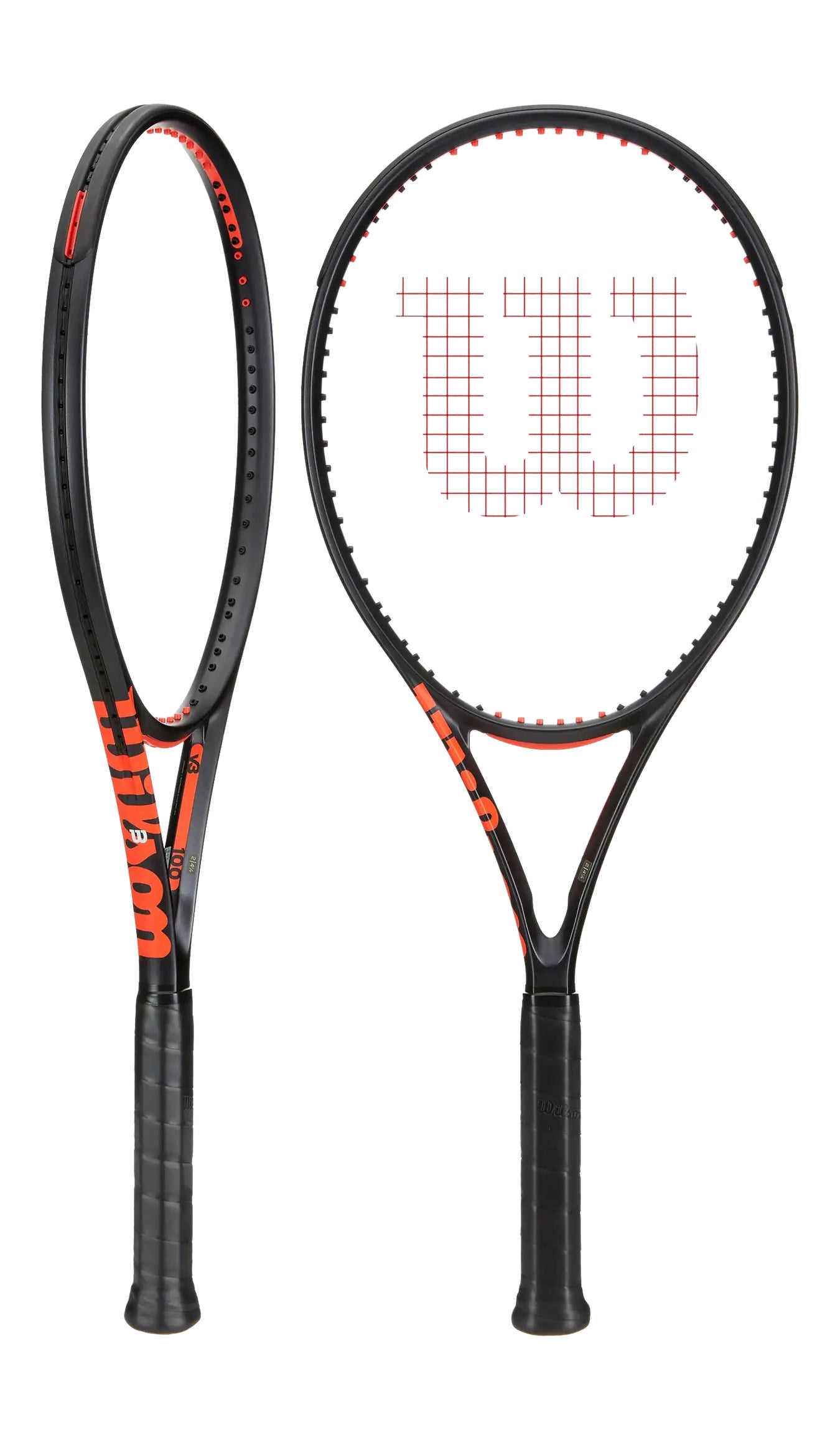
54 RA, one of the lowest stiffnesses in the catalog, with 295 g unstrung, 320 mm balance and a 16x19 pattern. The frame's flex gives more dwell time on the strings and control, and the swingweight of 308 keeps the racquet quick for defending and getting to the net.
- 2
- Weight
- 295 g
- Head
- 100 in²
- Strings
- 16x18
- RA
- 55 RA
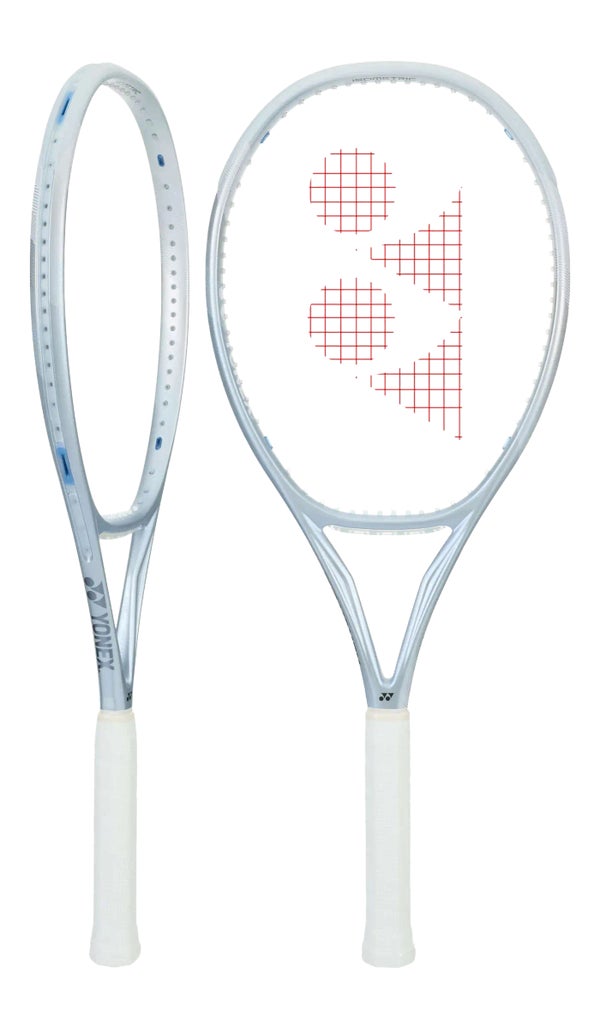
55 RA, 295 g and a 16x18 pattern, more open than usual. The frame thins to 18 mm in the throat and the grommets enlarge the sweet spot. A very comfortable combination for players who play for pleasure and want to spin the ball without forcing the arm.
- 3
- Weight
- 310 g
- Head
- 100 in²
- Strings
- 16x20
- RA
- 59 RA
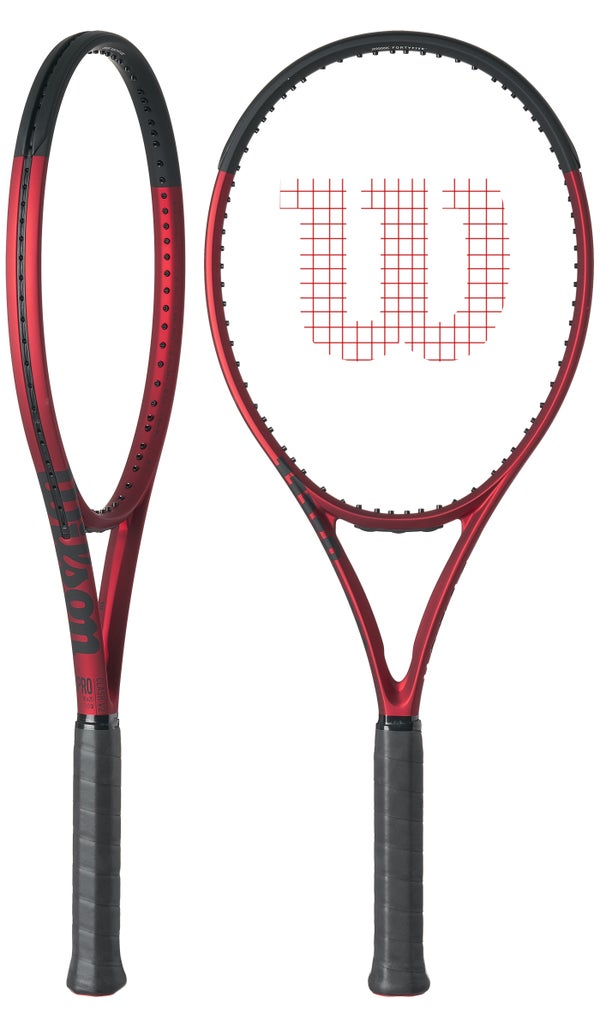
310 g unstrung, 59 RA, swingweight of 325 and 315 mm balance, clearly head-light. The extra mass holds up against heavy balls without passing the jolt to the arm, and the 16x20 pattern gives more control than the regular Clash.
- 4
- Weight
- 280 g
- Head
- 100 in²
- Strings
- 16x19
- RA
- 54 RA
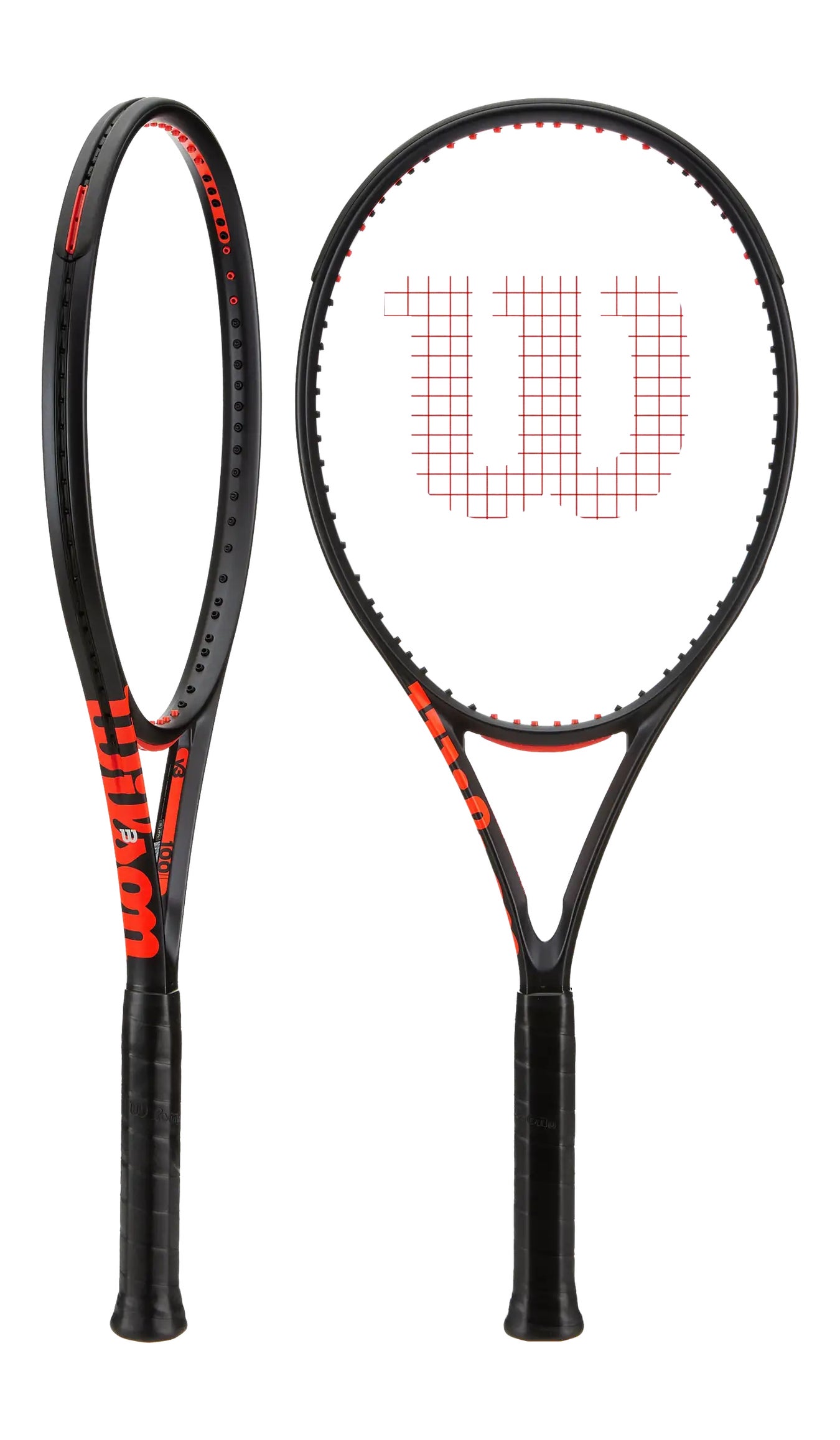
280 g with the same 54 RA as the Clash 100 and 315 mm balance. For players who cannot handle 295 g or more, it is the way to gain comfort without going to a light, stiff racquet, the worst combination for the elbow.






The numbers come from each model's spec sheet. If you want to put two or three side by side with the racquet you use today, use the tennis racquet comparison tool.
Which one fits your case
You hit hard and do not want to give up weight
Players with a formed stroke who have started to feel their arm often go wrong by switching to a much lighter racquet. The safer switch is to keep the weight and lower the stiffness. The Clash 100 Pro V2 and the Black Ace 300 do that: 300 to 310 g, swingweight above 320 and stiffness of 55 to 59 RA.

310 g unstrung, 59 RA and 315 mm balance: the weight holds up against the heavy ball and the flexible frame filters the shock. Calls for the fitness to handle long matches.
You need a lighter racquet
If 300 g tires your shoulder or arm, lower the weight without raising the stiffness. The Clash 100L v3 is 280 g and 54 RA. Another light, soft option is the Gravity MP L 2025, at 280 g, 57 RA and a 16x20 pattern, more control-oriented.
The Clash 100L has a 16x19 pattern and 315 mm balance, more head-light. The Gravity MP L has 16x20 and 338 mm balance, with more mass near the head to make up for the lightness. For players who feel their elbow on the volley, the Clash tends to be friendlier; for those who want to control baseline depth, the Gravity.
You want comfort and spin
The Muse 100 is the only one on the list with a 16x18 pattern. Strings spaced farther apart deform more, which makes the hit even softer and makes topspin easier. If spin is a priority and your arm tolerates a little more stiffness, also see the list of tennis racquets for topspin.
Strengths
- + 55 RA, among the most flexible in the catalog
- + 16x18 pattern makes spin easier and softens the hit
- + Wide sweet spot for a 100 sq in racquet
Drawbacks
- − Less ball exit than stiff racquets
- − The damped feel does not please those who like a firm response
Flexible vs. stiff: the difference on the same head
To understand what changes in practice, compare the most flexible racquet on the list with a classic power racquet, with the same head and similar weight.
Same head, opposite stiffness: Clash 100 v3 vs. Pure Drive 2025
Highlighted: what differs between the racquets. In bold: the best value in the row.
Both have 100 sq in and a 16x19 pattern. The Clash weighs 295 g and has 54 RA; the Pure Drive weighs 300 g and has 69 RA. On court, the Pure Drive returns more energy with little effort, and that is why it is so popular, but the firm frame also passes more shock to the hand. The Clash keeps the ball on the strings longer, calls for a fuller stroke to send the ball deep and filters part of the vibration. For a healthy arm, both work. For an arm that hurts, the 15-point difference in RA is big.
Another point of comparison: the Clash has a 320 mm balance, and the Pure Drive 330 mm. With the mass a little closer to the hand, the Clash swings around more easily on the volley and on blocking the return, the strokes where the elbow suffers most against a heavy ball.
How long it takes to adapt to the new racquet
Switching from a stiff racquet to a flexible one changes the feel right from the first balls. The ball seems to come off shorter and the player tends to accelerate the arm too much to compensate, which is exactly what you do not want. A few practices help with the transition:
- Start with short sessions. Hit for 30 to 40 minutes the first few times, without playing points, to recalibrate depth.
- Change one thing at a time. If you change racquet, string and tension on the same day, you will not know what worked.
- Let the racquet work. On flexible racquets, depth comes from the full stroke and the high finish, not from forearm strength.
- Reassess the grip. A new racquet with a grip different from the previous one changes the hand's pressure on the handle. A new overgrip counts too.
- Talk to your coach. They can tell if you are compensating with the wrist, which is one of the most common causes of elbow overload.
Adjustments to the racquet you already have
Before buying another one, it is worth trying cheap changes on your current racquet. They do not turn a stiff racquet into a flexible one, but they can reduce the load:
- Softer string and lower tension, within the manufacturer's range.
- Fresh string, if the current one has been in the racquet for a long time.
- Right-size grip, with an overgrip or cushion if your hand is squeezing too hard.
- Mass in the handle, with lead tape applied by an experienced stringer, to make the racquet more head-light and heavier overall. Small amounts already change the feel, so test gradually.
If none of this solves it, the racquets on the list are the next step.
The string matters as much as the racquet
Changing the frame and keeping a hard polyester strung high throws away a good part of the gain. The string is the first point of contact with the ball, and polyester is the firmest material on the market. For those with a sensitive elbow, the most common alternatives are:
- Multifilament in the mains and the crosses: the softest of the synthetics.
- Natural gut: the benchmark in comfort and tension maintenance, but expensive and sensitive to moisture.
- Hybrid: polyester in the mains and multifilament or gut in the crosses, for those who do not want to lose polyester's control.
- Moderate tension: in general, lower tensions make the string softer. Use the manufacturer's recommended range as the limit.
The guide to tennis racquet string tension details each material, how much tension drops with use and when to restring. Dead string, which has lost elasticity, also stiffens the hit: an old polyester can be worse for the arm than a new one.
Signs the equipment is working against your arm
Watch for these signs and take them to the professional who is following your case:
- The pain appears or gets worse after changing racquet, string or tension.
- You feel vibration rising through the forearm on balls hit off-center.
- You need to squeeze the handle hard so the racquet does not turn in your hand. It may be the wrong grip size; the guide to tennis racquet grip size shows how to measure.
- The string has gone months without being changed and the ball comes off with no control.
- You arrive late on fast balls and compensate with the wrist, a sign of a racquet too heavy for your pace.
What does not help as much as it seems
Vibration dampener. It reduces string vibration and changes the sound of the hit, but has little effect on the shock the frame transmits to the arm. You can use one, just do not count on it as a solution.
A very light racquet. Below about 270 g, especially with head-heavy balance and high stiffness, the racquet recoils on impact and the arm absorbs the difference. The cheapest entry racquets usually have this combination.
A huge head. Heads of 105 to 115 sq in forgive more, but tend to twist more on balls hit near the frame. For most players with pain, 98 to 100 sq in is the balance.
Changing only the grip. The right-size grip helps, but does not make up for a stiff racquet with hard string.
Frequently asked questions
What is the best tennis racquet for elbow pain?
There is no single answer, but the most suitable ones combine low stiffness, moderate to high weight and head-light balance. On the list, the Wilson Clash 100 v3 (54 RA, 295 g) is the most flexible, and the Clash 100 Pro V2 (59 RA, 310 g) is the most stable. In any case, see a health professional if the pain persists.
What RA is good for someone with epicondylitis?
Racquets up to about 60 RA are considered flexible and are usually the ones chosen by players who feel their arm. Above 67 RA the racquet is already firm. The RA number is just one of the factors: weight, balance, string and tension also change what reaches the elbow.
Is a light racquet better for tennis elbow?
In general no. A very light racquet recoils more on impact and transmits more shock, especially if it is stiff and head-heavy. The ideal is the highest weight you can use without arriving late and without tiring.
Can I keep playing with elbow pain if I change racquets?
The decision to keep playing belongs to the doctor or physical therapist. Changing equipment can be one part of the solution, together with treatment, strengthening and technical adjustment, but it should not be used to play through pain.
To see all the low-stiffness racquets in the catalog, open the tennis racquet catalog and compare the stiffness column, or browse the softest lines of each brand, like Wilson racquets and ProKennex racquets. If you still do not know which racquet style suits you, the find your racquet quiz helps you filter.
Where to buy the racquets in this guide
- Clash 100 V3 Wilson295 g · 100 in² · 16x19See priceAmazon
- Muse 100 2026 Yonex295 g · 100 in² · 16x18See priceRacquetGuys.ca
- Clash 100 Pro V2 Wilson310 g · 100 in² · 16x20See priceAmazon
- Clash 100L V3 Wilson280 g · 100 in² · 16x19See priceAmazon
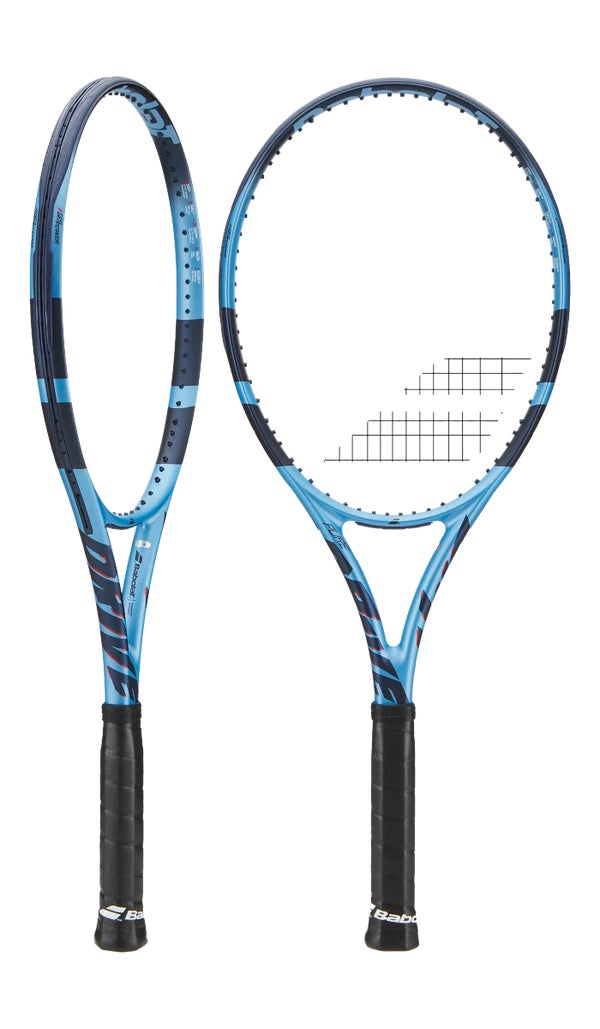 Pure Drive 2025 Babolat300 g · 100 in² · 16x19See priceAmazon
The prices above are checked automatically at each store and may have changed since the last check. The price that counts is the one shown on the store's website at checkout. We may earn a commission on purchases made through store links, at no extra cost to you.