


 Brasil
 United States
 United Kingdom
 Australia
 Netherlands
 France
 España
 Italia
 السعودية
How to choose a tennis racquet: complete buying guide
Head size, string pattern, stiffness, grip, length, string and tension: each spec explained by the effect it has on court, with tables to help you decide quickly.
Updated on 2026-10-07
On this page
Choosing a tennis racquet gets easier when you read the spec sheet in the right order: first head size, then weight and swingweight, string pattern, stiffness, grip and length. String and tension come last, and they change how a racquet behaves almost as much as the frame itself.
This guide explains what each number means on court, with real catalog examples. If you just want a ready-made list, see the best tennis racquets of 2026.
How to choose a tennis racquet in 7 steps
- Define your level and your most common mistake. Short balls call for power; long balls call for control; a sore arm calls for comfort.
- Choose the head size. 100 sq in is the standard; smaller for precision, larger for forgiveness.
- Choose the weight and swingweight range. Too light is unstable; too heavy arrives late.
- Choose the string pattern. 16x19 for spin and power; 18x20 for control.
- Check the stiffness (RA). Below 65 if you have or have had arm pain.
- Get the grip right. Measure your hand; when in doubt, go with the smaller number.
- Plan your string and tension. The right frame with the wrong string plays poorly.
Each step is detailed below.
Head size
Head size is measured in square inches (sq in) and defines the string area. A larger head has more usable area and longer strings, which work like a trampoline: the ball comes off with more speed and center errors are punished less. A smaller head concentrates the response and gives more precision, but demands clean contact.
| Size | Category | Behavior | Who it is for |
|---|---|---|---|
| 95 to 97 sq in | Midsize | Maximum precision, small sweet spot, little free power | Advanced players with a long swing |
| 98 to 100 sq in | Midplus | Balance between control, power and forgiveness | Intermediates and advanced players |
| 102 to 107 sq in | Large midplus | Forgiveness and power, less precision | Beginners, seniors, doubles |
| 108 sq in or more | Oversize | Maximum power and a huge sweet spot | Recreational play and short strokes |
Game situation: on a fast serve return, when all you can do is block, a 107 sq in racquet sends the ball back deep; a 97 sq in one requires you to hit the exact center for the ball to clear the net with depth.
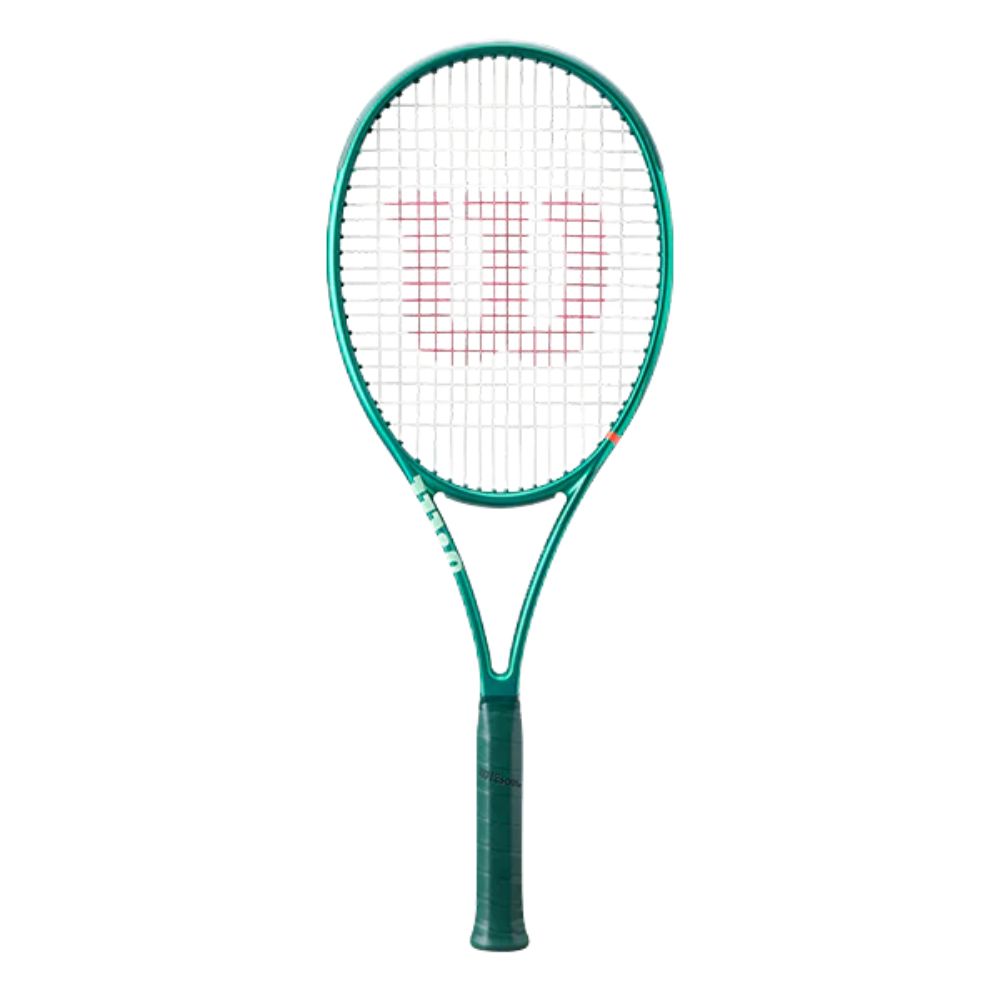
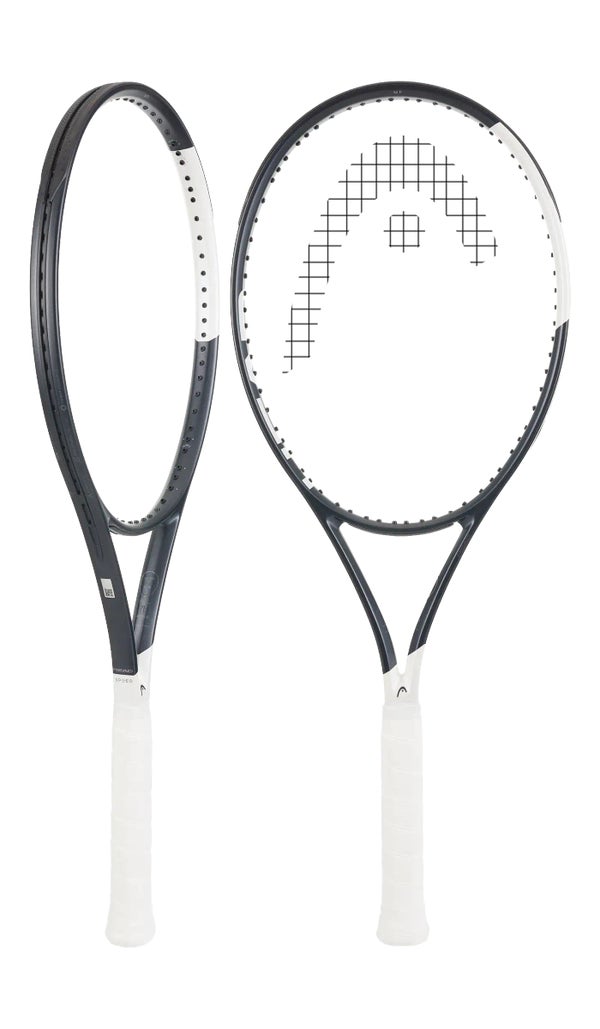
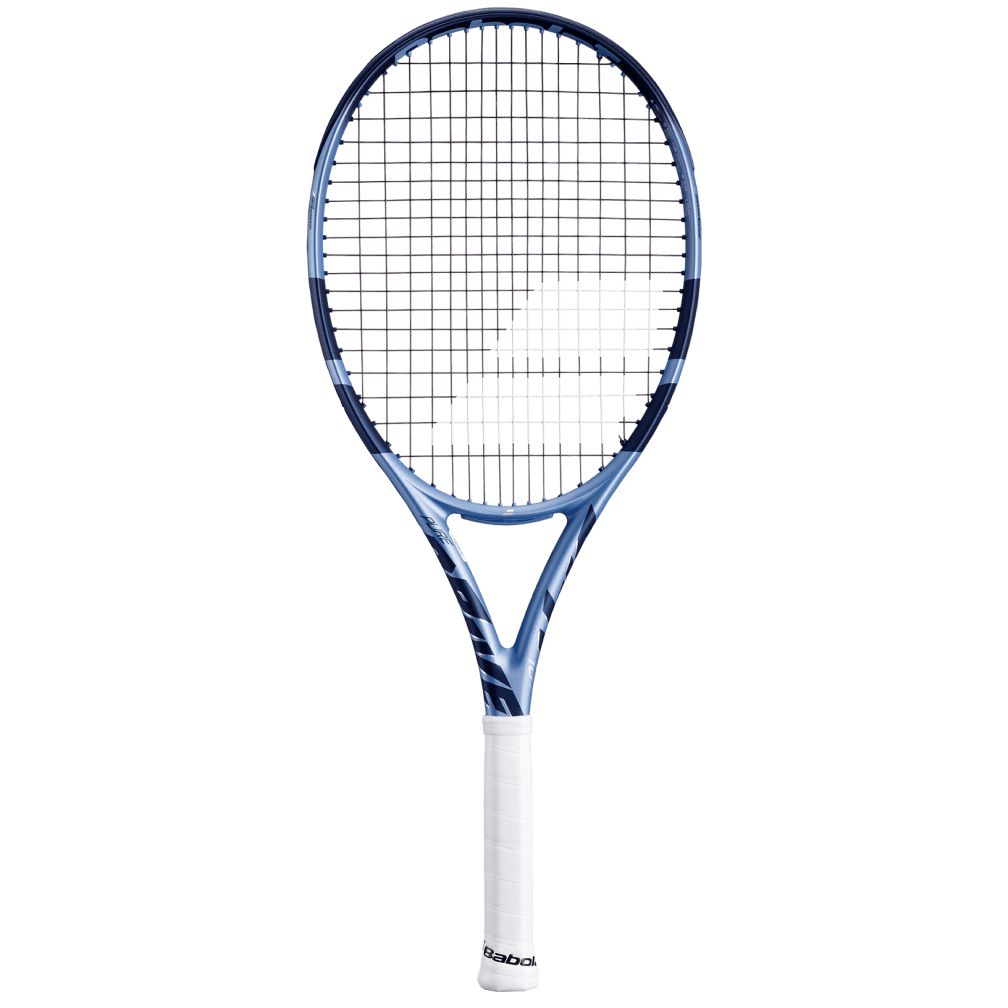
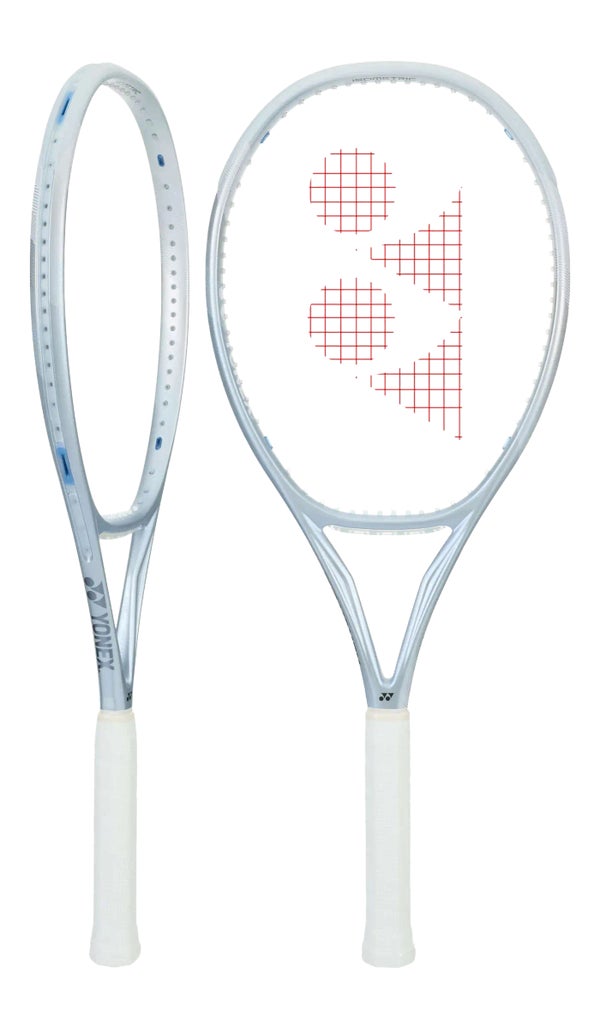
From midsize to oversize: one example of each head size








Weight, balance and swingweight (summary)
Weight is the second most important filter and deserves a guide of its own: how to choose tennis racquet weight. In short:
- Static weight: 255 to 285 g unstrung for beginners, 285 to 305 g for intermediates, 305 g or more for advanced players.
- Balance: light racquets tend to have more weight in the head; heavy racquets, more weight in the handle.
- Swingweight: tells you how much the racquet weighs during the stroke. Two 300 g racquets can behave very differently if one has a 315 swingweight and the other 330.
String pattern: 16x19, 18x20 and variations
The string pattern indicates how many vertical (main) and horizontal (cross) strings the racquet has. With fewer strings, the spaces between them are larger: the main strings slide on contact and snap back into place, which generates more spin, and the ball sinks deeper into the string bed, which generates more power. With more strings, the bed is firm and the trajectory comes out lower and more predictable.
| Pattern | Space between strings | Effect on court | String durability |
|---|---|---|---|
| 16x18 | Very open | Maximum spin and power, high trajectory | Lower |
| 16x19 | Open (the most common) | Easy spin and power, good control | Medium |
| 16x20 | Intermediate | A little more control than the 16x19, lower trajectory | Medium |
| 18x20 | Tight | Control and low trajectory; spin requires a fast swing | Higher |
For most players, 16x19 is the right choice. The 18x20 makes sense for players who hit hard and flat and err by hitting too deep, or for those who break strings often.
Both Blade 98 V10 racquets have the same mold, the same weight (305 g) and the same stiffness (61 RA). The main difference is the string pattern: by the general rule, the 16x19 tends to launch the ball higher and make spin easier, and the 18x20 tends to keep the trajectory lower and flatter. On the spec sheet, the 18x20 version also shows a slightly higher swingweight. To see other comparisons within the brand, use the Wilson racquet comparison tool.
Beam profile
The beam profile (or thickness) of the frame, in millimeters, is a good indicator of power. Thin beams, from 20 to 22 mm, flex more on impact and give control and feel. Wide beams, from 24 to 27 mm, are firmer and return more energy. Many racquets use a variable profile, such as 23/26/23 mm: wider in the middle of the head, where the ball usually lands, and thinner at the ends.
Examples: the Blade 98 has about 21 mm and is sold as a control racquet; the Pure Drive has 23/26/23 mm and is Babolat's power line.
Stiffness (RA)
Stiffness is measured in RA, on a scale that runs from about 50 to 75 in adult tennis racquets. A stiff racquet deforms little on impact and returns more energy to the ball, but also transmits more shock to the arm. A flexible racquet deforms more, holds the ball longer on the strings and filters vibration, with less free power.
| Stiffness | Classification | Feel | Recommended for |
|---|---|---|---|
| Up to 62 RA | Flexible | Soft, depth control, less power | Players with arm pain or who like feel |
| 63 to 66 RA | Medium | Balance | Most players |
| 67 to 70 RA | Firm | Lively and powerful | Players who want easy power |
| Above 70 RA | Stiff | A lot of power, more shock | Short swings, recreational play |
An important detail: the feeling of comfort does not depend on RA alone. Dampening technologies, the type of string and the tension also count. A 68 RA racquet with multifilament string can be more comfortable than a 63 RA one with polyester strung at maximum tension.
From flexible to stiff: three levels of RA
Highlighted: what differs between the racquets. In bold: the best value in the row.
The Muse 100 (55 RA) and the Pure Drive 2025 (69 RA) have the same 100 sq in head, but sit at opposite ends of the stiffness scale. By the general rule, the more flexible one calls for a full stroke to gain depth, and the stiffer one returns more energy, which calls for spin to keep the ball in. The Boom MP (61 RA) sits between the two. In the tennis racquet comparison tool you can check the stiffness of any model side by side.
Grip: L0 to L4 and how to measure
Grip size (the circumference of the handle) is indicated in Europe by numbers from L0 to L5, and in the United States in inches. Each number equals 1/8 of an inch, about 3 mm more circumference.
| Size | Inches | Approximate circumference | Most common profile |
|---|---|---|---|
| L0 | 4 | 102 mm | Juniors and small hands |
| L1 | 4 1/8 | 105 mm | Women with small to medium hands |
| L2 | 4 1/4 | 108 mm | Women with medium to large hands, men with small hands |
| L3 | 4 3/8 | 111 mm | Men with medium hands |
| L4 | 4 1/2 | 114 mm | Men with large hands |
There are two practical ways to measure, described by specialty stores such as Tennis Warehouse:
- Ruler: with your playing hand open and fingers together, line the ruler up with the lowest horizontal line of the palm and measure to the tip of the ring finger. The value in inches indicates the size (4 1/4 in = L2, for example).
- Finger test: hold the racquet with a forehand eastern grip. There should be room to fit the index finger of your other hand between the tip of your ring finger and your palm. If it does not fit, the handle is too thin; if there is extra room, it is too thick.
When in doubt between two numbers, choose the smaller one. An overgrip thickens the handle by about half a size, but there is no simple way to thin a thick handle. A handle that is too thin, on the other hand, forces you to squeeze so the racquet does not twist, which tires the forearm.
Tip
If you switch racquets and feel your wrist or forearm tiring, check the handle size before blaming the weight. A handle half a size below ideal already forces you to squeeze the racquet harder on every stroke.
Length
The standard length of adult racquets is 27 in (68.6 cm). Some models are 27.25 or 27.5 in, the so-called extended racquets. The rules of the International Tennis Federation (ITF) allow up to 29 in (73.7 cm) of total length.
Half an inch more increases reach and leverage: the serve gains speed and angle, and you reach balls a little farther away. The price is maneuverability. Because the mass sits farther from the hand, the swingweight rises and the racquet is slower on fast volleys. For juniors, there are racquets from 19 to 26 in, chosen by the child's height.
Both Pure Drive 2025 racquets weigh 300 g unstrung and have a 100 sq in head. The Plus is 27.5 in and therefore has a 325 swingweight, versus 317 for the regular version. In general, a higher swingweight helps on serves and returns, and a lower swingweight makes the racquet faster at the net. See other versions of the family in the Babolat racquet catalog.
String and tension
The string is the only part of the racquet that touches the ball. Changing the type of string or the tension changes control, power, spin and comfort, sometimes more than changing frames.
| String type | Feel | Strengths | Who it is for |
|---|---|---|---|
| Synthetic (nylon) | Neutral | Cheap and versatile | Beginners and recreational play |
| Multifilament | Soft and lively | Comfort, power, feel | Sensitive arms, touch players |
| Polyester (monofilament) | Firm | Control, spin, durability against breakage | Players who hit hard with a long swing |
| Natural gut | Very soft | Comfort and tension maintenance | Players who prioritize comfort and feel |
| Hybrid | Combines two strings | Polyester control with multifilament comfort | Intermediates and advanced players |
Tension. Each racquet has the manufacturer's recommended range printed on the frame, in kg or in pounds (1 kg equals about 2.2 lb). The general rule:
- Lower tension: the string bed gives more, the ball comes off with more power and the impact is more comfortable. The trajectory is higher.
- Higher tension: more control and a lower trajectory, with less power and less comfort.
Players who use polyester usually string a little lower than those who use multifilament, because polyester is stiffer. If you do not know where to start, string in the middle of the recommended range and adjust in 1 kg steps on the next restrings.
How often to restring. String loses tension even without use, and polyester loses elasticity faster. For players who play two or three times a week, restringing every one or two months is a common reference.
Heads up
Polyester at high tension in a stiff racquet is the hardest combination on the arm. If you have or have had elbow pain, start with multifilament or a hybrid and a tension in the middle of the recommended range.
Before you buy: final checklist
- Demo it, if possible. Many stores and clubs have demo racquets. An hour on court tells you more than any spec sheet.
- Check whether it comes strung. Many performance racquets are sold unstrung, and then stringing goes into the budget.
- Compare it with your current racquet. Put the two in the tennis racquet comparison tool and see where the differences in weight, swingweight and stiffness are. Big changes take adaptation.
- Consider the previous generation. Differences between generations are usually small, and the previous model may have a great price.
- Use the guided help. Find your racquet crosses level, style and injury history to suggest models.
For those just starting out, the guide to tennis racquets for beginners sums all this up in a few picks. For those who have been playing for a few years, the guide to racquets for intermediates shows the best options in the 285 to 305 g range. And the tennis racquet catalog lets you filter by any spec.
Frequently asked questions
What is the difference between a 16x19 and an 18x20 racquet?
The 16x19 has fewer strings and larger spaces between them, which makes spin easier and gives more power and a higher trajectory. The 18x20 has a tighter string bed, with more control, a lower trajectory and strings that last longer. Most players do better with 16x19.
How do I find my tennis racquet grip size?
With your hand open and fingers together, measure with a ruler from the lowest horizontal line of the palm to the tip of the ring finger. 4 in corresponds to L0, 4 1/8 to L1, 4 1/4 to L2, 4 3/8 to L3 and 4 1/2 to L4. When in doubt, choose the smaller size and add an overgrip.
What does RA mean on a tennis racquet?
RA is the measure of the frame's stiffness. The higher the number, the stiffer the racquet: more power and more vibration. Below 62 RA the racquet is considered flexible and comfortable; above 68 RA, firm or stiff.
What tension should I use on my tennis racquet?
Start in the middle of the range printed on the racquet's frame. Lower tension gives power and comfort; higher gives control. With polyester, many players use a slightly lower tension than with multifilament. Adjust in 1 kg steps until you find the ideal point.
Is a 27.5 inch racquet worth it?
It is worth it for players who want more reach and more serve speed, such as big servers and doubles players. It is a little slower to maneuver near the net. If you have never played with an extended racquet, demo one before buying.
Which tennis racquet is best for someone with tennis elbow?
Look for low stiffness (up to 62 RA), moderate weight (not too light), a head of 100 sq in or more and a soft string, such as multifilament. Examples in the catalog: Yonex Muse 100, Wilson Clash and Head Gravity MP. And seek medical advice: the racquet helps, but it does not replace treatment.
Where to buy the racquets in this guide
- Blade 98 16x19 V10 Wilson305 g · 98 in² · 16x19See priceAmazon
- Speed MP 2026 HEAD300 g · 100 in² · 16x19See priceAmazon
- Pure Drive 107 2025 Babolat285 g · 107 in² · 16x19See priceAmazon
 Muse 100 2026 Yonex295 g · 100 in² · 16x18See priceRacquetGuys.ca
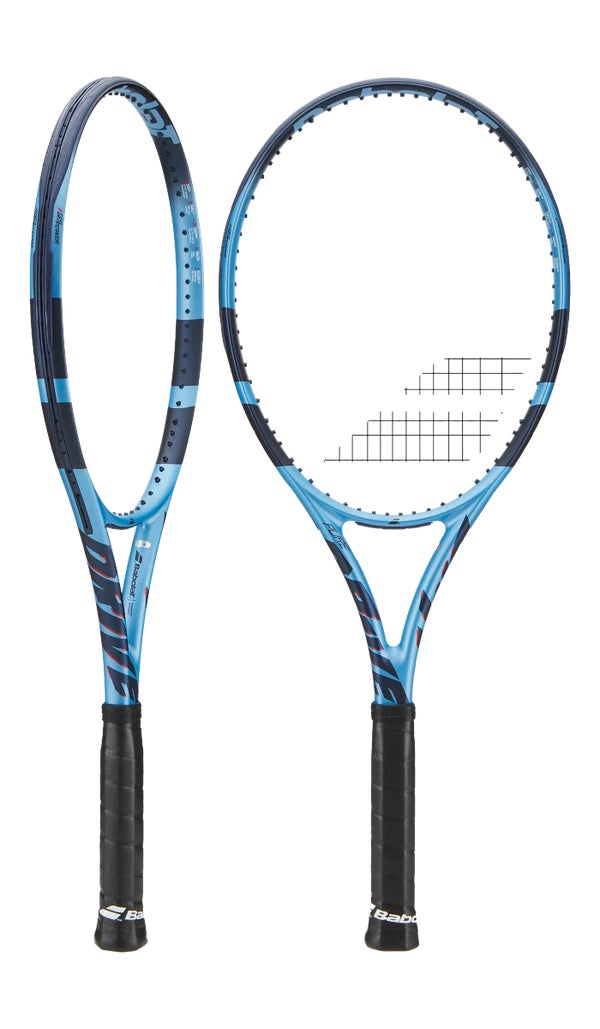 Pure Drive 2025 Babolat300 g · 100 in² · 16x19See priceAmazon
The prices above are checked automatically at each store and may have changed since the last check. The price that counts is the one shown on the store's website at checkout. We may earn a commission on purchases made through store links, at no extra cost to you.