


 Brasil
 United States
 United Kingdom
 Australia
 Netherlands
 France
 España
 Italia
 السعودية
Tennis Racquet String Tension: kg, lb and When to Restring
Which tension to use, how it changes with polyester, multifilament, natural gut and hybrid, how much string loses over time and the signs it is time to restring.
Updated on 2026-10-07
On this page
- 1.Tension conversion chart: kg to lb
- 2.The recommended range changes from racquet to racquet
- 3.What happens when you change the tension
- 4.String types and the tension for each
- 5.The string loses tension (even when idle)
- 6.When to restring a tennis racquet
- 7.Adjustment by symptom: what to change at the next restring
- 8.Where to start, in practice
- 9.Frequently asked questions
Tennis racquet string tension is the force with which each string is pulled tight during stringing, measured in kilograms (kg) or pounds (lb). Lower tension gives power, comfort and a higher trajectory; higher tension gives control and a lower trajectory, with less comfort. The safe starting point is the middle of the range printed on your racquet's frame, adjusted for the string type: a bit below with polyester, in the middle or above with multifilament.
The number, however, is only half the story. The string material, the loss of tension over time and how often you restring change the racquet's behavior as much as the choice between 22 and 24 kg. This guide covers those three subjects and ends with a symptom-based adjustment roadmap.
Tension conversion chart: kg to lb
European and Asian manufacturers usually use kg; American ones, lb. One kilogram equals about 2.2 pounds.
| kg | lb | kg | lb |
|---|---|---|---|
| 18 | 40 | 24 | 53 |
| 19 | 42 | 25 | 55 |
| 20 | 44 | 26 | 57 |
| 21 | 46 | 27 | 60 |
| 22 | 49 | 28 | 62 |
| 23 | 51 | 29 | 64 |
Rounded values. In practice, stringers work in steps of 0.5 or 1 kg (1 or 2 lb).
The recommended range changes from racquet to racquet
Each frame has a manufacturer-recommended range printed on the frame. In the tennis racquet catalog, ranges go from 18 to 25 kg on several Yonex up to 23 to 29 kg on the ProKennex, and some Tecnifibre indicate a narrow window, from 22 to 24 kg.
Four racquets, four recommended tension ranges




Highlighted: what differs between the racquets. In bold: the best value in the row.
What this means for you:
- The middle of the range is the manufacturer's reference. On the Yonex Muse 98 2026 (18 to 25 kg), that is somewhere around 21 to 22 kg. On the ProKennex Ki Q+5 300 g (23 to 29 kg), around 26 kg.
- The same tension does not feel the same on different frames. 23 kg is in the middle of the range of a Tecnifibre TF40 and at the start of the range of a ProKennex. The string pattern and head size also change how stiff the string bed is.
- Stay within the range. Outside it, the racquet tends to behave poorly and you lose the reference of whoever designed the frame.
Two frame measurements influence the tension you will feel. A dense pattern, like the 18x20, makes the string bed firmer at the same tension; the guide to string pattern 16x19 vs. 18x20 explains why. And a bigger head has longer strings, which give more; see the guide to tennis racquet head size.
What happens when you change the tension
Think of the string bed as a trampoline. Looser, it sinks more at impact and returns energy to the ball; tighter, it sinks less and lets the racquet "speak" more.
| If you lower the tension | If you raise the tension |
|---|---|
| More power and depth with the same stroke | Less power; you need to generate more speed |
| Higher trajectory | Lower, flatter trajectory |
| Softer impact, less shock | Firmer impact |
| Ball stays on the strings longer | More immediate response |
| Less directional precision on hard strokes | More predictability on hard strokes |
Match situation: if your crosscourt balls are coming out half a meter long even with a good swing, raising the tension 1 to 2 kg usually brings them in. If your ball dies in the middle of the court and your arm complains, lowering it 1 to 2 kg helps with both.
String types and the tension for each
The right tension depends on the material. The summary of the types is in the guide to how to choose a tennis racquet; here the focus is on how each one behaves with tension.
Polyester (monofilament and co-polyester)
It is the firmest string and the one that gives the most control and spin to those who hit hard. Because it is stiff, it is usually strung below the middle of the range: if the racquet recommends 21 to 25 kg, many polyester players land between 21 and 23 kg. The weak point is the loss of elasticity: polyester "dies" before it breaks, and the racquet starts to feel hard and unresponsive.
Multifilament
Thousands of thin braided fibers, with a soft, powerful feel. It keeps its elasticity better than polyester and is usually strung in the middle of the range or a bit above, to hold on to power. It frays with use, especially in open patterns and with a lot of topspin.
Natural gut
Made from cow intestine, it is the most elastic string and the one that best holds tension over time. It is the benchmark for comfort and feel, but it is expensive and sensitive to moisture. It is usually strung in the middle or a bit above the range.
Synthetic (nylon)
A solid-core string with a wrap, simple and cheap. Intermediate behavior, with no big tension demands. Good for those who play little or are starting out.
Hybrid
Two different strings: one in the mains and another in the crosses. The most common combination is polyester in the mains, for spin and control, and multifilament or gut in the crosses, for comfort. Stringers usually use different tensions for each string; ask for a recommendation for the chosen combination.
Gauge (thickness)
Gauge counts too. Thinner strings, like 1.25 mm, give more feel and spin, but break sooner. Thicker strings, like 1.30 mm, last longer. Players who break strings often can go up in gauge before changing tension.
Heads up
Polyester at high tension in a stiff racquet is the hardest combination on the arm. If you feel pain in your elbow, wrist or shoulder, see a doctor or physical therapist. On the equipment side, a soft string, moderate tension and a flexible racquet reduce shock, but they do not treat an injury.
If comfort is the priority, the guide to tennis racquets for tennis elbow shows frames that match this recipe.
The string loses tension (even when idle)
The tension you ask the stringer for is not the one that stays in the racquet. Three things happen from the moment the string is tied:
- Initial loss: right after stringing, the string settles into the holes and knots and loses part of its tension. Most of this loss happens in the first hours and days.
- Continuous loss: afterward, the string keeps giving with use and with time, more slowly. Polyester loses tension faster than multifilament and gut.
- Loss of elasticity: besides loosening, polyester becomes less elastic. The string bed may even look firm, but it returns less energy and holds spin less.
Some practical consequences:
- A racquet strung months ago, unused, is not at the tension of stringing day. If you have two racquets, string both together so they behave the same.
- Pre-stretching (stretching the string before installing it) reduces the initial loss, but makes the string bed a little firmer. It is a choice, not an obligation.
- The machine and the stringer change the result. Electronic constant-pull machines and lockout machines (crank or weight) can produce different string beds with the same number. If you have found a tension that works, stay with the same stringer.
When to restring a tennis racquet
An old rule of thumb among stringers is to restring, per year, the number of times you play per week: someone who plays three times a week changes the string three times a year. It works well for multifilament and synthetic. For those who use polyester and hit hard, the interval is usually much shorter, because the string loses its response before it breaks.
Signs the string is done, even without breaking:
- The ball starts flying farther without you changing your stroke.
- You have lost spin: topspin dips less and the slice floats.
- The main strings move out of place and do not return on their own after the stroke.
- Deep grooves appear at the intersections, or the multifilament is fraying.
- The sound of impact gets muffled.
- Your arm starts to complain with a racquet that used to be comfortable.
Tip
Write down the date, string and tension of each stringing on a tag or on your phone. After two or three restrings, you will know exactly how many hours of play your string lasts and which tension works for your arm.
Adjustment by symptom: what to change at the next restring
Use the table to decide the next tension. Change one thing at a time and in small steps, 1 kg at a time, so you know what caused the difference.
| What you feel | Tension adjustment | Other options |
|---|---|---|
| Ball going past the baseline | Raise 1 to 2 kg | Denser pattern, polyester string |
| Short ball, no depth | Lower 1 to 2 kg | Multifilament, bigger head |
| Little spin | Lower 1 kg | Shaped polyester, thinner gauge |
| Sore arm | Lower 1 to 2 kg | Multifilament or gut, restring more often |
| String breaking early | Keep | Thicker gauge, denser pattern |
| "Dead" racquet with old string | Keep and restring | Shorten the restringing interval |
| Playing in the heat, ball flying | Raise 0.5 to 1 kg | Return to normal tension on cold days |
Heat makes the ball and string livelier, and cold does the opposite. Many players who restring often vary the tension by 0.5 to 1 kg depending on the time of year.
Where to start, in practice
- Read the range on the frame (or on the spec sheet, in the tennis racquet comparison tool).
- Choose the material: multifilament or synthetic if you are starting out or have a sensitive arm; polyester if you hit hard with topspin; hybrid if you want polyester's control with more comfort.
- Set the starting tension: middle of the range for multifilament and synthetic; 1 to 2 kg below the middle for polyester.
- Play at least two or three sessions before judging. The first hours of a new string do not represent the rest of its life.
- Adjust by 1 kg at the next restrings, using the symptom table.
The Yonex Muse 98 2026 is a good example of a frame with a wide range, from 18 to 25 kg: 305 g, 98 sq in, a 16x18 pattern and 57 RA. The wide range gives room to experiment, from looser polyester to tighter multifilament. More models from the brand in the Yonex racquet catalog.
Frequently asked questions
What is the ideal tension for a tennis racquet?
There is no single number. Start with the middle of the range printed on your racquet's frame, which is usually between 21 and 25 kg. With polyester, stay 1 to 2 kg below the middle; with multifilament or gut, in the middle or a bit above. Then adjust 1 kg at a time.
Does high tension give more power?
No, the opposite. With higher tension the string bed gives less and returns less energy to the ball. It gives more control and a lower trajectory. To gain power, lower the tension.
How many kg is 55 pounds?
About 25 kg. To convert, divide the pounds by 2.2. 50 lb equals about 23 kg and 60 lb about 27 kg.
How often should I change my tennis racquet string?
A rule of thumb is to restring, per year, the number of times you play per week. Those who use polyester and hit hard usually change sooner, because the string loses elasticity before it breaks. A ball flying long, less spin and strings moving out of place are signs it is time.
Polyester or multifilament: which should I use?
Polyester gives control, spin and durability to those who hit hard with a long swing, but it is harder on the arm. Multifilament gives comfort, power and feel, and is better for beginners, touch players and those with a sensitive arm. Hybrid combines the two.
Does the string lose tension even if I do not play?
Yes. It loses part of its tension right after stringing and keeps giving over time, even when idle. Polyester loses tension and elasticity faster than multifilament and natural gut.
If you are still choosing the frame, the Find Your Racquet quiz suggests models for your level, and the Racquet Rank methodology explains how each racquet's scores are calculated.
Where to buy the racquets in this guide
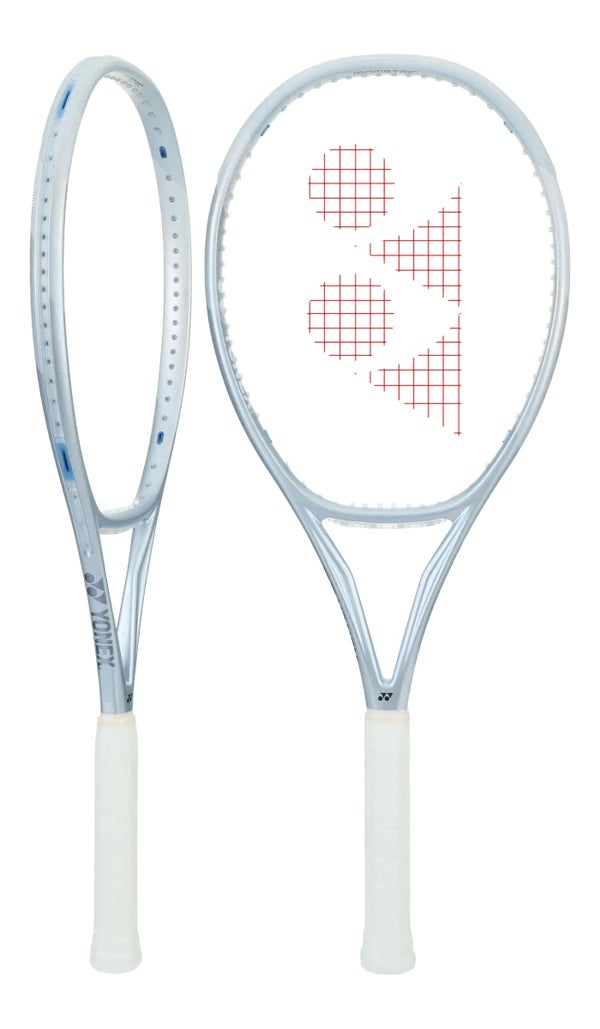 Muse 98 2026 Yonex305 g · 98 in² · 16x18See priceRacquetGuys.ca
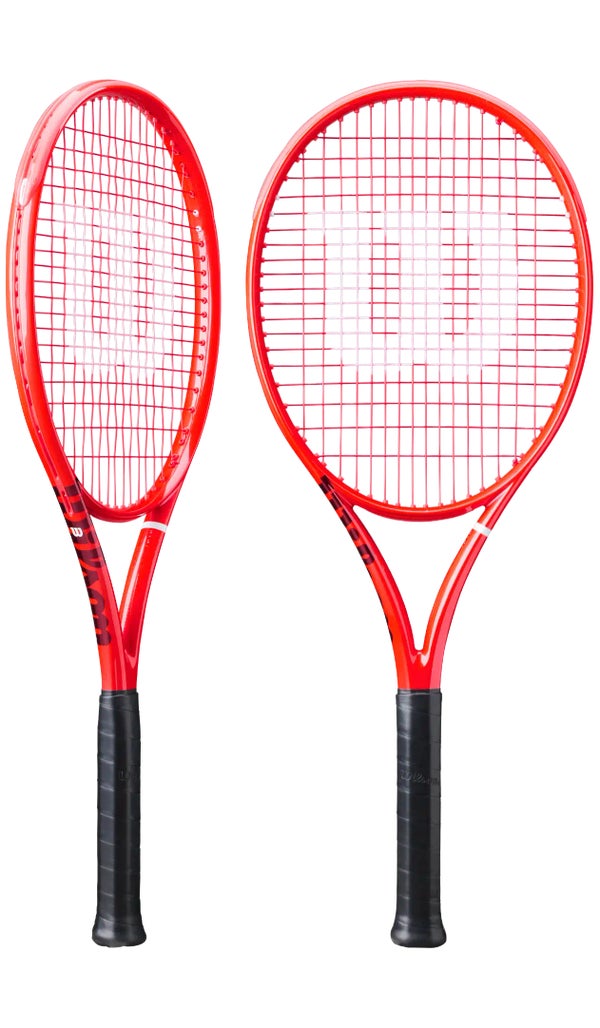 Defyer 100 V1 Wilson300 g · 100 in² · 16x19See priceAmazon
The prices above are checked automatically at each store and may have changed since the last check. The price that counts is the one shown on the store's website at checkout. We may earn a commission on purchases made through store links, at no extra cost to you.