


 Brasil
 United States
 United Kingdom
 Australia
 Netherlands
 France
 España
 Italia
 السعودية
7 best tennis racquets for beginners in 2026
Anyone starting out or returning to tennis needs a larger head, moderate weight and forgiveness. The 7 best options of 2026 and when it is worth skipping straight to a step-up racquet.
Updated on 2026-10-07
On this page
- 1.The 7 best tennis racquets for beginners
- 2.The picks in detail
- 3.What a beginner racquet needs
- 4.Aluminum or graphite?
- 5.Beginner racquet or a good racquet to grow into?
- 6.The mistake of buying a professional's racquet
- 7.For players returning to the game
- 8.How to test before you buy
- 9.Grip and string: the details people get wrong most
- 10.Frequently asked questions
For anyone just starting tennis, the right racquet has a 102 to 112 sq in head, weighs between 255 and 285 g unstrung and forgives off-center hits. The best tennis racquets for beginners in 2026 follow that recipe, but they differ quite a bit from one another: some are aluminum and suit the first lessons; others are graphite and stay with the player through two or three years of progress.
The choice depends on one simple question: do you want to try the sport, or do you already know you will play every week? The answer changes the ideal racquet, and that is what this guide helps you decide.
The 7 best tennis racquets for beginners
The 7 best tennis racquets for beginners in 2026
- 1
- Weight
- 260 g
- Head
- 102 in²
- Strings
- 16x19
- RA
- 65 RA
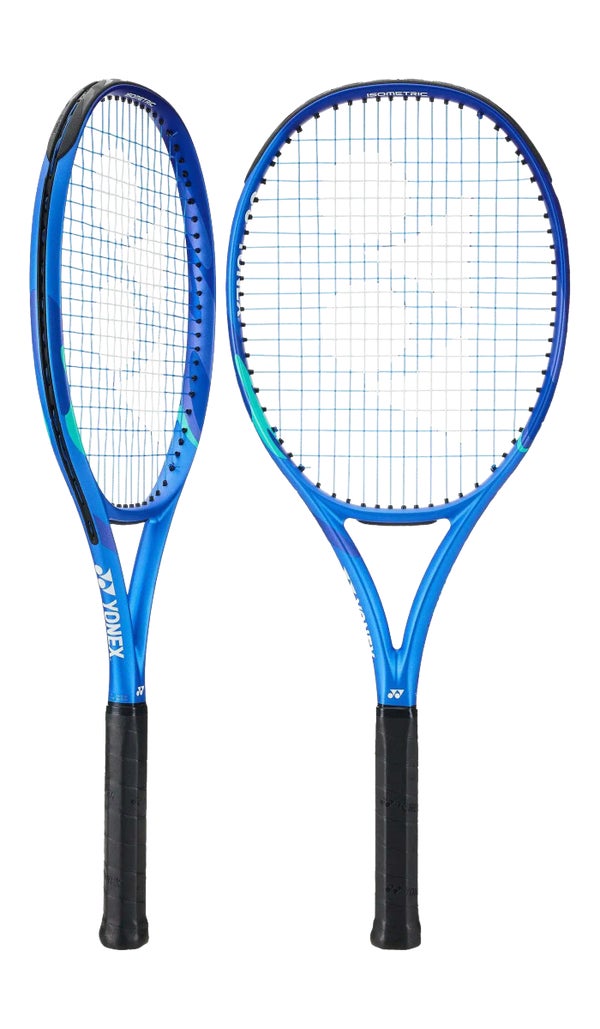
260 g, 102 sq in head and weight concentrated in the head, which takes the swingweight to 313. This balance tends to help players with a short swing. It comes strung and is graphite, a material that generally transmits more ball feel than aluminum.
- 2
- Weight
- 275 g
- Head
- 102 in²
- Strings
- 16x19
- RA
- 59 RA
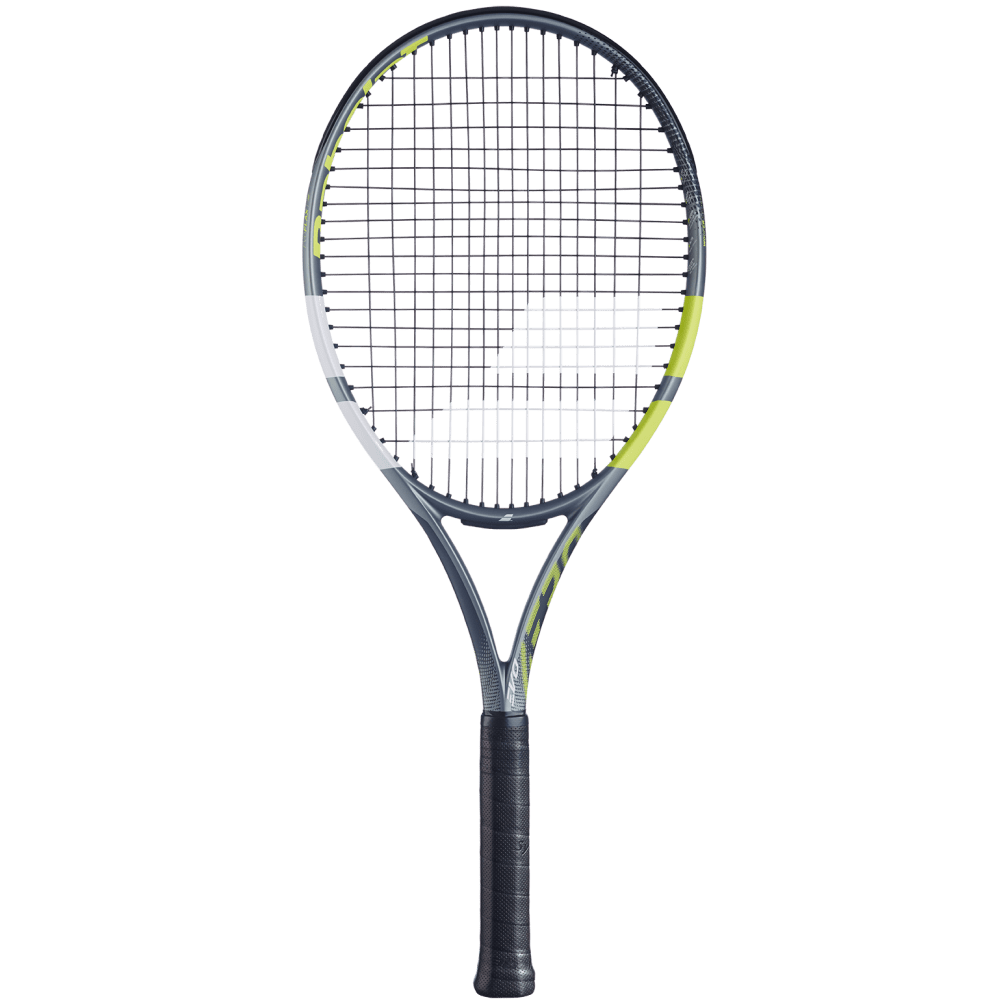
59 RA stiffness, 102 sq in head and 275 g, with the beam shape of the Pure Aero line. Flexible frames tend to have a softer impact, which helps those who are learning and still rarely hit the center of the strings.
- 3
- Weight
- 280 g
- Head
- 100 in²
- Strings
- 16x19
- RA
- 64 RA
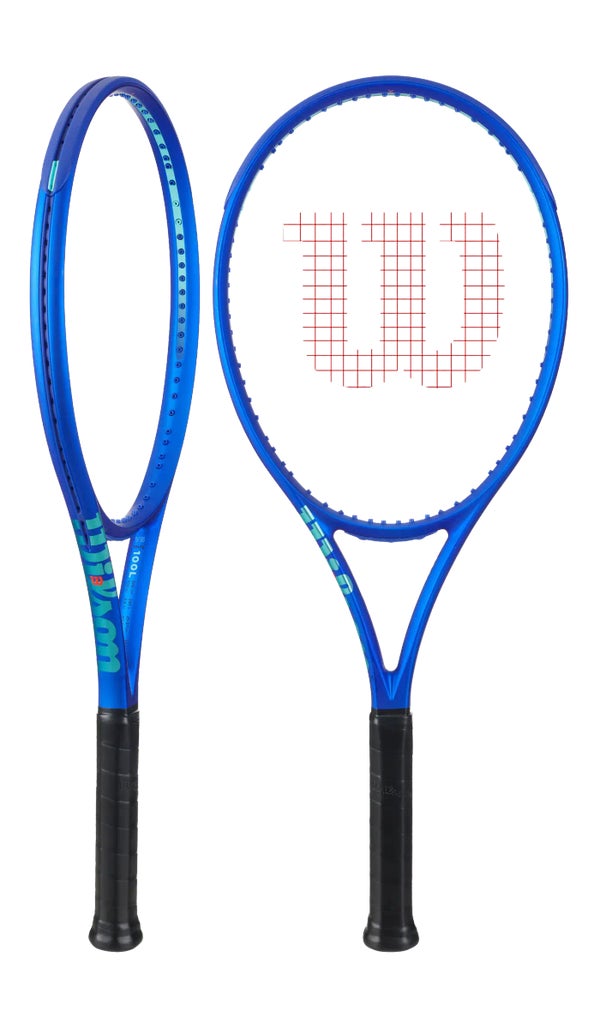
280 g, 100 sq in head and 310 swingweight. It is a racquet from Wilson's performance line, in a light version. It suits players who already know they will play every week and do not want to change racquets within a year.
- 4
- Head
- 110 in²
- Strings
- 16x19
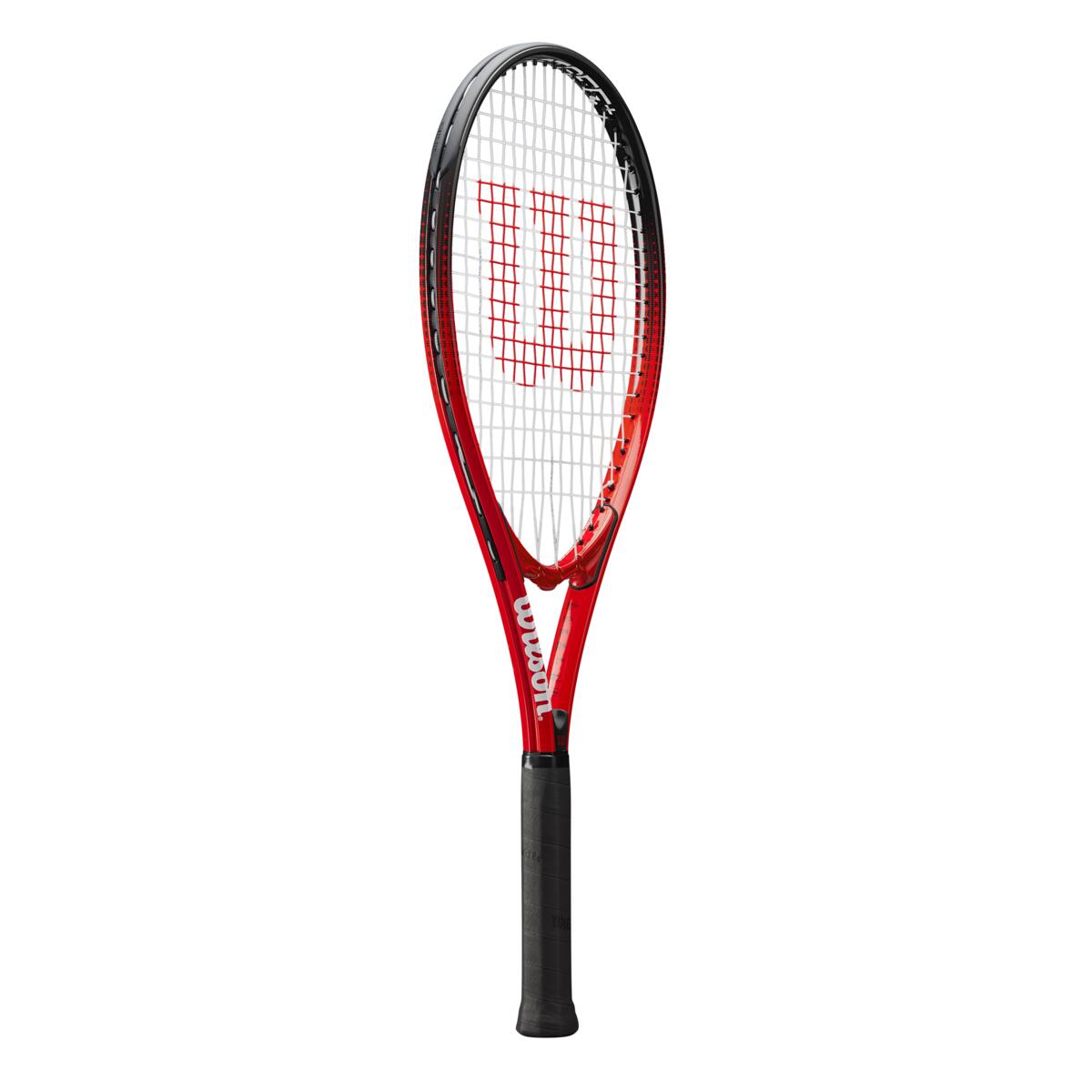
About 309 g strung, 110 sq in head, 27.25 in length and an aluminum frame. In general, a little more mass helps the racquet twist less in your hand when the ball arrives hard.
- 5
- Weight
- 260 g
- Head
- 105 in²
- Strings
- 16x19
- RA
- 65 RA
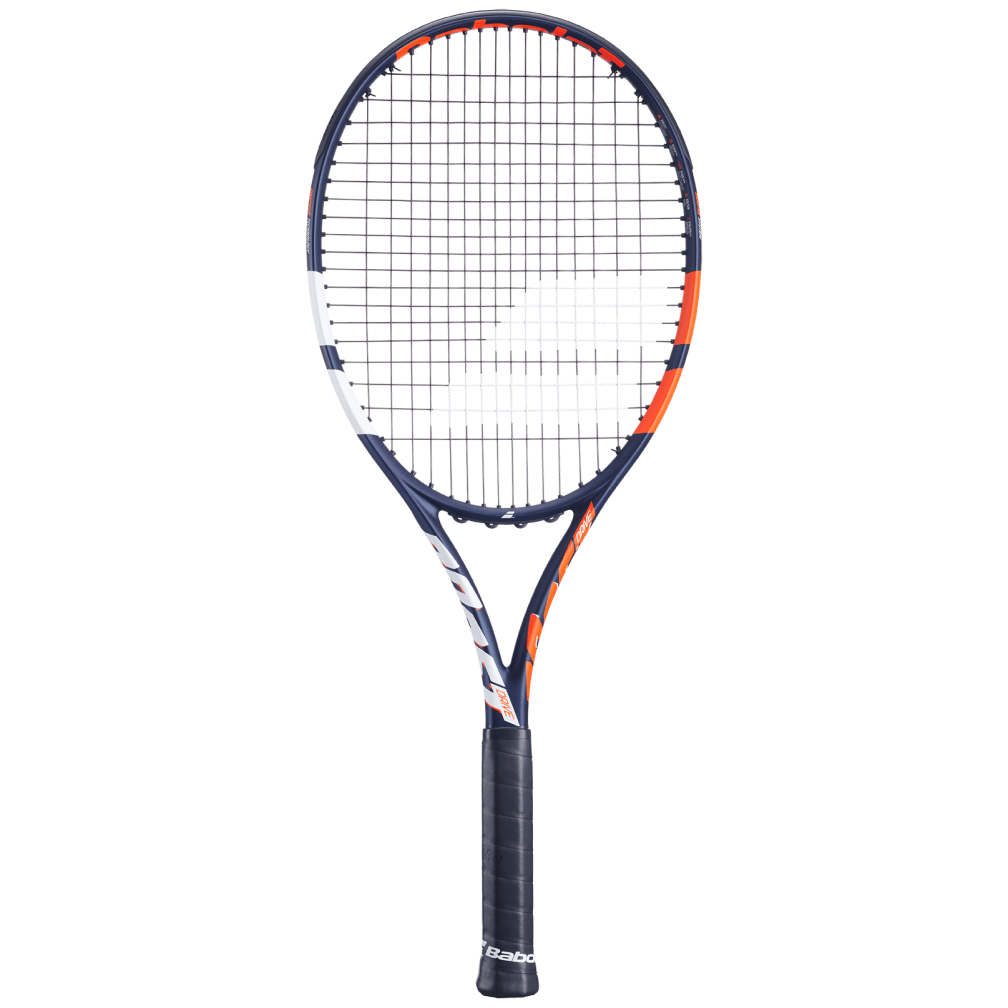
105 sq in head, 260 g, graphite frame and the Woofer system, Babolat's grommet technology. It comes strung and is light, good for adults who want to move on from aluminum without spending on stringing.




There is also an automatic ranking of tennis racquets for beginners, ordered by fit for the level, which is worth checking if you want to see more options beyond these seven.
The picks in detail
Wilson Tour Slam Lite. This is the racquet for those who are still deciding whether to stay with tennis. The 112 sq in head and 27.5 in length widen the usable area and the reach, which helps when contact lands far from the center, and the aluminum frame withstands the first months of balls off the frame and racquets thrown on the ground. The limitation is that of every very large-headed racquet: once the stroke picks up speed, it gets harder to control direction.
Yonex Ezone Ace. The jump to graphite without leaving the beginner range. At 260 g with head-weighted balance, it is light in the hand and has a 313 swingweight, a combination that tends to help players with a short swing. The 102 sq in head is smaller than that of the aluminum racquets on this list (110 to 112 sq in).
Babolat Evo Aero. It has low stiffness, at 59 RA, and uses the beam shape of the Pure Aero line. Flexible frames tend to have a gentler impact, a relief for those who still hit many balls off-center. On the other hand, they tend to give less free power: players with a very short stroke may miss the depth.
Wilson Ultra 100L. It is not a beginner's racquet, and that is exactly the point. For someone who starts with lessons twice a week, it demands a little more in the first month, but it avoids replacing the racquet a year later. At 280 g with a 310 swingweight, it fits in the range most adults can handle.
ProKennex Ki Q+15 285 g. Designed for players with an arm history. The Kinetic system uses microspheres inside the frame that, according to ProKennex, absorb part of the shock. The 105 sq in head and 27.5 in length widen the usable area and the reach. The 70 RA stiffness is high on paper, and the brand's proposition is that the dampening makes up for it.
What a beginner racquet needs
At the start, almost every ball is hit off-center, the swing is still short and preparation comes late. A beginner's tennis racquet compensates for those three things:
- Large head (102 to 112 sq in): increases the area where the ball comes off reasonably well. When you hit near the frame, the racquet twists less in your hand and the ball does not die in the net.
- Light to moderate weight (255 to 285 g unstrung): makes the racquet easy to prepare and to bring out in front of your body. You get to the ball on time, which is worth more than any spec.
- Weight shifted a bit toward the head: light beginner racquets tend to have head-weighted balance. This makes up for the lack of mass and gives depth without effort.
- Open string pattern (16x19 or 16x18): more power off the strings and more spin with little speed.
- Standard length or a bit longer: models of 27.25 to 27.5 in give reach and help the serve, which tends to be the hardest stroke at the start.
Beginner racquets: aluminum, light graphite and a step-up racquet
3 racquets: swipe sideways to see them all1–2 of 3 →
Highlighted: what differs between the racquets. In bold: the best value in the row.
Look at the swingweight column. The Ezone Ace weighs only 260 g, but its 313 swingweight is higher than the Ultra 100L's, which weighs 280 g. That happens because Yonex put more mass in the head. In general, weight in the head helps players with a short swing, while a more neutral-balance racquet tends to be easier to control once the stroke becomes complete.
Aluminum or graphite?
Aluminum racquets, such as the Tour Slam Lite and the Pro Staff Precision XL 110, are durable and cheap. For someone taking a package of lessons to see if they like the sport, they are enough. The problem shows up after a few months: aluminum transmits little ball feel and vibrates more, and a player who starts to accelerate the stroke notices the ball coming off with no direction.
Graphite (or graphite composite) racquets are lighter for the same size, more comfortable and respond better to touch. Models such as the Ezone Ace, the Evo Aero and the Boost Drive are the middle ground: graphite, already strung and designed for beginners.
A practical rule:
| Situation | Best path |
|---|---|
| Taking the first lessons and not sure whether to continue | Strung aluminum (Tour Slam Lite, Fusion XL) |
| Will play once a week, for fun | Strung graphite (Ezone Ace, Evo Aero, Boost Drive) |
| Already decided to train two or more times a week | Light step-up racquet (Ultra 100L and similar) |
| Returning after years away | Large head with comfort (Ki Q+15 285 g, Evo Aero) |
Beginner racquet or a good racquet to grow into?
This is the most common doubt, and both choices make sense. A pure beginner racquet (110 sq in head or more, weight very concentrated in the head) is the easiest to play in the first month. But it has a ceiling: once you learn to rotate your torso and accelerate your arm, the same power that helped starts sending the ball out.
A good racquet to grow into has a 100 to 105 sq in head, 275 to 285 g and more neutral balance. At the start, it demands a little more from you. In return, it keeps up with your progress without becoming a limit. The Wilson Ultra 100L is the example on this list; other options in the same range appear in the guide to racquets for intermediates, in the L and Team versions of the main families.
If you take lessons with a coach, ask them. They see your stroke and know in how many months you should leave the "get the ball in play" phase.
Strengths
- + Light: 280 g unstrung
- + 100 sq in head, the standard size to grow into
- + Keeps up with the player through the intermediate level
- + 310 swingweight, in a range most adults can handle
Drawbacks
- − As a performance racquet, it is usually sold unstrung: check with the store
- − Demands a little more technique than a 110 sq in racquet
- − Little mass for players who already hit heavy
The mistake of buying a professional's racquet
It is tempting to buy your favorite player's racquet. The problem is that player versions, such as the Wilson Pro Staff 97 or the Babolat Pure Strike 97, are 310 to 315 g unstrung, with a 97 sq in head and a swingweight above 320. For a beginner, that means three things:
- Late on the stroke: the heavy racquet arrives late, and the ball is hit beside or behind the body.
- Smaller usable area: the 97 sq in head punishes contact errors more, with balls in the net or out.
- Arm overload: the beginner compensates for the weight with the wrist and elbow, not the body. It is a well-known recipe for elbow pain.
Besides, the professional's racquet on TV is not the same as the one in the store: players use customized models, almost always heavier.
In the table above, all three racquets are from Wilson. The Tour Slam Lite has a head 15 sq in larger than the Pro Staff 97's. The Ultra 100L sits in the middle and is the natural step between the two. To see all of the brand's racquets side by side, use the Wilson racquet comparison tool.
For players returning to the game
Someone who played in their youth and returns after 40 has an advantage: the technique still exists, even if rusty. What changed was the body. The ideal racquet in that case is not the same as for someone who has never held a racquet:
- Prioritize comfort: stiffness up to 65 RA or dampening technologies, such as ProKennex's Kinetic. The tendons of the elbow and shoulder are less used to the impact.
- Use a 100 to 107 sq in head: your timing will come back gradually, and the larger usable area buys margin in the meantime.
- Do not go back with your old racquet if it is more than 15 years old: the graphite and strings of that era were stiffer, and the grip may have dried out.
- Start with a soft string: multifilament or synthetic gut, at moderate tension.
The ProKennex Ki Q+15 285 g and the Babolat Evo Aero are good entry points for this profile. If your doubt is about weight, the guide to weight, balance and swingweight explains why a racquet that is too light can also hurt.
Good to know
A large share of performance racquets are sold unstrung. Check on the product page whether the model comes strung. If it does not, include stringing in your budget and ask for a soft string and moderate tension to start.
How to test before you buy
If your school or club has demo racquets, use them. For a beginner, the test does not need to be technical. Notice three things during a lesson:
- Do you get to the ball on time? If the racquet seems to lag at the end of the stroke, it is too heavy for you right now.
- Does the racquet twist in your hand when the ball hits near the frame? If it twists a lot, it lacks stability, and a slightly heavier or larger-headed racquet will help.
- Does your arm complain the next day? Discomfort in the elbow or wrist after an easy lesson is a sign of a racquet that is too stiff, too light or strung too hard.
Ask your coach's opinion too. They see from the outside what you do not notice, such as late contact or a grip that is too tight.
Grip and string: the details people get wrong most
A right racquet with the wrong handle becomes a bad racquet. For adult beginners, the most common size is L2 or L3 for men and L1 or L2 for women, but the right way is to measure your hand. When in doubt between two sizes, go with the smaller: you can thicken it with an overgrip, but you cannot thin the handle. The step-by-step measurement is in the guide how to choose a tennis racquet.
As for string, avoid polyester at the start. It is the professionals' string, but it is stiff, loses tension quickly and is hard on the arm of someone who does not yet have a loose stroke. A synthetic or multifilament string, with tension in the middle of the manufacturer's recommended range, is enough for a long time.
Frequently asked questions
What is the best tennis racquet for an adult beginner?
For the first lessons, a strung aluminum racquet with a 110 to 112 sq in head, such as the Wilson Tour Slam Lite. If you already know you will play every week, it is worth starting with a light graphite one, such as the Yonex Ezone Ace or the Babolat Evo Aero, or going straight to a step-up racquet like the Wilson Ultra 100L.
What is the ideal racquet weight for a beginner?
Between 255 and 285 g unstrung for most adults. Below that, the racquet becomes unstable and transmits more shock to the arm; above it, it arrives late on the ball. Adults who are in good shape or have experience in other racquet sports can start closer to 285 g.
Is a large-headed racquet better for a beginner?
Yes, up to a point. Heads of 102 to 112 sq in forgive more and give more power. Above 110 sq in, though, the racquet gets hard to control as your stroke develops. For those who want to use the same racquet for longer, 100 to 105 sq in is a good compromise.
Can I start with a professional's racquet?
It is not recommended. Racquets such as the Pro Staff 97 or Pure Strike 97 are heavy, have a small head and a high swingweight. The beginner arrives late on the ball, makes more errors and tends to strain the elbow. Save those racquets for when your stroke is established.
How long does a beginner racquet last?
The frame lasts years if it does not take hard knocks. The limit tends to be your level: after six months to two years of regular training, many players feel the beginner racquet has become too easy and the balls start flying long. That is the time to move up to a step-up racquet.
Can a beach tennis or padel racket be used for tennis?
No. They are rackets for different sports, unstrung, with a different weight and size. For tennis, use a strung tennis racquet.
Still in doubt? Find your racquet asks a few questions about level, how often you play and pain history and suggests models. To explore on your own, the tennis racquet catalog lets you filter by level, and the tennis racquet comparison tool puts any combination side by side.
Where to buy the racquets in this guide
- EZONE Ace 2025 Yonex260 g · 102 in² · 16x19See priceAmazon
- EVO Aero 2026 Babolat275 g · 102 in² · 16x19See priceTenniszon
- Ultra 100L V5 Wilson280 g · 100 in² · 16x19See priceAmazon
- Pro Staff Precision XL 110 Wilson110 in² · 16x19See priceTenniszon
- Boost Drive 2025 Babolat260 g · 105 in² · 16x19See priceAmazon
The prices above are checked automatically at each store and may have changed since the last check. The price that counts is the one shown on the store's website at checkout. We may earn a commission on purchases made through store links, at no extra cost to you.